Power outages aren't rare events anymore—they're a genuine threat to daily life. More than 60% of homeowners worry about blackouts disrupting their routines, yet most remain unprepared when the grid actually fails. Darkness descends, refrigerators stop running, devices die, and suddenly the modern conveniences we depend on vanish in an instant.
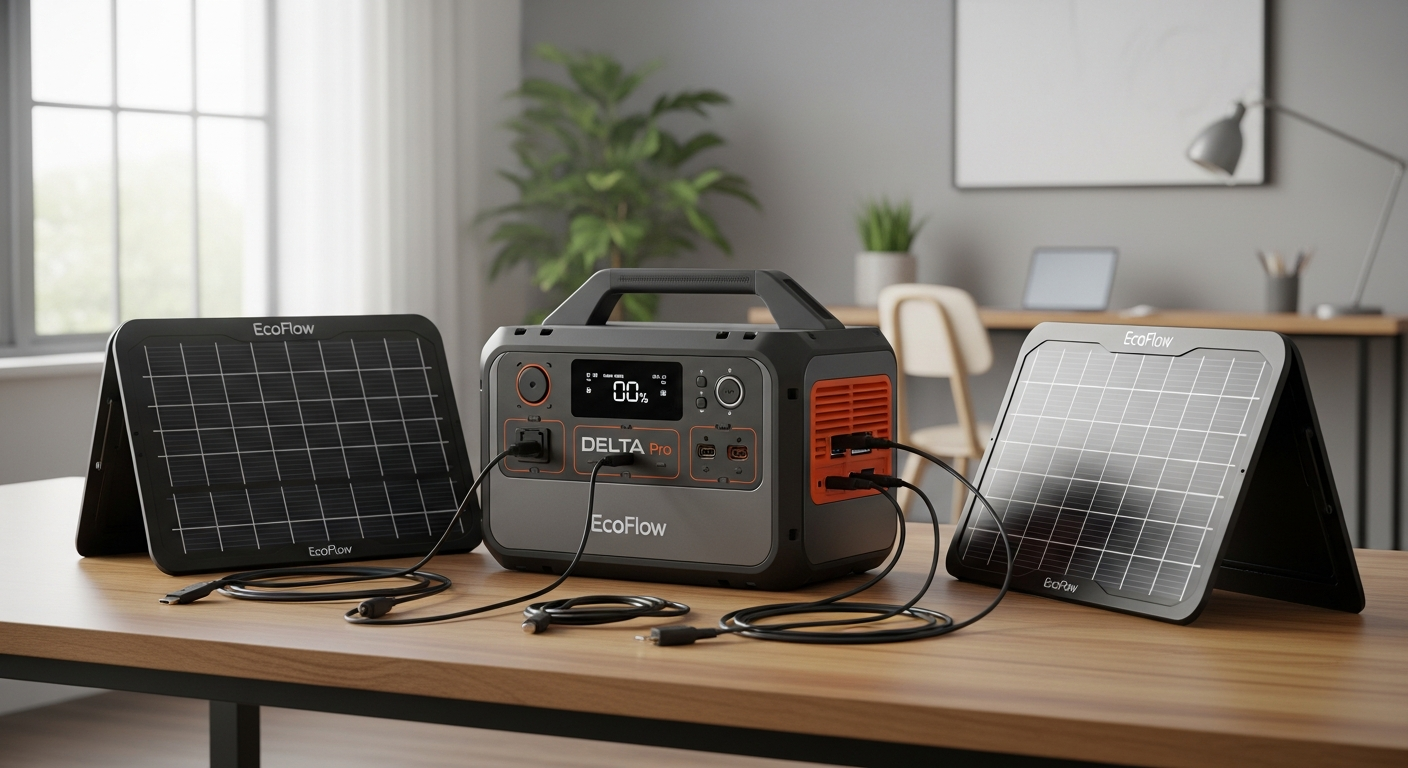
The EcoFlow DELTA Pro has emerged as one of the market's most trusted portable power stations, bridging the gap between emergency preparedness and genuine energy independence. It's not just another backup system; it's a comprehensive power solution engineered for real-world demands. This isn't a niche product gathering dust in a garage—it's EcoFlow's best-selling powerhouse, chosen by homeowners, off-gridders, and professionals who refuse to be caught unprepared.
Throughout this guide, you'll discover everything needed to understand the DELTA Pro's capabilities. From its expandable battery architecture and lightning-fast charging to real-world applications and honest cost considerations, this exploration covers the full picture. Whether you're weathering unexpected blackouts or building toward energy independence, understanding what this portable power station can actually deliver makes the difference between peace of mind and persistent anxiety.
Explore the EcoFlow DELTA Pro and transform how your household manages power emergencies.
Why Home Backup Power Has Become Essential for Modern Households
Power outages are increasing in frequency and duration across North America and Europe. Climate change intensifies severe weather events, aging infrastructure deteriorates, and demand pressures existing grids to their limits. What used to be a rare inconvenience now feels like an annual inevitability for many communities.
The financial impact extends far beyond temporary discomfort. Extended blackouts spoil refrigerated food, destroy medications requiring climate control, and create genuine medical concerns for those dependent on powered medical equipment. Beyond household losses, businesses lose revenue, and entire neighborhoods grind to a halt. A single week-long outage can cost homeowners thousands in spoiled goods, hotel stays, and emergency repairs.
Traditional generators seemed like the answer for decades. But they come with serious drawbacks: they're loud enough to disturb neighbors and family, require fuel storage with its own safety concerns, demand regular maintenance to stay functional, and produce emissions that contaminate indoor air. They're also bulky, difficult to move, and can fail precisely when needed most. For many households, the traditional generator solution creates as many problems as it solves.
This gap between actual needs and available options is where modern portable power stations fit. Unlike generators, they operate silently, require no fuel storage, need minimal maintenance, and produce zero emissions. They're genuinely portable despite their size, and they integrate seamlessly with solar panels for sustainable long-term operation. The DELTA Pro specifically addresses these limitations while delivering the power output that larger homes actually demand.
Understanding the DELTA Pro's Expandable Battery Architecture
The DELTA Pro starts with a base capacity of 3.6kWh, which sounds modest until you understand what it actually powers. This foundation can expand dramatically by adding extra battery modules, reaching up to 25kWh total capacity. This scalability means users aren't locked into a fixed system; they can start with what they need now and expand as circumstances change.
The battery chemistry matters significantly. The DELTA Pro uses LiFePO4 (Lithium Iron Phosphate) technology rather than traditional lithium-ion. This distinction isn't just technical jargon—it represents a fundamental difference in safety, durability, and longevity. LiFePO4 batteries are inherently more stable, less prone to thermal runaway, and capable of surviving thousands more charge cycles before degradation. They also tolerate deeper discharges without the capacity loss that plagues standard lithium-ion batteries.
Speaking of cycles, the DELTA Pro delivers 3,000+ charge cycles to 80% capacity. This specification translates to approximately 10 years of reliable operation for most households. Even after a decade of regular use, the battery retains 80% of its original capacity—meaning it still powers most home appliances effectively. This longevity fundamentally changes the cost-per-year calculation compared to cheaper alternatives that might fail within 3-5 years.
The expandable architecture also addresses a common dilemma: homeowners often don't know their actual long-term power requirements until they've lived through a real outage. The DELTA Pro allows starting conservatively, then adding batteries once usage patterns become clear. This staged approach makes financial sense and prevents over-purchasing capacity that might never be needed.
Power Output Performance: From Daily Essentials to Heavy-Duty Demands
The DELTA Pro's base AC output of 3600W handles the vast majority of household appliances without hesitation. Refrigerators, microwaves, television systems, charging stations, heating elements—all operate within this power envelope. For occasional power surges, X-Boost technology expands surge capacity to 7200W, allowing brief operation of devices that momentarily demand more power than continuous operation requires.
Multiple outlet types ensure compatibility with virtually any device. Standard AC outlets power conventional appliances, USB-A and USB-C ports charge phones and tablets, DC outlets support specialized equipment, and car power compatibility enables operation of automotive devices. This outlet versatility means fewer adapters, fewer incompatibility issues, and genuinely universal device support.
Real-world runtime examples clarify what these numbers mean in practice. A home office setup—laptop, monitor, printer, lighting, and internet equipment—typically draws 200-300 watts continuously. The DELTA Pro's 3.6kWh base capacity would sustain this setup for 12-15 hours before requiring recharge. A weekend camping trip with lights, charging devices, and a small refrigerator might consume 400-500 watts, yielding 7-9 hours of operation. Emergency backup during a winter outage powering furnace blower, water pump, and essential lighting uses roughly 1,500 watts, giving 2-3 hours before the next charge cycle becomes necessary.
These scenarios illustrate why understanding actual power consumption matters. The DELTA Pro's capabilities are substantial, but they're not infinite. Realistic expectations prevent disappointment and guide informed purchase decisions.
Charging Speed and Flexibility: Getting Back to Full Power Fast
Rapid charging separates the DELTA Pro from many competitors. Reaching 80% capacity in just 50 minutes via AC wall outlet power represents industry-leading performance. This means that even a quick midday charge provides enough power for several hours of operation—critically important when charging windows are limited or unpredictable.
Multiple charging input options create genuine flexibility. Wall outlets provide the fastest charge when grid power is available. Solar panels enable indefinite operation for off-grid applications. EV charging stations can replenish capacity at public locations. Vehicle chargers allow overnight charging during road trips. This variety prevents the "stranded with dead battery" scenario that limits other portable power solutions.
Dual charging capability deserves special attention. The DELTA Pro can simultaneously accept power from multiple sources—perhaps solar panels topping off the battery while AC wall power accelerates charging. This simultaneous input capability means faster effective charging and the ability to prioritize available power sources intelligently. On cloudy days when solar output is limited, wall charging fills the gap. On sunny days, solar handles the job while wall outlets remain available for other uses.
This flexibility translates to genuine peace of mind. Users aren't dependent on any single charging method; they adapt to whatever resources are available in their circumstances.
Smart Integration and Remote Monitoring Capabilities
The EcoFlow mobile app transforms the DELTA Pro from a static battery into an intelligent power management system. Real-time monitoring shows current charge level, power consumption rate, estimated runtime based on current draw, and historical usage patterns. Users checking the app can see exactly what's happening with their power system from anywhere—whether they're away from home or simply in another room.
Control capabilities extend beyond monitoring. The app enables remote power cycling for individual outlets, lets users set load priority for critical appliances, and provides notifications when charge levels reach specified thresholds. This intelligence prevents scenarios where non-essential devices drain the battery when critical systems need power.
Smart Home Panel integration represents the next sophistication level. This accessory connects the DELTA Pro directly into a home's electrical system, enabling seamless switchover during grid failures. When power disappears, the system automatically supplies backup power to pre-configured circuits. When grid power returns, the system switches back automatically while resuming the charging cycle. This integration means genuine home backup without manual intervention—the system simply handles power continuity transparently.
Automatic load management further refines this capability. The system recognizes which appliances are essential during outages and prioritizes their power supply. Less critical devices operate only when sufficient reserve capacity exists. This intelligent distribution dramatically extends the DELTA Pro's effective runtime during emergency situations.
Experience the intelligence and control of EcoFlow's advanced power management system today.
Real-World Applications: From Emergency Backup to Off-Grid Living
Home backup during outages represents the most straightforward application. When the grid fails, critical systems—water pumps, furnace blowers, medical equipment, refrigeration, lighting—continue operating. A family endures an outage as an inconvenience rather than a crisis. Food stays fresh, temperatures remain comfortable, and essential medical devices function uninterrupted. This security justifies the investment for countless homeowners who've experienced the chaos of extended blackouts.
Off-grid cabin living opens entirely different possibilities. Properties without utility connections can achieve genuine energy independence with the DELTA Pro paired with solar panels. The expandable capacity—reaching up to 25kWh—supports extended autonomous operation. Morning sunlight recharges the batteries while the system powers daily activities. This setup enables permanent occupancy of remote properties, transforming locations previously limited to seasonal use into year-round residences.
RV and camping adventures benefit from silent, emissions-free power that doesn't disturb other campers or wildlife. Professional job sites gain reliable backup power for tools, lighting, and equipment charging. Disaster preparedness scenarios—earthquake zones, hurricane-prone regions, areas vulnerable to extended grid failures—all benefit from the DELTA Pro's capacity and reliability.
The versatility explains why this single product serves such diverse applications. It's genuinely universal backup power for any situation where grid electricity becomes unavailable or insufficient.
Weighing the Investment: Pricing, Value, and Long-Term Economics
The base DELTA Pro unit costs €1,599–€2,799, with regional variations and promotional pricing creating variation within this range. Additional batteries cost extra, and solar panels represent another investment. These aren't impulse purchase numbers; they demand serious budget consideration.
However, cost-per-kilowatt-hour analysis shifts perspective. Traditional backup generators might cost less upfront but require fuel purchases, maintenance, repairs, and eventual replacement. Comparing the full lifecycle cost—not just initial purchase price—often favors the DELTA Pro. Over 10 years of ownership, fuel costs for a generator frequently exceed the DELTA Pro's price. Add in maintenance labor, repairs, and the generator's inevitable replacement, and the portable power station economics become compelling.
Financing options and payment plans through EcoFlow make the investment more accessible. Rather than requiring full upfront payment, users can spread costs across months, reducing immediate financial impact. This flexibility removes a major barrier for households genuinely interested in backup power but constrained by cash flow.
The real question isn't whether €1,599–€2,799 is expensive—it clearly is. The question is whether reliable backup power for a decade justifies the cost given the financial and emotional toll of extended outages. For many households, the answer is yes.
Honest Assessment of Limitations and Trade-offs
The DELTA Pro weighs approximately 45 kg, making it substantial equipment. While included wheels improve mobility, moving it regularly isn't trivial. This weight and size mean users must plan permanent placement and ensure adequate physical space. Unlike smaller power stations that fit on shelves, the DELTA Pro occupies significant floor area.
Space requirements extend to charging setup. Wall outlets, solar panels, and charging cables require dedicated real estate. Homes with limited storage might struggle to accommodate everything needed for optimal operation. Apartments with space constraints face particular challenges.
Capacity limitations present another honest consideration. While 25kWh sounds substantial, powering an entire home indefinitely without solar recharging exceeds its capability. During multi-day outages without sunlight, users must prioritize critical loads and accept that some appliances won't operate simultaneously. This isn't a flaw—it's physics. Any portable system has finite capacity, and understanding those limits prevents disappointment.
These limitations don't negate the DELTA Pro's value. They simply clarify realistic expectations and help users determine whether this system matches their actual situation.
Comparing the DELTA Pro Against Other Premium Portable Power Stations
Competitors exist in the premium portable power segment. Bluetti's AC500 offers comparable capacity with slightly different charging speeds. Goal Zero's Yeti line provides alternatives with varying price points. Jackery and other manufacturers compete aggressively in this space.
Feature-by-feature comparison reveals the DELTA Pro's particular strengths. Its 50-minute rapid charging to 80% capacity outpaces most competitors significantly. Solar compatibility and the modular expansion system provide flexibility that many alternatives lack. The LiFePO4 chemistry and 3,000+ cycle rating offer durability advantages over some competitors relying on standard lithium-ion technology.
Price-to-performance ratio in the premium portable power segment favors the DELTA Pro considerably. Equivalent capacity from competitors often commands higher prices without superior charging speeds or smart integration features. This value proposition explains its best-seller status among discerning homeowners willing to invest in quality.
That said, each competitor offers something the DELTA Pro doesn't. Bluetti excels in specific technical areas, Goal Zero brings brand heritage and reliability reputation, others focus on different price points. Choosing between premium options requires aligning specific needs with each system's particular strengths. The DELTA Pro wins when rapid charging, expandability, and smart features matter most.
Making Your Decision: Is the DELTA Pro Right for Your Situation?
Self-assessment questions clarify whether this investment makes sense. How often does your area experience power outages? How long do they typically last? Which appliances are absolutely critical during outages? What's your total monthly electricity consumption compared to your actual power requirements?
Calculating total capacity needs anchors decision-making. Add up the wattage of appliances you want to operate simultaneously during an outage, then multiply by the hours you need them running before recharging becomes possible. A home office using 300 watts for 8 hours needs 2.4kWh minimum capacity. Factor in comfort appliances and extended outage scenarios, and capacity requirements grow accordingly.
Budget considerations determine whether the base unit suffices or whether expansion batteries warrant the additional investment. Does your outage history suggest multi-day scenarios where 25kWh capacity becomes necessary? Or do your local outages typically last 4-6 hours, making 3.6kWh adequate for critical loads?
Payment planning strategies for implementation include spreading purchases across months, starting with the base unit and adding batteries later, or combining the initial investment with solar panels for future expansion. This staged approach makes the investment more financially manageable while building toward complete energy security.
Maximizing Performance and Longevity After Purchase
Optimal charging practices preserve battery health beyond 3,000 cycles. Avoiding complete discharge, limiting fast-charging frequency when possible, and maintaining moderate charge levels during extended storage periods all extend lifespan. The EcoFlow app provides guidance on these practices, preventing user errors that unnecessarily degrade capacity.
Temperature management directly affects battery longevity. LiFePO4 chemistry performs best between 15–25°C. Storage in unheated garages during winter or hot attics during summer accelerates degradation. Insulated storage spaces or climate-controlled areas maximize the battery's 10-year lifespan. Users in extreme climates should particularly prioritize this consideration.
Integration with solar panels creates sustainable long-term operation. During summer months with reliable sunshine, solar panels handle most daily charging needs, minimizing grid electricity consumption and extending the battery's lifespan through reduced charging cycles. This integration transforms the system from a backup power solution into a partial alternative to grid electricity.
These practices aren't demanding—they're simply conscious choices that maximize the value of a significant investment.
The Path Forward: Building Resilience with Intelligent Power Solutions
The EcoFlow DELTA Pro represents more than just a backup power source—it's a declaration of energy independence and household resilience. Whether protecting against unpredictable outages, embracing off-grid living, or powering demanding professional equipment, this portable power station delivers the capacity, speed, and intelligence that modern homeowners actually need.
Yes, the €1,599–€2,799 price tag demands serious consideration. The weight and space requirements aren't trivial either. But when factoring in industry-leading charging speeds, LiFePO4 durability, and genuine ability to power almost anything thrown at it, the value becomes crystal clear. The 10-year lifespan and 3,000+ cycle rating mean this investment pays dividends for over a decade.
Start by calculating actual power needs—which appliances matter most during outages, how long you need them running, what your actual consumption patterns look like. Decide whether the base 3.6kWh capacity handles your critical loads or whether expansion batteries make sense for your situation. Research your local outage history and assess how frequently backup power genuinely protects against disruption.
Your next outage doesn't have to be a crisis. It doesn't require choosing which appliances to abandon, which medical equipment sacrifices power, or which family members suffer without refrigeration and heating. Make it just another day at home—routine and secure because you've prepared intelligently.
Start building your resilience strategy with the EcoFlow DELTA Pro today.
Leave a Reply