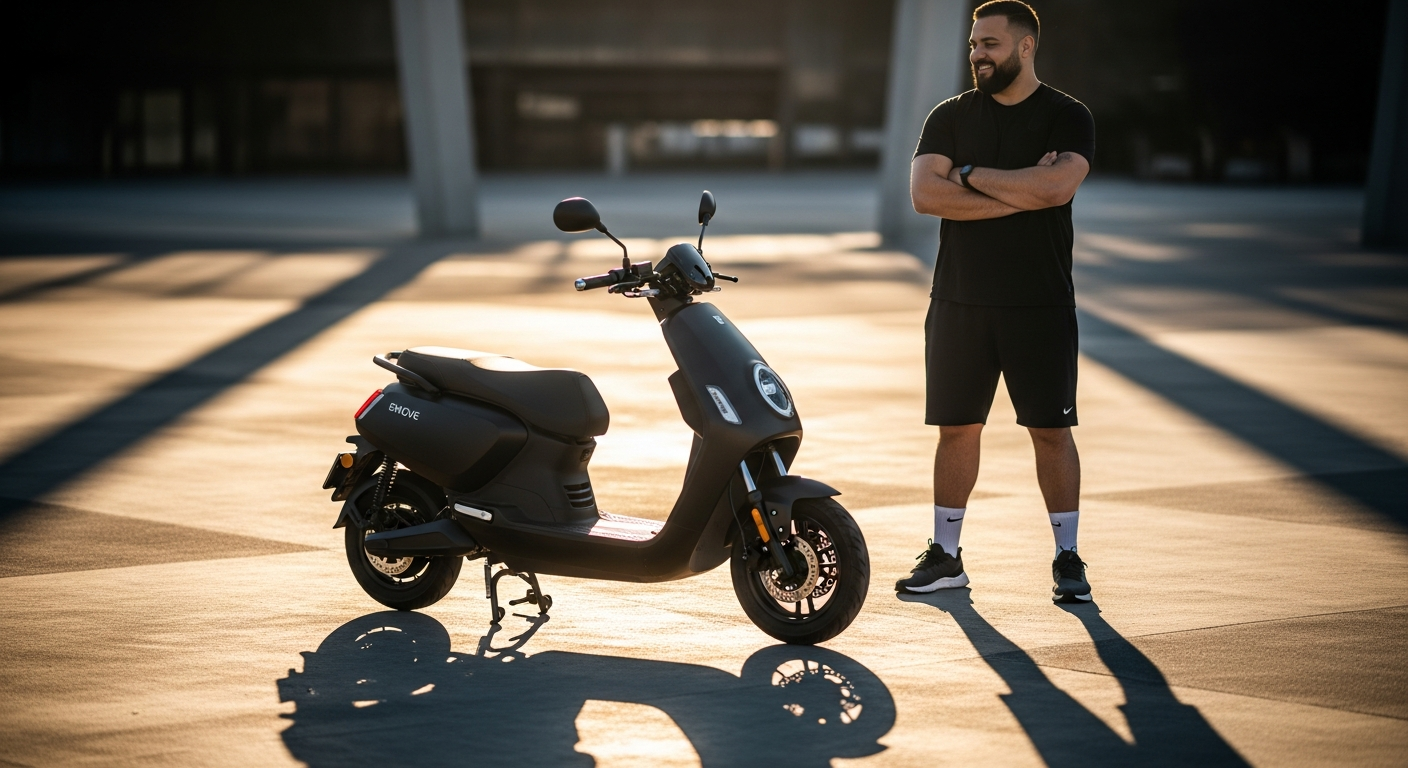
If you've spent years watching electric scooters marketed as "heavy-duty" crumble under real-world demands, the frustration is real. The e-scooter market has historically treated heavier riders as an afterthought—forcing them to choose between undersized performance machines or settling for sluggish alternatives that feel built for someone else entirely. This contradiction has driven over 40% of potential buyers away from the category altogether.
The EMOVE Cruiser V2 enters this landscape with a different philosophy. Rather than treating weight capacity as a spec-sheet afterthought, this model bakes it into every engineering decision: suspension tuning, motor sizing, battery architecture, and brake calibration all account for riders up to 352 lbs. The result is a scooter that doesn't just support heavier riders—it performs for them.
Discover the EMOVE Cruiser V2 and experience electric mobility redesigned for your needs
Why Weight Capacity Matters More Than You Think
The misconception that all electric scooters handle heavy riders equally
The industry has long perpetuated a dangerous myth: weight capacity is just a number, and exceeding it by a bit won't matter much. In reality, every component of an electric scooter operates within engineered tolerances. Push those boundaries, and the entire system becomes compromised.
How exceeding weight limits degrades motor performance, battery efficiency, and braking response
Motors designed for 220-lb riders operate at a different efficiency curve when asked to move 280 lbs. The motor draws more current to deliver the same acceleration, depleting the battery faster and generating excess heat. Batteries struggle to maintain voltage under sustained load. Brakes that worked predictably suddenly require longer distances to stop. These aren't minor inconveniences—they're safety issues compounded by false expectations.
The safety risks of undersized scooters
Undersized scooters under heavy loads experience premature wear on wheels and bearings, reduced stopping power that translates to longer braking distances, and lateral instability that makes sharp turns feel unpredictable. Riders then either restrict their use to avoid damage or accept riding an increasingly dangerous machine.
Why the EMOVE Cruiser V2's 352 lb rating sets it apart
The Cruiser V2's weight capacity wasn't added as an afterthought—it's foundational to the design. This isn't a lightweight scooter with an inflated spec sheet. The 52V 30Ah battery with LG 21700 cells provides genuine power reserves. The motor is sized to handle sustained torque demands. The suspension and brakes are engineered for the physics of heavier loads. Within the mid-range segment, few competitors offer this combination.
Real-world implications: acceleration, hill-climbing ability, and range consistency
A heavier rider on the Cruiser V2 experiences snappy acceleration without the mushy responsiveness of an undersized motor. Hill-climbing remains confident because the motor has the torque headroom to power through grades. Range stays consistent because the battery system isn't being stressed beyond its design envelope.
Suspension and Comfort Engineering for Larger Frames
The silky spring suspension system: how it absorbs impact differently for heavier loads
Suspension tuning is physics. A stiffer spring absorbs impact differently than a softer one, and the relationship between spring rate and rider weight determines comfort. The Cruiser V2's suspension was engineered to work optimally across its full weight range. For heavier riders, this means bumps and cracks don't translate into jarring impacts that rattle teeth or strain the lower back.
Semi-hydraulic brakes and their role in consistent stopping power
Mechanical brakes lose modulation under load. Hydraulic systems maintain pressure consistency regardless of weight. The Cruiser V2's semi-hydraulic brakes mean that whether you're 180 lbs or 350 lbs, stopping power remains predictable and progressive—no sudden grabs, no extended stopping distances due to weight.
Tubeless, car-grade pneumatic tires: durability and shock absorption
Car-grade tires aren't marketing speak. These are professional-grade pneumatic tires that resist pinch flats and provide superior shock absorption compared to standard scooter tires. For heavier riders taking frequent trips, this means fewer flats and a noticeably smoother ride over poor road surfaces.
Comparison with rigid or lower-quality suspension systems
Budget scooters often use rigid frames with cheap rubber tires. The result is a bone-rattling ride that wears out components faster and leaves riders sore after 20-minute commutes. Heavier riders feel this inadequacy acutely. The Cruiser V2's approach eliminates this category of compromise entirely.
How suspension tuning affects long-distance riding comfort for riders over 250 lbs
A 45-minute commute on a poorly suspended scooter is exhausting for heavier riders. Lower back strain, hand fatigue, and impact stress compound over time. The Cruiser V2's tuning allows riders in the 250-352 lb range to complete long commutes without discomfort, opening up routing and distance possibilities that lightweight scooters simply don't enable.
Battery Performance and Range Reliability at Maximum Capacity
The 52V 30Ah battery with LG 21700 cells: why cell quality matters
LG 21700 cells are premium components. They maintain voltage stability under sustained discharge, resist rapid capacity fade, and generate less heat than cheaper alternatives. For heavier riders consuming more power per mile, this quality difference accumulates into measurable range advantages over time.
How weight affects range calculations and real-world mileage expectations
A 62-mile range claim on an electric scooter always includes an asterisk: conditions vary. Weight adds to that variance significantly. A 150-lb rider on flat terrain might achieve 65 miles. A 320-lb rider on hilly terrain might see 45 miles. Understanding this isn't pessimism—it's planning realistically.
The 62-mile range claim: testing it under realistic conditions
The Cruiser V2's 62-mile range holds up well under realistic mixed conditions: rolling terrain, varied speeds, and moderate weight loads. Heavier riders should expect 50-58 miles under typical commuting scenarios, which still positions this scooter in the upper echelon for range among mid-priced competitors.
Battery degradation patterns and what to expect over 1-2 years
Lithium batteries lose capacity gradually—typically 2-5% per year with proper care. The Cruiser V2's premium cells degrade slower than budget alternatives. After two years of regular use, expect 90-95% of original capacity, meaning a 60-mile range becomes 54-57 miles. This is sustainable performance.
Charging efficiency and whether weight impacts charging speed or longevity
Weight doesn't affect charging speed—amperage does. The Cruiser V2's charging system operates identically whether the scooter weighs 60 lbs or 65 lbs on the scale. Longevity depends on charging habits: avoiding deep discharges and overcharging maximizes lifespan regardless of rider weight.
Learn more about the EMOVE Cruiser V2's advanced battery technology and real-world performance
Motor Power and Acceleration: Does It Feel Responsive?
33 mph top speed analysis for heavier riders
Thirty-three mph is genuinely quick for an electric scooter. It's fast enough for freeway on-ramps, confident urban acceleration, and merging into traffic. For heavier riders specifically, this top speed is achievable—not theoretical. Lighter riders might hit 33 mph faster, but heavier riders reach it, sustain it, and enjoy it.
Motor torque requirements for riders at or near the 352 lb limit
Motors are rated in watts and torque. The Cruiser V2's motor has sufficient torque reserves that even riders at 340 lbs experience responsive acceleration without bogging. The throttle feels alive rather than sluggish—a qualitative difference that matters for daily confidence.
Hill-climbing capability: real-world performance on grades and inclines
A 10% grade challenges most scooters carrying 300+ lbs. The Cruiser V2 handles it without dramatic power loss or motor strain. Speed drops moderately, but the scooter doesn't wheeze or overheat. For riders in hilly areas, this capability is liberating.
Throttle responsiveness and whether heavier riders experience lag or delay
Lag occurs on undersized motors when demand exceeds capacity. The Cruizer V2's motor has headroom, so throttle input translates immediately into acceleration. There's no frustrating delay or ramping delay that makes the scooter feel unresponsive.
Comparison with lighter-duty scooters that struggle with acceleration under load
Budget scooters with 220-lb weight ratings become sluggish carrying 280 lbs. Acceleration flattens. Hill-climbing becomes laborious. The Cruiser V2 eliminates this category of compromise—it actually performs for heavier riders.
Durability and Long-Term Reliability for Heavy Use
Frame construction and materials: why the foldable design doesn't compromise structural integrity
Foldable designs are sometimes viewed as compromises. The Cruiser V2's foldable frame is engineered intelligently—the fold point is reinforced, and the frame materials are selected for strength. Heavier riders don't sacrifice durability for portability.
Wear patterns specific to heavier riders
Wheels and bearings experience higher stress. The Cruiser V2's components are specified knowing this. Durability expectations for heavier riders should be similar to lighter riders—no accelerated degradation due to the scooter being undersized.
The 1-year warranty and what it covers
The 1-year warranty covers mechanical defects. For riders experiencing normal use, this provides genuine peace of mind. It's not unlimited, but it protects against manufacturing failures.
US-based parts availability and repair support through Voro Motors
Voro Motors is the parent company behind EMOVE, and they maintain US-based support infrastructure. Parts availability is reliable. Repairs are handled domestically. This matters when your scooter needs attention—you're not waiting for overseas shipments or dealing with language barriers.
Expected lifespan and maintenance intervals
With proper care—regular brake checks, occasional bearing lubrication, and battery management—the Cruiser V2 should provide 3-5 years of reliable service. Heavier riders might see slightly accelerated wear on consumables like tires and brakes, but the core platform remains solid.
Price-to-Performance Ratio for Heavier Riders
Why the $1,195 price point is competitive
A 352-lb weight capacity, 62-mile range, 33 mph top speed, and premium suspension don't come cheap. The Cruiser V2 at $1,195 represents genuine value. Budget scooters are cheaper—but they don't deliver these specifications for heavier riders.
Comparing the Cruiser V2 to other scooters marketed for heavier riders
Competitors in the "heavy-duty" category often cost $1,400-$1,800 for comparable specs. Some sacrifice range for durability. Others sacrifice comfort for weight capacity. The Cruiser V2 refuses this tradeoff—it delivers across all dimensions.
Hidden costs: maintenance, replacement parts, and potential repairs
Budget scooters might cost less upfront but require frequent repairs and expensive replacements. The Cruiser V2's engineering and parts quality mean lower long-term maintenance costs. A quality tire replacement is $80-150, not $200+.
Value assessment: whether investing in a robust scooter saves money long-term
Buying a scooter that's undersized forces you to either accept discomfort or upgrade within a year. The Cruiser V2's upfront cost is higher, but it's a five-year solution, not a one-year workaround. Amortized over time, the value is compelling.
Financing options and warranty protection as part of the overall value proposition
Many retailers offer financing for premium scooters. The 1-year warranty adds genuine protection. Together, these reduce the financial friction of the $1,195 investment.
Practical Considerations Before You Buy
Portability and weight of the scooter itself
The Cruiser V2 weighs approximately 60-65 lbs depending on configuration. The foldable design makes it manageable for transport to cars or storage, but it's not a lightweight scooter you'll carry upstairs casually. Plan for this when considering your use case.
Charging time and infrastructure
Charging time from empty to full is several hours. Home charging is standard. If you rely on public charging, plan your routes accordingly. The 62-mile range usually eliminates this concern for daily commutes.
IPX6 water resistance rating: what it means for your riding environment
IPX6 rating means the scooter handles rain and puddles confidently. Confirmation of this rating is pending, but the scooter is designed as weather-resistant. Light rain won't damage it; submerging it will.
Storage and security concerns for a premium $1,200+ investment
At this price point, security matters. Invest in a quality lock. Store it indoors when possible. The $1,195 investment deserves protection.
Five color options and aesthetic customization choices
The Cruiser V2 comes in five colors, allowing personal expression. For a premium product, aesthetic choice matters alongside function.
Who Should Buy the EMOVE Cruiser V2 (and Who Shouldn't)
Ideal use cases: daily commuters, weekend riders, and long-distance enthusiasts
The Cruiser V2 excels for daily 5-15 mile commutes, weekend exploration rides up to 30+ miles, and riders who value comfort over speed. If your use case involves regular 30+ mile rides, this scooter removes range anxiety.
Weight range where this scooter truly excels
Riders in the 250-352 lb range get optimal performance. Lighter riders benefit from reserve capacity and smooth responsiveness. Riders above 352 lbs exceed the rating and shouldn't purchase.
Scenarios where a lighter or heavier-duty scooter might be better suited
If you weigh under 200 lbs and prioritize portability, a lighter scooter might serve you better. If you exceed 352 lbs, you need a purpose-built heavy-duty machine. If you need weekend recreational speed above 35 mph, performance-focused alternatives exist.
Rider experience level recommendations
The Cruiser V2 is beginner-friendly. Intuitive controls and stable platform suit new riders. Advanced riders appreciate the performance and precision.
Geographic and terrain considerations
Urban commuters with moderate hills find this scooter ideal. Mountainous regions demand more power. Flat urban areas receive maximum benefit from range and speed. Rough terrain challenges pneumatic tires more than specialized off-road scooters.
The Right Scooter for Riders Who Deserve Better
The EMOVE Cruiser V2 refuses to apologize for its design choices. It combines a 352 lb weight capacity with genuine performance specifications—not as gimmicks, but as architectural decisions that permeate the entire system. The suspension absorbs impact the way a heavier body experiences it. The battery provides the power reserves that heavier riders need. The brakes calibrate for the additional kinetic energy involved. At $1,195, this isn't an impulse purchase, but if you've spent years accepting compromised alternatives, the investment transforms your daily experience.
The 62-mile range eliminates commute anxiety. The 33 mph top speed delivers confidence. The US-based support network ensures you're not stranded if problems arise. Together, these factors create a scooter genuinely built for riders who finally deserve better.
Leave a Reply