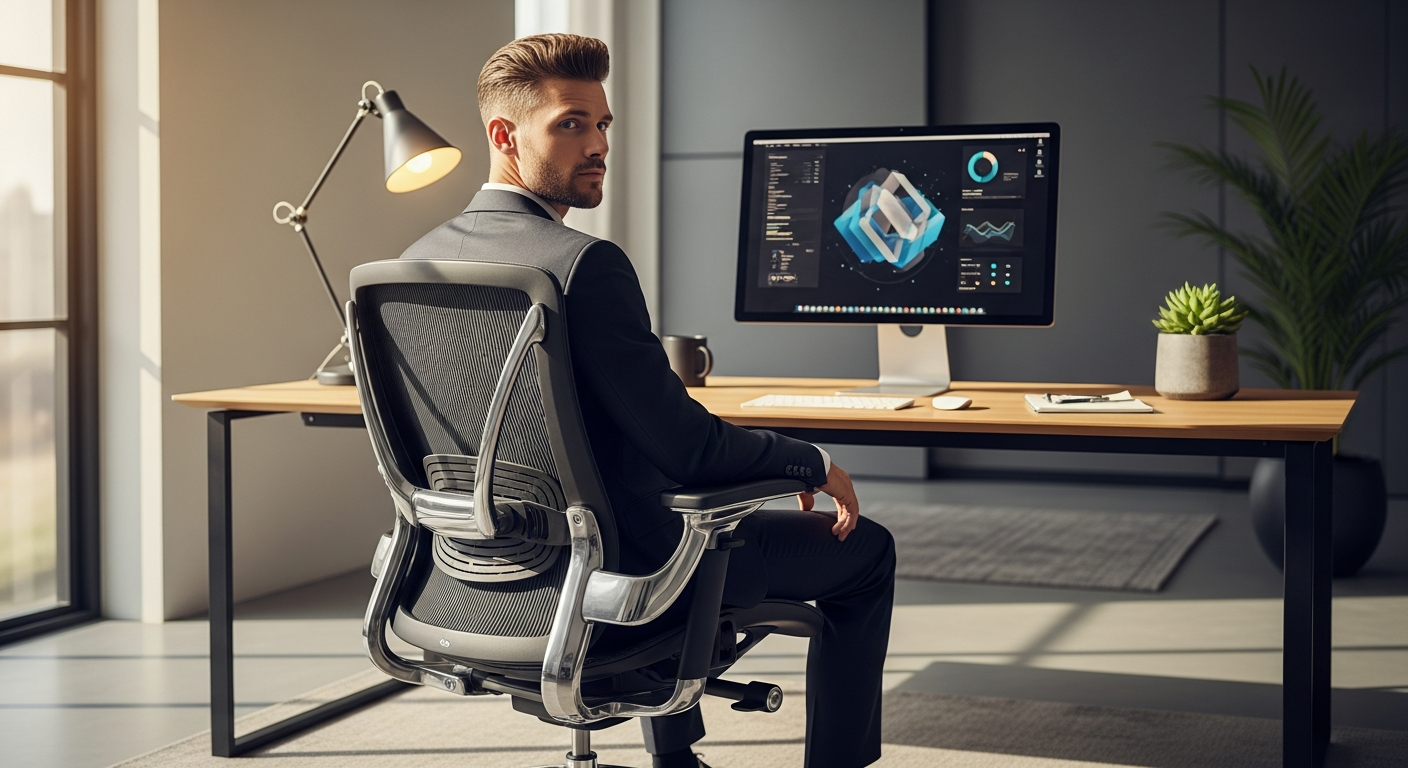
Employees spend approximately 40 hours per week sitting in their office chairs. Yet across Europe, the vast majority of businesses still furnish workspaces with basic, non-ergonomic seating that fails to support the human body adequately. The consequences are tangible and costly: widespread back pain, diminished focus, and absenteeism that drains organizational resources and morale.
An ergonomic office chair isn't a luxury amenity—it's foundational infrastructure for your team's health and performance. Kaiser Kraft ES has built its reputation as Europe's trusted supplier of office and business equipment by recognizing this reality. Among their extensive catalog, ergonomic seating consistently ranks as one of their best-selling products because it directly addresses a genuine need in professional environments.
Understanding Core Ergonomic Features That Transform Workspace Comfort
Multi-dimensional Adjustability
The foundation of effective ergonomic seating lies in customizable dimensions. Users need control over seat height, backrest angle, and lumbar support to achieve optimal spinal alignment. This flexibility reduces pressure points that accumulate during extended sitting periods and allows each employee to dial in settings that match their unique body geometry.
Adjustable Armrest Systems
Quality armrests—whether 2D or 3D—serve a critical function that many overlook. They prevent shoulder and wrist strain during extended computer work by providing proper support for the upper extremities. Without adequate arm support, employees compensate by hunching or twisting, patterns that generate cumulative strain injuries.
Breathable Upholstery Materials
Mesh or high-quality fabric upholstery maintains air circulation throughout the workday, reducing heat buildup and the discomfort that comes with prolonged contact between body and seat. This seemingly minor detail significantly impacts all-day comfort and focus.
Stable Base Construction
Five-star bases constructed from durable nylon or polished aluminum provide the stability necessary for safe, secure seating. A sturdy foundation prevents wobbling and distributes weight evenly across the floor.
Smooth-Rolling Casters
Effortless movement across different floor types—carpet, tile, or hardwood—without friction or resistance allows employees to access their workspace efficiently without straining or repositioning themselves awkwardly.
Gas Lift Mechanisms and High-Density Foam
Reliable height adjustment systems maintain smooth operation over years of daily use. Paired with high-density foam seating that balances support with comfort, these components create a chair that performs consistently and feels comfortable throughout extended work sessions.
Technical Specifications and Sizing: Finding the Right Fit for Your Team
Understanding Weight Capacity and Dimensions
Ergonomic office chairs typically accommodate weight capacities of 120-150 kg, ensuring your workforce—regardless of individual variation—finds appropriate seating. Seat height adjustment ranges of 45-55 cm provide flexibility for employees of different heights, while backrest heights of 50-60 cm deliver adequate cervical and thoracic support across body types.
Seat Depth and Material Composition
Seat depth measurements of 40-50 cm ensure proper thigh support without creating pressure on the back of knees—a common source of circulation problems and discomfort. Steel or aluminum frames paired with high-density foam deliver durability that justifies the investment.
Adjustability Precision and Workstation Compatibility
Understanding incremental adjustment options allows employees to fine-tune individual preferences. Equally important is ensuring chairs work seamlessly with your existing infrastructure: standing desks, traditional desks, and various monitor heights all demand compatible seating solutions.
Budget Considerations: Investing Strategically in Employee Seating
Price Tiers and Value Proposition
Entry-level ergonomic chairs in the €150-€250 range provide solid adjustability for essential needs. Mid-range options at €250-€400 introduce advanced features and premium materials, while premium models exceeding €400 offer specialized functionality and extended warranties.
Long-Term Financial Perspective
Calculating cost-per-employee over a 5-10 year lifespan reframes the conversation. Bulk purchasing through established suppliers like Kaiser Kraft ES provides negotiating leverage that reduces per-unit costs significantly. More compelling still: reduced absenteeism generates measurable savings. When fewer employees take sick days and productivity increases, the ROI calculation favors investment in quality seating every time. Warranty and support costs factor in as well—knowing replacement parts are readily available protects your long-term commitment.
Health Benefits That Drive Measurable Business Outcomes
Physical Wellness and Cognitive Performance
Proper lumbar support and seat design reduce slouching and forward head positioning—posture problems that accumulate into chronic pain. When the spine receives adequate support, back pain diminishes, neck and shoulder strain lessens, and repetitive strain injuries become preventable rather than inevitable.
Productivity and Attendance
Physical comfort correlates directly with cognitive performance. Employees sitting in comfortable chairs concentrate better, complete tasks more efficiently, and miss fewer workdays due to health issues. These aren't marginal improvements—they're measurable outcomes that appear in attendance records and project completion metrics.
Long-Term Investment and Workplace Culture
Preventing future medical expenses and workers' compensation claims protects your bottom line while demonstrating organizational commitment to employee well-being. Modern ergonomic chairs also elevate workplace aesthetics and employee morale, signaling that your company invests in creating a professional, employee-focused environment.
Practical Limitations and How to Navigate Them
Investment and Assembly Realities
Quality ergonomic chairs cost more than standard seating, requiring thoughtful budget planning. Some models need assembly when ordering in bulk, adding logistical considerations that larger organizations should anticipate.
Individual Variation and Customization
No single chair model perfectly suits every body type in a diverse team. Offering multiple chair styles or sizes accounts for this reality while ensuring all employees experience comparable comfort levels.
Space and Maintenance Considerations
Larger ergonomic chairs may require adequate office dimensions—a constraint worth evaluating before purchase. Breathable fabrics and adjustable components require occasional cleaning and care to maintain functionality and appearance. Employees also benefit from guidance on proper adjustment techniques to maximize the benefits their chairs provide.
Making the Selection Process Systematic and Data-Driven
Employee Input and Testing
Begin by conducting surveys that gather feedback on current seating discomfort and preferred features. Testing trial units with interested team members before company-wide purchases prevents costly mistakes and builds employee buy-in.
Technical and Supplier Evaluation
Evaluating adjustment mechanisms ensures all customizable elements function smoothly and intuitively. Assess material durability by examining upholstery quality and frame construction for long-term wear resistance. Confirm that vendors like Kaiser Kraft ES offer reliable products and consistent support—credentials that matter when you're making a significant organizational investment.
Warranty Terms and Scalability
Understanding coverage periods and replacement policies protects your investment. Selecting standardized models that can be reordered as your team grows ensures consistency and simplifies future purchasing decisions.
Why Ergonomic Office Chairs Remain Essential Business Equipment
Regulatory Compliance and Competitive Positioning
Quality seating meets EU ergonomic regulations and health and safety requirements, protecting your organization from compliance issues. More strategically, modern, employee-focused work environments attract talent in competitive labor markets and improve retention by demonstrating commitment to employee well-being.
Measurable Business Impact
Quantifiable improvements in output, efficiency, and project completion rates flow from physical comfort. Insurance and liability protection reduces exposure to workplace injury claims and compensation issues. Corporate responsibility initiatives align with ESG priorities when employee health receives genuine organizational support rather than lip service.
Investing in Comfort Pays Dividends for Years to Come
Selecting the right ergonomic office chair for your business transcends procurement logistics. It's a strategic decision that ripples throughout your organization in ways both obvious and subtle. The features examined—adjustable lumbar support, breathable mesh upholstery, stable bases, smooth-rolling casters—address tangible physical needs that your employees experience daily without fail.
Certainly, quality ergonomic seating requires meaningful financial commitment. Typical investments range from €150 to €500 depending on features and materials. But when you calculate reduced sick days, productivity gains, and prevention of costly musculoskeletal injuries, the mathematics becomes compelling. Kaiser Kraft ES understands this equation precisely. Their status as a leading European supplier stems from recognizing that ergonomic seating isn't optional—it's essential business infrastructure.
Start by assessing your current situation: survey your team about discomfort points, test a few models with interested employees, and work with a trusted supplier to identify options that fit both your budget constraints and your workforce's unique requirements. Your team's health, comfort, and productivity await on the other side of that decision.
Visit Kaiser Kraft ES today to discover ergonomic office chairs that transform your workplace.
Leave a Reply