Over 60% of first-time engine builders skip professional fuel system upgrades—and then regret it when leaks or poor fitment ruin their project. A fuel line failure doesn't just cost money; it can damage your engine, waste months of work, and kill your passion for the build. The difference between a failed build and a successful one often comes down to decisions made during the planning phase, not the assembly phase.
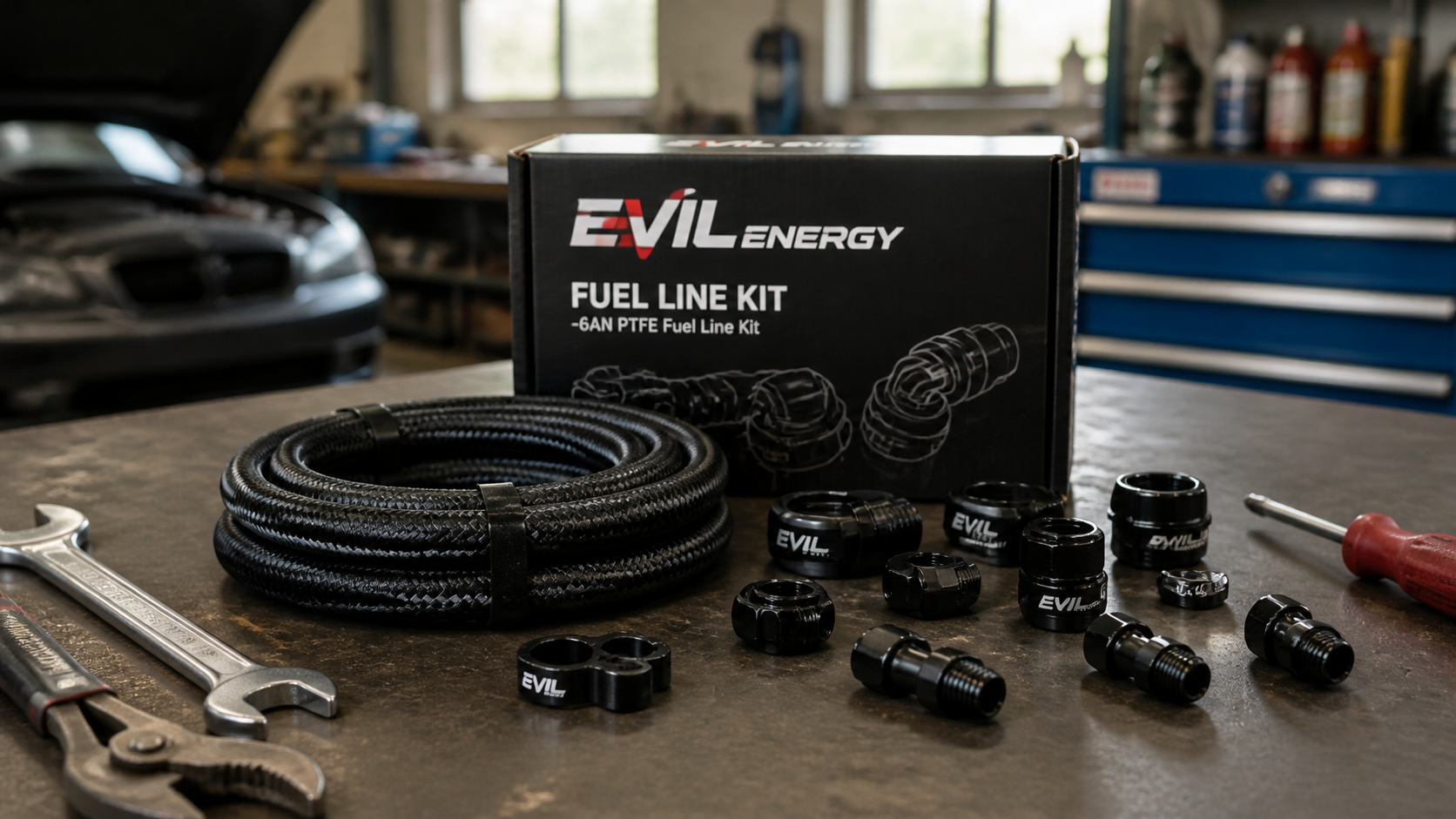
Evil Energy has carved out a reputation for delivering performance-grade fuel and fluid systems without the premium price tag. Their AN-style braided hose kits—available in sizes like AN6, AN8, and AN10—have become the go-to choice for street builders, turbo enthusiasts, and weekend warriors who refuse to compromise on looks or function. These kits combine affordability with the professional appearance and reliability that serious builders demand.
Discover which Evil Energy kit fits your build by exploring the complete lineup today.
What Makes Evil Energy Fuel Line Kits Stand Out in the Aftermarket
Evil Energy fuel line kits earn their reputation through thoughtful engineering and practical design choices. Nylon and stainless-steel braided construction delivers durability without adding unnecessary weight to your engine bay. The braided exterior protects the inner hose from abrasion, extending service life well beyond traditional rubber lines.
Reusable AN fittings represent another smart design decision. Rather than locking you into single-use connections, these fittings work across multiple projects and configurations. This approach makes financial sense for builders who plan multiple upgrades or future builds.
The anodized finishes aren't just for show. These corrosion-resistant coatings maintain their appearance through years of engine bay exposure, while also ensuring fittings operate smoothly during installation and maintenance. Heat and abrasion resistance work together to protect your system from the thermal stress and friction that daily driving and performance use create.
Multiple size options—AN6, AN8, and AN10—handle everything from catch can plumbing to high-flow fuel supply lines. Flexible routing capabilities let you work with tight engine bays and custom layouts without compromising system integrity. Perhaps most importantly, the competitive pricing delivers 40–60% savings compared to premium race-focused brands.
Choosing the Right AN Size for Your Build
Selecting the correct hose diameter requires understanding your fuel system's demands. AN6 hose works perfectly for fuel return lines, catch can setups, and low-flow applications. This size handles typical return pressure and flow rates without restricting performance. For most street and lightly modified builds, AN6 handles supplementary plumbing effectively.
AN8 represents the sweet spot for most fuel supply lines and moderate turbo setups. This size manages standard fuel pump outputs while maintaining adequate pressure for injectors and fuel rails. If you're upgrading a street car or running a modest turbo setup, AN8 delivers the flow you need without oversizing your plumbing.
AN10 steps up to handle high-flow fuel systems, dual fuel pumps, and serious performance builds. Full-race engines and extreme boost applications require this larger diameter to prevent fuel starvation. Choosing AN10 when your build only needs AN8 adds unnecessary complexity and cost.
Flow rate considerations remain critical. Matching hose diameter to fuel pump output prevents pressure loss that can limit engine performance. Fitting compatibility ensures your AN connectors match fuel rail ports, fuel pump outputs, and filter connections. Improper sizing at any connection point creates weak links in your system.
Length planning demands careful attention. Measure your actual routing distance and account for the path your hoses will follow. Unnecessary bends or kinks restrict flow and create potential failure points. Plan for some slack to ease installation, but avoid excess hose that takes up valuable engine bay real estate.
The most common mistake happens when builders undersize hoses for high-performance engines. Fuel starvation resulting from restrictive plumbing can destroy your engine faster than mechanical failure. When in doubt, size up—the modest efficiency loss from slightly oversized hoses beats the catastrophic consequences of running too small.
Select your ideal AN size and get started on your fuel system upgrade now.
Real-World Applications: Where Evil Energy Kits Shine
Street car fuel system upgrades represent the most common use case. Replacing OEM rubber hoses with braided lines transforms both aesthetics and reliability. Factory hoses age, crack, and leak—braided alternatives stay looking sharp while delivering proven durability. Many builders appreciate how the upgrade looks under the hood, even on cars that see mostly street duty.
Turbo and supercharger setups face elevated demands. Forced induction increases fuel system pressure and heat exposure significantly. Evil Energy kits handle the aggressive conditions while maintaining consistent performance. The braided construction protects hoses from abrasion caused by tight turbo plumbing routing in confined engine bays.
Oil cooler plumbing benefits from braided line construction. Engine oil lines experience thermal cycling and vibration exposure that degrades rubber quickly. Braided alternatives protect against abrasion while maintaining consistent flow to keep temperatures regulated. The professional appearance of braided lines enhances any engine bay.
Transmission cooler lines gain flexibility with Evil Energy kits. Custom transmission cooling solutions often require creative routing through tight spaces. The braided hose adapts to your layout while protecting against chafing on frame rails and engine components.
Catch can installations connect PCV systems without restrictive factory hoses. Quality plumbing ensures efficient blow-by evacuation, reducing crankcase pressure and protecting engine seals. Many builders prioritize catch can setups precisely because proper plumbing maximizes their benefit.
Fuel cell conversions represent another application where Evil Energy shines. Aftermarket fuel cells and custom fuel tank setups require compatible plumbing. The variety of sizes and fitting options handles most conversion scenarios without expensive custom fabrication.
Light track and autocross builds perform reliably under moderate stress. These applications demand better reliability than street duty, but don't require the extreme specifications of full-race competition. Evil Energy kits deliver exactly the performance level and durability these builds need—without premium pricing.
Installation Essentials: Tools, Techniques, and Common Pitfalls
Proper installation determines whether your fuel system thrives or fails. Required tools include AN wrenches (which differ from standard wrenches), hose cutters, crimp tools, and appropriate assembly lubricant. Investing in quality tools prevents damage to fittings and ensures tight, leak-free connections.
Proper fitting assembly follows a specific sequence. Hand-tighten fittings first to ensure they're correctly oriented. Then use AN wrenches to tighten to proper specifications. Over-tightening damages fittings and can crack hose barbs—a common failure point for builders who get too aggressive with torque wrenches.
Leak-free connections require attention to male fitting prep. Apply thread sealant tape or liquid thread sealant to male fittings before assembly. This simple step prevents seepage that can persist for months before becoming obvious leaks.
Routing best practices keep your system safe. Avoid sharp bends that crimp the hose interior or create stress points at fittings. Keep hoses away from hot exhaust components—braided construction resists heat better than rubber, but it still has limits. Secure hoses with adel clamps positioned to prevent vibration-induced movement and chafing.
Pressure testing procedures confirm system integrity before engine startup. Many builders overlook this step, then discover leaks only after fuel enters the system. A simple pressure test reveals problems in controlled conditions rather than during your first engine start.
Common installation errors derail projects regularly. Cross-threading fittings strips the relatively soft aluminum material inside hose ends. Over-tightening creates the same problem while potentially cracking the hose. Improper hose length measurement forces awkward routing or insufficient reach to connections.
Professional installation represents a smart option if you lack tools, experience, or confidence. A shop charges money for the service, but their expertise prevents expensive mistakes and ensures your system works correctly from day one.
Durability, Maintenance, and Longevity Expectations
Braided hose lifespan extends well beyond factory rubber under typical conditions. Street and light performance use see Evil Energy kits operating reliably for 10+ years without issues. This longevity far exceeds OEM hoses, which often begin deteriorating after 5-7 years.
Abrasion resistance benefits compound over time. The braided exterior shields the inner hose from chafing caused by engine bay movement and vibration. This protection prevents pinhole leaks that develop gradually in rubber lines, eventually forcing system failures at inconvenient moments.
Heat tolerance limits exist for all hose materials. Nylon constructions handle temperatures up to their rated specification, while stainless-steel braiding protects better at higher temperatures. Neither alternative melts under typical street or moderate performance use, but extreme conditions can degrade the inner hose material.
Inspection intervals keep problems small before they become catastrophic. Visual checks for cracks, bulges, or seeping at fitting connections take only minutes. Many builders establish quarterly inspection routines, examining hoses the same way they check tire condition.
Storage and shelf life matter for unused kits. Proper storage in cool, dry conditions prevents material degradation. Hoses stored in direct sunlight or extreme heat may become brittle before installation, limiting their effective lifespan.
Comparison to OEM rubber hoses highlights why braided lines outlast factory plumbing. Rubber degrades through exposure to heat, UV light, ozone, and fuel chemicals. Braided construction protects against all these threats while maintaining superior flexibility.
Warranty and customer support reflect Evil Energy's reputation. The company stands behind their products, addressing defects and failures with responsive customer service. This backing provides confidence that your investment remains protected.
Evil Energy Fuel Line Kits vs. Premium Race Alternatives
The price-to-performance ratio explains Evil Energy's popularity. Builders receive quality components, professional appearance, and proven reliability at a fraction of premium brand costs. The value proposition appeals to everyone from first-time builders to experienced enthusiasts planning their next project.
Build quality differences emerge in fitment tolerances and material consistency. Premium brands invest in tighter manufacturing controls, resulting in perfectly aligned fittings and uniform braiding. Evil Energy maintains acceptable standards that satisfy street and mild performance applications without premium pricing.
Budget kits prove sufficient for street cars, mild turbos, and weekend warriors. These applications don't demand the extreme tolerances and material perfection required for full-race competition. Evil Energy delivers exactly what these builds need.
Premium brands justify their cost through extreme performance applications. Full-race engines, extreme boost levels, and professional competition environments demand absolute reliability and perfection. The premium pricing reflects genuine engineering advantages in these extreme scenarios.
Upgrade paths make financial sense for builders with evolving ambitions. Starting with Evil Energy and transitioning to premium lines as your build evolves spreads costs across multiple years. Your initial investment remains reasonable while preserving the option to upgrade later.
Resale value and longevity perceptions affect long-term reliability. Potential buyers recognize Evil Energy as a legitimate performance choice rather than a budget compromise. Your kit choice influences how buyers perceive your build quality.
Real builder feedback proves Evil Energy's capability. Countless DIY enthusiasts have pushed these kits to their limits, sharing experiences across forums and social media. The accumulated evidence shows Evil Energy kits perform reliably across diverse applications.
Customization and Expansion Options
Mixing and matching kit components offers flexibility for unique builds. Evil Energy hoses work with other brand fittings, letting you source specific components that match your exact needs. This modularity appeals to builders with unconventional plumbing layouts.
Custom length orders accommodate unique engine bay layouts. Rather than accepting standard kit lengths, some builders source longer or shorter hose runs for their specific configuration. This option eliminates excess hose in tight bays or extends reach in custom fabrications.
Color and finish variations enable aesthetic customization. Anodized finishes arrive in different hues, letting your plumbing match your engine bay theme. Some builders coordinate hose colors with other under-hood accents, creating cohesive visual presentations.
Adapter fittings connect non-AN fuel system components. If your fuel rail uses different port sizes or styles, adapters bridge the gap without custom fabrication. This flexibility expands Evil Energy's application range beyond pure AN systems.
Expanding existing kits adds capability for catch cans, oil coolers, or transmission cooling. Rather than replacing your entire system, adding supplementary lines lets your plumbing evolve with your build. This staged approach spreads costs while maintaining system coherence.
Bulk purchasing for multiple projects generates cost savings. Builders working on several cars simultaneously can negotiate better pricing by ordering larger quantities. This approach makes sense for anyone with multiple projects in progress.
Compatibility with future upgrades requires forward thinking during initial kit selection. Designing your system with scalability in mind prevents costly replumbing when you later add forced induction or transmission cooling. Building flexibility into your original design pays dividends.
The Evil Energy Advantage: Building Smart Without Breaking the Bank
Your fuel system doesn't need to cost a fortune to perform flawlessly. Evil Energy Fuel Line Kits deliver the professional appearance, reliable function, and budget-friendly pricing that separates serious builders from casual tinkerers. Whether you're upgrading a street car, supporting a turbo build, or plumbing a catch can system, these AN-style braided hose kits punch well above their price point—and countless DIY enthusiasts have proven it.
The key is selecting the right AN size for your application, installing with precision, and maintaining your lines through regular inspections. Start with Evil Energy, and you'll unlock a world of performance plumbing possibilities without the premium price tag. Your engine bay will thank you, your build timeline will stay on track, and your wallet will remain pleasantly intact.
Leave a Reply