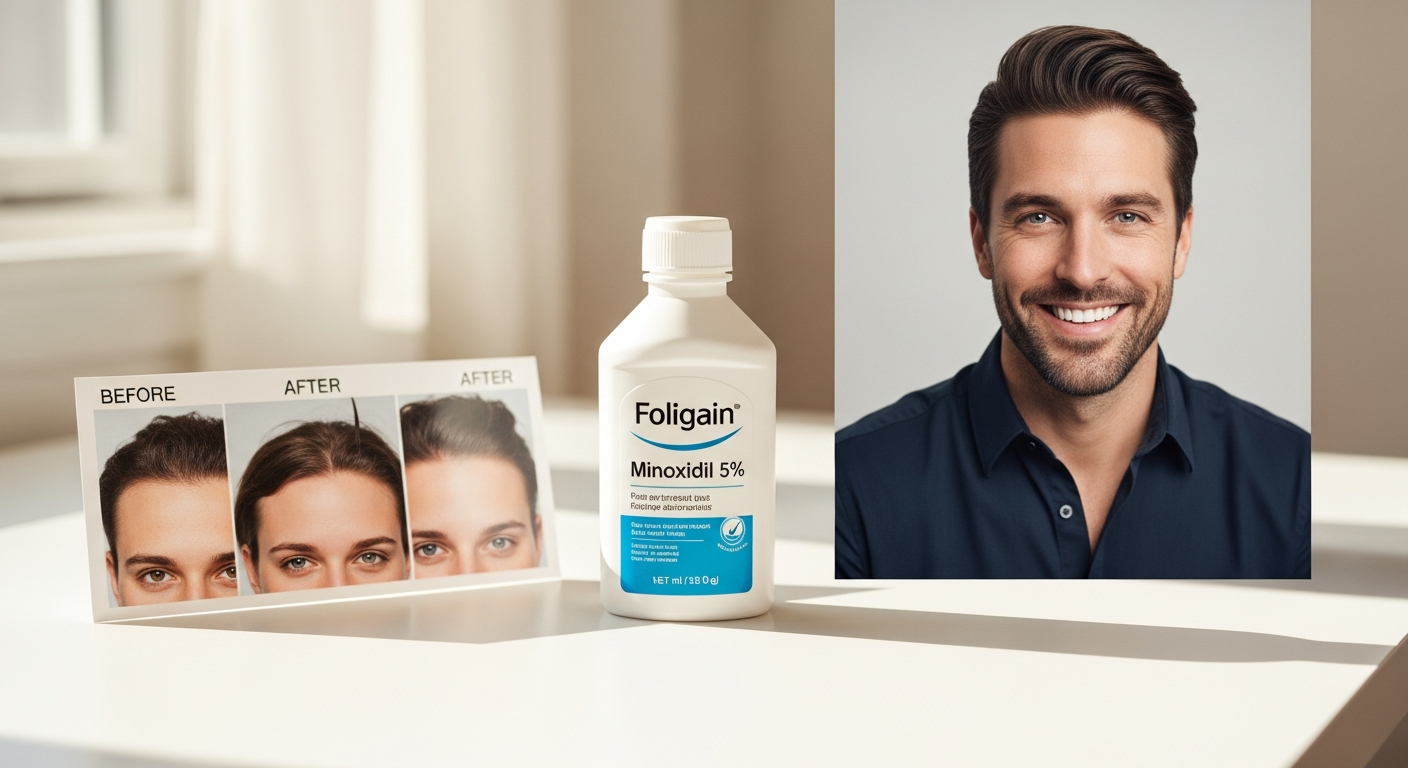
Hair loss affects millions of men worldwide, and the frustration of watching your hairline recede can be genuinely demoralizing. For many, it’s not just a cosmetic concern—it’s an emotional one that shapes how they see themselves. The search for an effective solution often leads down a winding path of products that promise miracles but deliver disappointment.
I’ve watched countless men turn to topical treatments in their quest for something that actually works, and Foligain Minoxidil 5% keeps appearing at the top of their lists. The question isn’t whether people are using it; it’s whether it’s genuinely delivering the hair regrowth results they’re hoping for. Discover how Foligain Minoxidil 5% Hair Regrowth Treatment for Men can transform your approach to hair loss.
Foligain’s Minoxidil 5% solution has earned its reputation as a best-seller on the UK market, backed by the FDA-approved active ingredient that’s been clinically proven to combat hair loss and stimulate regrowth. Unlike many hair loss products that make vague promises, this treatment works through a scientifically validated mechanism—revitalizing dormant hair follicles and promoting thicker, fuller growth. Understanding what makes this product tick, and whether it’s the right choice for your specific situation, requires looking beyond the marketing noise and into the actual science and user experiences.
How Does Foligain Minoxidil 5% Actually Stimulate Hair Growth?
The magic of minoxidil lies in its function as a vasodilator. Originally developed as an oral medication for high blood pressure, researchers discovered an unexpected side effect: it stimulated hair growth. The topical formulation found in Foligain bypasses the systemic complications and delivers the benefit directly where it’s needed most—your scalp.
The 5% concentration in Foligain’s formula targets hair follicles at different stages of their natural growth cycle. Hair doesn’t simply grow continuously; it cycles through three phases: anagen (active growth), catagen (transition), and telogen (resting). Minoxidil works primarily by extending the anagen phase, keeping follicles in their productive state longer and allowing them to produce thicker, longer strands before shedding.
Understanding the Science Behind the Solution
Minoxidil’s exact mechanism isn’t completely understood, but research suggests it increases blood flow to hair follicles, improves nutrient delivery, and stimulates cellular activity within dormant follicles. For men experiencing pattern baldness, this revitalization can awaken follicles that have shrunk or stopped producing visible hair—a condition called miniaturization.
The difference between stopping hair loss and actively regrowing new hair is crucial to grasp. Some treatments simply slow the rate at which you lose hair. Foligain Minoxidil 5% does both: it slows loss while simultaneously triggering new growth. This dual action explains why it’s become such a popular choice among men frustrated with treatments that merely hold the line.
Timeline Expectations and Application Consistency
When you start using minoxidil, cellular changes begin immediately, but visible results take time. Most users report noticing subtle improvements—baby hairs, increased density, less shedding—within three to four months of consistent use. Some see results faster, while others may wait six months before declaring success. This variation depends on factors like the severity of hair loss, your age, and how long hair follicles have been dormant.
Consistency matters tremendously. Minoxidil’s effects are entirely dependent on continuous application. Twice-daily dosing (typically morning and evening) maximizes your results because it ensures your follicles receive consistent stimulation. Skipping doses or using it sporadically diminishes effectiveness and extends the timeline for visible results.
Real User Results: What to Expect in Your First 3-6 Months
One of the most revealing aspects of Foligain’s popularity is the sheer volume of user testimonials describing their experiences. Real people using the product in real conditions provide insights you simply can’t get from clinical studies alone.
The typical progression follows a pattern many users describe as counterintuitive. Shortly after beginning treatment—sometimes within the first two to eight weeks—many men experience increased hair shedding. This phenomenon, commonly called the “dread shed,” often panics new users. They interpret increased shedding as a sign the product isn’t working or is somehow damaging their hair. In reality, this represents the beginning of the regrowth cycle.
Navigating the Dread Shed Phase
The dread shed happens because minoxidil pushes hair follicles from the resting phase into an active growth phase more rapidly than normal. Older, weaker hairs fall out faster to make room for new, healthier growth. This shedding typically lasts two to eight weeks, though some users experience it longer or more intensely than others.
Understanding this phase psychologically matters as much as understanding it biologically. Users who expect it and recognize it as a positive sign tend to push through. Those unprepared often abandon the treatment, never reaching the point where actual regrowth becomes visible. Patience during this window separates men who succeed from those who give up prematurely.
Baby Hairs and Visible Density Improvements
After the dread shed phase resolves, documented reports from verified users consistently describe the emergence of “baby hairs”—fine, short hairs that represent new follicle activity. These hairs gradually thicken and extend, eventually blending with existing hair. By month three or four, many users report noticeably increased hair density and coverage in previously thinning areas.
Different scalp areas respond at different rates. Crown thinning often shows earlier results, while hairline recession tends to respond more slowly and sometimes less dramatically. Before-and-after comparisons from users reveal that realistic expectations about which areas will improve most helps you stay motivated through the treatment journey.
Individual Variation and Influencing Factors
Your personal results depend on multiple factors beyond simply applying the product. Hair type plays a role—men with naturally thicker hair tend to see more dramatic density improvements, while those with finer hair might notice earlier changes but less dramatic visual difference. Age matters too; younger men often see faster results, though men in their 50s and 60s still experience meaningful regrowth.
The severity of your hair loss when you start treatment significantly influences timeline and magnitude of results. Men in early-stage pattern baldness see faster, more dramatic improvements. Those with advanced hair loss may see results, but they typically require more patience and shouldn’t expect complete coverage restoration.
Foligain’s Formulation Options: Standard vs. Low-Alcohol Solution
Foligain recognizes that one-size-fits-all rarely works in skincare and hair health. The brand offers different formulation options to address diverse user needs and scalp conditions.
The standard liquid formula contains the full 5% minoxidil concentration with a higher alcohol content. This formulation dries quickly after application and tends to be more economical per application. However, the alcohol can cause scalp irritation in sensitive individuals, leading to itching, flaking, or redness.
The Low-Alcohol Alternative
Recognizing this barrier, Foligain developed a low-alcohol version that maintains the same 5% minoxidil effectiveness while reducing the irritation risk. For men with sensitive scalps, prone to dermatitis, or who’ve experienced irritation with other minoxidil brands, this option can be transformative. It allows them to access the proven benefits of minoxidil without the scalp discomfort that might otherwise force them to discontinue treatment.
The trade-off involves slightly longer drying time and potentially a different texture on the scalp. Some users report the low-alcohol version feeling slightly greasier, while others notice no difference. Explore both formulation options to find which best suits your scalp condition and sensitivity.
The Foam Formulation: Reality Check
Foligain also offers a foam version that appeals to users seeking faster application and a lighter feel on the hair. However, real-world feedback reveals complications. The foam has faced periodic stock shortages in the UK market, creating availability issues for loyal users. More concerning, some users report quality inconsistencies where the foam separates during storage, turning into a yellowish liquid that no longer functions as intended.
These aren’t isolated complaints—they appear frequently enough in user forums and review sections to warrant serious consideration. If you prefer the foam format, research current availability and check recent reviews before purchasing, or stick with the proven reliability of the liquid formulations.
Pricing & Value for Money: Is £31.55 Worth the Investment?
The cost of Foligain Minoxidil 5% for a 3-month supply typically sits around £31.55 in the UK market. For many considering this treatment, the first question is whether that price point justifies the investment.
Breaking down the numbers: £31.55 divided by three months equals roughly £10.50 per month. That’s significantly cheaper than many prescription alternatives and comparable generic minoxidil products. Whether it represents good value depends on how long each bottle actually lasts.
Real-World Bottle Longevity
Here’s where user experience diverges from manufacturer expectations. Many users report that each bottle lasts considerably longer than the stated three-month supply suggests. With careful application and avoiding spillage, a single bottle sometimes stretches to four or even five months of twice-daily use. This longevity dramatically improves the cost-per-month calculation and the overall value proposition.
Competitive Pricing Context
Compared to Regaine and Rogaine—the brand-name minoxidil products—Foligain costs significantly less while offering identical or superior formulation options. Generic minoxidil alternatives sometimes undercut Foligain’s price, but users frequently report quality concerns and less reliable service. For the price difference of just a few pounds per month, many users prefer Foligain’s track record for consistency and customer support.
Foligain UK occasionally offers subscription discounts and bulk purchasing options that further improve value. Buying a three-month or six-month supply upfront often reduces the per-bottle cost. For men committed to long-term treatment—which is essential for maintaining results—these bulk discounts can save £10-20 over a year.
Return on Investment: The Bigger Picture
The real value assessment extends beyond monthly cost. Consider what meaningful hair regrowth is worth to you emotionally and practically. Men who regain confidence from fuller hair often report improved quality of life, better social interactions, and psychological benefits that far exceed the actual monetary cost. Additionally, compared to hair transplant surgery (which costs thousands of pounds), minoxidil treatment at £10-15 monthly represents an enormous value difference, even if transplants provide more dramatic results.
Application Guide: Getting the Most From Your Treatment
Proper application technique dramatically influences whether you’ll see results or waste your investment. Foligain Minoxidil 5% requires specific application methodology to maximize absorption and effectiveness.
Begin with a clean, dry scalp. Wet hair and scalp impede absorption, so apply minoxidil at least two hours after showering or in the morning before washing your hair. Part your hair to expose the target area—the crown, hairline, temples, or overall thinning region. Using the applicator bottle or dropper, dispense the recommended amount (typically one milliliter) directly onto the scalp.
Technique and Timing Optimization
Rather than simply pouring the liquid onto one spot, distribute it across the affected area using gentle massage motions with your fingertips. The goal is thorough scalp contact, not hair saturation. Rubbing minoxidil through your hair rather than applying it to the scalp wastes product and reduces effectiveness.
The twice-daily schedule works best when separated by consistent timing—morning and evening, roughly twelve hours apart. Many users apply it immediately after their morning shower and again before bed. The timing matters less than maintaining consistency and adequate spacing between applications.
Managing the Greasy Hair Challenge
One common complaint, particularly with the standard liquid formula, involves greasy-feeling hair after application. The minoxidil itself doesn’t cause greasiness, but the carrier solution and the inherent moisture on the scalp can make hair feel less fresh. Many users solve this by applying minoxidil exclusively at night, allowing the solution to absorb fully while they sleep. Morning hair looks and feels normal, and the nighttime application still provides the necessary twice-daily stimulus for hair follicles.
This adjustment particularly helps men with naturally oily scalps or those concerned about appearance during work or social activities. As long as you’re applying twice daily, the exact timing matters less than consistency.
Application Mistakes to Avoid
Common errors that reduce effectiveness include applying minoxidil to wet hair, using inconsistent timing patterns, skipping doses, and using less than the recommended amount thinking it will stretch further. While economizing on product initially saves money, under-dosing simply delays or diminishes results, extending your timeline to success.
Another mistake involves washing your hair immediately after application, rinsing away the treatment before it absorbs. Wait at least four hours between application and hair washing when possible, ideally applying it just before bed to allow full overnight absorption.
Addressing the Cons: Side Effects and Drawbacks You Should Know
Foligain Minoxidil 5% isn’t without legitimate drawbacks. Understanding these upfront helps you decide if the treatment suits your situation and manage expectations realistically.
The dread shed, already discussed in depth, remains the first major hurdle users encounter. For some men, shedding intensifies enough to cause visible thinning before regrowth begins. Psychologically weathering this phase requires knowing it’s temporary and represents progress, not failure.
Scalp Irritation and Sensitivity Issues
Scalp irritation, itching, and flaking occur in a meaningful portion of users, particularly with the standard liquid formula containing higher alcohol content. Symptoms typically range from mild daily itching to visible flaking resembling dandruff. For most users, these issues resolve within two to four weeks as the scalp adapts. Others find them persistent enough to necessitate switching to the low-alcohol alternative.
Management strategies include using the low-alcohol formulation, applying scalp moisturizers designed for sensitive skin between minoxidil applications, or reducing application frequency (though this compromises results). Some users combine minoxidil with gentle sulfate-free shampoos to minimize additional scalp stress.
Greasy Hair and Styling Challenges
Beyond irritation, the greasy sensation that some users experience genuinely affects daily life. Applying at night minimizes this issue, but men who prefer morning application or those with significantly oily scalps may need to adjust their hair care routine or styling products to compensate.
Systemic Side Effects and Medical Considerations
While minoxidil is applied topically, minimal absorption does occur. In rare cases, some users report lightheadedness, increased heart rate, or chest discomfort. These potential systemic effects warrant medical consultation, particularly if you have existing cardiovascular conditions or take medications affecting blood pressure. For the vast majority of users, systemic side effects don’t occur, but it’s not a risk category to ignore.
The Patience Factor: Results Aren’t Immediate
Perhaps the most significant “con” is simply that meaningful results require months of patient, consistent application. In an age of quick fixes and instant gratification, asking someone to commit to twice-daily application for four to six months before seeing results tests genuine commitment. Men unprepared for this timeline often abandon treatment prematurely, never reaching the point where success becomes visible.
Why Foligain Minoxidil 5% Dominates the UK Hair Loss Market
Foligain’s position as a best-seller on the UK market isn’t accidental. Multiple factors converge to create its dominant position.
Clinical evidence supporting minoxidil’s effectiveness provides the foundation. FDA approval and decades of research demonstrating that 5% minoxidil stimulates hair regrowth and slows hair loss give the product legitimate scientific credibility. Men don’t choose Foligain based on wishful thinking; they choose it because the active ingredient has been proven to work in clinical trials and real-world use.
Trust Through Visible Proof
Beyond clinical data, customer testimonials and before-and-after photographs build compelling social proof. Men see other men—not celebrities or models, but ordinary men who look like them—showing tangible results. These images and stories matter enormously in decision-making. Reading that someone with similar hair loss patterns regrew meaningful hair creates hope and trust that scientific abstracts alone can’t match.
Brand Reputation and Service Quality
Foligain’s reputation for reliable service, fast delivery, and responsive customer support differentiates it in a market where many competitors cut corners. Users consistently praise receiving orders quickly and products arriving in excellent condition. This operational excellence might seem like a small thing, but when you’re investing in a product requiring months of commitment, knowing your supplier will deliver reliably matters.
The availability of multiple formulation options—standard, low-alcohol, and foam—demonstrates that Foligain recognizes diverse user needs rather than forcing everyone into a single product. This flexibility helps them capture customers who might otherwise turn to competitors offering different options.
Market Position and User Retention
Foligain’s long-term user retention rates and repeat purchase patterns indicate genuine satisfaction. Users who experience results become long-term customers, ordering replacement supplies and recommending the product to others. This creates a virtuous cycle where success builds reputation, reputation attracts new users, and many of those new users become long-term customers themselves.
Foligain vs. Other Minoxidil Brands: How It Stacks Up
Understanding how Foligain compares to alternatives helps you make an informed decision rather than simply assuming all minoxidil products are equivalent.
Regaine and Rogaine, the major branded alternatives, contain the same 5% minoxidil concentration. The active ingredient is identical, which means at the cellular level, your hair follicles respond the same way. Where differences emerge involves formulation quality, delivery systems, price, and service reliability.
Price Comparison and Value Proposition
Foligain’s £31.55 for a 3-month supply undercuts Regaine and Rogaine by roughly 30-40%, depending on where you purchase and whether sales are active. For someone committing to 12 months of treatment, that price difference accumulates to £100+ in savings. Unless a competitor offers meaningfully superior results or service, that financial advantage favors Foligain.
Formula Quality and Consistency
All minoxidil products sold in the UK must meet regulatory standards for concentration and purity. Generic minoxidil options sometimes achieve lower prices by cutting service quality rather than formula quality. User reports of generic minoxidil occasionally mention inconsistent texture, separation in the bottle, or variability between purchases—issues that undermine confidence in the product.
Foligain maintains consistent quality across batches according to user reports, suggesting rigorous manufacturing standards. This reliability, combined with lower price, creates a compelling value proposition.
Service and Availability Differences
Regaine and Rogaine enjoy broader retail availability through pharmacy chains, while Foligain primarily sells through online channels. For men preferring to purchase in-person from pharmacists, Regaine offers convenience. However, Foligain’s online-first model allows them to operate with lower overhead and pass savings to customers.
The low-alcohol formulation deserves specific mention: Foligain offers this as a standard option, while Regaine and Rogaine primarily stock standard versions. For sensitive-scalp users, Foligain’s readily available alternative is a genuine advantage.
User Satisfaction Across Platforms
Comparing review patterns across platforms—Amazon, Trustpilot, Reddit communities, hair loss forums—reveals that Foligain consistently earns favorable ratings. User satisfaction doesn’t differ dramatically from Regaine or Rogaine when the product works, but Foligain’s lower price point means users feel they’ve received better value for money, which often translates to higher overall satisfaction ratings even when results are equivalent.
Who Should Use Foligain Minoxidil 5%—And Who Shouldn’t
Foligain Minoxidil 5% isn’t appropriate for everyone. Understanding whether you’re an ideal candidate prevents wasted money and disappointment.
Early-stage pattern baldness represents the ideal use case. Men noticing initial hairline recession, crown thinning, or increased shedding typically see the best results with minoxidil. The earlier intervention begins, the more hair follicles remain receptive to treatment. Men with advanced hair loss—those already significantly bald with only sparse hair remaining—may see some regrowth in the form of baby hairs or modest density increases, but shouldn’t expect dramatic recovery of lost coverage.
Age and Individual Response Variations
Age influences but doesn’t determine responsiveness. Young men typically see faster and more dramatic results, but men in their 50s, 60s, and beyond still benefit from minoxidil treatment. Some older men report outstanding results, while some younger men see modest improvements. Individual biological factors matter more than age alone.
Medical Contraindications and Prerequisites
Before starting minoxidil, your scalp should be relatively healthy. Severe inflammation, open wounds, active infections, or inflammatory conditions like psoriasis require medical consultation before using any topical treatment. Additionally, men with cardiovascular conditions or those taking medications affecting blood pressure should discuss minoxidil with their doctor before beginning treatment.
Women and minoxidil represent another important category: Foligain specifically formulates this product for men at a 5% concentration. Women experiencing hair loss should consult dermatologists about appropriate treatments; different formulations and concentrations may be more suitable for female pattern baldness.
Combining Treatments for Enhanced Results
Some men combine minoxidil with finasteride (Propecia), an oral medication that blocks the hormone driving pattern baldness. Used together, these medications address hair loss through different mechanisms—one stimulating growth while the other slows loss. Medical consultation is appropriate before combining treatments, but this combination represents a legitimate approach for men with more advanced hair loss seeking maximum intervention.
Nutritional supplements supporting hair health—biotin, zinc, vitamin D, iron—don’t contraindicate minoxidil use. A healthy diet and appropriate supplementation may support better overall results, though they’re not substitutes for clinically proven treatments.
Making the Commitment: Long-Term Use and Maintenance Strategy
Understanding that minoxidil results depend entirely on continuous use is essential before starting treatment. This isn’t a temporary intervention with lasting effects; it’s an ongoing commitment.
Stopping minoxidil reverses the regrowth gains you’ve achieved. Within weeks of discontinuing use, hair follicles return to their previous state, and you’ll begin losing the regrown hair. This permanence aspect means you’re committing to potentially years or decades of twice-daily application. For some men, this ongoing commitment feels burdensome; for others, it’s an acceptable price for maintaining fuller hair.
Building and Maintaining a Sustainable Routine
Success with minoxidil depends on establishing a habit so ingrained that skipping applications becomes as unusual as forgetting to brush your teeth. Many successful long-term users integrate minoxidil into their morning and evening routines—applying it immediately after their shower and again before bed, making it automatic rather than requiring conscious decision-making.
Setting reminders on your phone helps initially, but eventually, the routine becomes automatic. Users who’ve maintained treatment for years often report that application takes mere minutes and feels as routine as any other daily hygiene task.
Tracking Progress Effectively
Taking photos every four to eight weeks, under consistent lighting and from consistent angles, provides tangible progress evidence that daily mirror checks can’t match. Daily observation creates an illusion that nothing is changing because change happens gradually. Photos spanning months reveal transformation that subjective daily assessment misses.
Realistic milestone expectations help maintain motivation. Months one through two: expect initial shedding. Months three through four: subtle improvements—fewer hairs falling out, possible baby hairs. Months five through six: noticeable density increases in some areas. Beyond six months: continued improvement and thickening, with the rate of improvement potentially slowing.
Adjusting Expectations and Reassessing Strategy
Some users reach a plateau after initial improvements, with density increasing but not returning to previous full coverage. This plateau often represents the realistic limit of what minoxidil achieves for that individual. Adjusting expectations to celebrate the actual improvements made rather than mourning what wasn’t achieved maintains psychological commitment.
If after six months of consistent, proper application you see no discernible changes, medical consultation becomes appropriate. A dermatologist can assess whether your hair loss has other underlying causes requiring different treatments, or whether your particular biology simply doesn’t respond optimally to minoxidil.
Lifestyle Factors Supporting Hair Health
While minoxidil works at the follicle level, overall health supports better outcomes. Adequate sleep, stress management, proper nutrition, and hydration all support hair health. Men experiencing significant stress may see reduced results even with minoxidil use because stress itself drives hair loss. Addressing lifestyle factors alongside minoxidil creates a more comprehensive approach to hair preservation and regrowth.
Taking Action: Your Path Forward With Minoxidil Treatment
Foligain Minoxidil 5% Hair Regrowth Treatment for Men stands out as a clinically validated, affordable option for men serious about addressing pattern baldness. The evidence is compelling—thousands of users report tangible results, from baby hairs emerging on dormant follicles to noticeably thicker hair across previously thinning areas. Yet this product demands something many quick-fix solutions don’t: patience, consistency, and realistic expectations.
What makes Foligain genuinely competitive isn’t just the active ingredient—it’s the thoughtful formulation options, the transparent pricing at £31.55 for a 3-month supply, and the brand’s reputation for reliable service. The low-alcohol alternative caters to men with sensitive scalps, removing a barrier that stops others from committing to treatment. That said, the dread shed phase, occasional greasiness, and months-long wait for visible results aren’t marketing angles—they’re realities you’ll face.
If you’re ready to invest in a treatment backed by science and proven by thousands of real users, the next step involves committing to consistency. Start with a clear understanding of the timeline, anticipating that meaningful results require three to six months of continuous, twice-daily application. Track your progress through photos rather than daily mirror checks, which create discouraging illusions of stagnation.
The men who see the best results aren’t those expecting overnight transformation—they’re the ones who understand that meaningful hair regrowth is a marathon, not a sprint, and they’ve prepared themselves mentally for the long commitment. Your decision point is now: are you ready to take consistent action toward reclaiming fuller, thicker hair?
Start your hair regrowth journey with Foligain Minoxidil 5% Hair Regrowth Treatment for Men today.
Leave a Reply