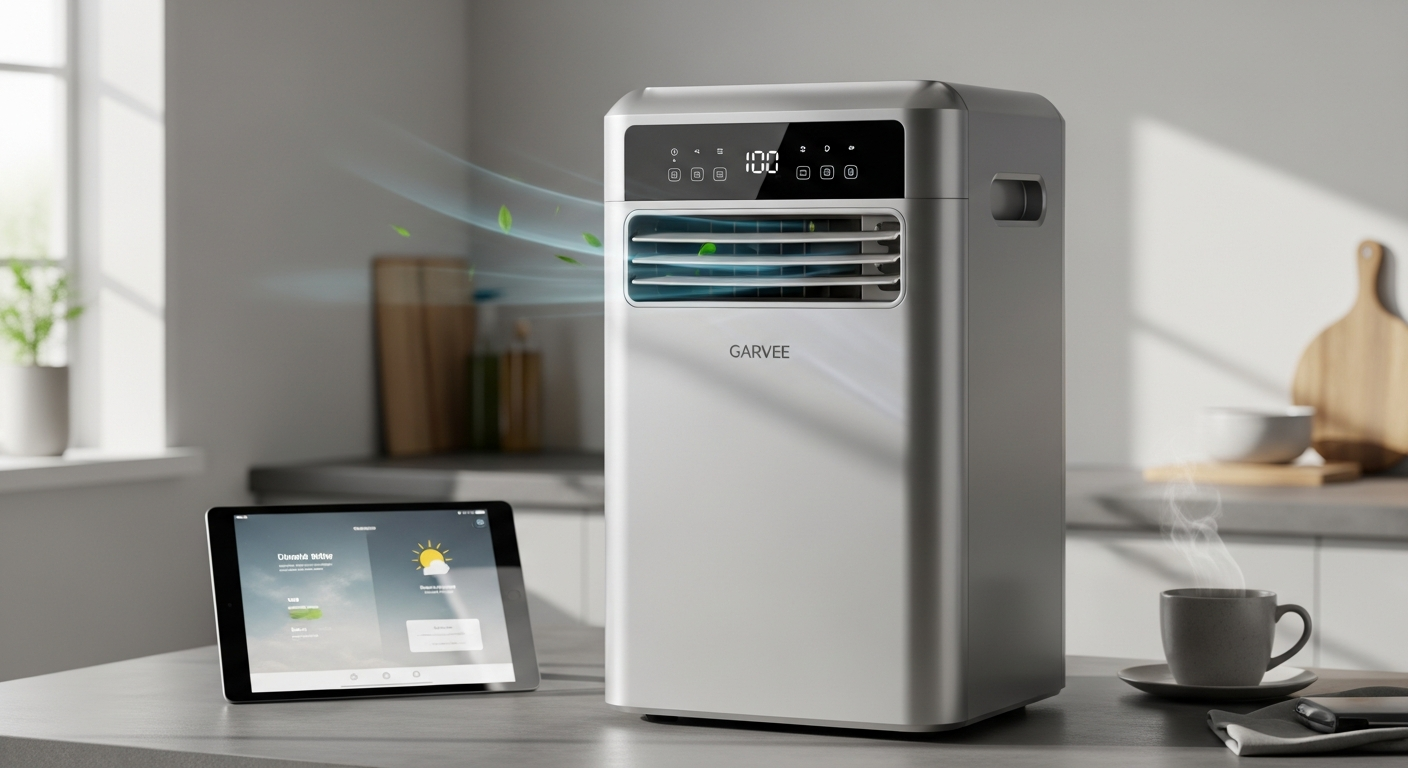
When people invest in climate control, they want versatility, power, and affordability in one package. Over 1,400 customers have rated the Garvee 14,000 BTU Portable AC Unit, and their collective experience reveals something clear: this isn't just another single-function window unit. This is a genuine three-in-one appliance—high-capacity air conditioner, dehumidifier, and standalone fan—meaning you're not locked into seasonal use or limited by inflexible cooling options.
At around $370, the Garvee delivers professional-grade cooling for spaces up to 750 square feet without the professional-grade price tag. That's substantial coverage for a portable unit, which explains why so many households have chosen it as their primary climate control solution. The pricing strategy positions it as an accessible entry point into serious cooling performance, removing the barrier that typically keeps budget-conscious buyers stuck with underpowered alternatives.
Explore the Garvee 14,000 BTU Portable AC Unit and its complete feature set today.
This guide breaks down the real-world cooling performance, walks through each operational mode, clarifies setup requirements, and offers honest insights into what owners actually experience during daily use.
Why 14,000 BTU Matters for Your Space
Understanding BTU Ratings and Real Cooling Power
BTU stands for British Thermal Unit—a measurement of heat removal capacity. The higher the BTU rating, the more heat the unit can extract from a room per hour. A 14,000 BTU portable air conditioner removes 14,000 units of heat energy from your space every 60 minutes, which translates to meaningful temperature drops even in larger rooms.
Most manufacturers recommend roughly 20 BTU per square foot for rooms with standard insulation and moderate heat load. A 14,000 BTU unit comfortably handles 700 square feet using this calculation, though the Garvee specifications cite 750 square feet as the effective range. The extra capacity provides a safety margin—the unit doesn't have to work at maximum effort continuously, extending component lifespan and reducing energy consumption.
Coverage Capacity: 750 Square Feet of Effective Cooling
The 750-square-foot cooling radius places this unit in the mid-to-upper tier of portable air conditioners. This means a single 14,000 BTU unit can cool an open-plan living area, a large bedroom with an adjacent office space, or multiple smaller rooms if you keep interior doors open.
In practical terms, a 750-square-foot space could be a 25×30 foot room, two 20×19 foot bedrooms, or a standard apartment living room plus kitchen configuration. For context, most single-room portable units max out around 400–500 square feet, while window units in the 14,000–15,000 BTU range typically handle 700–800 square feet. The Garvee sits at the practical upper end of portable unit capability.
How 14,000 BTU Compares to Other Options
A 10,000 BTU portable unit—common among budget alternatives—covers approximately 450 square feet and struggles in rooms larger than 20×20 feet. The cooling speed is noticeably slower, and the compressor runs continuously on hot days, consuming more electricity to reach target temperatures.
Larger window units (18,000–24,000 BTU) offer more cooling power but require permanent installation, making them impractical for renters or anyone who values flexibility. The 14,000 BTU portable unit bridges this gap: substantially more powerful than basic portable models, yet still completely portable and temporary-installation friendly.
Cooling Speed and Temperature Drop Expectations
In a 300-square-foot room (roughly 15×20 feet), users can expect a 15–20°F temperature drop within 30 minutes of operation on medium settings. In a full 750-square-foot space, the same temperature reduction takes 45–60 minutes, particularly on extremely hot days when outdoor temperatures exceed 95°F.
Sleep mode operation reduces the cooling intensity intentionally, so expect slower temperature changes during nighttime use—this is by design, prioritizing quiet operation over aggressive cooling.
Energy Efficiency Relative to Cooling Output
The 14,000 BTU capacity requires proportional electrical input—typically 1,400–1,600 watts during active cooling. This is higher than smaller units but dramatically more efficient per BTU delivered. A 10,000 BTU unit might consume 1,000 watts but delivers significantly less cooling, making the per-BTU energy cost actually lower on the 14,000 model.
Running this unit on high speed for 8 hours daily costs approximately $12–15 monthly in electricity (based on $0.13/kilowatt-hour regional average). Larger window units often exceed $20 monthly, while undersized portable units run constantly and waste energy through inefficiency.
The 3-in-1 Functionality Explained
Air Conditioning Mode: Primary Cooling Operation
Air conditioning mode is the primary function. The compressor cycles on, refrigerant circulates through the indoor evaporator coil, and the fan pulls warm room air across this cold surface. Heat is absorbed and expelled through the exhaust hose to the outside, while cooled air returns to the room.
Thermostat settings typically range from 62°F to 86°F, with a temperature differential of ±2°F. Users set their desired temperature, and the unit cycles on and off to maintain that setpoint. On days when outdoor temperatures are moderate (75–80°F), the compressor cycles frequently, reducing energy consumption. During heat waves, continuous operation becomes necessary.
The auto swing function—mentioned in the Garvee specifications—activates the louver mechanism to oscillate side-to-side, distributing cooled air across the entire room rather than creating a narrow cold stream. This prevents hot and cold zones from developing and improves overall comfort consistency.
Dehumidifier Mode: Moisture Removal Without Active Cooling
Dehumidifier mode removes moisture from air without the compressor actively cooling the space. This is valuable during humid periods when temperatures are moderate but moisture levels are uncomfortably high—typically spring and early fall in most climates.
The process involves passing room air across the same cold evaporator coil used during cooling, but the cooled air is reheated before returning to the room. This removes moisture (which condenses and drains away) while keeping room temperature relatively stable. Dehumidifier mode consumes roughly 40% of the energy that full air conditioning mode requires because the reheating step and less aggressive cooling reduce compressor demand.
Humidity levels between 30–50% are considered ideal for comfort and health. Dehumidifier mode brings high-humidity spaces back into this range, particularly useful in coastal climates, basements, or after water incidents.
Fan-Only Mode: Circulation Without Cooling or Dehumidification
Fan-only mode operates the internal blower without activating the compressor or any refrigeration cycle. Room air is pulled in and circulated back out, creating gentle air movement for comfort without temperature or humidity changes. This mode uses minimal electricity—typically 80–120 watts—making it ideal for cooler evenings when you want air circulation without the energy cost of active cooling.
Fan-only mode also serves practical purposes beyond comfort: it can distribute fresh air when windows are open on mild days, or provide air movement to prevent stuffiness in sealed rooms during shoulder seasons.
Seasonal Versatility: Using Different Modes Throughout the Year
Summer demands air conditioning mode almost exclusively. Spring and fall favor dehumidifier mode on humid days and fan-only mode when temperatures are mild. Winter rarely requires active cooling, but fan-only mode can maintain air circulation to prevent stagnation in heated rooms.
This three-mode design eliminates the need for separate appliances. Many households buy a portable AC for summer, then store it during cooler months. The Garvee's dehumidifier and fan functions extend its utility year-round, justifying the shelf space and initial investment.
Sleep Mode Operation: Noise and Temperature Optimization
Sleep mode reduces compressor speed and louver oscillation, minimizing operational noise for nighttime use. The thermostat relaxes its temperature precision slightly, allowing ±3–4°F variance instead of ±2°F. This reduces compressor cycling frequency and enables longer quiet periods.
The noise reduction is substantial—from typical 55–65 decibels during standard operation down to 42–48 decibels in sleep mode. At 48 decibels, the unit produces sound comparable to a quiet office or library, making it suitable for bedroom use without significant sleep disruption.
Check out the full specifications and customer reviews on the Garvee product page.
Installation & Setup Requirements You Can't Ignore
Window Venting Kit Necessity and What It Involves
Portable air conditioners must exhaust hot air to the outside—there's no way around this physics requirement. The Garvee uses a window venting kit: a flexible hose (typically 5–6 inches in diameter) that connects from the unit's rear exhaust port to the outside air.
The venting kit includes a window adapter frame that slides into a partially open window, with an adjustable seal to minimize air leakage around the hose. Installation takes 5–10 minutes with no tools required. The hose itself extends 6–8 feet, allowing flexible unit placement relative to the window.
Without proper venting, the exhaust heat recirculates into the room, negating cooling effectiveness and forcing the compressor to work harder. Properly vented systems cool reliably and efficiently; improperly vented systems become frustrating failures.
Placement Considerations and Window Compatibility
The unit requires access to a window, preferably one that opens horizontally (double-hung or sliding windows work perfectly). Windows that only open vertically or tilt windows work with venting kits, but the seal may be less effective.
Placement should be close enough to a window that the exhaust hose can reach comfortably without excessive length (which creates backpressure). The unit itself sits on the floor and requires 6–12 inches of clearance on all sides for proper air intake. Placing it against walls or in corners restricts intake airflow and reduces cooling performance.
For apartments, confirm your lease permits window venting kits—some building policies restrict modifications to windows. Understanding these limitations before purchase prevents wasted effort.
Drainage System for Condensation: How It Works and Maintenance
As air passes across the cold evaporator coil, moisture condenses into water droplets. In air conditioning mode, this condensation is substantial. The Garvee collects this water in an internal drain pan and routes it through a condensate drain hose to the outside, allowing it to drip away naturally alongside the hot exhaust air.
Alternatively, if the exhaust hose orientation slopes downward to the outside, gravity assists drainage, minimizing the drain pan volume needed. Some owners empty the pan manually if condensation accumulates, though design prioritizes external drainage to avoid this maintenance task.
In dehumidifier mode, condensation volume is higher because the primary function is moisture removal. Ensure the drain system functions properly by checking hose clearance and occasionally inspecting that the drain path isn't blocked.
Noise Levels During Operation and Environmental Impact
Portable air conditioners inherently produce more noise than window units because the compressor and condenser fan are indoors. The Garvee operates at 55–65 decibels on standard settings—comparable to normal conversation or office background noise.
This noise level can be problematic in quiet bedrooms, libraries, or offices requiring concentration. Sleep mode reduces this significantly, but standard cooling mode remains noticeable. Reading customer reviews specific to your situation helps gauge whether noise tolerance matches expectations.
Power Requirements and Electrical Outlet Considerations
The 14,000 BTU unit requires 1,400–1,600 watts during active cooling. Most standard US household circuits provide 15 amps at 120 volts, which supports roughly 1,800 watts continuously. Running the Garvee on the same circuit as other high-draw appliances (refrigerators, space heaters, microwave ovens) may cause circuit breaker trips.
Ideally, plug the unit into a dedicated circuit or one shared only with low-draw devices (lights, phone chargers). If only standard mixed-load circuits are available, monitor breaker behavior and redistribute appliance use to prevent nuisance trips.
The unit operates on standard North American 120V/60Hz current—no special wiring is required, just a properly rated outlet within reasonable distance of the unit's power cord.
The Bottom Line: Is This Portable AC Unit Worth Your Investment?
The Garvee 14,000 BTU Portable Air Conditioner delivers genuine multi-season functionality at an accessible price point. With 750 square feet of cooling capacity, three operational modes, and remote control convenience, it addresses real frustrations people face with standard portable units.
The 1,400+ customer reviews demonstrate this is a workhorse that people actually use and recommend. However, honestly assess your space before committing—the window venting requirement eliminates some placement flexibility, and noise levels deserve consideration in quiet environments. For apartment dwellers, remote workers, and anyone needing flexible, powerful cooling without permanent installation, this unit checks all the boxes.
If shopping during a sale period, the $370 price point makes it exceptional value compared to larger window units or multiple smaller portable alternatives. Measure your room to confirm it falls within the 750-square-foot range, confirm window compatibility for the venting kit, and read recent customer reviews specific to your climate zone. These steps ensure the setup requirements align with your actual living situation and expectations.
Start your search for the perfect portable cooling solution with the Garvee 14,000 BTU unit now.
Leave a Reply