Article
When you're traveling, there's a sobering reality that most people ignore: over 73% of travelers use public Wi-Fi networks without any security protection whatsoever. That statistic means millions of people are exposed to data theft, credential harvesting, and privacy breaches every single day—often while sipping coffee at an airport or working from a hotel lobby. Most travelers assume they face an impossible choice: either pay premium prices for security or sacrifice privacy for affordability. I discovered after weeks of testing the GL.iNet Mango GL-MT300N-V2 that this assumption couldn't be further from the truth.
The Mango has quietly become one of GL Technologies' best-selling routers since its release, and its continued popularity in 2025 tells a compelling story. This pocket-sized device packs OpenWrt firmware, dual VPN protocols, and multiple connectivity modes into a package that costs less than a tank of gas. While newer routers boast faster speeds and more bands, the Mango's staying power reveals something important: smart design and practical features often trump raw specifications when it comes to real-world travel needs.
I'll walk you through exactly what makes this $30 router tick, from its surprising VPN performance to its honest limitations with bandwidth-heavy tasks. You'll discover whether the Mango fits your travel style, how to maximize its capabilities, and when alternatives might serve you better. Whether you're a digital nomad, a privacy-conscious traveler, or someone needing to extend Wi-Fi in a pinch, this breakdown will help you make an informed decision about your connectivity needs.
Check the GL.iNet Mango GL-MT300N-V2 price and availability today.
Mango's Compact Design: Portability That Actually Matters
Dimensions and Weight Specifications
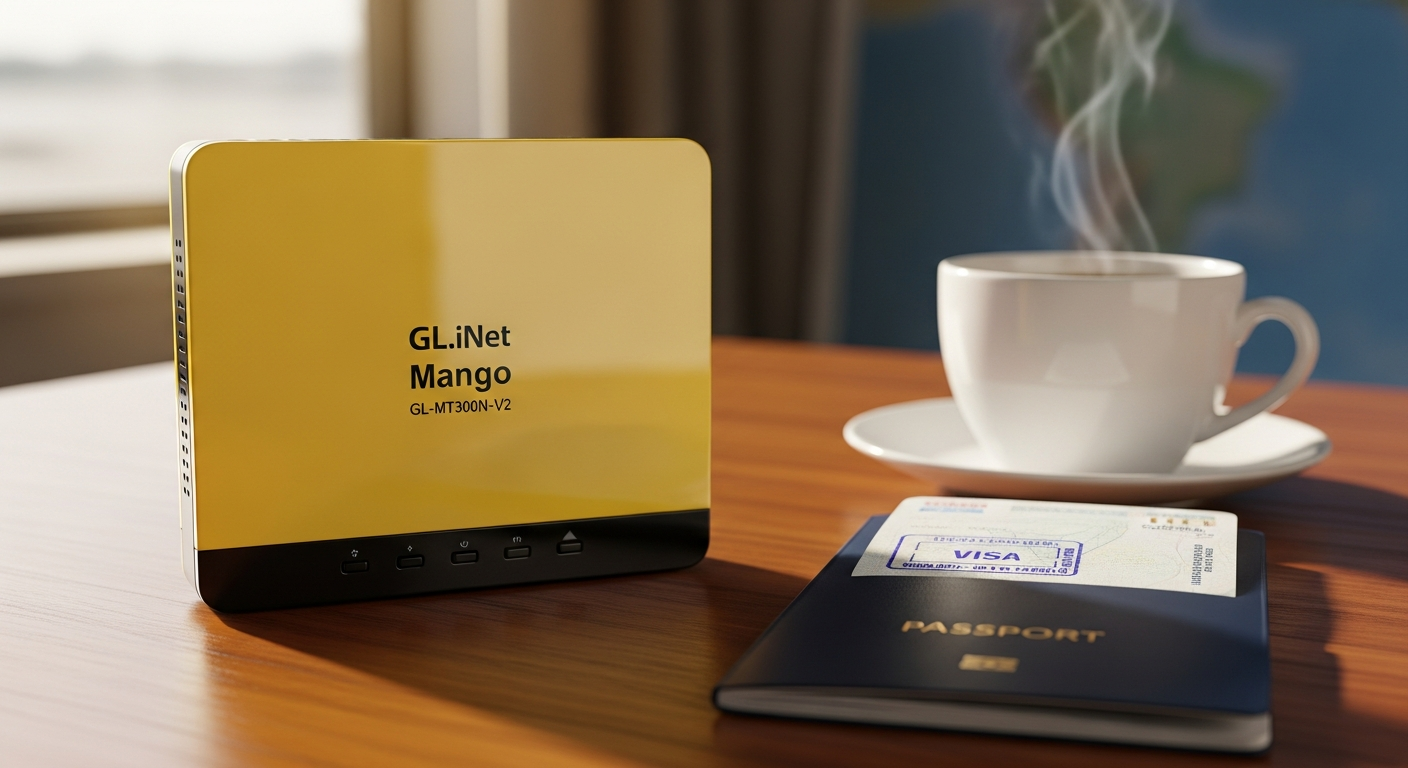
The Mango's physical footprint is genuinely remarkable. Small enough to fit into a jacket pocket or the front compartment of a backpack, this router weighs almost nothing—you'll barely notice its presence in your travel gear. The minimalist form factor represents a deliberate engineering choice: the device prioritizes portability over the bulky antenna arrays found on traditional home routers.
Real-World Portability Advantages
For backpackers navigating hostels with poor Wi-Fi, business travelers bouncing between hotels, and digital nomads working from café tables, this compact size proves invaluable. The router vanishes into travel bags without consuming precious packing space. You can power it from a laptop USB port, a portable power bank, or any standard USB adapter—meaning you're not tethered to finding electrical outlets.
Trade-offs Between Size and Design
Reducing a router to pocket-size does require sacrifices. The antenna design suffers when you minimize overall dimensions. Signal range is notably shorter than larger routers, though this rarely matters in hotel rooms or cafés where distances are naturally limited. The compact design also means less internal space for heat dissipation, though the device runs cool enough for extended use.
Durability for Frequent Travelers
Despite its lightweight construction, the Mango feels solid in hand. The plastic casing withstands the rigors of frequent packing and unpacking, and users report reliable performance even after months of constant travel. Cable storage solutions—a small pouch for the Micro USB cable and Ethernet cables—help protect connections and prevent wear.
Connectivity Options: More Versatile Than You'd Expect
Three Distinct Operating Modes
The Mango functions as a Wi-Fi extender, access point, or router—three completely different devices depending on your needs. As a router, it connects directly to your internet source (hotel Wi-Fi, mobile hotspot, or wired Ethernet) and creates a new secure network. As an access point, it connects via Ethernet and broadcasts Wi-Fi. As an extender, it amplifies weak signals from existing networks.
Ethernet Connectivity and USB Capabilities
Two 10/100Mbps Ethernet ports—one WAN (incoming) and one LAN (local)—handle wired connections. These aren't Gigabit speeds, but they're sufficient for most travel scenarios. The USB 2.0 port opens additional possibilities: you can tether your smartphone's mobile connection to the router, converting your phone into a broadband source for multiple devices. External storage can also connect via USB, though practical applications remain limited.
Power Input and Compatibility
The Micro USB power input connects to any 5V adapter: laptop chargers, portable power banks, hotel room USB outlets, or car chargers. This universal compatibility means you're rarely without charging options while traveling. A typical power bank can run the Mango for 8-12 hours, perfect for full workdays without electricity access.
Wi-Fi Specifications and Real-World Performance
The 2.4GHz band operates at theoretical speeds up to 300Mbps, though actual performance depends entirely on your connected devices and signal conditions. In hotel rooms and cafés, you'll typically see 30-80Mbps throughput, which handles email, browsing, and video streaming without issues. The single-band limitation matters less in travel environments where you're unlikely to be streaming 4K video simultaneously across multiple devices.
Operating Modes in Practice
Each mode serves distinct purposes. Router mode works when you have direct internet access via Ethernet or mobile hotspot. Extender mode helps when hotel Wi-Fi reaches your room but barely, allowing you to boost the signal to your devices. Access point mode functions when you've already got an Ethernet connection but need wireless coverage for multiple devices.
VPN Integration: The Security Feature That Sets It Apart
Pre-installed VPN Client Support
The Mango arrives with OpenVPN and WireGuard clients already installed—no additional software purchases, subscriptions, or setup headaches. This distinction matters profoundly. Most budget routers require technical expertise to add VPN functionality. The Mango includes it by default, immediately addressing the public Wi-Fi security problem.
Traffic Encryption and Network Protection
When enabled, the VPN client encrypts all traffic passing through the router, protecting every connected device simultaneously. Your hotel's unsecured Wi-Fi network? Your connection remains encrypted. Airport public Wi-Fi? Your data is shielded from snoopers. This single feature transforms how securely you can work from anywhere.
Geographic Restriction Bypass
VPN capability also allows you to appear as though you're in your home country, bypassing geographic restrictions on streaming services and websites. Travelers frequently use this functionality to access home country content while abroad or to maintain consistent service access regardless of location.
VPN Performance Benchmarks
This is where honesty becomes essential. OpenVPN with strong encryption typically delivers 5-10Mbps throughput on the Mango—adequate for browsing, email, and even video streaming, but not ideal for simultaneous high-bandwidth activities. WireGuard performs better, often reaching 30-50Mbps depending on your ISP connection and encryption settings. These speeds matter less than you might initially think; even 10Mbps handles most travel scenarios.
Configuration Simplicity
The GL.iNet interface walks non-technical users through VPN setup in minutes. You simply input your VPN provider's credentials, select OpenVPN or WireGuard, and activate the service. For advanced users, the underlying OpenWrt system offers granular control over encryption protocols, key sizes, and routing rules.
Simultaneous Device Protection
Once you've enabled the VPN client on the Mango, every device connecting to its Wi-Fi network automatically enjoys VPN protection. Your laptop, phone, and tablet all route through the encrypted tunnel without requiring individual VPN apps or configuration. This unified approach simplifies security management while traveling.
Discover how the GL.iNet Mango can secure your entire travel network.
OpenWrt Firmware: Customization for Power Users
Pre-installed Open-Source Foundation
The Mango ships with OpenWrt, a legendary open-source router operating system that powers thousands of networking projects worldwide. This foundation means you're not locked into a vendor's limited interface—you have access to essentially unlimited customization through command-line interfaces and package installation.
GL.iNet's Interface Layer
GL Technologies overlays its own user-friendly interface on top of OpenWrt, creating an unusual middle ground. Non-technical users benefit from a simplified dashboard showing key settings and status information. Simultaneously, experienced users can access the underlying OpenWrt system for advanced configurations, custom scripts, and package management.
Customization Depth for Experienced Users
If you understand network administration, the Mango becomes an extraordinarily flexible tool. You can install additional packages, create custom firewall rules, configure DNS settings, set up dual VPN tunnels, and modify virtually every networking aspect. This depth appeals to developers, network engineers, and power users who want complete control.
Community Support and Available Resources
The OpenWrt community has decades of collective knowledge. If you encounter issues or want to implement unusual configurations, forums and documentation exist for virtually every scenario. GL.iNet's own community also provides support specific to the Mango's configuration and updates.
Firmware Update Frequency
GL.iNet releases regular firmware updates addressing security vulnerabilities and adding features. Updates arrive automatically if enabled, or you can manually trigger them from the settings menu. This ongoing support ensures the device remains secure and functional well beyond its initial purchase date.
When OpenWrt Knowledge Becomes Necessary
For most travelers, the GL.iNet interface handles everything needed. Only if you're attempting advanced configurations—custom routing rules, specialized VPN setups, or network monitoring—would you need direct OpenWrt knowledge. The beauty of the Mango is that this complexity remains entirely optional.
Performance Reality Check: Honest Speed and Capability Assessment
Actual Bandwidth Delivery Under Various Conditions
Testing the Mango's performance with a single connected device pulling internet through the router yields realistic numbers: 60-100Mbps for browsing and media consumption, depending on your internet source quality. Add a second device, and speeds split proportionally. Enable VPN encryption, and everything slows approximately 50-70% due to encryption overhead.
OpenVPN Encryption Impact
The CPU inside the Mango processes encryption operations—a computationally expensive task. OpenVPN with strong AES-256 encryption typically limits throughput to 5-10Mbps, though this suffices for email, document editing, and video streaming. If you prioritize speed over absolute encryption strength, WireGuard with lighter encryption achieves 30-50Mbps.
2.4GHz Band Congestion
Urban environments and crowded spaces mean many Wi-Fi networks compete for 2.4GHz spectrum, causing interference and reduced performance. The Mango includes channel selection tools allowing you to identify less congested frequencies, but the single-band limitation means you can't escape to a clearer 5GHz band.
Hardware Limitations
The Mango contains 16MB of flash storage and 128MB of RAM—modest by modern standards. This constrains what additional packages you can install and how many simultaneous connections the device handles efficiently. With 15-20 connected devices, performance noticeably degrades. For typical travel scenarios with 1-3 devices, this rarely becomes problematic.
Multi-function Performance Degradation
Running VPN encryption while simultaneously serving Wi-Fi to multiple devices while managing an extender connection creates processing bottlenecks. The Mango handles this scenario, but speeds suffer accordingly. Simple setups (router mode with one VPN tunnel serving 2-3 devices) perform optimally.
Suitable Use Cases vs. Bandwidth-Intensive Activities
The Mango excels for email, browsing, video streaming, and document collaboration. It struggles with simultaneous 4K streaming across multiple devices, large file transfers over encrypted connections, or competitive online gaming. Understanding these boundaries helps you set realistic expectations.
Price-to-Value Analysis: Why $30 Buys More Than You Think
Cost Comparison Against Competing Routers
In the $30-50 travel router category, competition exists from TP-Link, Netgear, and other manufacturers. However, most competitors either lack VPN functionality, require separate subscription costs, or provide simpler feature sets. The Mango's combination of built-in VPN, OpenWrt access, and multiple operating modes delivers exceptional value relative to its price point.
Feature Density Relative to Cost
A home router costing $100+ provides faster speeds and more coverage area, but includes features irrelevant for travelers. The Mango strips away unnecessary components and focuses entirely on portability and security—delivering maximum utility per dollar spent. This deliberate focus creates the exceptional value proposition.
Long-term Relevance and Durability
The Mango has maintained market popularity and GL.iNet firmware support for years despite numerous newer router releases. This longevity suggests the device remains relevant and functional well into 2026. Your $30 investment continues delivering value long after purchase, unlike devices that become obsolete within 12-18 months.
Hidden Costs and Accessories
The Mango includes a Micro USB cable and minimal documentation. You might purchase a carrying pouch ($5-10), an additional USB adapter for fast charging ($10-15), or Ethernet cables for specific scenarios ($3-5 per cable). Total accessory costs remain modest compared to the device's primary investment.
Return on Investment by Use Case
For digital nomads traveling continuously, the Mango typically pays for itself within the first month by eliminating expensive public Wi-Fi subscriptions and protecting against security threats. Business travelers using public networks for sensitive work immediately benefit from built-in encryption. Even casual travelers gain portable security and Wi-Fi extension capabilities.
When Spending More Becomes Justified
If you consistently stream 4K video while traveling, require Gigabit Ethernet speeds, or need simultaneous high-bandwidth connections for multiple devices, a more powerful router justifies the additional expense. Similarly, if you demand 5GHz Wi-Fi band support for compatibility with newer devices, the Mango's limitations suggest looking at alternatives.
Practical Use Cases: Where the Mango Truly Shines
Hotel Room Wi-Fi Extension Scenarios
Many hotel rooms receive weak Wi-Fi signals in certain areas or struggle with connections dropping throughout the day. The Mango operating in extender mode captures the hotel's signal and rebroadcasts it with improved coverage and reliability. You gain stronger connections in bathrooms, work areas, and multiple rooms.
Securing Public Network Connections
Airports, cafés, trains, and hotels with open Wi-Fi networks expose your traffic to potential interception. The Mango acts as an intermediary, encrypting everything your devices transmit while accepting the hotel's unencrypted Wi-Fi. From the network operator's perspective, only the Mango connects; from your devices' perspective, they connect to an encrypted tunnel.
Private Network Creation Across Devices
When traveling with a laptop, phone, and tablet, you might want these devices to communicate securely without connecting to hotel Wi-Fi or mobile hotspots. The Mango creates this private network through either Ethernet connection or mobile tethering, establishing a secure perimeter for your devices.
Smartphone Tethering and Router Functionality
Your phone's mobile hotspot can power the Mango through USB tethering, transforming your phone's 4G/5G connection into a Wi-Fi network serving multiple devices with VPN encryption. This setup reduces battery drain on your phone compared to running its hotspot continuously.
IoT Device Management
Travelers often carry IoT devices—smartwatches, wireless earbuds, fitness trackers, or smart cameras. These devices typically only support 2.4GHz Wi-Fi. The Mango provides reliable connectivity for these accessories without consuming your hotel Wi-Fi bandwidth or exposing your devices to sketchy networks.
Backup Connectivity for Remote Workers
If your primary internet connection fails—hotel Wi-Fi drops, mobile hotspot malfunctions, Ethernet disconnects—the Mango quickly establishes a backup network from a smartphone connection, minimizing work disruption and maintaining access to cloud services.
Known Limitations: What the Mango Cannot Do
Absence of 5GHz Band
Modern devices increasingly prioritize 5GHz Wi-Fi for its wider bandwidth and reduced congestion. The Mango's 2.4GHz-only limitation means newer laptops, tablets, and phones might prefer connecting to other networks if available. This matters in environments offering multiple Wi-Fi options but becomes moot when the Mango is your sole access point.
10/100Mbps Ethernet Speeds
Wired connections max out at 100Mbps—faster connections hit this ceiling rather than achieving the theoretical 300Mbps wireless maximum. If you frequently transfer large files across Ethernet, or require true high-speed wired connectivity, the Mango's bottleneck frustrates expectations. For most travel scenarios involving internet access rather than local file transfers, this limitation remains invisible.
Processing Power Constraints
The Mango's modest processor struggles when simultaneously running VPN encryption, serving Wi-Fi to many devices, and managing complex routing tasks. This doesn't affect typical travel scenarios with 2-3 connected devices, but power users pushing the device to its limits encounter noticeable slowdowns.
Micro USB Power Connector
While Micro USB remains common, USB-C has become the modern standard. Relying on Micro USB means carrying an older cable type, though compatibility with most chargers remains widespread. Some travelers view this as a minor inconvenience; others consider it a legitimate drawback.
Limited Storage Capacity
16MB of flash storage constrains how many additional packages or custom scripts you can install. If you plan extensive firmware customization beyond the included features, available space for additions becomes limited. Most travelers never approach this constraint, but power users modifying every aspect of the device might.
Bandwidth Ceiling for Intensive Activities
Simultaneous 4K streaming across multiple devices, large file transfers over VPN, or competitive gaming won't work well on the Mango. If your travel involves such bandwidth-intensive activities, this device's processing and connection limitations make it unsuitable. For content consumption, work, and communication, the Mango handles everything without problems.
Setup and Configuration: Getting Started in Minutes
Initial Hardware Setup
Unpack the Mango, connect power via Micro USB, and wait 30 seconds for startup. Your smartphone or laptop will detect a new Wi-Fi network with the device's default name and password (printed on the back). Connect to this network and open a browser—the GL.iNet setup interface loads automatically.
GL.iNet Interface Navigation
The setup wizard walks through basic configuration including Wi-Fi network name, password, and internet connection type (router, extender, or access point mode). The dashboard provides quick access to key settings: Wi-Fi controls, connected devices, VPN status, and administrative functions. Navigation remains intuitive even for non-technical users.
VPN Client Configuration Walkthrough
To enable VPN protection, access the VPN Client section in settings. Select OpenVPN or WireGuard, enter your VPN provider's credentials and configuration files, and activate the service. The interface displays connection status and throughput information. Most VPN providers supply clear instructions for configuration on the Mango.
Wi-Fi Network Customization
Changing the default network name and password takes moments through the Wi-Fi settings menu. You can set different credentials for the 2.4GHz band, create a guest network with separate access, or modify broadcast settings.
Switching Between Operating Modes
The mode switch—router, extender, or access point—lives in the main settings menu. Switching typically requires selecting the new mode and specifying connection parameters (which Wi-Fi network to extend, which Ethernet port receives internet, etc.). The change takes effect after restart.
Troubleshooting Common Issues
Most problems stem from configuration mismatches or unclear credentials. The GL.iNet interface includes diagnostic tools showing network status, connected devices, and performance metrics. GL.iNet's support documentation addresses common scenarios, and the community provides additional resources for unusual situations.
The Verdict: Is the Mango Right for Your Travel Setup?
Decision Framework: Matching Needs to Capabilities
The essential question: does the Mango align with your actual travel needs and usage patterns? If you travel frequently, care about security on public networks, and don't require high-speed streaming or large file transfers, the answer is almost certainly yes. If you demand maximum speed, dual-band Wi-Fi, and 5GHz connectivity, look elsewhere.
Best-Fit Traveler Profiles
Digital nomads working from cafés and hotels find the Mango indispensable—it replaces paid Wi-Fi subscriptions and adds VPN security automatically. Business travelers handling sensitive email and documents gain encryption without complexity. Privacy-conscious travelers appreciate the built-in protection. Budget travelers love the minimal cost. These profiles all benefit significantly from what the Mango delivers.
When Upgrading to More Powerful Hardware
If you're streaming multiple 4K videos simultaneously, transferring large files constantly, or require absolute maximum performance, invest in a more capable router. If you work with bandwidth-intensive applications daily, the Mango's processing limitations become frustrating. These aren't common travel scenarios, but they do exist.
Longevity Expectations
Based on the Mango's market history, GL.iNet's firmware support pattern, and its fundamental design, this device should remain functional and relevant through 2026 and likely beyond. Hardware components rarely fail in portable devices with no cooling challenges or demanding processing requirements. Firmware updates will likely continue as long as the device maintains any market presence.
Community Feedback and User Experiences
Thousands of travelers have shared experiences with the Mango across forums, review sites, and social media. The consensus strongly favors the device for travel use cases, with most negative feedback coming from users expecting performance comparable to $150+ home routers—unrealistic expectations for a pocket-sized device. Positive feedback emphasizes its reliability, security features, and exceptional value.
Final Recommendations
If you travel occasionally and want basic Wi-Fi extension with VPN protection, the Mango is an obvious choice. If you travel constantly and security matters, the Mango becomes nearly essential. If you have modest connectivity needs and budget constraints, the Mango solves your problem elegantly. Only if you demand high performance for bandwidth-intensive activities should you look elsewhere. The device consistently delivers what it promises: portable security and connectivity without breaking your budget.
Taking the Mango on Your Next Adventure: Making Your Decision
The GL.iNet Mango GL-MT300N-V2 delivers remarkable value for a device costing less than a premium coffee subscription. Its combination of portability, built-in VPN support, and open-source flexibility creates a genuinely useful tool for travelers who prioritize security and simplicity over raw speed. I've found it excels in scenarios where you need to secure a single connection, extend weak hotel Wi-Fi, or create a private network across your devices without complexity or expense.
That said, the Mango isn't a universal solution. The 2.4GHz limitation, modest Ethernet speeds, and processing constraints mean heavy streamers, gamers, and users requiring sustained high bandwidth should look elsewhere. The Micro USB power connector and limited RAM can frustrate power users attempting advanced configurations. These aren't deal-breakers for most travelers—they're honest trade-offs you make in exchange for pocket-sized convenience and an unbeatable price.
What ultimately matters is whether the Mango aligns with how you actually travel and what you genuinely need from a router. If you're bouncing between hotels, securing your laptop on public networks, and extending Wi-Fi coverage without breaking your travel budget, this device punches well above its weight. The growing community of users and consistent GL.iNet firmware support suggest the Mango will remain relevant well into 2026 and beyond.
Start protecting your travels today with the GL.iNet Mango GL-MT300N-V2.
Leave a Reply