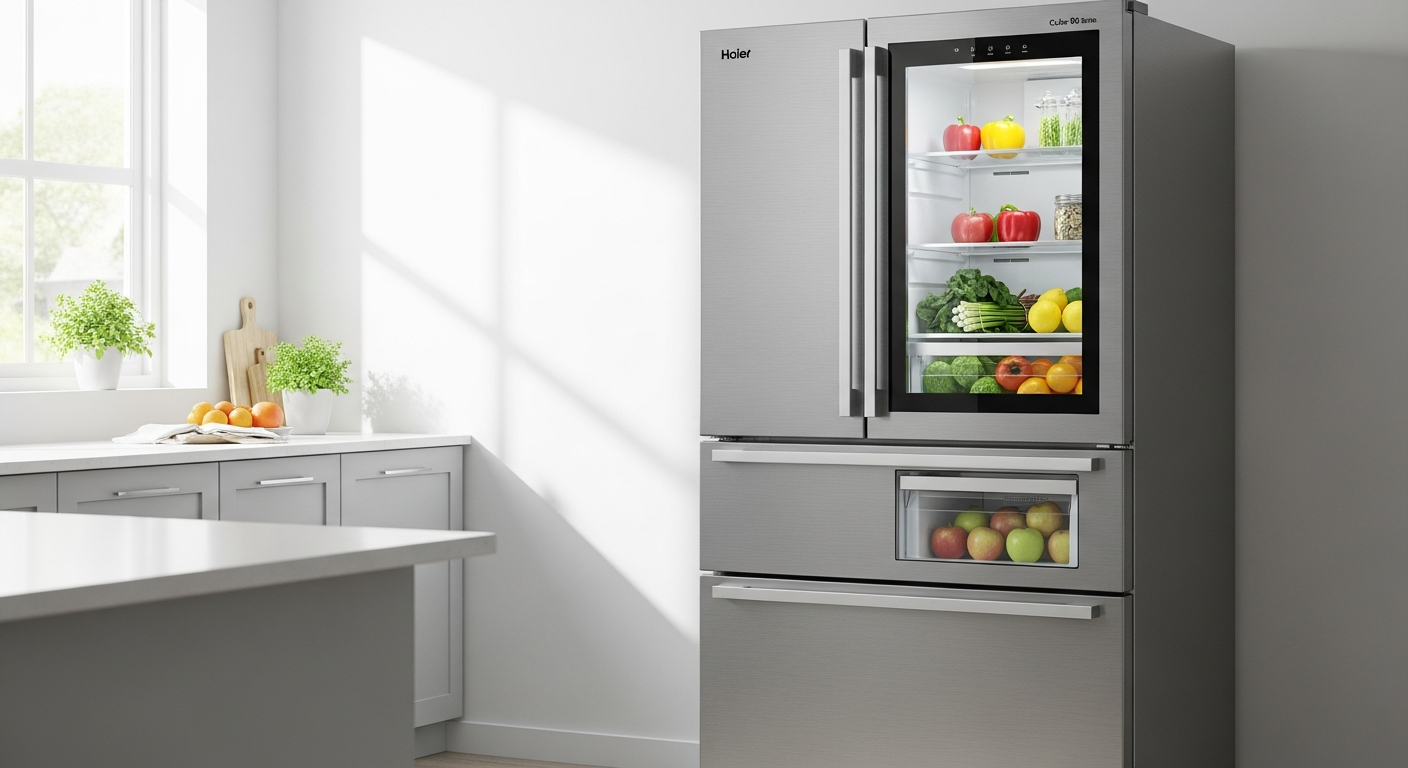
Food waste haunts modern kitchens. Groceries spoil faster than expected, vegetables wilt within days, and families wonder whether their refrigerator is actually keeping food fresh or simply keeping it cold. The distinction matters more than most realize. Not all refrigerators are created equal—some cool your food, while others actively preserve it with purpose-built technology systems.
The Haier Cube 90 Series 5 Multi-Door Fridge Freezer represents a fundamental shift in how European households approach food storage. With over 528 liters of capacity and multiple innovative preservation systems working in tandem, this appliance tackles a genuine problem: maintaining the nutritional value, taste, and texture of fresh groceries throughout the week. The four-door configuration, intelligent temperature controls, and proprietary fresher technologies create an environment where food naturally stays fresher longer.
This guide examines how these features work in practice and why they matter beyond marketing language. Understanding the engineering behind modern food preservation helps households make smarter appliance choices. Explore the Haier Cube 90 specifications and pricing to see if this model fits your household needs.
The Science Behind Air Surround Fresher Tech: How Gentle Cooling Preserves Food Quality
Understanding Traditional Airflow Problems
Conventional refrigerators rely on direct, forceful airflow to maintain cold temperatures. This approach works mechanically, but it creates problems for food itself. Direct cold air currents cause uneven freezing, with food closer to vents experiencing harsh conditions while distant areas receive inconsistent cooling. This thermal shock damages cell structures in produce, dairy, and prepared meals. Vegetables lose moisture and become limp. Proteins develop ice crystals that degrade texture upon thawing. Dairy products can separate or develop off-flavors from exposure to extreme temperature fluctuations.
How Air Surround Technology Works Differently
The Haier Cube 90 employs Air Surround Fresher Tech, which distributes cold air gently and evenly throughout the refrigerator chamber. Rather than concentrated jets of frigid air, this system creates a consistently cool environment where temperature remains stable across all shelf levels. The technology uses strategically positioned vents and circulation patterns that prevent direct airflow contact with stored food. This gentler approach maintains the integrity of produce cell walls, preserves the moisture content of fresh vegetables, and protects the texture of delicate foods like fresh berries and leafy greens.
The 99% Preservation Rate: What Seven Days Really Means
Haier’s testing demonstrates that Air Surround maintains food freshness at 99% of its original state after seven days of storage. For meal planning purposes, this translates to practical benefits. A family shopping on Sunday can confidently store produce, dairy, and prepared meals knowing that Wednesday’s dinner ingredients will retain their quality. Vegetables maintain their crispness without wilting. Prepared salads stay fresh without developing the soggy texture that typically occurs mid-week. Dairy products resist flavor changes and separation. This preservation window effectively extends weekly meal planning capabilities, reduces the pressure to use ingredients immediately after shopping, and minimizes mid-week grocery trips for forgotten items.
Gentle Cooling Versus Conventional Methods
The contrast between gentle and conventional cooling becomes visible when comparing food quality across different refrigerator types. Standard models often show visible deterioration by day four or five—browning on lettuce edges, softening of bell peppers, separation in sour cream. The Cube 90’s gentle approach delays these degradation markers significantly. Studies comparing food texture, nutritional retention, and visual quality show measurable advantages in gentle cooling systems. Families switching from conventional refrigerators typically notice the difference within the first week of use: fresher-tasting produce, longer-lasting prepared meals, and noticeably better condition of delicate items.
Humidity Zone Drawer with HCS Technology: The Game-Changer for Fresh Produce
Understanding the Humidity Control System
The Humidity Zone drawer incorporates HCS (Humidity Control System) Technology, which maintains optimal moisture levels at precisely 90%. This specific humidity percentage creates an ideal environment for produce storage. At 90% humidity, vegetables and fruits lose moisture slowly while remaining hydrated enough to maintain cellular structure and crisp texture. The system prevents the extreme conditions that typically occur in standard fridge drawers—neither the excessive moisture that promotes mold growth nor the dry air that causes rapid wilting.
Plant Fiber Membrane Innovation
The core of HCS technology is a plant fiber membrane that regulates moisture flow between the drawer environment and the surrounding refrigerator compartment. This membrane acts as a selective barrier, allowing excess moisture to escape gradually while blocking rapid humidity loss. The plant-based material is renewable and environmentally conscious compared to synthetic alternatives. The membrane’s effectiveness comes from its natural structure, which mimics how plant leaves naturally regulate their own moisture retention. This biological approach to environmental control represents a thoughtful engineering solution that works with natural principles rather than against them.
Doubling Freshness Lifespan for Produce
Haier’s data indicates that produce stored in the Humidity Zone drawer maintains freshness for up to twice as long compared to standard refrigerator compartments. Practically speaking, berries that typically last three days in conventional drawers remain fresh for six days. Leafy greens that wilt by day four maintain crispness through day eight. Carrots, bell peppers, and other hardy vegetables show similar extended lifespans. For families buying organic produce at premium prices, this doubling effect represents significant value—less waste and fewer shopping trips translate directly to cost savings.
Which Produce Benefits Most
Leafy greens benefit dramatically from humidity-controlled storage. Lettuce, spinach, arugula, and kale remain crisp and vibrant for extended periods. Berries—strawberries, blueberries, raspberries—resist mold development and maintain their firm texture. Stone fruits like peaches and plums develop better flavor continuity when stored in controlled humidity. Herbs in bundles last considerably longer without browning at stem ends. Root vegetables including carrots, beets, and radishes show reduced dehydration. Conversely, foods sensitive to excess moisture like bananas or avocados perform better in regular refrigerator compartments, making the four-section design particularly valuable for diverse household diets.
T-ABT® Antibacterial Technology: Creating a Hygienic Storage Environment
Airborne Bacteria Elimination Mechanics
T-ABT® technology eliminates up to 99.9% of bacteria present in the refrigerator’s airflow system. This works by treating air circulating through the appliance with antibacterial agents that target bacterial cell membranes. Unlike surface disinfection that requires manual cleaning, T-ABT® operates continuously as air moves through the system. Bacteria attempting to spread through air circulation encounter the antibacterial environment and are neutralized before they can settle on food surfaces or contaminate other items. This proactive approach differs fundamentally from passive food storage, where cross-contamination occurs naturally through airflow exposure.
Cross-Contamination Prevention Between Food Types
Raw proteins like chicken and fish naturally harbor bacteria that pose risks if transferred to ready-to-eat foods. Traditional refrigerators provide physical separation through shelving, but airborne bacteria still circulate freely. T-ABT® prevents this invisible contamination pathway. Families storing raw meat on lower shelves and prepared salads above no longer face risk from air-borne bacterial transfer. This becomes particularly important for households preparing diverse meals simultaneously—cooking proteins while storing fresh produce for salads or snacking without concern for contamination.
Health Benefits for Vulnerable Household Members
Families with young children, elderly members, or immunocompromised individuals face heightened foodborne illness risks from standard refrigeration. Children under five have developing immune systems that struggle against pathogens. Elderly family members often have compromised immune function. Individuals undergoing cancer treatment, managing HIV, or taking immunosuppressive medications face serious health consequences from bacterial contamination. T-ABT® technology reduces these risks significantly by maintaining a consistently hygienic storage environment. Parents preparing baby food or nutritional supplements for elderly relatives gain meaningful peace of mind knowing the storage environment itself actively prevents bacterial growth.
Reducing Foodborne Illness Risks
Foodborne illness statistics remain sobering—millions of cases annually result in hospitalizations and, in severe cases, fatalities. Many infections trace to cross-contamination during home storage rather than initial food preparation. Listeria, E. coli, and Salmonella can survive in standard refrigerators and spread through airflow to contaminate stored foods. T-ABT® technology interrupts this transmission pathway, creating a safer food storage ecosystem. For families with health-conscious priorities, this feature represents measurable protection beyond what conventional refrigerators provide.
MyZone Convertible Drawer: Flexible Storage for Every Household Need
Temperature Adjustment Range Explained
The MyZone drawer offers unprecedented flexibility with temperature adjustable from +5°C (optimal for chilled items) to -18°C (full freezing capability). This 23-degree adjustment range covers virtually every household food storage need. At +5°C, the drawer functions as an additional refrigerated zone, perfect for beverages, deli meats, or cheese that benefit from cold storage without freezing. Moving the temperature down incrementally creates zones suitable for specific purposes: +3°C for seafood requiring maximum freshness, 0°C for delicate proteins needing preservation without ice crystal formation, and -18°C for long-term freezing of prepared meals or seasonal produce.
Converting Space for Specific Food Categories
Meat storage benefits from slightly colder temperatures around 0°C to -2°C, which slows bacterial growth while preventing freezing that degrades texture. Fish prefers similar temperatures to maintain moisture and prevent oxidation. Deli items and cured meats stay fresher at +3°C to +5°C, where they maintain quality without temperature shock. Fresh beverages—chilled drinks, juice, milk—perform optimally at +5°C to +7°C. Prepared meals destined for consumption within a few days work well at +2°C to +5°C, while those intended for longer storage can be set toward -18°C for freezing. This flexibility eliminates the need for temperature-specific storage solutions, reducing reliance on separate beverage coolers or additional freezing compartments.
Practical Use Cases for Diverse Households
A family with vegetarians, pescatarians, and meat-eaters can dedicate the MyZone drawer to their specific protein storage needs simultaneously. One section stores chilled plant-based proteins at +5°C while another maintains fresh fish at near-freezing temperatures. A household practicing intermittent fasting can use MyZone to prepare and store meal-prep containers at ideal temperatures based on consumption timing. Families entertaining frequently can convert the drawer into a beverage chilling zone at parties or back to meal storage afterward. Parents of infants can maintain expressed breast milk or formula at precisely controlled temperatures. These adaptable scenarios demonstrate why MyZone appeals to households with varying dietary approaches and living situations.
Reducing the Need for Separate Appliances
Many households justify purchasing additional wine coolers, beverage chillers, or compact freezers for specialized storage. MyZone’s flexibility eliminates this necessity for many families. The adjustable temperature range essentially combines multiple appliance functions into a single drawer, saving counter and floor space while reducing energy consumption from operating multiple devices. This consolidation appeals particularly to apartment dwellers and those with limited kitchen space, where additional appliances create practical challenges.
Capacity That Actually Matters: 528 Liters Broken Down for Real Families
Understanding the Capacity Breakdown
The 528-liter total capacity divides into 354 liters of refrigerated space and 174 liters of freezer capacity. This allocation reflects the reality that most households use refrigeration more frequently than freezing. The 354-liter fridge section (equivalent to 20 shopping bags) accommodates fresh produce, dairy, proteins, beverages, and prepared meals for a week of varied dining. The 174-liter freezer section (equivalent to 9 shopping bags) handles longer-term frozen storage—batch-cooked meals, seasonal produce, meat purchases bought in bulk, and backup frozen vegetables. This 2:1 ratio between fridge and freezer matches how most European households actually distribute their food storage.
Shopping Bags Equivalent: What 29 Bags Means
Translating capacity into shopping bags makes the number tangible for grocery shoppers. Twenty-nine shopping bags represent approximately one to two weeks of grocery shopping for a family of four to six people, depending on dietary choices and meal patterns. For comparison, standard two-door refrigerators typically hold the equivalent of 12-15 shopping bags total. The Cube 90’s expanded capacity means fewer shopping trips, better meal planning flexibility, and the ability to stock up during sales or bulk-purchase periods. Families buying organic produce or shopping at warehouse clubs benefit particularly from this extra capacity—they can purchase in quantities that provide cost savings without the space anxiety of overstuffing.
Four-Door Configuration and Accessibility
The four-door design places the full-width fridge section at eye level across the entire top, eliminating the need to bend down for everyday fresh food access. The two freezer compartments below organize frozen items intuitively. This vertical arrangement means frequently accessed items sit at convenient heights while bulk freezer items remain easily accessible without awkward bending. The door-in-door compartments on many models provide quick access to beverages and frequently grabbed items without opening the main fridge section, reducing cold air loss and energy consumption.
Suitability for Specific Household Types
Large families of six or more people find this capacity essential for managing diverse dietary needs without daily shopping trips. Meal preppers who cook in batches rely on the freezer space to store multiple weeks’ worth of prepared portions. Families entertaining frequently need capacity for hosting dinner parties without cluttering their storage. Health-conscious households buying fresh produce weekly benefit from the refrigerated space to maintain variety. Multi-generational homes with grandparents, parents, and children living together require the flexibility this capacity provides.
Total No Frost Technology: Eliminating Defrosting and Food Damage
How Frost Buildup Damages Frozen Foods
Frost accumulation in conventional freezers represents a gradual threat to frozen food quality. Ice crystals form on food surfaces through repeated freeze-thaw cycles created by temperature fluctuations during automatic defrost cycles. These ice crystals puncture cell membranes in frozen meat and produce, causing moisture loss when food eventually thaws. The texture becomes grainy and unappetizing. Frozen vegetables lose their firm structure and develop mushy consistency. Prepared meals show visible ice accumulation that indicates cellular damage. Beyond texture degradation, the moisture loss concentrates flavors in undesirable ways—meats develop “freezer burn,” a gray-brown discoloration indicating oxidative damage, while vegetables taste bland after ice crystal damage has compromised their cellular structure.
How Automatic Defrosting Systems Work
Total No Frost technology employs automatic defrost cycles that prevent ice buildup without requiring manual intervention. The system carefully monitors temperature and humidity levels, triggering brief warming periods that melt any forming frost without raising the overall freezer temperature significantly. The meltwater drains away automatically through collection systems rather than accumulating as ice. This prevents the visible frost buildup that characterizes older freezer models, where families had to periodically empty the freezer, unplug it, and wait hours for frost to melt—during which frozen foods began thawing and losing quality.
Zero Manual Maintenance Required
The convenience factor cannot be overstated. Families no longer schedule defrost days or manage the operational disruption of emptying a freezer. Foods remain frozen continuously without interruption. There is no decline in storage efficiency over time due to ice accumulation taking up valuable space. The Cube 90’s Total No Frost system handles this maintenance automatically, transparently, and continuously—the way modern appliances should function. This eliminates a household chore that, while manageable, creates genuine inconvenience and risks food quality degradation.
Protection of Frozen Foods from Ice Crystals
Meat stored in a frost-free freezer maintains its original texture and quality for substantially longer than meat in frost-prone freezers. Frozen berries retain their form without becoming a solid, crystallized mass. Prepared lasagna, soups, and other batch-cooked meals remain suitable for thawing and serving weeks or months after freezing, without the compromised quality that ice crystal damage causes. Families practicing meal prep or buying seasonal produce can confidently freeze items with the assurance that quality degradation remains minimal even after months of storage.
Energy Efficiency and Running Costs: The Real Financial Picture
Understanding E Class Energy Rating
The Haier Cube 90 typically carries an E Class energy rating, which falls in the middle range of the current EU energy efficiency scale (A through G, where A represents the most efficient). This rating reflects the reality that such large-capacity appliances require significant energy to maintain consistent temperatures across 528 liters of space. The E classification indicates reasonable efficiency without representing the absolute lowest energy consumption available. Households should understand that absolute efficiency comparisons matter less than the complete feature package—a less efficient appliance with superior food preservation technology may provide better overall value than a marginally more efficient model lacking preservation features.
Annual Energy Consumption Breakdown
The Cube 90 consumes approximately 297-350 kWh annually, depending on specific model and use patterns. Breaking this down: at £0.28 per kWh (a reasonable UK average), annual running costs equal approximately £83-98 per year. Monthly costs average £7-8. Daily energy consumption comes to roughly 0.8-1 kWh per day. For perspective, this represents the energy consumption of running a standard dishwasher approximately three times weekly, or a washing machine twice weekly. Households considering this appliance should factor these running costs into the lifetime cost calculation but recognize that the annual expense remains modest for a primary kitchen appliance serving critical food storage functions.
Seasonal Variations and Practical Considerations
Energy consumption varies slightly through seasons. Summer months require more cooling energy as ambient kitchen temperatures rise, while winter operation consumes less energy. Household usage patterns also affect consumption—families opening the fridge frequently consume more energy than those with stable usage patterns. Keeping the freezer well-stocked also affects efficiency, as stored items help maintain cold temperatures more easily than empty space. Placing the appliance away from heat sources (ovens, direct sunlight, radiators) significantly reduces energy demands.
Comparison with A-Rated Alternatives and Trade-Offs
A-rated refrigerators in this size category exist but typically cost substantially more—often 30-50% higher purchase prices. These models achieve superior efficiency through enhanced insulation, more sophisticated compressor technology, and advanced refrigeration systems. However, the energy savings over a 10-year lifespan typically amount to £200-300 in reduced electricity costs, compared to purchase price premiums of £400-600. For many households, the Cube 90’s balance of features, capacity, and reasonable efficiency represents better overall value than pursuing the absolute most efficient option at significantly higher upfront cost.
Who Should Buy the Haier Cube 90: Ideal Use Cases and Household Scenarios
Large Families and Multi-Generational Households
Families of six or more people generate food storage needs that standard appliances cannot accommodate without daily shopping trips. A household with grandparents living in-law with adult children and grandchildren requires the flexibility to maintain diverse dietary preferences simultaneously. The 354-liter fridge space allows storing vegetarian proteins alongside meat options, fresh produce for various age groups, and specialized dietary items (gluten-free, dairy-free, etc.) without constant reorganization. The freezer capacity handles batch meals designed to feed large numbers, plus backup items for unexpected guests.
Meal Preppers and Batch Cooking Enthusiasts
Individuals dedicating one day weekly to cooking five to ten meals for the upcoming week require substantial freezer capacity. The 174-liter freezer compartment accommodates 8-10 prepared meals per shelf, allowing storage of 30-40 prepared portions across multiple shelf levels. The MyZone convertible drawer can maintain specific proteins at optimal temperatures while batch cooking occurs. The fridge space keeps components fresh for assembly-based meal prep approaches. For those investing significant time in meal preparation, the Cube 90 infrastructure supports this approach far better than standard refrigeration.
Frequent Entertainers and Hosting Families
Households hosting dinner parties monthly or more frequently benefit from the capacity to prepare components ahead. The fridge space accommodates prepared appetizers, salads, and side dishes without crowding out daily necessities. The MyZone drawer converts to additional beverage chilling capacity for parties. The freezer handles prepared elements like stocks, sauces, and base components. Entertaining no longer requires last-minute shopping or using external coolers—the appliance itself provides the infrastructure for entertaining confidently.
Health-Conscious Families Prioritizing Food Preservation
Families buying premium organic produce, grass-fed meats, and locally-sourced items invest significantly in food quality. The Cube 90’s preservation technologies protect these investments by extending product lifespan. The Humidity Zone prevents expensive organic greens from wilting prematurely. Air Surround maintains the texture and nutritional content of premium produce. T-ABT® ensures hygienic storage. The total value proposition makes sense when considering the premium prices paid for high-quality ingredients—extended freshness directly offsets the cost premium of better food sources.
Pricing Strategy and Value Assessment: Is £899-£1,199 Worth It?
Price Range Across Models
The Haier Cube 90 Series 5 pricing varies between £899 and £1,199 depending on specific model variants. The HTF-540DP7 and HTF-610DM7 represent different configurations with varying feature sets and color options. Stainless steel finishes command modest premiums over standard options. Models with enhanced connectivity features or expanded color ranges sit at higher price points. Seasonal sales, promotional pricing, and retailer variations create opportunities to secure models at lower price points during slower sales periods (typically January and July in UK retail cycles).
Cost Per Liter Analysis
At the £899 entry point, the cost per liter of total capacity equals approximately £1.70 per liter. At the £1,199 upper range, this metric rises to roughly £2.27 per liter. Standard two-door refrigerators of 300-400 liters capacity typically cost £1.50-2.00 per liter, suggesting the Cube 90 pricing remains competitive on a pure capacity basis. When accounting for the advanced preservation technologies (Air Surround, Humidity Zone, T-ABT®) that competitors either omit entirely or charge significant premiums for, the per-liter metric understates the actual value proposition. Comparable four-door models from premium manufacturers often exceed £2.00 per liter for equivalent or lesser feature sets.
Feature-to-Price Ratio Assessment
The Cube 90 combines multiple premium features—Air Surround Fresher Tech, HCS Humidity Zone, T-ABT® antibacterial technology, MyZone convertible drawer, and Total No Frost—in a package priced between £899-£1,199. Competitors offering similar technology arrays typically command prices of £1,400-£1,800. The Haier pricing represents genuine value within the preservation technology category. Conversely, basic four-door models without these preservation systems cost £700-£900, making the Cube 90 premium modest relative to the technological capabilities gained.
Seasonal Pricing Fluctuations and Optimal Purchase Timing
Appliance pricing follows predictable seasonal patterns. January and early February see aggressive pricing as retailers clear previous year inventory and make room for new models. Summer months (June-August) generate promotions tied to warmer weather marketing. Black Friday and Boxing Day periods create competitive discounting. Late August through September sees back-to-school and back-to-university promotions. Easter holidays generate sporadic sales. Conversely, spring months (March-May) and autumn months (October-November) typically see less aggressive pricing. Families able to delay purchase until January or Boxing Day can expect 10-15% discounts compared to list pricing, potentially saving £90-£180 on purchase price.
Making Your Fresh Food Investment Count
The Haier Cube 90 Multi-Door Fridge Freezer operates as an active food preservation system rather than passive storage—it’s equipment designed to measurably extend the freshness, nutritional quality, and safety of stored groceries. The convergence of Air Surround technology, Humidity Zone precision, and T-ABT® antibacterial systems creates an integrated ecosystem where food preservation happens automatically throughout each week.
The £899-£1,199 investment aligns with genuine value when measured against outcomes. Reduced food waste translates directly to household savings—families wasting 15-20% of purchased groceries typically see that waste reduction to 5-10% when food lasts longer. The convenience of zone-specific storage eliminates the need for supplementary appliances, saving both space and energy. The hygienic storage environment provides genuine peace of mind, particularly for households with vulnerable members. For families prioritizing food quality, storage capacity, and preservation capability, the Cube 90 delivers measurable returns on investment that extend substantially beyond the purchase price.
Making this decision requires honest assessment of household needs. Measure your kitchen space, especially if counter depth or height presents constraints. Assess your actual grocery shopping frequency and food storage patterns—if you shop daily and maintain minimal storage, this appliance’s capacity advantage diminishes. Consider your household’s dietary diversity and food waste patterns. Compare this model against competing four-door options in the £800-£1,200 range to understand feature differentials and pricing justification. Factor in your anticipated ownership duration; if this appliance will remain in your home for 10+ years, the per-year cost becomes genuinely modest. Visit Haier’s website to compare the Cube 90 models and find authorized retailers offering current pricing and delivery options.

Leave a Reply