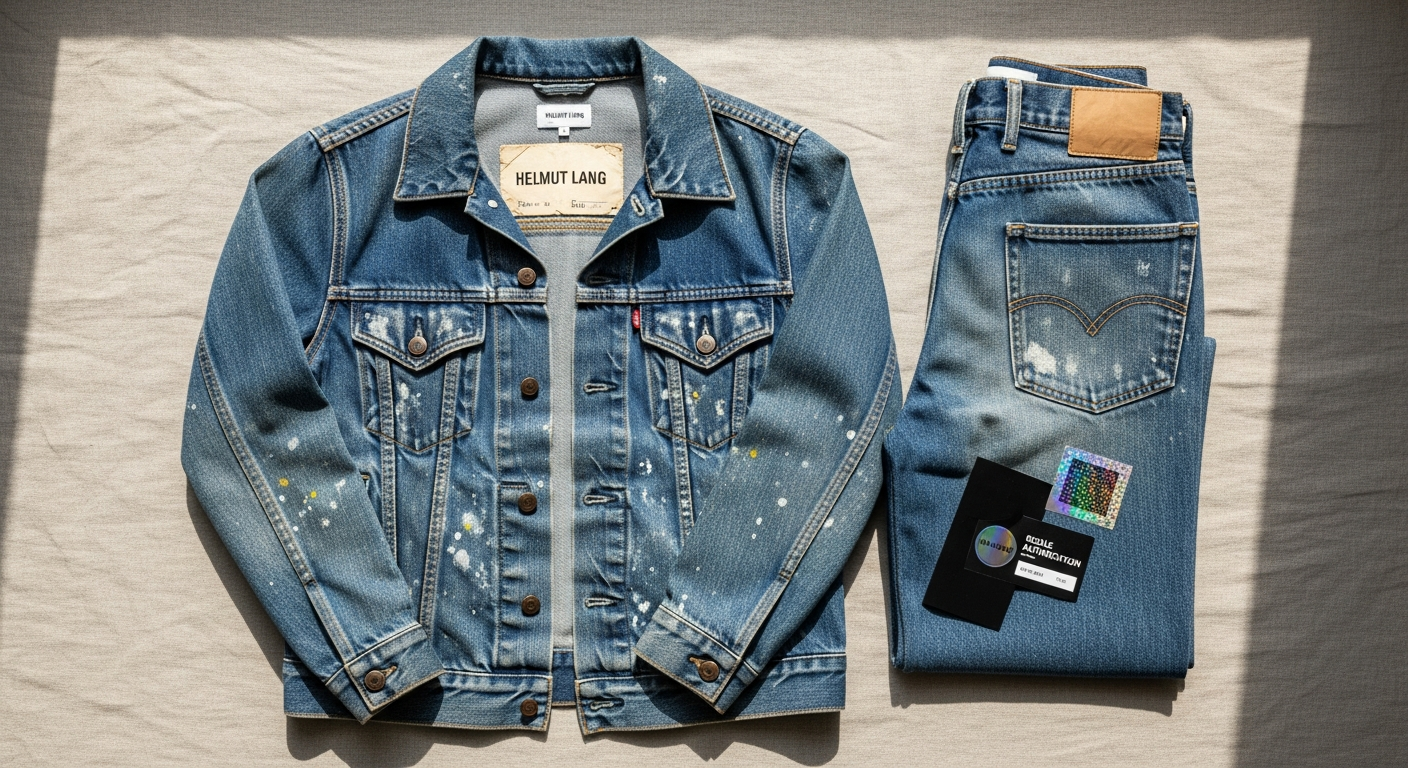
The Helmut Lang OG Painter Denim: A Complete Guide to Vintage Value, Authentication, and Investment Strategy
In just over two decades, vintage Helmut Lang OG Painter Denim jeans have appreciated over 400% in value since their 1998 debut, transforming from a cult favorite into one of the most coveted pieces in luxury resale markets. What started as a bold experiment in merging high fashion with workwear has become a benchmark for understanding how design philosophy translates into lasting cultural currency.
When Helmut Lang introduced the OG Painter Denim in Spring/Summer 1998, few anticipated it would become the cornerstone of luxury streetwear culture. This wasn't simply another denim silhouette—it was a deliberate collision between runway innovation and utilitarian authenticity. The hand-applied paint splattering, the meticulous Italian craftsmanship, and the androgynous fit struck a chord that transcended typical fashion cycles, resonating across demographics and decades.
This guide helps you navigate the resale market with confidence, covering authentication, pricing factors, vintage seasons, and styling strategies to make informed purchase decisions. Explore premium vintage denim collections today and discover your next investment piece.
The Evolution of Helmut Lang OG Painter Denim: From Runway to Resale Royalty
Origins in the Spring/Summer 1998 collection and its revolutionary impact on luxury denim
The Spring/Summer 1998 debut of the OG Painter Denim marked a seismic shift in how luxury brands approached casual wear. Helmut Lang possessed a rare gift—the ability to identify untapped potential in overlooked everyday objects. The painter's jean, traditionally associated with construction sites and manual labor, suddenly became a canvas for high-fashion experimentation. This collection didn't simply reference workwear; it elevated it into something entirely different.
How the design elevated workwear into high-fashion territory
The transformation worked because Lang approached the painter jean with intellectual rigor rather than superficial aesthetics. The medium-weight, 100% cotton denim was subjected to meticulous washing, sanding, and distressing processes that created a worn-in appearance without the typical shortcuts. This attention to process mirrored the craftsmanship of luxury tailoring, applying it to a garment category that had never received such treatment.
The role of hand-applied paint splattering using melted rubber technology
What truly distinguished the OG Painter Denim was its hand-applied paint splattering technique using melted rubber. This wasn't screen printing or surface-level distressing—it was a labor-intensive process that created raised, tactile marks resistant to fading even after extensive washing. Each pair received its own unique pattern, making every garment a singular object rather than a mass-produced commodity. The paint appeared in off-white, black, and grey, applied with enough randomness to feel authentic yet enough intention to feel designed.
Why the androgynous silhouette resonated across gender lines and demographics
The cut itself—a medium rise with a fitted seat and thigh tapering to a narrow straight leg—proved remarkably democratic. It flattered without being overtly feminine, appeared sharp without demanding conventionally masculine styling, and accommodated a broad range of body types. This gender-fluid approach emerged from Lang's broader design philosophy, which rejected the idea that luxury fashion needed to reinforce traditional aesthetic binaries.
The transition from retail staple to vintage archival collectible
Initially, the OG Painter Denim represented accessibility within luxury—quality craftsmanship at a price point that attracted serious fashion enthusiasts rather than purely elite consumers. At one point, the denim line accounted for over 50% of Helmut Lang's annual sales. As production ceased and original pairs entered the secondary market, their status shifted. What had been purchasable retail goods became scarce, then rare, then collectible. Time itself transformed these jeans into historical artifacts.
Key moments that solidified its cult status
Two moments crystallized the OG Painter Denim's place in fashion history. First, Alexander McQueen's documented affinity for the piece brought it into conversation with avant-garde creative circles. Second, the jeans graced the cover of New Order's 2001 album "Get Ready," reaching audiences far beyond traditional fashion spaces. These endorsements weren't manufactured marketing—they emerged organically from genuine appreciation by artists and designers who recognized the piece's cultural weight.
Evolution of production years and notable variations across seasons
Production continued through the early 2000s with subtle variations reflecting seasonal adjustments and fabric innovations. Early pairs from 1998-2000 maintain different hand-distressing characteristics compared to later runs. Seasonal releases introduced minor color variations and splatter intensity differences. Understanding these variations became essential for collectors interested in specific production windows.
Decoding Authenticity: How to Spot Real vs. Counterfeit Helmut Lang OG Painter Denim
Identifying genuine melted rubber paint application versus screen printing or standard distressing
Authentic paint splattering exhibits a distinctive tactile quality—the melted rubber creates raised areas that catch light differently than flat distressing. Run your fingers across the painted areas; genuine pieces show measurable texture. Counterfeit versions typically employ screen printing, which lies flat against the fabric surface, or crude hand-painting that lacks the characteristic dimensional quality. The melted rubber technique also creates slightly different opacity levels as the material dried, producing subtle variations in color saturation across the splatters.
Examining stitching patterns, metal rivet placement, and Italian manufacturing markers
Helmut Lang pairs were manufactured in Italy with construction standards reflecting luxury positioning. Examine the stitching with a magnifying glass—authentic pieces show consistent, uniform stitching throughout, including along the inseam and around pocket construction. Metal rivets appear at stress points identical to the Levi's 501XX design they referenced. Check for Italian manufacturing labels and country-of-origin markings that should appear inside the waistband. Counterfeit versions often show uneven stitching or rivets positioned inconsistently.
Understanding fabric weight and the characteristic medium-weight 100% cotton composition
Genuine OG Painter Denim possesses a substantial but not rigid hand—it feels substantial when held, with a weight around 12-14 ounces. The cotton composition is 100%, without blends common in contemporary denim. Hold an authentic pair next to suspected counterfeit and compare the drape and weight immediately. Counterfeiters sometimes substitute inferior cotton blends to reduce production costs, creating noticeably different fabric behavior. The authentic fabric also develops a specific patina over time, with color fading in predictable areas corresponding to natural wear patterns.
Recognizing authentic wear patterns and vintage aging versus artificial distressing
Real vintage pairs show wear concentrated in functional areas—the seat, inner thighs, and crotch seams reveal fading from actual body contact. Artificial distressing appears more random and uniform across the garment. Authentic aging also produces subtle color variations reflecting storage conditions and cumulative wear. The paint splatters themselves fade differently than the base denim, creating layered patina. Counterfeit pieces often display suspiciously uniform fading or distressing concentrated in aesthetically obvious areas designed to look worn without reflecting genuine use patterns.
Checking for original Helmut Lang tags, care labels, and hologram authenticity markers
Examine all tag placements carefully. Authentic pairs feature proper Helmut Lang branding on the waistband label, size tags with corresponding care instructions, and tags positioned with consistent spacing. Later production runs included hologram authenticity markers. Check for proper tag construction—authentic tags show precise printing and consistent font spacing. Counterfeiters frequently replicate tags with slightly off registration or color variations. The care label should specify composition (100% cotton) and feature European laundry symbols.
Analyzing the uniqueness of paint splatter patterns (genuine pairs are individually unique)
This represents one of the strongest authentication tools. No two authentic pairs possess identical paint splatter patterns. Document your pair's specific pattern distribution—note where splatters concentrate, their density, and color distribution across the front and back. Compare against other documented pairs; if multiple listings show identical splatter patterns, those are nearly certainly counterfeits produced from a single template. Photograph your pattern from consistent angles and maintain documentation for future reference.
Red flags that indicate counterfeit or heavily altered pairs
Be immediately suspicious of pairs showing: identical splatter patterns to other listings, uniformly faded distressing without natural wear concentration, suspiciously perfect condition in high-stress areas that should show wear, tags with printing irregularities, stitching inconsistencies throughout seams, or artificial paint that flakes rather than fades. Additional concerns include heavily altered waistbands suggesting size modification, patched seams indicating major damage repair, or complete absence of original documentation or provenance information.
The importance of provenance documentation and resale platform verification
When possible, request documentation of the pair's history. Legitimate vintage dealers and collectors maintain records of acquisitions and previous ownership. Resale platforms like Grailed implement authentication procedures for higher-value pieces. Verify seller credibility by reviewing transaction history and feedback. Direct peer sales carry more risk; prioritize sales from established collectors with verifiable track records. Premium pricing often justifies the expense of professional authentication services for pairs exceeding $400.
Resale Market Pricing: What Drives Value in 2026
Current price range analysis ($129 to $680+ depending on condition and rarity)
The resale market for OG Painter Denim exhibits remarkable price variation reflecting condition, production year, and specific characteristics. Entry-level pairs in fair condition start around $129, while excellent specimens in desirable sizes command $400-$680. Museum-quality deadstock pieces and particularly rare production years exceed these ranges significantly. Recent market data shows consistent appreciation, with pairs that would have sold for $200-$300 three years ago now commanding $400+ in comparable condition.
How condition grades impact resale value (pristine, excellent, good, fair, poor)
Condition represents perhaps the single strongest value determinant. Pristine pairs—essentially unworn deadstock—command premium pricing approaching the high end of the market. Excellent condition pieces show minimal wear with original paint splatters and fabric integrity intact; these typically occupy the $400-$550 range. Good condition pairs exhibit noticeable wear consistent with careful use but retain strong structural integrity; expect $250-$400. Fair condition pieces show significant wear, possible repairs, and notable fading; these fall to $150-$300. Poor condition pairs—damaged seams, major repairs, or severely compromised structural integrity—sell below $150. Establishing accurate condition grading requires honest assessment and comparison against market comps.
Seasonal and color variations that command premium pricing
Earlier production seasons (1998-1999) command premiums over later releases. Specific color splatter combinations, particularly those featuring balanced proportions of grey, black, and off-white, tend to price higher than predominantly monochromatic patterns. Off-white splatters on darker base denim create higher contrast and visual interest, attracting collectors willing to pay premiums. Regional availability also influences pricing; certain color combinations appear more frequently in specific markets, affecting supply-driven pricing dynamics.
The role of provenance and previous ownership by notable figures
Pairs with documented histories—particularly those connected to recognized fashion figures or appearing in publications—command significant premiums. A pair worn by or connected to Alexander McQueen could theoretically justify multiple-times-standard pricing, though verifying such provenance requires rigorous documentation. Even documented ownership by respected collectors or appearance in influential fashion editorials enhances value perception and pricing justification.
Limited availability factors and their effect on market scarcity
Helmut Lang ceased producing the OG Painter Denim after the early 2000s, creating hard supply constraints. The original production volumes, while substantial during peak years, remain finite. As pairs age and deteriorate from wear, usable inventory actually decreases, naturally supporting pricing. Particularly desirable sizes—typically 28-34 for women's sizing and 30-32 for men's—face stronger demand relative to supply, compressing availability and driving premiums.
Comparison of pricing across major resale platforms (Grailed, Vestiaire Collective, Depop, Rebag)
Grailed tends to position itself as a collector-focused platform, often reflecting higher asking prices reflecting informed buyer bases. Vestiaire Collective displays more international pricing variation, sometimes offering competitive opportunities for patient buyers monitoring multiple regional markets. Depop attracts younger buyers and typically features lower price points, though condition and authenticity verification varies considerably. Rebag maintains relatively consistent pricing as an established platform but sometimes underprices compared to peer-to-peer marketplaces where sellers directly control pricing.
Trend forecasting: which vintage seasons are appreciating versus depreciating
Early production runs (1998-2000) show consistent appreciation as original pairs age further and desirable sizes become scarcer. Mid-period production (2000-2004) appreciates more modestly; these pieces remain more readily available. Later releases from the final production window show relatively flat pricing dynamics. Market analysis suggests early-season pairs will continue appreciating 5-8% annually, while mid and late production may appreciate 2-4% as supply-demand ratios gradually shift. Pairs in excellent condition across all seasons show stronger appreciation trends than those in fair or poor condition.
Storage and care impact on long-term value retention
Proper storage directly affects appreciation potential. Pairs stored in cool, dry conditions with protection from sunlight maintain value far better than those exposed to heat, humidity, or UV exposure. Folding versus hanging creates different wear patterns; hanging generally preserves condition better than folded storage where crease lines develop. Sealed plastic storage prevents dust accumulation but risks moisture trapping; breathable garment bags offer superior protection. Pairs stored poorly may experience $100+ value deterioration compared to those stored optimally, making storage conditions a legitimate investment consideration.
The Collector's Breakdown: Which Vintage Seasons Matter Most
Early production runs (1998-2000) and their premium positioning
Original release pairs from the Spring/Summer 1998 debut and subsequent seasons through 2000 represent the apex of collector desirability. These early runs featured hand-application processes with particular attention to detail before production scaled up. The paint splattering exhibits distinctive characteristics reflecting earlier application techniques. Early season pairs show the most dramatic appreciation trends—recent sales data indicates pairs in excellent condition from this window now command $500-$680, with desirable sizes approaching $700. Rarity compounds as these pieces age; fewer pairs survive in wearable condition compared to later productions.
Mid-period variations (2000-2005) and accessibility factors
As demand grew and production increased, 2000-2005 releases maintained quality standards while becoming more widely available. These pieces occupy a compelling middle ground—still authentic OG Painter Denim with complete production credentials, but with somewhat better availability than early runs. Pricing typically ranges $300-$450 depending on condition and size, offering entry points for collectors with moderate budgets. These pieces appreciate steadily, typically 3-4% annually, making them reasonable speculative investments without the extreme price exposure of early releases.
Later releases and their comparative market value
Final production runs from 2005 onward represent the accessible end of the market. Wider availability keeps pricing more modest—even excellent condition pieces rarely exceed $350. Appreciation trends flatten considerably; these pairs function more as wearable vintage pieces than investment vehicles. However, they remain legitimate Helmut Lang OG Painter Denim with authentic credentials, making them sensible choices for enthusiasts prioritizing wearability over speculative appreciation.
Color variations and their rarity status (off-white splatters, black, grey combinations)
Paint splatter color combinations create micro-tier pricing variations within production windows. Off-white splatters create high visual contrast and command modest premiums of $25-$75 over predominantly grey or black alternatives. Balanced three-color combinations—equal distribution of off-white, black, and grey—appeal to purist collectors and typically price above monochromatic variants. Heavily distressed base denim combined with minimal paint splattering sometimes commands premiums among minimalist enthusiasts, though the inverse (pristine base denim with bold splatters) appeals to broader audiences.
Size availability and demand disparities across sizing
Women's sizing in the 26-30 range shows disproportionately strong demand relative to available inventory. These sizes command consistent premiums; a size 28 pair might sell for $75-$150 more than the same year and condition in size 32. Men's sizing in 30-32 shows similar dynamics, with these sizes pricing above less common alternatives. Extremely small or large sizes (below 24 or above 38) sometimes sell at discounts despite rarity, as the smaller collector pool reduces demand intensity. Serious investors prioritize desirable sizes when building collections, as these appreciate fastest.
Condition-adjusted value comparisons across different vintage years
A fair-condition pair from 1998 might price similarly to an excellent-condition pair from 2002, highlighting how condition affects relative value across years. This creates opportunities for collectors—sometimes a well-preserved later-production piece offers better value proposition than a worn early-production alternative. Mapping condition-adjusted pricing across years reveals where value concentrations exist; currently, excellent-condition 2000-2001 pieces offer reasonable value relative to appreciation potential.
Investment potential: which seasons offer the best value-to-appreciation ratio
From a pure investment standpoint, 1998-1999 pieces offer strong appreciation potential but require significant capital deployment and carry greater risks if condition deteriorates. Mid-period 2001-2003 pieces in excellent condition offer compelling value-to-appreciation ratios—typically priced $350-$425 with appreciation potential of 4-6% annually. These pieces remain accessible for collectors with modest budgets while offering genuine investment characteristics. Later productions function better as wearable pieces than investment vehicles.
Identifying sought-after deadstock pairs and their market positioning
Unworn deadstock pairs—original retail pieces never worn and preserved in original condition—represent the absolute premium tier. These might price at $600-$800+ depending on size and specific characteristics. Deadstock requires meticulous documentation; original packaging, tags, and verifiable purchase records significantly enhance credibility. Identifying authentic deadstock requires careful inspection for any sign of wear; even tried-on deadstock pieces show minute evidence of handling. Fewer than 10% of pieces offered as deadstock survive authentication scrutiny, making genuinely unworn examples exceptionally valuable.
Styling the Investment: Making Your Helmut Lang OG Painter Denim Work
Minimalist aesthetic pairings that honor the original design intent
The OG Painter Denim belongs in minimalist contexts where its design philosophy receives proper respect. Pair these jeans with neutral basics—white or black cotton t-shirts, understated long-sleeves, or refined knits in charcoal or cream. The paint splattering contains sufficient visual interest that surrounding pieces should recede. Simple white leather sneakers, black boots, or neutral canvas shoes complement the utilitarian-luxury balance without competing visually. This approach honors Lang's original vision, allowing the jeans' design to function as the outfit's focal point.
Contemporary streetwear combinations that feel current without overshadowing the jeans
Modern wardrobes can incorporate these jeans into contemporary streetwear contexts when executed thoughtfully. Oversized button-ups in neutral tones layered over fitted long-sleeves create visual interest without overwhelming the distinctive paint splatters. Technical fabrics and contemporary silhouettes pair effectively provided they maintain neutral colorways. Minimal sneaker culture—understated Veja, Asics, or Diadora models—complements both vintage pieces and contemporary sensibilities. The key involves respecting the jeans' inherent statement without adding additional competing visual elements.
Layering strategies that showcase the distinctive paint splattering
Strategic cropping and layering ensures the paint splatters remain visible rather than hidden. Cropped or fitted jackets leave the jeans' lower thigh and leg fully exposed, showing off the splatter patterns. Unbuttoned overshirts over fitted layers reveal the full paint application. Intentional cuff positioning can either display splatters or create proportional interest depending on desired effect. Consider the paint distribution when deciding layering depth; evenly distributed patterns work with more coverage, while concentrated splatters benefit from complete visibility.
Footwear choices that complement the utilitarian-luxury balance
Footwear significantly impacts how these jeans read contextually. Clean white leather creates refined minimalism emphasizing luxury positioning. Distressed or vintage sneakers align with the jeans' utilitarian heritage. Black leather boots—whether sleek or structured—maintain the minimalist aesthetic. Conversely, loud footwear choices clash with the jeans' sophisticated restraint; avoid bold colors or excessive patterns. The footwear should feel intentional rather than arbitrary, reflecting careful consideration of how complete outfits harmonize.
Occasion versatility: casual, smart-casual, and elevated styling approaches
These jeans operate across contexts more successfully than typical distressed vintage denim. Casual styling pairs them with plain tees and sneakers for approachable authenticity. Smart-casual contexts accommodate blazers or structured button-ups paired with minimal jewelry and refined footwear. Elevated styling introduces quality fabrics and tailored silhouettes—cashmere sweaters, silk scarves, or Italian-made footwear—that emphasize the luxury dimension. The androgynous cut suits all these contexts equally, adapting to various styling interpretations.
Gender-fluid styling inspiration from iconic wearers like Alexander McQueen
McQueen's documented approach paired the OG Painter Denim with tailored pieces and refined fabrics, emphasizing the jeans' ability to function within sophisticated contexts rather than purely casual settings. This styling philosophy transcends gender conventions, demonstrating how the androgynous cut accommodates various body types and styling preferences. Contemporary gender-fluid fashion finds inspiration in how McQueen and others treated these jeans as foundational pieces capable of supporting multiple aesthetic directions.
Seasonal adaptations and layering techniques
Warm weather styling benefits from simplicity—consider the jeans with minimal layering, allowing maximum visibility of the paint application. Cool seasons introduce layering opportunities; oversized blazers, cardigans, or technical jackets extend wearability. The jeans' medium weight suits spring and fall naturally; summer requires specific fabric choices to avoid excessive heat, while winter layers address temperature without overwhelming the visual composition. Considering seasonal contexts when styling ensures these pieces integrate naturally into year-round wardrobes.
Balancing the jeans' statement nature with understated accessories
The paint splatters function as statement elements, meaning accessorizing should respect this visual priority. Minimal jewelry—simple chains, understated watches, or small rings—complements without competing. Bags should maintain neutral colorways and simple silhouettes; oversized or ornate bags distract from the jeans' design. This restraint in accessorizing reflects the minimalist philosophy underlying the entire design, creating coherent outfits where every element reinforces the original design intent.
Navigating the Resale Platforms: Where to Buy and Sell Helmut Lang OG Painter Denim
Grailed's authentication process and collector community advantages
Grailed positions itself as the premier platform for vintage fashion and streetwear collecting, attracting serious buyers familiar with authentication nuances. The platform implements tiered verification for higher-value items, with Grailed authentication services available for pieces exceeding certain price thresholds. This creates confidence for both parties in major transactions. The collector community actively discusses provenance, production details, and authentication markers, providing valuable peer expertise. Grailed's fee structure—approximately 8% for sellers—reflects the platform's positioning and premium audience. Buyer concentration among informed collectors means fair pricing tends to emerge through market mechanisms rather than artificial manipulation.
Vestiaire Collective's international reach and pricing transparency
Vestiaire Collective maintains the largest international fashion marketplace, with particularly strong European presence. This geographic distribution creates opportunities for cross-market pricing arbitrage; sometimes equivalent pieces price differently across regional listings. The platform provides detailed condition assessment frameworks and authentication services for luxury items. Price transparency features allow easy comparison across multiple listings. Vestiaire's fee structure resembles Grailed's, though seller policies and buyer protection mechanisms differ. The international scope creates both advantages (wider buyer pool) and challenges (variable fulfillment expectations across regions).
Depop's demographic appeal and peer-to-peer transaction dynamics
Depop attracts younger demographics and maintains a more social media-integrated approach to selling. This accessibility creates opportunities for casual sellers connecting with enthusiasts rather than hardened collectors. However, condition assessment consistency varies considerably; detailed photographs and honest descriptions remain critical for successful transactions. Depop's fee structure slightly undercuts competitors, potentially benefiting sellers. Buyer verification and authentication support remains less formalized than platforms like Grailed, requiring careful vetting of seller credibility. The demographic skew toward younger buyers sometimes results in lower average pricing compared to collector-focused platforms.
Specialized vintage boutiques versus general resale platforms
Established vintage boutiques specializing in designer clothing maintain substantial inventory and typically offer condition guarantees. Pricing tends toward premium positioning reflecting curated selection and storefront overhead costs. However, boutiques frequently offer superior authentication services, condition documentation, and return policies providing confidence in major purchases. Boutiques also sometimes offer lower pricing than peer platforms due to higher-volume business models and ability to undercut competitors. Building relationships with boutiques frequently yields access to pre-sale inventory and potential discounts for regular customers.
Direct peer sales through fashion communities and collector networks
Online fashion communities—including dedicated Discord servers, Reddit communities, and private collector networks—facilitate direct peer-to-peer sales without platform fees. This approach typically results in lowest pricing but requires substantially higher caution regarding authentication and fraud prevention. Successful peer sales depend on established reputation, mutual references, and careful inspection documentation. Payment methods and dispute resolution lack platform protections, making these transactions riskier for both parties. Experienced collectors sometimes prefer peer networks despite risks due to ability to negotiate and eliminate intermediary fees.
Auction house options for rare or museum-quality pieces
Premium auction houses like Christie's and Sotheby's occasionally feature museum-quality vintage pieces or notably provenance-rich examples. Auction formats can generate competitive bidding driving prices above typical resale market levels. However, auction house commissions—typically 20-25% combined buyer and seller fees—significantly compress final net proceeds. Auction houses provide expert authentication and condition assessment, lending credibility to museum-quality pieces. Entry thresholds for auction inclusion typically require pieces valued above $1,000-$2,000, limiting accessibility for most collectors.
Platform fees, shipping costs, and their impact on final pricing
Platform fees substantially impact final proceeds for sellers and effective costs for buyers. Grailed's approximately 8% seller fee plus payment processing (typically 2-3% additional) means a $400 sale nets approximately $360-$365 after platform costs. Vestiaire Collective fees similarly approach 8-10% total. Depop's 10% fee plus payment processing creates similar net effects. Direct peer sales eliminate platform fees but increase payment security risks. Shipping costs vary considerably; domestic shipping within the US typically costs $15-$25, while international shipping escalates to $40-$100+. Factoring these costs into pricing decisions ensures realistic expectations about net proceeds and effective purchase costs.
Red flags when evaluating listings and seller credibility
Suspicious listings show: limited photographs, incomplete condition descriptions, unrealistically low pricing, vague provenance information, or sellers with minimal transaction history. Sellers requesting payment methods outside platform protections raise significant fraud concerns. Listings lacking clear splatter pattern documentation or showing identical splatters across multiple "different" pairs indicate counterfeits. Be cautious of listings from sellers unable to provide specific production year information or those claiming certainty about worn-by-famous-person status without documentation. Request additional photographs before committing; legitimate sellers typically accommodate this without resistance.
Condition Assessment and Care: Preserving Your Vintage Pair
Understanding the natural aging process and distinguishing it from damage
Vintage denim naturally ages through wear-related fading concentrated in movement-stress areas—the crotch seam, seat, and inner thighs typically show most color loss. This natural patina develops gradually and shows wear concentration patterns reflecting actual use. Genuine aging creates subtle color variations across the garment; areas of maximum contact fade significantly while protected areas maintain original color. Paint splatters fade at different rates than the base denim, creating layered patina that appears intentional yet authentic.
Damage differs fundamentally from aging. Rips, tears, and separated seams represent structural compromises rather than aesthetic changes. Extreme color loss concentrated in non-wear areas suggests chemical damage rather than natural fading. Staining, odor retention, or visible deterioration in fabric structure indicate damage. Distinguishing between authentic aging and damage determines appropriate care approaches; authentic aging typically requires minimal intervention, while damage might warrant professional restoration or acceptance of its contribution to vintage character.
Proper storage techniques to prevent further deterioration
Cool, dry conditions slow fabric deterioration dramatically. Basements and damp closets risk mildew and moisture damage; climate-controlled storage environments perform far better. Hanging storage prevents creasing that can stress fibers, though hangers should distribute weight evenly to avoid shoulder stretching. Breathable garment bags protect from dust without trapping moisture that plastic bags risk. Avoid sunlight exposure, which accelerates fading, especially affecting paint splatters. Temperature fluctuations stress fibers; consistent environments prove superior to spaces experiencing seasonal temperature swings. Maintain 40-60% humidity; excessive dryness becomes brittle while excess moisture invites mold.
Gentle cleaning methods that respect the original distressing and paint application
Most vintage Helmut Lang OG Painter Denim benefits from minimal cleaning. Surface dust removal using soft brushes suffices for most purposes. For necessary laundering, cold-water hand washing in mild detergent proves far gentler than machine washing. Submerge gently and agitate minimally; avoid aggressive scrubbing that damages fibers or stresses paint adhesion. Rinse thoroughly with cool water until detergent residue disappears completely. Air dry away from direct sunlight; excessive heat risks fiber damage and accelerated fading. Never use bleach, fabric softener, or enzyme-based detergents that compromise fibers or paint stability.
When to avoid professional restoration versus strategic repair
Professional restoration can address structural damage but risks altering authenticity and patina development that collectors value. Consider restoration only for damage threatening garment wearability—major seam separation, crotch failure, or significant rips justify professional intervention. Minor damage—small tears, slight fraying, or loose stitching—often better left alone, accepting vintage character as part of authentic aging. Discuss restoration options with conservators experienced in denim before committing; some approaches preserve more authenticity than others. Photography-document original condition before any professional work, creating reference for future transactions and personal satisfaction.
Insurance considerations for high-value pairs
Valuable pairs deserve insurance protection, particularly those exceeding $500 or with significant sentimental meaning. Standard homeowner's insurance frequently undervalues vintage clothing or excludes them entirely; specialized vintage clothing insurance or valuable items riders provide appropriate coverage. Maintain appraisals documenting condition, production year, and current market value. Photographs from multiple angles serve as documentation supporting claims. Insurance costs typically range $50-$150 annually for pieces valued $500-$1,000, representing reasonable protection against loss, theft, or damage.
The debate: preserving vintage authenticity versus practical wearability
This tension defines serious vintage collecting. Pristine unworn condition preserves maximum value appreciation potential but forfeits actual wearing enjoyment. Wearing vintage pieces inevitably causes additional aging—creating the very patina that makes aged pieces beautiful while reducing resale value. Some collectors decide to wear pieces they've acquired, accepting that wearability matters more than speculative appreciation. Others preserve pieces purely for collecting value. Neither approach proves objectively superior; the decision depends on personal priorities. Those selecting wearability should accept that value will appreciate slower than unworn pieces and focus on pieces already showing sufficient wear that additional aging matters minimally.
Environmental factors that accelerate or slow aging
Sunlight exposure dramatically accelerates fading; UV radiation breaks down dyes more aggressively than any natural wear pattern. Humidity promotes fiber degradation and mold risk. High temperatures stress fibers and accelerate chemical changes. Conversely, cool darkness slows all degradation processes. Consistent environments prove superior to fluctuating conditions; seasonally variable climates stress fibers more than consistently warm or cool storage. Air circulation prevents stagnant conditions risking mold while avoiding excessive air flow that dries fibers. Understanding environmental factors allows strategic storage decision-making that optimizes whatever preservation approach suits your collecting priorities.
Documentation practices for tracking condition changes over time
Photograph new acquisitions from multiple consistent angles under identical lighting. Establish a file system organizing photos chronologically. Make notation about any damage, repairs, or condition changes. Periodically re-photograph (annually) to document aging progress and establish baseline for future condition assessment. Documentation serves multiple purposes: it creates insurance evidence, establishes provenance history, supports future sales with transparent condition documentation, and provides personal satisfaction tracking how beloved pieces age. This systematic approach transforms casual collecting into serious preservation practice.
The Cultural Legacy: Why These Jeans Transcend Fashion Trends
Helmut Lang's philosophy of merging luxury with everyday utility
Helmut Lang rejected the artificial division separating luxury from utility, instead arguing that exceptional design could elevate any object regardless of its functional origins. The OG Painter Denim embodied this philosophy perfectly—a utilitarian workwear staple received the same design attention and quality commitment as a luxury runway piece. This approach resonated because it felt intellectually honest; Lang wasn't pretending painters wore designer denim but rather acknowledging that exceptional design transcends categorical boundaries. This philosophy influenced a generation of designers who began examining overlooked everyday objects as design opportunities.
The minimalist-yet-rebellious aesthetic that defined late 1990s fashion
The cultural moment of 1998 supported such a proposition in ways that earlier or later periods might not. The minimalist movement, largely associated with luxury and restraint, traditionally opposed rebellious excess. Lang synthesized these seemingly contradictory impulses—the paint splattering introduced artistic chaos into minimalist restraint. The androgynous cut challenged gender normativity. The meticulous craftsmanship applied to intentionally distressed fabric created paradoxical refinement-through-imperfection. This sensibility defined a specific cultural inflection point when fashion audiences appreciated complexity and contradiction.
Influence on contemporary designers and modern denim interpretations
Contemporary designers from Vetements to Martine Rose acknowledge Lang's impact on treating denim as legitimate design canvas rather than default casual wear. The idea that denim deserves the same intellectual rigor as tailored suiting gained acceptance through pieces like the OG Painter Denim. Modern luxury denim brands frequently employ distressing
Leave a Reply