Over 1.2 billion people worldwide struggle with hypertension, yet most rely on sporadic blood pressure readings that capture only snapshots of their cardiovascular health. Traditional cuff-based monitors miss the critical patterns happening during sleep, stress, and daily activities—the moments when your blood pressure matters most.
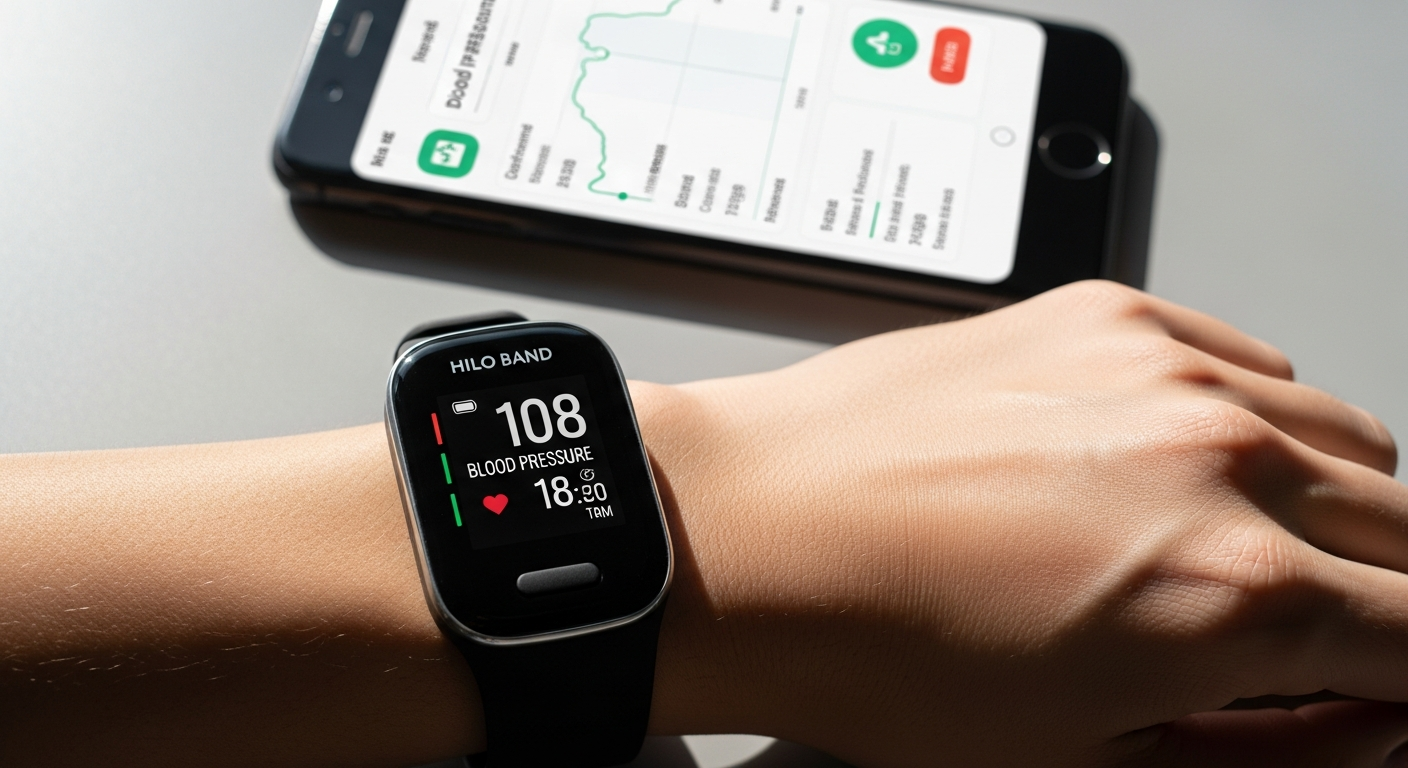
The Hilo Band represents a genuine shift in how you approach blood pressure management. This FDA-cleared wearable, developed by Swiss biotech innovator Aktiia, eliminates the need for cuff inflation altogether. Instead, it harnesses optical sensor technology to passively track your cardiovascular health 24/7, delivering up to 800 measurements monthly without disrupting your day or night.
Discover how the Hilo Band transforms your cardiovascular monitoring routine today.
This guide walks you through everything you need to know about the Hilo Band—from its groundbreaking optical sensing technology and real-world performance to the subscription costs and limitations you should consider. By the end, you’ll have the clarity to make an informed decision about integrating this device into your cardiovascular health routine.
How the Hilo Band’s Optical Sensor Technology Works
Photoplethysmography (PPG) Explained: Understanding How Light-Based Sensors Measure Blood Pressure
The Hilo Band’s core innovation lies in photoplethysmography technology. Rather than inflating a cuff around your arm, optical sensors embedded in the bracelet emit light into your wrist. These sensors detect how blood flow changes with each heartbeat, creating a detailed picture of your cardiovascular activity. This light-based measurement approach captures the subtle physiological signals that traditional cuffs miss entirely.
The device analyzes how your blood vessels absorb and reflect light as blood pulses through them. Machine learning algorithms process these optical signals in real-time, converting raw sensor data into accurate blood pressure readings. The technology bypasses the discomfort of cuff inflation while maintaining medical-grade accuracy that satisfies FDA regulatory requirements.
Passive Monitoring Mechanics: How the Device Continuously Collects Data
Unlike traditional monitors that require active effort, your Hilo Band works silently in the background. The optical sensors function continuously throughout your day and night, automatically collecting measurements during your normal activities. You don’t press buttons, initiate readings, or position your wrist in specific ways—the device simply monitors.
This passive approach solves a fundamental problem with traditional monitoring: user compliance. When blood pressure tracking requires deliberate action multiple times daily, adherence drops significantly. The Hilo Band’s seamless integration means you’re building a comprehensive health dataset without disrupting your routine.
Measurement Frequency and Accuracy: 800+ Monthly Readings Provide Comprehensive Cardiovascular Insights
Traditional spot-check monitoring typically captures 2-4 readings monthly during doctor visits or manual home checks. The Hilo Band delivers approximately 800 measurements per month, providing an extraordinarily complete picture of your cardiovascular patterns.
This measurement frequency reveals what isolated readings cannot: your true baseline blood pressure, circadian variations, stress-response patterns, and sleep-related changes. You’re not guessing about your cardiovascular health; you’re building evidence-based insights from continuous data collection.
Calibration Requirements: Initial Setup and Monthly Recalibration Protocols
The Hilo Band arrives with an included upper-arm cuff for calibration purposes. During initial setup, you’ll use this traditional cuff to establish your personal baseline. This calibration step teaches the optical sensors how your individual physiology translates light signals into blood pressure values.
Monthly recalibration maintains accuracy over time. While this requires discipline and access to the included cuff, it ensures your readings remain medically valid. Think of it as periodic system maintenance that keeps your continuous monitoring reliable.
Clinical Validation: FDA Clearance and CE Mark Certification
The Hilo Band holds FDA clearance as the first cuffless blood pressure monitor approved for over-the-counter use in the United States. It also carries CE Mark certification as a Class IIa medical device in Europe. These regulatory endorsements aren’t marketing claims—they represent rigorous clinical testing and government validation of the device’s safety and accuracy.
Multiple published studies support the Hilo Band’s measurement reliability, establishing clinical credibility that matters when you’re making health decisions based on the data.
Limitations with Certain Conditions: Why Arrhythmias and Irregular Heartbeats May Affect Sensor Accuracy
Optical sensors rely on detecting consistent heartbeat patterns. If you have atrial fibrillation, frequent premature contractions, or other arrhythmias, the device’s accuracy may suffer. The irregular electrical signals that characterize these conditions confuse the algorithms designed around normal heart rhythm patterns.
Before purchasing, assess whether any existing cardiac conditions might compromise the Hilo Band’s effectiveness for your specific situation. Learn whether continuous optical monitoring meets your cardiovascular monitoring needs.
Design, Durability, and Everyday Wearability
Lightweight Construction: 20-22 Gram Bracelet Designed for All-Day, All-Night Comfort
At approximately 20-22 grams, the Hilo Band weighs less than most traditional smartwatches. This minimal weight distribution means you’ll forget you’re wearing it during daily activities, while remaining secure enough for overnight monitoring.
The bracelet design accommodates wrist circumferences from 14-21 cm, fitting most adult wrists comfortably. Size adjustability ensures proper contact between optical sensors and your skin—a critical requirement for accurate measurements.
Premium Materials: Polished Ceramic Casing, Hypoallergenic Silicone Band, and Stainless Steel Hardware
The Hilo Band’s construction prioritizes both durability and skin safety. The polished ceramic casing provides an elegant aesthetic while protecting the optical sensors. The hypoallergenic silicone band prevents the skin irritation that sometimes accompanies extended wear of synthetic materials.
Stainless steel hardware connects these components, offering corrosion resistance and longevity. These material choices reflect medical-device-grade standards rather than consumer electronics shortcuts.
Waterproof Capabilities: IP68 Rating on Newer Models Enables Worry-Free Water Exposure
Newer Hilo Band versions feature IP68 waterproof rating, meaning you can shower, swim, and expose the device to water without concern. Earlier models were only splash-resistant, so verify which generation you’re purchasing if waterproof capability matters to you.
This improvement represents a meaningful step forward in everyday usability. You never need to remove the device before water exposure—it monitors continuously whether you’re swimming, showering, or caught in rain.
Aesthetic Appeal: Minimalist Bracelet Design That Blends Seamlessly into Daily Fashion
Unlike clinical medical devices that broadcast their purpose, the Hilo Band looks like a stylish accessory. The minimalist design works equally well in professional office settings, casual home environments, or athletic contexts. Your wrist device doesn’t announce “patient” or “sick person”—it simply appears as an attractive bracelet.
Extended Battery Life: Up to 9 Days Per Charge with 90-Minute Full Recharge Time
Battery longevity directly impacts monitoring consistency. The Hilo Band delivers up to 9 days of continuous operation per charge, meaning you recharge roughly once weekly. A full charge requires only 90 minutes, so you can top up overnight or during work breaks.
This battery performance translates to minimal charging friction. You’re not managing daily charging demands like some fitness trackers, nor are you struggling with charging cables multiple times weekly.
The Hilo Band App: Data Insights and Healthcare Integration
Real-Time Tracking Dashboard: View Blood Pressure Trends, Heart Rate Data, and Sleep Patterns
The companion app transforms raw sensor data into understandable visualizations. Your dashboard displays current blood pressure status, historical trends across days and weeks, heart rate patterns, and sleep duration correlations. Instead of isolated numbers, you see the complete picture of your cardiovascular patterns.
Interactive charts reveal when your blood pressure tends to rise or fall. You notice patterns emerging that would remain invisible in traditional spot-check monitoring.
Personalized Health Insights: Algorithm-Driven Recommendations Based on Your Unique Cardiovascular Patterns
The app’s machine learning algorithms analyze your personal data patterns and generate customized insights. Rather than generic health advice, recommendations address your specific cardiovascular signature. You might discover that afternoon stress triggers blood pressure spikes, or that poor sleep correlates with elevated morning readings.
These personalized insights drive behavioral changes more effectively than generic guidance ever could.
Medication Reminders: Built-In Alerts Help Maintain Consistent Medication Adherence
For people taking antihypertensive medications, consistent adherence matters enormously for treatment effectiveness. The Hilo Band app includes medication reminder functionality, sending alerts at your preferred times.
This feature addresses a common treatment barrier: simply forgetting to take medication on schedule. Regular adherence improves your cardiovascular outcomes measurably.
Healthcare Provider Reports: Generate Shareable PDF Reports with Detailed Trends
Rather than describing your blood pressure vaguely during doctor visits, you generate comprehensive reports from months of continuous data. These PDFs include trend analyses, measurements across different times of day, and correlation data showing how various factors affect your readings.
Healthcare providers receive the detailed, objective information they need to make informed medication and treatment decisions. You’re bringing evidence-based insights into clinical conversations rather than relying on memory or isolated spot checks.
iOS and Android Compatibility: Seamless Bluetooth Synchronization Across Both Major Smartphone Platforms
Whether you use iPhone or Android, the Hilo Band integrates seamlessly. Bluetooth synchronization happens automatically whenever the bracelet is near your phone, keeping your data current without manual intervention.
Data Visualization: Interactive Charts and Graphs Reveal Patterns Invisible in Traditional Spot-Check Readings
Trends that seem obvious in graphical form remain completely invisible in raw numbers. Viewing your blood pressure as an interactive chart across weeks and months reveals circadian patterns, response to activities, and gradual trends over time.
Visual representation transforms data into understanding.
Sleep and Blood Pressure Correlation: Understand How Rest Quality Impacts Your Cardiovascular Health Metrics
Sleep profoundly influences cardiovascular health, yet traditional monitoring provides no sleep-related context. The Hilo Band tracks sleep patterns alongside blood pressure measurements, revealing correlations between your rest quality and cardiovascular performance.
You discover whether poor sleep drives elevated blood pressure, or whether stress during waking hours continues affecting readings at night.
Detecting Hidden Hypertension Patterns with Continuous Monitoring
White Coat Syndrome Identification: Distinguish Between Anxiety-Induced Spikes and Genuine Hypertension
White coat syndrome—elevated blood pressure specifically during medical appointments—affects significant portions of the population. Traditional monitoring captures these anxiety-induced spikes, potentially leading to unnecessary medication.
Your Hilo Band’s 24/7 data reveals your true baseline. If readings consistently elevate only during doctor visits while remaining normal throughout daily life, you have concrete evidence distinguishing white coat syndrome from genuine hypertension.
Masked Hypertension Detection: Uncover Elevated Nighttime or Early-Morning Readings
Masked hypertension is the reverse problem: normal daytime readings that don’t reflect elevated nighttime or early-morning pressures. This dangerous pattern might escape detection with traditional monitoring that only occurs during office visits.
Continuous monitoring catches these hidden episodes. If your blood pressure spikes reliably at 3 AM or rises dangerously before breakfast, you’ll see the pattern clearly in your monthly data.
Circadian Rhythm Insights: Track How Your Blood Pressure Naturally Fluctuates Across 24-Hour Cycles
Your blood pressure isn’t static. Healthy circadian rhythm patterns show lower nighttime readings and elevated morning pressures as you wake. Abnormal patterns—flat readings across 24 hours or inverted nighttime spikes—indicate cardiovascular dysfunction requiring medical attention.
The Hilo Band documents your personal circadian blood pressure signature with precision impossible through manual monitoring.
Activity-Based Variations: Correlate Blood Pressure Changes with Exercise, Stress, Caffeine, and Sleep Patterns
Which activities raise your blood pressure? Does your morning coffee create measurable cardiovascular changes? Does evening stress elevate nighttime readings? These questions remain theoretical with traditional monitoring but become empirically answerable with continuous data.
You can manually log activities and correlate them with measured blood pressure changes, building an evidence-based understanding of what affects your cardiovascular system.
Medication Effectiveness Tracking: Monitor How Your Antihypertensive Drugs Perform Across Different Times of Day
Medications don’t lower blood pressure uniformly throughout the day. Some work best in morning hours; others maintain steadier effects. Continuous monitoring reveals when your medication’s effectiveness peaks and when levels decline before your next dose.
This information helps your healthcare provider optimize dosing schedules for better 24-hour coverage.
Early Warning Indicators: Identify Concerning Trends Before They Develop into Serious Cardiovascular Events
Gradual blood pressure trends developing over weeks often precede cardiovascular events. Traditional spot-check monitoring misses these slow progressions, but continuous data documents emerging patterns clearly.
Early detection enables preventive intervention—medication adjustments, lifestyle modifications, or closer medical monitoring—before problems become serious.
Pricing, Subscription Model, and Cost Considerations
Device Cost Range: $199-$335 for the Hilo Band Hardware
Initial device costs vary by retailer and promotional availability. Budget between $199 and $335 for the bracelet itself. This price point positions the Hilo Band competitively against frequent pharmacy blood pressure checks or repeated home monitor purchases.
Monthly Subscription Fee: $9.99 Per Month ($119.88 Annually) Required for Full App Features
The Hilo Band subscription isn’t optional—it’s required for accessing the app’s full feature set, cloud data storage, and continuous synchronization. Plan on $9.99 monthly, or $119.88 annually if you prefer upfront payment.
What’s Included in Subscription: Access to Advanced Insights, Healthcare Provider Reports, and Continuous Data Synchronization
Your monthly subscription covers advanced analytics, personalized health insights, healthcare provider report generation, and automatic data backup. These services require ongoing server resources and cloud storage.
Upfront Investment: Calculate Total First-Year Costs Including Device and Annual Subscription
Your first-year total investment ranges from approximately $319 (device at low end plus annual subscription) to $455 (device at high end plus annual subscription). This represents substantial but reasonable investment compared to years of pharmacy visits and manual monitoring.
Comparison to Traditional Monitoring: Cost Analysis Versus Frequent Doctor Visits, Pharmacy Cuff Readings, and Home Monitor Purchases
A traditional home blood pressure cuff costs $40-100 upfront but requires frequent replacements as accuracy drifts. Pharmacy blood pressure checks are typically free but provide minimal data. Doctor visits for blood pressure checks average $150-300 per visit. Over several years, the Hilo Band’s cost structure compares favorably to these fragmented alternatives.
Long-Term Value Proposition: ROI Potential Through Reduced Healthcare Visits and Better Medication Management
Comprehensive continuous monitoring might reduce unnecessary doctor visits for blood pressure checks. Better medication optimization through objective data could improve cardiovascular outcomes and reduce medication adjustment cycles. Calculate your personal ROI based on how frequently you currently visit healthcare providers for blood pressure management.
Subscription Flexibility: Understanding Cancellation Policies and Device Functionality Without Active Subscription
Verify subscription cancellation policies before purchasing. Understand whether you can pause subscription temporarily or what device functionality remains available if you cancel. Most medical devices become substantially less useful without their companion app access.
Who Benefits Most from Continuous Blood Pressure Monitoring
Hypertension Diagnosis Candidates: Individuals with Borderline Readings Needing Comprehensive Data for Medical Decisions
People with borderline blood pressure readings in the 130-139 systolic range benefit tremendously from continuous monitoring. Comprehensive data helps your healthcare provider distinguish between white coat syndrome and genuine hypertension, avoiding unnecessary medication in ambiguous cases.
Medication Optimization Seekers: People Adjusting Antihypertensive Drugs Who Need Detailed Feedback on Treatment Effectiveness
When starting or changing blood pressure medications, detailed feedback on effectiveness across different times of day guides treatment decisions. Rather than relying on isolated office readings, your doctor sees complete medication response patterns.
Preventive Health Enthusiasts: Those with Family History of Cardiovascular Disease Wanting Early Detection Capabilities
People with family histories of heart disease or stroke often benefit from aggressive cardiovascular risk monitoring. The Hilo Band enables proactive tracking before problems develop clinically.
Healthcare Compliance Improvers: Patients Struggling with Traditional Monitoring Adherence Who Need Frictionless Tracking
If traditional cuff-based monitoring requires so much effort that you skip sessions, continuous passive monitoring solves your compliance problem. You maintain consistent data without any behavioral effort.
Sleep Health Investigators: People Exploring Connections Between Rest Quality and Blood Pressure Regulation
Understanding sleep’s impact on your cardiovascular health requires simultaneous sleep and blood pressure data. The Hilo Band provides this correlation analysis directly.
Busy Professionals: Individuals with Demanding Schedules Who Can’t Accommodate Frequent Cuff-Based Monitoring Sessions
People with unpredictable schedules can’t reliably take multiple manual readings daily. The Hilo Band captures data regardless of schedule demands.
Remote Patient Monitoring Candidates: Those Participating in Telehealth Programs Requiring Continuous Cardiovascular Data
Healthcare providers offering remote monitoring programs benefit from real-time continuous patient data. If your care involves telehealth elements, the Hilo Band’s data integration streamlines communication with your medical team.
Important Limitations and Considerations Before Purchasing
Not a Replacement for Clinical Diagnosis: Continuous Monitoring Supplements But Doesn’t Replace Formal Hypertension Diagnosis Protocols
The Hilo Band generates valuable health data, but it doesn’t replace formal clinical hypertension diagnosis. Healthcare providers still need in-office evaluation, medical history assessment, and sometimes ambulatory monitoring before initiating treatment.
Use the Hilo Band as a diagnostic aid and monitoring tool, not a diagnostic replacement.
Arrhythmia and Irregular Heartbeat Concerns: Optical Sensors May Struggle with Atrial Fibrillation
If you have diagnosed or suspected arrhythmias, optical sensor accuracy becomes questionable. Consult your healthcare provider before purchasing if you have any heart rhythm concerns.
Monthly Calibration Requirement: Ongoing Need for Traditional Cuff Verification Maintains Accuracy
You’ll need access to the included upper-arm cuff monthly to maintain measurement accuracy. This requirement adds a maintenance step that traditional continuous monitors sometimes claim to eliminate entirely.
Subscription Dependency: Full Feature Access Requires Ongoing Monthly Payments
Unlike a one-time device purchase, you’re committing to ongoing monthly costs. Subscription dependency means discontinued devices become essentially worthless when companies cease app support.
Not a Fitness Tracker: Hilo Band Focuses Exclusively on Cardiovascular Monitoring
This device doesn’t track steps, calories, workout intensity, or general activity. It’s a medical-focused tool, not a comprehensive fitness device.
Wrist Placement Sensitivity: Optical Sensors Require Proper Positioning and Skin Contact
Optical sensors need consistent skin contact and appropriate wrist positioning. Loose bands, certain tattoos, or unusual skin characteristics might affect measurement quality.
Medical Condition Contraindications: Not Suitable for Everyone
Certain medical conditions might make the Hilo Band inappropriate for you. Always discuss with your healthcare provider before purchasing.
Data Privacy Considerations: Understanding How Your Cardiovascular Data Is Stored, Encrypted, and Protected
Your blood pressure data represents sensitive personal health information. Review Aktiia’s privacy policies and data security practices. Understand where data is stored, who can access it, and how it’s encrypted.
Comparing Hilo Band to Traditional and Alternative Monitoring Methods
Versus Standard Arm Cuff Monitors: Comfort, Convenience, and Frequency Advantages
Traditional upper-arm cuffs require active effort, cause occasional discomfort during inflation, and measure only when you remember to use them. The Hilo Band eliminates these friction points while dramatically increasing measurement frequency.
Standard cuffs remain the clinical gold standard for diagnosis, but for ongoing monitoring, continuous optical sensing offers practical advantages.
Versus Other Wearable Blood Pressure Devices: How Hilo’s FDA Clearance and Clinical Validation Stack Against Competitors
Several other wearable blood pressure devices exist, but few have FDA clearance for over-the-counter use. The Hilo Band’s regulatory status and published clinical validation set it apart from experimental wearables.
Versus Smartwatch Blood Pressure Features: Dedicated Medical-Grade Device Versus Multi-Function Wearables
Some smartwatches include blood pressure features, but these typically provide less rigorous medical validation and lower measurement accuracy than dedicated blood pressure monitors. The Hilo Band prioritizes cardiovascular monitoring specifically.
Versus Ambulatory Blood Pressure Monitoring: Cost and Accessibility Comparison to 24-Hour Clinical Monitoring Gold Standard
Ambulatory blood pressure monitoring—clinical 24-hour monitoring with devices that inflate hourly throughout the day—represents the diagnostic gold standard but costs hundreds of dollars per session and feels uncomfortable. The Hilo Band provides similar data comprehensiveness far more conveniently, though it supplements rather than replaces clinical ambulatory monitoring.
Versus Home BP Monitoring Programs: Effectiveness of Continuous Passive Data Versus Manual Twice-Daily Readings
Traditional home BP monitoring protocols recommend twice-daily manual readings. These spot checks miss the patterns that continuous monitoring captures. The Hilo Band eliminates manual measurement burden while providing vastly more complete data.
Clinical Accuracy Benchmarks: How Hilo Band Measurements Compare to Validated Reference Standards
Published studies validate the Hilo Band against standard mercury sphygmomanometers and FDA-cleared devices. The device meets rigorous accuracy standards comparable to traditional upper-arm cuffs.
User Experience Differences: Time Investment, Comfort Level, and Adherence Rates
Traditional monitoring requires active participation—finding your cuff, taking position, inflating, and recording results. The Hilo Band’s passive approach dramatically reduces friction, improving long-term adherence.
Getting Started: Setup, Calibration, and Initial Configuration
Unboxing and Hardware Inspection: What’s Included in the Package
Your Hilo Band package includes the bracelet itself, the included upper-arm cuff for calibration, charging cable, documentation, and quick-start guides. Inspect all components for shipping damage before proceeding.
App Download and Account Creation: Step-by-Step Smartphone Setup
Download the Hilo Band app from your device’s app store. Create a user account with email address and password. Enable Bluetooth on your smartphone.
Initial Calibration Process: Using the Included Upper-Arm Cuff to Establish Your Personal Baseline
During initial setup, you’ll perform three calibration measurements with the included upper-arm cuff. Sit comfortably, position the cuff correctly, and allow the device to complete measurements. These readings establish your personal conversion algorithm for optical sensor data.
Follow the app’s step-by-step guidance during this process. Proper calibration technique ensures accurate ongoing measurements.
Wrist Placement Optimization: Proper Positioning for Accurate Optical Sensor Readings
Position the Hilo Band on your wrist approximately one finger-width above your wrist crease. The optical sensors should contact your inner wrist skin directly. Ensure the band is snug enough for consistent skin contact but loose enough for comfortable all-day wear.
Proper positioning is critical for measurement accuracy. Refer to the included guides for specific placement instructions.
Bluetooth Pairing and Synchronization: Connecting the Hilo Band to Your Smartphone
Enable Bluetooth and follow the app’s pairing instructions. The Hilo Band should appear as an available device. Select it to establish the connection. The bracelet will automatically sync data whenever it’s near your paired phone with Bluetooth enabled.
First Readings Interpretation: Understanding Your Baseline Blood Pressure
Your first readings establish baseline data. Normal blood pressure reads below 120/80 mmHg. Elevated readings range 120-129/<80. Stage 1 hypertension is 130-139/80-89. Stage 2 hypertension exceeds 140/90. Consult your healthcare provider about what your personal readings mean for your health.
Monthly Recalibration Scheduling: Setting Reminders and Maintaining Accuracy
Set calendar reminders for monthly calibration. Perform three calibration measurements using the included cuff, following the same process as initial setup. This maintenance ensures accuracy over time.
Troubleshooting Common Setup Issues: Solutions for Connectivity Problems and Measurement Errors
If the Hilo Band fails to pair, restart both the bracelet and phone, then retry. If measurements seem inaccurate, verify proper wrist placement and recalibrate. If the app crashes or freezes, force-close and reopen it. Consult the support documentation for persistent problems.
Real-World Performance: What Users Actually Experience
Measurement Consistency: How Reliable Readings Remain Across Different Times, Activities, and Environmental Conditions
Users report consistent measurement accuracy across daily activities, various times of day, and different environmental conditions. While optical sensors have known limitations with certain skin types or conditions, the device performs reliably for most users under typical circumstances.
Battery Life in Practice: Actual Days Between Charges Under Typical Daily Wear
Real-world battery life typically aligns with manufacturer claims: 7-9 days between charges with continuous wear. Battery degradation occurs gradually over years, eventually shortening intervals.
App Responsiveness and Interface: User Experience Quality During Data Viewing
Users consistently praise the app’s intuitive interface and responsive performance. Data loads quickly, charts render smoothly, and report generation completes without frustrating delays. The interface requires minimal learning curve for most users.
Comfort During Extended Wear: Feedback on All-Day and Overnight Wearability
The Hilo Band’s lightweight design enables truly all-day wear without noticeable discomfort. Users report forgetting they’re wearing it during daily activities while remaining secure enough for active motion and sleep. Skin irritation remains rare with the hypoallergenic silicone band.
Data Accuracy Validation: How User Readings Compare to Simultaneous Traditional Cuff Measurements
Users who compare Hilo Band readings to simultaneous traditional cuff measurements generally find good agreement, particularly after proper calibration. Minor variations occur occasionally, consistent with the variability inherent in all blood pressure monitoring.
Healthcare Provider Reception: Doctor Feedback on Report Quality and Usefulness
Healthcare providers appreciate the detailed PDF reports with trend data and measurement frequency. The reports provide context traditional spot-check monitoring cannot match. Doctors report that the comprehensive data facilitates more informed treatment decisions.
Long-Term Adherence Rates: Whether Users Maintain Consistent Monitoring Habits Beyond the First Month
Users maintain monitoring habits long-term at far higher rates than with traditional cuff-based systems. The frictionless passive monitoring removes behavioral barriers that cause compliance failure with other devices.
Making Your Cardiovascular Health Data Work for You
The Hilo Band fundamentally transforms blood pressure monitoring. Rather than capturing isolated readings during stressful doctor visits, you’re building a comprehensive 24/7 picture of your cardiovascular patterns—the hidden rhythms that matter most. The FDA clearance and clinical validation mean you’re not experimenting with unproven technology; you’re accessing medical-grade monitoring that happens to feel like wearing a regular bracelet.
That said, this device shines brightest when you’re ready to commit. The monthly subscription isn’t optional, the monthly calibration requires discipline, and the optical sensors won’t work perfectly for everyone. If you have arrhythmias or simply prefer traditional monitoring, Hilo Band isn’t your answer.
But if you’re serious about understanding your cardiovascular health—whether you’re managing existing hypertension, investigating white coat syndrome, or optimizing medication effectiveness—this wearable delivers insights that traditional monitoring simply cannot match.
Start by consulting your healthcare provider about whether continuous monitoring aligns with your health goals. If you get the green light, the Hilo Band’s seamless integration into your daily routine means you’ll actually stick with monitoring long-term. That consistency transforms raw data into actionable health intelligence.
Take control of your cardiovascular health with the Hilo Band’s continuous monitoring technology.
Leave a Reply