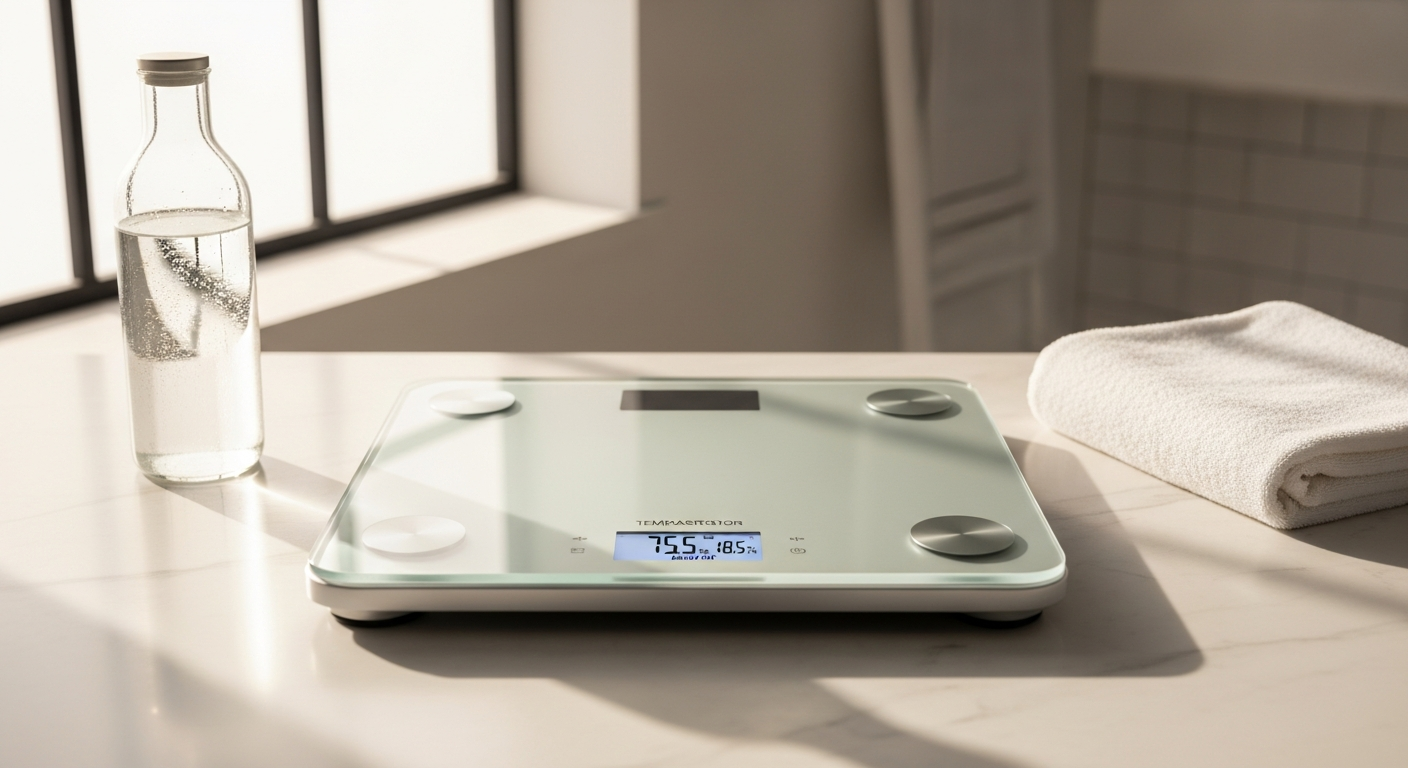
Most people step on a scale and see a single number—completely missing the real story about their health. That number tells you almost nothing about what's actually happening inside your body. You could lose weight while gaining fat, or build muscle while your visceral fat climbs dangerously high. The Hume Body Pod shatters that limitation by measuring 41 different body composition metrics in under 60 seconds, delivering insights that rival medical-grade DEXA scans.
The Hume Body Pod represents a significant leap forward in at-home health technology, employing 8-frequency bioelectrical impedance sensors to capture detailed information about muscle mass, fat distribution, visceral fat, bone density, and metabolic age. Rather than guessing at your health based on weight alone, you get comprehensive data that reveals how your body truly responds to your lifestyle choices. This is the kind of information doctors and practitioners have relied on for years—now available in your home.
Discover the Hume Body Pod and transform your health tracking today.
How the Hume Body Pod's 8-Frequency Sensor Technology Works
Bioelectrical Impedance Analysis (BIA) Explained
The Hume Body Pod uses bioelectrical impedance analysis—a technology that sends low-frequency electrical signals through your body to measure tissue composition. Your body is roughly 60% water, and different tissues conduct electricity at different rates. Muscle, being more water-dense, conducts electricity better than fat tissue. By measuring how quickly and efficiently these signals travel through your body, the device calculates your body composition with remarkable precision.
8-Frequency Advantage
Most home scales use single or dual-frequency bioelectrical impedance, which provides a surface-level measurement. The Hume Body Pod's 8-frequency approach sends signals at multiple frequencies simultaneously, allowing the device to distinguish between different tissue types and measure both intracellular and extracellular water. This multi-frequency strategy penetrates deeper into your tissues and captures a far more complete picture than conventional single-frequency scales, resulting in significantly superior accuracy.
98% Accuracy Claims
Hume claims 98% accuracy comparable to DEXA scans—clinical-grade imaging that requires a hospital visit and radiation exposure. While bioelectrical impedance can never be 100% identical to DEXA scanning, the Hume Body Pod's multi-frequency approach comes remarkably close, particularly for tracking changes over time. The real value isn't necessarily achieving perfect individual measurements, but rather capturing consistent, repeatable data that shows how your body composition shifts week to week.
Medical-Grade Measurement Capability
What makes the Hume Body Pod exceptional is its ability to deliver hospital-quality insights from a home device. The sensor technology, data processing algorithms, and validation protocols are comparable to what clinics use. You get medical-grade information without scheduling appointments, traveling, waiting in reception areas, or paying hundreds of dollars per scan.
Segmental Analysis
Rather than providing a single whole-body measurement, the Hume Body Pod breaks down composition metrics by body region—arms, legs, torso, and core. This segmental data reveals asymmetries and helps you understand which areas are gaining muscle, losing fat, or experiencing other changes. Athletes and fitness enthusiasts find this particularly valuable for identifying imbalances that affect performance or increase injury risk.
Real-Time Data Processing
The technology enables complete body composition scans in under 60 seconds with instant app synchronization. You step on the device, stand still while the sensors take measurements, and within moments your full data profile appears in the Hume Health app. This speed and responsiveness make daily tracking practical rather than burdensome.
The 41 Metrics That Matter: Beyond Basic Weight Tracking
Body Fat Percentage and Distribution
The device distinguishes between visceral fat (the dangerous kind surrounding your organs) and subcutaneous fat (under your skin). Location matters enormously for health. High visceral fat correlates with metabolic dysfunction, inflammation, and chronic disease risk, even in people with relatively normal BMI. Understanding this distribution gives you actionable health information that simple weight never provided.
Muscle Mass and Lean Body Mass
Skeletal muscle, water retention, and protein distribution all factor into your lean body mass calculations. Tracking these metrics separately reveals whether changes in overall weight come from muscle gain (desirable) or fat gain (generally undesirable). For anyone doing strength training, this distinction is crucial for assessing whether your training program is actually building muscle.
Metabolic Age and BMR
The device calculates your basal metabolic rate—the calories you burn at rest—and compares it to standard ranges for your chronological age. Your metabolic age might be significantly lower or higher than your actual age, depending on your fitness level and body composition. A lower metabolic age reflects a healthier metabolic profile and better fitness status.
Bone Density and Mineral Content
Monitoring skeletal health and osteoporosis risk factors becomes increasingly important with age. The Hume Body Pod tracks bone density trends, helping you identify whether your lifestyle supports bone health or contributes to deterioration. This is particularly valuable for aging adults and post-menopausal women at higher osteoporosis risk.
Body Water Percentage
Tracking hydration status and electrolyte balance provides insights into your cellular health and workout recovery. Proper hydration supports metabolic function, cognitive performance, and physical performance. Abnormal water retention can signal inflammation, hormonal changes, or other health issues worth investigating.
Segmental Metrics
Individual measurements for arms, legs, and torso composition reveal your body's unique composition profile. You might have excellent muscle in your legs but need more work on upper body strength, or vice versa. This granular data guides more effective training and nutrition decisions.
Cardiovascular Health Indicators
The device tracks heart rate variability, resting heart rate, and circulatory performance data. These metrics provide windows into your autonomic nervous system function and cardiovascular fitness. Heart rate variability, in particular, indicates recovery status and stress levels—valuable information for optimizing training and lifestyle.
Protein, Minerals, and Impedance Values
Advanced metrics including estimated protein content, mineral distribution, and impedance values appeal particularly to serious athletes and health optimization enthusiasts. These measurements support deep biohacking experiments where people want to understand how specific interventions affect their body at a granular level.
Explore all 41 metrics with the Hume Body Pod's advanced measurement system.
Hume Health App Integration: AI Insights That Drive Real Change
AI-Powered Personalized Recommendations
Machine learning algorithms analyze your data and suggest lifestyle adjustments tailored to your specific body composition trends. The app doesn't just show you numbers—it interprets them and tells you what to focus on. If your visceral fat is climbing, it recommends dietary adjustments. If muscle mass is declining, it suggests strength training emphasis. This personalized guidance transforms raw data into actionable change.
Meal Scoring Functionality
The app evaluates foods and meals based on your body composition goals. If you're trying to lose fat while building muscle, different meals score differently based on their likely impact on your specific situation. Over time, you learn which foods support your goals and which work against them, creating a feedback loop that drives better choices.
Apple Health and Google Health Connect Compatibility
Seamless data synchronization with your existing health ecosystem means your body composition data integrates with your fitness tracking, steps, workout data, and health records. Rather than isolated silos of information, everything flows together into a unified health picture.
Trend Tracking and Progress Visualization
Long-term analytics show how your body responds to diet, exercise, sleep, and stress. You can see patterns that daily or weekly data might obscure. Maybe your fat loss stalls during high-stress periods, or muscle gain accelerates when you prioritize sleep. These connections inform better overall lifestyle management.
Lifestyle Correlation Analysis
The app's ability to connect body composition changes to specific habits reveals what actually works for your individual body. Your neighbor might thrive on intermittent fasting while you respond better to regular meals. The data shows you your personal truth rather than relying on general advice that might not apply to you.
Notification and Goal-Setting Features
Customizable alerts and milestone tracking provide motivation and accountability. When you hit a goal—5 pounds of fat loss, 2 pounds of muscle gain—the app celebrates it. Consistent notifications remind you to measure and track, building the habit of regular monitoring.
Data Privacy and Security
Hume Health protects your sensitive health information through encrypted data transmission and secure storage. Your body composition data is personal and often revealing; knowing it's protected matters.
Physical Design and Practical Usability
Compact Footprint (315mm x 315mm)
Space-saving dimensions make the device suitable for bathrooms, bedrooms, or home gyms without requiring dedicated space. It fits in places where larger equipment wouldn't work, making daily use more convenient.
Tempered Glass Surface
Durability, easy cleaning, and slip-resistant design ensure safety during use and longevity over time. The glass surface remains attractive and functional even after years of daily use.
Retractable Handle Design
Portability for travel, multi-location tracking, or shared household use means you can take the scale with you. If you travel frequently or move between homes, the handle makes transport practical.
Rechargeable Battery Specifications
The device operates on a rechargeable battery, eliminating the need for constantly replacing batteries. A full charge lasts weeks of regular use, and charging takes a few hours.
Bluetooth Connectivity
Wireless setup and app pairing happen seamlessly once you've completed initial configuration. Troubleshooting common connection issues typically involves simple re-pairing procedures.
Display Options
Basic information appears on the device screen during measurement, while comprehensive metrics appear exclusively in the app. This design keeps the device simple while putting detailed insights where you can really examine them.
Weight Capacity and User Limits
The device accommodates various body types and sizes within standard specifications. Verify the specific weight capacity matches your needs, though the device handles the vast majority of users comfortably.
Measurement Consistency and Optimal Tracking Conditions
Timing Considerations
Morning measurements before eating or exercise yield most consistent results. Your body composition changes throughout the day based on food intake, hydration, and activity. Morning measurements, taken under consistent conditions, provide your most reliable data point for tracking trends.
Hydration Impact on Readings
Water intake, sweat, and electrolytes affect body composition measurements. Heavy sweating or significant dehydration can distort readings. Maintaining consistent hydration status between measurements prevents artificial fluctuations that don't represent actual body composition change.
Environmental Factors
Temperature, humidity, and surface placement effects on accuracy matter more than many people realize. Measuring on a hard, level surface with similar room temperature each time creates more consistent conditions. Soft surfaces, humidity extremes, or uneven placement can introduce measurement variability.
Frequency Recommendations
Daily, weekly, or monthly measurement frequencies all serve different purposes. Daily tracking reveals trends quickly but can feel obsessive. Weekly measurements balance consistency with sufficient time for meaningful changes. Monthly measurements work for long-term trend analysis without frequent monitoring.
Avoiding Measurement Errors
Common mistakes leading to inconsistent or erratic readings include inconsistent hydration, varying meal timing, measuring at different times, using different surfaces, or failing to maintain stable stance during measurement. Standardizing these variables improves reliability.
Calibration and Maintenance
Device care ensures long-term accuracy and reliability. Keep the surface clean and dry, store the device on a stable surface, and charge regularly. The device rarely requires formal calibration, but consistent care extends accuracy over years of use.
Seasonal and Hormonal Variations
Understanding natural fluctuations in body composition metrics prevents misinterpretation of data. Women's body water content varies throughout the menstrual cycle. Seasonal activity changes affect muscle mass. Weather-induced hydration shifts create temporary fluctuations. Recognizing these patterns prevents overreacting to temporary changes.
Hume Body Pod vs. Traditional Scales and DEXA Scans
Traditional Bathroom Scale Limitations
Weight alone masks critical health changes. You could lose 5 pounds of muscle while gaining 5 pounds of fat, with the scale showing no change. Or you could gain weight from increased muscle while losing fat—something that would concern someone looking at the scale but excite someone examining body composition. Weight provides almost no useful health information without context.
DEXA Scan Comparison
DEXA scans provide slightly more precision than bioelectrical impedance but require appointments, radiation exposure, and cost $100-300 per scan. DEXA remains the gold standard for clinical assessment, but the convenience and frequency advantages of daily Hume tracking often provide more valuable information over time. You can't afford weekly DEXA scans; you can easily do weekly Hume measurements.
Bioelectrical Impedance vs. Other Measurement Methods
BIA has strengths and weaknesses compared to other approaches. It's fast, non-invasive, and affordable. It shows your body's current state with reasonable accuracy. However, BIA can be affected by hydration status, recent meals, and medical conditions like edema in ways that DEXA scans aren't. For regular trend tracking, BIA excels. For clinical diagnosis, DEXA remains superior.
At-Home Convenience Factor
Time savings and frequency advantages of daily tracking matter profoundly. With a home device, measurement takes 60 seconds. Spontaneous tracking at any time costs nothing and requires no planning. This accessibility changes your relationship with your health data, enabling the consistent monitoring necessary for understanding how your body truly responds to your lifestyle.
Cost-Effectiveness Analysis
A $229 device that you use weekly for five years costs about $9 per measurement. A DEXA scan costs $150-300 each. Even tracking monthly with the Hume Body Pod becomes cost-effective within months, and weekly tracking becomes dramatically cheaper than any professional alternative.
Clinical Validation
Research supports Hume Body Pod accuracy claims, with studies showing bioelectrical impedance measurements correlate strongly with DEXA results when measurement conditions are optimized. While not every measurement will match perfectly, the overall accuracy and repeatability make the device suitable for tracking trends and assessing body composition changes.
When DEXA Scans Still Matter
Professional imaging remains valuable for specific scenarios: baseline assessment for someone starting a major health transformation, clinical diagnosis of osteoporosis or sarcopenia, medical monitoring for certain conditions, or validation when you want to cross-check home measurements. For most people doing consistent self-monitoring, DEXA becomes unnecessary once you have Hume data.
Real-World Performance: User Experience and Reliability
Ease of Use for Beginners
The setup process is straightforward enough for first-time users, though the app's complexity might overwhelm someone unfamiliar with biometrics. Download the app, create an account, pair via Bluetooth, stand on the scale—these steps take minutes. Understanding what all 41 metrics mean takes longer, but the app provides educational resources.
Consistency of Readings
User reports on measurement reliability show generally good repeatability when people measure under consistent conditions. Most users find that multiple measurements on the same day produce similar results, suggesting the device is measuring something real rather than random variation.
App Performance and Stability
Common bugs, glitches, and technical issues reported by users tend to be minor—occasional app crashes, rare synchronization delays, or occasional display glitches. Most users report these issues happen infrequently, and updates typically resolve problems. The app isn't flawless, but it's generally functional.
Customer Service Quality
Support responsiveness varies based on recent user reports. Some users praise responsive support that resolved issues quickly; others report slower response times or less satisfactory resolutions. Support quality doesn't match top-tier tech companies but seems comparable to other health device manufacturers.
Connectivity Reliability
Bluetooth pairing typically works smoothly once initial setup is complete. Occasional troubleshooting is needed—re-pairing the device or reinstalling the app—but these steps usually resolve issues quickly. Most users don't experience ongoing connectivity problems.
Data Accuracy Validation
User experiences comparing Hume results to other measurement methods show the device generally produces reasonable estimates. When people compare Hume results to professional DEXA scans, differences usually fall within expected margins. The device isn't perfectly accurate every measurement, but it's accurate enough for meaningful trend tracking.
Long-Term Durability
Device longevity appears good based on available user reports. The tempered glass surface is durable, and the rechargeable battery maintains capacity for years. Performance degradation over time seems minimal for users who properly care for their devices.
Who Benefits Most: Ideal Use Cases and User Profiles
Fitness Athletes and Strength Trainers
Tracking muscle gain, fat loss, and body recomposition progress represents a primary use case. Athletes need to know whether training is actually building muscle or just burning calories. The segmental analysis helps identify whether gains are balanced across the body or concentrated in specific areas.
Weight Loss Journey Participants
Monitoring fat loss while preserving muscle mass during caloric restriction is critical for successful weight loss. Traditional scales punish people for building muscle during weight loss—the Hume Body Pod rewards them by showing they're losing fat while maintaining muscle. This positive feedback drives better adherence to nutrition plans.
Health-Conscious Professionals
Preventive health tracking and metabolic optimization appeal to people who view their body as worthy of serious attention. These individuals want detailed data to make informed decisions about health and often have the resources to invest in premium health tools.
Medical Practitioners and Coaches
Client monitoring and evidence-based progress documentation become much easier with objective body composition data. Personal trainers can show clients exactly what's changing with their training. Nutritionists can demonstrate the impact of dietary changes. Doctors can monitor metabolic markers over time.
Biohackers and Optimization Enthusiasts
Deep health data for personalized lifestyle experimentation attracts people designing their lives around quantified data. These users love the 41 metrics and use them to test hypotheses about how different interventions affect their bodies.
Aging Adults
Monitoring sarcopenia (muscle loss), bone density, and metabolic health markers becomes crucial with age. The Hume Body Pod helps aging adults maintain awareness of physical changes and take action before serious decline occurs.
Post-Injury Rehabilitation
Tracking muscle recovery and functional capacity restoration helps people understand their progress during rehabilitation. Objective measurements provide motivation and help guide the pace of recovery.
Pricing, Availability, and Financial Considerations
Current Pricing Structure
The standard price is approximately $229, often available as a sale price from an original MSRP of $352. Frequent sales make the device even more accessible, sometimes dropping below the standard price temporarily.
HSA and FSA Eligibility
The device qualifies for tax-advantaged health savings account submission, allowing you to use pre-tax health savings dollars for purchase. This benefit effectively reduces the cost by whatever tax bracket you're in—25% off for someone in the 25% tax bracket, for example.
Shipping and Delivery
Free shipping is standard, and delivery typically arrives within 5-10 business days depending on your location.
Warranty Coverage
Device protection plans and manufacturer guarantees cover defects and malfunctions. Review specific warranty terms, but generally the device includes a standard warranty protecting against manufacturing defects for at least one year.
Financing Options
Check whether payment plans or subscription models are available, though the device is already affordable enough that most people purchase outright.
Comparison to Competitor Pricing
Compared to other advanced body composition scales, the Hume Body Pod is competitively priced. Some alternatives cost more for similar or lesser functionality; some cost less but sacrifice accuracy or features. At $229, the Hume Body Pod represents reasonable value for the measurement quality and app features included.
Long-Term Value Calculation
Cost per measurement drops the more frequently you use it. Someone measuring weekly for five years pays roughly $9 per measurement. Professional body composition services cost $50-300 per session. From a pure cost perspective, the Hume Body Pod delivers exceptional value.
Limitations, Drawbacks, and When It Might Not Be Right for You
BIA Accuracy Limitations
Extreme dehydration, edema, certain medical conditions, or unusual body compositions can reduce measurement precision. If you have specific health conditions affecting hydration or electrolyte balance, bioelectrical impedance might not be appropriate without professional guidance.
App Reliability Issues
Reported bugs, synchronization delays, and software inconsistencies occasionally occur. While usually minor, these issues can frustrate users. If you require absolute reliability, this might not be the device for you.
Connectivity Problems
Bluetooth pairing failures and troubleshooting challenges happen occasionally, though most users resolve them easily. If your home has poor Bluetooth coverage or you're technologically uncomfortable with device pairing, setup might frustrate you.
Measurement Condition Sensitivity
The need for consistent conditions limits spontaneous tracking. You can't just hop on the scale after a workout or meal and expect meaningful results. This requirement feels like a limitation compared to traditional scales, though it's scientifically sound.
Not a Replacement for Medical Diagnosis
Understanding what the device can and cannot assess is crucial. The Hume Body Pod provides health data and trends, but it doesn't diagnose diseases or replace professional medical evaluation. If you have specific health concerns, consult a doctor—the Hume Body Pod supplements but doesn't replace medical care.
Learning Curve for Data Interpretation
Avoiding misinterpretation of metrics and over-reliance on numbers requires some education. Someone unfamiliar with body composition science might see a number spike and panic unnecessarily. Spending time understanding what metrics mean prevents this stress.
Customer Service Gaps
Reported difficulties with technical support and issue resolution occasionally occur. Customer service isn't consistently excellent across the company, so support expectations should be modest.
Making the Decision: Is the Hume Body Pod Worth It?
Investment Justification
Calculating ROI based on your health goals and tracking frequency helps determine value. If you measure weekly for five years, each measurement costs about $9—far less than professional alternatives. If your health goals depend on understanding body composition changes, the investment pays for itself.
Alternative Solutions
Comparing to gym-based DEXA scans, bioimpedance analysis at wellness centers, or professional body composition services reveals that none match the Hume Body Pod's convenience and affordability for regular tracking. These alternatives work for periodic baseline assessments, but the Hume enables consistent monitoring that drives real behavior change.
Trial Period Considerations
Whether to test the device before full commitment depends on your confidence level. If you're unsure about body composition tracking's value for you, renting a similar device or trying it at a gym first might make sense. However, most people who use it regularly find it valuable.
Integration with Existing Health Tools
Compatibility with your current fitness trackers, apps, and health ecosystem matters. If you use Apple Health or Google Health Connect, the Hume Body Pod integrates seamlessly. If you use a competing ecosystem, verify compatibility first.
Long-Term Commitment
Understanding that body composition tracking requires consistent measurement habits is essential before purchase. You can't measure sporadically and expect meaningful data. The $229 investment only delivers value if you'll use it regularly over months or years.
Personal Health Priorities
Matching device capabilities to your specific wellness objectives ensures the Hume Body Pod actually serves your needs. If your goal is understanding your health deeply, tracking body composition changes, or optimizing your body, it's an excellent tool. If you only care about total weight for basic health monitoring, traditional scales serve you adequately.
Expert Recommendations
Guidance from fitness professionals and health practitioners on device suitability is worth seeking. Your personal trainer, doctor, or nutritionist might have specific recommendations based on your situation.
Getting Started: Setup, First Measurements, and Maximizing Accuracy
Unboxing and Initial Setup
The device arrives ready to use with minimal hardware preparation. Charge the battery fully, download the Hume Health app, and prepare a hard, level surface for placement. Within minutes, you're ready for your first measurement.
App Download and Account Creation
Download the Hume Health app from Apple or Google Play stores. Registration requires an email address and basic health information. Review privacy considerations—understand what data you're sharing and how it's used.
First Measurement Protocol
Optimal conditions for baseline body composition assessment mean measuring in the morning before eating, on a hard level surface, with bare feet, after using the bathroom. This baseline establishes your starting point for all future comparisons.
Establishing Measurement Routine
Building consistent tracking habits means picking a specific time (morning works best) and measuring regularly. Daily, weekly, or monthly frequencies all work—choose based on your goals. Consistency matters more than frequency.
Interpreting Your Baseline Metrics
Understanding your starting point and identifying areas of focus prevents overwhelm. Your metabolic age might be higher than you expected, or muscle mass might be lower. Rather than judging yourself, use this information as a starting point for improvement.
Setting Realistic Goals
Using initial data to establish health and fitness targets creates a roadmap. Rather than vague goals like "get healthier," specific targets like "lose 8 pounds of fat while gaining 3 pounds of muscle" give you something concrete to work toward.
Tracking Progress Over Time
Weekly, monthly, and quarterly analysis patterns for motivation help you see progress that daily fluctuations might obscure. Three months of consistent tracking will show clear trends. Six months show transformation. A year of data reveals your body's response to your lifestyle over extended time.
The Bottom Line: Advanced Body Composition Tracking for Serious Health Optimization
The Hume Body Pod represents a genuine breakthrough in accessible body composition analysis. With 8-frequency sensors delivering 98% accuracy comparable to clinical DEXA scans, it transforms how you understand your internal health—moving far beyond the limitations of traditional bathroom scales. The device captures 41 distinct metrics in under 60 seconds, providing the granular data you need to track muscle gain, fat loss, and metabolic health with precision.
The real power emerges when you pair the hardware with Hume Health's AI-driven app, creating a feedback loop that connects your body composition changes directly to your diet, sleep, stress, and exercise habits. You don't just see numbers; you understand what those numbers mean and how your lifestyle affects them. This insight drives real behavioral change that leads to actual health transformation.
For fitness athletes pursuing muscle gain and fat loss, fat loss enthusiasts who need to preserve muscle during caloric restriction, health practitioners monitoring clients, and anyone serious about understanding their body's response to lifestyle changes, the $229 investment delivers exceptional value. You'll spend more on a week of coffee than on a measurement tool that works for years, providing data comparable to clinic-based assessments.
Your body speaks in data. The Hume Body Pod gives you the tools to listen. Rather than guessing at your progress or relying on weight as your only measure, you gain objective insight into what's actually happening inside your body. This knowledge empowers you to make decisions based on facts rather than assumptions.
Start your body composition journey with the Hume Body Pod today.
Leave a Reply