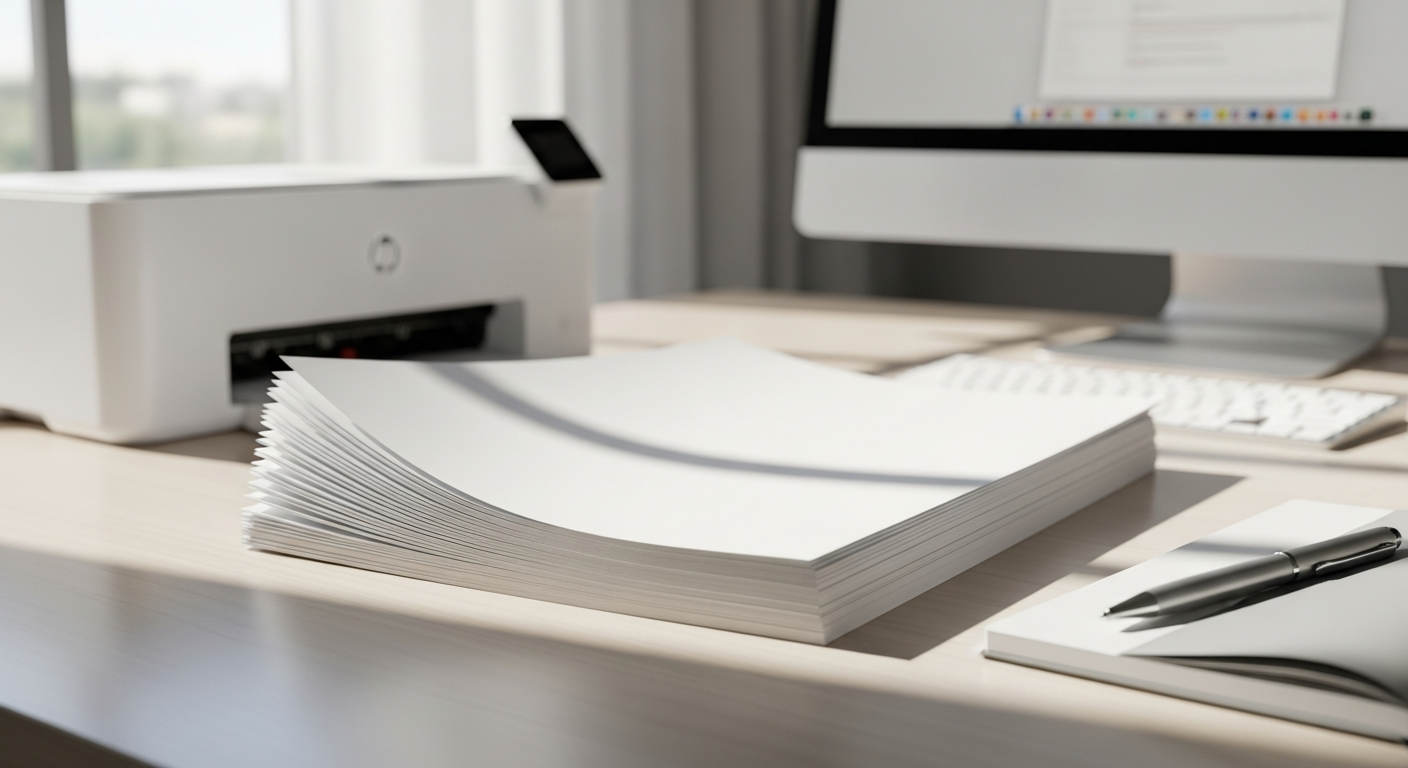
Choosing the right Premium A4 Paper can make a noticeable difference in how your documents look, feel, and perform during printing. Paper may seem like a simple office essential, but factors such as weight, brightness, opacity, texture, and printer compatibility can affect the final result.
From everyday reports and school assignments to client presentations and professional correspondence, quality A4 paper may help produce cleaner, more polished pages.
With many options available, understanding basic paper specifications can help you choose a product that matches your printer and intended use.
What Is Premium A4 Paper?
Premium A4 Paper generally refers to higher-quality paper manufactured for consistent printing, smooth handling, and a more refined appearance. A4 sheets measure 210 × 297 mm, making this format widely used for business, educational, administrative, and personal documents.
Premium paper may offer improvements in areas such as smoothness, brightness, opacity, and thickness compared with basic copy paper.
These characteristics can help text appear crisp while supporting cleaner presentation for documents that need a professional finish.
Common uses include:
- Business reports and proposals
- Letters and correspondence
- School projects and assignments
- Presentations and handouts
- Forms and administrative documents
- Resumes and cover letters
- Charts and simple graphics
- Everyday office printing
Why Does Paper Quality Matter?
The quality of your A4 printing paper can influence both appearance and printer performance. Low-quality sheets may occasionally produce uneven results, excessive show-through, or feeding problems, depending on the printer and paper.
Higher-quality paper is typically designed with greater consistency in thickness, surface texture, and sheet dimensions. A smoother surface may help toner or ink create sharper lines and more readable text.
Paper quality becomes especially important when documents will be shared with clients, customers, teachers, colleagues, or other readers. A clean, sturdy sheet can give printed material a more polished appearance.
Understanding A4 Paper Weight
Paper weight is commonly measured in grams per square meter (gsm). The appropriate weight depends largely on what you plan to print.
| Paper Weight | Typical Use | General Characteristics |
|---|---|---|
| 70–75 gsm | Drafts and high-volume printing | Lightweight and economical |
| 80 gsm | Everyday office documents | Standard and versatile |
| 90 gsm | Reports and correspondence | Slightly thicker feel |
| 100 gsm | Presentations and important documents | More substantial |
| 120 gsm+ | Covers and specialty documents | Thick and sturdy |
For regular office printing, 80 gsm A4 paper is a common choice. If presentation and durability matter more, 90 or 100 gsm paper may provide a more substantial feel.
Before using heavier paper, check your printer specifications to confirm the supported paper-weight range.
Brightness and Whiteness Can Affect Printed Results
Brightness describes how much light a sheet reflects, while whiteness relates to its overall visual shade. Although the two terms are sometimes used interchangeably, they measure different paper characteristics.
Brighter white paper can create stronger contrast between the background and printed text. This may make black text appear more defined and colored elements more noticeable.
For ordinary internal documents, extremely bright paper may not be necessary. Reports, presentations, resumes, and customer-facing materials may benefit more from a brighter sheet.
Why Opacity Matters for Double-Sided Printing
Opacity indicates how effectively paper prevents printed content from showing through to the opposite side.
If you regularly use double-sided printing, opacity is worth checking. Higher-opacity sheets can reduce visible text or graphics from the reverse side, making both pages easier to read.
This feature may be particularly useful for:
- Reports
- Manuals
- Training materials
- Booklets
- Contracts
- Academic documents
Smoothness and Print Quality
Paper texture affects how ink or toner interacts with the sheet. Premium paper typically has a relatively smooth and uniform surface.
For laser printers, a consistent surface may help toner produce defined text and graphics. For inkjet printers, the right paper can help manage ink absorption and reduce uneven-looking results.
However, not every premium sheet is designed for every printer. Always review the packaging for inkjet, laser, copier, or multifunction printer compatibility before purchasing.
Premium A4 Paper for Inkjet and Laser Printers
Printer compatibility is one of the most important considerations when choosing paper.
Inkjet Printers
Inkjet printers apply liquid ink directly to paper. Suitable sheets should absorb the ink effectively without excessive spreading or bleeding.
Premium inkjet-compatible A4 paper may work well for:
- Color documents
- Charts
- School projects
- Letters
- Reports containing graphics
Laser Printers
Laser printers use toner and heat during the printing process. Paper designed for laser printing should tolerate this process and feed consistently through the machine.
Laser-compatible premium paper may be useful for:
- Business documents
- Text-heavy reports
- Contracts
- Forms
- High-volume office printing
Multifunction Printers
Many modern multifunction printers support several types and weights of paper. Universal or multipurpose A4 paper can be convenient when multiple printers share the same paper supply.
Standard Copy Paper vs Premium A4 Paper
Your intended use can help determine whether standard or premium paper makes more sense.
| Feature | Standard Copy Paper | Premium A4 Paper |
| Everyday drafts | Suitable | Suitable |
| Professional documents | Basic presentation | More refined presentation |
| Thickness | Usually lighter | May offer heavier options |
| Opacity | Varies | Often higher |
| Surface | Standard | Typically smoother |
| Double-sided printing | Depends on sheet | May provide better opacity |
| Cost | Usually lower | Often higher |
Standard paper can be practical for drafts and routine internal printing. Premium paper may be worth considering for documents where presentation, durability, or print clarity matters more.
How to Choose Premium A4 Paper
Rather than selecting paper based only on packaging or price, consider how you plan to use it.
First, check your printer compatibility. Confirm whether your printer supports the paper type and gsm you are considering.
Next, think about your printing volume. Lightweight multipurpose paper may make sense for frequent printing, while thicker premium sheets may be better reserved for presentations or important documents.
You can also compare:
- Paper weight
- Sheet count per ream
- Brightness
- Opacity
- Surface smoothness
- Printer compatibility
- Double-sided printing suitability
- Environmental certifications
- Price per sheet
Comparing price per sheet rather than package price alone can make different pack sizes easier to evaluate.
Order Infowerk Premium A4 Printer Paper now and start experiencing the difference quality makes.
When Is Premium Paper Worth Considering?
Premium paper may be useful when the printed document needs to create a polished impression or withstand repeated handling.
For example, you might choose it for a business proposal that will be presented to a client. A student may prefer thicker sheets for a final project, while a job seeker may use higher-quality paper for printed resumes.
For temporary notes, rough drafts, or internal documents, basic copy paper may be sufficient. Matching the paper to the purpose can help control printing costs without compromising important materials.
How Should You Store A4 Paper?
Even good-quality paper can develop feeding or printing problems when stored improperly.
Keep unused paper in a cool, dry location and leave it in its original wrapper until needed. Paper can absorb moisture from the surrounding air, which may contribute to curling, sticking, or inconsistent feeding.
For better storage:
- Keep paper away from direct sunlight.
- Avoid damp storage areas.
- Store sheets flat rather than upright.
- Keep opened reams covered when possible.
- Avoid placing paper directly on floors.
- Allow paper to adjust to room conditions before printing if it has been stored somewhere unusually cold or warm.
Proper storage can help maintain the paper’s shape and printing performance.
Can Premium A4 Paper Help With Professional Documents?
It may. Paper alone cannot improve the content or design of a document, but it can influence its physical presentation.
Sharper-looking text, good opacity, consistent texture, and a substantial feel can complement a well-designed document. This may matter for proposals, resumes, portfolios, presentations, formal correspondence, and other materials intended for external readers.
Frequently Asked Questions About Premium A4 Paper
What size is A4 paper?
A4 paper measures 210 × 297 millimeters, or approximately 8.27 × 11.69 inches.
Is 80 gsm paper suitable for everyday printing?
Yes. 80 gsm paper is commonly used for office documents, schoolwork, forms, letters, and general printing.
Is 100 gsm paper better than 80 gsm?
Not necessarily. A 100 gsm sheet is thicker and may feel more substantial, while 80 gsm paper can be more practical for routine printing. The better choice depends on your document and printer.
Can A4 paper be used for double-sided printing?
Yes, but paper with sufficient opacity generally performs better because less content from the reverse side may remain visible.
Can the same paper work in inkjet and laser printers?
Some multipurpose papers are designed for both technologies. Check the product specifications because printer compatibility varies between paper types.
How much paper comes in a ream?
A standard ream commonly contains 500 sheets, although smaller and larger packages are also available.
Getting Better Results With the Right A4 Paper
The right Premium A4 Paper depends on what you print, how frequently you print, and the level of presentation you need. Weight, brightness, opacity, smoothness, printer compatibility, and sheet count are all useful specifications to compare before purchasing.
Standard 80 gsm paper can handle many everyday printing jobs, while heavier premium options may be better suited to reports, presentations, resumes, and other important documents.
Leave a Reply