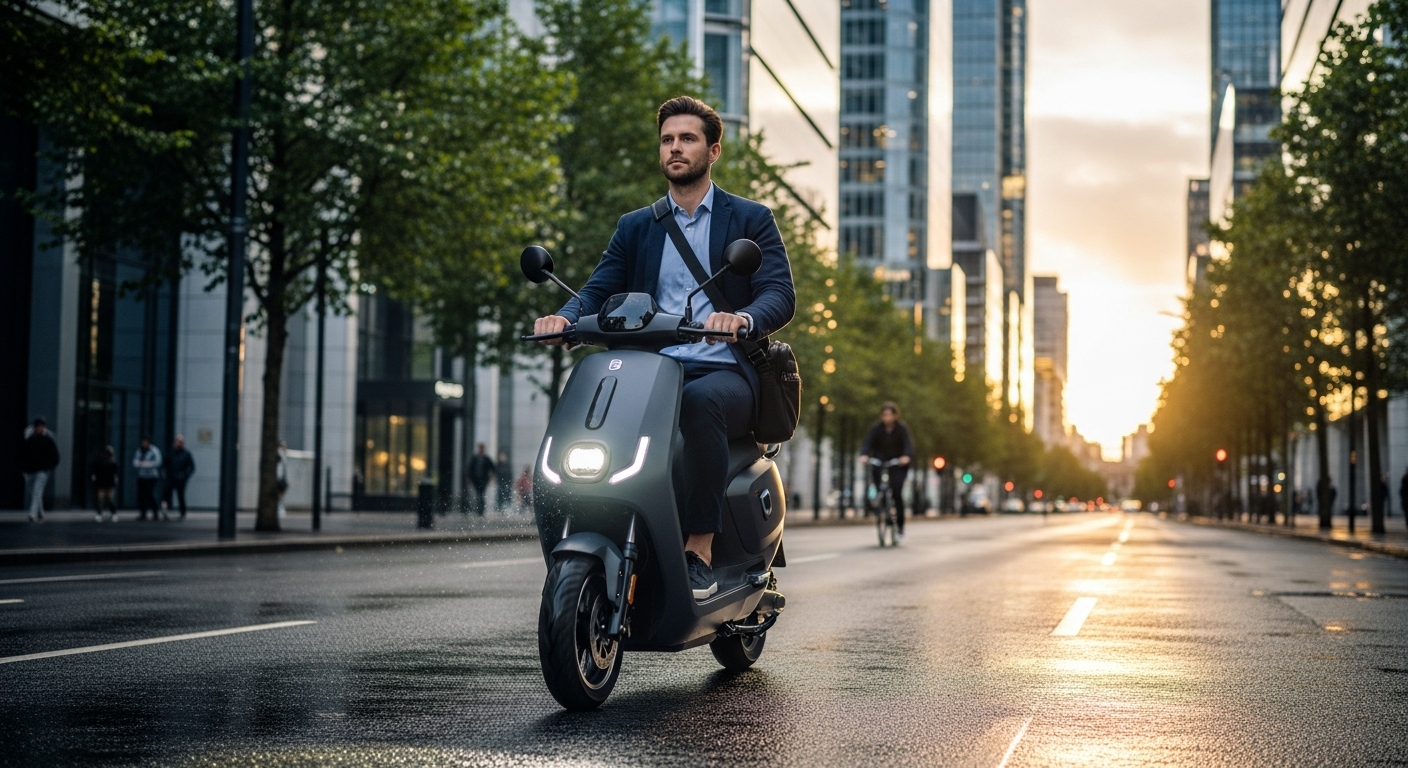
Urban commuting is shifting fast. Over 40% of city dwellers have swapped their cars for e-scooters, and the iScooter i9 Max is claiming serious market share in that exodus. The real question has evolved: e-scooters work for commuting—that's settled. What matters now is whether this specific model delivers reliable performance without draining your wallet.
The iScooter i9 Max sits at a crucial intersection. It's affordable enough for riders taking their first e-scooter leap, yet robust enough for daily commuters who demand consistency. With German ABE certification backing it, the legal barriers that typically plague European scooter buyers simply vanish. Riders can navigate urban streets with genuine peace of mind.
This breakdown covers the practical essentials: real-world range performance, suspension comfort during actual rides, battery longevity expectations, pricing trends, and whether the unit lives up to market claims.
Explore the iScooter i9 Max and discover your next commute solution.
Motor Performance & Speed Capabilities: What You Actually Get
The 500W motor handles urban acceleration cleanly. Riders experience responsive starts at traffic lights and controlled acceleration through crowded pedestrian zones. It's not explosive power—it's practical power tailored for city riding.
Speed sits at a 20 km/h cap, which aligns perfectly with German road regulations and ABE compliance standards. This limitation frustrates some riders initially, but it reflects a deliberate design choice prioritizing legal operation over raw speed. Unlocked versions reach 35 km/h for those willing to operate outside regulated areas, though this voids warranty coverage and creates legal liability.
Hill-climbing performance reveals the motor's actual limits. Moderate inclines feel manageable. Steeper grades expose the motor's constraints, particularly when riders exceed 85 kg. Heavier commuters on mountainous terrain will notice the struggle. For flat or gently rolling urban environments, the motor delivers adequate performance without compromise.
Battery Range & Charging Realities
The 36V 10Ah or 10.4Ah battery (374.4 Wh capacity) produces approximately 40 km of range under ideal conditions. Real-world performance typically falls between 24-40 km depending on three variables: terrain type, rider weight, and weather patterns.
Mixed riding conditions—a realistic blend of acceleration, coasting, and braking—generally yield 30-35 km per charge. This covers most single-leg commutes without requiring midday charging. Cold weather substantially impacts performance, reducing effective range by 15-25%. Winter riders should expect their comfortable 35 km range to shrink to 25-28 km during freezing months.
Battery degradation emerges as a legitimate long-term consideration. After 12-18 months of regular use, riders consistently report noticeable capacity reduction. The initial 40 km range gradually erodes to 30-35 km by year two. This trajectory is normal for lithium battery chemistry, but it's worth acknowledging when calculating total cost of ownership.
Suspension & Ride Quality: Comfort Over Rough Urban Terrain
The dual suspension system—combining front hydraulic damping with rear spring mechanisms—transforms the riding experience on imperfect streets. This setup absorbs energy from potholes, uneven pavement, and sudden obstacles that plague urban commuting.
Ten-inch pneumatic tires amplify this comfort advantage. They flex naturally with terrain variations, providing cushioning that solid tires simply cannot match. Vibration reduction is substantial, particularly during sustained 15-20 km/h cruising. The overall ride quality compares favorably to scooters costing significantly more.
This comfort foundation makes daily commuting genuinely sustainable. Riders don't arrive at work with numb feet or aching joints—they arrive ready for the day. For commuters facing 30-45 minute rides across rough city streets, this feature justifies the purchase alone.
German Road Legal Status & Regulatory Compliance
ES-DGT/ABE certification confirms something simple but crucial: this scooter is legal for German public roads. The speed limiting to 20 km/h directly aligns with German e-scooter regulations, eliminating the legal gray zone that surrounds many imported models.
Compliance eliminates constant uncertainty. Riders don't wonder whether police will intervene or whether they're technically violating regulations. This peace of mind has tangible value, particularly for commuters making daily trips through busy urban zones. Legal status also protects against surprise fines or confiscation.
Get your ABE-certified iScooter i9 Max and commute with complete legal confidence.
The Bottom Line: Is the iScooter i9 Max Your Next Commute Companion?
The iScooter i9 Max occupies a genuinely difficult-to-beat position at its price point. You're receiving legitimate suspension comfort, confirmed legal compliance, and a motor that handles typical urban riding without overextending itself. The 40 km range covers most single-leg commutes, and the folding mechanism makes multimodal trips practical.
Battery degradation is real. Range erosion after 12-18 months is inevitable, and that deserves consideration in your long-term cost planning. For riders tackling 5-15 km daily in flat or gently rolling terrain, this scooter will deliver reliable service for 2-3 years before battery replacement becomes necessary.
The purchasing strategy matters. Monitor pricing across retailers—seasonal sales frequently drop the i9 Max below €300, substantially improving value. Before committing, read recent user reviews specific to your region and verify ABE certification on the exact model you're purchasing.
Order the iScooter i9 Max today and transform your daily commute.
Leave a Reply