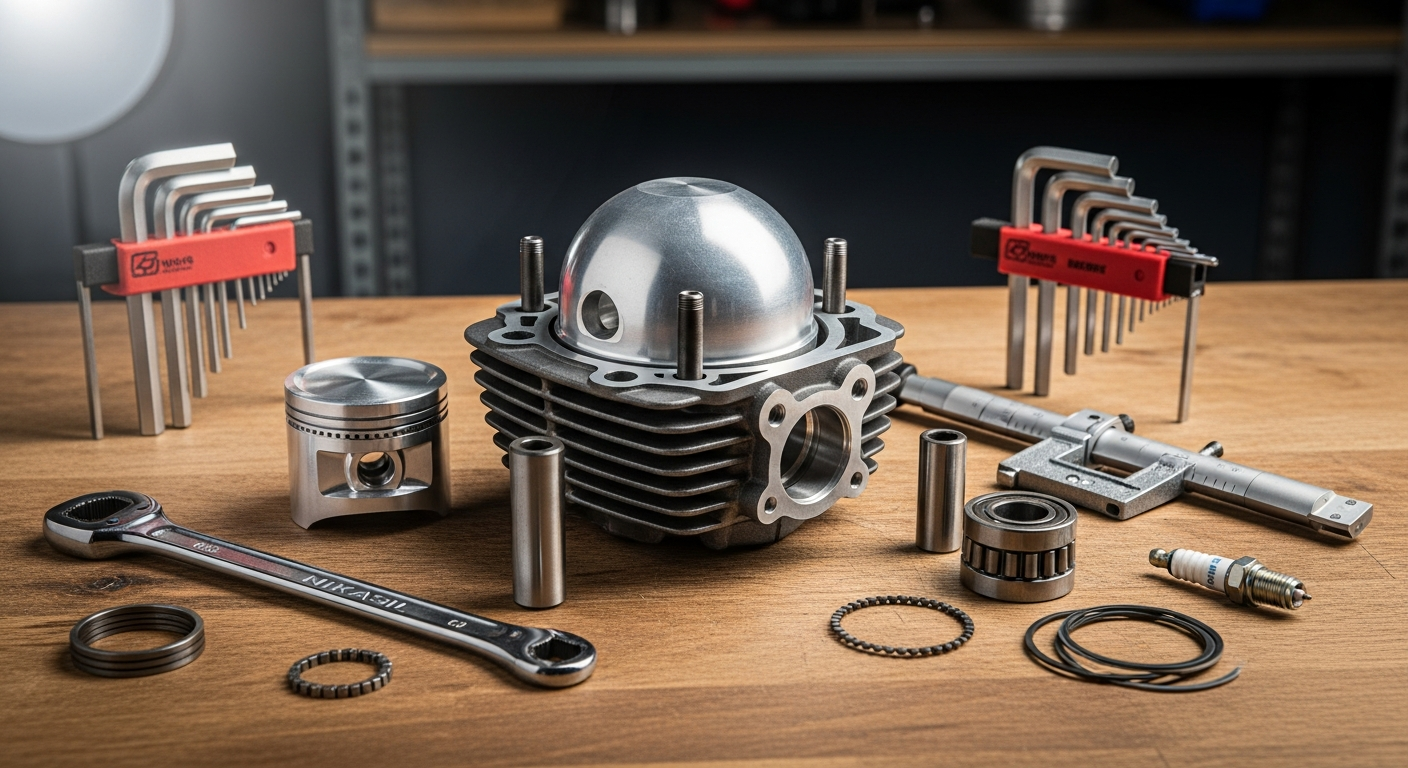
Your 50cc engine feels sluggish, lacking the punch it once had. Performance sits somewhere between disappointing and frustrating, draining the joy from rides that should feel alive and responsive.
You're not alone—thousands of riders and DIYers across France are discovering that a high-performance cylinder kit can transform their bike's responsiveness and power delivery. Cylinder kits represent the backbone of 50cc engine customization, whether you're restoring a vintage enduro, breathing new life into a scooter, or maximizing performance on your daily commuter. La Bécanerie has built its reputation over decades by stocking the exact components that bricoleurs and motards malins rely on—from cast iron durability to aluminum precision engineering.
Explore La Bécanerie's complete selection of high-performance 50cc cylinder kits today.
This guide covers everything you need to know about selecting, installing, and maintaining high-performance cylinder kits for your 50cc machine. You'll discover material comparisons, compatibility requirements, real installation challenges, legal considerations, and why La Bécanerie stands as the reference for hard-to-find technical parts that make the difference between mediocre and exceptional results.
Comprendre les Matériaux : Fonte vs Aluminium pour Votre Kit Cylindre
Cast Iron Cylinders: Durability and Traditional Reliability
Cast iron cylinders deliver superior durability and longevity, making them the traditional choice for reliability-focused riders. These components excel with stock or mildly tuned engines, absorbing heat gradually and maintaining consistent performance across varying conditions. Cast iron's proven track record spans decades—it's what older generations trusted, and for good reason. The material resists thermal shock better than alternatives, forgiving inconsistent cooling or occasional temperature spikes. Maintenance costs remain reasonable since the material tolerates minor imperfections in machining or installation.
Aluminum Construction: Performance Meets Efficiency
Aluminum cylinder kits offer superior heat dissipation properties that cast iron simply cannot match. Their lighter weight improves handling and acceleration noticeably, shifting the power delivery characteristics in your favor. High-performance builds gravitate toward aluminum because thermal management becomes critical at elevated RPMs. Aluminum dissipates heat approximately three times faster than cast iron, preventing engine knock and maintaining optimal operating temperatures even during aggressive riding. The weight reduction compounds benefits—less rotating mass means quicker throttle response and snappier acceleration.
Hybrid Approaches and Balanced Engineering
Some manufacturers employ combination designs that balance cast iron's durability with aluminum's thermal advantages. These hybrid kits represent a middle ground, offering respectable heat management without sacrificing longevity. The trade-off involves compromised thermal efficiency compared to pure aluminum, but installation costs and compatibility issues decrease substantially.
Material Impact on Engine Longevity
Material choice directly affects wear rates and maintenance intervals. Aluminum requires more precise cooling system management—lapses in maintenance accelerate degradation. Cast iron forgives inconsistent cooling protocols, extending service life even under suboptimal conditions. Your riding style and maintenance discipline should guide this decision. Aggressive riders with meticulous maintenance schedules thrive with aluminum. Conservative riders who maintain engines more casually benefit from cast iron's forgiving nature.
Thermal Efficiency and Operating Temperature Control
Aluminum's advantage in preventing engine knock justifies the premium for serious performance builds. Optimal operating temperatures prevent ring wear, piston scuffing, and premature bearing failure. Cast iron operates effectively in a wider temperature band, but aluminum maintains tighter thermal control that high-revving modified engines demand.
Cost-to-Performance Ratio Evaluation
Price premiums for material upgrades typically range from €40 to €120 depending on bore size and brand. Whether they justify investment depends on your riding style. Daily commuters and casual riders rarely recoup the performance difference. Competition-focused riders and speed enthusiasts find aluminum upgrades deliver proportional gains. Entry-level cast iron kits start around €80, while premium aluminum options exceed €300.
Spécifications Techniques Essentielles à Vérifier Avant l'Achat
Bore and Stroke Measurements
Bore and stroke dimensions directly affect displacement and power characteristics. A larger bore increases cylinder volume, allowing more fuel-air mixture per cycle. Stroke length affects engine RPM ceiling and torque characteristics at various power bands. Matching these measurements to your engine's specifications ensures proper fitment. Mismatched bore sizes create compression leaks and poor ring sealing. You'll find bore ranges typically between 39mm and 47mm for 50cc cylinder kits, with stroke variations affecting whether displacement increases slightly or significantly beyond standard 50cc limits.
Porting Design Optimization
Precisely engineered ports maximize fuel-air mixture flow, transforming how your engine breathes. Port diameter, shape, and wall finish affect volumetric efficiency—essentially how much air your engine can pull during intake strokes. Optimized porting allows fuel mixture to flow freely without turbulence, improving combustion efficiency and power output. Standard ports follow conservative designs prioritizing reliability over performance. High-performance ports feature larger diameters and polished walls that reduce flow resistance. These refinements explain much of the price difference between basic and performance kits.
Piston Ring Configurations
Single versus double ring designs create measurable differences in compression and sealing efficiency. Double ring pistons seal better at lower RPMs, improving cold-start characteristics and reducing blow-by at idle. Single ring designs reduce friction at high RPMs, allowing slightly higher maximum power and cleaner combustion. Modern performance kits typically employ double rings for balanced reliability and responsiveness.
Displacement Increase Potential
Performance kits can push beyond 50cc limits, with some offerings reaching 70cc or beyond. Understanding this potential matters because displacement increases trigger legal implications regarding vehicle registration. A 65cc kit delivers approximately 30% more power than original displacement—substantial gains that definitely feel different on the road. Verify whether your intended kit stays within legal displacement limits for your region before purchasing.
Compatibility Matrices for Your Model
Ensuring proper fitment with Beta RR 50, Sherco, Rieju, and other popular platforms requires cross-referencing multiple specifications. Cylinder height, mounting bolt patterns, and cooling jacket configurations vary between manufacturers. Incompatibility means wasted money and frustration—your kit arrives perfectly engineered but physically won't bolt to your engine. La Bécanerie's expertise lies partly in maintaining accurate compatibility databases that prevent these expensive mistakes.
OEM Versus Performance Specifications
Original equipment specifications prioritize reliability and longevity over peak power. Performance specifications optimize for maximum output within engineering tolerances. OEM pistons tolerate slightly lower cooling efficiency, while performance pistons demand precise cooling to prevent scuffing. These differences seem subtle until installation when tolerances become critical.
Technical Documentation Review
Detailed spec sheets matter before committing financially. Photos showing bolt patterns, mounting surfaces, and cooling jacket configurations prevent costly surprises. Reputable manufacturers provide comprehensive documentation; budget manufacturers often supply minimal information. Requesting detailed specs before purchase separates reliable suppliers from those operating on incomplete knowledge.
Compatibilité Moteur : Trouver le Kit Parfait pour Votre Modèle
Popular 50cc Platforms and Specific Requirements
Beta RR 50, Sherco, and Rieju models each impose unique compatibility requirements. Beta engines feature specific bolt patterns and cooling passages that limit kit options. Sherco platforms tolerate broader compatibility due to standardized mounting configurations. Rieju models often accept components from related platforms, expanding available options. Understanding your specific model's engineering heritage helps identify compatible kits quickly.
Scooter Versus Motorcycle Cylinder Differences
Scooter cylinders mount differently than motorcycle variants, with different cooling jacket orientations and mounting angles. Attempting motorcycle kits on scooter engines or vice versa results in interference with frame components or improper cooling. The distinction matters because performance benefits only materialize when installation proceeds cleanly—mismatched cylinders force compromises that eliminate advantages.
Vintage Enduro Considerations
Older models with non-standard specifications require special attention. Some vintage engines feature unique spark plug orientations, fuel line routing, or cooling configurations that modern kits don't accommodate. Restoration projects sometimes demand sourcing original specification kits rather than modern performance alternatives. Specialized suppliers like La Bécanerie stock components for less common platforms precisely because mainstream retailers won't bother.
Cross-Compatibility Myths
Adapting kits from similar models works sometimes—and creates problems other times. Engine A from one manufacturer might share identical bolt patterns with Engine B from another, making cross-compatibility possible. But differences in combustion chamber shape or cooling passage alignment can negate benefits despite physical fitment. Trial-and-error approaches waste money; verification prevents these expenses.
La Bécanerie's Reference Status
Their reputation for stocking rare and model-specific components exists because they maintain accurate compatibility information most retailers lack. They've invested decades building relationships with manufacturers and understanding platform-specific requirements. This expertise transforms what could be a frustrating search into straightforward sourcing.
Verification Process Before Ordering
Confirm compatibility by providing your engine's exact model designation, displacement, and year to La Bécanerie's technical team. They cross-reference multiple databases and manufacturer specifications to ensure proper fitment. This verification step prevents ordering incompatible kits, which cost money and create installation delays. Patience during this stage saves frustration later.
Adapter Solutions and Safe Bridging
Aftermarket adapters sometimes bridge compatibility gaps when direct fits prove unavailable. These solutions work reliably when engineered properly, allowing older or unusual models to access modern performance kits. However, adapters add complexity and potential failure points. Use them only when direct-fit options genuinely don't exist and professional installers confirm safe integration.
Installation : Défis Techniques et Compétences Requises
Honest Mechanical Skill Assessment
Evaluate your experience level objectively before committing to DIY installation. Cylinder kit installation involves engine disassembly, precision measuring, gasket management, and reassembly—multiple opportunities for costly mistakes. Mechanics with experience rebuilding engines typically succeed. First-time modifiers frequently encounter unexpected challenges. Recognizing your skill ceiling prevents damage that costs more to repair than professional installation would have charged.
Essential Tools and Equipment Checklist
Proper cylinder kit installation requires specialized tools beyond basic socket sets. You'll need a cylinder hone for precision boring, feeler gauges for gap measurements, a torque wrench calibrated for engine specifications, and gasket scrapers designed to avoid damaging mating surfaces. Improvising with substitutes almost guarantees problems. Rental options exist for expensive tools like cylinder hones, making the cost more manageable than purchasing outright.
Step-by-Step Installation Complexity
The process begins with engine removal—straightforward on some bikes, challenging on others depending on frame design. Draining coolant and removing fuel systems follows logically. Cylinder removal itself demands patience; bolts seize if overtightened during original assembly, requiring penetrating oil and careful force application. Once removed, old gasket material clings stubbornly to mating surfaces—complete removal prevents compression leaks. The new cylinder slides on carefully, bolts torque to precise specifications (usually 1.8-2.2 kgm depending on kit), and reassembly mirrors disassembly. The entire process typically requires 4-6 hours for experienced mechanics, 8-12 hours for capable DIYers.
Gasket and Seal Management
Gaskets represent critical interfaces preventing oil leaks and compression loss. New gaskets must replace old ones entirely—reusing original gaskets risks compression leaks and poor sealing. Cylinder head gaskets require particular attention since they seal the highest pressures. Apply gasket sealer sparingly according to manufacturer specifications; excess sealer blocks critical oil passages. Incorrect sealing causes catastrophic failures—oil starvation that seizes bearings within minutes of operation.
Timing and Synchronization Adjustments
Engine timing often requires adjustment after cylinder kit installation, particularly with performance-oriented builds featuring modified porting. Ignition timing that worked perfectly with original cylinders might not suit modified combustion chamber characteristics. Running too lean timing causes pre-ignition knock; running too rich timing wastes fuel and reduces performance. Dynamic timing verification using a timing light confirms proper adjustment after installation.
Common Installation Mistakes
Insufficient gasket surface preparation causes recurring compression leaks. Debris left on mating surfaces prevents proper sealing despite careful gasket installation. Bolts torqued without proper sequence create uneven pressure across the gasket. Some DIYers forget to refill cooling systems completely, running engines with air pockets that cause hot spots. Reassembly without confirming proper component orientation (spark plugs installed incorrectly, fuel lines routed without thinking) creates problems that only surface during cold starts or operation.
When Professional Help Becomes Necessary
Specialized situations demand professional attention. Engine teardown revealing internal damage that necessitates machine shop work exceeds typical DIY capabilities. Vintage models requiring custom adapter fabrication or modifications benefit from experienced technicians. Installation on bikes with frame-integrated engine mounting or unusual cooling configurations often goes smoother with professional hands. The decision ultimately weighs time investment, tool cost, and confidence against professional service charges.
Performance Gains Réalistes et Attentes Utilisateur
Realistic Horsepower and Torque Improvements
Basic cast iron replacement kits deliver approximately 1-2 horsepower gains over completely worn original equipment. These modest improvements reflect like-for-like replacements without performance optimization. Mid-range aluminum kits provide 4-6 horsepower increases through superior heat management and optimized porting. Premium performance kits from specialty manufacturers achieve 8-12 horsepower gains when displacement increases approach 65cc. Torque improvements follow similar patterns, with mid-range kits providing 1.2-1.5 Nm additional torque at peak power RPMs.
Acceleration Improvements and 0-60 Times
Measurable acceleration differences emerge with quality kits. Entry-level upgrades trim 0.3-0.5 seconds off 0-60 times. Mid-range performance kits deliver 0.8-1.2 second reductions, creating noticeably snappier off-the-line response. Premium kits providing substantial displacement increases achieve 1.5-2 second improvements. These differences feel dramatic in real riding—the bike responds immediately to throttle input rather than requiring engine spin-up time.
Top Speed Potential
Original 50cc bikes reach approximately 60-65 km/h. Quality cylinder kits increase top speed proportionally to horsepower gains. Mid-range upgrades typically deliver 70-75 km/h ceilings. Premium displacement-increasing kits approach 85-90 km/h depending on gearing and aerodynamic factors. Speed gains feel satisfying partly because they extend riding enjoyment across more diverse terrain types without exhausting engine capability.
Fuel Consumption Impact
High-performance kits typically increase fuel consumption by 5-15% due to higher average RPMs during normal riding. Aggressive riders pushing performance boundaries see consumption increase substantially. Conservative riders who maintain moderate throttle inputs experience minimal consumption changes. The trade-off between performance and fuel economy remains favorable for most riders—faster acceleration and improved responsiveness justify slightly more frequent fuel stops.
Engine Response Characteristics
Throttle feel transforms noticeably with quality kits. Engines develop more immediate response, eliminating the slight lag between accelerator input and power delivery. Smoothness improves because optimized combustion chamber designs reduce turbulence and pinging. The bike feels more willing to rev, suggesting mechanical sympathy rather than mechanical protest.
Tier-by-Tier Performance Benchmarks
Entry-level kits (€80-120) provide reliable like-for-like replacement with minimal performance enhancement. Mid-range kits (€150-220) deliver meaningful performance improvements that transform riding characteristics. Premium kits (€250+) achieve maximum displacement increases and engineering optimization, representing the performance ceiling for 50cc platforms. Real-world testing reveals performance gains track closely with price—significantly better components justify significant cost premiums.
Real-World Performance Versus Dyno Numbers
Dynamometer testing measures peak power under controlled conditions, often exceeding street performance. Street riding involves partial throttle operation, varying atmospheric conditions, and load changes that reduce measured horsepower. A kit producing 12 horsepower on the dyno might deliver 9-10 horsepower under typical riding conditions. These differences matter less than feeling improvements—responsive acceleration that emerges from optimized combustion management matters more than peak power figures.
Considérations Légales et Immatriculation
50cc Classification Limits and Licensing
Fifty-cubic-centimeter classification affects motorcycle licensing categories across Europe and France specifically. The 50cc threshold determines whether riders require specialized licensing—many riders obtain 50cc bikes specifically to operate them under relaxed licensing categories available to younger or less experienced operators. Exceeding 50cc displacement reclassifies your vehicle, potentially requiring different licensing even if you legally own it.
Performance Kit Legal Status
Entry-level cylinder kits maintaining original displacement remain street-legal because they don't alter vehicle classification. Performance kits increasing displacement beyond 50cc create legal complications. Some regional authorities tolerate minor oversizing (up to 60cc) for enthusiast riders, while others enforce strict displacement limits. Performance kits increasing displacement to 65cc or beyond almost certainly trigger registration complications.
Regional Regulation Variations
French law follows EU standards regarding motorcycle classifications, but enforcement varies by département. Some regions tolerate modest displacement increases for vehicle owners who inform authorities during registration updates. Other areas strictly enforce original displacement specifications, treating modifications as vehicle alterations requiring re-certification. Understanding your specific region's enforcement culture prevents purchasing components that create legal complications.
Vehicle Registration Implications
Modified bikes exceeding original displacement specifications require re-registration or amended registration documents. The process varies—some regions issue new registration straightforwardly, others demand technical inspections confirming components match specifications. This bureaucratic step adds time and minor costs beyond the kit purchase itself.
Insurance Considerations
Performance modifications affecting insurance coverage represent a substantial consideration most riders overlook. Insurance policies typically specify coverage for original equipment; modifications creating performance exceeding stock specifications might void coverage. Informing your insurer of modifications before implementing them prevents discovering coverage gaps during claim processes. Premiums often increase slightly to reflect modified-bike risk profiles.
Technical Inspection Requirements
Preparing documentation for technical verification after upgrades involves gathering manufacturer specifications, installation photos, and performance figures. French MOT procedures (contrôle technique) include visual inspections and emission testing. Performance kits might pass visual inspections while emission levels potentially exceed legal standards, particularly for displacement-increasing modifications affecting fuel mixture and combustion characteristics.
Off-Road Versus Street Legality
Competition-use modifications follow different rules than street operation. Off-road events and closed-course racing often permit unlimited displacement increases and performance modifications. Street legal requirements remain stricter. Understanding the intended use case guides modification selection—competition-focused riders need fewer legal constraints than street commuters.
Catalogue La Bécanerie : Sélection et Disponibilité
Breadth of Catalog and Exact Match Finding
La Bécanerie's unbeatable catalog matters because finding your exact match becomes straightforward rather than frustrating. They stock components for Beta RR 50, Sherco, Rieju, and dozens of less common platforms. This breadth means specialized models you might assume unserviceable often find compatible kits quickly. Catalog depth reflects their decades-long commitment to serving France's bricoleur and motard communities.
Brand Partnerships and Exclusive Access
Exclusive partnerships with premium manufacturers grant access to components unavailable through mainstream retailers. These relationships stem from La Bécanerie's reputation as a serious technical resource rather than a casual parts seller. Riders seeking specific performance characteristics benefit from curated brand selections representing genuine expertise rather than vendor arrangements favoring whoever offers best margins.
Price Range Breakdown and Cost Drivers
The €80 to €300+ spectrum reflects enormous quality variation. Budget kits at €80-120 prioritize basic functionality with minimal performance optimization. Mid-range offerings (€150-220) balance cost and performance effectively for most riders. Premium kits (€250+) feature aluminum construction, advanced porting designs, and performance-optimized combustion chambers justifying substantial premiums. Cast iron versus aluminum explains much price variation; brand reputation and engineering precision account for remaining differences.
Stock Availability and 24-Hour Dispatch
Real inventory advantage distinguishes La Bécanerie from drop-shipping retailers. In-stock items dispatch within 24 hours, eliminating frustrating waits for international shipments. Urgent replacement needs transform from week-long ordeals into next-day solutions. Stock reliability matters tremendously to DIYers planning project timelines—waiting for special orders disrupts momentum and motivation.
Hard-to-Find Technical Parts Solution
Accessing the "pièce technique introuvable" (the hard-to-find technical part) represents La Bécanerie's defining value. Vintage model owners, competition riders seeking specific components, and those maintaining unusual bikes benefit from their commitment to sourcing rare items. This capability explains their reference status among France's most dedicated enthusiasts.
Expert Guidance and Personalized Recommendations
Leveraging their technical knowledge prevents costly mistakes. Their team understands nuances that spec sheets never capture—which kits suit aggressive riders, which work best for vintage restorations, which deliver best cost-to-performance ratios. Personalized consultations guide selection toward components matching your specific goals rather than generic recommendations.
Bulk and Bundle Options
Cost savings emerge when purchasing complete engine rebuild kits simultaneously. Sourcing cylinders, gaskets, seals, bearings, and supporting components as a coordinated package costs less than purchasing components individually across multiple suppliers. These bundles particularly benefit riders conducting major engine rebuilds rather than partial upgrades.
Maintenance et Longévité Post-Installation
Critical Break-In Procedures
The first 500 kilometers determine long-term reliability. Break-in requires restrained throttle operation, avoiding maximum RPMs and full-load conditions that stress new components before ring seating completes. Varying engine speeds every 50 kilometers prevents glazing of cylinder walls and piston rings. Following manufacturer break-in guidelines religiously extends engine service life substantially.
Oil and Coolant Specifications
Performance kits demand specific fluid specifications more rigorous than original engines tolerated. Higher combustion pressures and temperatures require synthetic oils maintaining viscosity across wider temperature ranges. Coolant concentrations need verification—inadequate protection causes overheating that scuffs pistons. Using whatever oil you have on hand or standard coolant risks degradation accelerating far beyond acceptable rates.
Inspection Intervals and Maintenance Schedules
Modified engines benefit from more frequent inspections than stock equivalents. Oil changes every 1000-1500 kilometers (rather than 2000-3000) prevent sludge accumulation from higher operating temperatures. Spark plug inspection every 500 kilometers catches thermal damage before it forces engine shutdown. Coolant system checks every 1000 kilometers verify proper concentration and protection.
Wear Pattern Monitoring
Observing wear patterns reveals installation or compatibility issues before catastrophic failure occurs. Darker-than-normal oil suggests carbon buildup from improper combustion. White or milky coolant indicates head gasket leaks. Visible cylinder scoring during routine spark plug removal signals compression problems. Early detection of these issues prevents engine damage costing thousands to repair.
Gasket and Seal Routine Checks
Torque bolts at 500-kilometer intervals after initial installation, as components settle and vibration loosens fasteners. Visual inspections around gasket interfaces catch minor leaks before they accumulate damage. Weeping that seems insignificant becomes major leaks if left unaddressed across hundreds of kilometers.
Performance Degradation Signals
Diminishing acceleration despite consistent throttle application suggests developing mechanical issues. Loss of top-end power combined with rough running indicates spark plug fouling or ignition timing drift. Sudden consumption changes signal internal problems demanding professional inspection. Responsiveness to throttle input remaining consistent indicates continued health; sluggish response suggests something's deteriorating.
Seasonal Preparation for Modified Engines
Pre-season maintenance becomes more critical with modified engines. Flush cooling systems before winter storage to prevent corrosion damage over months of dormancy. Change oil before storage rather than after extended shutdown, preventing acid accumulation in old oil. Stabilize fuel for extended idle periods, preventing varnish buildup that clogs carburetor jets during startup.
Comparaison avec Alternatives de Tuning
Carburetor Optimization Effectiveness
Jetting and carburetor tuning represent more accessible modifications than cylinder kit installation. Changing jets, needle positions, and air filter characteristics costs minimal money and requires no specialized tools. These modifications improve fuel delivery matching your specific riding conditions and altitude. However, carburetor optimization cannot overcome displacement limitations—a perfectly jetted original-displacement engine still produces less power than a modest cylinder kit.
Exhaust System Modifications
Complementary upgrades maximizing cylinder kit potential include performance exhaust systems. Higher-flowing exhaust manifolds and silencers allow optimized cylinders to breathe freely, realizing full performance potential. Restrictive stock exhaust systems bottleneck performance gains—a kit delivering 40% more intake airflow struggles if exhaust remains stock. Strategic exhaust upgrades multiply cylinder kit benefits substantially.
Ignition System Enhancements
Spark plug and CDI upgrades work alongside cylinder improvements, ensuring combustion efficiency scales with increased displacement. Hotter-burning spark plugs increase ignition reliability at higher pressures. CDI units offering adjustable timing curves allow fine-tuning combustion characteristics to specific build personalities. These enhancements amplify cylinder kit effectiveness without requiring major mechanical work.
Transmission Tuning and Gear Ratio Adjustments
Gear ratio changes optimize power delivery across riding conditions. Increasing sprocket sizes extends mid-range powerband at the expense of top-speed capability. Decreasing sizes emphasizes acceleration while sacrificing top-end potential. Intelligent ratio selection tailored to your typical riding conditions maximizes perceived performance.
Combined Modification Strategies
Cylinder kits work best as part of comprehensive engine optimization rather than standalone upgrades. Pairing improved displacement with optimized carburetion, responsive exhaust, refined ignition timing, and appropriate gearing multiplies benefits. Neglecting supporting modifications leaves horsepower on the table—a properly built 65cc engine with coordinated upgrades outperforms a poorly integrated system using identical cylinder kit.
Cost-Benefit Analysis Across Approaches
Performance-per-euro calculations reveal spending priorities. Carburetor optimization delivers highest return-on-investment for modest investments—€50-100 carburetor work provides meaningful gains. Cylinder kits require substantially higher investment (€150-300) but deliver proportionally larger results. Combining these approaches maximizes total performance within typical enthusiast budgets.
Synergistic Modification Effects
Properly matched modifications compound exponentially. A 65cc cylinder kit paired with jetting and exhaust optimization delivers 40% more power; each modification alone contributes perhaps 15-20%. These synergies explain why assembled builds from experienced tuners significantly outperform riders attempting modifications independently without comprehensive understanding.
Témoignages et Résultats Communautaires
Documented Real-World Performance Stories
Bricoleurs and motards malins across France share documented experiences with specific cylinder kits across various platforms. Competition riders report consistent acceleration improvements matching manufacturer claims. Commuter bike enthusiasts describe enhanced responsiveness transforming daily rides. Vintage restoration specialists confirm reliability gains from modern kits installed on older models. These varied experiences demonstrate kit effectiveness across different use cases and rider profiles.
Before-and-After Comparisons
Tangible results emerge from riders documenting modifications with baseline measurements. Video acceleration tests comparing original and modified bikes provide obvious performance differences. Dyno sheets verify horsepower increases matching or exceeding manufacturer claims. Fuel consumption logs track efficiency trade-offs. These documented comparisons eliminate speculation, establishing realistic expectations for prospective buyers.
Problem-Solving Narratives
Experienced users share solutions overcoming installation and compatibility challenges others encountered. Riders who solved carburetor jetting problems document specific needle positions and jet sizes preventing lean-running conditions. Mechanics who addressed compression issues reveal gasket sealing mistakes and correction approaches. These troubleshooting narratives prevent future riders from repeating expensive errors.
Brand Reliability Rankings
Community consensus identifies which manufacturers deliver consistent results across multiple platforms. Certain brands gain reputation for reliable performance across Beta RR platforms; others excel with Sherco modifications. Brands producing oversized tolerances that cause installation problems gain negative reputations through repeated complaints. Real-world reliability establishes brands more than marketing claims or single reviews.
Long-Term Ownership Perspectives
Multi-year ownership reports reveal durability and value retention for modified bikes. Owners documenting 5,000+ kilometers on modified engines report consistent reliability when maintenance protocols followed properly. Performance degradation patterns help identify which kits maintain capability longest. Resale value retention information reveals whether modifications enhance or diminish bike value—a critical consideration for riders considering eventual sale.
Modification Regret Factors
Honest assessment of upgrades disappointing or creating unexpected issues helps others avoid similar mistakes. Riders who installed oversized kits discovering legal complications caution others about displacement limits. Mechanics reporting reliability problems with specific brands prevent others from repeating mistakes. Learning from others' regrets costs nothing but prevents expensive consequences.
Consistent Recommendation Patterns
Certain kits receive repeated praise across different 50cc platforms, establishing genuine value. Specific aluminum brands from premium manufacturers consistently deliver on performance promises. Budget cast iron options earn respect for reliability despite modest performance gains. These recommendation patterns suggest objective quality assessments rather than isolated positive experiences.
Ressources Techniques et Support Après-Vente
Technical Documentation and Installation Guides
Detailed manuals from La Bécanerie provide step-by-step installation instructions specific to various platforms. Comprehensive documentation reduces guesswork during assembly, improving success rates for capable DIYers. Exploded diagrams clarify component relationships and assembly sequences. Torque specifications for critical fasteners prevent under-tightening causing leaks or over-tightening breaking bolts.
Video Installation Resources
Visual learning materials demonstrate complex assembly procedures more effectively than text descriptions. Seeing actual hand positions during gasket installation, proper bolt sequencing, and component orientation accelerates comprehension. Quality videos capture common mistakes, warning viewers against errors that text instructions might not adequately emphasize.
Expert Consultation Availability
Connecting with La Bécanerie's technical team provides personalized guidance for unique situations. DIYers encountering unexpected complications benefit from experienced perspectives on solutions. Pre-purchase consultations confirm compatibility before ordering, preventing costly mistakes. Post-installation troubleshooting support addresses problems emerging during or after work.
Troubleshooting Support for Installation Problems
Addressing issues emerging during or after installation prevents minor problems becoming catastrophic failures. Compression loss diagnosis helps identify gasket sealing failures or piston ring problems. Overheating symptoms receive guidance determining whether cooling system inadequacy or combustion problems cause elevated temperatures. This support transforms frustrating setbacks into learning opportunities.
Community Forums and Peer Networks
Connecting with other 50cc enthusiasts via community forums provides real-world perspectives on specific modifications and platforms. Peer experiences answer questions that official documentation might not address. Shared troubleshooting approaches accelerate problem resolution through collective knowledge.
Warranty and Return Policies
Understanding protection for defective or incompatible kits prevents financial loss from poor purchases. Reputable manufacturers stand behind products with reasonable warranty coverage. Clear return policies for incompatible kits allow corrections without penalty. These protections reflect seller confidence in their products.
Continuous Learning Resources
Staying updated on new products and technical innovations keeps knowledge current as manufacturers develop improved offerings. Industry publications and forums highlight emerging trends in 50cc modification. Educational resources help DIYers develop increasing technical competence across broader modification categories.
Votre Chemin vers l'Excellence de Performance 50cc
Upgrading your 50cc engine with a high-performance cylinder kit isn't just about chasing horsepower—it's about unlocking the full potential of your machine. Whether you're a seasoned bricoleur tackling installation yourself or seeking expert guidance, the journey demands careful consideration of materials, specifications, compatibility, and legal boundaries. La Bécanerie's decades of expertise and unmatched catalog eliminate the guesswork, transforming what could be a frustrating search into a straightforward path toward the exact components your bike deserves.
The difference between a mediocre upgrade and a transformative one lies in preparation. You now understand the material science behind aluminum versus cast iron, the technical specifications that matter, the installation realities you'll face, and the legal landscape you're navigating. Armed with this knowledge, you're ready to make decisions that deliver genuine performance gains rather than expensive disappointments.
Reach out to La Bécanerie's technical team, verify compatibility for your specific model, and take the first step toward the responsive, powerful 50cc machine you've been imagining. Start your 50cc transformation with La Bécanerie's premium cylinder kits and expert support.
Leave a Reply