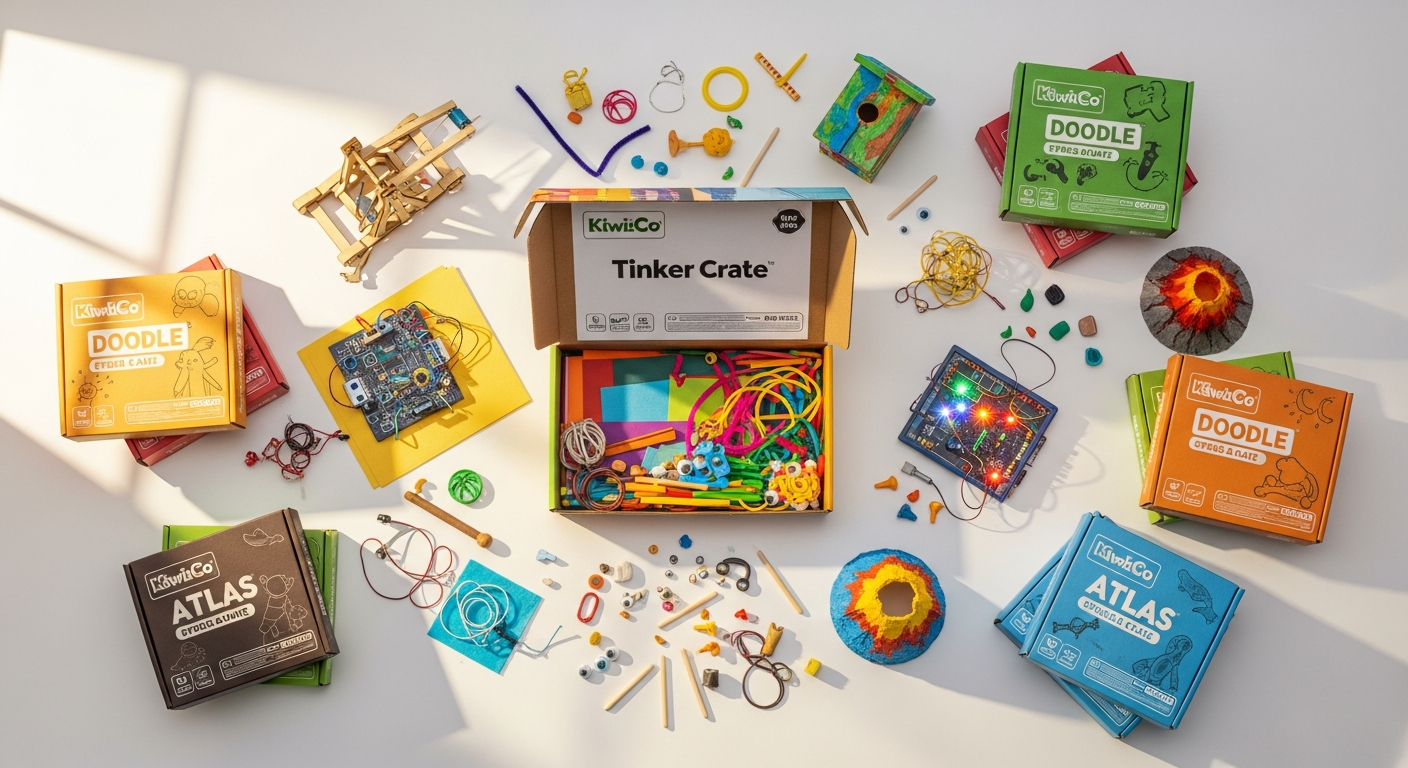
Your child has spent another hour scrolling through videos, and you're wondering if there's a better way to spend their time. The average child now consumes over 7 hours of screen-based entertainment daily, yet parents consistently report feeling guilty about the quality of that engagement. What if there was a way to redirect that energy toward genuine learning experiences that kids actually want to do?
KiwiCo STEAM subscription boxes have emerged as a compelling alternative to passive entertainment, offering hands-on projects that weave science, technology, engineering, art, and math into activities kids find genuinely exciting. Rather than lecturing about concepts, these crates let children discover principles through building, creating, and experimenting. The brand has built its reputation on one core belief: learning shouldn't feel like work.
Explore KiwiCo's full lineup and start your child's STEAM journey today.
I'm breaking down everything you need to know about KiwiCo's subscription model—from understanding which crate matches your child's age and interests, to evaluating whether the investment makes sense for your family budget. You'll learn what makes these boxes different from typical craft kits, how they compare to other educational subscriptions, and whether parents report genuine developmental gains from the experience.
Understanding the Full KiwiCo Crate Lineup: Finding Your Child's Perfect Match
Panda Crate (0-36 months): Sensory exploration and early motor skill development
The Panda Crate targets the youngest learners, focusing on safe, tactile materials that stimulate sensory development. At this age, children are just beginning to understand cause and effect, so projects emphasize textures, sounds, and colors rather than complex assembly. These early experiences lay the foundation for curiosity about how things work.
Koala Crate (2-4 years): Play-based learning combines imagination with foundational problem-solving
As children reach ages 2-4, the Koala Crate introduces slightly more structured activities while maintaining play-based learning. Projects at this stage encourage imaginative thinking alongside basic problem-solving skills. Children begin following simple instructions and develop persistence when faced with small challenges.
Kiwi Crate (5-8 years): The flagship offering featuring balanced science, art, and engineering
The Kiwi Crate stands as KiwiCo's most popular offering, striking an ideal balance between all three core disciplines. Projects like building a trebuchet or creating a kaleidoscope appeal to the elementary-age learner who's developed enough fine motor control to handle more complex tasks yet still craves tangible results. This crate serves children when their critical thinking abilities are rapidly expanding.
Tinker Crate (9-12+ years): Advanced engineering and physics concepts
Older children gravitate toward the Tinker Crate, which tackles more sophisticated engineering principles and physics concepts. These projects challenge tweens to think systematically about design, test hypotheses, and troubleshoot when something doesn't work as expected. The increased complexity maintains engagement for children who might otherwise find simpler crafts boring.
Doodle Crate (9-16+ years): Art-focused projects emphasizing design thinking
For creatively inclined children, the Doodle Crate offers art projects that go beyond simple coloring. These boxes encourage design thinking, visual problem-solving, and creative expression without demanding a "correct" outcome. Art projects validate multiple approaches and celebrate individual artistic voice.
Age-specific progression and thematic variety
KiwiCo designs projects to scale in complexity as children develop cognitively. Monthly themes span geography, nature, history, and contemporary topics, ensuring variety doesn't lead to boredom. One month might feature a weather-themed engineering project, the next an art exploration of different cultures.
Flexibility options built into the subscription
Parents can pause subscriptions during transitions, skip specific months, or switch crates as children's interests evolve. This flexibility prevents the feeling of being locked into a one-size-fits-all experience.
What's Actually Inside: Materials, Instructions, and the Explore! Magazine Experience
Complete material packages eliminate the hunting phase
Every crate arrives with all supplies pre-measured and included. You won't find yourself halfway through a project realizing you need to substitute materials or make an emergency craft store run. This completeness transforms the experience from scattered activity into focused engagement.
Detailed instruction guides balance independence with guidance
Step-by-step directions adapt to the age group, allowing younger children to work with parental support while older kids can tackle projects more independently. Instructions provide just enough scaffolding to prevent frustration without removing the satisfaction of problem-solving.
Explore! Magazine extends learning beyond the physical activity
Each crate includes a magazine featuring comics, bonus activities, and deeper dives into the project's underlying themes. A child who built a catapult might read about historical siege weapons or physics principles. This supplementary content transforms single projects into cohesive learning experiences.
Quality assessment reveals material durability that exceeds expectations
Reviewers consistently praise the quality of components. Materials feel substantial, colors don't fade after one use, and construction elements actually work as designed rather than falling apart during assembly. This durability signals that KiwiCo views these as educational investments rather than disposable craft supplies.
Packaging design enhances the unboxing experience
The presentation matters. A well-designed box with organized compartments creates anticipation and sets a tone of quality before a child even touches the materials. This attention to detail contributes to the excitement surrounding each monthly arrival.
Instruction clarity adapts to developmental stages
Instructions for younger children feature more visuals and simpler language, while older children receive more technical guidance. This differentiation respects how different age groups process information.
The Real Cost Breakdown: Subscription Pricing vs. One-Time Project Bundles
Monthly subscription rates and what they include
Standard pricing ranges from $20-$30 per crate depending on the age group. This typically includes materials for one primary project, supplementary supplies for variations, instruction materials, and the Explore! Magazine. Shipping is generally included in subscription pricing.
Annual commitment discounts for long-term planning
Families willing to commit to 12 months upfront often receive meaningful discounts. This option works well for parents confident their child will maintain interest throughout the year.
Best Sellers 3-Pack: The no-commitment alternative
KiwiCo offers the Best Sellers 3-Pack for families uncertain about subscription commitment. A "Chalkboard & Glow Slime" kit bundled with two other popular projects lets you sample the product quality and engagement level without recurring charges. This bundle typically qualifies for free shipping.
Breaking down cost against separate supply purchases
If you assembled equivalent supplies yourself, the per-project cost would likely exceed subscription pricing once you factor in shopping time and inevitable overbuying. A single art supply store run for markers, glue, and specialty materials often costs $15-$25 before assembly time.
Multiple child pricing adds considerations
Families with children across different age ranges need to budget for multiple crate subscriptions. Two children might require $40-$60 monthly, which shifts the value proposition significantly.
Budget-friendly alternatives within the subscription model
Pausing subscriptions during tight financial months prevents guilt while maintaining the option to resume. Some families opt for quarterly delivery instead of monthly, reducing annual costs while maintaining the surprise element.
Check out KiwiCo's current pricing and flexible subscription options.
Skills Development: What Parents Actually See Happening
Hands-on STEAM learning transforms abstract concepts into tangible experiences
When a child builds a catapult and sees physics principles in action, learning sticks differently than memorizing force formulas. The combination of sensory engagement and intellectual understanding creates stronger neural pathways.
Problem-solving emerges naturally through trial-and-error
Projects often require adjustment and experimentation. When a structure doesn't balance, a child must troubleshoot—testing different weight distributions or construction methods. This mirrors real problem-solving rather than following a predetermined answer key.
Fine motor skill advancement happens through building and crafting
Cutting, folding, assembling, and decorating strengthen hand-eye coordination and dexterity. These skills transfer to handwriting, sports performance, and everyday tasks requiring precision.
Confidence building accumulates with each completed project
Successfully finishing a project—especially one that works or looks impressive—builds self-efficacy. Children internalize the message that they can figure things out and create something meaningful.
Creativity cultivation validates imaginative thinking
Art components specifically encourage multiple valid approaches. A child learns that creative expression isn't judged by whether it matches someone else's vision, but by whether it represents their own thinking.
Perseverance development through multi-session projects
Some projects span multiple sessions. This teaches delayed gratification and persistence—valuable traits that extend far beyond craft skills.
Parent-child bonding transforms mandatory quality time into something both enjoy
When quality time centers on a shared project with clear purpose, the interaction feels different from forced togetherness. Parents often report enjoying the activities themselves.
Subscription Model Realities: Convenience Benefits and Practical Challenges
The convenience factor eliminates planning burden
Parents don't need to research projects, source materials, or plan logistics. The subscription handles the cognitive load of coming up with engaging activities.
Predictable engagement creates anticipated structure
Monthly arrival gives children something to look forward to, and it naturally structures free time around an activity parents know will engage them. This regularity can be valuable for families seeking rhythm.
Project accumulation requires honest space assessment
Over time, completed creations pile up. A child who's completed 12 crates suddenly has 12 projects competing for shelf space. Storage solutions range from designated bins to selective photography and recycling completed items.
Younger children genuinely need significant parental participation
For Panda and Koala crates especially, a parent typically sits with the child throughout. This isn't independent entertainment; it's structured co-activity. Understanding this expectation prevents disappointment.
Commitment flexibility varies across different cancellation policies
Most subscriptions allow cancellation or pausing, though some have minimum commitment periods. Reading the specific terms prevents unexpected lock-in situations.
Shipping and delivery operate on predictable windows
Most crates arrive within specified timeframes, though occasional delays happen. Damaged packages are typically replaced without hassle based on customer reviews.
Subscription fatigue occurs when monthly boxes don't align with current interests
A child might temporarily lose interest in building projects or prefer different art styles some months. This doesn't mean the subscription is wrong, just that engagement naturally fluctuates.
KiwiCo vs. Alternatives: How These Boxes Stack Against Other Educational Subscriptions
Pre-curated projects outperform generic craft supplies for learning outcomes
Random craft supplies lack intentional connection to educational concepts. KiwiCo's curation ensures each project teaches specific principles while maintaining engagement.
Integrated approach to science, art, and engineering differs from STEM-only competitors
Many educational subscriptions focus narrowly on one discipline. KiwiCo's strength lies in showing how art, science, and engineering interconnect, fostering more integrated thinking.
Tactile engagement differs fundamentally from screen-based learning
Educational apps offer benefits, but physical manipulation of materials engages different cognitive pathways. The combination approach works better than replacing one with another.
Individual project purchases make sense for budget-conscious families testing interest
If a child shows mild interest in KiwiCo but you're uncertain about commitment, the Best Sellers 3-Pack provides lower-risk entry.
Doodle Crate positioning against traditional art instruction
Online art courses and local classes offer different advantages—expert instruction and real-time feedback. Doodle Crate excels at accessible art exploration without requiring class schedules.
Comparison with other science kit competitors
Competitors exist, but KiwiCo's integration of art alongside science, the quality of materials, and the Explore! Magazine component differentiate it. Some alternatives focus purely on STEM without creative outlets.
Value proposition clarity helps identify where KiwiCo excels
KiwiCo succeeds when you value convenience, material quality, and integrated learning. Budget craft kit alternatives might suffice if you have time to curate projects yourself.
Making the Decision: Is a KiwiCo Subscription Right for Your Family?
Assess whether your child's learning style matches hands-on projects
Some children thrive with tactile, project-based learning while others prefer reading or discussion. Honest assessment of your child's preferences matters more than generic recommendations.
Evaluate available space for materials, work areas, and completed item storage
Apartments with limited room face different constraints than homes with dedicated craft spaces. Be realistic about where projects will happen and where creations will live afterward.
Budget reality check determines if monthly costs fit discretionary spending
$20-$30 monthly sounds manageable until you calculate annual costs—$240-$360 per child per year. Multiple children multiply this significantly. Determine what this represents as a percentage of your discretionary budget.
Consider time commitment required for adult involvement
Younger children genuinely need parental participation. If you're stretched thin, the subscription might sit unused, creating guilt without value. Be honest about available bandwidth.
Match crate themes to your child's current passions
A child passionate about dinosaurs might love a paleontology-themed project while being bored by fashion design. Checking monthly themes ensures alignment with interests.
Trial approach reduces commitment risk
Starting with a 3-Pack bundle lets you assess whether the project style, material quality, and engagement level match your expectations before committing to monthly payments.
Household dynamics affect subscription feasibility
Multiple children with different interests might require multiple subscriptions, changing the financial calculation. Alternatively, older children can mentor younger ones through projects, adding value.
The Verdict: Where KiwiCo Delivers and Where Expectations Need Adjusting
KiwiCo STEAM subscription boxes genuinely deliver on their core promise—transforming learning into something kids actively look forward to. The quality of materials, thoughtfulness of project design, and educational integrity across their crate lineup sets them apart from typical craft subscriptions. I've seen the real impact in how children approach challenges differently after months of guided experimentation and creative problem-solving.
That said, this isn't a magic solution that replaces parental engagement or solves screen time issues entirely. The investment adds up when you're paying $20-$30 monthly, and you'll need to address the practical reality of project storage. Younger children genuinely need adult participation, which means these boxes work best when you view them as quality time investments rather than independent entertainment.
The strongest case for KiwiCo emerges when you're already seeking enriching activities, have the budget flexibility, and can commit to regular engagement. For families wanting to replace passive entertainment with something genuinely educational—and who don't mind the space and cost considerations—these boxes deliver measurable value. Start with their Best Sellers bundles to test compatibility with your child's interests before locking into a subscription.
Start your KiwiCo exploration with their Best Sellers bundles today.
Leave a Reply