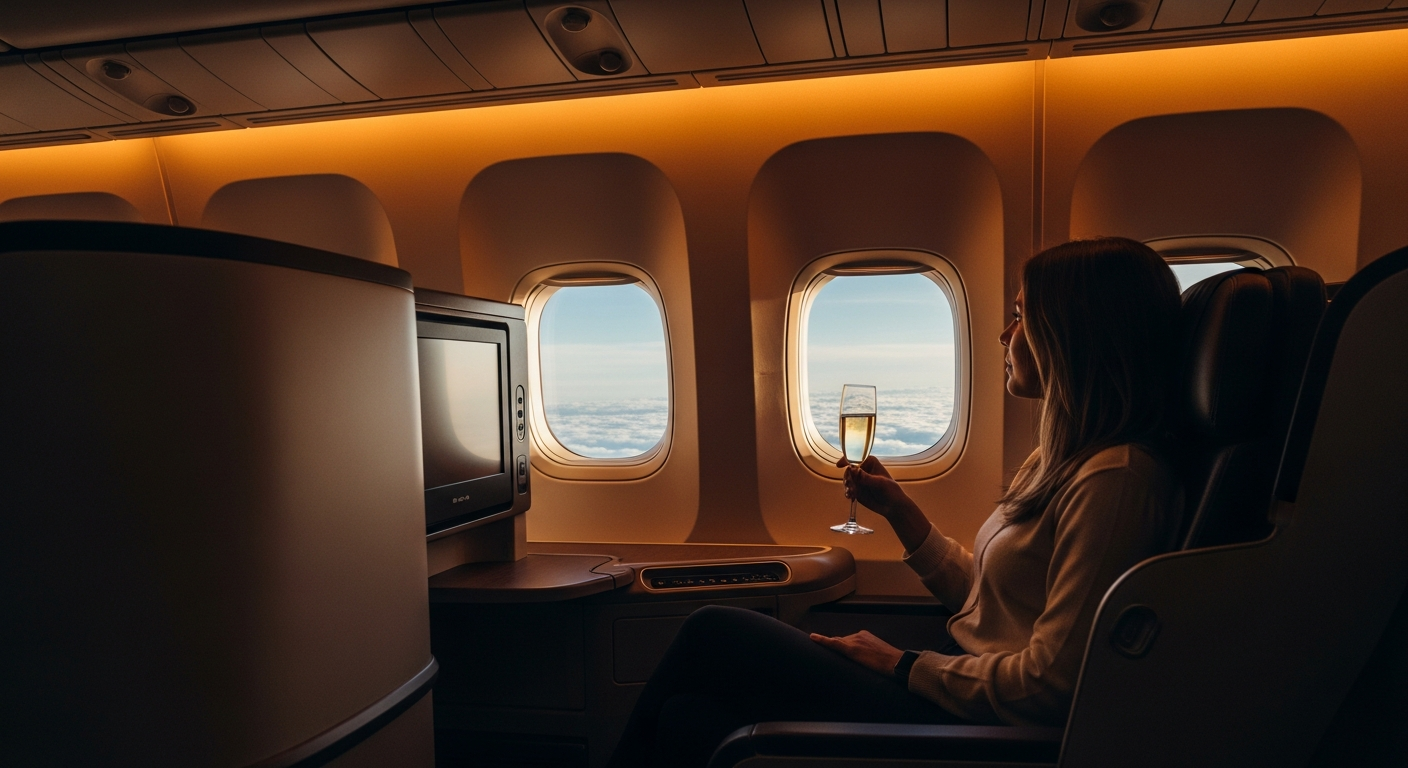
Not all business class seats are created equal—and if you’re booking LATAM Premium Business Class, the aircraft you’re flying matters more than you might think. The difference between a 1-2-1 open suite with direct aisle access and a cramped 2-2-2 configuration can make or break your long-haul experience.
LATAM Airlines operates one of Latin America’s most extensive route networks, and their Premium Business Class has earned recognition as a top-tier offering for regional and intercontinental travel. However, LATAM’s fleet modernization is still ongoing, meaning passengers can encounter vastly different cabin products depending on which aircraft operates their route.
Throughout this guide, you’ll find detailed breakdowns of the specific aircraft operating LATAM Premium Business Class, comparisons of their cabin layouts and seat specifications, and insights into which planes deliver the most impressive amenities. You’ll also learn how to identify which aircraft flies your route before booking, plus strategies for maximizing your experience regardless of which cabin configuration you’re assigned.
The 1-2-1 Revolution: LATAM’s Newest Premium Business Suites
Boeing 787 Dreamliner: The flagship aircraft with LATAM’s most advanced cabin design
The Boeing 787 Dreamliner represents LATAM’s commitment to modern luxury travel. This aircraft features the airline’s most advanced cabin design, with spacious open suites that convert into fully flat beds. The 787’s technological innovations extend beyond aesthetics—the aircraft’s larger cabin windows, advanced air filtration systems, and optimized cabin pressure create an environment specifically engineered for passenger comfort on long-haul routes.
Boeing 777 fleet: Direct aisle access for every passenger with open suite configuration
LATAM’s Boeing 777 fleet brings the coveted 1-2-1 open suite layout to more routes across the network. Every passenger enjoys direct aisle access, eliminating the frustration of climbing over seatmates during an eight-hour flight. This configuration prioritizes privacy and freedom of movement, setting a premium standard that resonates with business travelers and leisure passengers alike.
Seat specifications: 24-inch width, 45-inch personal space upright, 77-inch fully flat bed
The numbers tell a compelling story. At 24 inches wide, these seats provide comfortable shoulder room without feeling confined. When upright, you have 45 inches of personal space for working, dining, or relaxing. When it’s time to sleep, the seat converts into a fully flat 77-inch bed—practically a real bed at 35,000 feet.
The advantage of direct aisle access: Privacy, mobility, and reduced disruption to seatmates
Direct aisle access transforms the flying experience. You can move freely without disturbing neighbors, use the lavatory without the awkward shuffle, and stretch your legs without negotiating with adjacent passengers. For business professionals reviewing contracts or personal travelers seeking genuine rest, this freedom of movement feels luxurious rather than utilitarian.
Modern amenities standard across newer aircraft: Enhanced IFE systems, USB-C charging, premium bedding
The newest LATAM Premium Business cabins include enhanced in-flight entertainment systems with intuitive controls and expansive content libraries. USB-C charging ports allow you to keep devices powered throughout the journey. Premium bedding—including quality pillows, duvets, and linens—transforms your suite into a bedroom rather than a modified airplane seat.
Cabin pressure and humidity benefits of Boeing 787 technology for long-haul comfort
The Boeing 787’s advanced cabin systems maintain higher cabin pressure and humidity levels than traditional aircraft. This means you’ll arrive at your destination feeling more refreshed, with less jet lag impact and reduced dry skin irritation. These physiological benefits, while technical, translate into genuine comfort advantages that compound across a multi-hour journey.
Older Cabin Configurations: What You Need to Know About 2-2-2 Layouts
Boeing 787-8 and 787-9 aircraft still operating with legacy 2-2-2 business cabins
Not all of LATAM’s Boeing 787 fleet has been retrofitted with the new 1-2-1 configuration. Some 787-8 and 787-9 aircraft still operate with the older 2-2-2 business cabin layout, where two seats sit on either side of the center aisle. This is a critical distinction for potential passengers—the aircraft type alone doesn’t guarantee you’ll experience the newest product.
Seat sharing implications: No guaranteed direct aisle access on all seats
In a 2-2-2 configuration, middle seats exist, and passengers sitting in those middle positions lack direct aisle access. If you’re assigned a middle seat, you’ll need to coordinate bathroom visits and movements with one of your neighbors. For an eight, ten, or fourteen-hour flight, this represents a meaningful reduction in comfort and autonomy.
How middle seats affect your privacy and in-flight experience
Middle seats eliminate the privacy that defines premium business travel. You’re sharing an armrest with a neighbor, navigating shared space, and maintaining awareness of adjacent passengers. While LATAM’s cabins remain significantly more comfortable than economy, the 2-2-2 configuration lacks the sanctuary feeling that the newer 1-2-1 suites provide.
Identifying which LATAM routes still use older cabin configurations
Certain regional routes and some long-haul paths still operate with 2-2-2 equipped aircraft. South American routes, particularly those connecting major cities within the region, are more likely to use older configurations. Routes to the United States and Europe increasingly feature the newer 1-2-1 equipment, but exceptions exist.
Redemption considerations: Why older cabins should impact your award booking strategy
When redeeming LATAM Pass miles for premium business class, aircraft assignment matters significantly. If your preferred redemption route operates with older cabins, you might reconsider whether the miles represent genuine value. Alternatively, strategic flexibility—booking a connection that includes newer equipment—might maximize your award’s worth.
Customer feedback on 2-2-2 configurations: Mixed reviews and comfort trade-offs
Travelers who experience LATAM’s 2-2-2 cabins report varying impressions. While the seat itself converts to a flat bed and offers reasonable comfort, the lack of direct aisle access and privacy diminishes the premium feel. Reviews frequently highlight the trade-off: these cabins are significantly better than economy or premium economy, but measurably less comfortable than the newer 1-2-1 suites.
Route-Specific Aircraft Assignments and How to Verify Before Booking
LATAM’s route network: Which destinations get the newest 1-2-1 equipped aircraft
LATAM’s modern 1-2-1 equipped aircraft are strategically deployed across their network. Long-haul routes to North America, Europe, and major intercontinental destinations prioritize the newest equipment. Regional routes within South America, while still serving premium business passengers, are more likely to operate with older cabin configurations.
South American routes: Typical aircraft assignments for regional premium business travel
Routes connecting São Paulo, Rio de Janeiro, Buenos Aires, and Santiago with regional destinations often operate with older Boeing 787-8 or 767 aircraft. However, major routes between these hub cities and North America tend to use the newest equipment. Understanding your specific routing—not just your destination—helps predict which cabin you’ll experience.
North American and European routes: Where you’ll find the most modern cabin products
If you’re booking premium business class on LATAM flights to Miami, New York, Los Angeles, or European cities like Madrid, you’re more likely to encounter 1-2-1 equipped aircraft. These premium long-haul routes represent LATAM’s flagship service and receive priority equipment assignments.
Tools for checking aircraft type before purchasing your ticket
SeatGuru remains the most accessible tool for identifying aircraft types before booking. The platform displays seat maps, reviews, and specifications for specific aircraft on your chosen route. LATAM’s official website also provides aircraft information during the booking process, though the interface requires navigation to access detailed cabin diagrams.
Airline seat maps: Using SeatGuru and official LATAM resources to identify cabin configurations
Before finalizing your booking, visit SeatGuru and search for your specific flight number. The platform displays the exact aircraft operating that route, complete with seat maps showing the cabin configuration. Toggle between different aircraft on the same route—this reveals whether you might encounter 1-2-1 or 2-2-2 cabins depending on scheduling variations.
Contact strategies: How to confirm aircraft type directly with LATAM customer service
For absolute certainty, contact LATAM customer service directly and ask specifically which aircraft operates your flight. Provide your flight number and date. Representatives can confirm the aircraft type and, in some cases, discuss cabin configuration details. This approach takes five minutes and eliminates guesswork.
Premium Services That Differentiate LATAM Business Class Across All Aircraft
Dedicated Premium Check-in counters and priority Group 1 boarding privileges
LATAM Premium Business Class passengers access dedicated check-in counters at major airports. This bypass eliminates economy queue frustration and typically places you at the gate with minimal waiting. Group 1 boarding privileges mean you board first, selecting your preferred suite location and ensuring bin space for your luggage.
Priority baggage handling: First-to-arrive guarantee at your destination
Your bags don’t wait. Priority baggage handling ensures your luggage emerges first from the baggage carousel at your destination. For business travelers on tight schedules or anyone eager to clear the airport quickly, this service substantially improves the travel experience.
LATAM lounge access: Facilities, amenities, and dining options pre-flight
LATAM lounge access accompanies premium business class bookings. These lounges offer comfortable seating, shower facilities on select routes, business centers, and complimentary dining. The quality varies by location—flagship lounges in São Paulo and Miami exceed regional lounge standards—but all provide a peaceful alternative to airport terminal environments.
In-flight dining experience: Regional cuisine and South American wine selections
LATAM sources regional cuisine, emphasizing dishes from South America. The premium business class menu rotates seasonally and frequently features ingredients from Argentina, Chile, and Peru. Wine selections emphasize South American producers—Chilean Carmenère, Argentine Malbec, and Uruguayan Tannat—offering a genuine connection to the airline’s home continent.
Catering quality: How LATAM sources ingredients and maintains consistency
LATAM maintains partnerships with regional producers to ensure ingredient quality and consistency. The catering operation emphasizes fresh preparation rather than reheated assembly-line meals. This attention manifests in superior flavor, texture, and presentation compared to typical airline food.
In-flight entertainment systems: Content libraries and screen quality across cabin types
Modern LATAM aircraft feature high-definition entertainment systems with expanded content libraries. Movies, television series, music, and games rotate regularly. Screen quality and responsiveness differ between newer 1-2-1 suites and older 2-2-2 cabins, with the newest aircraft featuring larger, clearer displays positioned for optimal viewing during reclined sleep.
Seat Comfort and Specifications: The Numbers Behind the Experience
Seat width comparison: 24 inches in new suites versus older configurations
The 24-inch width of newer premium suites provides genuine shoulder room without feeling confining. Older 2-2-2 configurations offer narrower seats—typically 20 inches or less—that create a more confined sensation despite converting to flat beds. This width difference becomes increasingly noticeable during longer flights when you’re spending hours in an upright position.
Personal space metrics: 45 inches upright position for work and relaxation
Upright, the newer suites provide 45 inches of personal space—essentially a standard office desk depth. This allows you to comfortably open a laptop, spread documents, or simply recline with a book. Older cabins provide notably less personal space in the upright position, making work more challenging and relaxation less comfortable.
Fully flat bed length: 77 inches of sleeping space on newer aircraft
At 77 inches, the flat bed accommodates most travelers without extending your feet uncomfortably. This length allows you to stretch completely, a significant advantage for restorative sleep on long-haul flights. Older configurations typically provide shorter flat beds, forcing taller passengers to sleep with slightly bent knees.
Storage solutions: Closet access, overhead bins, and under-seat compartments
Newer premium suites often include direct closet access—a detail that transforms the flying experience. You can hang a sport coat or dress without wrinkles rather than stuffing it into an overhead bin. Generous overhead bins and under-seat compartments ensure you have space for personal items without checking additional bags.
Recline mechanics: How modern seat technology differs from older designs
Modern seat mechanisms employ smoother, quieter recline systems. The motorized recline in newer suites glides seamlessly from upright to fully flat, without the mechanical jolting of older designs. You can recline gradually to your preferred angle without disturbing seatmates or experiencing sudden shifts.
Lumbar support and ergonomic features in premium suites
Premium suites incorporate sophisticated lumbar support systems that adjust to your spinal curve. Adjustable headrests, footrests, and side bolsters allow personalization of your sleeping position. These ergonomic features reduce the neck and back pain that often accompanies long-haul flights in less thoughtfully designed seats.
Maximizing Value: LATAM Pass Miles and Premium Business Class Redemptions
LATAM Pass loyalty program: How miles accumulate and transfer options
LATAM Pass miles accumulate through flights, credit card spending, and partner transfers. The program allows transfers from partner loyalty programs, expanding redemption options. Earn rates vary based on cabin class and ticket type, with premium cabin tickets generating significantly higher mileage.
Redemption rates for premium business class: Domestic versus international routes
Premium business class domestic redemptions typically require 50,000-75,000 miles, depending on the route and season. International redemptions span a broader range—from 108,000 miles for transatlantic flights to 180,000+ miles for ultra-long-haul routes to Asia or Australia. Peak season redemptions cost substantially more than off-season bookings.
Partner airline redemptions: Using miles on Delta and other alliance partners
LATAM partnerships with Delta and other Star Alliance carriers allow mile redemption on partner business class cabins. Delta One business class flights often require 108,000 miles, presenting value opportunities depending on your target route. These partner redemptions sometimes offer better value than LATAM’s own international business class bookings.
Sweet spot pricing: Routes where business class redemptions offer best value
Certain routes offer exceptional redemption value. Domestic South American flights, particularly premium cabin positioning flights, sometimes provide business class experiences at economy-level mile costs. Regional flights to Miami, Cartagena, or Bogotá from major LATAM hubs often represent sweet spot pricing where you receive premium service at moderate point expenditure.
Fuel surcharge considerations: Additional costs beyond base mile requirements
LATAM’s fuel surcharges can substantially increase redemption costs. International premium business class bookings sometimes include $500+ in fuel surcharges on top of the mile requirement. Factor these costs into your valuation when comparing redemption opportunities—occasionally, paying cash for premium economy or upgrading from economy through co-pay represents better value than redeeming miles outright.
Booking windows and availability: Timing your redemption for optimal cabin access
Premium business class award availability on LATAM flights opens typically 350+ days before departure, though seats release gradually. Booking early maximizes your chances of securing seats on preferred aircraft and optimal routing. However, flexibility—particularly on less popular routes or off-peak dates—sometimes reveals unexpected availability on newer equipment with better cabin configurations.
Taking Off: Your Action Plan for an Exceptional LATAM Premium Business Journey
The aircraft you fly truly transforms your premium business class experience. Whether you’re securing a coveted 1-2-1 open suite on LATAM’s newest Boeing 787 or navigating the realities of an older 2-2-2 configuration, knowledge is your most valuable boarding pass.
Before clicking purchase on your LATAM Premium Business Class ticket, take two minutes to verify which aircraft operates your route using SeatGuru, contacting LATAM directly, or reviewing recent traveler reports. This single action dramatically increases the odds that your premium experience will actually feel premium. The difference between a 24-inch seat width and standard business seating, between direct aisle access and middle seat compromises, between a 77-inch bed and a cramped recline—these details matter profoundly when you’re spending 10+ hours aloft.
Whether you’re chasing that fully flat bed with a closet for pressing your clothes, or strategically planning a miles redemption that delivers genuine luxury rather than inflated point costs, you’re now equipped to make choices that align with your comfort expectations and travel goals. The premium services—the priority boarding, the lounge access, the South American wine selections—accompany you regardless of aircraft type. But the seat itself, the cabin configuration, the ergonomic features that translate into actual sleep on a long flight: these vary dramatically based on which aircraft LATAM assigns.
Book smart, fly better, and experience the genuine luxury that LATAM Premium Business Class promises.
Leave a Reply