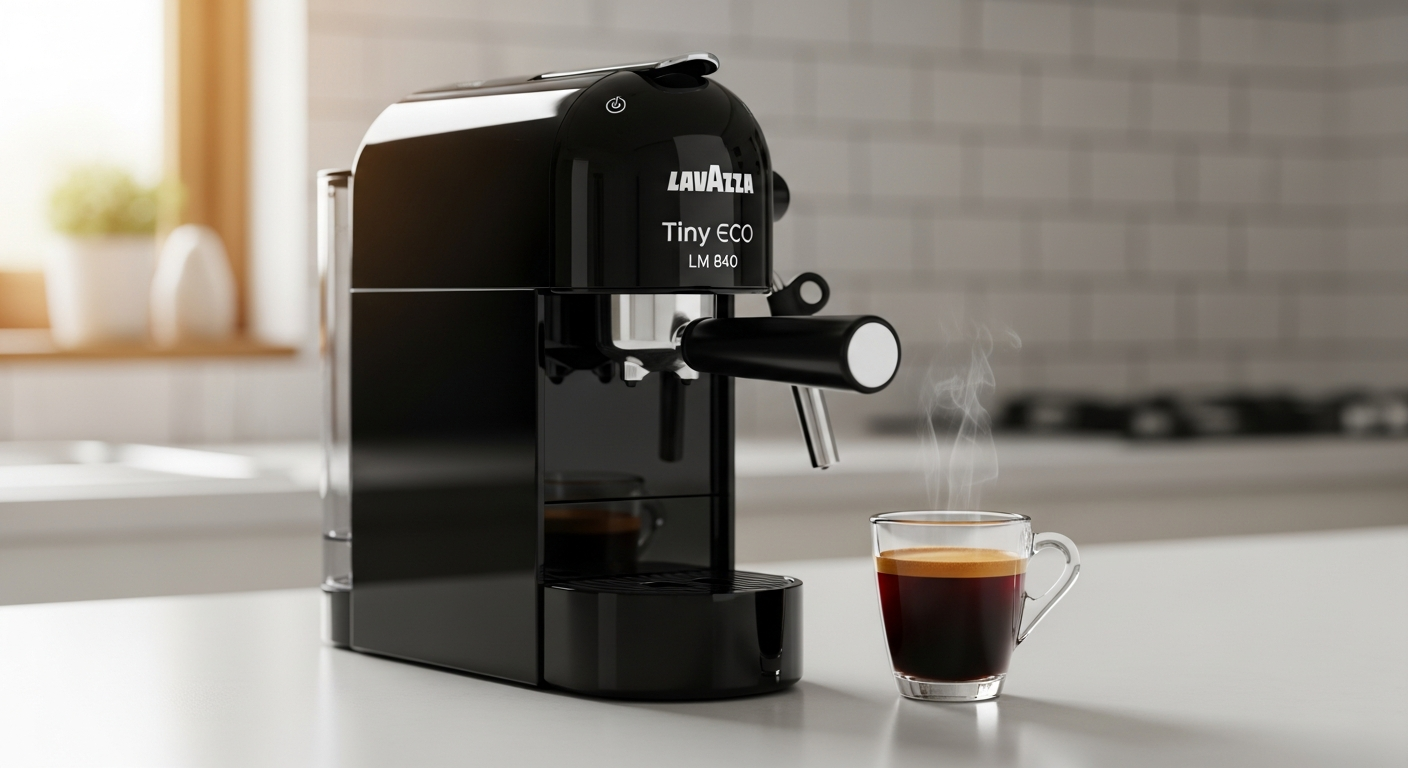
Minimalist Coffee Done Right: The Lavazza Tiny Eco LM 840 Espresso Machine
Over 2 million households across Europe have ditched bulky espresso machines in favor of compact capsule systems, and the Lavazza Tiny Eco LM 840 leads the charge. This semi-automatic espresso maker delivers café-quality shots in seconds while maintaining an A+ energy efficiency rating. Rather than occupying half your counter space, it solves a real problem: how do you enjoy premium coffee without guilt, complexity, or clutter?
The machine represents a fundamental shift in how modern households approach morning rituals. Where traditional espresso machines demanded counter real estate, technical knowledge, and maintenance routines, this compact alternative strips away the friction. At just 26 centimeters tall and weighing under 4 kilograms, it fits seamlessly into spaces where conventional machines simply won't work. The engineering behind this simplicity matters just as much as the compact footprint—rapid heating technology, recycled plastic construction, and intelligent power management combine to create something genuinely useful rather than merely trendy.
Discover the Lavazza Tiny Eco LM 840 on Esseeffe.com today.
Who Actually Benefits From the Lavazza Tiny Eco LM 840?
Remote workers and home office professionals represent the machine's core audience. A quick caffeine boost without leaving your desk, ready in under a minute from cold start, transforms afternoon productivity slumps. No mess, no grinder noise disrupting video calls, no espresso puck to dispose of—just capsule-in, espresso-out efficiency.
Apartment dwellers and renters face genuine constraints that this machine addresses directly. Premium counter real estate in urban kitchens costs money, and bulky appliances become negotiation points with landlords. The Tiny Eco LM 840 requires no permanent installation, minimal counter footprint, and zero modification to existing spaces.
Environmentally conscious consumers find alignment between their values and this machine's construction. Recycled plastic components reduce manufacturing waste, and the A+ energy efficiency rating demonstrates commitment beyond surface-level greenwashing. Every brewing cycle consumes less electricity than conventional machines, accumulated across thousands of servings annually.
Solo coffee drinkers and couples benefit most from the economics and practicality. The 0.6-liter tank matches their usage patterns perfectly. Households requiring six cups before 9 AM will face frustrating refilling cycles, but individuals and pairs experience seamless operation.
Breaking Down the Eco-Friendly Design & Energy Performance
The recycled plastic composition tells a specific story about manufacturing priorities. Rather than virgin plastic or aluminum, Lavazza sourced materials destined for landfills, processed them, and built a functional appliance. This design choice simultaneously reduces manufacturing waste and appeals to environmentally aware buyers who track their consumption patterns.
The A+ energy efficiency rating delivers tangible benefits beyond marketing claims. Compared to traditional espresso machines operating at 2000+ watts during heating phases, the Tiny Eco LM 840's 1450-watt output strikes a genuine balance. Quick heating happens without excessive energy demands—a 25-30 second warm-up period avoids both waiting frustration and electrical excess.
The auto power-off function activates after two minutes of inactivity, preventing unnecessary energy drain from forgotten appliances. Countless households leave machines idle while occupied elsewhere, and this feature eliminates that common waste pattern. Over months and years, these small efficiencies compound into measurable electricity reductions and lower utility bills.
Check current pricing and availability at Esseeffe.com.
The Real Cost of Convenience: Capsule System Economics
Capsule pricing typically ranges from €0.40 to €0.60 per pod depending on blend and intensity. This straightforward cost structure eliminates surprise expenses—you know exactly what each coffee costs before purchasing. Different intensity levels accommodate morning wake-up shots and afternoon gentler options without buying multiple machine types.
Comparison to ground coffee reveals uncomfortable mathematics: capsule brewing costs 2-3 times more per serving than traditional espresso preparation. A household consuming one capsule daily spends €146-€219 annually, versus €50-€80 using conventional beans and a basic grinder. Over five years, the difference compounds to €400-€700. This reality demands honest assessment—convenience carries a measurable premium.
The variety advantage partially justifies this premium. Lavazza's A Modo Mio system offers 20+ different blends and intensities across price tiers. Experimentation happens without equipment changes or grinder adjustments. Single-origin African coffees, Italian dark roasts, and everything between occupy the same machine. Ground coffee drinkers either accept limited variety or manage multiple opened bags simultaneously.
No grinder or tamping eliminates the need for additional equipment purchases. The complete coffee setup costs €40-€80 for this machine, versus €200-€500 for a quality traditional espresso machine plus grinder. Initial accessibility opens premium coffee to households where traditional setups remained economically unrealistic.
Performance Features That Actually Matter in Daily Use
Rapid 25-30 second heat-up eliminates the frustration of waiting for machines to reach brewing temperature. Cold water enters the system, and within half a minute, extraction pressures stabilize. This speed transforms coffee from a planned activity requiring advance preparation into an impulse that gets satisfied immediately. The difference between "let me wait for the machine" and "coffee is ready now" reshapes morning routines.
One-button simplicity makes operation foolproof with no learning curve for guests or family members. Insert capsule, press button, wait thirty seconds, retrieve espresso. No pressure adjustments, no grind settings, no tamping technique discussions. Multiple people operating the machine produces consistent results—a remarkable achievement for entry-level equipment.
The 0.6-liter water tank capacity suits single-user or couple scenarios but requires refilling for multiple servings. Back-to-back espressos demand tank refills, which takes perhaps two minutes total. Households brewing three cups simultaneously need different solutions, but dual-serving scenarios work smoothly within this constraint.
Consistent espresso extraction receives praise from users despite the machine's entry-level price point. Coffee quality doesn't match €2000 professional equipment, but it far exceeds expectations for a machine costing €40-€80. Crema consistency, flavor complexity, and body quality suggest engineering investment in this specific aspect, even where other capabilities remain limited.
Where This Machine Falls Short
No milk frothing capability means cappuccinos, lattes, and flat whites require external milk steamers or manual frothing devices. Espresso-only users never notice this limitation, but milk-drink enthusiasts must modify their approach. Adding a separate €30-€50 milk frother extends functionality, but compounds the total setup cost and counter clutter.
Espresso and lungo modes restrict beverage options compared to multi-function machines. The lungo setting extends extraction for a larger cup, but differentiation stops there. Programmable button customization, adjustable water volumes, and temperature control simply don't exist. Users accept whatever the machine delivers or seek alternatives.
The 0.6-liter tank becomes a bottleneck if brewing multiple cups in succession. Refilling requires stopping mid-routine, waiting for the tank to fill, and restarting. Couples sharing the machine during morning routines experience this inconvenience regularly. Larger households or entertaining guests with coffee exceeds practical capacity.
Pod system lock-in restricts users exclusively to Lavazza A Modo Mio capsules. Proprietary systems eliminate experimentation with other brands, subscription services, or cost-saving alternatives. If Lavazza discontinues A Modo Mio production (historically unlikely given market position), machine compatibility becomes problematic. This dependency demands trust in Lavazza's long-term commitment to the system.
The Bottom Line for Minimalist Coffee Enthusiasts
The Lavazza Tiny Eco LM 840 occupies a unique position in the espresso machine market, succeeding brilliantly for a specific audience: anyone seeking quality coffee without complexity, space constraints, or environmental guilt. The machine delivers on its promises with rapid heating, foolproof operation, and genuinely good espresso from a footprint smaller than a toaster. Where it truly shines is solving the apartment dweller's dilemma with café-quality shots in seconds, recycled plastic construction aligned with sustainability values, and an A+ energy rating that keeps electricity bills reasonable. The capsule system costs more long-term than grinding your own beans, and the 0.6-liter tank demands frequent refilling for multiple servings, but these are trade-offs made for convenience and minimal clutter. If your lifestyle prioritizes speed, space efficiency, and environmental responsibility over maximum beverage options, this machine deserves serious consideration at its accessible €40-€80 price point.
Explore the Lavazza Tiny Eco LM 840 and place your order at Esseeffe.com.
Leave a Reply