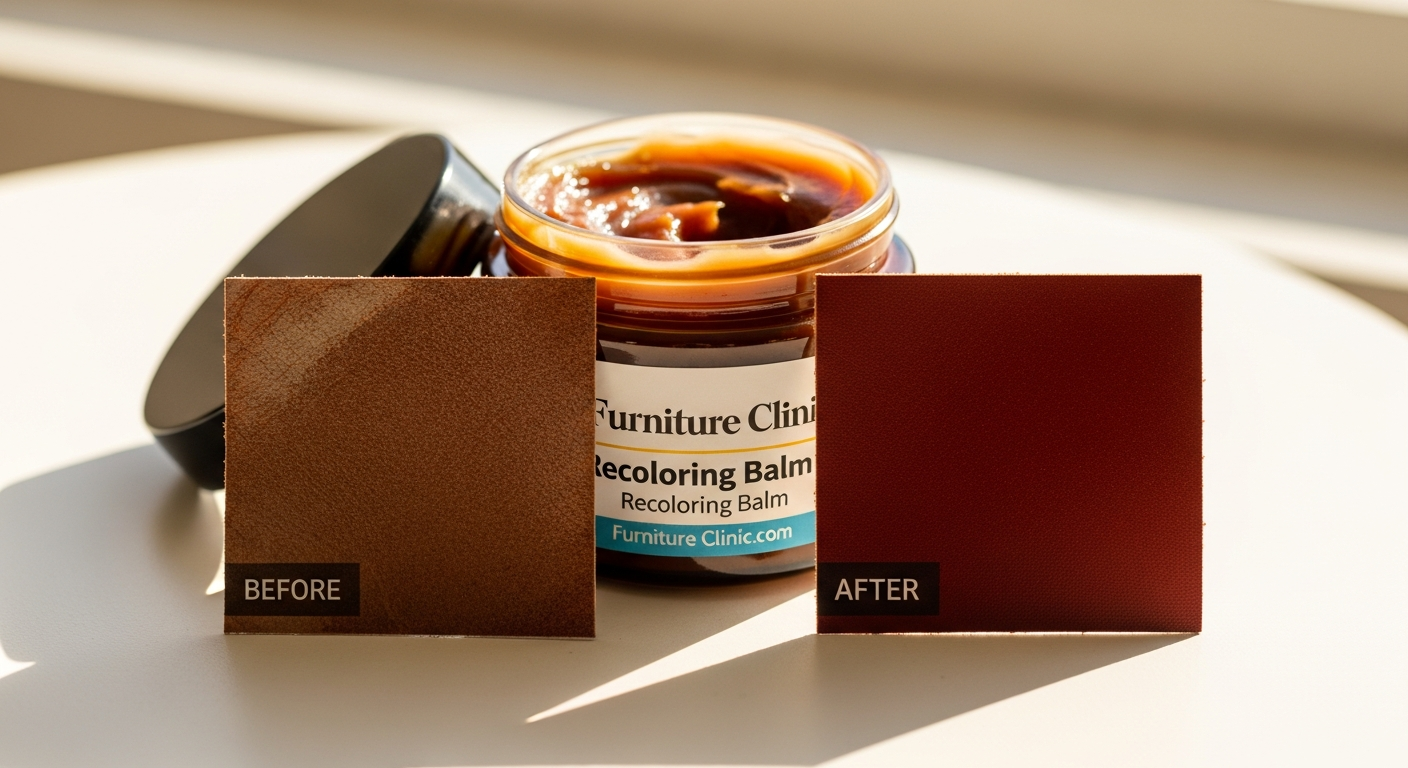
Your favorite leather sofa has lost its luster, and that car seat you've babied for years is scuffed and discolored. The reality is that leather ages, but replacement isn't your only option. Furniture Clinic's Leather Recoloring Balm has become a game-changer in leather restoration, backed by the Good Housekeeping Seal and earning thousands of five-star reviews.
This pigmented cream balm penetrates absorbent leather fibers to restore original color while conditioning the material. The product transforms worn, faded leather through a straightforward application process that doesn't require professional expertise or expensive equipment.
Explore the Furniture Clinic Leather Recoloring Balm and start your restoration journey today.
Understanding Leather Absorbency: The Critical First Step
What absorbent leather is and why it matters for recoloring balm effectiveness
Absorbent leather acts like a sponge, allowing pigmented products to penetrate and bond with the fibers. This characteristic is essential for the Leather Recoloring Balm to work effectively. When leather has this quality, the cream balm can seep into the material, restoring color from within rather than sitting on the surface. Non-absorbent leather, by contrast, has been sealed or treated in ways that prevent penetration, making the balm ineffective.
How to perform the absorbency test before purchasing using the water droplet method
Before investing in the product, perform a simple water droplet test on your leather item. Apply a small drop of water to an inconspicuous area—the underside of a sofa cushion, the inside of a jacket pocket, or beneath a car seat. Watch what happens over 10-15 seconds. If the water absorbs into the leather and darkens the spot, you have absorbent leather suitable for treatment. If the water beads up and sits on the surface, your leather is sealed and won't respond to the recoloring balm.
Leather types that work best with the recoloring balm including aniline and semi-aniline
Aniline leather, which contains no surface coating, responds beautifully to the Leather Recoloring Balm. Semi-aniline leather, treated with a light protective layer, also works well with the product. Both types allow the pigmented cream to penetrate and condition effectively. Full-grain leather that hasn't been sealed typically falls into these categories, making it ideal for restoration work.
Why non-absorbent or sealed leather won't respond to the treatment
Sealed or protected leather has a barrier that prevents absorption. Products like the Leather Recoloring Balm simply can't penetrate these surfaces, regardless of how many coats you apply. Attempting to use the balm on non-absorbent leather results in wasted product and disappointing results. This is why the absorbency test is non-negotiable.
Common leather items that are typically absorbent and suitable for restoration
Most furniture leather is absorbent by nature—couches, armchairs, ottomans, and dining chairs respond well to the recoloring balm. Car seats made from leather are typically absorbent too. Leather jackets, shoes, bags, and other apparel items usually have the absorbency needed for successful restoration. Even leather car interiors and leather-topped desks often qualify as candidates for treatment.
Navigating the 16-Color Palette for Perfect Matches
Overview of the 16+ available color options in the Furniture Clinic range
The Furniture Clinic Leather Recoloring Balm comes in more than 16 distinct shades, covering the full spectrum of leather colors. Options range from classic blacks and deep browns to warm tans, rich cognacs, and even specialty colors. This extensive palette means you're likely to find a shade that matches your leather or gets extremely close.
How to identify your leather's original color or desired shade accurately
Examine your leather in natural daylight to see its true color. Look at areas that receive less sun exposure—the underside of cushions or the back of a sofa often retain original color better than high-traffic areas. If you're restoring to match the original appearance, these hidden spots provide your best reference. For items you want to transform to a different shade, consider the overall aesthetic you're aiming for and how the new color will complement your space.
Matching strategies for common furniture colors like black, brown, tan, and cognac
Black leather requires an exact match to avoid visible inconsistencies. Most black options in the Furniture Clinic range perform consistently, but slight variations exist. Brown leather offers more flexibility since variations are expected and natural-looking. Tans and cognacs present similar versatility—slight shade variations often enhance the restoration by creating a lived-in appearance. When in doubt, lean slightly darker rather than lighter, as the balm can appear lighter once fully dried.
Using lighting conditions to assess color accuracy before application begins
Natural daylight reveals the truest color representation. Avoid assessing color matches under artificial lighting alone, as overhead lights can distort perception. If possible, view your leather item and color samples in the same lighting conditions where the furniture will spend most of its time. Early morning or late afternoon light provides particularly accurate color assessment.
Ordering sample swatches or testing on hidden areas first for confidence
Many users benefit from testing the selected color on a hidden area before committing to full application. Apply a small amount to the underside of a cushion or inside a car seat to see how the color looks on your specific leather once dry. This low-risk approach builds confidence and ensures you've selected the right shade before treating visible surfaces.
The Application Process: Technique and Timing
Preparation steps including cleaning leather thoroughly before treatment begins
Start with clean leather. Dust the surface with a soft cloth to remove debris. For deeper cleaning, use a mild leather cleaner or a solution of water and gentle soap. Allow the leather to dry completely before beginning the recoloring process. Clean leather accepts the balm more evenly, preventing the product from interacting with dirt or grime that could affect results.
Using included application sponges for even coverage across the surface
The Furniture Clinic package includes application sponges designed specifically for this product. These sponges distribute the balm evenly without leaving streaks or uneven patches. Dampen the sponge slightly if needed, then dab it into the balm before applying to the leather in circular motions. The sponge applicator is far superior to brushes or direct finger application.
Applying thin, even coats to avoid blotchy or uneven coloring results
Resist the temptation to apply one thick coat. Thin, even coats produce superior results and prevent blotchy appearance. Work the sponge in small sections, maintaining consistent pressure and coverage. Each stroke should blend seamlessly with the previous one. This methodical approach takes slightly longer but delivers professional-looking restoration.
Recommended drying time between coats to prevent color transfer issues
Allow adequate drying time between coats—most users report waiting 30-60 minutes, depending on ambient humidity and temperature. Rushing this step can result in color transfer onto cloths or fingers as you apply subsequent coats. Be patient between applications; the final result justifies the wait.
Working in sections on larger pieces like sofas or car interiors systematically
On large furniture items, divide the project into manageable sections. Treat one cushion or one section of a sofa before moving to the next. This systematic approach prevents you from becoming overwhelmed and helps you maintain consistent pressure and application technique throughout the project. For car interiors, work on one seat at a time.
Maximizing Results: Multiple Coats and Layering Strategy
Why heavily faded or damaged areas typically require 2-3 coats minimum
Severely faded or damaged leather needs multiple coats to achieve vibrant, consistent color. The first coat typically provides partial coverage, revealing the scope of restoration needed. Subsequent coats build intensity and ensure complete coverage across problem areas. Most users find that two to three coats produces the desired result for heavily worn pieces.
Building color intensity gradually rather than applying one thick coat
Layering thin coats gives you control over final color intensity. You can stop when the color reaches the desired richness, rather than overshooting with one heavy application that might appear too dark or uneven. This gradual approach also prevents the balm from pooling or creating shiny spots that would require additional work to correct.
Assessing coverage between applications to identify weak spots needing attention
After each coat dries, examine the leather carefully. Identify areas where color still appears faded or uneven. These spots may need an extra coat during the next application phase. Paying attention between coats ensures you end up with uniform, vibrant color rather than patchy restoration.
The balance between achieving vibrant color and maintaining leather flexibility
While the Leather Recoloring Balm includes conditioning properties, excessive applications can potentially affect leather flexibility. Apply only the number of coats necessary to achieve your desired color. Most items look best with two to three coats, striking the ideal balance between restored color and maintained leather quality.
Signs that additional coats are needed versus when optimal saturation is reached
Your leather has reached optimal saturation when color appears consistent across the entire piece and matches your target shade. If you can still see faded patches or the color looks lighter than desired, additional coats are warranted. Once you achieve even coverage and desired vibrancy, stop applying. Over-application wastes product and provides no additional benefit.
Real-World Durability: What to Expect Long-Term
Documented lifespan of recoloring balm results with many users reporting 6+ months
Users consistently report that the Furniture Clinic Leather Recoloring Balm results last six months or longer. Many report even more extended durability, with restoration holding strong for a year or more. The specific timeframe depends on usage intensity and care practices, but the results are undeniably durable compared to temporary solutions.
Factors that affect how long results last including usage frequency and care routine
High-traffic furniture naturally experiences faster color fading than lightly used items. A sofa in a busy family room sees more wear than a decorative accent chair. Regular care also matters—cleaning leather occasionally and conditioning it appropriately extends the life of your restoration. Protective leather treatments can further enhance longevity.
How daily wear on furniture or car seats impacts color retention over time
Daily use gradually affects any restoration work. Car seats that receive constant contact fade faster than rarely used furniture. Friction from sitting, leaning, and handling naturally impacts color retention. However, even with daily use, the Leather Recoloring Balm provides impressive durability that far exceeds temporary fixes.
Environmental elements that fade or degrade the restoration like sunlight and heat
Direct sunlight accelerates fading on any leather restoration. Intense heat can also degrade the recoloring balm's effectiveness over time. Positioning furniture away from direct sunlight or using window treatments to filter harsh light significantly extends restoration longevity. Climate-controlled environments preserve results better than fluctuating or extreme temperature conditions.
Maintenance practices that extend the life of your restoration work significantly
Regular gentle cleaning prevents dirt accumulation that can dull restored color. Conditioning leather periodically maintains its suppleness and supports the restoration. Protective leather sprays create a barrier against stains and environmental damage. These simple maintenance habits can double or triple the lifespan of your restoration work.
Transform Your Leather, Reclaim Your Investment
The Furniture Clinic Leather Recoloring Balm delivers on a straightforward promise: bring faded leather back to life without expensive replacement. This product works affordably, with thousands of users experiencing transformation as tired leather becomes vibrant again through a simple, user-friendly process. Whether you're reviving a beloved sofa, restoring car seats, or bringing jackets and shoes back to their former glory, the same principles apply.
The investment is minimal—typically under $30—and the payoff is substantial. You're not just refreshing appearance; you're extending the life of items you care about and saving yourself from costly replacements. Start by testing your leather for absorbency today. If it passes, you're just a few coats away from restoration success. Your favorite leather items deserve a second life, and now you have the knowledge and tools to give them one.
Leave a Reply