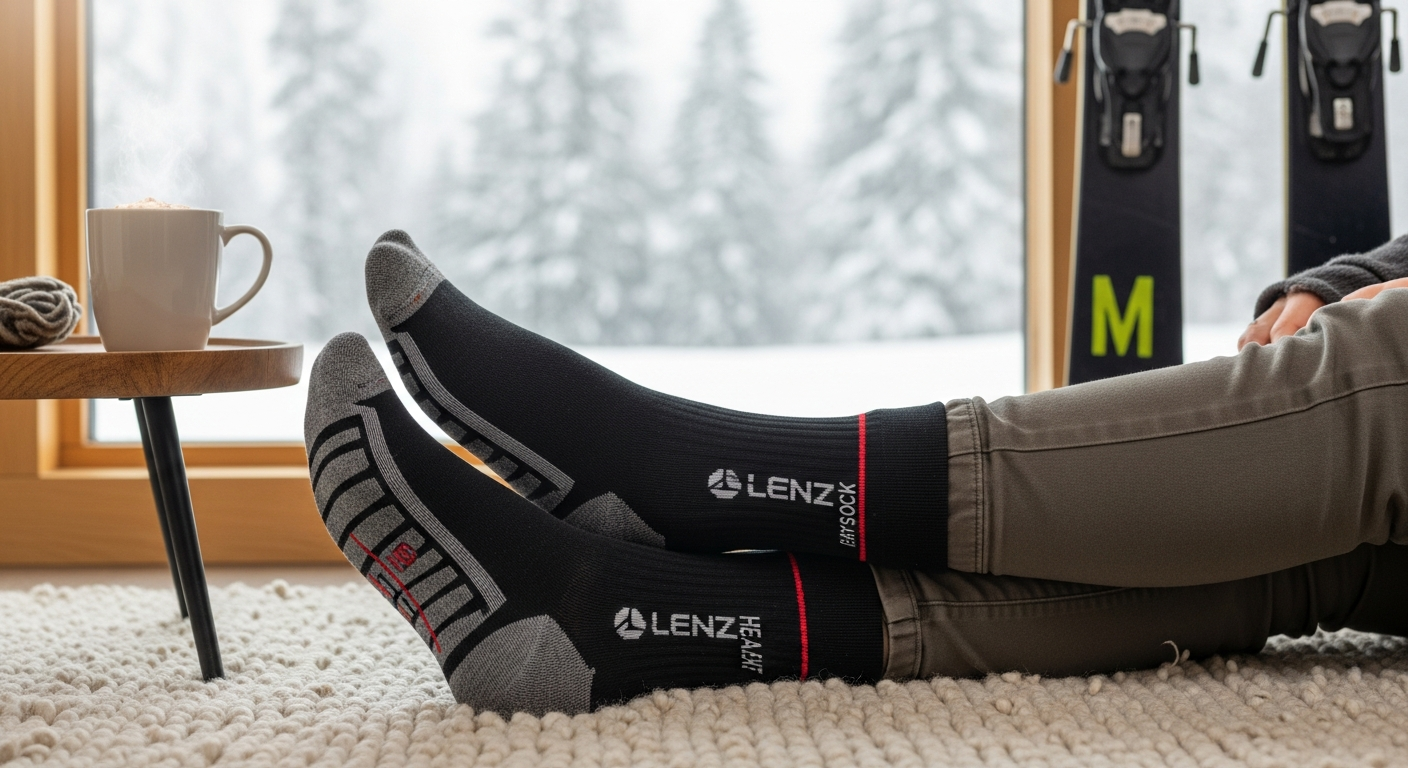
Cold toes can cut a ski day, winter hike, or outdoor shift short. The Lenz Heat Sock 5.1 Toe Cap Heated Socks address that problem with an integrated heating element that warms the toe area from above and below.
You also get a knee-high design, targeted padding, merino wool, silk, and compatibility with Lenz Body Heat System lithium packs.
Before buying, though, you need to account for the battery pack, fit, heating duration, and intended use.
Here is what you should know before spending your money.
Lenz Heat Sock 5.1 Toe Cap Heated Socks: Key Features
These socks use Lenz’s Toe Cap heating system. Instead of concentrating warmth in one small area, the heating element surrounds the toe area from the top and bottom.
This setup makes them especially relevant if you are comparing heated socks for skiing and other cold-weather activities.
The regular-fit version is knee-high and includes additional padding around the shin and fibula. Reinforcements are also placed around the toes and heel.
A ring bandage around the instep helps keep each sock positioned correctly on your foot.
| Feature | Details |
|---|---|
| Heating area | Toes, from above and below |
| Sock height | Knee-high |
| Fit | Regular fit |
| Material | Polyester, merino wool, polyamide, polyacrylic, silk, elastane |
| Battery system | Lenz Body Heat System lithium packs |
| Heat control | Battery controls or Lenz Heat App with compatible packs |
| Washing | Machine washable at 30°C |
| Battery included | No |
| Included accessories | Laundry bag and care instructions |
The manufacturer currently lists the regular-fit socks at €89.95 before shipping. Battery packs are purchased separately, so your total setup cost can be substantially higher.
How Does the Toe Cap Heating System Work?
The biggest functional difference between these and ordinary insulated socks is the sewn-in heating element.
Lenz places its Toe Cap element around the toes, providing heat from both directions rather than relying entirely on insulation to retain body heat.
You attach compatible rechargeable lithium packs near the sock cuff using snap connectors.
Depending on the battery you select, controls are available directly on the pack. Bluetooth-compatible packs can also be managed through the Lenz Heat App.
That setup makes these battery heated socks adjustable during changing conditions.
You can reduce the heat when you become active and increase it during less active periods, such as sitting on a ski lift.
How Long Can the Batteries Keep the Socks Heated?
Runtime depends heavily on the battery model and heat setting.
Lenz currently states that compatible battery options can provide up to 23 hours of sock heating. For example, the rcB 2000 is rated for up to 23 hours, while the rcB 1200 is rated for up to 14 hours. Actual duration drops as you use higher heat levels.
That distinction matters when comparing rechargeable heated socks. A long advertised maximum runtime usually represents operation at a lower setting rather than continuous maximum heat.
For a full ski day, you may get better battery efficiency by starting at a lower setting and increasing the temperature only when your feet begin feeling cold.
Are They Comfortable Inside Ski Boots?
Lenz uses a flat heating element designed to avoid unnecessary bulk around the toes.
The socks are also ergonomically knitted for the left and right foot, helping them sit correctly inside close-fitting footwear.
Additional shin and fibula padding can help inside ski boots, while reinforced heel and toe sections target areas that experience regular friction.
The regular-fit construction has increased elasticity around the calf.
If your feet and legs are particularly narrow, Lenz also sells a separate slim-fit 5.1 model designed specifically for narrower feet and legs.
What Materials Are Used?
The regular-fit version contains:
- 30% polyester
- 25% merino wool
- 20% polyamide
- 15% polyacrylic
- 5% silk
- 5% elastane
That composition gives merino wool heated socks a different feel from models made primarily from synthetic fibers.
Lenz combines the wool with silk and performance fibers to support moisture management, quick drying, elasticity, and comfort.
The merino content can be particularly useful during active winter use because managing moisture inside your footwear matters almost as much as generating heat.
Who Could Benefit From These Heated Socks?
These socks make the most sense when you regularly spend extended periods outside in low temperatures.
They can suit:
- Skiing and snowboarding
- Winter hiking
- Outdoor work
- Cold-weather sporting events
- Hunting and other low-movement outdoor activities
- Long periods outside during winter
If you need heated socks for cold weather only occasionally, the total price may be difficult to justify.
If cold feet regularly interfere with winter activities, adjustable electric heating may provide greater practical value.
What Should You Know About the Battery Packs?
This is one of the biggest details to check before ordering.
The basic sock package contains one pair of socks, a laundry bag, and safety and care instructions. A battery is not included with the standard €89.95 sock listing.
Lenz lists several compatible options, including the rcB 2000, rcB 1200, and Heat Pack 2.0.
The rcB packs support smartphone temperature adjustment through the Lenz Heat App, while compatible batteries can also be controlled directly.
For example, the rcB 1200 weighs 85 grams and attaches to the sock using snap buttons. It provides three heat levels when controlled directly from the battery.
If you already own compatible Lenz Body Heat System batteries, buying the socks alone becomes much easier to justify financially.
How Do You Wash Them?
Electronic heating components make care instructions especially important.
Lenz states that the socks are machine washable at 30°C and includes a laundry bag with the pair. Follow the manufacturer’s battery-removal and care instructions before washing them.
Proper care matters because these are technical winter sports socks containing permanently integrated heating components.
Pros and Cons
Pros
- Heating surrounds the toes from above and below
- Multiple compatible battery choices
- Smartphone temperature control with compatible Bluetooth packs
- Merino wool and silk included in the fabric composition
- Reinforced heel and toe areas
- Added shin and fibula padding
- Regular and slim-fit versions available
- Machine washable at 30°C
Cons
- Batteries cost extra with the standard sock-only purchase
- Complete setup costs considerably above standard winter socks
- Battery charging adds another task before outdoor use
- Maximum heating duration varies by battery and temperature setting
- Knee-high construction may be unnecessary for casual everyday use
Are Lenz Heat Sock 5.1 Toe Cap Heated Socks Worth the Price?
They make the strongest case for buyers who frequently ski, work outdoors, hike in winter, or spend long periods in low temperatures.
The Toe Cap design is the main reason to choose this model. It actively heats both sides of your toes rather than relying exclusively on insulated fabric.
Adjustable temperature settings add another practical advantage when your activity level changes throughout the day.
However, calculate the complete system price before ordering.
The socks themselves are currently listed by Lenz at €89.95, while compatible batteries are separate purchases. Depending on your chosen battery, the power system can cost significantly above the price of the socks.
If you already own a compatible Lenz battery system, the buying decision becomes simpler.
If you are starting from scratch, compare the combined sock-and-battery price against how frequently you expect to use them.
Is This Heated Sock Setup Right for You?
The Lenz Heat Sock 5.1 Toe Cap Heated Socks are designed for buyers who need controllable toe warmth during extended cold-weather activities.
Their strongest features include heating above and below the toes, adjustable battery-powered temperature control, targeted padding, and a merino-silk fabric composition.
Before purchasing, verify your size, preferred fit, and battery choice. Pay particular attention to battery runtime at different heat settings rather than relying only on the maximum advertised figure.
For frequent winter use, those details can determine how practical the system is for your typical day outdoors.
Leave a Reply