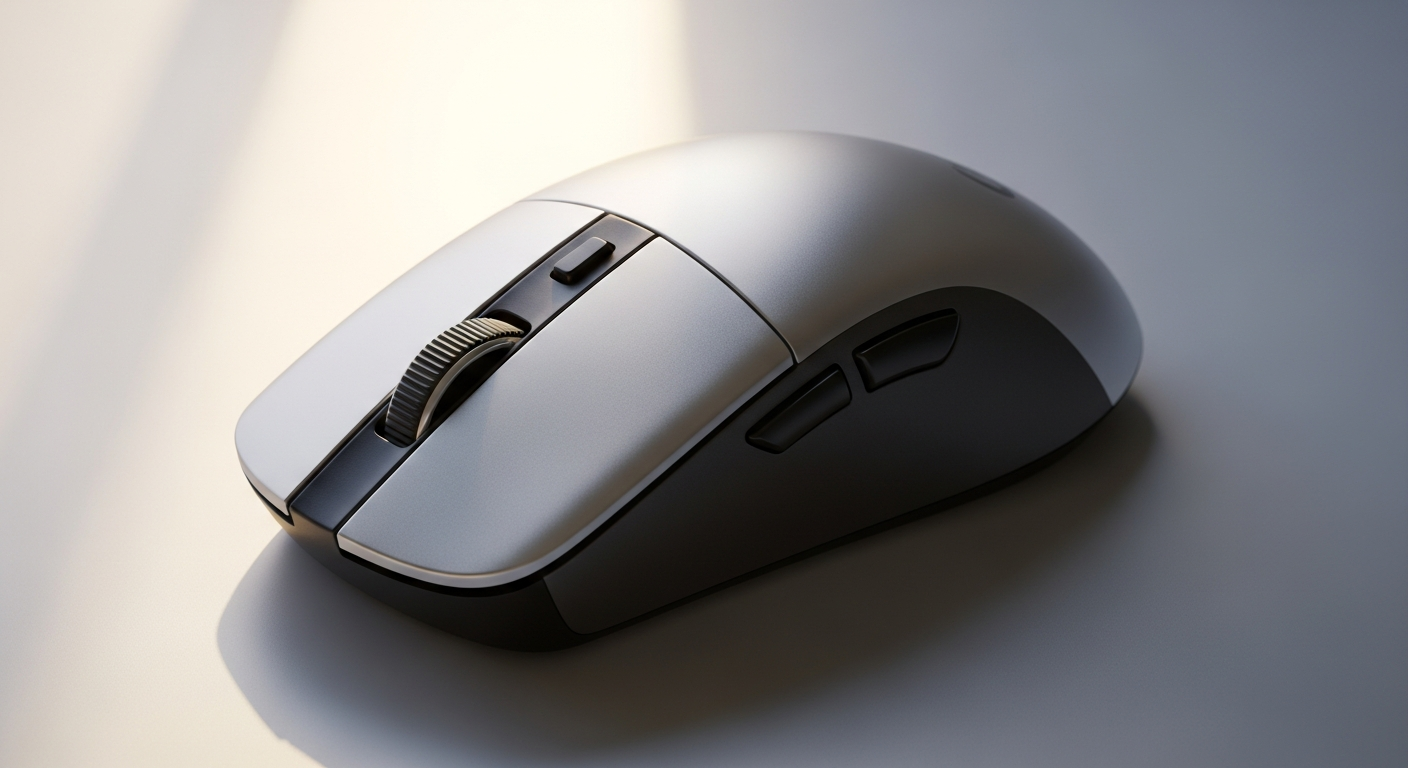
Electronics manufacturers design products to fail. The average computer mouse lasts 18-24 months before ending up in a landfill—a cycle we've accepted as inevitable. But what if your mouse could outlive your career? The Lunar Artefacts Pointer Instrument shatters this expectation entirely, proving that luxury and longevity aren't mutually exclusive.
Born from the vision of an architect and automotive designer, Lunar Artefacts brings a radically different philosophy to everyday tech. Rather than chasing quarterly sales through planned obsolescence, the brand crafts tools meant to be repaired, cherished, and passed down. The Pointer Instrument represents this commitment—a wireless mouse engineered with the precision of a luxury car and the timeless vision of architecture, wrapped in full-grain French leather and hand-polished precious metals.
Discover the Lunar Artefacts Pointer Instrument and experience the future of durable design.
The Repair-First Philosophy Behind Lunar Artefacts' Design
How the Pointer Instrument Challenges Planned Obsolescence Through Modular, User-Repairable Construction
Most computer mice are sealed black boxes. Once something fails, you throw it away and buy another. Lunar Artefacts rejects this model entirely. The Pointer Instrument is built from the ground up with repairability at its core, treating your mouse as a lasting possession rather than a disposable commodity.
Every component inside the Pointer Instrument can be accessed, removed, and replaced by you. There are no proprietary screws, no adhesives binding parts together permanently, and no hidden engineering designed to make repair impossible. This modular approach means that if a switch wears out after years of use, you replace just that switch. If the leather develops a small tear, you repair it. The mouse doesn't become obsolete because one part failed—it simply gets refreshed.
All Components Designed to Be Replaceable Without Adhesives or Proprietary Tools
The engineering philosophy here is stunning in its simplicity. Everything comes apart without permanent bonding. This isn't cutting-edge technology—it's a return to how products were actually made before manufacturers decided that repairability was bad for business.
When you open a Pointer Instrument, you'll find a construction approach that prioritizes longevity. Springs can be swapped. Contact points can be replaced. The wireless receiver can be upgraded if new technology emerges. Customizable tops allow you to change the aesthetic or ergonomics without purchasing an entirely new mouse. This level of modularity keeps your device current and functional for decades.
Lifetime Repair Service Commitment and What It Means for Long-Term Ownership
Lunar Artefacts backs this philosophy with a Lifetime Repair Service. Think about that for a moment—the company is willing to support your mouse for life because they're confident in the design and materials. This isn't a marketing gimmick. It's a genuine commitment that fundamentally changes the economics of ownership.
A lifetime repair guarantee means you're never truly alone with a broken mouse. Parts wear out; that's natural. But Lunar Artefacts assumes responsibility for keeping your device functional. This transforms ownership from a transaction into a partnership, where the brand stands behind its product indefinitely.
The Environmental Impact of Choosing Repairability Over Replacement
The environmental math here is brutal and simple. Electronic waste is one of the fastest-growing waste streams globally. A typical mouse represents mining, manufacturing, packaging, shipping, and landfill disposal. When you buy a new mouse every two years, you're creating five devices' worth of waste over a decade.
The Pointer Instrument eliminates most of this cycle. Yes, it required resources to manufacture initially, but those resources are amortized across decades of use. A single Pointer Instrument that lasts 20 years has a fraction of the environmental impact of ten disposable alternatives. For professionals who care about their carbon footprint, this isn't a small distinction.
Premium Materials That Develop Character Over Time
Full-Grain French Leather Construction and Its Durability Advantages
The Pointer Instrument uses full-grain French leather—not the synthetic covering found on budget mice. Full-grain leather is the highest quality leather available because it retains the natural surface and all the layers of the hide. This means it's genuinely durable and improves with age.
Full-grain leather breathes. Your palm won't feel clammy after hours of use. It develops a patina as your skin oils and the natural environment interact with its surface. Unlike synthetic materials that flake and crack, genuine leather actually becomes more supple and comfortable over time. This is a material choice that rewards years of use rather than degrading under them.
Gold-Plated and Hand-Polished Aluminum or Brass Base Options
The base of the Pointer Instrument comes in configurations featuring gold-plated or hand-polished aluminum and brass. These aren't cosmetic flourishes—they're functional choices that enhance both performance and longevity. Gold plating provides corrosion resistance and ensures consistent electrical contact. Hand polishing creates a smooth surface that reduces friction with your desk.
These materials are expensive upfront, which is why budget manufacturers never use them. But they represent a deliberate rejection of shortcuts. A gold-plated brass base will outlast any plastic alternative by decades while actually improving its functionality over time.
How Premium Materials Contribute to the Mouse's Tactile Experience
There's something irreplaceable about holding a well-crafted object. A mouse made from full-grain leather and hand-polished metal feels different in your hand than plastic alternatives. This isn't superficial. The tactile feedback you receive from quality materials affects your relationship with the tool and, consequently, your work.
Weight, texture, and responsiveness all matter when you're holding something for eight hours a day. The Pointer Instrument's material choices create a satisfying weight and smooth texture that actually reduces fatigue compared to lighter plastic mice. Your hand and wrist know the difference between a tool built to last and one built to fail.
The Patina Effect: How the Pointer Instrument Ages Gracefully With Use
Here's where the philosophy of longevity truly reveals itself. Most electronics look worse the older they get. The Pointer Instrument looks better. Full-grain leather develops a rich patina—a deepening of color and character that reflects your actual use. Scratches and marks aren't flaws to hide; they're evidence of a life well-lived with your tool.
This is intentional design. The materials age gracefully because they're chosen specifically for this property. After five years of daily use, your Pointer Instrument will be more beautiful than when you bought it. This aesthetic appreciation reinforces the emotional connection to your tools and makes the initial investment feel increasingly justified with each passing year.
Explore the full collection and find your perfect Pointer Instrument configuration today.
Ergonomic Design for Extended Work Sessions
Ambidextrous Form Factor and Its Benefits for Diverse User Preferences
Not all hands are the same, and not all users prefer right-handed design. The Pointer Instrument's ambidextrous form factor serves left-handed users equally well as right-handed users without compromise. This simple design choice eliminates an entire category of frustration that left-handed users experience with most mice.
Beyond left-right symmetry, ambidextrous design also allows for flexibility in how you interact with the device. You can switch hands mid-session to rest one side, or adjust your grip based on the task at hand. This adaptability is particularly valuable during long working days when fatigue and repetitive strain become concerns.
Adjustable Features Designed to Reduce Strain and Fatigue During Long Workdays
The Pointer Instrument incorporates adjustable features that respond to individual ergonomic needs. The ability to customize the mouse's configuration means you can optimize it for your specific hand size, grip style, and work habits. This personalization is impossible with standard off-the-shelf mice, yet it's crucial for reducing strain.
Professionals who spend their careers with a mouse in hand understand how small adjustments cascade into major comfort improvements. The Pointer Instrument's adjustability ensures you're not forcing your hand and wrist into a compromise position designed for an average hand. Your hand is unique; your mouse should be too.
How the Weight and Balance Contribute to Comfort and Control
Weight is often misunderstood in mouse design. Lighter isn't always better. The Pointer Instrument's substantive weight actually contributes to both comfort and control. Heavier mice provide better proprioceptive feedback—your hand knows where it is and what it's doing without having to consciously think about it.
This weight, combined with the low friction base and balanced weight distribution, creates a mouse that moves exactly as your hand intends. No unexpected gliding. No overshooting. No correction movements. For precision work like design, coding, or detailed editing, this responsiveness reduces fatigue because your nervous system isn't constantly making micro-corrections.
Ergonomic Considerations for Different Hand Sizes and Grip Styles
Hand size varies dramatically across the population, yet most mice are designed for a mythical "average" hand that probably doesn't exist. The Pointer Instrument addresses this through its customization options and adjustable design philosophy. Interchangeable tops accommodate different grip styles and hand sizes without forcing compromise.
Some users prefer a palm grip, others a claw grip, and some a fingertip grip. Each style requires different support and contact points. The Pointer Instrument's modularity means you can configure it for your specific grip rather than adapting your grip to fit a fixed design. This flexibility prevents the repetitive strain injuries that plague professionals who work with generic ergonomic products.
Investment Value: Breaking Down the Price-to-Longevity Equation
Price Range Analysis: $170–$415 Depending on Materials and Customization
The Pointer Instrument's price creates initial sticker shock. Depending on the materials and customization options you select, the cost ranges from $170 for entry-level configurations to $415 for premium builds with precious metal bases and full customization. This is significantly more than the $20-50 price tag on budget mice.
However, this comparison is fundamentally flawed. You're not comparing the Pointer Instrument to another mouse—you're comparing it to a series of mice you'll buy over the next two decades. The price range reflects genuine material choices. Premium builds with gold-plated brass bases and full-grain leather cost more because those materials cost more. This is honest pricing, not artificial inflation.
Cost-Per-Year Calculation When Accounting for the Mouse's Lifespan
Here's where the math becomes compelling. Assume you buy a $40 mouse every two years. Over 20 years, you've purchased 10 mice for $400 total. You've also disposed of 10 mice, created 10 shipping containers' worth of waste, and spent your work time dealing with the frustration of each transition.
The Pointer Instrument at $295 (a mid-range configuration) costs $14.75 per year over 20 years. For that per-year cost, you're getting a tool that only improves with age, requires minimal maintenance, and eliminates the need for replacement shopping and setup. Suddenly, the upfront investment becomes economically rational rather than indulgent.
How the Lifetime Repair Service Reduces Total Cost of Ownership
The Lifetime Repair Service fundamentally changes the ownership equation. A typical mouse with a two-year lifespan has zero repair value—when it breaks, you trash it. The Pointer Instrument, backed by unlimited lifetime repairs, essentially guarantees functionality for as long as you own it.
This transforms the device into what economists call a capital asset rather than a disposable good. You're not consuming a mouse; you're acquiring a tool that will serve you indefinitely. The repair service is the insurance policy that makes this possible, and it eliminates the hidden cost of premature failure.
Comparison of Lifetime Expenses: Pointer Instrument vs. Replacing Budget Mice Every 2 Years
Let's construct a detailed comparison over 30 years of professional work:
Budget Mouse Scenario: 15 mice at $40 each = $600. Add shipping, setup time, learning curve on each new device, and the environmental cost. Your real cost is higher than the sticker price.
Pointer Instrument Scenario: One mouse at $295. Zero replacement costs. Minimal maintenance. Improved experience as the materials develop character. Your true cost is $295 plus the minimal time investment in one initial setup.
The Pointer Instrument breaks even financially around the three-year mark and then becomes increasingly valuable relative to alternatives. After ten years, you've saved hundreds of dollars while also saved dozens of hours and eliminated significant electronic waste from your personal responsibility.
Building a Workspace Worth Keeping
The Lunar Artefacts Pointer Instrument isn't just a mouse—it's a statement about how you value your tools and your time. By choosing repairability, premium materials, and thoughtful design, you're rejecting the throwaway culture that dominates consumer electronics. This mouse will still be performing beautifully five, ten, or twenty years from now, developing a unique patina that tells the story of your work.
The investment stings upfront, absolutely, but when you calculate the true cost of ownership against replacing a disposable mouse every couple of years, the math becomes undeniable. For professionals who spend their days with a mouse in hand, for creatives who believe their tools should inspire them, and for anyone tired of replacing technology that should last—this is the device you've been waiting for.
Your workspace deserves tools that match your ambition. The objects you interact with daily shape your relationship to work itself. A beautifully crafted, durable tool sends a message to your brain that your work matters, that quality matters, and that longevity is worth pursuing. The Pointer Instrument embodies these values in a form you touch thousands of times each day.
Make the switch to something built to endure—visit Lunar Artefacts now.
Leave a Reply