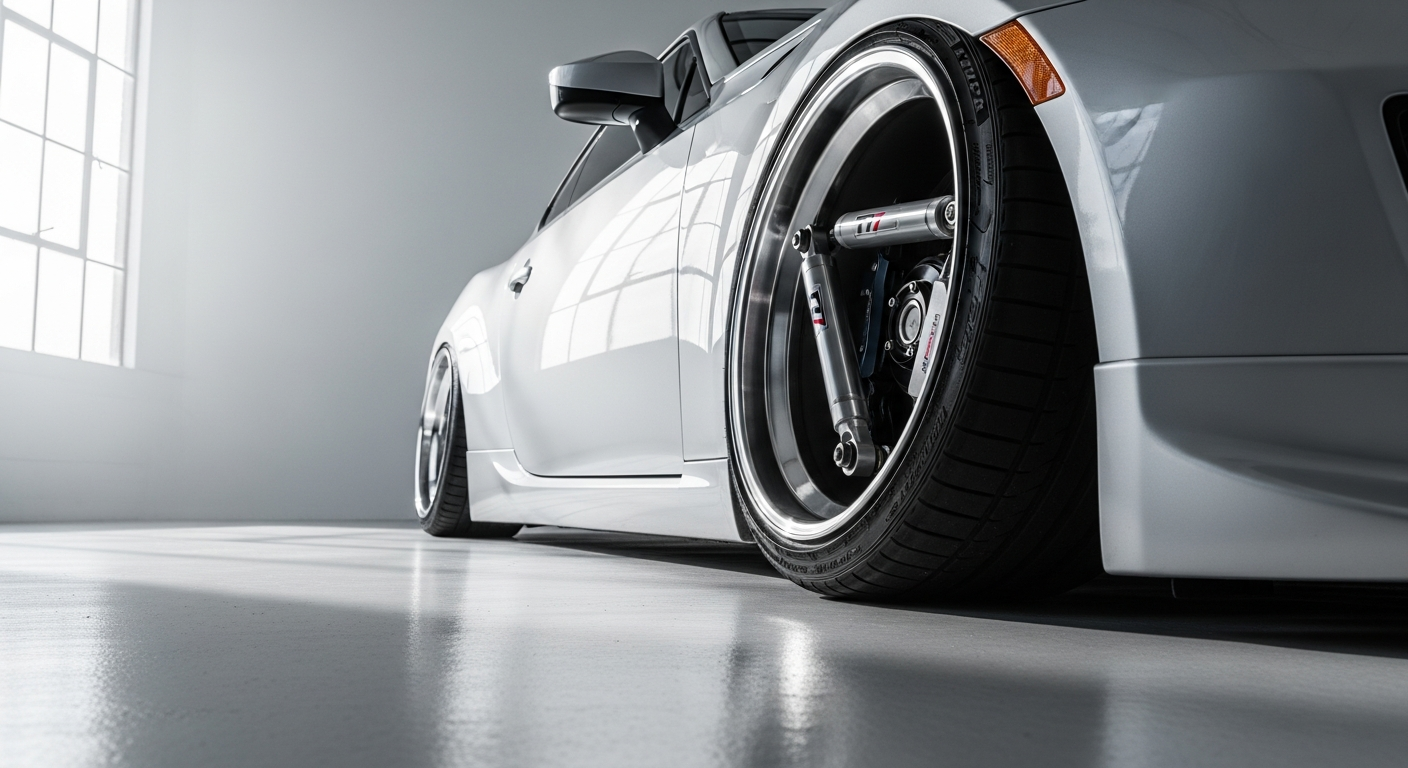
Suspension upgrades account for nearly 40% of performance modifications among budget-conscious enthusiasts. Most drivers assume upgrading their suspension means emptying their wallet, but that assumption crumbles when you encounter components engineered for real value. The Maxpeedingrods T7 Adjustable Performance Coilovers have quietly become a game-changer in the aftermarket suspension space.
These aren't your typical bolt-on-and-forget components—they're engineered for drivers who want granular control over their vehicle's behavior without sacrificing their budget. With 24-way damping adjustability and height customization, the T7 series bridges the gap between street comfort and track capability.
Discover the Maxpeedingrods T7 Coilovers and transform your vehicle's performance today.
Engineering Excellence at an Accessible Price Point
The T7 platform delivers construction quality that punches above its weight class. CNC-machined 6061-T6 aluminum top mounts and lock collars reduce unsprung weight while resisting corrosion—a combination that improves both durability and vehicle dynamics. Pillow ball top mounts with integrated camber plates enable precise adjustments for optimal tire contact and cornering grip, particularly valuable on McPherson strut designs.
The twin-tube damper design balances comfort during daily driving with responsive feedback during aggressive maneuvers. High viscosity index racing damping oil maintains consistent performance across temperature ranges, while 55CrSi progressive springs provide vehicle-specific support tailored to each application. Heavy-duty steel lower shock mounts now feature integrated sway bar mounting points, addressing previous durability concerns and enhancing overall system reliability.
Extended TPV dust covers protect internal components from road contaminants, directly extending component lifespan. The competitive $450–$550 price range delivers features typically found in systems costing 2–3 times more—a value proposition that separates the T7 from lesser competitors.
The 24-Way Damping Adjustment System Explained
Understanding rebound stiffness settings unlocks the T7's true potential. Adjusting damper resistance affects spring extension and vehicle behavior in measurable ways. Softer settings (1–8 clicks) prioritize comfort and compliance for daily driving, absorbing road imperfections while maintaining control. Stiffer settings (16–24 clicks) enhance responsiveness and reduce body roll during spirited driving or track sessions.
Damping oil viscosity changes with temperature, requiring seasonal adjustments for consistent feel. Cold weather thickens the oil, making adjustments feel stiffer at the same click setting. Warmer conditions thin the oil, creating a softer response at identical positions.
Finding your sweet spot involves a methodical approach—adjust one click at a time and drive several miles before evaluating changes. Common tuning mistakes include over-stiffening settings that reduce grip by preventing the tire from maintaining contact through compressions, and under-damping that causes the chassis to wallow and bounce excessively.
Vehicle-specific recommendations vary based on weight distribution and suspension geometry. A BMW E46 with 9K front/11K rear spring rates benefits from different damping ranges than a Nissan S13 with 8 kg/mm front/7 kg/mm rear springs.
Explore the full range of T7 Coilover options and find the perfect setup for your vehicle.
Height Adjustment and Stance Customization
The 1–3 inches (25–75mm) lowering range accommodates aggressive stance goals while delivering measurable handling improvements. Lower ride height decreases body roll and improves cornering performance by reducing the distance the suspension must travel during compression events.
Center of gravity reduction becomes noticeable during cornering—the chassis leans less, tires maintain better contact patches, and confidence increases. Some applications require rear spring perch removal for extreme lowering aesthetics, but this should only be pursued if daily driving and speed bump navigation won't suffer.
Aggressive lowering can impact comfort on rough roads. Balancing visual appeal with practical ground clearance remains essential for real-world usability. Different vehicles respond differently to lowering due to suspension design variations—a front-heavy sports car may perform differently than a balanced luxury sedan at the same ride height.
Height adjustments can be tweaked multiple times during ownership without special tools or professional service, allowing drivers to evolve their setup as preferences change.
Real-World Tuning Strategies for Dual-Purpose Driving
Hybrid setups balance street and occasional track use effectively. Mid-range damping (10–14 clicks) and moderate lowering (1–2 inches) provide performance during track sessions while maintaining reasonable comfort for commuting.
Seasonal adjustments transition between summer performance settings and winter comfort configurations. Summer typically benefits from stiffer damping and lower ride heights; winter may require softer settings and slightly higher clearance for snow and ice.
Load-dependent tuning accounts for passenger weight and cargo. A driver alone handles differently than with four passengers and luggage—the suspension loads and unloads differently, affecting how damping adjustments feel.
Tire pressure correlation with suspension adjustments maximizes grip. Stiffer suspension often pairs well with slightly higher tire pressures; softer setups may perform better with lower pressures within manufacturer specifications.
Stiffer suspension improves weight transfer during braking events, enhancing stability and ABS effectiveness. Throttle-on behavior becomes more predictable when suspension tuning matches the vehicle's power delivery characteristics.
Reading vehicle behavior cues identifies whether adjustments improved or worsened dynamics. Does the car respond faster to steering inputs? Does it maintain composure over bumpy roads? These observations guide tuning direction more accurately than guessing.
Installation, Compatibility, and Application-Specific Considerations
Different vehicle models require different spring rates and mount configurations. McPherson strut designs accept pillow ball top mounts with camber plates, while double-wishbone suspension may require different upper mount designs entirely.
Compatibility variations affect how much adjustability remains available. Some vehicles allow aggressive lowering and wide camber adjustment ranges; others face geometric constraints that limit options.
Professional wheel alignment becomes mandatory after installation. Camber plate adjustments alter suspension geometry, and improper alignment degrades tire wear and handling. This investment protects tire longevity and ensures the coilovers perform as intended.
Clearance problems can occur with certain wheel sizes and body modifications. Wider wheels or aggressive offsets may contact inner fenders at extreme ride heights. Test fitment before finalizing height decisions.
Tool requirements vary by vehicle platform. Some applications support DIY installation with basic hand tools and a jack; others demand professional help due to access limitations or suspension design complexity. Research your specific vehicle thoroughly before committing to home garage work.
Installation method affects manufacturer coverage. Professional installation sometimes preserves warranty coverage, while DIY approaches may void certain protections. Check Maxpeedingrods' warranty documentation before proceeding.
Lowering alters bump steer, caster, and camber characteristics. These geometry changes require compensation through alignment adjustments and potentially additional modifications to maintain predictable handling.
Value Comparison Against Premium Alternatives
The T7 versus KW Variant 3 comparison reveals feature parity in adjustability but performance consistency differences. KW systems typically maintain tighter damping tolerances over extended mileage, while the T7 delivers comparable performance at a fraction of the cost.
T7 versus Bilstein B16 PSS analysis shows similar feature sets but different long-term reliability profiles. Bilstein components famously resist degradation over 100,000+ miles; T7 longevity expectations rest closer to 75,000 miles before performance evolution becomes noticeable.
The T7 separates from lesser budget brands through Maxpeedingrods' engineering refinements—CNC-machined mounts, high-quality damping oil, and vehicle-specific spring rates versus generic components found in cheaper alternatives.
Breaking down the $450–$550 price tag reveals extraordinary value. Comparable systems from established premium brands cost $1,200–$2,000 for similar feature sets. The cost-per-feature analysis heavily favors the T7.
Damping precision trade-offs exist between the T7's adjustable system and fixed-rate premium options. Premium systems dial in perfect damping for specific driving scenarios but lack the flexibility the T7 provides for varied driving conditions.
Realistic lifespan projections estimate 75,000–100,000 miles before major maintenance becomes necessary. Regular inspections and proper dust cover maintenance extend this window considerably.
Resale value considerations reveal that T7 coilovers enhance used vehicle pricing compared to stock suspension, though less dramatically than premium systems. Buyers recognize the value upgrade.
Addressing Common Limitations and Realistic Expectations
The T7 excels in delivering performance on street and occasional track environments but maintains a clear ceiling where premium systems retain advantages. Sequential track days, road racing, or extreme lowering applications may expose performance limitations.
Damping consistency evolution occurs gradually. Performance may remain virtually identical at 20,000 miles but become noticeably softer by 75,000+ miles as internal components wear. This progression feels natural and manageable rather than sudden.
Extreme lowering constraints reflect physical platform limitations. Certain vehicles simply cannot achieve ultra-slammed aesthetics without removing functional components or sacrificing ground clearance entirely.
Cold weather affects damping oil responsiveness measurably. Winter driving in harsh climates reveals stiffer damping at equivalent click settings; drivers should adjust expectations or dial in softer positions for consistent feel.
Compatibility with other modifications requires consideration. Lowering springs, sway bars, and bracing upgrades interact with coilover tuning. Stacking multiple suspension modifications demands systematic tuning to avoid counterproductive results.
Maxpeedingrods addressed early concerns with design refinements—improved sway bar mounting points and better lock collars emerged from customer feedback and real-world usage patterns.
Identifying performance goals that outpace what the T7 delivers determines upgrade timing. Regular street driving and occasional track use fit the platform perfectly; frequent racing or extreme performance aspirations suggest eventually pursuing premium alternatives.
Maximizing Longevity and Maintenance Best Practices
Regular inspection intervals should occur every 15,000–20,000 miles. Visual checks for dust cover damage, oil seepage, and mount deterioration catch problems early before they compromise performance.
Extended TPV dust covers prevent internal contamination—road salt, sand, and moisture remain outside where they belong. Neglecting dust cover protection accelerates internal component deterioration.
Damping oil preservation avoids extreme heat exposure. Excessive track use without adequate cooldown periods thickens and degrades racing damping oil, compromising adjustability precision.
Corrosion prevention benefits from the aluminum construction's natural properties. Even in harsh coastal climates, CNC-machined 6061-T6 mounts resist oxidation far better than typical steel components.
Lock collar maintenance ensures adjustments stay locked and don't drift during driving. Verify click settings periodically—vibration can gradually loosen lock collars if installation wasn't perfectly snug.
Seasonal storage considerations protect coilovers during off-season vehicle storage. Keeping the vehicle on jack stands periodically prevents suspension components from remaining compressed for months.
Professional servicing options exist for comprehensive damper rebuilds. When performance noticeably degrades after 75,000+ miles, servicing restores damping performance more affordably than complete replacement.
The Bottom Line: Building Your Performance Foundation
The Maxpeedingrods T7 Adjustable Performance Coilovers represent a pivotal moment in your vehicle's evolution. You're not settling for mediocrity—you're making a calculated investment in handling dynamics that genuinely matter during every drive. The 24-way damping adjustability puts tuning power directly in your hands, while the CNC-machined construction and vehicle-specific spring rates prove that budget-friendly doesn't mean compromised engineering.
Real drivers achieve track-day competence and daily-driving comfort on the same platform. The $450–$550 investment delivers suspension features that premium brands charge thousands more to access. Start by identifying your primary driving priority and take time to understand how the 24-way system responds to incremental adjustments. Connect with the T7 community, absorb real-world tuning data from your specific platform, and don't hesitate to revisit your settings as you become more familiar with your vehicle's behavior.
The T7 platform rewards intentionality and patience. Your suspension upgrade is waiting—make it count.
Get your Maxpeedingrods T7 Coilovers now and start your performance journey.
Leave a Reply