Nearly 92% of Americans are deficient in at least one essential vitamin or mineral—yet most never discover it until symptoms become impossible to ignore. The gap between feeling off and understanding why often stretches for months or years, leaving people frustrated and searching for answers outside conventional medical channels.
The Medicross Combo Test represents a growing category of at-home health assessments designed for people who want actionable insights without the hassle of traditional medical appointments. This comprehensive test merges micronutrient analysis with intolerance screening through hair sampling—a method that's gained significant traction among wellness enthusiasts, fitness enthusiasts, and pet owners alike.
In this guide, you'll uncover how hair-based analysis actually works, what the Medicross Combo Test can reveal about your nutritional status and food sensitivities, and whether the results hold up to scrutiny. Discover what the Medicross Combo Test can tell you about your health. By the end, you'll have a clear picture of whether this test aligns with your health objectives.
The Science Behind Hair Analysis: Understanding Medicross's Non-Invasive Methodology
How hair strands capture micronutrient levels and mineral deficiencies over time
Hair grows continuously, and as it does, it incorporates minerals and nutrients from your bloodstream into its structure. This principle forms the foundation of hair analysis—the idea that your hair acts as a biological record of your nutritional status over the preceding months. When you send in 10-20 hair strands to Medicross, the laboratory examines the mineral composition locked within those strands to assess whether your body has maintained adequate levels of essential nutrients.
The appeal of this method is straightforward: hair analysis requires no needles, no fasting, and no appointment scheduling. You collect the sample at home and mail it in. For people needle-averse or those seeking a friction-free testing experience, this non-invasive approach removes barriers to health screening.
Why hair analysis differs fundamentally from blood work and biochemical testing
Blood tests measure circulating nutrients in real-time, providing a snapshot of what's currently in your system. Hair analysis operates differently—it reflects what has been incorporated into hair tissue over time, offering a historical perspective rather than an immediate reading.
This distinction matters considerably. Conventional medical labs use biochemical, molecular-biological, and cellular analysis to detect deficiencies with precision. Hair analysis, by contrast, falls into the category of alternative wellness methods. Medicross explicitly states its tests are designed for "individual, complementary wellness orientation" and carry no medical purpose.
The alternative medicine perspective on hair-based wellness assessment
Within alternative and functional medicine circles, hair analysis enjoys a solid reputation as a tool for identifying nutritional imbalances and guiding supplementation strategies. Practitioners in these fields view it as a useful screening method that prompts deeper investigation and dietary optimization.
This perspective emphasizes using the results as a starting point for wellness experimentation rather than as definitive diagnosis. If a hair analysis suggests magnesium deficiency, the alternative medicine approach would be to adjust diet and supplementation, then observe whether energy levels and sleep quality improve.
Limitations of hair analysis compared to molecular-biological approaches
The central criticism of hair analysis concerns its methodological foundation. Because it doesn't involve biochemical or molecular-biological analysis, results can diverge significantly from traditional blood work findings. Some users report ordering both a Medicross test and a conventional blood panel, only to find conflicting results. These discrepancies have led certain reviewers to describe Medicross findings as "ridiculous false results" when compared side-by-side with medical lab data.
Additionally, the explanation of how Medicross generates its specific results remains somewhat opaque. The company's methodology description strikes many as vague, leaving questions about the precise analytical process and validation standards.
Dual Insights in One Test: Micronutrient Deficiency Detection Meets Food Intolerance Screening
What micronutrient gaps the test identifies (vitamins, minerals, trace elements)
The micronutrient portion of the Medicross Combo Test scans for deficiencies across a broad spectrum: essential vitamins, major minerals, and trace elements your body requires for optimal function. The test identifies which of these nutrients your hair analysis suggests you're lacking, from common culprits like iron and zinc to less obvious deficiencies in selenium, copper, or B vitamins.
Users typically receive results organized by nutrient category, making it clear which specific elements warrant dietary attention or supplementation.
How food intolerance analysis differs from allergy testing
Food intolerance and food allergy represent different biological processes, and the Medicross test targets intolerances specifically. An allergy involves immune system activation and can trigger immediate, sometimes severe reactions. Intolerance is typically a digestive sensitivity—your body struggles to process certain foods efficiently, leading to bloating, fatigue, skin reactions, or digestive distress that may take hours or days to appear.
The intolerance screening portion examines sensitivities to common food groups and specific foods, helping users identify which items consistently cause them problems. This distinction proves valuable because many people confuse the two, assuming every food reaction represents an allergy when it might simply be an intolerance their body can't efficiently manage.
Which nutritional deficiencies most commonly appear in test results
Across user testimonials and reports, certain deficiencies surface repeatedly: iron (particularly common in menstruating individuals and vegetarians), vitamin D (especially in northern climates with limited sunlight), magnesium (widespread due to soil depletion and modern dietary patterns), and B vitamins (often low in highly processed diets).
Trace element deficiencies also appear frequently—zinc, selenium, and iodine show up in results for users with restrictive diets or those living in regions with depleted soil mineral content.
Identifying hidden sensitivities that may affect digestion, energy, and skin health
Food sensitivities often masquerade as unrelated health issues. Chronic bloating might seem like a digestive disorder when it's actually a gluten sensitivity. Brain fog and afternoon energy crashes could trace back to a hidden intolerance to dairy or processed foods. Even skin issues like acne or eczema occasionally stem from food reactions rather than dermatological conditions.
The intolerance screening helps connect these dots, revealing patterns you might never have identified alone. Many users report that discovering their specific food sensitivities through the Medicross test led to elimination trials, subsequent dietary changes, and noticeable improvements in energy, digestion, and skin clarity.
The Pet Owner Advantage: Extending Wellness Testing to Your Furry Family Members
Why pet owners are turning to hair analysis for companion animal health
Pet owners increasingly view their animals as family members deserving the same wellness attention humans receive. Just as nutritional imbalances and food sensitivities affect human health, they impact pets profoundly. The Medicross Combo Test extends to dogs, cats, and other companion animals, appealing to owners who notice behavioral changes, coat quality decline, or chronic digestive issues in their pets and want to understand the underlying causes.
Conventional veterinary nutrition offers limited personalization—most recommendations follow breed and weight-based guidelines. Hair analysis for pets provides a customized perspective on what that specific animal's body actually needs.
Detecting nutritional imbalances in dogs, cats, and other pets
Pets eating commercial diets sometimes lack optimal levels of certain minerals and vitamins, or their particular metabolism processes nutrients differently than standard formulations assume. Hair analysis reveals whether your dog is absorbing sufficient zinc for coat health, whether your cat's magnesium levels support muscle function, or whether trace element deficiencies might be contributing to lethargy or behavioral changes.
Pet owners who've run Medicross tests on their animals often discover imbalances they hadn't suspected, leading to targeted dietary adjustments or supplementation that restores vitality.
Identifying food sensitivities affecting pet behavior and coat quality
Chronic itching, dull coat, behavioral irritability, or digestive upset in pets frequently traces back to food sensitivities rather than external parasites or medical illness. A dog might itch constantly from a chicken sensitivity, or a cat might have chronic diarrhea from dairy in their food despite never being explicitly fed dairy products (it can hide in commercial formulations).
The intolerance screening for pets identifies these hidden triggers, enabling owners to switch to elimination diets or alternative protein sources with confidence that they're targeting the actual problem.
How pet results inform dietary changes and supplement additions
Once you receive your pet's results, you have concrete guidance for dietary modification. Instead of trial-and-error feeding, you know specifically which foods your pet should avoid and which nutrients to prioritize. Many pet owners adjust their animals to raw diets, novel protein sources, or home-prepared meals based on Medicross recommendations.
Start understanding your pet's nutritional needs with the Medicross Combo Test.
From Order to Results: The Complete Medicross Experience and Timeline
Step-by-step ordering process and initial setup
Ordering a Medicross Combo Test is deliberately uncomplicated. You visit the Medicross website, select the Combo Test (micronutrient plus intolerance analysis), choose between standard or express shipping, and complete checkout. The process mirrors any typical online purchase—no registration barriers or medical form requirements that many medical testing companies impose.
After ordering, you receive instructions via email for sample collection, making the next steps clear and actionable.
Hair sample collection guidelines (what to avoid, proper technique)
Proper collection ensures accurate analysis. You'll need to cut 10-20 hair strands from the back of your scalp near the roots, as this area provides the most representative sample of your nutrient status. Avoid recently washed hair or hair that's been treated with certain products that might affect mineral readings.
The instructions specify exactly where to collect from, how to secure the sample, and how to package it for mailing. Following these guidelines carefully maximizes the reliability of your results.
Express shipping advantage: results in three days
Standard processing takes longer, but express shipping accelerates results delivery to approximately three days after the laboratory receives your sample. This rapid turnaround appeals to people who want answers quickly so they can begin implementing dietary or supplementation changes without prolonged uncertainty.
For those accustomed to waiting weeks for conventional medical test results, the three-day express timeline feels remarkably fast.
Interpreting your personalized recommendations report
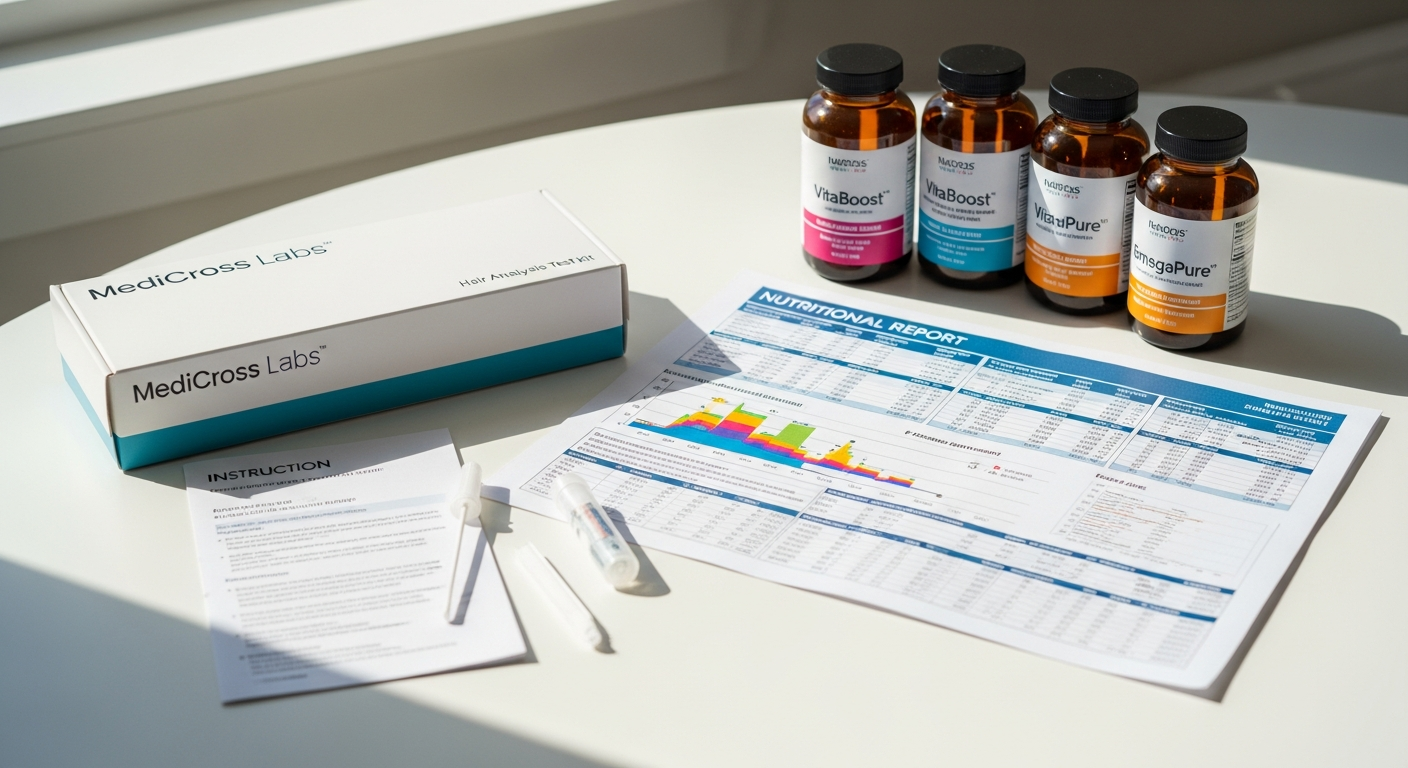
Your results arrive as a detailed PDF report delivered via email. The report presents findings in an easy-to-understand format, highlighting identified deficiencies and food sensitivities alongside personalized recommendations for addressing them.
These recommendations typically suggest dietary modifications, specific supplementation, and lifestyle adjustments tailored to your individual results. The clarity of presentation helps you move from raw data to actionable steps without requiring medical interpretation.
Beyond the Hair Strand: Making an Informed Wellness Choice
The Medicross Combo Test occupies a unique space in the wellness landscape—it's accessible, fast, and genuinely appeals to people craving personalized health insights without traditional medical gatekeeping. The dual micronutrient and intolerance analysis does deliver actionable information that many users translate into meaningful lifestyle improvements.
Your decision ultimately hinges on your expectations and health goals. If you're seeking complementary wellness data to optimize your diet, explore potential food sensitivities, or extend health screening to your pets, the Medicross Combo Test delivers genuine value. However, if you suspect serious nutritional deficiencies, need medical-grade diagnostics, or require results suitable for clinical treatment decisions, traditional blood work remains the gold standard.
View the Medicross Combo Test as a wellness conversation starter rather than a definitive medical verdict. Use the insights to inform your choices, experiment with dietary adjustments, and monitor how you feel. If results raise significant health concerns, follow up with conventional medical testing. The test works best when you approach it with realistic expectations about what hair analysis can and cannot reveal.
Ready to explore your nutritional profile and food sensitivities? Order your Medicross Combo Test today and begin your personalized wellness journey.
Leave a Reply