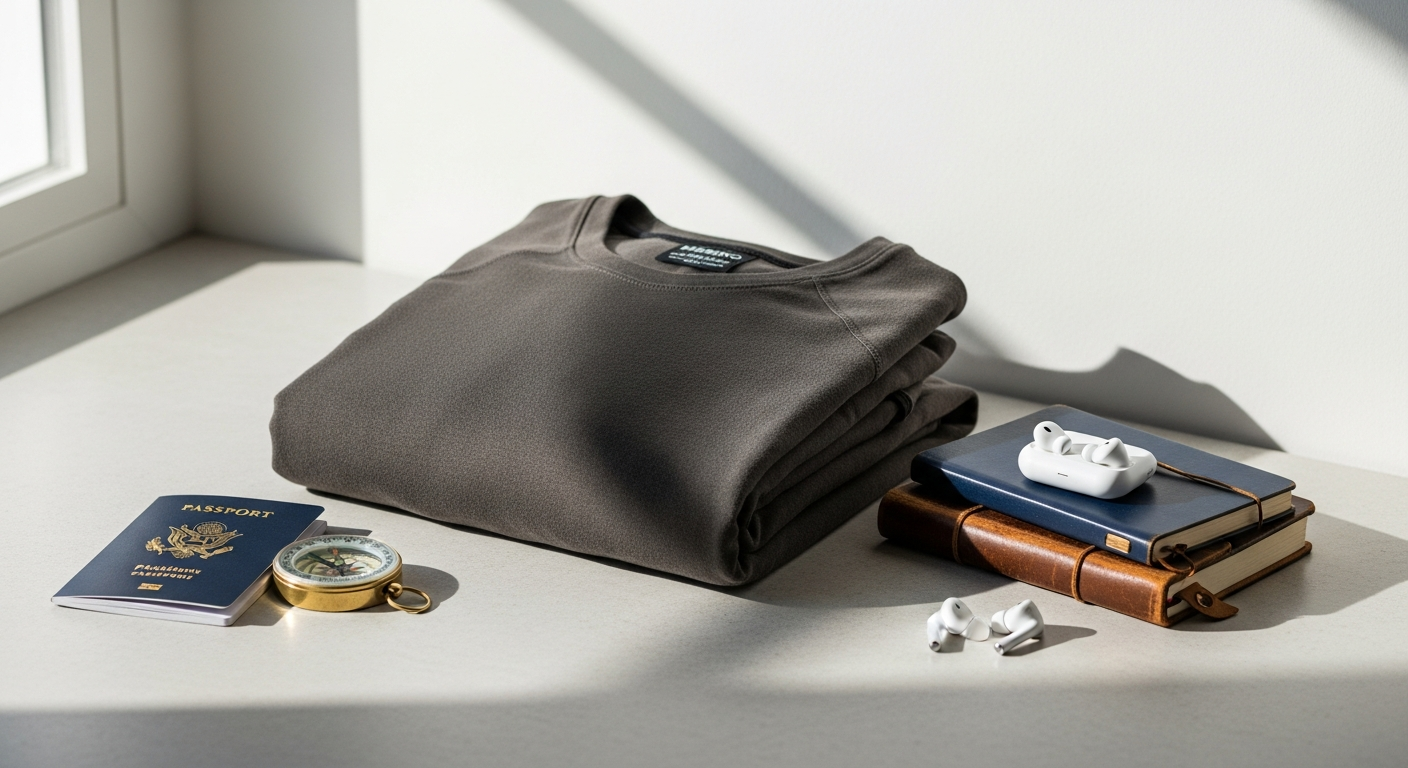
You're packing for a week-long hiking expedition, and you're staring at your suitcase wondering how to fit enough clothing for every weather scenario. The challenge feels insurmountable—bring too much and your pack becomes unwieldy; bring too little and you'll freeze when conditions shift. This is where most travelers hit a wall, accepting that they'll need multiple base layers, multiple wash cycles, and the constant worry that something essential got left behind.
Merino wool has quietly revolutionized how outdoor enthusiasts and frequent travelers approach layering. Unlike synthetic alternatives that trap odors and cotton that loses shape after washing, this natural fiber naturally regulates temperature, wicks moisture, and resists odor development. The Merino Tech Midweight 250 Merino Wool Base Layer Set delivers professional-grade performance at a fraction of what you'd pay for comparable merino offerings from heritage brands.
Discover the Merino Tech Midweight 250 Merino Wool Base Layer Set and transform how you travel.
This guide covers the specific features that make it travel-friendly, how it performs across different climates, real-world durability insights, and whether the sizing actually runs small like some reviewers claim. You'll understand why seasoned travelers are ditching their multi-piece base layer systems in favor of this single versatile option.
The Travel-Specific Advantages of Merino Wool Base Layers
Why merino wool's natural odor resistance matters for multi-day trips without laundry access
Picture this: you're three days into a backcountry trek with no shower in sight. With synthetic base layers, you're already dealing with that distinctive smell that seems to embed itself into the fabric. Merino wool works differently. The fiber naturally inhibits bacterial growth—the actual source of odor—meaning you can wear the same base layer for multiple days without developing that grimy feeling. This isn't marketing hype; it's chemistry. For travelers juggling limited luggage space and irregular access to laundry facilities, this advantage translates to packing one base layer instead of three or four.
How the 250 g/m² weight strikes the sweet spot between warmth and packability
Weight in merino wool isn't arbitrary. The 250 g/m² measurement indicates a midweight construction that balances genuine insulation with packability. Heavier merino (300+ g/m²) delivers more warmth but takes up considerable space and takes longer to dry. Lighter merino (150-200 g/m²) packs smaller but leaves you vulnerable in genuinely cold conditions. At 250 g/m², this set provides meaningful warmth without the bulk that defeats the purpose of traveling light. When you're negotiating carry-on luggage or fitting everything into a 40-liter pack, this distinction matters profoundly.
Temperature regulation capabilities across spring, fall, and mild winter conditions
Merino wool regulates temperature through a mechanism that synthetic fibers simply cannot replicate. The fiber naturally absorbs and releases moisture vapor, which moderates your body temperature across a wider range than conventional materials. In spring conditions where mornings are chilly but afternoons warm up, you're not layering and de-layering constantly. During fall's unpredictable swings between crisp mornings and mild afternoons, the base layer adapts without requiring a complete outfit change. In mild winter conditions, it layers effectively under a shell jacket without creating excess bulk.
Moisture management during active days and recovery days
Active days demand aggressive moisture-wicking. Merino wool excels here, moving sweat away from your skin far more efficiently than cotton or many synthetics. But merino also outperforms on recovery days—the low-activity periods where you're resting, exploring a town, or acclimatizing at altitude. On these days, you want comfort and a material that doesn't feel clammy. Merino's hygroscopic properties mean it can absorb up to 30% of its weight in moisture without feeling wet, creating a genuinely comfortable experience whether you're summiting a peak or sitting in a café.
The psychological comfort of wearing the same base layer for extended periods without feeling grimy
There's a mental component to wearing the same clothing for days that shouldn't be underestimated. Most travelers carry guilt about this practice, assuming that repeated wear equals poor hygiene. With merino wool's natural odor resistance, that anxiety evaporates. You're not questioning whether you smell or how others perceive you. You're simply wearing a base layer that performs, feels fresh, and eliminates the internal friction that comes with extended wear. This psychological comfort often matters as much as the physical performance, especially on longer trips where small frustrations compound.
Unpacking the 17.5-Micron Superfine Construction
What micron count means and why 17.5 is the sweet spot for comfort
Micron count measures fiber diameter—the smaller the number, the thinner and softer the fiber. At 17.5 microns, you're in the superfine range, which sits between standard merino (19-24 microns) and ultrafine luxury merino (under 16.5 microns). This positioning is strategic. Ultrafine merino feels marginally softer but commands prices that approach luxury clothing. Standard merino works well but often retains that slight scratchiness that makes wool feel uncomfortable to some people. At 17.5 microns, you get fibers thin enough to feel genuinely soft against your skin without the premium pricing of ultrafine options. It's the practical sweet spot for performance-oriented travelers who refuse to compromise on comfort.
The difference between superfine merino and standard merino wool
Standard merino wool, typically 19-24 microns, has been the baseline for outdoor gear for decades. It works, but some people experience mild itchiness, particularly those with sensitive skin. Superfine merino (17.5-18.5 microns) creates a dramatically different tactile experience. The thinner fibers bend less easily against your skin, reducing the scratching sensation that creates that wool-aversion many people hold. In practical terms, you can wear this base layer directly against your skin for 8+ hours without any itch—something that wouldn't be reliable with standard merino for sensitive skin types.
Why this specific fiber diameter prevents the itchiness associated with traditional wool
The itching sensation you associate with traditional wool stems from fiber stiffness and the way thicker fibers bend against your skin. When a fiber diameter exceeds the sensitivity threshold of your skin (roughly 25-30 microns for most people), the fiber triggers an itching response. At 17.5 microns, you're well below that threshold for the vast majority of people. The fibers remain flexible enough to conform to your skin without triggering irritation, creating the soft, next-to-skin feel that makes merino wool genuinely comfortable for extended wear. This is why someone who insists "I don't do wool" often changes their mind after experiencing 17.5-micron superfine construction.
How the 100% merino composition affects performance and durability
The 100% merino composition means no synthetic blending, which affects both performance and durability. Pure merino delivers maximum moisture-wicking, temperature regulation, and odor resistance—you're not compromising these characteristics for the sake of added durability that synthetics would provide. The tradeoff is that 100% merino requires careful washing to maintain integrity; the fiber is more delicate than merino blends. However, reviewers frequently praise the durability of this specific set, with many noting extended longevity when properly cared for. The lack of synthetic fibers also means the base layer remains fully biodegradable and environmentally neutral—relevant for travelers conscious of their impact.
Check current availability and pricing on the Merino Tech Midweight 250 Merino Wool Base Layer Set.
Real-World Performance Across Different Travel Scenarios
Cold-weather expeditions and winter layering system performance
The Merino Tech set functions as the foundation layer in a cold-weather system. Worn directly against your skin, the base layer pulls moisture away from your body while the 250 g/m² weight provides meaningful insulation. Layer a fleece or wool sweater over top, then add a shell jacket, and you've created a system that handles sustained cold far more effectively than bulkier single-layer options. Reviewers specifically mention that the midweight construction works well in genuine winter conditions (well below freezing) when layered properly. The slim fit ensures it doesn't create excess bulk under insulating layers—critical when you're managing multiple pieces of clothing in tight spaces.
Warm-climate travel wearing as a standalone piece in mild weather
In warm climates or mild seasons, many travelers assume merino wool becomes irrelevant. The reality is different. The natural temperature-regulating properties mean you can wear this base layer solo in temperatures between 50-65°F without overheating. The moisture-wicking ensures you stay dry if you're moving around exploring, kayaking, or doing light activity. The 250 g/m² weight is substantial enough to provide modest sun protection, relevant in high-altitude tropical travel where UV is intense. Some travelers wear merino base layers in warm climates specifically for this protection and the moisture management, rather than for warmth.
Transitional seasons with unpredictable spring and fall temperature swings
Spring and fall travel presents the exact problem merino wool solves. Morning temperatures near freezing, afternoon temperatures in the 60s, and evening shifts that catch you off-guard. With this base layer, you're not constantly adjusting. In the morning, wear it under your jacket. As temperatures rise, the moisture-wicking keeps you comfortable even when active. In evening, you can layer it under an insulating piece without overheating. The 250 g/m² provides enough insulation to matter in cool conditions while remaining breathable enough not to trap heat when temperatures climb. Transitional season travelers specifically appreciate this flexibility.
Multi-day backpacking with extended wear duration and odor resistance
Multi-day backpacking creates the perfect storm for traditional base layer problems—you're active enough to sweat, you're carrying limited clothing, and you don't have regular laundry access. Many backpackers wear the same base layers for 4-7 days, sometimes longer. With synthetics, this creates genuine odor challenges by day three or four. With this merino set, reviewers report comfortably wearing it for extended periods—one reviewer mentioned six days on a backcountry trek without the garment developing noticeable odor. The natural antimicrobial properties mean you're not dealing with that bacterial funk that makes synthetic odor resistance feel like a losing battle.
The Value Proposition: Premium Performance Without Premium Pricing
How Merino Tech's pricing compares to established merino brands like Smartwool and Icebreaker
Merino wool pricing varies dramatically across brands. A Smartwool midweight base layer set typically runs $200-250. An Icebreaker equivalent sits in the $250-350 range. The Merino Tech set delivers comparable features—100% merino, 17.5-micron superfine construction, 250 g/m² weight, moisture-wicking, odor resistance—at a significantly lower price point. You're looking at roughly 40-60% of what established brands charge for nearly identical performance. This isn't because Merino Tech compromises on quality; it's because they've avoided the premium brand markup that heritage companies charge. You're paying for performance, not legacy branding.
What features justify the investment at this price point
Even at the lower price point, this set includes features that justify the investment. The 100% superfine merino (not a blend) is a premium feature. The 250 g/m² weight is substantial enough for genuine functionality. The slim fit and flatlock seams indicate design consideration. Reviewers frequently praise the durability, mentioning that the set holds up to repeated wear and washing when handled properly. The inclusion of both a long-sleeve top and matching bottoms means you're getting a complete base layer set, not just a single garment. For travelers evaluating the cost, you're investing in clothing that will perform across multiple trips and potentially outlast cheaper synthetic alternatives.
Long-term cost analysis showing durability versus cheaper alternatives
A $40 synthetic base layer set might seem economical initially, but the durability math tells a different story. Synthetic materials often degrade within 20-30 wash cycles, particularly if exposed to repeated dryer heat (which many travelers resort to). This merino set, with proper care, reliably lasts 100+ wash cycles—reviewers mention getting 3-5+ years of use. That $40 synthetic set becomes five $40 purchases over the same timeline. The Merino Tech set, costing perhaps $120-150, becomes a single purchase that outlasts five cheaper alternatives. The cost-per-wear calculation heavily favors merino investment for travelers who travel regularly.
Hidden savings from owning fewer base layers due to extended wear between washes
The extended wear capability creates subtle financial savings that compound over time. Owning three synthetic base layer sets (which you'd need for regular travel) costs more than owning two merino sets, particularly when you factor in eventual replacement. Extended wear also means fewer laundry cycles—relevant if you're using laundromats, hand-washing in hostels, or paying for laundry services. Some travelers report washing this base layer every 5-7 days instead of daily or every other day, which translates to reduced water usage, reduced detergent consumption, and less time managing laundry logistics. These aren't dramatic savings individually, but they accumulate into meaningful advantages for frequent travelers.
The Bottom Line for Your Travel Wardrobe
The Merino Tech Midweight 250 Merino Wool Base Layer Set isn't just another piece of outdoor gear—it's a strategic decision that simplifies packing, reduces laundry stress, and delivers genuine comfort across unpredictable travel conditions. Whether you're embarking on a two-week trek through Patagonia or juggling work and exploration across Southeast Asia, this base layer proves that premium performance doesn't require premium pricing.
The 17.5-micron superfine merino construction feels luxurious against your skin, the natural odor resistance means fewer washing cycles and lighter luggage, and the temperature regulation adapts to whatever conditions you encounter. The 250 g/m² weight strikes the exact balance between warmth and packability that traveling athletes and expedition hikers depend on. Real-world reviewers consistently mention durability that matches or exceeds expectations, with many noting 3-5+ years of reliable performance when properly cared for.
If you've been hesitant about investing in quality merino wool, this set offers the perfect entry point. Grab one, test it on your next adventure, and experience why travelers everywhere are making this their go-to base layer choice.
Leave a Reply