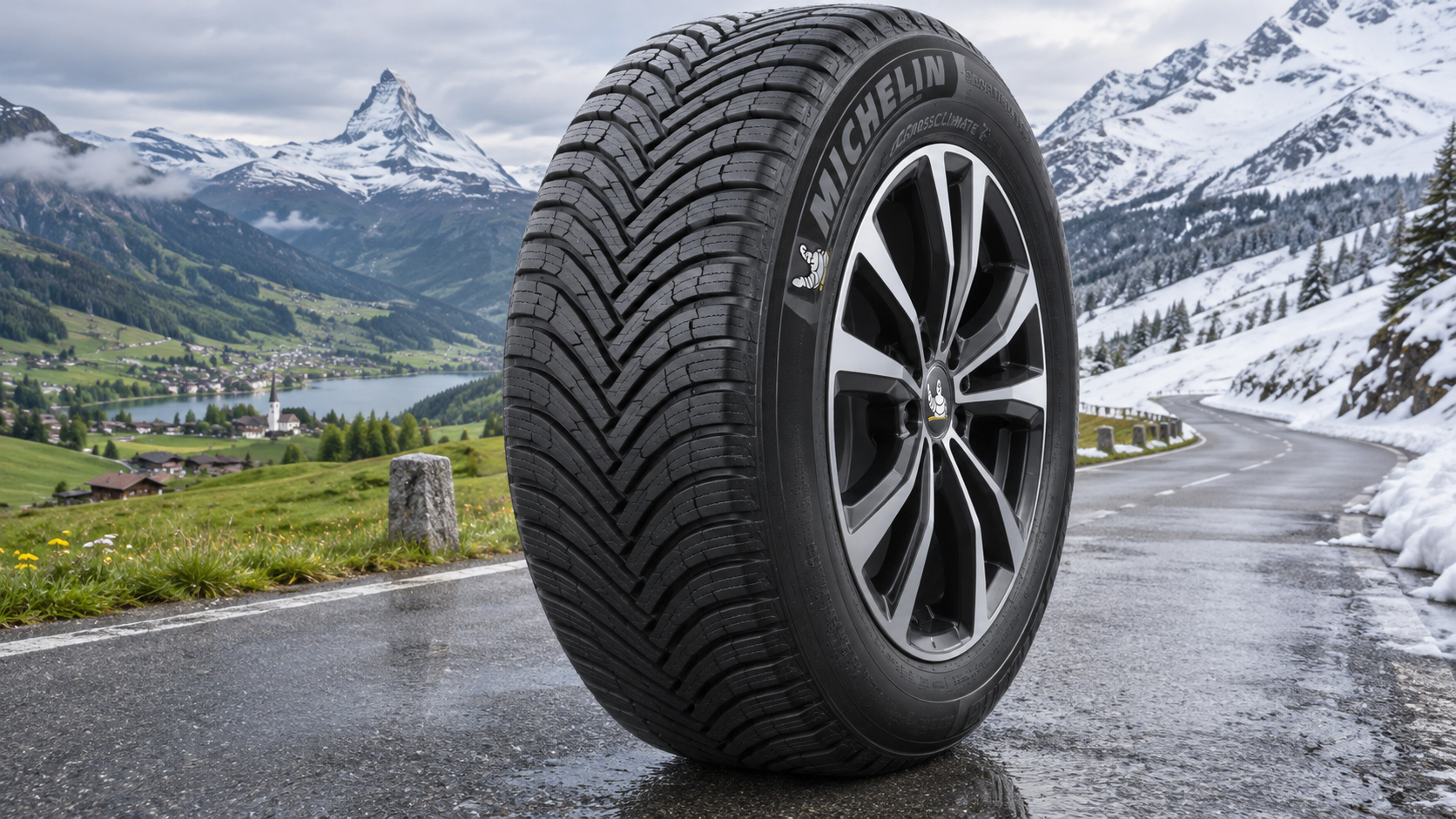
More than 60% of Swiss drivers dread the annual ritual: hauling tires between home and workshop, paying labor costs twice yearly, and managing storage space for the seasonal set they're not using. This friction point has driven thousands of drivers to seek a better solution, one that eliminates the swap entirely while maintaining safety across changing conditions.
The Michelin CrossClimate 2 has emerged as reifendirekt.ch's best-selling all-season tire precisely because it addresses this frustration head-on. Built with an advanced directional tread pattern, 3PMSF winter certification, and engineered for Alpine variability, this tire has earned the trust of Swiss drivers who refuse to compromise between convenience and safety. Discover why the CrossClimate 2 has become the year-round tire of choice for pragmatic Swiss drivers.
This article examines what makes this tire genuinely different—from the engineering beneath the rubber to its real-world performance across spring rain, summer heat, and winter snow. You'll understand whether it truly replaces dedicated winter tires, what its limitations are, and whether the premium pricing justifies the convenience it delivers.
Engineering the All-Season Advantage: What Makes CrossClimate 2 Different
Michelin's Directional Tread Pattern Design and Water Management
The CrossClimate 2's directional tread pattern isn't arbitrary—every groove, block, and sipe serves a specific function in managing water evacuation and maintaining contact patch pressure. The design channels water away from the tire's center in controlled pathways, reducing hydroplaning risk on rain-soaked highways that Swiss drivers encounter frequently during spring and autumn. This architecture performs differently depending on direction, which is why installation orientation matters and why rotation patterns affect longevity.
3PMSF Winter Certification Standards and Alpine Conditions
The 3PMSF symbol represents genuine winter capability, but understanding what it guarantees prevents dangerous misconceptions. This certification, issued by the European Tyre and Rim Technical Organization, confirms the tire has passed rigorous snow traction tests on ice and packed snow. For Alpine conditions, this means the CrossClimate 2 handles light snow, slush, and occasional ice competently—but it doesn't match dedicated winter tires in severe snowstorm scenarios or on solid ice sheets common at higher elevations during peak winter.
Advanced Rubber Compound Technology and Temperature Adaptability
Michelin formulated the CrossClimate 2's rubber compound to maintain pliability across a broader temperature range than conventional all-season tires. At summer temperatures exceeding 30°C, the rubber resists excessive softening that would increase rolling resistance. As temperatures drop toward winter cold, the compound retains grip rather than hardening into a slippery surface. This adaptability comes from decades of Michelin research but requires accepting that no single compound perfectly optimizes every temperature extreme—it performs best in moderate ranges rather than extremes.
Rolling Resistance Optimization for Fuel Efficiency
The tire's construction prioritizes low rolling resistance without sacrificing safety margins. This engineering choice benefits fuel consumption noticeably over a tire's lifespan, particularly relevant for Swiss drivers managing mountain routes where fuel efficiency compounds across countless journeys. The trade-off is subtle—rolling resistance reduction sometimes conflicts with maximum grip optimization, which is why the CrossClimate 2 finds a balanced middle ground rather than achieving class-leading performance in either category exclusively.
Wet Braking Performance: The Safety Factor Swiss Drivers Demand
Wet Braking Distance Metrics and Independent Test Results
Independent testing from organizations like TÜV and DEKRA consistently ranks the CrossClimate 2 among the top performers for wet braking distance. On soaked pavement, the tire stops from 100 km/h within distances competitive with dedicated summer tires—a critical safety metric for drivers navigating Swiss highways during rainy conditions. This performance stems from the directional tread pattern's water evacuation efficiency and the rubber compound's grip characteristics when wet.
Hydroplaning Risk Reduction on Rain-Soaked Highways
The tread pattern's design actively combats hydroplaning by channeling water continuously away from the contact patch. During heavy downpours on flat highways, this design prevents the tire from losing contact with the pavement at speeds where thinner-grooved tires would skate. Swiss drivers frequently encounter intense rainfall, particularly in spring and autumn, making this hydroplaning resistance a practical safety advantage rather than a theoretical benefit.
Grip Stability During Emergency Maneuvers on Wet Pavement
The tire maintains predictable grip behavior when drivers execute emergency lane changes or hard cornering on wet surfaces. The directional pattern provides consistent feedback through the steering wheel, allowing drivers to trust the tire's limits and respond confidently during unexpected situations. This stability matters more than peak grip—drivers can anticipate the tire's behavior and adjust their inputs accordingly rather than experiencing sudden grip loss that triggers panic braking.
Winter Capability Without the Seasonal Tire Swap
3PMSF Certification Explained: Guarantees and Limitations
The 3PMSF certification confirms the tire passes standardized snow traction tests but doesn't guarantee performance in every winter scenario. It certifies light snow and packed snow performance—the conditions most common on Swiss roads outside severe Alpine weather. What it doesn't certify: performance on glare ice, behavior during blizzard conditions, or capability at extreme temperatures below -15°C. Understanding this distinction prevents drivers from assuming the CrossClimate 2 handles all winter situations identically to dedicated winter tires.
Light Snow Performance Versus Heavy Snow Scenarios
The CrossClimate 2 excels when snow depth remains light to moderate—the conditions prevailing on most Swiss highways during typical winter weather. The tire's block structure and compound grip snow effectively under these circumstances. Heavy snow scenarios, however, expose limitations: deep powder reduces grip noticeably compared to winter tires with higher block counts and more aggressive tread depths, and the CrossClimate 2's compromised design sacrifices snow bite for year-round versatility.
Ice Grip Limitations and When Dedicated Winter Tires Become Necessary
On solid ice, the gap between the CrossClimate 2 and dedicated winter tires becomes pronounced. Winter tires use softer rubber compounds and aggressive tread patterns optimized specifically for ice grip, while the CrossClimate 2's moderate compound and balanced tread pattern provide adequate but not superior ice traction. Drivers regularly navigating Alpine passes during peak winter or those living in regions receiving frequent ice storms should maintain dedicated winter tires for genuine safety rather than relying on the CrossClimate 2's winter capability.
Size Range and Vehicle Fitment Guide
Available Sizes from 15-Inch to 20-Inch for Common Swiss Vehicles
The CrossClimate 2 is available across a comprehensive size range accommodating most Swiss vehicle fleets. From 15-inch sizes fitting compact hatchbacks and economy sedans through 20-inch sizes for larger SUVs and premium vehicles, the tire's availability makes it a practical all-season choice regardless of vehicle class. This extensive range explains much of its popularity—Swiss drivers can find the CrossClimate 2 for nearly any vehicle they own.
Speed Ratings and Load Index Variations by Size
Speed ratings vary by size, typically ranging from H-rated (210 km/h) for smaller fitments to W-rated (270 km/h) for larger sizes. Load index values similarly adjust based on tire size to ensure proper weight capacity for each vehicle application. When ordering, verify your vehicle's specific requirements listed on the door jamb or owner's manual—selecting the correct speed and load rating ensures the tire performs as engineered for your vehicle's weight and performance characteristics.
Compatibility with Popular Passenger Cars, SUVs, and Compact Models
Whether driving a Volkswagen Golf, BMW 3 Series, Audi Q5, or Renault Scenic, the CrossClimate 2 offers compatible sizes. This universal availability means drivers needn't search multiple suppliers or accept compromised fitments—reifendirekt.ch stocks sizes suitable for virtually every vehicle type operating on Swiss roads.
Pricing Reality: Understanding the Premium Investment
Typical Price Range from CHF 120–CHF 250+ per Tire Depending on Size
The CrossClimate 2 occupies the premium all-season tier, with pricing reflecting its engineering sophistication and market positioning. Smaller sizes (15-16 inches) start around CHF 120 per tire, while larger sizes (19-20 inches) approach CHF 250 or exceed it for premium fitments. This pricing undercuts dedicated summer and winter tires purchased separately but costs considerably more than budget all-season alternatives from lesser-known brands.
Long-Term Value Calculation: Tread Life and Replacement Intervals
The CrossClimate 2's longevity extends beyond many competing all-season tires, with expected tread life reaching 50,000–60,000 kilometers under typical driving conditions. This extended lifespan improves value when amortized across the tire's usable life. A driver maintaining proper inflation and rotation practices can expect 4–5 years of service, spreading the upfront cost across extended service intervals.
Cost Per Kilometer Versus Cheaper Options Over a Tire's Lifespan
Budget all-season tires might cost CHF 60–80 per tire but deliver noticeably shorter tread life and inferior performance characteristics. When calculating cost per kilometer, the CrossClimate 2's superior longevity often results in lower per-kilometer expense despite higher purchase price. Additionally, the eliminated annual labor costs from seasonal swaps (typically CHF 50–100 per swap, twice yearly) further improve the total value equation when amortized across the tire's service life.
Tread Life and Durability: What to Expect Over Time
Expected Tread Wear Patterns and Longevity Benchmarks
The CrossClimate 2 exhibits predictable, even tread wear when rotation patterns follow Michelin's recommended schedule. Front-wheel-drive vehicles typically see center tread wear first, while rear-wheel-drive vehicles experience edge wear. Maintaining proper tire pressure (critically important for all-season tires) dramatically extends tread life—pressure loss of just 0.5 bar accelerates wear noticeably. Expected benchmarks suggest usable tread remaining at 1.6 mm depth after 50,000–60,000 kilometers under moderate driving conditions.
Michelin's Warranty Coverage and Protection
Michelin typically warrants the CrossClimate 2 against manufacturing defects for 5 years or the tire's useful life, whichever comes first. The warranty covers separation, bubbling, and workmanship defects but excludes wear from improper inflation, misalignment, or driving abuse. Coverage varies by market, so verify specific terms through your distributor or reifendirekt.ch before purchase.
Maintenance Practices That Extend Tire Life
Regular pressure checks (monthly minimum), wheel alignment verification annually, and rotation every 10,000–15,000 kilometers optimize tread life substantially. Avoiding aggressive cornering and hard acceleration reduces wear rates noticeably. Storing the vehicle in shade prevents UV damage during long parking periods. These practices aren't exclusive to the CrossClimate 2 but deliver particularly visible benefits given the tire's moderate tread depth and compound design.
Comfort and Noise Characteristics on Swiss Roads
Noise Reduction Technology and Cabin Comfort on Highway Driving
The CrossClimate 2 incorporates sound-absorbing layers within its structure that dampen tire noise more effectively than budget alternatives. Highway driving at 130 km/h produces noticeably quieter cabin environments compared to conventional all-season tires, contributing to reduced driver fatigue on extended Swiss motorway journeys. The directional pattern minimizes tread resonance, though some road noise remains inherent to all-season tires operating at highway speeds.
Vibration Dampening Across Different Road Surfaces
The tire's construction absorbs vibration from rough pavement and expansion joints effectively, translating to smoother ride quality on deteriorated road sections. Swiss roads, though generally well-maintained, include numerous expansion joints on older motorway sections where vibration absorption matters for passenger comfort. The CrossClimate 2 performs comparably to premium summer tires in vibration isolation, distinguishing it from budget all-season offerings.
Handling Feedback and Steering Responsiveness
The tire transmits steering inputs predictably, providing drivers with confidence in directional control during spirited cornering or precise maneuvers on mountain roads. The directional tread pattern maintains consistent contact patch deformation, delivering feedback that allows drivers to sense the tire's limits rather than experiencing sudden unpredictable behavior. Experience the balanced handling and comfort that make CrossClimate 2 the preferred all-season solution for Swiss drivers.
When One Tire Isn't Enough: Honest Limitations
Severe Snow and Ice Performance Gaps Versus Dedicated Winter Tires
The performance gap widens noticeably during severe winter conditions. Dedicated winter tires employ significantly higher block counts, deeper tread depths (typically 10 mm versus the CrossClimate 2's moderate depth), and softer compounds formulated exclusively for sub-zero temperatures. In blizzard conditions or on glare ice, the CrossClimate 2 reaches performance boundaries that dedicated winter tires easily surpass. Honest assessment: if winter conditions regularly demand 4-wheel drive activation or chains, the CrossClimate 2 provides insufficient capability.
Performance Degradation in Extreme Cold Below -10°C
As temperatures plummet below -10°C, the CrossClimate 2's compound stiffens gradually, reducing grip on ice and packed snow compared to its behavior at temperatures above -5°C. This degradation matters most on Alpine passes where temperatures regularly reach -15°C or lower. The tire remains functional but loses the performance margin that provides safety confidence during hazardous conditions.
Scenarios Where CrossClimate 2 Reaches Its Limits
The tire reaches its limits in several scenarios: deep powder snow requiring maximum snow bite, sustained mountain passes during heavy snowfall, repeated ice driving on unplowed secondary roads, and extreme cold episodes where compound stiffness reduces grip noticeably. Drivers facing any of these scenarios regularly should maintain dedicated winter tires rather than relying exclusively on the CrossClimate 2.
Real-World Performance Across Swiss Seasons
Spring Driving: Wet Roads and Temperature Fluctuations
Spring conditions—the CrossClimate 2's strong suit—feature frequent rain, temperature swings from near-freezing to 15°C, and varying road surface conditions. The directional tread pattern excels at water evacuation during spring downpours, while the adaptable rubber compound maintains grip across the season's temperature swings. Many Swiss drivers report their most confident driving occurs during spring when the CrossClimate 2's versatility shines.
Summer Reliability: Dry Grip and Heat Management
Summer heat tests the tire's compound stability and rolling resistance optimization. The CrossClimate 2 maintains dry grip comparable to quality all-season offerings while resisting the excessive softening that budget alternatives experience. Heat management performs adequately for highway cruising but slightly trails dedicated summer tires during spirited driving or in sustained high-temperature environments.
Winter Capability: Light Snow, Slush, and Occasional Ice
The tire performs capably during typical Alpine winter weather—light snow accumulations, slushy conditions, and occasional ice patches. This represents the CrossClimate 2's intended use case: regions experiencing winter weather but not severe enough to demand dedicated winter tires universally. When these conditions match your driving environment, the tire delivers satisfactory performance without compromising summer and spring capabilities.
Comparing CrossClimate 2 to Direct Competitors
Head-to-Head with Goodyear Vector 4Seasons Gen-3
The Goodyear Vector 4Seasons Gen-3 competes directly with the CrossClimate 2, offering similar year-round versatility and 3PMSF certification. Direct comparisons reveal the CrossClimate 2 provides superior wet braking performance slightly while the Goodyear delivers marginally better ice grip. Pricing typically favors Goodyear slightly, making it attractive for cost-conscious buyers, while Michelin's reputation and tread life expectations appeal to drivers prioritizing long-term value. Both remain excellent choices—the decision often hinges on specific tire sizes available and pricing variations at your distributor.
Performance Against Continental AllSeasonContact 2
Continental's AllSeasonContact 2 positions itself as the premium all-season alternative, with pricing often matching or exceeding the CrossClimate 2. Performance metrics show essentially equivalent wet braking, comparable winter certification, and similar tread life expectations. The choice between them often depends on regional distributor relationships and specific fitment pricing rather than objective performance differences. Both represent premium all-season engineering rather than one definitively outperforming the other.
Michelin's Positioning Versus Bridgestone Turanza QuietTrack
Bridgestone's Turanza QuietTrack emphasizes noise reduction and comfort, positioning itself toward luxury vehicles and comfort-focused drivers. The CrossClimate 2 emphasizes year-round versatility and consistent performance, positioning toward practical drivers valuing convenience and safety across seasons. The Turanza excels at noise isolation but lacks the CrossClimate 2's winter certification and all-season performance balance. These are genuinely different philosophies—selecting between them depends on your priority hierarchy rather than which tire is objectively superior.
The Year-Round Choice for Pragmatic Swiss Drivers
The Michelin CrossClimate 2 delivers genuine versatility without requiring seasonal compromise. This tire genuinely handles the unpredictable mix of conditions Swiss drivers encounter across seasons—spring downpours, summer heat, autumn temperature swings, and winter snow—without the annual ritual of seasonal tire changes. That convenience carries real value for drivers managing storage space constraints and eliminated labor costs twice yearly.
The 3PMSF certification provides authentic winter capability for the light snow and slushy conditions prevailing on most Swiss roads outside severe Alpine weather. The tire's wet braking performance addresses the hydroplaning and grip hazards most Swiss drivers face during rainy seasons, while low rolling resistance improves fuel consumption noticeably across the tire's lifespan. The reputation backing Michelin's engineering—decades of European tire development and trust from hundreds of thousands of drivers—translates into safety confidence during daily commutes and occasional mountain drives.
However, limitations exist and deserve honesty. If navigating severe Alpine winters regularly or living in regions receiving heavy snowfall and consistent ice, dedicated winter tires provide superior capability that the CrossClimate 2's compromised design cannot match. For drivers encountering these conditions frequently, maintaining separate seasonal tires remains the prudent safety choice despite the inconvenience and labor costs.
For drivers in moderate climate zones or those rarely encountering heavy snowfall—which describes the majority of Swiss driver populations outside Alpine mountain communities—the CrossClimate 2 eliminates real headaches. Storage space concerns disappear. Twice-yearly labor costs vanish. The mental burden of timing seasonal swaps evaporates. The pricing reflects premium quality, yet long-term value improves substantially when calculating eliminated annual labor, reclaimed storage space, and peace of mind from a tire trusted across European roads.
Whether the CrossClimate 2 is the right choice depends on matching its capabilities to your actual driving patterns, regional climate exposure, and whether the upfront premium justifies the genuine convenience benefits it delivers. For pragmatic Swiss drivers seeking reliable year-round performance without seasonal complications, the CrossClimate 2 represents the most practical all-season solution available today.
Leave a Reply