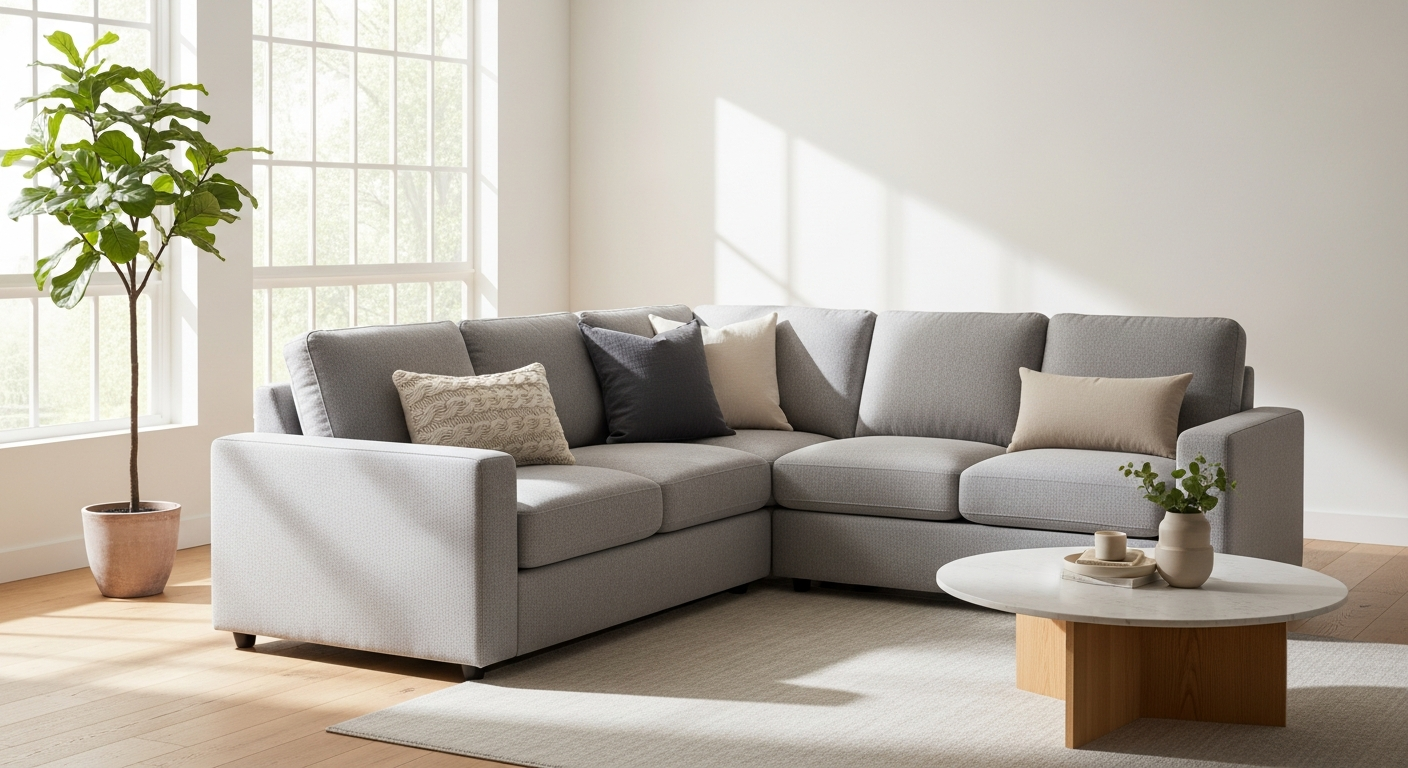
A modern fabric corner sectional can completely change the look and feel of your living room. Combining generous seating with a space-efficient layout, a corner sectional creates a comfortable place for relaxing, entertaining guests, watching movies, or simply stretching out after a long day.
With so many sizes, fabrics, colors, configurations, and features available, however, finding the right sectional requires more than choosing the first design that catches your eye.
The perfect sofa should complement your interior while fitting comfortably into your available space and supporting the way you actually use your living room.
What Is a Modern Fabric Corner Sectional?
A fabric corner sectional is a sofa made from multiple connected seating sections arranged to make efficient use of a corner or open living area. Common configurations include L-shaped sectionals, chaise sectionals, modular sofas, and larger U-shaped designs.
Modern versions typically feature clean lines, streamlined silhouettes, comfortable cushions, and contemporary upholstery. Unlike traditional sofas that may require additional chairs to create a complete seating area, a corner sectional can provide substantial seating in a single coordinated piece.
Fabric upholstery adds another advantage: warmth and softness. Depending on the material, it can also offer excellent durability and a wide selection of colors and textures.
Why Choose a Modern Fabric Corner Sectional?
One of the biggest benefits of a modern corner sectional sofa is its ability to maximize seating without making a room feel cluttered. By following the shape of a corner, the sectional can use space that might otherwise remain empty.
A sectional can also help define different areas in an open-plan home. For example, positioning the back of the sofa toward a dining or kitchen area creates a natural visual boundary without requiring walls or partitions.
Comfort is another major reason homeowners choose sectionals. Deep seats, supportive cushions, chaise extensions, and spacious configurations make them particularly appealing for households that spend plenty of time in the living room.
1. Measure Your Living Space Carefully
Before shopping for a fabric corner sectional, measure your room accurately. A sectional that looks perfectly proportioned in a large showroom can feel surprisingly oversized once it arrives in a smaller home.
Measure the length and width of the area where you plan to place the sofa. Consider windows, doors, radiators, electrical outlets, tables, and other furniture that could affect placement.
Don’t forget traffic flow. Leave enough room for people to comfortably walk around the sectional rather than squeezing between pieces of furniture.
It is also worth measuring doorways, hallways, elevators, and staircases. Even if the sectional fits your living room, its individual components still need to reach the room on delivery day.
2. Choose the Right Sectional Configuration
Modern sectionals come in several layouts, so think about how your room is arranged before selecting one.
An L-shaped corner sectional works particularly well in a traditional living room corner and provides plenty of seating without requiring multiple separate pieces.
A chaise sectional offers an extended seat where you can put your feet up while maintaining a relatively streamlined footprint.
For larger spaces, a U-shaped sectional creates an inviting conversation area with seating on several sides.
Modular sectionals provide even more flexibility. Individual modules can often be rearranged as your needs or room layout change, making them useful for homeowners who value versatility.
Pay attention to whether the sectional is left-facing or right-facing. The orientation determines which direction the chaise or extended section runs, and choosing the wrong orientation can interfere with doors, walkways, or other furniture.
3. Select Fabric That Fits Your Lifestyle
The upholstery you choose affects the appearance, comfort, maintenance, and lifespan of your sectional.
For busy households, durability should be a priority. Tightly woven upholstery and performance fabrics can be practical options because they are generally designed to handle frequent use.
Homes with children or pets may benefit from fabrics that are easier to clean and more resistant to stains. Removable cushion covers can also make routine maintenance simpler.
Texture matters as well. Bouclé can create a cozy contemporary appearance, while chenille provides softness and visual depth. Linen-inspired upholstery offers a relaxed, airy aesthetic, while velvet can introduce a richer and more sophisticated finish.
Before buying, check the manufacturer’s care instructions and durability information to make sure the upholstery suits your household.
4. Find the Perfect Color
Your sectional will probably be one of the largest pieces of furniture in your living room, which means its color can have a significant impact on the overall design.
Neutral shades such as beige, cream, gray, taupe, and charcoal are popular because they coordinate easily with changing décor. You can refresh the room over time simply by changing pillows, rugs, artwork, or accessories.
If you want the sectional to become a focal point, consider deeper colors such as navy, forest green, rust, or other rich contemporary shades.
Also think about practical considerations. Very light upholstery can show spills and dirt more easily, while extremely dark fabrics may make dust, lint, or pet hair more noticeable.
The ideal color balances your preferred aesthetic with everyday maintenance.
5. Pay Attention to Seat Depth and Cushion Support
Appearance matters, but comfort should never be an afterthought.
Some modern sectionals have deep seats designed for lounging, while others offer shallower seating and firmer support. Neither is automatically better—the right choice depends on how you prefer to sit.
If you enjoy curling up with a book or stretching out during movie nights, deeper seating may be appealing. If you prefer sitting upright or frequently entertain guests, a more supportive seat depth could be more comfortable.
Look at the cushion construction as well. Quality foam, supportive suspension, and well-made back cushions can help the sectional maintain its comfort and shape with regular use.
6. Check the Frame and Overall Construction
A stylish sectional is only a worthwhile investment if it is built to handle everyday use.
Look for information about the internal frame, joinery, suspension system, cushion filling, and upholstery construction. A strong frame provides the foundation for long-term durability, while quality cushioning helps prevent premature sagging.
If you’re considering a modular design, check how securely the individual sections connect. Reliable connectors help prevent modules from gradually separating when people sit down or move around.
Product warranties can also provide useful clues about a manufacturer’s confidence in its materials and construction.
7. Consider Practical Features
Modern corner sectionals can offer much more than basic seating.
Depending on the design, you may find features such as:
- Hidden storage compartments
- Reclining seats
- Adjustable headrests
- Removable cushion covers
- Built-in charging ports
- Sleeper or pull-out bed functions
- Reversible chaise sections
- Rearrangeable modular components
You don’t necessarily need every available feature. Focus on options that solve genuine needs in your home.
For example, a sleeper sectional can be particularly useful in a home without a dedicated guest room, while hidden storage can help keep blankets and pillows organized in smaller spaces.
8. Match the Sectional to Your Interior Style
A modern fabric sectional sofa should feel connected to the rest of your décor rather than looking like an isolated piece.
For minimalist interiors, consider simple silhouettes, neutral upholstery, and understated legs. Mid-century-inspired spaces may benefit from tapered legs and structured cushions.
Contemporary interiors can accommodate low-profile designs, oversized proportions, and softer sculptural shapes.
Use rugs, coffee tables, lighting, pillows, and artwork to connect the sectional with the rest of the room.
The goal isn’t necessarily to match everything perfectly. A coordinated combination of complementary colors, textures, and shapes usually creates a more interesting space.
9. Think About Long-Term Flexibility
Furniture needs can change over time. You might move to another home, rearrange your living room, expand your household, or simply decide that you want a different layout.
A modular fabric sectional can provide useful flexibility because sections may be repositioned or, with some furniture systems, expanded by purchasing compatible modules.
A reversible chaise can offer similar versatility in smaller configurations.
If flexibility is important to you, check exactly which pieces can be rearranged before purchasing. Not every sectional marketed as modular offers the same level of customization.
10. Balance Price With Quality
The cheapest sectional isn’t always the most economical choice over the long term. At the same time, a high price does not automatically guarantee better quality.
Compare the details behind the price tag. Look at the frame materials, upholstery specifications, cushion construction, dimensions, warranty, return policy, and customer feedback.
Consider the sofa’s overall value rather than price alone. A well-made sectional that remains comfortable and attractive for years can be a better investment than a cheaper model that needs to be replaced quickly.
How to Style a Modern Fabric Corner Sectional
Once you’ve found the right sectional, thoughtful styling can make it feel even more inviting.
Start with a rug large enough to visually anchor the seating area. Ideally, the relationship between the rug and sofa should feel intentional rather than leaving a small rug floating in the middle of a large sectional.
Add cushions in complementary colors and varied textures, but avoid covering every available seat. A throw blanket can introduce additional softness and color.
Choose a coffee table that suits the proportions of the sectional while leaving enough clearance to move around comfortably. Round or oval tables can work especially well with large corner sofas because their curved edges soften the sectional’s strong lines.
Finish the space with layered lighting, artwork, plants, or decorative accessories to give the room personality.
Common Mistakes to Avoid When Buying a Corner Sectional
One of the most common mistakes is buying based on appearance without checking measurements. Another is forgetting to confirm the orientation of the sectional.
It is also easy to overlook fabric maintenance, seat comfort, and delivery access.
Before placing your order, confirm:
- Overall sectional dimensions
- Left- or right-facing orientation
- Seat height and depth
- Upholstery care requirements
- Delivery pathway measurements
- Assembly requirements
- Return and exchange policies
- Warranty coverage
A few extra checks before purchasing can prevent expensive problems later.
Frequently Asked Questions
Are fabric corner sectionals good for small living rooms?
Yes. A carefully sized corner sectional can make efficient use of a small room by providing multiple seats without requiring several separate chairs and sofas. Compact or modular designs are especially useful when space is limited.
What is the best fabric for a sectional sofa?
The best fabric depends on your lifestyle. Performance fabrics and tightly woven upholstery are often practical for busy households, while softer textured fabrics may appeal to buyers who prioritize comfort and appearance. Always review the specific fabric’s cleaning and care requirements.
Should I choose a left-facing or right-facing sectional?
Choose the orientation according to your room layout. Consider doors, windows, walkways, television placement, and surrounding furniture. Check how the manufacturer defines left- and right-facing configurations before ordering, since terminology can sometimes vary.
Are modular sectionals worth buying?
They can be an excellent choice if flexibility matters. Modular pieces may allow you to rearrange your seating when your room or lifestyle changes. Check the specific product system to determine exactly which configurations are possible.
How do I maintain a fabric sectional?
Vacuum the upholstery regularly using an appropriate attachment, clean spills according to the manufacturer’s instructions, and rotate removable cushions when recommended. Always follow the upholstery care label rather than using general-purpose cleaning products that could damage the fabric.
Invest in Comfort With a Modern Fabric Corner Sectional
Start with accurate room measurements and determine the configuration that works best for your layout. From there, compare upholstery options, cushion construction, practical features, and overall build quality. Finally, choose a design and color that complement your home’s personality.
The right sectional isn’t simply another piece of furniture. It can become the centerpiece of your living space—a comfortable, practical place where family and friends naturally gather.
By considering both everyday functionality and long-term value, you can choose a modern fabric corner sectional that looks great and feels right at home for years to come.
Leave a Reply