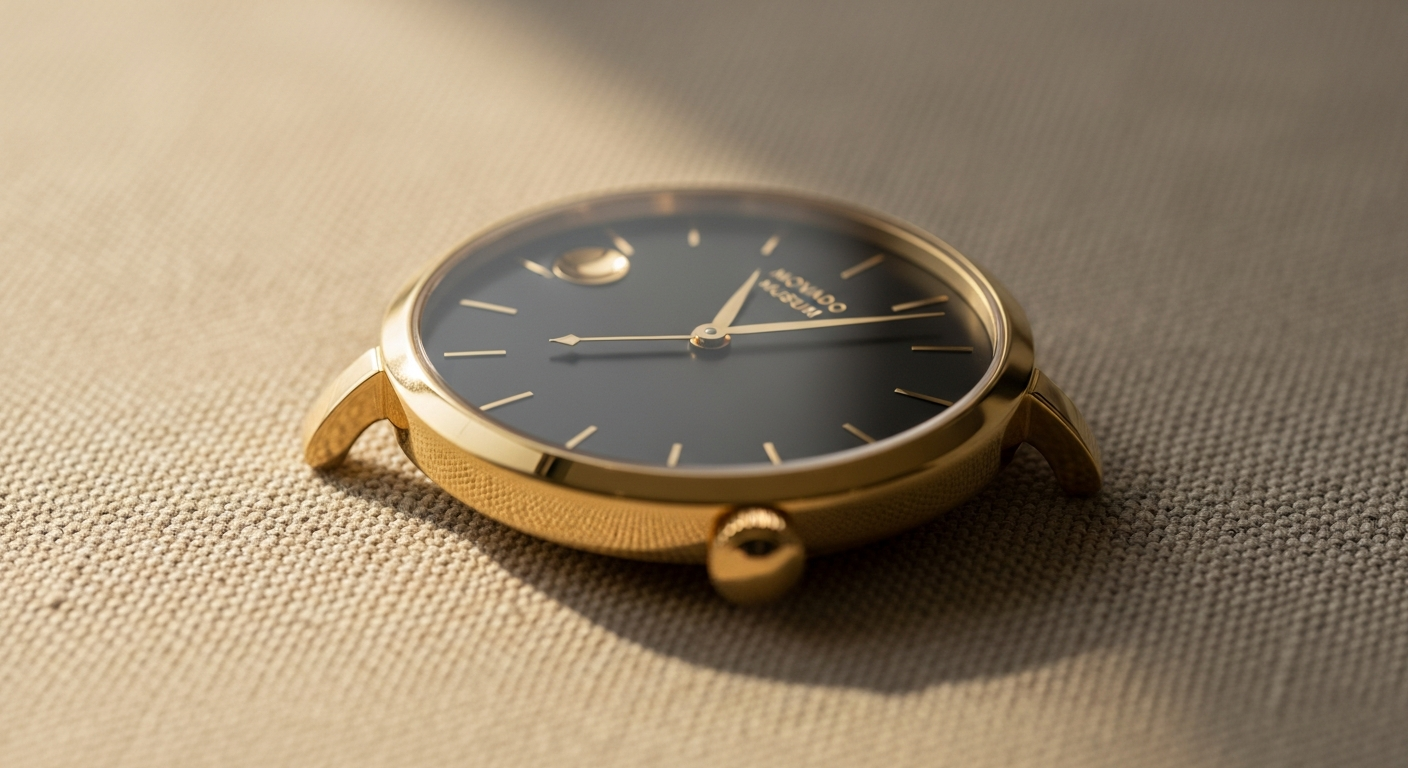
A single dot. That's all it took for Nathan George Horwitt to revolutionize watch design in 1947, creating what would eventually become one of the most recognizable timepieces in the world. The Movado Museum Classic stands as an exceptional achievement in horological design—not just a tool for telling time, but a conversation starter, a design statement, and a piece of wearable art that's earned its place in the Museum of Modern Art.
The Movado Museum Classic represents something rare in the watch industry: a product that refuses to fade into obscurity despite decades of market evolution. While trends come and go, this iconic timepiece has maintained its status as Movado's best-seller, appealing to everyone from corporate professionals to design-conscious millennials. Its enduring appeal lies in its radical simplicity—a stark black dial interrupted only by that signature concave dot at 12 o'clock—which somehow manages to feel both timeless and contemporary.
Discover the Movado Museum Classic and explore whether this legendary timepiece is right for you.
The Design Philosophy Behind the Iconic Dial
Nathan George Horwitt's 1947 Original Concept and Bauhaus Influence
Horwitt's approach to watch design drew directly from the Bauhaus movement, a revolutionary design school that prioritized form following function and rejected unnecessary ornamentation. When he conceived the Museum Classic in 1947, the watch industry was drowning in complexity. Dials featured numerous markers, sub-dials, and decorative elements that served no practical purpose. Horwitt asked a fundamental question: what if a watch contained nothing but what was absolutely essential?
The Significance of the Single Concave Dot
That single concave dot at the 12 o'clock position represents the sun at high noon—a symbolic anchor point that gives the dial meaning without cluttering it. This dot serves a practical function too, providing a reference point that helps orient the wearer to the watch's position on the wrist. By limiting visual elements to just this singular feature, Horwitt forced every other aspect of the design to earn its place.
How Minimalism Became the Watch's Defining Characteristic
The Museum Classic's power emerges from what it refuses to show. No hour markers. No minute markers. No date window. No complications. This deliberate restraint creates a paradox: the watch becomes more striking precisely because it offers less. The uninterrupted expanse of the dial draws the eye, making the timepiece feel larger and more commanding than its actual dimensions suggest.
Recognition by the Museum of Modern Art as a Design Achievement
The Museum of Modern Art's acquisition of the Movado Museum Classic wasn't arbitrary. MoMA curates objects that represent significant achievements in design and culture. The inclusion of this watch placed it alongside works by Pablo Picasso and Le Corbusier, affirming that Horwitt had created something genuinely important to design history. This institutional recognition transformed the watch from a commercial product into a cultural artifact.
Evolution of Dial Colors Beyond the Classic Black
While the black dial remains the definitive version, Movado has explored other colorways over the decades. Silver, champagne, and navy dials have appeared in various collections, each offering subtle variations while maintaining the design's core identity. These alternatives allow wearers to express personal preference without abandoning the minimalist philosophy.
The Psychological Appeal of "Less is More" in Luxury Watch Design
The minimalist approach taps into something deeply human: the desire for clarity and order in an increasingly complex world. Wearing a watch that strips away distractions appeals to people who value intentionality and deliberate simplicity in their possessions. The Museum Classic becomes a quiet rebellion against the contemporary tendency to pack every product with maximum features.
How the Design Transcends Gender and Generational Boundaries
The watch's neutral aesthetic works equally well on masculine and feminine wrists, on young professionals and established executives. Its lack of gendered design language—no "sporty" elements, no "delicate" ornamentation—creates genuine versatility. This universality explains why the Museum Classic has remained commercially viable across demographic shifts and changing consumer preferences.
Movement and Technical Specifications Explained
Swiss Quartz Movement as the Standard Option
Most Movado Museum Classic models feature a Swiss quartz movement, a reliable choice that prioritizes accuracy and practicality over mechanical complexity. Quartz movements vibrate at a precise frequency, allowing them to keep time within seconds per month. This consistency, combined with minimal maintenance requirements, makes quartz an excellent choice for a watch meant to be worn daily without fuss.
Availability of Automatic/Mechanical Alternatives for Collectors
For purists and serious collectors, Movado offers automatic versions of the Museum Classic. These mechanical movements contain the traditional escapement and balance wheel that appeal to watch enthusiasts who appreciate the "artistry and complexity" of mechanical timekeeping. However, these versions represent a smaller portion of the lineup and command premium pricing.
Case Size Variations (28mm to 42mm) and Gender Considerations
The Museum Classic comes in multiple case sizes to accommodate different wrist sizes and aesthetic preferences. The 28mm version works beautifully on smaller frames, while the 40mm and 42mm options suit those preferring a more substantial presence. Notably, Movado resists marketing smaller sizes exclusively to women or larger sizes exclusively to men, reflecting the watch's genuinely unisex appeal.
Sapphire Crystal Construction and Scratch Resistance Benefits
The sapphire crystal protecting the dial offers superior scratch resistance compared to standard mineral glass. Sapphire ranks 9 on the Mohs hardness scale—only diamonds exceed it. This means the crystal maintains its clarity and optical properties even with years of daily wear, preserving the watch's appearance far better than lesser materials would.
Water Resistance Rating (3 ATM/30 Meters) and Practical Limitations
At 3 ATM (30 meters), the Museum Classic can withstand splashes from hand washing and brief exposure to moisture, but it's not suitable for swimming, showering, or snorkeling. This rating reflects the watch's design purpose: an elegant everyday timepiece rather than a tool watch for aquatic activities. Wearers must be conscious of this limitation and remove the watch during water-intensive activities.
Stainless Steel Case Options and PVD Finishes
The Museum Classic typically uses stainless steel for durability and aesthetic appeal. Some models feature PVD (Physical Vapor Deposition) finishes—such as the distinctive yellow PVD-finished cases—which provide additional hardness and resistance to scratching. These finishes also offer subtle color variations that distinguish certain editions without compromising the minimalist design language.
Accuracy Expectations from Quartz Versus Mechanical Movements
Quartz movements generally achieve accuracy within ±15 seconds per month, while mechanical movements typically lose or gain 10-30 seconds daily depending on the specific movement and wearing patterns. For someone prioritizing reliability and minimal adjustment, quartz delivers superior consistency. For those valuing the mechanical tradition, the periodic adjustment required by automatic movements becomes part of the ownership experience.
Maintenance Requirements and Long-Term Durability
Quartz watches require minimal maintenance beyond periodic battery replacement (typically every 2-3 years). Mechanical versions need professional servicing every 3-5 years to maintain accuracy and longevity. Both types offer excellent durability when handled appropriately, with sapphire crystals and stainless steel cases providing reliable protection across decades of wear.
The Case for the Movado Museum Classic: Real Advantages
Timeless Elegance That Transcends Fashion Cycles
The Museum Classic's design has proven resistant to the fashion cycles that render most timepieces dated within a decade. Its minimalist aesthetic—rooted in design principles rather than trend—means it looks equally appropriate today as it did in 1967 or will in 2037. This timelessness translates to genuine value retention and relevance across the wearer's lifetime.
Versatility Across Casual, Business, and Formal Settings
Few watches achieve this level of versatility. The Museum Classic works effortlessly at a corporate board meeting, transitions seamlessly to casual weekend wear, and holds its own at formal evening events. This adaptability means wearers genuinely need fewer watches overall, making it an economical choice for those seeking a single, sophisticated everyday piece.
Lightweight and Thin Profile for All-Day Comfort
Many wearers praise the Museum Classic's thin, lightweight construction, which disappears on the wrist during daily wear. This comfort factor shouldn't be underestimated—a watch that becomes an afterthought enables all-day wearing without fatigue or distraction, which only enhances its practical utility.
Instant Recognition and Brand Prestige
The Museum Classic's iconic status means its design is immediately recognizable to anyone with even passing familiarity with watch culture. This recognition carries prestige without ostentation—the watch communicates taste and sophistication to those who understand it, while remaining understated enough not to dominate the wearer's appearance.
Investment in Design History and Cultural Significance
Owning a Museum Classic connects the wearer to design history. This watch sits in MoMA's permanent collection. Wearing it means carrying a piece of that cultural significance on your wrist. For design enthusiasts and those who value meaningful objects, this historical weight provides genuine satisfaction beyond typical watch ownership.
Low Maintenance Requirements of Quartz Movement
The prevalence of quartz models means most owners enjoy minimal maintenance demands. Battery replacements cost little and take minutes. This practicality appeals to people whose lives don't accommodate regular trips to watch specialists, yet who appreciate quality timekeeping nonetheless.
Excellent Value Proposition Across Price Range ($350–$1,295)
Movado offers Museum Classic models across a significant price spectrum, allowing entry at the lower end without sacrificing the design's essential character. Even at higher price points, the watch delivers strong value when compared to similarly positioned luxury brands. This accessibility—without compromising authenticity—accounts for much of its enduring popularity.
Conversation-Starting Aesthetic Appeal
The watch's distinctive dial frequently prompts inquiries from design-conscious observers. Rather than requiring explanation, its striking minimalism speaks for itself, initiating conversations about design, taste, and philosophy. For those who appreciate this kind of engagement with their possessions, the Museum Classic rewards that appreciation.
The Honest Drawbacks You Should Consider
Polarizing Minimalist Design Not Suited for Everyone's Taste
The Museum Classic's radical simplicity isn't universally appealing. Some find it overly austere, preferring watches with traditional hour markers, decorative elements, or visual complexity. If you're drawn to watches brimming with details, complications, and visual interest, the Museum Classic's stark aesthetic may feel underwhelming rather than elegant.
Readability Challenges with Minimal Hour Markers in Low Light
Without traditional hour and minute markers, telling time at a glance requires quick mental adjustment. In dim lighting conditions, the absence of luminous markers makes rapid time-checking difficult. This trade-off—aesthetic purity versus practical readability—matters only if you frequently need to consult your watch in low-light situations.
Limited Water Resistance Restricts Water-Based Activities
The 3 ATM rating excludes swimming, showering, and water sports. For those whose lifestyles involve regular water exposure, this limitation becomes a genuine inconvenience. The watch demands removal and protection during any water-intensive activity, which conflicts with the all-day wearability that otherwise characterizes its appeal.
Quartz Movement May Disappoint Serious Mechanical Watch Collectors
Dedicated horologists often view quartz as pragmatic rather than artful. If you're building a serious watch collection and value the mechanical tradition, the Museum Classic's reliance on quartz may feel like a concession to commercial practicality rather than a celebration of watchmaking craft. The automatic versions address this concern, but at elevated price points.
Potential Perception of "Overused" Design in Certain Circles
The Museum Classic's commercial success and cultural prominence mean it appears frequently in professional environments and design-conscious circles. Some perceive it as an "obvious" choice rather than a personal statement, viewing it as what designers select when they want to seem sophisticated without genuine originality. This perception concerns only those prioritizing unique ownership within specific communities.
Lack of Chronograph or Complex Complications
The Museum Classic remains a time-only watch. Those seeking chronograph functionality, date complications, or other advanced features will find the Museum Classic limiting. If your needs include frequent stopwatch operation or date display, this watch simply doesn't deliver those capabilities.
Limited Customization Compared to Other Luxury Watches
The minimalist design philosophy naturally restricts customization options. Beyond selecting case size, material, and strap type, there's little room for personalization. Those who value bespoke modifications or extensive customization possibilities should look elsewhere.
Not Suitable for Sports or Rugged Outdoor Activities
The watch's elegant design and limited water resistance make it unsuitable for athletic pursuits, hiking, camping, or other outdoor activities where durability and water protection become essential. If your lifestyle involves significant physical activity or outdoor exposure, the Museum Classic requires careful management and removal during such pursuits.
Who Should Buy the Movado Museum Classic?
Design-Conscious Professionals Seeking Understated Luxury
Executives and professionals who value design sophistication appreciate the Museum Classic's ability to communicate taste and cultural awareness. The watch suits corporate environments perfectly while signaling that the wearer understands aesthetics at a deeper level than mere branding.
Minimalist Lifestyle Enthusiasts and Aesthetic Purists
Those deliberately curating lives around minimalist principles find the Museum Classic philosophically aligned with their values. The watch becomes more than an accessory; it's a manifestation of lived minimalism.
Gift-Givers Looking for Iconic, Meaningful Presents
The Museum Classic works beautifully as a significant gift—meaningful enough for important occasions, iconic enough to resonate across generations, and accessible enough that giving it doesn't require extraordinary wealth. Its design heritage adds weight to the gesture.
First-Time Luxury Watch Buyers Wanting Accessible Prestige
Newcomers to luxury watches often feel overwhelmed by technical specifications and price escalation. The Museum Classic offers genuine luxury through an accessible entry point, with the Museum of Modern Art credentials providing reassurance of quality and significance.
Fashion-Forward Individuals Prioritizing Style Over Functionality
Those viewing watches primarily as style statements rather than technical instruments find the Museum Classic's aesthetic superiority compelling. The watch communicates personal taste more effectively than functionally equivalent alternatives.
Corporate Professionals Needing Versatile Everyday Wear
Busy professionals juggling multiple commitments and settings benefit from a watch that transitions seamlessly across contexts. The Museum Classic's adaptability means one watch serves every occasion, simplifying daily decisions.
Those Who Appreciate Design History and Cultural Significance
Museum curators, design historians, and cultural enthusiasts value the Museum Classic's institutional recognition and role in design history. Wearing it becomes a connection to something larger than personal ornamentation.
People with Smaller Wrists or Preference for Elegant, Thin Watches
The Museum Classic's proportional availability across sizes and its notably thin profile make it ideal for those seeking elegance without bulk. This accessibility across different body types distinguishes it from many luxury alternatives that skew toward substantial sizing.
The Lasting Legacy of Simplicity
The Movado Museum Classic represents something increasingly rare in our complicated world: the power of restraint. By stripping away everything unnecessary and leaving only what matters most, Nathan George Horwitt created a design that refuses to age, that transcends trends, and that continues to resonate with people who understand that true sophistication whispers rather than shouts.
This watch isn't for everyone—and that's precisely what makes it special. It demands a certain appreciation for minimalism, a comfort with understated elegance, and a willingness to let the design speak for itself rather than relying on flashy complications or bold statements. Whether the Movado Museum Classic belongs on your wrist depends entirely on your personal values and lifestyle.
If you're drawn to design history, if you appreciate the philosophy that less really can be more, and if you want a timepiece that works equally well at a board meeting or a weekend brunch, this iconic watch delivers on every front. The honest drawbacks—limited water resistance, readability challenges in dim light, and the polarizing minimalist aesthetic—matter only if they conflict with your actual needs. For countless others, these trade-offs are irrelevant; they're buying into a design legacy that's earned its place in museums and on the wrists of people who truly understand the value of timeless elegance.
The question isn't whether the Movado Museum Classic is a great watch. The question is whether it's the right watch for you.
Choose the Movado Museum Classic and join the legacy of timeless design excellence.
Leave a Reply