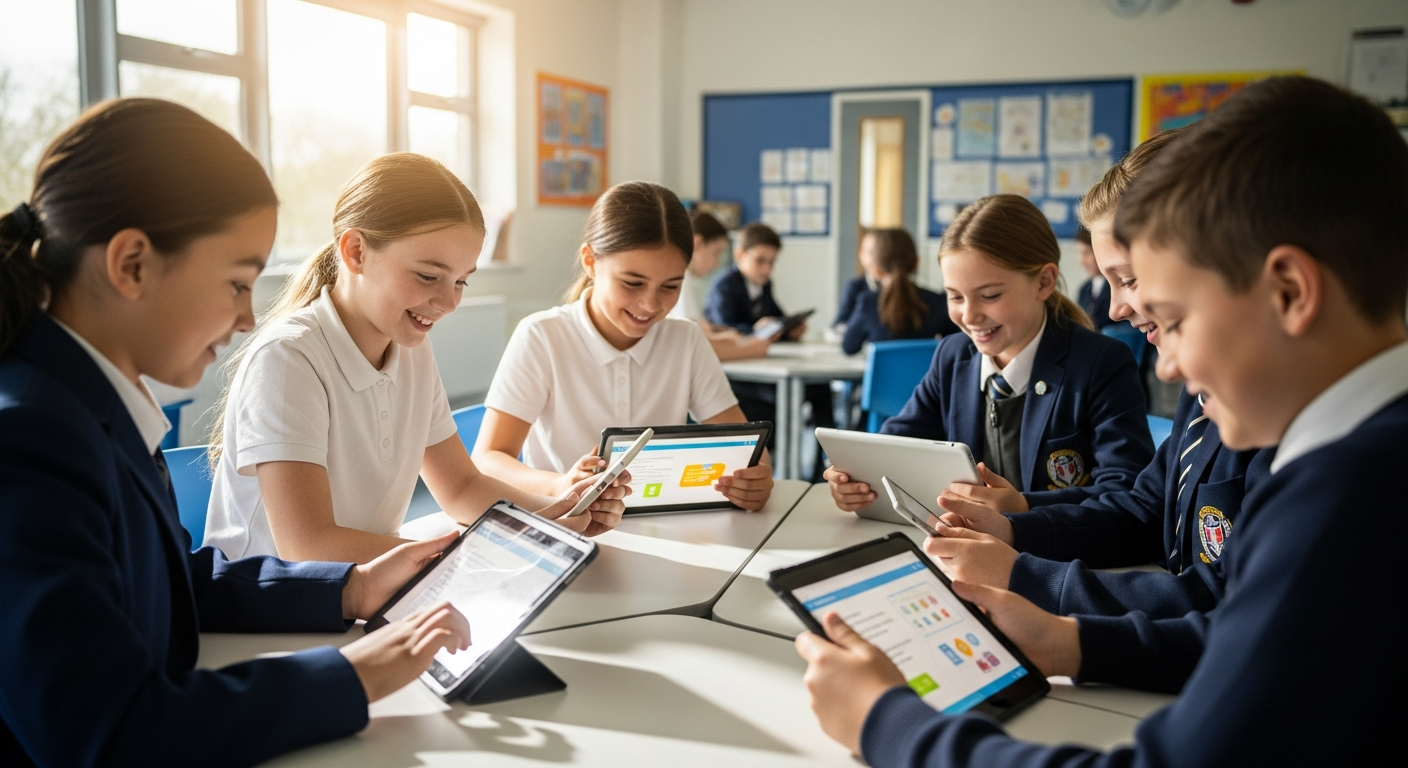
Imagine your child dreading English lessons the way most kids dread broccoli. Now imagine them actually excited to log in for their next session—not because they're forced to, but because they're genuinely invested in the story unfolding on their screen. That's the reality for thousands of children using Novakid Magic Academy, where engagement and learning outcomes have stopped being opposing forces.
Here's what caught my attention: children learning through Novakid's Magic Academy demonstrate 39% better performance in Level I ESL courses compared to traditional methods. That's not a marginal improvement—that's a fundamental shift in how children retain language skills. Most online learning platforms struggle to keep children engaged past the first week, yet this one has cracked the code through pure storytelling brilliance.
Novakid operates differently from conventional language schools. The platform delivers live, one-on-one English lessons through an interactive digital environment where children aged 4 to 12 (sometimes up to 14) learn alongside experienced international teachers—many of them native speakers with university degrees. The Magic Academy component transforms the experience entirely: a story-based, gamified learning space that converts grammar drills and vocabulary lessons into actual adventures. Parents increasingly turn to this model as a more affordable alternative to traditional international schools, without sacrificing quality instruction. Start your child's Novakid Magic Academy journey with a trial lesson today.
What Makes Novakid Magic Academy Different From Traditional Online English Programs
The Magic Academy isn't simply an English course wrapped in colorful graphics. It's a fundamentally different approach to language acquisition. The platform weaves lessons into a narrative framework where children progress through story chapters, solving language-based challenges to advance. This narrative structure taps into how children's brains naturally process and retain information—through meaning-making and emotional connection, not isolated drills.
The curriculum incorporates games, songs, role-playing scenarios, comics, mini-games, and virtual tours within this cohesive storytelling environment. Each element serves a pedagogical purpose while maintaining entertainment value. A child might learn past tense verbs through a role-playing scenario, reinforce vocabulary through mini-games, and consolidate learning through a song that stays lodged in memory long after the lesson ends.
The lesson structure itself remains manageable: standard 25-minute sessions with 40-minute options available. This duration respects children's attention spans while ensuring focused, productive learning time. The curriculum aligns with the Common European Framework of Reference for Languages (CEFR), which means your child progresses through clearly defined proficiency levels with internationally recognized standards. This isn't arbitrary progression—it's structured learning that translates to real language competency.
The platform adapts to each child's learning pace and style preferences. Some children thrive with visual elements; others respond better to songs and movement. Some prefer rapid progression; others need more consolidation time. The interactive system accommodates these differences, personalizing the learning experience without creating separate "tracks" that might make children feel limited or accelerated in isolating ways.
The Teacher Quality Factor: Why Native Speakers and Credentials Matter
Behind every successful session stands a qualified instructor. Novakid's teaching staff comprises international educators with genuine credentials—university degrees, certifications in early childhood education, and experience working with young learners. Many are native English speakers, which provides children with authentic pronunciation models and cultural context that non-native teachers, regardless of proficiency, simply cannot replicate.
The platform offers Standard and Premium teacher options, allowing families to match their preferences and budgets. This flexibility acknowledges that "quality" isn't one-dimensional. Some families prioritize native speaker status above all else; others value a teacher's communication style or experience with a specific age group. The two-tier system respects these different priorities without suggesting one approach is universally superior.
One-on-one instruction means your child receives undivided attention. Teachers provide immediate feedback, catch pronunciation errors before they solidify into habits, and adjust pacing based on real-time understanding rather than predetermined curriculum timelines. After each lesson, parents receive detailed progress reports—not generic statements about "good participation," but specific observations about what your child learned, where they struggled, and what to practice before the next session.
However, consistency with a preferred teacher isn't guaranteed. Some families report difficulty maintaining lessons with the same instructor over extended periods, either due to scheduling conflicts or teacher availability changes. This frustration is real and worth planning for. Building rapport with a teacher aids learning, so scheduling variability can disrupt momentum. Many families address this by booking multiple lessons with the same teacher simultaneously or by clearly communicating preferences during the booking process.
How the Gamified Curriculum Keeps Children Engaged Without Sacrificing Learning Outcomes
Gamification gets thrown around carelessly in education, often meaning superficial points and badges tacked onto traditional instruction. Novakid's approach runs deeper. The Magic Academy's narrative structure means children aren't completing random exercises for arbitrary rewards—they're advancing a story they care about, and language mastery is the mechanism for progression.
Mini-game mechanics reinforce specific language concepts through play. A vocabulary-building game might involve matching words to characters in the story, creating mnemonic associations that stick. Grammar mini-games transform conjugation practice into interactive challenges where errors feel like part of the game rather than failures. This distinction matters psychologically—children embrace challenge within game contexts where mistakes are expected and part of learning.
Visual learning components including comics and character-driven narratives create multiple memory pathways. Children absorb language through reading dialogue, hearing it spoken by teachers, and seeing it used within meaningful contexts. Comics particularly appeal to visual learners and reluctant readers, making language feel accessible rather than intimidating.
Song-based learning leverages a powerful memory mechanism. Musical memory operates differently than semantic memory; songs lodge in long-term memory more readily than isolated vocabulary. A child might forget a word presented traditionally but remember it perfectly when embedded in a melody they've heard repeated. Explore how Novakid Magic Academy's music-based learning transforms language retention for your child.
Virtual tours embedded within lessons allow cultural exploration while building conversational English skills. A child might take a virtual tour of London, learning building names and architectural vocabulary in context, or visit a marketplace in an English-speaking country, acquiring real-world conversational phrases. This contextual learning makes language feel connected to actual communication rather than abstract symbol manipulation.
The motivation systems reward progress genuinely—through advancing the narrative, unlocking new story chapters, and achieving visible milestones. This differs fundamentally from arbitrary reward systems that teach children to perform for external incentives rather than intrinsic motivation.
Real Parent Feedback: What Works and What Doesn't in Practice
Parents consistently praise the engaging, interactive curriculum for maintaining children's motivation long-term. Unlike many online programs where enthusiasm wanes after a few weeks, children using the Magic Academy frequently ask when their next lesson is scheduled. This sustained engagement itself represents a major win for families frustrated with programs that feel like homework.
Appreciation for native-speaking teachers and personalized instruction surfaces repeatedly in parent discussions. The combination of authentic English models and individual attention creates confidence in children who might struggle with group classroom settings. Parents note visible improvements in pronunciation and conversational fluency relatively quickly.
Positive feedback extends to progress tracking transparency. The detailed post-lesson feedback parents receive offers concrete information about their child's development rather than vague encouragement. This specificity helps families understand where their child excels and where additional practice would help.
The convenience factor matters immensely for busy families. No commute, no rigid scheduling tied to institutional timetables, no weather-related cancellations—just lessons delivered at home when it suits your family's rhythm. This flexibility proves invaluable for families with multiple children, unpredictable work schedules, or those living in areas without quality English instruction.
However, customer service emerges as a consistent frustration point. Some families describe difficulty reaching support when technical issues arise or when account problems need resolution. Response times can be slow, and accessibility to customer service representatives varies. This frustration is particularly acute when it interferes with lesson scheduling or billing.
Technical issues, while not universal, occur frequently enough that they merit acknowledgment. App glitches happen; connection problems disrupt occasional lessons; platform hiccups interrupt learning flow. Most families experience these infrequently enough that they don't derail their overall experience, but they're real sources of frustration when they do occur.
Subscription renewal complications and billing transparency concerns have troubled some families. Unexpected charges, unclear billing timelines, or difficulty modifying subscription terms frustrate parents trying to manage family finances responsibly. While these issues don't reflect the quality of instruction, they create friction that mars the overall experience.
Your Next Move With Novakid Magic Academy
Novakid Magic Academy represents a genuine shift in how children can learn English—one that actually respects their developmental needs while delivering measurable results. The 39% performance boost isn't marketing hype; it's what happens when storytelling, gamification, and qualified teachers converge in one platform. You're getting native-speaking instructors, CEFR-aligned progression, and a learning environment that children genuinely want to return to week after week.
That said, the platform isn't flawless. Customer service gaps exist, technical hiccups happen, and finding consistency with your preferred teacher requires patience. These aren't deal-breakers for most families, but they're real friction points worth acknowledging before you commit.
If your child has struggled with traditional English classes, or if you're searching for a program that genuinely blends education with engagement, Novakid Magic Academy warrants serious consideration. Start with a single lesson, observe how your child responds to the gamified environment, and assess whether the teaching style clicks. The flexible scheduling and personalized approach mean you can test-drive the experience without major financial commitment.
Your child's language journey might just begin with a single magical lesson. Begin your child's Novakid Magic Academy adventure now.
Leave a Reply