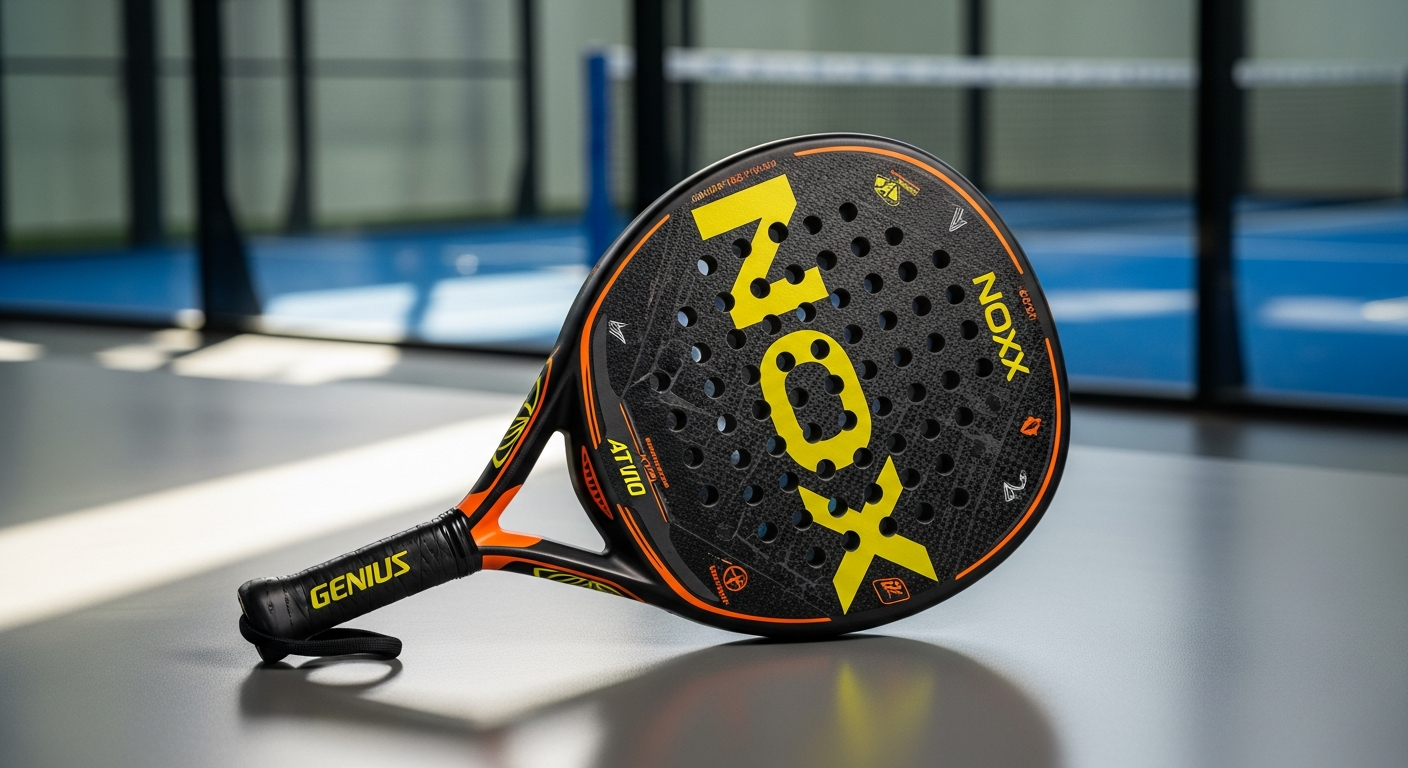
The 12K Carbon Advantage: Why Material Science Matters in Padel
Stiffness and Responsiveness: How 12K Carbon Delivers a Firmer, More Reactive Feel
The jump from standard carbon to 12K carbon is immediately noticeable the moment you strike the ball. This premium weave creates a noticeably stiffer frame that responds explosively to your input. Where lower-grade carbon constructions absorb some of your energy through flex and give, 12K carbon transfers nearly all of it directly into the ball. Advanced players feel this as crisp, predictable feedback—the racket becomes an extension of intention rather than a tool with inherent lag.
Power Generation Mechanics: The Relationship Between Carbon Density and Energy Transfer
Carbon density directly correlates with energy efficiency. Denser carbon weaves resist deformation during impact, which means more of your swing's kinetic energy converts into ball velocity rather than dissipating through frame movement. The AT10's 12K construction capitalizes on this principle, concentrating force delivery on attacking shots. A smash struck with this frame feels different—sharper, more authoritative, with immediate ball response that intermediate frames simply cannot replicate.
Durability Profile: Why Premium Carbon Construction Extends Racket Lifespan
The AT10 Genius 12K Xtreme 2026 is engineered to withstand the demands of competitive play. Higher-quality carbon resists micro-cracking that gradually weakens mid-range rackets over time. Players using this frame competitively can expect consistent performance season after season, assuming reasonable care. This durability directly impacts long-term value—you're not replacing the frame every season like you might with budget-conscious alternatives.
Vibration Damping Technology: How Multi-Layered EVA Rubber Cores Absorb Impact
Behind the carbon exterior lies sophisticated dampening architecture. Multi-layered EVA rubber cores absorb the shock of ball impact, protecting both the frame's integrity and your arm from repetitive stress. This technology balances two competing demands: dampening vibration to reduce fatigue while maintaining enough ball feedback to enable precision shot-making. The AT10 achieves this balance exceptionally well—your arm stays fresher during extended play, yet you never lose touch with what the ball is doing.
Comparative Analysis: Performance Differences Between 12K, 10K, and Standard Carbon Constructions
Standard carbon frames feel noticeably softer, with more frame flex on hard strikes. This translates to somewhat unpredictable power output and greater forgiveness on off-center hits—useful for beginners, but frustrating for advanced players seeking consistency. 10K carbon occupies middle ground: stiffer than standard, but with slightly more give than 12K. The AT10's 12K weave represents the upper tier, sacrificing some error tolerance for maximum responsiveness and power. Players with solid technique prefer this trade-off.
Maintenance Implications: Care Requirements for Preserving Carbon Integrity
Premium carbon demands respect. Store the racket away from extreme temperatures and direct sunlight, both of which degrade the resin matrix binding the carbon fibers. Avoid leaving the frame in hot vehicles or humid environments for extended periods. After competitive matches, wipe down the frame to remove sweat and dirt. These practices might seem basic, but they directly preserve the 12K carbon's structural integrity and performance longevity.
Explore the AT10 Genius 12K Xtreme 2026 on Padel Market today.
Teardrop Shape Decoded: Versatility Meets Performance
Sweet Spot Characteristics: Why Teardrop Frames Offer a Balanced Hitting Zone
The teardrop shape creates a generous yet balanced sweet spot—larger than diamond frames, but more focused than round-head designs. This geometry benefits advanced players who possess consistent shot placement. The sweet spot rewards accurate positioning and punishes lazy technique, making it perfect for competitors who've internalized proper form. Players transitioning from beginner rackets often appreciate this middle ground: enough forgiveness to maintain confidence, but enough precision demand to encourage continuous improvement.
Power Distribution: How Frame Geometry Concentrates Force on Smashes
Teardrop geometry naturally funnels impact force through the frame's core, concentrating energy on attacking strokes. Smashes struck with the AT10 feel particularly potent because the frame geometry amplifies rather than disperses that power. The weight distribution and structural design create a natural power corridor—high-velocity offensive shots feel effortless compared to frames designed for defensive capabilities.
Control Precision: The Role of Teardrop Design in Maintaining Accuracy During Defensive Play
Despite its offensive bias, the teardrop shape maintains excellent control during defensive scenarios. The frame's geometry doesn't penalize blocking strokes or counterattacks; it simply doesn't enhance them the way it enhances attacks. Advanced players report that defensive play feels stable and predictable, even when responding to aggressive opponents. The teardrop design distributes forces evenly enough to prevent erratic responses to hard incoming balls.
Spin Generation Potential: Frame Geometry's Influence on Topspin and Slice Shot Capabilities
Spin generation depends on string bed geometry and frame stiffness more than shape, but the teardrop's balanced design enables effective spin production across all shot types. The frame's responsiveness (thanks to 12K carbon) translates to crisp string bed engagement during topspin drives. Slice shots feel clean and controlled, with predictable spin output. Advanced players can layer spin techniques onto the AT10's inherent power without compromising accuracy.
Reach and Positioning: How the Shape Affects Court Coverage and Volleying Mechanics
The teardrop's slightly extended reach compared to round-head frames provides marginal but meaningful advantages at the net. Volleys benefit from the extended frame geometry, allowing defenders to reach balls slightly further away. This becomes especially valuable during transition play when quick reactions determine point outcomes. The shape doesn't dramatically alter reach, but every centimeter matters in competitive padel.
Comparison with Other Frame Shapes: Teardrop Versus Round Head Versus Diamond Frame Trade-offs
Round-head frames prioritize forgiveness and power, suiting recreational and intermediate players. Diamond frames maximize control and precision, appealing to defensive specialists. The teardrop sits philosophically between these extremes—it doesn't optimize any single aspect, but it performs competently across all dimensions. Advanced players choosing the AT10's teardrop are essentially saying they want a frame that adapts to their varied playstyle rather than forcing them into a specific tactical approach.
The Agustín Tapia Effect: Professional Endorsement as Performance Indicator
World Number One Credentials: What Tapia's Ranking Means for Racket Validation
Agustín Tapia's position as world number one in padel isn't casual—it represents years of competitive mastery against the sport's elite opponents. When a player of his caliber selects a specific racket, it's not merely an endorsement; it's a professional judgment about equipment reliability at the highest competitive level. Tapia faces opponents who punish equipment weaknesses instantly. His choice of the AT10 Genius 12K Xtreme 2026 signals confidence in this frame's ability to perform under intense pressure against world-class competition.
Tournament-Tested Reliability: How Professional-Level Competition Stress-Tests Equipment
Professional padel tournaments subject equipment to conditions recreational players rarely encounter. Extended match schedules, high-speed exchanges, extreme court conditions, and match pressure all stress-test frames in ways that casual club play cannot replicate. Equipment failures during major tournaments are devastating—they cost prize money, ranking points, and confidence. The fact that Tapia trusts the AT10 in these situations confirms the frame's durability and reliability under maximum stress.
Playing Style Alignment: Why Tapia's Aggressive-Yet-Precise Game Matches the AT10's Design Philosophy
Tapia's playing style emphasizes aggressive offense tempered by precision control. He doesn't just hit hard; he hits hard with purpose and placement. This alignment with the AT10's design philosophy isn't coincidental. The frame's power-control balance suits his tactical approach perfectly. Watching Tapia play reveals how the AT10 enables devastating smashes while maintaining the accuracy needed for placement-focused rallies. Players seeking to emulate his style naturally gravitate toward his equipment choice.
Market Credibility Impact: How Pro Endorsements Influence Purchasing Decisions
Professional endorsements carry disproportionate weight in equipment selection. Advanced players reason that if the world's best player trusts a frame, it must be performing at elite levels. This logic is generally sound—professional athletes genuinely use the equipment they endorse, unlike some endorsement arrangements in other sports. The AT10's popularity among Padel Market's most serious customers demonstrates how Tapia's association elevates the frame's perceived prestige and credibility.
Sponsorship Versus Genuine Use: Understanding Authentic Equipment Partnerships in Professional Padel
Some endorsements are primarily financial arrangements, but professional padel sponsorships typically involve genuine equipment use. Tapia wouldn't compromise his competitive performance by using a substandard frame just for sponsorship money. The arrangement makes sense because the AT10 objectively performs at his required level. This authenticity is why Tapia's endorsement carries genuine weight—he's not selling a product he wouldn't use himself.
Performance Expectations for Amateur Players: Realistic Outcomes When Using Pro-Endorsed Equipment
Advanced amateur players shouldn't expect to suddenly play like Tapia simply because they're using his racket. However, they can expect the frame to perform consistently at demanding competitive levels. The AT10 rewards good technique and punishes poor form—exactly what competitive players need. Amateurs with solid fundamentals will notice immediate improvements in power consistency and control precision compared to mid-range frames. The racket doesn't change your game; it enables your game to reach its potential.
Power and Control Balance: The Holy Grail of Advanced Racket Design
Power Output Specifications: Measurable Force Generation on Attacking Shots
The AT10's 12K carbon construction delivers noticeably higher power output compared to standard frames. This isn't subjective—physics confirms it. Stiffer frames lose less energy to flexing, meaning more of your swing translates directly into ball velocity. Advanced players report that smashes struck with the AT10 carry aggression without requiring additional physical effort. The frame itself contributes meaningful force generation, allowing skilled players to hit harder with better control than they could with less responsive equipment.
Control Precision Metrics: How the Racket Maintains Accuracy During Placement-Focused Play
Power without control is mere striking; the AT10 combines both. The frame's stiffness actually enhances placement precision because you get immediate, predictable feedback about ball contact. There's no guessing whether the frame flexed more or less than expected—the response is consistent every time. Advanced players describe this as "knowing where the ball is going before it leaves the strings." This certainty enables aggressive placement strategies that recreational players cannot execute reliably.
Forgiveness Factor: The Trade-off Between Power and Error Tolerance on Off-Center Hits
The AT10's aggressive design philosophy means it doesn't coddle mistakes. Off-center hits produce noticeably less power and control than center-string strikes. For intermediate players still developing shot consistency, this unforgiving nature can feel frustrating. Advanced players, however, view this as beneficial—the frame provides immediate feedback about contact quality, motivating continued technical refinement. This trade-off is intentional: maximum performance for skilled players in exchange for less error tolerance.
Aggressive Playstyle Compatibility: Why the AT10 Rewards Attacking Players With Solid Technique
The AT10 is designed for players who attack first and defend second. Its geometry, power output, and control precision all support an offensive approach. Players who prefer baseline grinding or defensive counterattacking might find more suitable alternatives. However, competitors who drive toward the net, execute smashes early in rallies, and pressure opponents with offensive strokes will find the AT10 responds exactly as they want. The frame doesn't force a playing style; it enhances whatever style you bring to it, but it particularly rewards aggression.
Defensive Capabilities: How the Frame Handles Blocking and Counterattack Situations
While optimized for offense, the AT10 handles defensive situations competently. Blocking strokes feel stable, and the frame's responsiveness translates to quick counterattack preparation. Players won't describe defensive play as the frame's strength—and that's intentional design philosophy. The AT10 enables solid defense because it's fundamentally sound, not because defense is its focus. Advanced players viewing defense as occasional necessity rather than primary strategy find this approach perfectly suited to their game.
All-Court Performance: Versatility Across Baseline, Neutral, and Attacking Zones
The AT10's teardrop design enables performance across different court areas without requiring major tactical adjustments. Baseline play feels stable, transition play feels responsive, and net play feels controlled. The frame doesn't force you into a specific zone strategy; it performs well enough everywhere that you can dictate play based on tactical preference rather than equipment limitation. This versatility appeals to advanced players who vary their strategies throughout matches.
Shot Consistency: Ball Output Predictability Across Different Stroke Types
Perhaps the AT10's most valued characteristic is shot consistency. Forehands, backhands, smashes, volleys, and defensive strokes all feel predictably responsive. Players can internalize how the frame responds to different inputs and adjust accordingly. This predictability enables tactical sophistication—you're not fighting the equipment's inconsistency, you're executing planned strategies. Competitive success often hinges on consistency, making the AT10's reliable ball output essential for players competing at advanced levels.
Investment Justification: Understanding the Premium Price Point
Market Positioning: Why the AT10 Commands Premium Pricing in the Padel Market
The AT10 Genius 12K Xtreme 2026 occupies the highest tier of padel racket pricing for deliberate reasons. Premium materials cost more—12K carbon is significantly more expensive than standard weaves. Professional-grade manufacturing demands precise tolerances and quality control that budget producers cannot maintain. The frame's design represents years of research and development investment. World number one endorsement carries associated costs. All these factors combine to justify pricing around £436.99 or $455. You're not paying for a brand name; you're paying for genuinely superior materials and engineering.
Cost-Per-Performance Ratio: Value Proposition Compared to Mid-Range Professional Frames
Mid-range professional frames typically cost half the AT10's price, yet performance differences are undeniable. The AT10 delivers noticeably superior power consistency, control precision, and durability. Whether that difference justifies double the price depends on your competitive level and frequency. Casual competitive players might find excellent value in mid-range alternatives. Serious competitors who play frequently and push equipment to its limits will find the AT10's additional performance more than justifies the premium. The value equation is genuinely frame-dependent.
Longevity Calculations: How Durability Factors Into Total Cost of Ownership
A mid-range frame lasting two seasons costs roughly £200-250 annually (purchase price divided by lifespan). An AT10 lasting five seasons costs roughly £87 annually. If you're a competitive player investing in multiple rackets annually, choosing frames that last becomes economically sensible. Premium carbon construction truly does extend equipment lifespan in ways that lower-grade materials cannot replicate. Total cost of ownership calculations often reveal that expensive frames become more economical over time for serious players.
Competitive Advantage Quantification: Performance Gains Versus Price Premium
Precise quantification is impossible, but the physics is clear: the AT10 produces objectively measurable performance improvements in power consistency and control precision compared to mid-range frames. Whether that 15-20% improvement translates to match wins depends on opponent caliber and your tactical execution. Against elite competitors, marginal equipment advantages accumulate. Against recreational players, superior skill matters far more than superior equipment. Honest assessment requires acknowledging that the AT10 provides genuine advantages for players competing at advanced levels, though advantages matter less against lower-skilled opponents.
When the Investment Makes Sense: Skill Level Thresholds for Justifying Premium Pricing
Players just entering competitive club leagues should invest in solid mid-range frames first—the AT10 is wasted on someone still building fundamentals. Players competing in regional tournaments or higher have likely developed sufficient skill to benefit meaningfully from the AT10's superior performance. Professionals and serious amateurs playing frequently justify the investment easily. The threshold is honestly skill level: can you extract the frame's potential? If yes, the investment makes sense. If no, you'll resent the cost.
Resale Value Considerations: Secondary Market Demand for Professional-Grade Equipment
Premium rackets hold resale value better than budget alternatives. A used AT10 Genius 12K Xtreme 2026 from a respected seller can recover 60-70% of its purchase price, depending on condition. This differs dramatically from budget frames, which lose 80%+ of value once used. If you're uncertain about long-term commitment, the resale value provides some financial cushion. You can sell the AT10 relatively painlessly if you decide it's not your ideal frame, recovering meaningful money toward a replacement.
Financing Alternatives: Payment Options and Budget-Friendly Acquisition Strategies
Retailers often offer installment plans for premium purchases, enabling you to spread payments over several months. Some accept trade-ins on older rackets, reducing your net cost. Seasonal promotions, particularly around major tournaments, occasionally discount premium frames. Buying slightly older models (previous year's version) sometimes offers small savings without meaningfully sacrificing performance. These strategies don't eliminate the premium cost, but they can reduce the financial shock of the initial investment.
Who Should (and Shouldn't) Play With the AT10 Genius 12K Xtreme 2026
Ideal Player Profile: Advanced Competitors Seeking Tournament-Ready Equipment
The AT10's ideal player competes regularly in tournament or league formats, has developed solid technique across all shot types, and seeks equipment that performs at demanding competitive levels. This player trains regularly, understands tactical nuance, and views equipment as enabling tool rather than performance shortcut. They appreciate precise, responsive feedback and willingly accept less forgiveness in exchange for maximum performance potential. They compete seriously without playing professionally—essentially, committed club players and semi-professional competitors.
Skill Level Requirements: Why Intermediate Players May Struggle With the Frame's Characteristics
Intermediate players—those with inconsistent technique or still building fundamentals—often find the AT10 frustratingly unforgiving. Off-center hits produce noticeably worse results than center-string contact. The frame doesn't hide technical flaws the way beginner-friendly alternatives do. Intermediate players generally perform better with slightly more forgiving frames that provide confidence while they continue developing skills. Jumping to the AT10 before you're ready creates discouragement rather than improvement.
Aggressive Playstyle Advantages: How Attacking Players Maximize the Racket's Potential
Players whose tactical preference emphasizes offense—driving to net, executing smashes, pressuring opponents—will genuinely love the AT10. The frame rewards aggressive approach and enables devastating attack execution. Defensive specialists or baseline grinders should consider whether the AT10's offensive emphasis aligns with their playing style. It works for them, but other frames might better suit their tactical preferences.
Technical Proficiency Prerequisites: The Technique Level Needed to Access the AT10's Performance
You need solid fundamentals to access the AT10's potential. This means consistent grip, proper footwork, reliable contact point, and smooth stroke mechanics across forehands, backhands, volleys, and smashes. Players lacking these fundamentals will feel like the frame is working against them. Once you possess solid technique, the AT10 becomes transformative—the frame stops fighting you and starts empowering you. The prerequisite isn't professional-level skill; it's competent amateur technique.
Common Mistakes by Lower-Skilled Players: Why Beginners Face Challenges With This Frame
Beginners typically cannot control the AT10's power output, resulting in excessive ball velocity and frequent errors. The stiffer frame demands precise contact that novices haven't yet developed. The smaller sweet spot compared to beginner rackets creates frustration. Beginning players get better value from more forgiving frames, then transition to the AT10 once they develop necessary skills. Skipping intermediate-level rackets creates unnecessary struggle.
Progression Pathway: When Players Are Ready to Graduate to This Level of Equipment
Most players progress through three equipment tiers: beginner-friendly frames (high forgiveness, moderate power), intermediate frames (balanced characteristics), and professional frames like the AT10 (maximum performance, less forgiveness). You're ready for the AT10 when intermediate frames start limiting you—when you can execute consistent shots but want more power and precision than they provide. Listen to your playing partners; if advanced club players respect your competitive level, you're probably ready.
Playing Frequency Considerations: Competitive Versus Recreational Usage Implications
Competitive players justify the AT10 investment through frequent use—playing multiple times weekly during competition season. Recreational players participating in casual matches occasionally get less return on the investment. The frame's longevity means competitive players recover costs across its lifespan, while recreational players carry the full purchase cost for occasional use. Honest assessment of your actual playing frequency helps determine whether the premium investment makes sense.
Real-World Court Performance: Beyond the Specifications
Smash Execution: How the Frame Translates to Devastating Overhead Shots
The AT10's power generation becomes most apparent during overhead smashes. The stiff 12K carbon responds explosively to the downward force of a committed attacking stroke. Smashes that might feel labored with mid-range frames feel crisp and authoritative with the AT10. Competitive opponents notice the difference—your smashes become genuinely threatening rather than merely scoring opportunities. Advanced players report that smash execution actually becomes fun rather than technically difficult once they have the AT10's responsive feedback.
Volley Precision: Net Play Control and Touch Sensitivity
Volleys require feel and control above raw power. The AT10 delivers both through responsive frame feedback and balanced geometric design. Touch volleys near the net feel delicate yet controlled. Attacking volleys carry appropriate force without overwhelming your opponent's court position. Defensive volleys respond predictably to incoming aggression. Advanced players describe net play as a strength area where the AT10 truly shines—the frame enables the technical sophistication net play demands.
Baseline Rallies: Consistency and Power Maintenance During Extended Exchanges
Extended baseline rallies test consistency and durability. The AT10 maintains predictable ball output throughout long exchanges, enabling players to gradually shift from defensive to offensive positioning without worrying about equipment reliability. The frame's stiffness feels consistent from first shot to twentieth—no degradation in response quality as you push the racket harder. This consistency enables tactical sophistication that wavering frame characteristics would prevent.
Transition Game: Performance During Mid-Court Positioning and Movement
The transition zone—that area between baseline and net—requires responsive equipment enabling quick tactical shifts. The AT10's predictable feedback enables confident transition play. You can attack from mid-court knowing the frame will deliver appropriate power and control. You can defend transition attacks knowing the frame provides stable, reliable responses. Competitive success increasingly depends on transition zone mastery, and the AT10 truly supports this critical playing area.
Pressure Situations: Reliability During Competitive Match Moments
When matches tighten and pressure increases, you need equipment you trust implicitly. The AT10's consistency proves invaluable when emotions rise and technical execution matters most. The frame won't surprise you with unexpected responsiveness variations or inconsistent ball output. You can focus on tactical execution and opponent pressure rather than worrying about equipment reliability. This psychological confidence translates directly to better pressure performance.
Weather Adaptability: How the Racket Performs in Different Conditions
Premium carbon construction handles weather variations better than budget alternatives. Temperature changes affect all rackets, but 12K carbon frames maintain performance more consistently across temperature ranges. Humidity variations matter less for premium frames. Rain doesn't degrade performance as dramatically. Essentially, the AT10 provides reliable performance regardless of whether you're playing in Spanish heat, British dampness, or unpredictable spring conditions. This adaptability appeals to competitive players who cannot cancel matches due to weather.
Fatigue Factor: Arm Strain and Energy Efficiency During Extended Play Sessions
The AT10's vibration damping and responsiveness directly impact fatigue management. You're not fighting frame flex or absorbing repetitive shock through arm tension. Multi-layered EVA rubber cores absorb impact that budget frames transfer to your arm. Extended match play becomes less physically exhausting. This matters significantly during tournament play when you might play multiple matches daily. Reduced fatigue helps you maintain performance quality from first match to final match.
The Benchmark Status: Why Advanced Players Reference This Frame
Industry Recognition: Accolades and Awards Earned by the AT10 Genius 12K Xtreme 2026
The AT10 consistently earns recognition from padel publications and equipment testing organizations. It's frequently referenced as a benchmark—the standard against which competitors compare their own frames. This recognition reflects genuine performance excellence, not marketing hype. When multiple independent sources praise a frame's characteristics, that consensus carries weight. The AT10 has earned its benchmark status through consistent performance validation.
Competitive Comparison: How It Stacks Against Other Premium Padel Rackets
Direct comparison reveals the AT10's genuine strengths and occasional limitations. Against pure power frames, it sacrifices slightly to pure attacking specialization. Against control-focused alternatives, it sacrifices precision for versatility. Against balanced frames, it offers superior performance in most dimensions. Advanced players comparing options consistently find the AT10 delivers exceptional balance—it doesn't dominate any single category, but it performs elite-level across nearly every category. That versatility is precisely why it's achieved benchmark status.
Innovation Leadership: Technological Features That Set It Apart From Competitors
The 12K carbon weave, premium EVA rubber cores, and carefully engineered teardrop geometry represent genuine innovation. Competitors develop similar technology, but the AT10's integrated approach—combining all elements into cohesive design—sets it apart. The frame doesn't single-handedly define the sport's future, but it represents the current pinnacle of what integrated design can achieve. Players using the AT10 feel they're using current-generation technology, not yesterday's engineering.
Community Consensus: What High-Level Players Report About the Frame's Capabilities
Advanced padel players discussing equipment consistently acknowledge the AT10's capabilities. Forums, coaching communities, and competitive circles recognize it as a serious frame deserving respect. This community consensus reflects genuine experience with the equipment across varied playing conditions and styles. When respected players independently reach similar conclusions about equipment quality, that consensus carries authority that marketing cannot manufacture.
Tournament Presence: Frequency of the Racket Appearing in Professional Competition
The AT10 appears with notable frequency in professional tournament coverage. Top players using this frame perform competitively, validating its capabilities at the highest levels. Tournament presence confirms reliability under maximum stress—the frame performs when it matters most. Professional players don't compromise performance by using substandard equipment; tournament appearance represents genuine performance validation.
Equipment Evolution: How This Model Represents the Current Pinnacle of Padel Racket Design
The AT10 Genius 12K Xtreme 2026 designation implies this is the current evolution of a successful design lineage. Earlier AT10 models established reputation; this 2026 version represents accumulated refinement. The frame benefits from years of feedback, testing, and optimization. It represents where padel racket design stands in 2026—not necessarily the final form, but the current pinnacle. Choosing the AT10 means choosing current-generation technology.
Future-Proofing: Why This Frame Remains Relevant as Technology Advances
Future technology might offer incremental improvements, but they'll likely be evolutionary rather than revolutionary. The AT10's fundamentals are sound; they won't become obsolete. Carbon weaves might become more efficient, but 12K will remain viable. Teardrop design might gain new variations, but the basic geometry will endure. Investing in the AT10 means investing in technology that will remain competitive as padel evolves. You're not buying outdated design; you're buying proven fundamentals that will age gracefully.
Making the Purchase Decision: Practical Considerations
Where to Buy: Authorized Retailers and Pricing Verification
Purchase the AT10 exclusively from authorized retailers ensuring genuine product authenticity and warranty coverage. Counterfeit padel equipment exists; unauthorized channels carry risk. Padel Market is a reputable source offering the AT10 at verified pricing. Comparing prices across multiple authorized retailers helps ensure competitive pricing without compromising authenticity. Avoid suspiciously discounted offers from unfamiliar sellers—authenticity matters more than marginal savings.
Warranty Coverage: Protection and Support Included With Purchase
Authorized retailers provide manufacturer warranty protecting against defects. Understand the warranty period and what damage it covers. Manufacturing defects should be handled under warranty; normal wear and tear generally aren't. Quality retailers explain warranty details clearly during purchase. Clarify whether the warranty covers damage from dropped frames or only manufacturing defects. This protection provides valuable peace of mind for a premium investment.
Trial Opportunities: Rental or Demo Options Before Committing to Purchase
Some retailers offer demo programs enabling you to test frames before purchasing. Padel clubs occasionally have demo days where manufacturers provide test rackets. Taking advantage of these opportunities ensures you're purchasing a frame that genuinely suits your playing style and preferences. Testing before committing reduces buyer's remorse risk. If trials aren't available, consider purchasing from retailers with generous return policies.
Return Policies: Flexibility if the Racket Doesn't Match Expectations
Reputable retailers offer return policies enabling you to exchange or return frames within specific timeframes if the AT10 doesn't meet expectations. Understand return conditions—some retailers require frames to remain unused, while others allow returns after limited play. Clear return policies reduce purchase risk. Confirm return terms before committing to purchase, ensuring you're protected if the frame doesn't suit your needs.
Bundling Options: Packages That Include Grips, Protective Cases, or Additional Accessories
Retailers sometimes bundle the AT10 with complementary accessories: overgrips, protective cases, or string packages. Bundled pricing occasionally offers better value than purchasing separately. Assess whether bundled items match your actual needs—sometimes standalone purchasing proves more economical. Bundling adds convenience for players transitioning to premium equipment; you acquire necessary accessories simultaneously.
Seasonal Promotions: Timing Considerations for Optimal Pricing
Padel equipment sometimes goes on promotional pricing around major tournaments or seasonal transitions. Spring and autumn often feature promotional activity. Major tournament calendars sometimes drive equipment promotions as players upgrade before competitions. Monitoring promotional calendars and retailer announcements helps identify optimal purchase timing. Patience occasionally rewards you with meaningful discounts on premium frames.
Customization Possibilities: Grip Sizing and Weight Distribution Adjustments
Some manufacturers offer customization options: specific grip sizes, weight additions for increased stability, or balance point adjustments. Custom options ensure the AT10 matches your precise preferences and physical characteristics. Discuss customization possibilities with retailers—they can explain available options and associated costs. Customization slightly increases purchase time but ensures optimal frame characteristics for your specific needs.
The Bottom Line: Is the AT10 Genius 12K Xtreme 2026 Your Next Racket?
The Nox AT10 Genius 12K Xtreme 2026 stands as a masterclass in premium padel racket engineering—and the performance outcomes validate the engineering excellence. This frame doesn't just perform at high levels; it rewards solid technique, punishes hesitation, and delivers consistent power-control balance separating competitive players from recreational counterparts. The 12K carbon construction feels noticeably crisper than mid-range alternatives, translating directly to superior power consistency and touch responsiveness. The teardrop geometry genuinely adapts to varied playing approaches without sacrificing specialization in any critical area.
This racket demands respect. It's unforgiving to players still building fundamental technique, yet absolutely transformative for those with solid mechanics seeking competitive edge. Agustín Tapia's endorsement isn't marketing flourish—it reflects genuine professional judgment about equipment reliability at the highest competitive levels. Advanced players consistently report that the AT10 enables aggressive offense, reliable defense, and the shot consistency that separates tournament winners from regular competitors.
The premium investment makes genuine sense only for players ready to perform at the level this frame demands. If you're competing regularly in leagues or tournaments, your technique is fundamentally sound, and you're prepared to maximize the frame's potential through continued improvement, the AT10 Genius 12K Xtreme 2026 delivers transformative equipment performance. The real question isn't whether this racket performs—it absolutely does. The honest question is whether you're prepared to perform at the level this equipment enables.
Visit Padel Market to secure your AT10 Genius 12K Xtreme 2026 and elevate your competitive game.
Leave a Reply