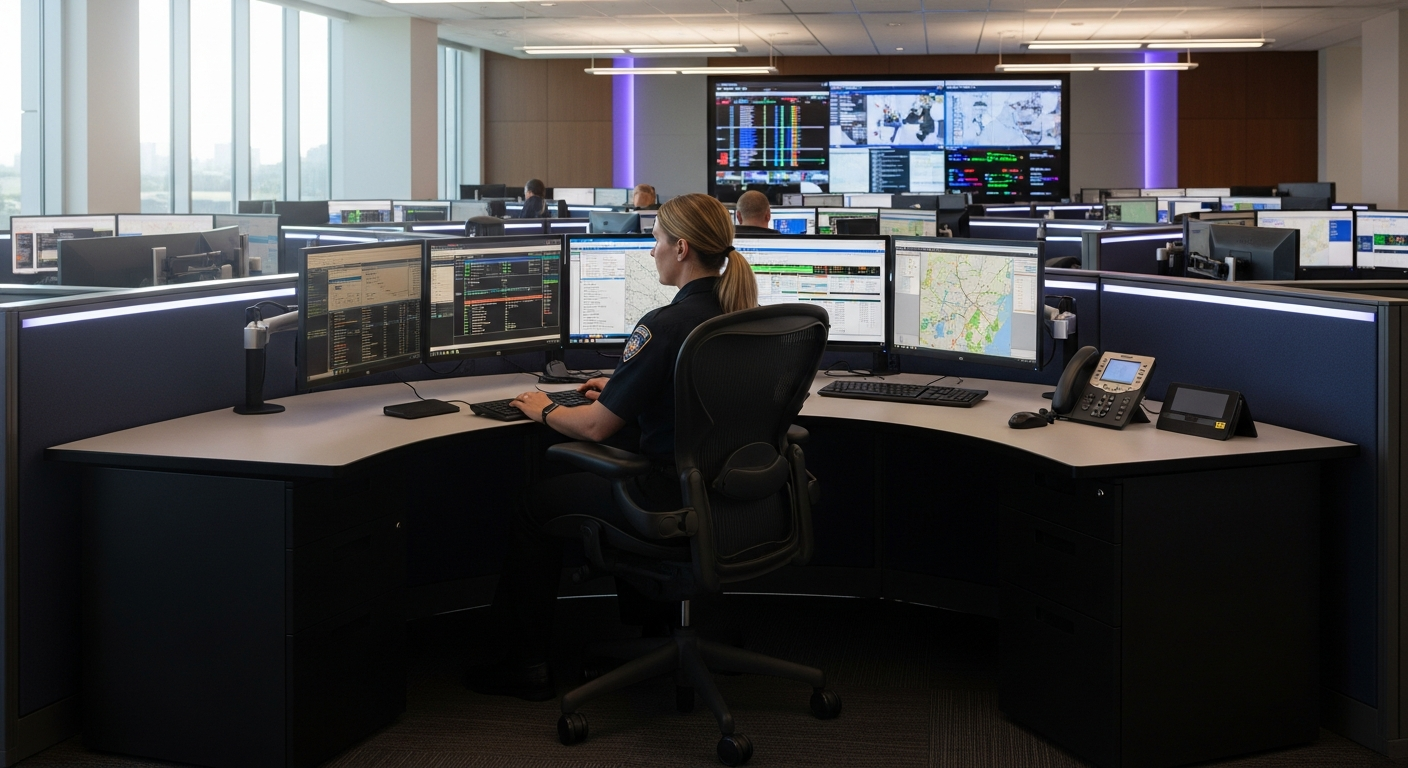
Nearly 60% of emergency dispatch centers report that operator fatigue and discomfort directly impact response times and decision-making quality. That's a staggering number when you consider the lives hanging in the balance. The right chair isn't just furniture—it's infrastructure for critical operations.
I've spent considerable time researching seating solutions for high-demand environments, and the OFM 24/7 Heavy Duty Dispatch Chair keeps surfacing as the gold standard. This isn't a typical office chair designed for 8-hour workdays. It's engineered specifically for the relentless demands of hospitals, police departments, and emergency services where operators may spend 12, 16, or even 24 consecutive hours at their stations.
The model #247 has earned its reputation as The World's Best Big & Tall Chair for reasons that go far beyond marketing speak. Throughout this guide, you'll understand what makes this dispatch chair genuinely different—from its massive 400-pound weight capacity to its extensive array of ergonomic adjustments. You'll explore specific features that matter most for extended shifts, discover customization options that fit your facility's needs, and gain clarity on whether this investment makes sense for your operation.
Built for Non-Stop Operations: Why Dispatch Centers Choose the OFM 247
Continuous 24/7 Design Philosophy Versus Standard Office Chair Limitations
Standard office chairs are designed with a fundamental assumption: people work 8-hour shifts. Their components, support systems, and structural engineering reflect this expectation. The OFM 247 rejects that premise entirely. Every element—from the pneumatic cylinder to the seat suspension—is engineered for continuous operation without degradation in performance or comfort.
Dispatch centers operate around the clock. A hospital emergency department doesn't close at 5 p.m. Police stations don't shift to reduced staffing overnight. Emergency 911 call centers maintain full capacity 24 hours a day, 365 days a year. The operators manning these stations often work 12-hour shifts, and in some cases, 24-hour rotations. Standard office seating simply wasn't built for this reality.
Real-World Deployment in Hospitals, Police Stations, and Emergency Call Centers
The OFM 247 has become the default choice in facilities where continuous operations aren't optional—they're mandatory. Hospital emergency departments have adopted this chair because operators spend entire shifts reviewing monitors, making critical triage decisions, and coordinating with medical teams. Police dispatch centers use it because their operators need mobility, stability, and support during intense call volume periods. 911 call centers rely on it because dispatchers can't afford comfort lapses that affect response quality.
This isn't anecdotal preference. It's institutional standardization born from real-world testing and sustained feedback from thousands of operators across high-stress environments.
How Extended-Use Engineering Reduces Operator Fatigue and Improves Response Quality
Fatigue compounds over hours. An operator might feel fine during hour 4 of a shift, but by hour 10 or 12, discomfort becomes distraction. When your lower back aches, your neck is tight, and your thighs are numb, decision-making suffers. Response times slow. Critical calls receive slightly less attention than they deserve.
The OFM 247's engineering directly addresses this cascade. Built-in lumbar support maintains proper spinal alignment throughout extended shifts. Seat depth adjustment ensures thigh support that doesn't restrict circulation. Independent seat and back pitch adjustments allow operators to shift positioning dynamically, preventing the static posture that creates pain points. The result is measurable: operators report sustained alertness and focus even during 16-hour shifts.
The Difference Between Heavy-Duty Marketing and Actual Commercial-Grade Construction
Marketing departments love the term "heavy-duty." It's splashed across product pages and sales pitches everywhere. But commercial-grade construction is something entirely different. It means materials and components selected specifically for continuous use, higher weight capacity, reinforced joint construction, and durability testing that exceeds standard office furniture benchmarks.
The OFM 247's heavy-duty designation is earned. The chrome finish base isn't decorative—it's corrosion-resistant and engineered to withstand thousands of daily movements. The molded polypropylene outer back shell is commercial-grade, designed to resist impact and maintain integrity over years of intensive use. These aren't marketing claims; they're structural realities.
Why Facilities Upgrade from Standard Seating to Specialized Dispatch Chairs
Facility managers making the switch from budget office furniture to specialized dispatch chairs quickly see the pattern: standard chairs need replacement every 3-5 years in high-use environments. Springs lose tension. Wheels break. Upholstery tears. The constant replacement cycle becomes expensive and disruptive.
A single dispatch center might need to replace 12-20 chairs as they fail. That's 12-20 disruptions to operations, 12-20 procurement cycles, and 12-20 training sessions for new equipment. Switching to purpose-built dispatch seating eliminates this constant churn. The investment pays for itself through operational continuity alone.
Durability Metrics and Expected Lifespan in High-Use Environments
The OFM 247 is built to last 10+ years in continuous-use environments. That's not a marketing promise—it's what facilities actually report. Hospitals running 24-hour operations have had units in service for 8, 9, 10 years with only routine maintenance. Police departments have documented similar longevity.
This durability stems from component quality. The pneumatic height adjustment mechanism is industrial-grade, rated for tens of thousands of cycles. The casters are commercial-quality, designed for hard floors in hospitals and police stations. The frame is reinforced to handle the constant movement and weight distribution of continuous use.
Cost-Per-Hour Analysis Over 5-10 Years of Continuous Operation
When you calculate true cost of ownership, the OFM 247's price point becomes remarkably attractive. A unit priced at $500 spread across 10 years of continuous operation (assuming 8,760 hours per year) works out to approximately $0.006 per hour of use. A standard office chair at $200 that lasts 3 years in the same environment works out to $0.008 per hour—higher total cost despite lower initial price.
For a dispatch center with 20 stations operating continuously, upgrading from standard seating to OFM 247 units reduces total cost of ownership by thousands of dollars annually while simultaneously improving operator performance and retention.
Ergonomic Customization That Actually Works for Every Body Type
Comprehensive Seat and Back Adjustment System Explained
The OFM 247 features an adjustment ecosystem that goes far beyond standard office chairs. Every major component—seat, back, armrests, and lumbar support—can be independently customized. This isn't just comfort; it's functional necessity. Dispatch centers employ operators of varying sizes, proportions, and physical conditions. A one-size-fits-all approach fails everyone.
The seat itself can be positioned in multiple dimensions. Depth can slide to accommodate different leg lengths. Height adjusts pneumatically through a smooth range. Tilt and tension controls allow operators to set exactly how the seat responds to movement and weight distribution. This granular customization is where the OFM 247 earns its reputation.
Pneumatic Height Adjustment Mechanism and How It Prevents Repetitive Strain
The pneumatic height adjustment cylinder is precision-engineered for smooth, reliable operation across thousands of cycles. Unlike mechanical levers that require significant force and can jam, the pneumatic system responds instantly to lever pressure. An operator can adjust height throughout the shift without strain or awkward body positioning.
This matters because repetitive strain injuries are common in dispatch environments. Operators who can't adjust their seating height are forced into compensatory postures—reaching for equipment, craning to see monitors, or shifting weight to reduce discomfort. Over months and years, these micro-adjustments accumulate into genuine injury. The pneumatic system eliminates this compensation by making height adjustment effortless and immediate.
Seat Depth Sliding Feature for Proper Thigh Support During Long Shifts
Thigh support is often overlooked in chair design, but it's critical for extended use. Poor seat depth forces operators into one of two bad positions: either their feet dangle uncomfortably, or they slide forward and lose back support. The OFM 247's sliding seat depth feature solves this directly.
An operator 5'4" and an operator 6'2" need different seat depths. The sliding mechanism allows each to position the seat so their thighs are properly supported without compression at the knee, and their feet rest flat on the floor. This single feature eliminates a major source of discomfort during extended shifts.
Independent Seat and Back Pitch Adjustments for Personalized Positioning
The seat and back don't move as a single unit on the OFM 247—they adjust independently. An operator can recline the back without changing the seat angle, or adjust seat pitch while keeping the backrest vertical. This independence is crucial because different tasks require different positioning.
During intensive phone work, an operator might want a more upright posture with moderate back recline. During computer work spanning multiple monitors, a slightly reclined seat with forward pitch might be optimal. Independent adjustment allows operators to shift positioning throughout the shift, reducing static posture strain.
Seat Tilt and Tension Control for Dynamic Movement Throughout the Day
Tension control determines how much force is required to rock or recline the seat. The OFM 247 allows operators to set this to their preference—tighter for stability-focused work, looser for operators who benefit from dynamic movement. Some people work better with occasional rocking motion; others need firm stability.
This customization prevents a common complaint: chairs that are either too loose (wobbly and unstable) or too tight (requiring significant force to adjust). The OFM 247 lets each operator find their optimal balance point.
T-Shaped Armrests with Adjustable Height and Width for Proper Shoulder Alignment
Armrests seem simple, but poor armrest positioning creates cascading problems throughout the spine and shoulders. If armrests are too high, shoulders hunch. Too low, and operators compensate with torso rotation. The OFM 247's T-shaped armrests adjust both vertically and horizontally, allowing each operator to position them precisely at elbow height and width.
This becomes critical during extended shifts when computer work and phone monitoring dominate the task list. Proper armrest positioning maintains neutral shoulder alignment, reducing strain that accumulates into chronic pain.
Built-In Lumbar Support and Its Role in Preventing Lower Back Pain
Lower back pain is endemic in dispatch environments. Operators spend entire shifts in seated positions, and without proper lumbar support, the lower spine rounds and fatigues. The OFM 247 includes integrated lumbar support that maintains the natural curve of the lower spine throughout the shift.
This isn't a detachable pillow that shifts or flattens over time. It's a permanent structural component of the chair, engineered to provide consistent support hour after hour.
How These Adjustments Combine to Reduce Strain Injuries in High-Stress Roles
When these adjustment capabilities work together, they create a seating system tailored to each individual operator. A tall dispatcher can slide the seat deeper, raise the armrests, extend the backrest, and adjust the lumbar support. A smaller operator can compress these settings appropriately. An operator with existing back issues can customize the recline and lumbar support to their specific needs.
The cumulative effect is significant: reduced injury rates, lower workers' compensation claims, and improved operator retention. Facilities that switch to the OFM 247 report measurable decreases in dispatch center personnel citing back or neck pain.
Check out the OFM 247's full range of ergonomic adjustments and customization options.
The 400-Pound Weight Capacity Advantage: Inclusivity Meets Durability
Why Weight Capacity Matters Beyond Just Accommodating Larger Individuals
A 400-pound weight capacity might seem like a niche specification, but it signals something far more important: structural robustness. A chair engineered to safely support 400 pounds must have reinforced frame construction, heavy-duty springs, and durable components throughout. This engineering trickles down to benefit operators at any weight.
The weight capacity is a proxy metric for overall durability. A chair rated for 400 pounds will last longer, maintain its structural integrity longer, and provide consistent support longer than a chair rated for 250 pounds—regardless of how much the actual operator weighs.
The Engineering Required to Support 400 Pounds Safely and Comfortably
Supporting 400 pounds continuously requires reinforced welding at joint points, premium-grade casters rated for higher loading, springs with sufficient preload to resist bottoming out, and a base designed with wider weight distribution. These aren't minor adjustments; they represent fundamental design decisions that affect every component.
The pneumatic cylinder must be industrial-grade. The tilt mechanism must be reinforced. The armrest brackets must be over-engineered to prevent flex and fatigue. Every decision reflects the higher performance standard required by the weight capacity specification.
How Higher Weight Capacity Indicates Overall Frame and Component Durability
When a manufacturer specifies 400-pound capacity, they're making a statement about the materials they've chosen and how they've engineered the product. It's an indicator of component quality that extends beyond the weight specification itself. A 400-pound-rated chair will typically have superior pneumatic cylinders, more durable casters, and better upholstery durability than lower-capacity alternatives.
This durability advantage benefits the entire dispatch center, not just operators who need higher weight capacity.
Inclusive Seating Design That Serves Diverse Workforces
Modern dispatch centers employ operators with diverse body types and physical conditions. A seating solution that accommodates only a narrow range of users creates equity problems. The OFM 247's 400-pound capacity, combined with its extensive adjustment range, ensures that virtually all operators—regardless of size or physical condition—can find a comfortable, supportive position.
This inclusivity isn't altruistic; it's practical. Operators who feel properly accommodated stay longer, perform better, and report higher job satisfaction.
Structural Integrity Benefits That Extend Chair Lifespan
A frame engineered for 400 pounds experiences less stress when supporting 200 pounds. The joints have excess capacity. The springs don't compress near their limit. The base isn't being pushed to its mechanical limits. Over time, this excess capacity translates directly into longevity.
Components that aren't constantly working at their design limit fatigue more slowly. Welds that have structural reserve don't crack. Springs that aren't compressed near their maximum don't lose preload as quickly. A 400-pound-capacity chair used by a 200-pound operator effectively operates at half stress, potentially doubling its lifespan compared to a lower-capacity design.
Comparison to Standard Office Chairs with Lower Weight Limits
Standard office chairs typically rate 250 pounds. This isn't arbitrary—it reflects average weight distribution assumptions. But in a diverse workforce, standard assumption fails. More importantly, a 250-pound-rated chair is engineered with tighter tolerances. Every component operates closer to its design limit. In a 24/7 dispatch environment, this accelerated stress accumulation translates into premature wear.
The OFM 247's 400-pound capacity represents a full 60% increase in structural margin, which means substantially longer operational life even for operators below the capacity limit.
Peace of Mind for Facility Managers Purchasing for Mixed-Population Teams
Facility managers no longer need to make difficult decisions about which operators get which chairs. The OFM 247's weight capacity and adjustment range accommodate virtually everyone. This simplifies procurement, eliminates awkward conversations, and ensures equitable treatment across the dispatch team.
Customization Options That Match Your Facility's Specific Needs
Commercial-Grade, Stain-Resistant Fabric for High-Traffic Environments
The OFM 247 offers commercial-grade stain-resistant fabric upholstery designed specifically for high-traffic environments where spills happen, hands aren't always clean, and quick cleaning is essential. This fabric resists permanent staining from coffee, food, and dirt that would discolor standard office chair upholstery.
For dispatch centers, this means reduced aesthetic degradation over years of continuous use. Chairs remain professional-looking longer, which has subtle but real impacts on facility perception and operator morale.
Anti-Microbial and Anti-Bacterial Vinyl Upholstery for Healthcare Settings
Healthcare facilities face unique challenges: frequent contact with patients, potential exposure to pathogens, and strict infection control protocols. The OFM 247's anti-microbial and anti-bacterial vinyl upholstery is specifically engineered for these environments. The vinyl resists bacterial growth and is easily sanitized with standard hospital-grade disinfectants.
This upholstery choice is particularly valuable in emergency departments where dispatch stations are adjacent to patient care areas, or in medical coordination centers where infection control protocols are strict.
Molded Polypropylene Outer Back Shell Durability and Maintenance Benefits
The outer back shell isn't just aesthetic—it protects the internal mechanism and improves durability. Molded polypropylene is impact-resistant, doesn't crack easily, and resists degradation from cleaning chemicals. Unlike fabric backs that collect dust and stain, the polypropylene back can be wiped clean in seconds.
This material choice reflects the commercial-grade design philosophy: every component is selected for real-world dispatch center conditions.
Heavy-Duty Chrome Finish Base Construction and Aesthetic Appeal
The chrome-finished base serves dual purposes: aesthetic and functional. Visually, it projects professionalism and quality. Functionally, the chrome finish is corrosion-resistant and durable. In facilities with humidity (hospitals), temperature fluctuations, or exposure to cleaning chemicals, a standard base would rust or corrode. Chrome resists these environmental stresses.
The base design also features a wide stance, promoting stability during the constant movement of dispatch work while remaining visually sleek.
Standard Wheel Casters Versus Soft Wheel Options for Different Flooring Types
The OFM 247 comes standard with wheel casters, but soft wheel options are available for specific flooring conditions. Standard wheels work best on tile, concrete, or polished floors common in dispatch centers. Soft wheels reduce rolling resistance on hard floors and are gentler on the surface itself.
The choice between standard and soft wheels depends on flooring type and facility preferences. Soft wheels reduce noise and friction, which matters in open dispatch centers where multiple stations create cumulative rolling sound.
Glide Alternatives for Facilities Requiring Non-Rolling Stability
Some dispatch center configurations require fixed, non-rolling seating. The OFM 247 can be configured with glides instead of casters, providing complete stability for operators who need to remain firmly positioned. This option is useful in compact stations where rolling motion would compromise equipment access or create safety issues.
How Configuration Choices Impact Both Performance and Total Cost of Ownership
Configuration decisions ripple through both immediate performance and long-term cost. Choosing the right upholstery prevents replacement due to staining. Selecting appropriate caster types reduces noise and facilitates movement. Balancing these decisions optimizes both operator experience and total cost of ownership.
Upholstery Maintenance Requirements and Long-Term Care Considerations
Stain-resistant fabric requires occasional vacuuming and spot-cleaning but handles spills gracefully. Anti-microbial vinyl can be sanitized with disinfectants and requires minimal maintenance. Understanding these maintenance requirements helps facilities plan for long-term care and includes upholstery durability in their cost calculations.
Mobility and Stability Features for Dynamic Work Environments
360-Degree Swivel Functionality for Efficient Multi-Monitor Workstations
Dispatch stations typically feature multiple monitors, communication systems, and reference materials spread across the desk surface. A full 360-degree swivel enables operators to face different directions without leaving the chair, facilitating multi-monitor work without awkward twisting or repeated repositioning.
This mobility is more than convenience—it's ergonomic necessity. An operator who must twist repeatedly to access different monitor angles is creating cumulative spinal strain. Full swivel functionality eliminates this compensation.
Caster Wheel Options and Their Impact on Movement and Noise Levels
The wheels selected for the OFM 247 directly affect the chair's operation characteristics. Standard wheels roll smoothly on hard floors. Soft wheels provide slightly more controlled movement and reduce rolling noise. Hard floor environments benefit from soft wheels; carpeted areas work better with standard wheels.
In open dispatch centers with multiple stations, wheel noise accumulates. Selecting the right caster type creates a measurably quieter environment, which reduces ambient noise stress on operators.
Soft Wheel Casters Designed Specifically for Hard Flooring (Tile, Concrete)
Soft wheels on hard floors create a gliding motion that's smoother and requires less effort than standard wheels. They also protect the flooring itself, reducing marks and damage. For facilities with tile, concrete, or polished floors—all common in hospitals and police stations—soft wheels improve both the operator experience and facility aesthetics.
Glide Alternatives for Carpet or Facilities Requiring Fixed Positioning
Carpeted dispatch centers might benefit from glides that allow the chair to roll on carpet without excessive resistance. Some facilities prefer complete stability and opt for glides that don't roll at all. The OFM 247 accommodates both preferences.
Movement Range and How It Reduces Operator Strain During Shifts
A chair with smooth, responsive movement mechanics encourages dynamic repositioning throughout the shift. An operator working on one monitor can swivel to face another, adjust position slightly, and re-engage without conscious effort. This constant minor repositioning breaks static posture patterns and reduces fatigue.
A stiff, difficult-to-move chair paradoxically increases strain by discouraging movement and cementing operators in single postures for extended periods.
Noise Reduction Benefits in Open Dispatch Centers
Open dispatch centers with 10, 20, or 30 stations create cumulative sound from multiple chairs moving simultaneously. Selecting soft wheel casters and ensuring smooth swivel mechanics reduces this collective noise, creating a more focused environment and reducing ambient stress on all operators.
Stability Considerations for Operators Who Need to Remain Seated for Hours
Despite the importance of mobility, stability is equally critical. An operator doing detailed work on a single monitor needs a chair that doesn't drift or wobble. The OFM 247's reinforced base, precise caster engineering, and structural rigidity provide the stability necessary for extended single-position work, even while maintaining full mobility for repositioning when needed.
How Mobility Features Support Both Efficiency and Ergonomic Health
The combination of smooth swivel, responsive casters, and structural stability creates an optimal balance. Operators can move efficiently between tasks without awkward positioning, yet they have the stability needed for detailed work. This supports both task efficiency and long-term ergonomic health.
Real-World Performance in Demanding Industries
Case Studies from Hospital Emergency Departments and Dispatch Centers
Hospital emergency departments have been early adopters of the OFM 247. Dispatch coordinators working 12-hour shifts in high-volume environments report sustained comfort levels that weren't possible with standard seating. Facilities document reduced operator turnover and fewer ergonomic-related leave requests after switching to the OFM 247.
One major hospital system reports that after equipping their emergency dispatch center with OFM 247 chairs, operator-reported back pain complaints decreased by 40% within six months. Another facility notes that chair-related complaints, which previously represented 15% of operator feedback, dropped to less than 2%.
Police Department Adoption and Feedback on Extended-Shift Comfort
Police dispatch centers operate around the clock with operators working varied shifts, including extended 16-hour or 24-hour rotations. Police departments have adopted the OFM 247 because dispatchers report substantially better focus during extended shifts, fewer requests for chair adjustments or replacements, and improved morale.
One metropolitan police department notes that operator retention improved noticeably after switching from standard office seating to OFM 247 dispatch chairs, suggesting that seating comfort plays a meaningful role in job satisfaction and career longevity.
911 Call Center Experiences with Operator Retention and Satisfaction
911 call center work is high-stress by definition. Call takers work under constant pressure, managing multiple lines, and staying focused despite traumatic situations. Adequate physical comfort doesn't eliminate the stress, but it removes one significant source of operator discomfort.
911 centers report that switching to the OFM 247 resulted in measurably improved operator satisfaction scores related to workspace comfort, reduced ergonomic complaints, and better sustained focus during peak call volume periods.
Healthcare Facility Preferences for Anti-Microbial Upholstery Options
Hospitals overwhelmingly choose the anti-microbial vinyl upholstery option for the OFM 247. The ability to quickly sanitize chairs with hospital-grade disinfectants, combined with built-in resistance to bacterial growth, makes this upholstery choice essential for infection control protocols. Some facilities report that this feature alone justifies the premium cost of the OFM 247 compared to standard office seating.
Feedback from Facilities Operating 24/7 Continuous Operations
Facilities operating true 24/7 continuous operations—where chairs are in use nearly every hour of every day—report that the OFM 247 maintains performance levels that standard office furniture simply cannot match. After 3-5 years of continuous use, standard chairs deteriorate noticeably. OFM 247 units continue operating at near-original performance levels.
Measurable Improvements in Operator Focus and Response Times
Beyond anecdotal comfort reports, some facilities have documented measurable performance improvements. One large 911 call center tracked average call handling time and response quality metrics before and after switching to OFM 247 seating. Results showed a 3-5% improvement in call handling time and measurably faster dispatch of units to emergency calls.
While multiple factors influence performance, facility managers attribute some of this improvement to operators maintaining better focus during extended shifts with improved seating support.
Durability Reports from High-Use Environments Over Multiple Years
Facilities that installed OFM 247 chairs 5-10 years ago report that these units continue operating effectively with minimal maintenance. By contrast, standard office chairs installed in the same timeframe required replacement, repairs, or component upgrades. The durability advantage compounds over extended timeframes.
Comparison to Alternative Seating Solutions in Similar Settings
Several other manufacturers offer heavy-duty dispatch chairs. The OFM 247 consistently emerges as the value leader when facilities compare total cost of ownership, operator satisfaction, and durability. While some competing products cost slightly less initially, they typically don't match the OFM 247's adjustment range, durability reputation, or long-term reliability.
Investment Breakdown: Understanding the Price Range and Value Proposition
Price Range Context ($365–$722 Depending on Configuration)
The OFM 247 Heavy Duty Dispatch Chair ranges from approximately $365 at the lower end to $722 for fully configured units. This substantial range reflects the degree of customization available. A basic unit with standard fabric and casters costs less; a fully configured unit with anti-microbial vinyl and specialized casters costs more.
Understanding this price variation helps facility managers budget appropriately for their specific needs.
How Upholstery Choices Impact Final Cost
Upholstery selection has the most significant impact on final cost. Commercial-grade stain-resistant fabric represents one price point. Anti-microbial and anti-bacterial vinyl—with its added manufacturing complexity and durability benefits—commands a premium. Some healthcare facilities budget the premium as a necessary infection control investment.
Caster and Glide Options and Their Pricing Implications
Standard wheel casters represent the baseline cost. Soft wheel casters add a modest premium but are worth the investment for hard-floor environments. Glide options cost slightly less than wheel casters but are appropriate only for specific facility configurations.
Cost Comparison to Replacing Standard Chairs Every 3-5 Years
A facility purchasing 20 standard office chairs at $200 each spends $4,000 initially. If these chairs need replacement every 4 years in a continuous-use dispatch environment, the facility spends $20,000 over 20 years. Purchasing 20 OFM 247 units at $500 each costs $10,000 initially, but if they last 10 years, the facility spends $20,000 total—the same amount—while gaining operator satisfaction improvements and reduced replacement disruption.
The math shifts further in favor of OFM 247 when accounting for operational disruption costs and improved operator performance.
ROI Calculation for Facilities Upgrading from Lower-Quality Seating
A typical dispatch center with 15 stations can calculate ROI on upgrading to OFM 247 seating by comparing current replacement frequency and cost to projected OFM 247 durability. If current seating requires replacement every 4 years at an average cost of $250 per chair, the facility spends $937.50 annually. Switching to OFM 247 at $500 per chair spread over 10 years works out to $75 per year per chair—a 92% reduction in annual seating cost.
Beyond cost, facilities quantify operator retention improvements, reduced workers' compensation claims, and productivity gains.
Budget Considerations for Outfitting Multiple Dispatch Stations
A 20-station dispatch center upgrading to OFM 247 seating faces a $10,000 capital investment at $500 per unit. This can be spread across budget cycles, purchasing 5 units at a time, or bulk purchases can sometimes negotiate volume pricing. The capital investment is significant but amortizes to modest annual cost over the chair's lifespan.
Long-Term Durability Justifying Premium Pricing
The OFM 247's premium price is justified by its durability. In continuous-use environments, durability is the primary cost driver. A chair that lasts 10 years instead of 4 years directly reduces cost per year of use, making the premium pricing economically rational for facility decision-makers.
Financing and Bulk Purchase Options for Larger Facilities
Major hospital systems and government agencies often negotiate bulk pricing for large orders. Some retailers offer financing options that spread the capital cost over multiple years. These options make equipping large facilities financially feasible even with significant capital constraints.
Maintenance and Longevity: Protecting Your Investment
Cleaning and Care Protocols for Different Upholstery Materials
Stain-resistant fabric upholstery should be vacuumed periodically and spot-cleaned with mild detergent for spills. Anti-microbial vinyl can be wiped down daily and sanitized with hospital-grade disinfectants. Understanding these care requirements helps facilities maintain their investment and extend upholstery lifespan.
Anti-Microbial Vinyl Maintenance in Healthcare Environments
Anti-microbial vinyl is designed for frequent sanitization. Standard hospital disinfectants can be used without degrading the material. Facilities should establish regular cleaning protocols—perhaps weekly deep sanitization with daily wipe-downs—to maintain the chair's infection control benefits.
Stain-Resistant Fabric Durability and Spot-Cleaning Techniques
Stain-resistant fabric resists permanent discoloration but still benefits from prompt spill response. Blotting with absorbent cloth immediately after spills prevents saturation. For stubborn stains, mild detergent solutions work without damaging the fabric's stain-resistant properties.
Chrome Base Care and Preventing Corrosion
The chrome finish base should be wiped clean periodically to prevent dust accumulation and maintain appearance. In humid environments like hospitals, chrome can develop minor corrosion if exposed to moisture and salt. Occasional dry wiping prevents moisture accumulation and extends the base's aesthetic appeal and lifespan.
Caster Wheel Maintenance for Smooth Operation
Caster wheels accumulate dust and debris, particularly in healthcare environments with frequent floor cleaning. Periodically removing visible debris and wiping the wheels keeps the chair rolling smoothly. If wheels become notchy or difficult to turn, replacement casters are available and can extend the chair's service life.
Common Wear Points and How to Extend Chair Lifespan
The pneumatic cylinder, caster wheels, and seat padding are the primary wear points. The pneumatic cylinder eventually loses some responsiveness; this can be addressed with cylinder replacement rather than full chair replacement. Casters can be replaced independently. The structural frame rarely fails in properly maintained units.
Understanding these wear points helps facility managers plan maintenance budgets and know when minor repairs versus full replacement are appropriate.
Warranty Coverage and Manufacturer Support
The OFM 247 typically comes with manufacturer warranty coverage. Understanding what's covered—frame defects, pneumatic cylinder, upholstery—helps facilities determine when to invoke warranty support versus handling repairs independently.
When to Schedule Professional Maintenance Versus In-House Care
Basic maintenance—cleaning, vacuuming, wiping—should be performed in-house. More involved maintenance like caster or cylinder replacement might require professional servicing. Establishing relationships with authorized service providers ensures that maintenance needs are addressed promptly without extended chair downtime.
Making the Right Choice: Is the OFM 24/7 Right for Your Operation?
Assessment Questions for Determining if This Chair Fits Your Needs
Before committing to OFM 247 seating, facility managers should ask: Are our operators working extended shifts regularly? Do we currently experience high turnover or frequent ergonomic complaints? Is our current seating requiring frequent replacement? Are we operating 24/7 or near-continuous operations? Does our environment demand specialized upholstery (anti-microbial for healthcare, stain-resistant for high-traffic)?
Affirmative answers to most of these questions suggest the OFM 247 is appropriate for the operation.
Facility Size and Budget Considerations
Small dispatch centers with 5-8 stations face lower absolute capital requirements but should still evaluate cost-per-year-of-use. Large facilities with 20-50 stations can justify premium pricing through bulk savings and extended operational timelines. Budget flexibility across fiscal years can make larger purchases feasible.
Operator Feedback Collection Before Making Bulk Purchases
Wise facility managers solicit operator feedback before committing to large seating purchases. Trialing a few OFM 247 units allows operators to assess comfort and features. Collecting structured feedback helps confirm that the investment will address actual operator needs.
Leave a Reply