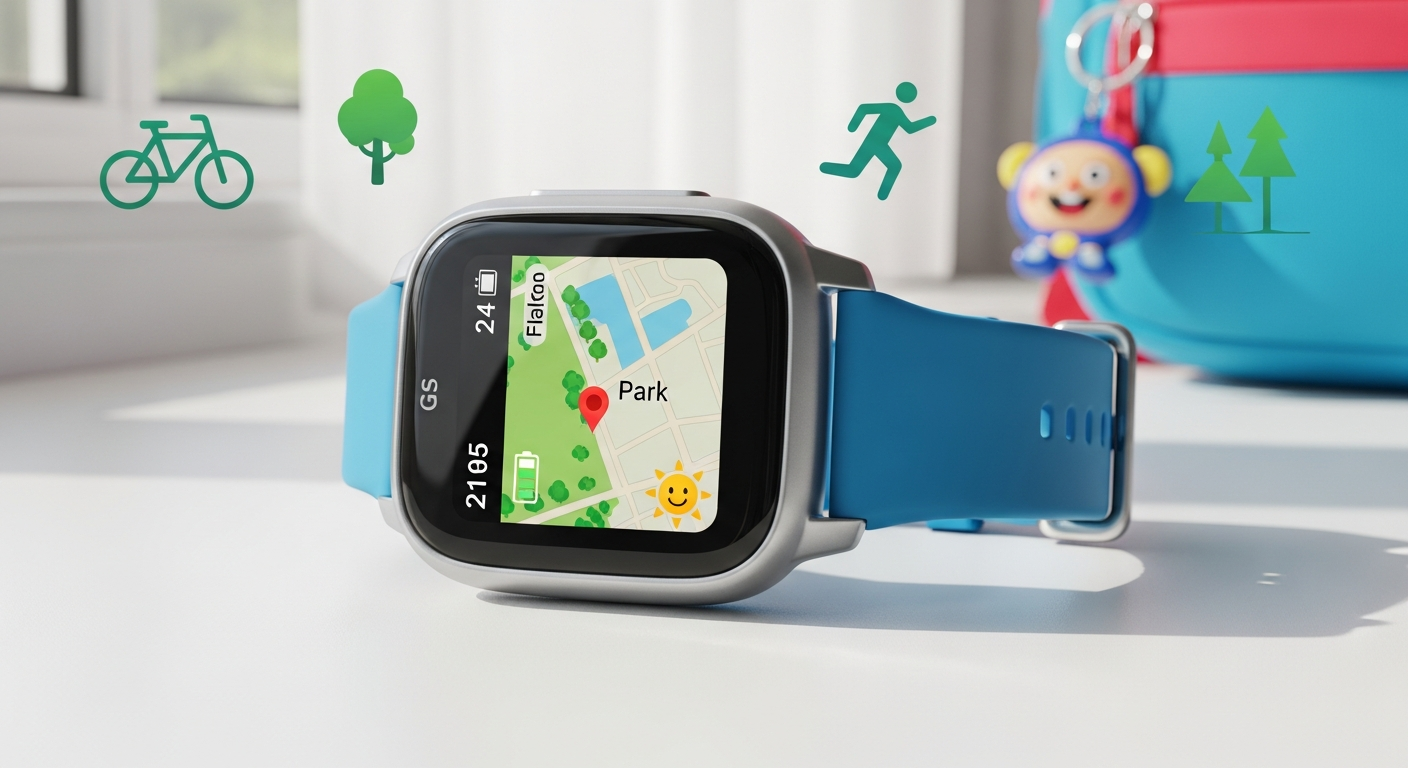
Independence Without Distraction: The One2track Connect NEXT GPS Watch Explained
Over 200,000 families face the same parenting crossroads: how do you give your child independence without handing them a smartphone loaded with games, social media, and endless distractions? The One2track Connect NEXT GPS Watch offers a refreshingly different answer to this modern dilemma. Rather than forcing you to choose between safety and freedom, this purpose-built smartwatch combines real-time location tracking, direct communication, and a deliberately distraction-free experience.
Designed specifically for children aged 6 and above, it's built on One2track's proprietary I-GPS technology and backed by secure European data centers. The watch strips away the noise that smartphones bring while keeping the essentials parents actually need: knowing where their child is, staying in constant contact, and responding to emergencies within seconds.
Explore the One2track Connect NEXT and see how it transforms family independence today.
The Independence Paradox—Why Parents Choose Focused Wearables Over Smartphones
The tension between safety and freedom defines modern parenting. Children need room to grow, to take calculated risks, to discover their neighborhoods and build confidence. Yet the moment you hand over a smartphone, you're opening a door to endless scrolling, peer pressure, and algorithmic manipulation designed by teams of engineers with no stake in your child's wellbeing.
Smartphone addiction rewires developing brains. Studies show that excessive screen time during childhood correlates with anxiety, depression, and fragmented attention spans. Beyond the neurological impact, there's the constant parental anxiety: what's your child accessing? Who are they talking to? How many hours are they spending in apps designed to be maximally addictive?
The demand for communication devices that exclude gaming and social media reflects a fundamental shift in how thoughtful parents approach technology. They're not rejecting connectivity—they're rejecting distraction masquerading as communication. A device that lets your child call you, text you, and share their location is genuinely useful. A device that does those things plus offers TikTok, Instagram, and infinite games is a Trojan horse.
One2track's distraction-free philosophy speaks directly to this reality. The Connect NEXT has no app store, no games, no social feeds. What it has instead is purpose: communication, location sharing, and emergency contact. For families who've spent months dreading the "when can I have a phone" conversation, this watch offers an honest middle ground.
The psychological benefits of giving children autonomy within safe boundaries are profound. Research in developmental psychology shows that children thrive when they experience age-appropriate independence. A GPS watch creates what researchers call "independent exploration with a safety net"—your child can walk to a friend's house, ride their bike further from home, or navigate their school's campus with the knowledge that you're a call away and you know exactly where they are.
Real-world scenarios make this concrete. Your 9-year-old walks to school for the first time. With the Connect NEXT, they have a phone in their wrist, you can see their route in real-time, and they can alert you instantly if something feels wrong. Your 11-year-old goes to an after-school soccer practice. You don't need to wait in the parking lot anymore—you can see when they leave the field, and they can call you when practice ends. These aren't hypothetical benefits; they're the actual moments when parents report the watch pays for itself emotionally.
Tracking Technology That Actually Works—Inside the I-GPS System
Standard GPS watches rely on a single signal source, which creates accuracy problems, especially indoors. One2track's proprietary I-GPS system combines three data streams: traditional GPS satellites, GSM cellular signals, and Wi-Fi networks. The result is something closer to actual accuracy in the messy, complex environments where children actually spend their time.
Real-time location updates refresh at regular intervals, allowing parents to track their child's movement throughout the day. The One2track app shows position on a map, updated frequently enough to give you genuine situational awareness without constant battery drain.
Compared to standard GPS-only watches, I-GPS significantly reduces the accuracy degradation that happens indoors or in urban canyons where tall buildings block satellite signals. When your child is at school, inside a shopping mall, or walking through downtown, the I-GPS system draws on Wi-Fi and cellular data to triangulate position. This multi-source approach is why One2track stands apart from cheaper alternatives that rely solely on GPS.
The reported accuracy margins range from 5 to 40 meters depending on conditions. In clear outdoor spaces, you're typically looking at the tighter end of that range. In dense urban areas or inside buildings, accuracy widens somewhat. For the purpose of knowing whether your child is at school, at home, or somewhere else on the route, this level of accuracy is more than sufficient. If you're counting on meter-by-meter precision, any GPS system will disappoint you; if you're looking for "is my child in the right general location," I-GPS performs reliably.
Geofencing creates custom safe zones—home, school, sports fields, grandparents' house—anywhere that matters to your family. When your child enters or exits a geofence, you receive an instant alert. Your 10-year-old arrives at soccer practice? You get a notification. They leave school at an unusual time? Alert. This feature transforms the watch from passive tracking into proactive safety monitoring. Parents report that geofencing eliminates a significant portion of daily parental anxiety; instead of wondering when their child has arrived somewhere, they simply know.
Technical performance varies by environment. In suburban neighborhoods with moderate building density and good cellular coverage, the Connect NEXT performs exceptionally well. In dense urban areas, performance remains solid but occasionally experiences the accuracy widening mentioned earlier. Rural environments with spotty cellular coverage rely more heavily on GPS, which can increase response time but generally still functions adequately. The system is designed to work everywhere families actually live.
Communication Features Built for Kids (Not Social Scrolling)
The 4G video calling and regular calling capabilities connect your child to a pre-set list of trusted contacts. This is intentionally restrictive by design. Your child cannot call random numbers or build an expanding contact list with peers they've recently met online. They can call Mom, Dad, Grandma, and the emergency contact you've designated. That simplicity is the entire point.
Messaging functionality exists as text-based contact, not as a social platform. Messages go to the same pre-set contacts—no group chats, no message threads with classmates, no opportunity for peer pressure dynamics to unfold in digital space. Your child can send a message saying they'll be late getting home; they cannot get pulled into endless back-and-forth conversations about who said what to whom.
The emergency SOS button provides a direct line to pre-set emergency contacts with a single press. In a moment of genuine distress—a fall, a threatening situation, a medical emergency—your child doesn't need to remember a phone number or navigate a phone interface. They press the button. You get an alert that includes their location. You call them back immediately. This feature matters most in situations where seconds count, and it functions as intended.
School mode silences the watch during class hours, eliminating the temptation to check messages or take calls during instruction. Teachers report that students with GPS watches often have better classroom focus because the device literally cannot distract them during designated times. This built-in boundary helps children maintain attention without relying solely on willpower.
The address book and contact management functions are entirely parental-controlled. You decide who can reach your child. This prevents the scenario where your child's GPS watch number gets shared in a group chat and suddenly receives messages from every classmate. The device stays connected to the people you've vetted, period.
The One2track App Experience—What Parents Actually See and Control
The parent-facing app is where the watch becomes genuinely useful. The dashboard layout shows a map interface with your child's current location, displayed clearly without unnecessary complexity. You see their position, the accuracy radius of that position, and a timestamp showing how recent the location data is.
Setting up and managing geofence alerts happens through straightforward controls. You draw zones on the map—a circle around home, around school, around after-school activities—and receive notifications when your child crosses those boundaries. Multiple zones allow for granular tracking of different parts of your child's routine.
Communication history logs all calls and messages sent through the watch. This creates a record of your child's interactions without invasive monitoring. You're not reading private conversations between friends; you're seeing that your child called you at 3:45 PM and texted at 4:20 PM.
Activity tracking includes a step counter and basic health metrics like daily activity levels. These features add utility without veering into gamification or creating obsessive tracking behaviors. Your child isn't trying to beat a friend's step count; the data is simply there if you want to check it.
Weather updates and other contextual information round out the functionality, providing your child with practical information they might need as they move through their day.
Ease of setup and daily usability directly impact whether families actually stick with the device long-term. The One2track app installs easily on iOS and Android devices, account creation takes minutes, and adding your child's watch to your account involves straightforward pairing steps. The interface avoids complexity; most parents navigate it intuitively within their first session. Daily usability is low-friction—you open the app when you want location information, or you receive notifications automatically when alerts trigger.
Get started with One2track's intuitive parent dashboard and experience real-time family connectivity.
Subscription Plans and Hidden Costs—Breaking Down the Numbers
The prepaid plan structure works on a simple model: you pay for the data and communication services you actually use, with a small monthly keep-alive fee (around €1.25-€1.40) that maintains the SIM card activation. This option appeals to families whose children don't communicate through the watch constantly. A child who uses the watch primarily for location sharing and occasional calls might generate minimal monthly costs.
The Unlimited plan costs €7.95 per month and includes unlimited calls, video calls, and data. This option makes sense for families where the watch becomes the primary communication tool for their child or where the child regularly uses video calling features.
The pre-installed 4G SIM card from One2Mobile comes ready to activate. Setup involves a straightforward process through the One2track app, and activation happens within minutes rather than requiring a trip to a carrier store or waiting for SIM card delivery.
Cost comparison depends on usage patterns. A child who primarily uses the watch for location tracking and calls you once or twice per day might spend €15-20 per month (prepaid plan plus usage fees). A child who actively uses video calling and messaging might reach €8 per month with the unlimited plan. A family with two children doubles these costs.
Whether the monthly fee feels justified or like a hidden cost depends on perspective. The SIM card and cellular connectivity aren't free; carriers charge One2track for network access, and One2track passes reasonable costs to users. However, some families view even small monthly fees as unexpected after paying for the hardware. Comparing the cost to an alternative (a basic phone on a family plan) often clarifies that One2track's fees are genuinely economical.
Long-term affordability for families with multiple children is worth calculating. The hardware cost stays the same per device (€94-€105), but subscription costs multiply. A family with three children on unlimited plans pays nearly €24 monthly for connectivity—which is actually competitive with providing three basic phones on a family plan.
Privacy and Data Security—Why European Parents Trust One2track
Secure Dutch data center storage means your child's location history and communication data reside in a single jurisdiction with strict privacy protections. Unlike American tech companies that store data across global cloud networks, One2track maintains centralized control of all user information.
GDPR compliance isn't optional in the EU; it's legally mandated. One2track's infrastructure meets these standards, meaning your child's data receives the legal protections that Europeans have voted for through their governments. This matters practically: European law gives you rights to access your child's data, correct inaccuracies, and understand exactly how it's used.
European privacy standards differ fundamentally from international alternatives. American tech companies operate under legal frameworks that permit selling user data to advertisers, combining datasets across services, and accessing data at government request with minimal notice. One2track operates under fundamentally different legal constraints.
Child location data is encrypted in transit and at rest, preventing interception or unauthorized access. The encryption standards One2track employs are industry-standard military-grade specifications, not proprietary or weaker alternatives.
Transparency in data collection and parental controls means you understand exactly what's being tracked, how it's stored, and who has access. The One2track privacy policy is available in plain language (not hidden in dense legal text), and the company provides clear documentation of what data parents can access regarding their child's device usage.
One2track's commitment to not selling user data distinguishes it from many tech companies. The company's revenue comes from subscription fees, not from selling behavioral data to advertisers. This creates an incentive structure aligned with user privacy rather than against it.
Peace of mind for privacy-conscious families translates into genuine value. Parents who have concerns about mega-tech companies accumulating location history on their children find the One2track approach fundamentally different.
Design, Battery Life, and Everyday Practicality
The touchscreen color display is visually appealing enough that children actually want to wear the watch, which seems like a minor point until you realize that a device your child refuses to wear provides zero value. The screen is bright enough to read in sunlight, responsive to touch, and large enough for children's fingers to interact with reliably.
The lightweight, durable design suits active children. The watch doesn't feel like a burden on a young wrist, and the materials withstand the rough handling children naturally subject devices to.
Water resistance means the watch survives splashes, rain, and the occasional submersion in a swimming pool or water fountain. This isn't marine-grade waterproofing (you're not bringing this diving), but it's robust enough for the real environments children inhabit.
Battery life expectations center around 1-2 days of typical use before requiring a charge. This means your child needs to charge the watch nightly—a reasonable expectation that becomes part of the bedtime routine. Some families use this as a built-in boundary: the watch charges overnight, so evening communication happens directly rather than through the device.
Strap options and sizing accommodate different age groups, from 6-year-olds with slim wrists to pre-teens. Replacement straps are available inexpensively, which matters because straps get worn, damaged, or outgrown.
Comfort for all-day wear without irritation requires a decent strap and appropriate sizing. The Connect NEXT handles this well; children report wearing the watch continuously without discomfort or skin irritation.
When the One2track Connect NEXT Makes Sense—And When It Doesn't
Ideal use cases clearly include first independent outings—when a child walks to school for the first time or takes their first solo trip to a friend's house. The watch provides genuine reassurance that works.
School commutes represent another practical use case. Your child travels to and from school independently; you see their route and receive notification when they arrive and leave.
After-school activities create situations where the watch shines. Your child attends soccer practice, music lessons, or after-school clubs. You don't need to drive them and wait or to wonder when they'll call for pickup. You see when activities end and they can contact you when ready.
Age-appropriate scenarios matter. A 6-year-old using the watch is typically under close parental supervision anyway; the watch supplements in-person monitoring. A 10-year-old using the watch bridges the gap between constant supervision and unsupervised activity. A 14-year-old probably needs something different; they may be ready for more autonomy than the watch enables.
Families who benefit most from distraction-free communication are those with values around childhood, screen time, and developmental priorities. If your family consciously limits smartphones and prioritizes face-to-face interaction, this watch aligns perfectly with those values.
Situations where a full smartwatch might be necessary instead emerge when your child needs fitness tracking capabilities, wants to engage with a broader app ecosystem, or is approaching the age where they'll need genuine smartphone functionality for school projects, online learning, or social connection with peers.
Limitations compared to general-purpose smartwatches are significant. The Connect NEXT does one thing brilliantly—communication and location tracking. It doesn't do the hundred other things modern smartwatches attempt. If you're looking for a device that does everything, this isn't it.
Budget considerations involve balancing the hardware cost (€94-€105) against the monthly subscription fees (€1.25-€7.95). For a family where the watch will replace a smartphone or where the child will use it for several years, the total cost of ownership is quite reasonable. For a family trying the watch as an experiment, the monthly fees might feel excessive.
Real Limitations Worth Considering Before You Buy
GPS accuracy concerns and reported discrepancies represent the most significant technical limitation. Users report inaccuracies ranging from 5 to 40 meters depending on conditions. In most situations, this matters little; knowing your child is within 40 meters of where you expect them is genuinely useful. In some scenarios—trying to locate your child in a crowded mall, for example—wider accuracy becomes frustrating. Understanding this limitation prevents disappointment.
Monthly costs add up over time, even with prepaid plans. A family with one child on the prepaid plan might spend €150-200 per year on connectivity. A family with two children on unlimited plans might spend €180+ per year. These aren't enormous figures, but they're not negligible either.
Lack of app ecosystem compared to mainstream smartwatches is intentional, but it's still a limitation if your child wants more functionality. There's no app store, no third-party software, no ability to customize the watch beyond configuration options.
Screen size and interface constraints for younger children create challenges. A 6-year-old with smaller hands might struggle with the touchscreen interface, though age 7-8 and up typically navigate it without issue.
Limited fitness tracking compared to adult smartwatches means you're not getting detailed health metrics, advanced workout logging, or sophisticated activity analysis. The step counter is basic; serious athletes outgrow its functionality quickly.
Potential for children to lose or damage the device is real. The watch is relatively affordable (not thousands of euros), but it's also something a child might misplace, drop, or sit on. Parents should discuss device care and establish a plan for replacement costs.
Setting Up and Getting Started—What to Expect on Day One
Unboxing and initial device activation steps begin the moment you open the box. The watch arrives pre-configured with a SIM card installed, so there's no SIM-related setup. You charge the device (usually arriving partially charged), power it on, and begin pairing it with your phone.
One2track app installation happens through your device's app store. Download the app to your phone, create an account, and authenticate.
Adding contacts and setting up emergency SOS recipients involves entering phone numbers for people your child should be able to contact. These are typically parents, grandparents, and possibly a neighbor or trusted adult. Emergency SOS recipients might include these same people plus perhaps a school administrator or another trusted contact.
Configuring geofence zones for home, school, and other locations is done through the app's map interface. You're essentially drawing circles on a map and naming them. Straightforward work that takes ten minutes.
Teaching your child to use the watch independently requires showing them how to make calls, access their contact list, send messages, and trigger the emergency button if needed. A practice call or two typically takes care of this; the interface is intuitive enough that most children learn quickly.
First-week troubleshooting and support resources are available through One2track's customer support channels. Most issues resolve quickly; common problems include connectivity on weak networks (normal behavior, not a device issue) or initial geofence configuration (easily adjusted).
Giving Your Child Freedom Without Sacrificing Peace of Mind
The One2track Connect NEXT GPS Watch occupies a unique space in the parenting toolkit. It's not trying to be everything—and that's precisely why it works so well for families who want to foster independence without handing over a gateway to digital distraction. Real-time tracking, direct communication, and a deliberately focused experience create a foundation of safety that lets children explore their world with confidence.
Yes, there are trade-offs. The GPS accuracy isn't perfect, the monthly fees add up, and you won't get the bells and whistles of a full smartwatch. But for parents navigating the tension between letting go and staying connected, those compromises often feel like acceptable ones. Over 200,000 families have already made this choice—and they're reporting that the peace of mind is worth far more than the €94-€105 price tag.
If your child is ready for more independence, if your family values focused communication over endless apps, or if you've been dreading the smartphone conversation, the Connect NEXT deserves serious consideration. Start by mapping out your child's typical day, identifying the moments when real-time location tracking would genuinely matter, and testing whether the subscription costs fit your budget. From there, you'll have a clear sense of whether this watch aligns with your family's values and needs.
Leave a Reply