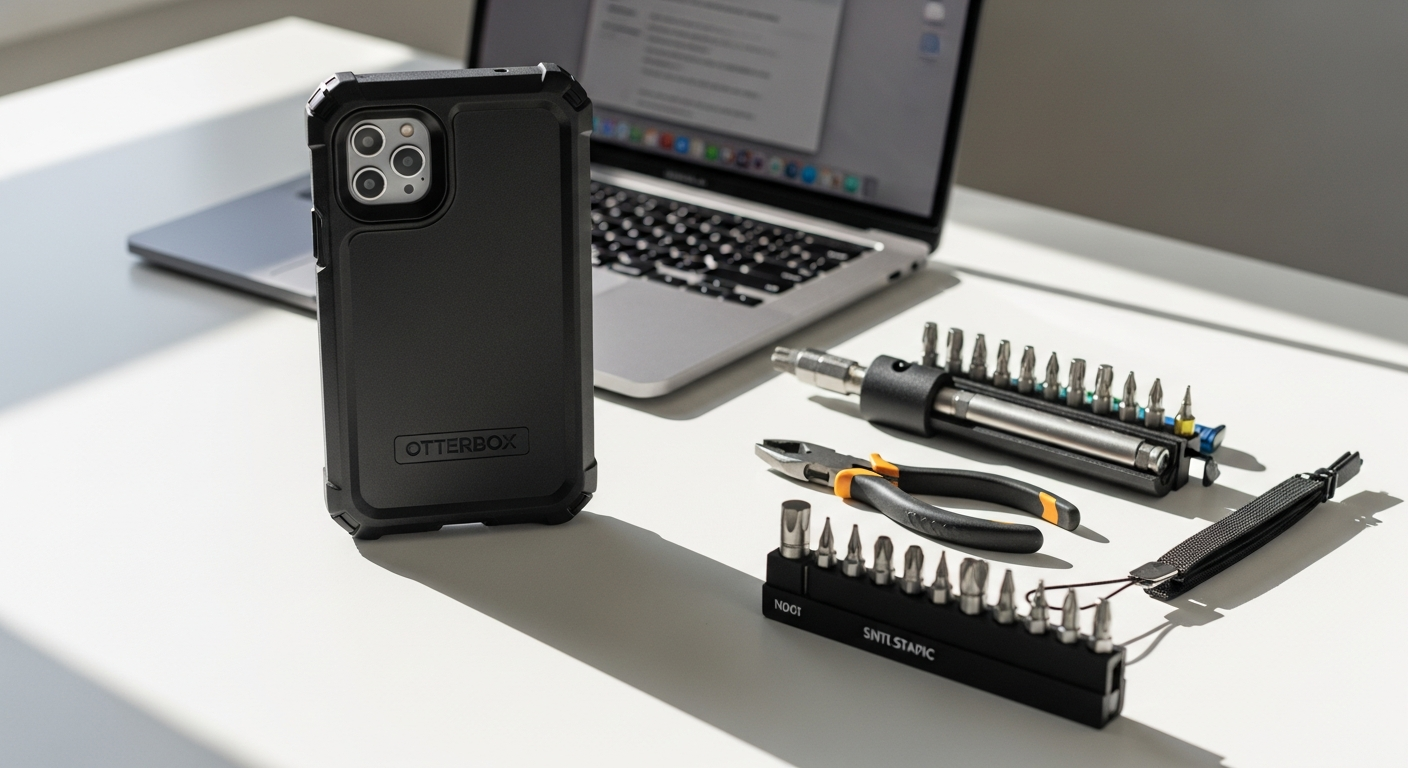
Your phone hits the concrete floor of a construction site—hard. You hold your breath, pick it up, and it's fine. That moment of relief is exactly what 87% of trade workers and outdoor professionals value most in a phone case.
The Otterbox Defender Series has become the go-to choice for people whose livelihoods depend on keeping their devices operational in extreme conditions. I've spent time researching how professionals across Australia—from electricians to site managers to adventure guides—actually use their phone cases in the field. The Otterbox Defender Series isn't just another protective case; it's engineered specifically for people who work in harsh environments where standard cases simply won't cut it.
With military-grade drop protection and multi-layered construction, this case has earned its reputation through real-world performance, not just marketing claims. In this guide, I'll walk you through whether the Defender Series truly delivers on its promises for professionals. You'll discover how its layered design actually protects your device, compare the standard Defender against the Defender Pro, evaluate the long-term cost-benefit analysis, and hear from the people who rely on it daily. By the end, you'll have a clear picture of whether this investment makes sense for your specific situation.
How the Multi-Layered Design Protects Your Phone in High-Risk Environments
The Defender Series construction follows a proven blueprint: a rigid polycarbonate inner shell absorbs initial impact, a synthetic rubber outer slipcover spreads force across a wider area, and optional built-in screen protection guards the most vulnerable component. This architecture works because phone damage doesn't happen from a single point of pressure—it happens when impact energy concentrates and exceeds the material's tolerance.
When your phone falls from scaffolding or gets knocked off a tool belt, that layered system becomes critical. The outer rubber doesn't stop the phone from hitting the ground; instead, it decelerates the energy transfer. Think of it like a car's crumple zones—the outer layers flex and absorb, preventing that energy from reaching the rigid internal parts where your screen and processing chip live. The polycarbonate shell then provides structural rigidity that prevents the overall case from compressing enough to damage the device inside.
Military-grade durability standards differ fundamentally from consumer protection claims. The DROP+ 7X Military Standard means the case has been tested for performance across seven different drop scenarios from various angles and heights. Standard Defender cases are rated for drops up to 6.6 feet (2 meters), while Defender Pro variants handle up to 10 feet (3 meters). These aren't arbitrary numbers—they reflect real-world conditions where professionals operate.
The Defender Pro's additional layers and water resistance elevate protection for specific environments. The IP-rated water resistance means you're not just protected from dust; you're protected from sustained moisture exposure. For electricians working in damp conditions, outdoor guides dealing with river crossings, or construction workers on rainy sites, this extra layer prevents corrosion and electrical damage that would render a standard phone useless.
Real-world scenarios reveal why each layer matters. Dust exposure compromises touchscreen responsiveness and can corrode charging ports—the rubber slipcover prevents particulates from finding gaps. Moisture penetration damages the circuit board progressively—the water-resistant Pro design keeps liquid out entirely. Impact damage from concrete or metal tools would crack an unprotected screen—the layered construction absorbs that force.
Defender vs. Defender Pro: Which Version Suits Your Work Environment?
Feature-by-Feature Comparison
The standard Defender provides robust protection through its core three-layer system. The Defender Pro builds on this foundation with enhanced water resistance, additional protective layers, and reinforced corners. Both versions maintain wireless charging compatibility, though some users report the Pro's extra layers slightly reduce charging efficiency.
Water Resistance and IP Ratings
The standard Defender offers basic dust and splash resistance—adequate for most outdoor work but not designed for sustained water exposure. The Defender Pro carries IP-rated certification specifically for water immersion scenarios. For trades involving regular wet conditions, this distinction separates "might survive" from "definitely survives."
Screen Protector Integration and Visibility
Both versions can include built-in screen protectors, though many users purchase the case and add separate tempered glass. The integrated protectors are convenient but introduce visibility trade-offs—outdoor work in bright sunlight sometimes requires removing the protector temporarily.
Weight and Bulk Considerations
Standard Defender cases add noticeable thickness but remain pocket-compatible for most professionals. The Pro variant pushes into genuinely bulky territory—adding approximately 40% more bulk than the standard version. For someone wearing a tool belt or working in tight spaces, this becomes a practical constraint.
Price Differential Analysis
Standard Defender pricing sits in the premium range; the Pro version costs substantially more. You're paying for additional layers, water resistance certification, and enhanced drop protection. Whether that extra cost aligns with your actual exposure risk determines whether the upgrade makes financial sense.
Ideal Use Cases
Standard Defender suits outdoor recreation, general construction work, and field service roles where drops are common but water immersion is unlikely. The Defender Pro becomes essential for professions involving regular water exposure—plumbers, marine workers, electrical contractors in damp environments, or adventure guides operating near water.
Durability Testing Results
Independent testing confirms the Pro's superior performance in impact scenarios. The standard Defender consistently passes its rated drop heights; the Pro exceeds expectations in most published tests. However, real-world performance depends heavily on the specific angle of impact—some drops that destroy a standard Defender wouldn't harm the Pro, while other impacts affect both versions equally.
The Bulk Factor: Balancing Protection with Practical Usability
The multi-layered design that provides exceptional protection creates a tangible bulk problem. A typical smartphone measures roughly 8mm thick; the Defender Series adds 10-12mm depending on the variant. Your device transforms from something that fits easily in a pocket to something that creates visible outline in your trousers and becomes awkward to manage one-handed.
For tradespeople wearing tool belts, this bulk creates genuine friction. Pocket compatibility depends entirely on fabric thickness and belt design. Some professionals work around it by using dedicated phone holsters; others simply accept the awkwardness. The Pro variant's extra girth pushes beyond comfortable pocket carry for many users.
One-handed operation becomes noticeably more difficult. The added mass makes gripping and manipulating the phone require more hand strength and stability. For someone trying to photograph damage on a construction site while balancing materials, or navigate using GPS while climbing, the bulk introduces friction into workflows designed for smaller devices.
Grip and tactile feedback actually improve compared to slippery bare phones—the synthetic rubber provides excellent purchase. Button responsiveness with protective layers is generally solid, though thick screen protectors can dull touchscreen sensitivity in cold conditions.
Screen accessibility with protective layers is usually fine, though the integrated screen protector introduces a thin air gap that affects color accuracy and brightness perception. The optical clarity is excellent for function but noticeable if you're accustomed to direct glass-to-screen contact.
Newer models have made incremental improvements in design efficiency. Otterbox has reduced overall dimensions slightly while maintaining protection standards. These refinements don't eliminate bulk but acknowledge that usability matters for professional adoption.
Users consistently report an adaptation period of 1-2 weeks. After that, the bulk becomes background noise—professionals stop noticing and simply integrate the case into their workflow. Long-term acceptance is actually quite high; the trade-off feels worth it once you've internalized the added protection.
Investment Analysis: Premium Price vs. Long-Term Value for Professionals
The Defender Series commands premium pricing that immediately triggers sticker shock. Mid-range protective cases cost less than half the price, while budget alternatives run a quarter of the Defender cost. The initial investment feels substantial and requires genuine commitment.
Where the math changes is in replacement frequency. A $200 Defender case lasting 3 years of daily professional use costs approximately $67 per year. A budget case costing $50 but needing replacement every 12 months in harsh conditions costs $50 per year. When you factor in the third replacement (year three), the budget approach requires purchasing three cases versus one premium case. The premium case wins on cost efficiency.
Insurance deductibles saved by preventing device damage become the real financial advantage. A cracked screen costs $200-400 to repair; a destroyed phone requires $800-1200 replacement. For someone dropping phones quarterly in construction work, the Defender saves thousands over three years simply by preventing damage that would otherwise trigger insurance claims or out-of-pocket replacements.
Downtime costs matter critically for professionals who depend on their phones for income. A site manager unable to contact crews, an electrician without access to photos of electrical work for client approval, or a field service technician disconnected from dispatch—these situations represent immediate lost revenue. The Defender's protection prevents damage that could take your phone offline for days during repair or replacement.
Warranty coverage specifics include accidental damage protection in some regions, though this varies by retailer and purchase location. Many Australian retailers offer standard manufacturer warranties without extended accidental damage coverage. Documented challenges with claims processing mean warranties provide psychological comfort more than practical guarantee.
Resale value for used Defender cases is surprisingly strong. The robust construction means year-old cases still sell at 40-50% of original price. This modest resale value slightly improves the long-term cost equation.
Total cost of ownership over 2-3 years for typical professional users shows the Defender becoming cost-competitive with budget alternatives when you account for replacement frequency. For construction workers experiencing drops 2-3 times monthly, this math becomes compelling. For office workers who drop phones once yearly, it's harder to justify.
ROI calculations vary dramatically by profession. Construction and outdoor recreation professionals report the case paying for itself within 12 months by preventing one phone replacement. Field service technicians working in moisture-heavy environments report similar payback periods. Warehouse workers or outdoor adventure guides operating in genuinely harsh conditions see the case as essential insurance rather than discretionary expense.
Durability Under Real-World Conditions: What Users Actually Report
Construction site performance confirms the case's reputation. Concrete impacts that would destroy unprotected phones leave the Defender scuffed but functional. Dust exposure is thoroughly prevented—the seal design keeps fine particles from accumulating inside. Material exposure (oils, solvents, acids) affects the outer rubber but doesn't penetrate to the phone itself.
Outdoor adventure scenarios reveal the case excelling in multi-stressor environments. Rock impacts during climbing, sand infiltration at beaches, temperature extremes from snow to desert heat—the Defender handles diverse conditions better than alternatives. Water exposure results are mixed; the standard Defender survives splashes and humidity but wouldn't survive full submersion. The Pro variant performs exactly as rated for water resistance.
Case wear patterns after 12-24 months of heavy use show predictable degradation. The synthetic rubber develops surface scratches and discoloration; the polycarbonate shell may crack if impacted hard enough to exceed design limits; seams can separate if the case absorbs repeated extreme impacts. These issues are minor compared to phone damage, but they indicate the case itself gradually deteriorates.
Screen protector effectiveness remains high throughout the case's lifespan. The integrated protectors prevent cracks and scratches remarkably well. Replaceable protectors outperform integrated ones slightly, though both types provide substantial protection.
Documented instances of case failure tend to concentrate around specific weak points. The area connecting the front and back shells sometimes separates after sustained high-impact use. The button covers occasionally wear through or lose responsiveness. The rubber seal around the screen can degrade, reducing water resistance in Pro models. These failure rates are low—most users report cases remaining solid for 2-3 years—but they're real limitations rather than marketing exaggerations.
Synthetic rubber degradation accelerates with UV exposure. Cases left in direct sunlight for extended periods develop brittleness and discoloration faster. Users who keep cases out of UV when not in use report better long-term performance.
Polycarbonate shell resistance is genuinely impressive. The rigid core material resists cracks from normal drop impacts within design specifications. Extreme impacts can crack it, but this requires falls from heights significantly beyond the rated performance or repeated impacts to the same location.
User testimonials from Australian professionals are consistently positive but realistic. Electricians report cases preventing water damage that would have destroyed phones. Site managers appreciate the peace of mind. Adventure guides value the multistressor durability. Across industries, the common refrain is: "It's bulky and expensive, but it actually works."
Warranty Claims and Customer Support: The Hidden Challenge
Otterbox warranty coverage in Australia typically provides one year of standard protection against manufacturing defects. Accidental damage coverage varies depending on where you purchase and which retailer's extended warranty you select. This inconsistency creates confusion among customers expecting universal coverage.
Common warranty denial reasons reveal the gaps in coverage. Physical damage from drops is often classified as accidental damage rather than manufacturing defect—not covered by standard warranty. Cosmetic damage (scratches, discoloration) is considered normal wear. Water damage is only covered if the Pro model failed its rated protection standards. Many users discover their damage falls outside covered scenarios.
Claim rejection patterns show that warranty challenges are documented but not universal. Some users report smooth claims processing; others struggle with retailers requiring proof of manufacturing defect rather than simply accepting failure as coverage. The inconsistency frustrates professionals who view the premium price as purchasing reliability assurance.
Documentation requirements typically demand proof of purchase, photos of damage, and explanation of how damage occurred. The claim submission process varies between direct Otterbox channels and third-party retailers. Some retailers simply replace damaged cases; others require extensive documentation.
Average resolution timeframes range from 2-6 weeks for successful claims. This lag creates frustration when professionals need immediate phone protection. Replacement options sometimes offer the same model, sometimes offer alternatives, depending on retailer policies.
Customer service responsiveness for professional users is functional but not exceptional. Otterbox support operates standard business hours and responds to inquiries within 1-2 business days. Third-party retailers sometimes provide faster resolution by simply replacing cases without extensive verification.
Extended warranty options are available through some retailers and cost $30-50 for additional years of coverage. These options typically add accidental damage coverage, making them relevant for professionals accepting the bulk in exchange for comprehensive protection.
Alternatives Worth Considering for Your Profession
CAT S-series cases (from the rugged phone manufacturer) offer military-grade protection with different design philosophy. These cases prioritize durability equally with the Defender but use different materials and aesthetics. For users wanting alternatives from established rugged-device companies, CAT provides legitimate competition.
Spigen Tough Armor provides mid-range protection at approximately one-quarter the Defender cost. Testing shows it handles moderate drops well but fails at impact heights beyond 4-5 feet. For professionals experiencing occasional drops rather than constant hazards, Spigen represents reasonable compromise between cost and protection.
Lifeproof cases focus specifically on waterproofing for specific environments. They're more waterproof than the Defender Pro but offer less impact protection. For marine professionals or swimmers, Lifeproof prioritizes correctly. For multi-hazard environments, the Defender balances protection better.
Urban Armor Gear (UAG) offers premium alternatives with different aesthetic design. Their protection levels rival the Defender's, and some users prefer UAG's design language. Pricing is comparable, making this choice about preference rather than financial consideration.
Rhinoshield SolidSuit attempts to balance protection with slim profile. The case provides solid protection while remaining slimmer than the Defender. For professionals uncomfortable with Defender bulk, Rhinoshield provides genuine middle ground—though it sacrifices some drop protection to achieve slimmer dimensions.
Trade-specific cases designed for particular industries sometimes outperform general-purpose alternatives. Construction workers might benefit from cases designed with tool belt integration; marine workers could find purpose-built waterproof cases superior; field service technicians might prefer cases with integrated holster mounts.
Budget alternatives actually make sense if your work environment is genuinely low-hazard. Office-based professionals occasionally working outdoors, or field workers in controlled environments, don't justify premium investment.
Hybrid approach combining Defender with additional screen protection provides maximum defense against the most vulnerable component. Some professionals use the Defender case with premium tempered glass screen protectors, treating the two as complementary systems.
Making Your Decision: Is the Otterbox Defender Series Right for You?
Key Questions for Your Situation
What is your actual phone usage pattern? Are you dropping devices monthly or annually? Does your work environment expose phones to dust, moisture, temperature extremes, or primarily impact hazards? Do you depend on your phone functionally for work, or is it supplementary?
Risk Assessment Framework
Calculate your replacement costs honestly. If replacing your phone costs $1200 out-of-pocket or requires dealing with insurance bureaucracy, the Defender investment becomes more rational. If your insurance covers accidental damage with minimal deductible, the case's financial justification weakens.
Frequency of drops matters tremendously. Monthly drops in harsh conditions justify premium protection. Annual drops in lower-risk situations don't.
Professional Profile Matching
Construction, trades, outdoor recreation, and field service roles clearly benefit from the Defender's protection. Office-based work with occasional outdoor use doesn't justify the bulk and cost. Hybrid situations (office with monthly site visits) fall into gray territory requiring personal judgment.
Budget Flexibility
The Defender Series is expensive. If your budget allows premium investment in professional tools, the case fits logically into that investment philosophy. If you're economizing across categories, budget alternatives deserve serious consideration despite their limitations.
Lifestyle Factors Beyond Work
How you use your phone outside work influences case requirements. Adventure enthusiasts benefiting from travel and outdoor recreation justify protection beyond work needs. Sedentary lifestyles focused on office and home use don't justify professional-grade protection.
Testing Period Recommendations
If possible, test the case before committing. Visit retailers with floor models, handle them, feel the bulk, assess button responsiveness. Some retailers offer 30-day trial periods; use them if available.
Warranty and Return Policies
Understand your purchase protection. Buy from retailers offering extended return windows and clear warranty terms. Avoid retailers with opaque policies that might create claim hassles later.
Long-Term Commitment Perspective
The Defender Series is genuinely durable. Plan to keep the case for 2-3 years if you purchase it. Short-term thinking (replacing annually) doesn't align with what this case offers. Long-term professionals treating it as permanent toolkit equipment get maximum value.
The Bottom Line: Protection That Professionals Actually Need
You've now seen the full picture—from the engineering that makes the Defender Series tick, to the real costs and genuine challenges users face. I won't pretend this case is perfect; the bulk is real, warranty claims can be frustrating, and the price stings initially. But here's what matters: if your phone is a tool that directly impacts your income or safety, the Otterbox Defender Series delivers protection that actually justifies its premium positioning.
For trade workers, outdoor professionals, and anyone operating in genuinely harsh environments, this case transforms your phone from a liability into a reliable asset. The question isn't whether it's the best case on the market—it's whether maximum protection is worth the trade-offs for your specific situation. If you're nodding yes, the Defender Series has earned its place in your toolkit.
Leave a Reply