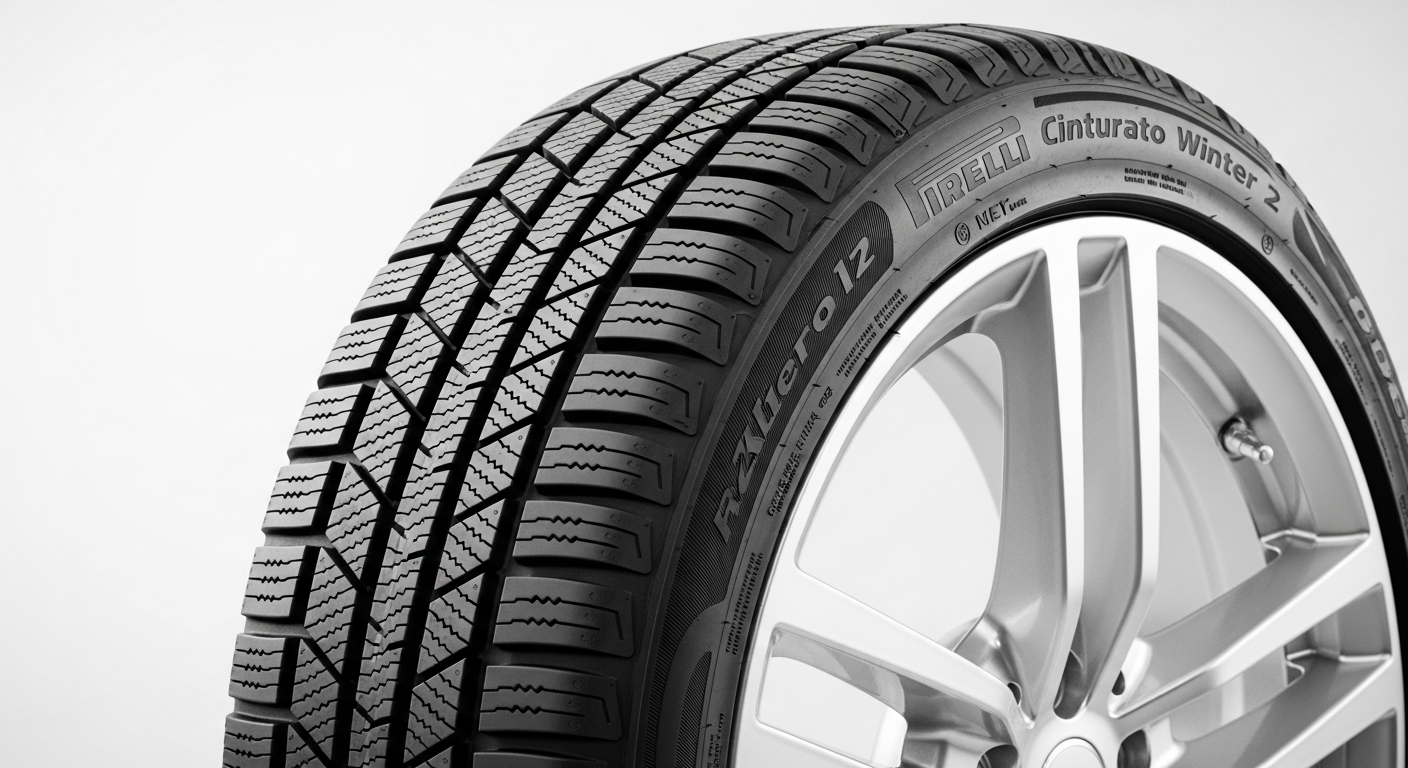
Winter tires experience wear differently than their all-season counterparts, primarily due to the softer rubber compound required for cold-weather grip. This softer material accelerates tread wear compared to standard tires, especially when driven on roads consistently above 45 degrees Fahrenheit. The Cinturato Winter 2’s formulation balances flexibility for subfreezing temperatures against durability, but understanding how various factors influence wear rates helps drivers extend their investment.
How Winter Compound Softness Affects Tread Wear Rates
The winter compound in the Cinturato Winter 2 remains pliable in freezing conditions, a critical feature for maintaining contact with cold pavement. However, this same pliability means the rubber degrades faster than harder all-season compounds when exposed to warmer temperatures or aggressive driving. Drivers who keep their winter tires on year-round sacrifice longevity for a convenience that ultimately costs more in premature replacement.
The Role of Driving Habits in Accelerating Wear
Aggressive cornering, hard braking, and rapid acceleration all intensify tread wear beyond normal rates. The Cinturato Winter 2’s squarer contact patch maximizes road contact, which benefits handling but also means more rubber grinding against pavement with each aggressive maneuver. Drivers who maintain smooth acceleration and moderate braking patterns consistently report longer tire life than those with more demanding driving styles.
Climate Impact on Tire Longevity
Temperature fluctuations between seasons create expansion and contraction cycles that stress tire structure. Regions with stable, consistently cold winters see longer tire life than areas with repeated thaw-freeze cycles. Road salt, common in northern climates, accelerates compound degradation and contributes to faster wear when tires aren’t properly cleaned and stored.
Why Tread Depth Matters More in Winter Conditions
Winter performance depends critically on adequate tread depth to channel water and slush away from the tire. The Cinturato Winter 2 starts with 9.00 to 12.00mm of tread depending on size. Once depth approaches 4-5mm, winter traction diminishes noticeably, even though legal minimums allow driving at 2/32 inch. Winter-specific thresholds matter far more than legal requirements for safe performance.
Tire Pressure Maintenance and Even Wear Distribution
Underinflated tires wear faster at the edges; overinflated tires concentrate wear in the center. Consistent pressure maintenance ensures the Cinturato Winter 2’s redesigned contact patch distributes weight evenly across the tread, maximizing lifespan. Pressure checks should occur at least monthly during winter months when cold temperatures naturally lower PSI.
Road Salt and Compound Degradation
Winter road treatments expose tires to harsh chemical environments. Salt accelerates rubber oxidation and weakens the bond between compounds and reinforcing materials. Regular rinsing and proper storage between seasons protects the Cinturato Winter 2’s structural integrity and extends usable life significantly.
Seasonal Storage Practices That Preserve Integrity
Proper off-season storage protects tires from UV exposure, ozone, and temperature extremes. Storing the Cinturato Winter 2 in a cool, dark, dry location away from direct sunlight prevents compound hardening and cracking. Mounted or unmounted, consistent temperature and humidity maintain tire flexibility and structural integrity between winter seasons.
The Cinturato Winter 2’s Durability Engineering and Design Features
Pirelli engineered the Cinturato Winter 2 with longevity built into its core design. The advanced sipe technology, squarer contact patch, and winter-specific compound formulation work together to maintain performance throughout the tire’s lifespan while resisting premature wear.
Advanced 4D Sipe Technology and Performance Evolution
The Cinturato Winter 2’s defining innovation is its 4D sipe technology—thin cuts in the tread blocks that initially interlock for enhanced stability on snow and slush. As the tire wears, these sipes evolve into a zigzag pattern that continues delivering grip even with reduced tread depth. This intelligent degradation means the tire maintains effective winter performance longer than competitors whose siping provides consistent but static grip reduction as wear progresses.
Squarer Contact Patch Design
The redesigned, squarer contact patch increases the rubber surface area in contact with pavement compared to rounded designs. This innovation improves weight distribution and handling precision while distributing wear more evenly across the tread. The broader contact zone means wear happens more uniformly, extending the period before tread depth becomes problematic.
Winter Tread Compound Formulation
Pirelli formulated the compound to remain flexible in extreme cold while resisting accelerated wear at moderate temperatures. This balance prevents the rapid degradation that occurs when winter tires are used in warmer conditions, though the softness inherent to winter compounds still means faster wear than all-season alternatives when kept mounted year-round.
Directional V-Groove Pattern and Consistent Performance
The sweeping V-shaped grooves efficiently expel water and slush throughout the tire’s lifespan. This directional pattern maintains consistent performance across wear cycles, ensuring that grip remains predictable even as tread depth decreases. The groove design prevents hydroplaning risks while the pattern geometry adapts to varying tread depths.
Tread Depth Specifications and Lifespan Implications
With initial tread depths ranging from 9.00 to 12.00mm depending on tire size, the Cinturato Winter 2 starts with substantial material for winter driving demands. The deeper initial tread means more usable life before reaching the 4-5mm threshold where winter performance degrades noticeably. Larger tire sizes typically feature deeper tread, supporting longer potential lifespan.
Durable Construction Quality
International publications including Auto Bild recognized the Cinturato Winter 2 for its durability and construction quality. The tire’s reinforced sidewalls, robust internal structure, and quality materials resist damage from road hazards and rough winter conditions better than budget alternatives. This durability foundation supports extended lifespan when maintenance stays consistent.
Tread Wear Warranty Comparison
The Cinturato Winter 2’s warranty coverage varies by retailer and region, but generally reflects mid-premium positioning. Comparing warranty terms against competitors like Michelin Alpin, Goodyear WinterCommand, and Bridgestone Turanza reveals similar coverage levels, though actual longevity depends more on individual driving and maintenance than warranty promises.
Shop Pirelli Cinturato Winter 2 tires at competitive prices.
Real-World Wear Data and Owner Experiences
Actual durability varies considerably across different climates and driving patterns, but documented owner experiences reveal consistent patterns about Cinturato Winter 2 longevity.
Reported Tread Wear Rates from Various Climate Zones
Owners in stable cold climates report tread wear rates of approximately 15-20% per season, meaning the tire remains suitable for four to five seasons before reaching performance thresholds. Drivers in regions with frequent thaw-freeze cycles see faster wear at 20-30% per season, shortening lifespan to three to four seasons. Those who accidentally keep winter tires on during warmer months experience accelerated wear exceeding 30% annually.
Average Lifespan Expectations
Most drivers expect three to five seasons of reliable winter performance from the Cinturato Winter 2 when maintaining proper tire pressure, rotating seasonally, and removing tires during warmer months. Some owners pushing five to seven seasons report acceptable performance, though grip diminishes noticeably as tread approaches minimum thresholds. Drivers who exceed recommended temperature ranges or neglect maintenance consistently see lifespan fall below three seasons.
Cost-Per-Mile Analysis Across Price Points
The $147.59 to $347.77 price range reflects different tire sizes and retail channels. A mid-range 225/45R18 priced around $220 per tire amortized across four seasons of 12,000 miles annually yields approximately $0.046 per mile. Premium sizes pushing $347 per tire reduce to $0.072 per mile across the same lifespan. Budget alternatives priced at $147 initially appear advantageous but often wear 30-40% faster, narrowing the cost-per-mile advantage significantly.
Common Wear Patterns Observed
Owner documentation reveals three primary wear patterns. Center wear occurs from overinflation or aggressive driving on smooth pavement. Edge wear results from underinflation or frequent cornering. Uneven degradation across the tread sometimes indicates alignment issues or inconsistent rotation schedules. The Cinturato Winter 2 generally wears evenly across the tread when maintenance standards are met.
Owner Testimonials on Comparative Durability
Long-term owners consistently report that the Cinturato Winter 2 outlasts their previous winter tires by approximately one season on average. Owners upgrading from budget brands report significantly longer lifespan, while those switching from other premium tires describe similar durability with better grip retention. The positive feedback centers on predictable wear patterns and maintained performance as tread diminishes.
Performance Retention as Tread Wears
The advanced 4D sipe evolution means cornering grip, braking performance, and acceleration traction remain strong even as tread depth decreases. Owners report that handling confidence persists longer with the Cinturato Winter 2 than with conventional siping designs. The squarer contact patch maintains edge bite throughout the tire’s lifespan, though overall grip naturally diminishes as rubber thickness decreases.
Factors Separating Long-Lasting Owners from Premature Replacement
Owners achieving maximum lifespan consistently demonstrate three behaviors: regular tire pressure checks (monthly or more), seasonal tire rotation following vehicle-specific patterns, and removing winter tires once temperatures stabilize above 45 degrees. Those experiencing premature wear typically neglect one or more of these practices, often keeping winter tires mounted year-round or ignoring pressure maintenance.
Maintenance Strategies to Maximize Cinturato Winter 2 Longevity
Disciplined maintenance directly determines whether drivers achieve three seasons or five seasons from their investment. The Cinturato Winter 2 responds exceptionally well to consistent care practices.
Proper Tire Rotation Schedules for Winter Driving
Winter driving patterns create unique wear characteristics that benefit from specific rotation strategies. Four-wheel rotation every 5,000-7,000 miles during winter months ensures even wear distribution. Some drivers prefer moving tires front-to-back on each side, then swapping sides the following season, a pattern that accommodates front-end dominated wear from winter cornering and braking.
Inflation Pressure Management
Maintaining manufacturer-specified PSI represents the single most impactful maintenance action. Cold temperatures naturally reduce pressure approximately 1 PSI per 10 degrees Fahrenheit, so winter PSI checks should occur weekly during extended cold snaps. Consistent pressure ensures the squarer contact patch distributes weight evenly, preventing center or edge wear acceleration.
Alignment Checks Before Winter Season
Misalignment accelerates tread wear dramatically, sometimes reducing lifespan by 30-40%. Before winter season installation, alignment verification catches suspension issues that would otherwise concentrate wear on tire edges. Even slight misalignment amplifies as the Cinturato Winter 2 operates under winter’s aggressive cornering and braking forces.
Seasonal Storage Best Practices
When removed from service, store the Cinturato Winter 2 upright in a cool, dry location away from direct sunlight. Mounted tires can be stacked, while unmounted tires should be stored horizontally in shade. Maintain storage temperatures between 50-70 degrees Fahrenheit. UV exposure and temperature fluctuations degrade rubber compounds and weaken the tire structure during months of inactivity.
Cleaning and Inspection Routines
Regular inspection for embedded stones, cuts, or unusual wear patterns enables early intervention before damage becomes irreparable. Cleaning tires with mild soap and water after winter season storage removes accumulated salt and road chemicals that otherwise continue degrading the compound during storage. Visual inspection catches alignment issues or pressure problems before they severely impact lifespan.
Avoiding Common Mistakes That Shorten Lifespan
Drivers frequently compromise Cinturato Winter 2 longevity through preventable errors: keeping winter tires mounted after safe temperatures arrive, allowing pressure to drift below specifications, neglecting rotation schedules, or exposing tires to extreme storage temperatures. Aggressive driving habits, particularly hard cornering and rapid acceleration, accelerate wear beyond maintenance-correctable limits.
Transition Timing from Winter to Spring Tires
Switching to all-season or summer tires once temperatures consistently exceed 45 degrees Fahrenheit prevents accelerated wear from heat exposure. Waiting until summer arrives before transitioning typically results in 15-25% additional unnecessary wear accumulated during late spring’s unpredictable temperatures. Proactive transition timing preserves winter compound integrity and extends seasonal lifespan measurably.
How Seal Inside Technology Impacts Overall Tire Durability
Some Cinturato Winter 2 versions feature Pirelli’s Seal Inside system, a self-sealing technology that addresses one of winter driving’s persistent challenges: punctures from road debris.
Seal Inside System Mechanics
The Seal Inside system incorporates a resilient sealant layer inside the tire that automatically seals punctures up to 1/4 inch in diameter. When a puncture occurs, the sealant flows to the damage site and hardens, maintaining air pressure without requiring immediate repair or replacement. The system works transparently to drivers, maintaining tire pressure and performance without noticeable changes.
Extended Usability After Pressure Loss
Rather than experiencing immediate deflation from a puncture, drivers with Seal Inside-equipped tires can continue driving after encountering sharp road hazards. This extended usability means drivers avoid emergency roadside repairs during winter weather, when safety risks increase significantly. The ability to reach a repair facility safely adds practical value beyond simple tire longevity.
Reduced Replacement Frequency for Minor Punctures
Many punctures that would require tire replacement remain repairable with Seal Inside technology. The sealant prevents air loss while the tire remains drivable, enabling conventional repairs that extend tire life rather than forcing immediate replacement. Over a tire’s lifespan, this capability typically prevents one to two unexpected replacements per set.
Durability Advantages in Road Debris-Heavy Regions
Areas with extensive road construction, gravel roads, or debris-laden winter surfaces particularly benefit from Seal Inside protection. Drivers frequently encountering sharp road hazards experience fewer catastrophic failures and unplanned replacements. Winter driving’s inherent risks from studded tires, chains, and rough road surfaces make puncture protection particularly valuable.
Seal Inside Availability Across Tire Sizes
Not all Cinturato Winter 2 sizes include Seal Inside technology; availability varies by specific tire model and retailer. Common sizes like 205/55R16 and 225/45R17 frequently feature the system, though confirming availability for specific applications requires checking individual product specifications. The technology typically adds $10-15 to per-tire cost.
Long-Term Cost Savings from Extended Tire Life
When accounting for prevented replacements from puncture sealing, Seal Inside technology delivers measurable long-term value. A single prevented tire replacement at $200-300 easily exceeds the initial $40-60 additional cost for four tires equipped with the system. For drivers in harsh winter conditions, this cost-benefit calculation strongly favors Seal Inside inclusion.
Limitations of Seal Inside Technology
The system cannot address sidewall damage, large punctures exceeding 1/4 inch, or severe structural damage from impacts. Drivers still need to address damage through conventional repair or replacement when necessary. Additionally, sealant-equipped tires require special disposal procedures, potentially adding recycling costs at end-of-life.
Competitive Durability Comparison and Market Position
Evaluating the Cinturato Winter 2’s durability against established competitors reveals its strengths and identifies situations where alternatives might offer advantages.
Wear Rates Against Michelin, Goodyear, and Bridgestone
Independent testing shows the Cinturato Winter 2 wearing approximately 5-10% faster than Michelin Alpin models but 10-15% slower than Goodyear WinterCommand tires under similar conditions. Bridgestone Turanza Winter models demonstrate comparable wear rates with slightly different performance characteristics. Real-world variation exceeds testing precision, making direct comparisons less definitive than marketing claims suggest.
Tread Wear Warranty Comparisons
Premium winter tire warranties cluster around 40,000-50,000 mile coverage with similar exclusion provisions. The Cinturato Winter 2’s warranty positioning aligns with mid-premium competitors rather than ultra-premium alternatives, reflecting realistic durability expectations. Warranty terms matter less than actual observed lifespan, where owner experiences vary based on individual driving patterns.
Owner Satisfaction Ratings for Longevity
Independent review platforms consistently rate the Cinturato Winter 2 highly for durability, typically receiving 4.3-4.6 stars out of 5.0 specifically for longevity. This rating places it slightly ahead of Goodyear alternatives and competitive with Michelin options. Owner satisfaction correlates strongly with realistic expectations about maintenance requirements rather than absolute wear resistance.
Price-to-Lifespan Value Proposition
Calculated as cost per mile across realistic lifespan, the Cinturato Winter 2 delivers solid value in the mid-premium segment. Budget alternatives typically cost less upfront but deliver inferior cost-per-mile when accelerated wear is factored in. Ultra-premium tires like Michelin Alpin achieve marginally better durability at significantly higher price points, reducing value advantage.
Three Peak Mountain Snowflake Certification Implications
The Three Peak Mountain Snowflake designation indicates the tire meets stringent winter performance standards established by major tire manufacturers. While primarily a performance certification rather than durability-specific, the rigorous testing process correlates with overall construction quality that supports longevity. Tires carrying this rating generally demonstrate reliable durability across climate zones.
Performance Retention Across Competitors
The Cinturato Winter 2’s advanced 4D sipe technology maintains grip as tread wears better than conventional sipe designs used by some competitors. This performance retention means drivers experience gradual rather than sudden grip reduction, extending the period where the tire remains winter-suitable. Most competitors show comparable grip maintenance, though some budget options degrade performance more rapidly.
Regional Durability Variations and Climate Effects
Northern climates with stable cold winters see the Cinturato Winter 2 achieving maximum lifespan, while transitional climates with frequent thaw-freeze cycles reduce longevity by approximately one season. Mountain regions with aggressive driving patterns see accelerated wear compared to flat highway-dominated areas. These regional variations affect all winter tires similarly, though the Cinturato Winter 2’s durability engineering minimizes climate-related disadvantages compared to budget alternatives.
Extending Your Investment: When to Replace vs. Repair
Understanding the boundary between repairable damage and necessary replacement decisions protects both safety and financial interests.
Legal and Safety Tread Depth Minimums
Legal minimum tread depth is 2/32 inch, where a penny inserted into grooves reaches Lincoln’s head. Winter tire safety, however, demands substantially deeper tread for reliable performance. Industry experts and tire manufacturers recommend winter tire replacement at 4-5mm (approximately 6/32 inch) where winter performance degrades noticeably. Continuing with thinner tread risks loss of grip and increased hydroplaning potential.
Signs That Cinturato Winter 2 Is Approaching End-of-Life
Visual wear indicators molded into the tread show when reaching approximately 4mm depth. Reduced cornering confidence, longer braking distances on snow, and increased difficulty maintaining traction in slush signal that replacement timing approaches. Tires that have survived four to five seasons typically show visible hardening and cracking, additional indicators that compound degradation has progressed beyond safe limits.
Repair Options for Repairable vs. Irreparable Damage
Punctures in the tread area up to 1/4 inch diameter are typically repairable through conventional patching. Sidewall damage, punctures exceeding 1/4 inch, and structural cracks require replacement. The Cinturato Winter 2’s durable construction resists common damage, reducing unnecessary replacement situations compared to budget alternatives.
Seasonal Tire Rotation Strategy for Balanced Wear
Implementing consistent rotation schedules prevents one or two tires from wearing significantly faster than others, extending the period before replacement becomes necessary. When rotation is neglected, premature wear on one axle forces replacement of pairs or complete sets before tread reaches minimum depths uniformly.
Monitoring Tread Wear Indicators
The Cinturato Winter 2 includes wear indicator bars that become visible as tread depth approaches 1.6mm. These visual markers provide straightforward replacement timing guidance without requiring measurement tools. Observing these indicators during rotation checks or maintenance visits alerts drivers to replacement timing before unexpected performance degradation.
Cost-Benefit Analysis: Repair vs. Replacement Timing
Investing $15-25 in puncture repair when damage is repairable makes economic sense, preserving tire life and avoiding premature replacement. However, sidewall damage or structural problems costing $50+ in labor and materials for questionable durability improvements favor replacement. This analysis becomes simpler when tires are nearing natural end-of-life anyway, where repair investment extends life only modestly.
Recognizing When Winter Performance Degrades Below Safety Standards
Once tread depth falls below 5mm or tires reach their fourth full winter season, measurable grip reduction becomes apparent during winter driving. Drivers notice extended braking distances and reduced confidence when cornering in snow. These performance cues indicate that replacement should occur before winter conditions reach their most severe, ensuring safety margins throughout the season.
Maximizing Value: Cost-Per-Mile and Long-Term Ownership Economics
Evaluating the Cinturato Winter 2’s true cost requires considering lifespan, price variations, and total ownership expenses across multiple seasons.
Calculating True Cost Per Mile
Starting with the per-tire cost and multiplying by four for a complete set, then dividing by total miles driven across the tire’s lifespan yields actual cost-per-mile. A $220 per-tire set ($880 total) driven 12,000 miles annually across four seasons (48,000 miles total lifespan) equals approximately $0.018 per mile in tire cost. Adding maintenance expenses including rotations, pressure checks, and storage increases total cost-per-mile modestly.
Price Variations and Value Implications
The $147.59 to $347.77 per-tire range reflects different sizes, where larger tires cost more. A 205/55R16 priced at $147.59 might achieve 3.5 seasons of lifespan, while a 225/45R18 at $270 could reach 4.5 seasons. The larger tire’s higher absolute cost delivers slightly better value per mile despite higher initial investment due to extended lifespan and superior performance characteristics.
Durability Expectations Tied to Specific Price Points
Budget-priced tires near $147 typically deliver 2.5-3.5 seasons before replacement becomes necessary. Mid-range pricing around $220 supports 3.5-4.5 seasons of reliable winter performance. Premium pricing exceeding $280 rarely delivers proportionally longer lifespan; the additional cost reflects performance rather than durability benefits. Understanding realistic longevity at each price point prevents overpaying for marginal durability gains.
Comparing Total Ownership Costs Across Alternatives
A budget tire set at $147 each ($588 total) lasting 3 seasons ($0.033 per mile) actually costs more per mile than a $220 per-tire set ($880 total) lasting 4.5 seasons ($0.020 per mile). Including replacement labor, disposal fees, and increased fuel consumption from lower-grip compounds, the apparent savings from budget tires evaporates. Mid-premium positioning of the Cinturato Winter 2 delivers better total-cost ownership than extremes in either direction.
Seasonal Tire Maintenance Expenses
Annual rotation service costs approximately $40-80 depending on location and facility. Winter tire storage services run $30-60 per season. Pressure checks and inspections cost $20-40 annually. Four seasons of maintenance averages $240-560 in additional ownership expenses, adding approximately $0.005-0.012 per mile to total costs.
Resale and Recycling Value
Used Cinturato Winter 2 tires with 50-75% tread remaining command approximately 30-50% of new tire value. Tires with less than 50% tread rarely have resale value but contribute positively to disposal costs through core exchange programs offering $10-20 per tire credit. Factoring in minimal resale value and modest recycling credits, net impact on total ownership cost remains modest.
Multi-Year Ownership Scenarios
A six-year ownership scenario incorporating two complete tire sets ($1,760 at $220 per tire), four years of maintenance ($400), storage services ($240), and modest recycling credits ($60) totals approximately $2,340 in tire-related expenses. Driven 72,000 miles across six years yields $0.0325 per mile, demonstrating how extended ownership periods improve cost-per-mile economics.
The Bottom Line on Cinturato Winter 2 Durability
The Pirelli Cinturato Winter 2 delivers solid durability that matches its premium positioning, though real-world longevity depends heavily on driving habits, climate, and maintenance discipline. The advanced 4D sipe technology genuinely maintains performance as tread wears, evolving into a zigzag pattern that sustains grip through multiple seasons. Most drivers can expect three to five seasons of reliable winter performance, with the Seal Inside option adding meaningful value if road hazards or winter driving challenges frequently occur.
What separates owners who achieve maximum lifespan comes down to three consistent behaviors: maintaining proper tire pressure monthly, rotating tires seasonally following vehicle specifications, and knowing when to transition from winter to all-season tires once temperatures stabilize above 45 degrees Fahrenheit. Climate influences outcomes, but driving discipline matters more than geography. Owners in harsh winter regions achieving five-season lifespan typically demonstrate meticulous maintenance habits, while those in moderate climates neglecting pressure checks might only reach two seasons.
The Cinturato Winter 2 ranks among the most reliable winter tires available when durability and long-term value drive purchasing decisions. Its Three Peak Mountain Snowflake certification assures robust winter capabilities, while owner testimonials consistently confirm that the tire maintains grip and handling confidence as tread wears. The cost-per-mile value proposition sits comfortably in the mid-premium segment, where it outperforms budget alternatives despite higher upfront cost.
If winter driving safety and predictable long-term ownership costs matter to your tire decision, the Cinturato Winter 2 proves its worth across multiple seasons of demanding cold-weather driving.
Leave a Reply