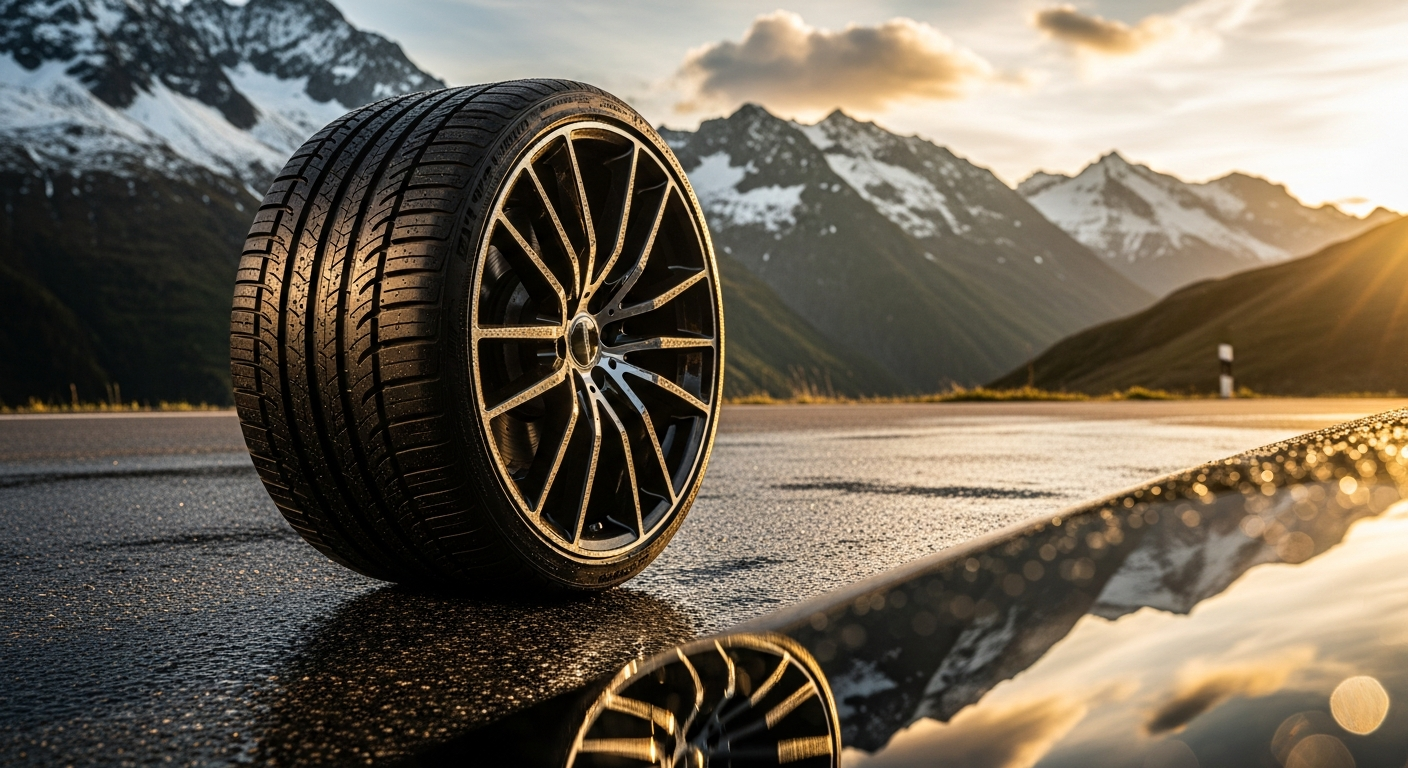
Alpine passes demand respect, and so do the tires beneath your vehicle. Austrian roads present challenges that casual drivers often underestimate—sharp descents that test braking performance, sudden weather shifts that catch the unprepared, and seasonal demands that separate adequate tires from genuinely reliable ones. Your tire choice isn't merely about getting from point A to point B; it's about maintaining control when conditions deteriorate, preserving fuel efficiency across thousands of kilometers, and avoiding the regret that follows a preventable accident.
Pneus Online Österreich has fundamentally changed how Austrian motorists access premium tire brands. Rather than accepting whatever your local dealer stocks, you can now browse Continental, Michelin, Dunlop, Goodyear, Pirelli, Bridgestone, Hankook, Semperit, Vredestein, and Nokian from your home, compare specifications side-by-side, and read honest customer feedback from drivers who've tested these tires on the same roads you travel.
Understanding Tire Performance Categories for Austrian Conditions
Summer tires vs. all-season vs. winter tire specifications and their Austrian road relevance
Summer tires prioritize grip on warm, dry pavement and maximize fuel efficiency during warmer months. Their rubber compounds remain pliable in heat, delivering responsive handling and shorter braking distances when temperatures climb. All-season tires compromise across temperature ranges, performing adequately in mild conditions but lacking the specialized performance of seasonal alternatives. Winter tires transform below 7°C, when conventional rubber hardens and loses grip. Austrian drivers living in lowland regions might stretch with all-season options, but Alpine proximity demands winter tires during colder months.
Wet braking performance ratings and why they matter on Alpine descents
European tire labels display wet braking ratings from A to F, representing stopping distance differences that literally separate safety from danger. An A-rated tire stops roughly 18 meters shorter than an F-rated alternative from 80 km/h—a margin that proves decisive on rain-slicked Alpine descents. When you're navigating tight switchbacks in the Ötztal or Zillertal, especially during autumn's unpredictable weather transitions, superior wet grip prevents the heart-stopping moment when your vehicle doesn't respond to brake pressure as expected.
Fuel efficiency ratings (A-G scale) and long-term cost savings for Austrian drivers
Rolling resistance directly impacts fuel consumption. An A-rated tire can reduce fuel consumption by 20% compared to a G-rated equivalent—not merely cents per liter, but hundreds of euros annually for Austrian drivers covering typical distances. Over a tire's five-year lifespan, this efficiency difference translates to genuine savings that offset premium pricing for higher-rated options.
Noise reduction technology and comfort on highway stretches
Extended highway drives toward Alpine destinations become tolerable or tiresome depending on tire noise levels. Decibel ratings measure external noise and cabin sound transmission. Quieter tires enhance comfort during four-hour journeys on the A1 toward Salzburg or Vorarlberg, reducing driver fatigue and passenger irritation—factors that matter significantly during family vacations or business travel.
Tread depth requirements under Austrian law and safety margins
Austrian law mandates 1.6mm minimum tread depth, but this represents the legal minimum, not a safety recommendation. Wet braking performance deteriorates markedly above 2mm, and many safety experts recommend replacement at 3mm, particularly for winter tire performance. Understanding this threshold helps you assess whether used tires represent genuine value or false economy.
Load index and speed ratings explained for different vehicle types
Load index indicates maximum weight capacity; speed rating specifies the maximum speed for which a tire is engineered. A sedan requires different specifications than an SUV or commercial van. Selecting tires matched to your vehicle's actual requirements prevents premature wear and ensures engineering margins remain intact for emergency maneuvers and unexpected road conditions.
Continental PremiumContact Series: Why These Models Dominate Austrian Preferences
Continental PremiumContact 6 specifications and ideal driver profiles
The PremiumContact 6 represents Continental's refined summer tire engineering, emphasizing wet grip without sacrificing fuel efficiency or comfort. Ideal for drivers prioritizing balanced performance across diverse Austrian conditions—from city driving in Vienna to regular Alpine excursions. The model delivers predictable handling and responsive braking on both dry and wet surfaces, making it a sensible choice for drivers who refuse to compromise on safety margins.
Continental PremiumContact 7 advancements and technological improvements
The newer PremiumContact 7 introduces evolutionary improvements over its predecessor, enhancing wet braking performance through refined tread patterns and compound chemistry. Austrian testers have reported marginally improved Alpine performance and extended tread life, though pricing reflects these incremental enhancements. The question becomes whether the advantages justify the premium for your specific driving patterns.
Wet grip performance in rainy Alpine conditions
Continental's engineering focus on wet grip resonates strongly among Alpine drivers. Real-world testing in Austrian mountain regions consistently demonstrates superior water evacuation and braking confidence during sudden downpours—precisely the conditions that Austrian autumn and spring weather frequently presents.
Longevity and tread wear indicators for extended value
Continental builds extended tread life into PremiumContact series tires, often delivering 40,000-50,000 kilometers of usable performance. Integrated wear indicators provide visual guidance for replacement timing, eliminating guesswork about remaining lifespan.
Pricing strategy and where to find competitive rates on Pneus Online
Continental tires command premium pricing reflecting their engineering investments and testing rigor. Pneus Online Österreich frequently offers competitive rates compared to brick-and-mortar retailers, particularly during seasonal promotions. Comparing prices across multiple shopping cycles identifies optimal purchase timing.
Real-world feedback from Austrian drivers on durability and handling
Austrian customer reviews consistently praise Continental's predictability and durability across diverse conditions. Drivers report confidence navigating Alpine terrain and feeling secure during sudden weather transitions—testimonies that reinforce the brand's reputation among discerning motorists.
Seasonal suitability and transition periods for tire changes
PremiumContact series summer tires perform optimally between April and October in Austrian climate zones. Transition periods during spring and autumn demand attention; switching too early invites winter weather risks, while delayed changes sacrifice performance advantages and safety margins.
Michelin Tires: Balancing Performance and Everyday Reliability
Michelin's engineering approach to European road conditions
Michelin's tire development specifically incorporates European road characteristics, weather patterns, and driving behaviors. Rather than adapting American or Asian designs to European markets, Michelin engineers these tires for European conditions from inception—a philosophy that resonates with Austrian drivers seeking locally-relevant performance.
Popular Michelin models available through Pneus Online Österreich
Michelin maintains extensive availability through online retailers, offering multiple tire families addressing different driver priorities and budgets. Pneus Online Österreich typically stocks Michelin's primary product lines, enabling Austrian drivers to access models matching their specific vehicle requirements.
Grip consistency across temperature ranges (crucial for Austrian climate variations)
Austrian weather transitions dramatically—from cold spring mornings to warm afternoons and sudden evening temperature drops. Michelin's rubber compounds maintain consistent grip performance across wider temperature ranges than competitors, preventing the grip loss that accompanies rapid temperature shifts.
Comfort and noise reduction features for family vehicles
Michelin prioritizes cabin comfort through sound-dampening technology and vibration isolation. Families undertaking extended drives appreciate the reduced fatigue and passenger comfort that quieter tires provide—particularly valuable during school holidays or cross-country journeys.
Warranty coverage and manufacturer support in Austria
Michelin provides comprehensive warranty coverage and maintains support infrastructure throughout Austria. This backing provides assurance beyond the sales transaction, recognizing that tire issues occasionally emerge after purchase.
Comparative pricing against Continental and other premium brands
Michelin typically positions between value-oriented brands and premium Continental offerings. This middle ground appeals to Austrian drivers unwilling to sacrifice quality yet seeking better value than Continental's premium pricing. Smart shoppers identify Michelin as the efficiency choice—excellent performance without paying purely for brand prestige.
Fuel economy benefits for budget-conscious drivers
Michelin's efficiency engineering translates to tangible fuel savings across a tire's lifespan. For drivers covering substantial annual distances on Austrian highways, these accumulating savings justify selecting Michelin over cheaper alternatives offering inferior fuel efficiency.
Winter Tire Alternatives: Dunlop, Goodyear, and Pirelli Options
Why winter-specific tires are non-negotiable in Austrian mountain regions
Winter tires aren't optional in Alpine Austria—they're fundamental safety equipment for survival. Below 7°C, summer tire rubber essentially turns to plastic, losing all grip capability. Mountain passes become skating rinks without appropriate winter tires, transforming routine drives into life-threatening adventures.
Dunlop winter tire performance metrics and ice grip capabilities
Dunlop winter tires deliver proven ice grip performance, particularly valuable on Austrian mountain roads where ice patches persist throughout winter. The brand emphasizes Alpine-specific engineering, creating products that handle the extreme conditions Austrian drivers regularly face.
Goodyear's winter technology and Alpine-tested reliability
Goodyear's winter tire development incorporates extensive Alpine testing, resulting in products engineered specifically for mountain driving. Austrian drivers report confidence on steep descents and icy hairpin turns—exactly where winter tire quality proves decisive.
Pirelli winter tires for performance-oriented drivers
Pirelli caters to drivers seeking performance characteristics during winter—maintaining responsive handling and braking precision even as temperatures plummet. This matters for drivers unwilling to sacrifice driving dynamics despite seasonal conditions.
Studded vs. non-studded options and Austrian legal requirements
Austrian law permits studded tires during winter months but requires specific seasonal windows. Non-studded winter tires provide superior performance on most conditions, with studded tires offering advantages primarily on extremely slippery ice. Most Austrian drivers select non-studded options as the practical default.
Temperature thresholds where winter tires become essential
Legally, Austrian drivers must switch to winter tires once temperatures consistently drop below 7°C. Practically, many experienced drivers transition slightly earlier—around mid-October—anticipating eventual temperature drops and avoiding the late-season rush at tire shops.
Storage and maintenance tips for seasonal tire rotation
Proper off-season storage extends tire lifespan dramatically. Store winter tires in cool, dark locations away from sunlight and heat sources that degrade rubber compounds. Clean tires before storage, removing embedded debris that otherwise causes deterioration over months of dormancy.
Bridgestone, Hankook, and Value-Oriented Brands: Quality Without Premium Pricing
Bridgestone's reputation for consistent performance across tire categories
Bridgestone's century of tire manufacturing created a reputation for dependable quality across product categories. Austrian drivers recognize Bridgestone as a manufacturer delivering genuine engineering without the premium pricing associated with some competitors. This positions the brand as the practical choice for drivers valuing substance over brand prestige.
Hankook's rapid innovation and competitive positioning
Hankook emerged from South Korea with aggressive innovation and competitive pricing. Austrian retailers increasingly stock Hankook tires as smart drivers recognize excellent performance at substantially reduced costs. Hankook represents the emerging alternative to established European brands, offering comparable engineering without historical premium pricing.
Semperit's Central European heritage and local relevance
Semperit carries particularly strong resonance among Austrian drivers due to its Central European manufacturing heritage. The brand understands local climate challenges intimately, creating products specifically engineered for Alpine and Central European conditions rather than adapted from global designs.
Vredestein's specialty tires for specific driving conditions
Vredestein focuses on specialized tire solutions for particular driving scenarios—off-road capability, extreme weather performance, or specific vehicle types. Austrian drivers with non-standard requirements often discover that Vredestein offers optimal solutions tailored to their particular needs.
Nokian's Nordic expertise applied to Alpine environments
Nokian's Finnish manufacturing heritage created legendary winter tire expertise, subsequently applied to Alpine conditions similar to Nordic environments. Austrian drivers familiar with Scandinavian winter driving recognize Nokian as a trusted alternative offering winter performance rivaling or exceeding established brands.
Quality assurance standards across budget and mid-range tiers
Value-oriented brands maintain rigorous quality standards despite lower pricing. Modern manufacturing and testing ensure that budget alternatives deliver genuine safety—these tires aren't dangerous, merely offer fewer luxury features than premium brands.
When premium pricing isn't necessary for your driving needs
Not every Austrian driver requires premium Continental tires. City dwellers with modest annual mileage, predictable driving patterns, and short-distance commutes derive minimal benefit from premium pricing. Value-oriented alternatives deliver adequate performance without unnecessary premium expense.
Matching Tire Selection to Your Vehicle Type and Driving Style
Sedan drivers: comfort, efficiency, and balanced performance requirements
Sedan owners prioritize comfort, fuel efficiency, and predictable handling across diverse conditions. Summer tire selections emphasize smooth ride quality and low rolling resistance. Winter transitions require tires optimizing safety without sacrificing comfort during daily commuting.
SUV and crossover owners: load capacity and off-road capability considerations
SUV drivers require higher load indices and often appreciate improved off-road capability. Heavier vehicles demand reinforced tire construction and specific tread patterns optimizing traction on varied surfaces. Selection criteria expand beyond sedan priorities to encompass load capacity and diverse terrain performance.
Performance vehicle drivers: grip, responsiveness, and handling precision
Performance drivers demand maximum grip, responsive steering feedback, and precise braking characteristics. Premium summer tires from Continental, Michelin, and Pirelli deliver the performance characteristics these drivers refuse to compromise on. Winter tire selection becomes equally demanding, requiring performance-oriented alternatives rather than conservative, comfort-focused options.
Family vehicle priorities: safety, durability, and noise management
Family drivers prioritize safety margins, extended durability, and cabin comfort during extended journeys. Quiet tires reducing fatigue during long drives receive premium consideration. Wet braking performance and winter capability become non-negotiable regardless of regional climate—family safety transcends cost considerations.
Commercial drivers: longevity, cost-per-kilometer, and reliability metrics
Professional drivers track cost-per-kilometer religiously. Extended tread life and fuel efficiency receive priority over comfort features irrelevant to commercial operations. Reliability and predictable performance matter more than premium engineering refinement.
Identifying your primary driving environment (city, highway, mountain, mixed)
Your dominant driving environment fundamentally shapes tire requirements. Urban city drivers minimize Alpine performance benefits and prioritize comfort on congested streets. Alpine drivers requiring frequent mountain driving demand capabilities irrelevant to flatland commuters. Honest assessment of driving patterns prevents investing in capabilities you'll never utilize.
Assessing annual mileage to determine tire lifespan expectations
Drivers covering 15,000 kilometers annually need different tire economics than 30,000-kilometer drivers. High-mileage drivers benefit from premium tires offering extended durability and fuel efficiency advantages that justify higher initial cost through accumulated savings. Low-mileage drivers derive minimal financial benefit from premium durability, making value alternatives more economical.
Navigating Pneus Online Österreich: Shopping Smart for Best Value
Website navigation and filtering options for streamlined searching
Pneus Online Österreich provides filtering tools enabling rapid searches by vehicle registration, tire size, or performance category. Rather than browsing thousands of options, systematic filtering isolates appropriate alternatives quickly. Understanding these tools transforms random browsing into efficient decision-making.
Price comparison tools and seasonal promotions to maximize savings
Tire pricing fluctuates seasonally; summer tires drop in spring as summer demand approaches, while winter tires decrease in autumn. Pneus Online frequently advertises seasonal promotions offering 10-20% savings during transition periods. Timing purchases strategically versus shopping opportunistically generates meaningful savings.
Tire specification matching using vehicle registration data
Modern online retailers enable tire selection through vehicle registration input. This automated matching prevents purchasing incompatible sizes or specifications—a service eliminating confusion for drivers uncertain about tire size or load requirements.
Customer reviews and rating systems for real-world insights
Austrian customer reviews provide invaluable insight into tire performance within local conditions. Reading accounts from drivers with similar vehicles, annual mileage, and driving patterns reveals whether specific tires deliver the advertised benefits under genuine Austrian conditions.
Delivery options and installation service partnerships across Austria
Pneus Online coordinates delivery and mounting services through partnerships with Austrian installers. Understanding delivery timelines and installation costs prevents surprise expenses when budgeting for tire purchases.
Return policies and warranty information before purchasing
Clarifying return policies and warranty coverage before purchase eliminates confusion if tires prove unsatisfactory. Knowing your recourse options provides assurance during the decision-making process.
Creating a wishlist and price alert features for future purchases
Wishlist features enable price monitoring across weeks or months. Setting price alerts identifies optimal purchase timing without requiring constant manual monitoring. Smart shoppers leverage these tools to capture seasonal promotions and pricing opportunities.
Seasonal Tire Management: Planning Your Austrian Driving Calendar
Spring transition: when to switch from winter to summer tires
Austrian spring demands attentiveness; temperature swings between freezing mornings and warm afternoons complicate transition timing. Most drivers switch between mid-April and early May, once sustained warm weather patterns emerge. Switching too early risks winter weather returning unexpectedly; delaying sacrifices summer tire advantages and safety margins.
Summer tire maintenance and pressure optimization for fuel efficiency
Summer tires require monthly pressure checks, as temperature increases expand air volume and increase pressure. Maintaining recommended pressure—not maximized pressure—optimizes fuel efficiency while preserving ride comfort and safety margins. Monthly attention prevents slow leaks from developing into problems.
Fall preparation and early winter tire changeover strategies
Austrian autumn's unpredictability demands early planning. Many experienced drivers schedule winter tire installation by early-to-mid October, anticipating the seasonal rush. Early transitions provide safety margins ahead of unexpected cold snaps or early-season weather events.
Winter driving essentials beyond just tire selection
Winter tires provide essential grip, but additional equipment matters equally. Keeping ice scrapers, emergency blankets, and jumper cables in your vehicle addresses winter emergencies that tires alone cannot resolve. Winter preparation extends beyond tires to comprehensive seasonal readiness.
Storage solutions for off-season tires in Austrian homes
Off-season tires require cool, dark storage away from sunlight, heat sources, and moisture. Many Austrian homes lack dedicated storage space. Professional tire shops often provide storage services for reasonable fees, eliminating home storage complications.
Professional mounting and balancing services available through retailers
Pneus Online partnerships include professional mounting and balancing services. These services prevent vibration and premature wear, ensuring your new tires perform optimally from installation forward.
Tracking tire age and replacement schedules for safety compliance
Tire sidewalls display manufacturing dates indicating tire age. Even unused tires deteriorate with time; most experts recommend replacement regardless of tread depth after eight years. Creating a simple calendar reminder prevents inadvertently driving excessively old tires.
Making the Final Decision: Evaluation Framework for Austrian Drivers
Creating a priority checklist based on your specific needs
Before browsing, clarify your priorities: Is safety your paramount concern? Do you minimize annual mileage, making durability less critical? Do Alpine drives dominate your routine? Ranking priorities eliminates distraction by irrelevant features and focuses your evaluation on factors mattering to your specific situation.
Balancing budget constraints with performance requirements
Few Austrian drivers possess unlimited budgets. Identifying the minimum performance threshold for your needs prevents overspending on capabilities you'll never utilize. Conversely, understand where budget limitations genuinely compromise safety—respecting these boundaries rather than false economies.
Reading technical specifications and understanding manufacturer claims
Tire labels provide standardized performance ratings enabling genuine comparison. Understanding what A/B/C ratings represent transforms confusing manufacturer marketing into transparent performance metrics. Standardized testing eliminates manufacturer exaggeration and enables confident comparison.
Consulting independent tire testing organizations and reviews
Organizations like ADAC and tire testing publications conduct rigorous evaluations providing independent assessments beyond manufacturer marketing. These third-party evaluations provide credible guidance for complex decisions involving product claims you cannot personally verify.
Considering total cost of ownership beyond initial purchase price
Purchasing price represents only one cost component. Fuel efficiency differences generate accumulating savings across thousands of kilometers. Durability differences determine replacement frequency. Calculating true cost-per-kilometer across expected tire lifespan reveals whether premium pricing delivers genuine value or represents wasteful expense.
Warranty coverage comparison across different brands and models
Warranties vary significantly across manufacturers and retailers. Understanding what coverage includes and excludes prevents assumptions about protection you believed you possessed. Comparing warranty terms alongside purchase prices contributes to genuine cost comparisons.
Timing your purchase for seasonal sales and promotional periods
Tire retailers advertise seasonal promotions around spring-to-summer and autumn-to-winter transition periods. Shopping during promotions captures savings unavailable during off-season periods. Monitoring Pneus Online's promotional calendar identifies optimal purchase timing.
Your Path to Confident Tire Selection
Selecting Austrian tires transcends clicking "add to cart" on whatever option appears convenient. Your decision directly impacts safety margins during Alpine descents, fuel costs accumulating across years, and the confidence you feel navigating unpredictable seasonal weather. The frameworks I've outlined guide you toward decisions optimized for your specific vehicle, driving patterns, and priorities rather than generic recommendations that may not address your unique circumstances.
Whether you ultimately select Continental's proven engineering, Michelin's balanced excellence, or value-oriented alternatives from Bridgestone, Hankook, and emerging competitors, you now possess the knowledge to evaluate options systematically. You understand how wet braking ratings translate to real safety benefits during sudden rainstorms, how fuel efficiency ratings accumulate into genuine savings, and how tire characteristics match your driving environment and vehicle requirements.
Your current decision generates consequences extending three to five years forward. Each Austrian kilometer traveled depends on tire performance during conditions ranging from summer highway cruises to winter mountain descents. Take the time to review specifications carefully, compare options across Pneus Online's comprehensive selection, and read customer experiences from drivers navigating the same roads you travel. Allow this consideration time rather than rushing toward hasty decisions—quality tire selection rewards patience with years of reliable, safe driving.
Leave a Reply