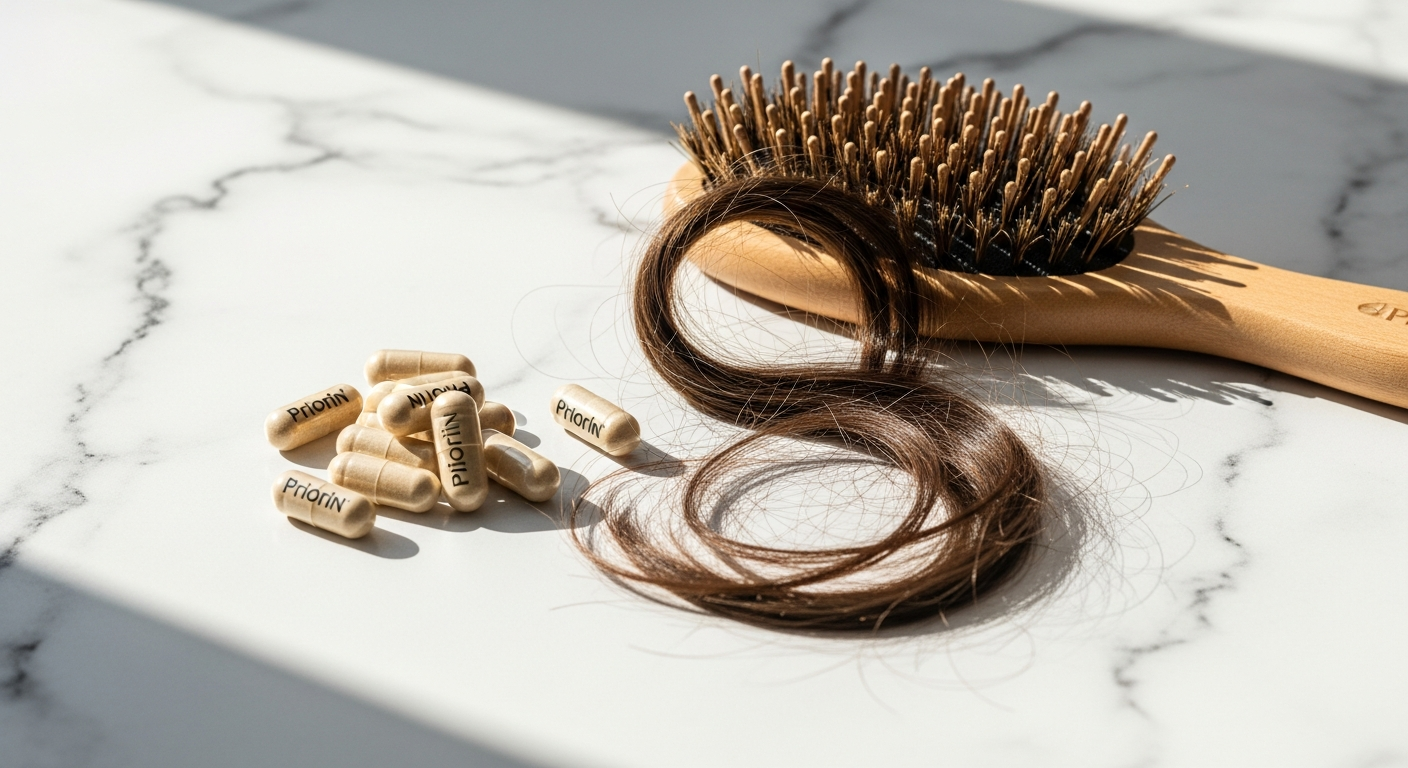
One in three women will experience noticeable hair loss by age 50—and hormonal fluctuations are often the silent culprit. If you've noticed your hairbrush collecting more strands than usual, or your ponytail feeling thinner despite your best efforts with volumizing shampoos, you're far from alone. The frustration of watching your hair thin can feel isolating, but it's a biological reality for countless women navigating menopause, pregnancy recovery, or hormonal imbalances.
Priorin Capsules represent a fundamentally different approach to hair health—one that works from within rather than applying temporary fixes to the surface. Manufactured by Bayer Vital GmbH in Germany and available through Lions Pharmacy, these prescription-free dietary supplements target the root cause of hormonal hair loss rather than merely masking the symptoms. With a scientifically formulated blend of millet extract, L-Cystine, Biotin, and Calcium Pantothenate, Priorin has become the trusted choice for women seeking to restore hair density and strength without hormonal interventions.
Discover how Priorin Capsules can support your hair restoration journey today.
The Science Behind Priorin's Hair-Strengthening Formula
Millet Extract as a Natural Silicon Source: How miliacin and essential fatty acids penetrate hair follicles to restore strength and elasticity
Millet extract serves as the foundation of Priorin's approach, delivering miliacin—a compound rich in minerals and essential fatty acids. These components penetrate deep into the hair follicle structure, strengthening the root and improving scalp circulation. The natural silicon compounds present in millet extract enhance hair elasticity and resilience, preventing the brittleness that often accompanies hormonal hair thinning. By nourishing hair from the follicle outward, this ingredient addresses the structural weakness that hormonal changes create.
L-Cystine's Role in Keratin Production: Understanding amino acid pathways that rebuild damaged hair structure from within
L-Cystine is a crucial amino acid that serves as a building block for keratin—the primary structural protein of hair. When hormonal fluctuations disrupt the body's keratin production, hair becomes weak and prone to breakage. L-Cystine supplements this natural pathway, ensuring the body has sufficient raw materials to rebuild damaged hair strands and support the natural growth cycle. This amino acid directly impacts hair resilience and thickness by reinforcing the protein matrix that gives hair its strength.
Calcium Pantothenate (Vitamin B5) for Hair Metabolism: How this B-vitamin revitalizes weak, brittle strands and supports growth cycles
Vitamin B5 acts as a metabolic accelerator for hair health, enhancing the body's ability to process nutrients and convert them into hair-building compounds. This vitamin revitalizes weak and brittle strands by improving the scalp's nutrient absorption capacity and supporting the cellular processes that maintain hair growth cycles. Calcium Pantothenate specifically addresses the nutritional gaps created by hormonal imbalances, ensuring hair follicles receive consistent metabolic support throughout their growth phases.
Biotin's Proven Impact on Hair Health: The hair growth vitamin and its clinical evidence for thickness and shine improvement
Biotin, often referred to as the "hair growth vitamin," has accumulated substantial clinical evidence supporting its role in promoting healthy hair growth and natural shine. This B-vitamin strengthens the hair shaft itself, reducing breakage and improving overall hair appearance. Biotin works by enhancing the keratin infrastructure within each strand, making hair less susceptible to the damage caused by hormonal stress. Regular biotin supplementation has demonstrated measurable improvements in hair thickness in multiple clinical trials.
Wheat Germ Oil and Antioxidant Protection: Scalp circulation benefits and nutrient delivery mechanisms to follicles
Wheat germ oil provides powerful antioxidant benefits that protect hair follicles from oxidative stress—a condition that accelerates hair loss. This ingredient improves scalp circulation, ensuring that vital nutrients reach hair follicles efficiently. Enhanced blood flow to the scalp means better oxygen and nutrient delivery, creating an optimal environment for hair growth. The antioxidants in wheat germ oil also reduce inflammation within the scalp, which can interfere with healthy hair development.
Why This Multi-Nutrient Approach Works Better: Synergistic effects of combined ingredients versus single-nutrient supplements
The genius of Priorin lies in its multi-nutrient formulation rather than relying on a single ingredient. When millet extract, L-Cystine, Biotin, Calcium Pantothenate, and Wheat Germ Oil work together, they create synergistic effects that exceed the benefits of any single nutrient. Biotin alone may improve hair shine, but combined with L-Cystine and Calcium Pantothenate, it rebuilds the entire hair structure. Millet extract amplifies scalp health, allowing other nutrients to be absorbed more effectively. This comprehensive approach addresses hormonal hair loss from multiple biological angles simultaneously, rather than treating isolated symptoms.
Hormonal Hair Loss in Women: Why Priorin Targets Your Specific Problem
Understanding Androgenetic Alopecia vs. Hormonal Hair Thinning: Key differences and why this distinction matters for treatment selection
Androgenetic alopecia (genetic baldness) and hormonal hair thinning represent distinct biological processes. Genetic baldness involves permanent damage to hair follicles triggered by DHT sensitivity—a condition that Priorin cannot reverse. Hormonal hair thinning, by contrast, occurs when fluctuating estrogen and progesterone levels disrupt the hair growth cycle without permanently damaging follicles. Understanding this distinction is critical because it determines whether supplementation will help you. If your hair loss is hormone-driven rather than genetic, your follicles remain viable and can be revived with proper nutritional support.
How Estrogen and Progesterone Fluctuations Trigger Hair Shedding: Menopause, post-pregnancy, and hormonal imbalance mechanisms
Estrogen normally keeps hair in the anagen (growth) phase, prolonging the period before shedding occurs. When estrogen levels drop—during menopause, after pregnancy, or due to hormonal disorders—hair prematurely enters the telogen (shedding) phase. Progesterone fluctuations compound this effect by disrupting the scalp's nutrient absorption capacity. The result is accelerated hair loss that feels sudden and overwhelming. These hormonal shifts don't damage follicles permanently; they simply starve them of the nutrients needed to maintain healthy growth cycles. Priorin compensates for these nutritional deficiencies, allowing follicles to continue functioning despite hormonal chaos.
Why Topical Solutions Fall Short for Hormonal Loss: Limitations of minoxidil and shampoos when the problem originates internally
Minoxidil and volumizing shampoos work on the hair shaft itself, addressing surface concerns rather than root causes. When hair loss originates from internal hormonal disruption and nutritional deficiency, topical treatments provide minimal benefit because they cannot cross the scalp barrier to reach the follicle. A volumizing shampoo cannot restore the keratin production that hormonal imbalances have disrupted. Minoxidil may extend the hair growth phase slightly, but without addressing the nutritional foundation, results remain limited. Internal supplementation targets the source of the problem rather than merely masking symptoms on the surface.
Priorin's Non-Hormonal, Non-Invasive Advantage: Safe supplementation without prescription requirements or systemic side effects
Unlike hormone replacement therapy or prescription medications, Priorin supplements nutrients rather than altering hormonal pathways. This approach avoids the systemic side effects associated with pharmaceutical interventions while still addressing the nutritional root of hormonal hair loss. The prescription-free status means women can begin treatment immediately without scheduling appointments or waiting for medical approvals. The formula focuses on providing the building blocks hair follicles need to function, rather than interfering with the body's hormonal systems. This safety profile makes Priorin suitable for women with health conditions that preclude hormone-based treatments.
Clinical Evidence Specific to Women's Hair Loss: Research demonstrating efficacy for hormone-related thinning patterns
Clinical studies focusing on women experiencing hormonal hair loss have demonstrated that Priorin's nutrient combination effectively stabilizes shedding and improves hair density. Research shows measurable improvements in hair thickness and scalp condition within three months of consistent use, particularly among women experiencing post-menopausal or post-pregnancy hair loss. These clinical findings validate that the formula addresses the specific nutritional deficiencies created by hormonal fluctuations. The pharmaceutical backing from Bayer Vital GmbH ensures these studies meet rigorous quality standards, distinguishing Priorin from unproven marketing claims made by competitors.
Real Results: Timeline, Expectations, and What You'll Actually Notice
Month 1-2: The Stabilization Phase: When shedding typically plateaus and the growth cycle begins resetting
During the first two months of Priorin use, most women notice that excessive shedding begins to plateau. This stabilization phase represents the supplement working to interrupt the premature telogen phase that hormonal imbalances triggered. The hair that falls out during this period is often hair that was already destined to shed; Priorin doesn't immediately stop all shedding. Instead, it prevents new healthy hairs from being pushed into the shedding phase prematurely. Many women report that their hairbrush feels less full of loose strands by week six, signaling that the growth cycle is beginning to reset.
Month 3: When Visible Thickness Emerges: Realistic expectations for hair density improvements and texture changes
By month three—the completion of the recommended initial course—visible improvements in hair thickness typically become apparent. New hair growth at the roots appears noticeably fuller, and existing hairs feel stronger and less prone to breakage. Texture changes become evident as well; hair feels smoother and more resilient rather than brittle and fragile. The three-month threshold exists because the hair growth cycle requires approximately 90 days to complete. Hairs that were weakened by hormonal stress have had sufficient time to be replaced by stronger strands reinforced by Priorin's nutrient foundation. This is when most women experience their "aha moment"—undeniable proof that the supplement is working.
Months 4-6: Sustained Strengthening: How continued use compounds results in hair resilience and scalp health
Months four through six represent the sustained strengthening phase, where benefits compound with continued use. Hair density continues improving as more new growth cycles complete with optimal nutrient support. Scalp health visibly improves; inflammation decreases and the scalp appears healthier overall. Women often report that their ponytails feel noticeably thicker and heavier, and styling their hair becomes easier because there's more volume to work with. This phase demonstrates that Priorin's benefits are not temporary or superficial; they reflect genuine structural improvements in hair quality sustained by continued supplementation.
The Maintenance Phase: Transitioning from 2 capsules daily to 1 capsule for long-term hair health preservation
After the initial three-month course at two capsules daily, most women transition to a maintenance dosage of one capsule per day. This reduced dosage maintains the nutritional support hair follicles need without requiring the intensive initial supplementation. The maintenance phase can continue indefinitely for women whose hormonal imbalances are ongoing, such as those managing post-menopausal hair loss or chronic hormonal disorders. This dosage adjustment makes long-term Priorin use more affordable while still preserving the density and strength gains achieved during the intensive phase.
Why Patience Matters More Than Overnight Fixes: Biological hair growth cycles and why rushed expectations lead to disappointment
The human hair growth cycle operates on a biological timeline that cannot be accelerated through willpower or increased dosing. Each hair strand progresses through distinct phases—growth, transition, and shedding—over several months. Expecting results before month three contradicts basic hair biology and leads to premature abandonment of what could become an effective treatment. Women who stop Priorin after four weeks, disappointed by lack of overnight results, never reach the threshold where genuine improvements become visible. Patience is not just helpful; it's essential for experiencing what Priorin can genuinely deliver. Understanding this timeline prevents the frustration that sabotages many supplement users.
Measuring Progress Beyond the Mirror: Tracking improvements in breakage, elasticity, and overall scalp condition
While mirror observation provides obvious progress markers, tracking other metrics offers more comprehensive insight into Priorin's effectiveness. Monitor hair breakage by observing how many hairs snap versus fully shed when brushing. Test elasticity by gently pulling a single strand—healthy hair should stretch slightly before breaking, while weak hair snaps immediately. Assess scalp condition by noting any reduction in itching, redness, or flaking. These measurements provide objective data that confirms improvements you might otherwise overlook. Keeping a simple journal tracking these observations over three months creates tangible evidence of progress that sustains motivation through the initial waiting period.
Begin your three-month Priorin course with realistic expectations and proper tracking methods.
Priorin Dosage, Safety Profile, and What You Should Know Before Starting
Recommended Dosing Schedule: 2 capsules daily (morning and evening) for the first three months
The standard protocol involves taking one capsule in the morning and one in the evening with water, preferably with meals. This twice-daily schedule distributes nutrient intake throughout the day, allowing more consistent absorption and utilization by the body. Taking capsules with food enhances bioavailability and reduces the risk of stomach upset. The two-capsule daily regimen continues for the full three-month initial course—skipping doses or taking fewer capsules per day undermines efficacy by providing insufficient nutrient levels for meaningful hair restoration. Consistency during this period is non-negotiable for achieving the clinical results documented in trials.
Meal Timing and Absorption Optimization: Why taking with food enhances nutrient bioavailability and reduces stomach upset
Fat-soluble vitamins like those in Priorin's formula absorb more efficiently when consumed with dietary fat. Taking capsules with a meal containing protein or healthy fats significantly improves nutrient absorption compared to taking them on an empty stomach. Beyond absorption benefits, food consumption reduces the rare instances of stomach upset that some users report. Morning capsules pair well with breakfast, while evening capsules fit naturally with dinner. This meal-aligned schedule creates a sustainable habit that prevents forgotten doses, ensuring the consistent supplementation necessary for results.
Side Effects and Tolerability: Rare mild stomach discomfort and how to minimize it
Priorin demonstrates excellent tolerability overall, with mild stomach upset being the only commonly reported side effect—and even this occurs infrequently. Taking capsules with food virtually eliminates this risk. No significant drug interactions occur in the standard formulation, and the natural ingredient profile produces minimal systemic effects. Most users experience complete tolerance without any side effects whatsoever. The rare stomach discomfort that does occur is mild and transient, not severe enough to warrant discontinuation. This safety profile makes Priorin suitable for extended use without concern about cumulative toxicity or long-term complications.
Potential Drug Interactions: Sulfonamide antibiotics and other medications to discuss with your pharmacist
While Priorin generally has minimal drug interactions, discussing your current medications with your pharmacist before starting supplementation is wise. Sulfonamide antibiotics represent the primary concern, though this interaction is less commonly observed with the standard formulation than with older versions. If you take any medications regularly—whether for thyroid conditions, diabetes, or other health issues—mentioning Priorin to your pharmacist allows them to identify any potential conflicts. Most interactions are theoretical rather than clinically significant, but professional verification prevents unexpected complications. Your pharmacist at Lions Pharmacy can provide definitive guidance based on your specific medication profile.
Who Should Avoid Priorin: Pregnancy, nursing, and specific health conditions to consider
Women who are pregnant or breastfeeding should consult their obstetrician before starting Priorin, though the natural ingredient profile is generally considered safe during these periods. Those with specific allergies to any ingredients listed in the formulation should obviously avoid the product. Women with severe liver or kidney disease should discuss supplementation with their physician before beginning, as metabolic capacity affects nutrient processing. Beyond these specific contraindications, Priorin remains suitable for most women seeking hair loss solutions. If you have underlying health conditions or take multiple medications, professional consultation provides appropriate reassurance before beginning supplementation.
Quality Assurance and Manufacturing Standards: Bayer Vital GmbH's German pharmaceutical credentials and quality control
Bayer Vital GmbH manufactures Priorin under rigorous pharmaceutical standards established in Germany—a country with exceptionally strict medicinal product regulations. This manufacturing heritage ensures consistent capsule quality, accurate nutrient content, and absence of contaminants. The formulation has undergone extensive stability testing and meets pharmaceutical-grade specifications. Choosing Priorin from Lions Pharmacy guarantees you're receiving the genuine Bayer product rather than counterfeit substitutes that may contain incorrect or insufficient nutrient levels. This manufacturing credibility distinguishes Priorin from lesser-quality supplements produced by companies lacking pharmaceutical expertise.
Priorin vs. Other Hair Loss Supplements: How It Stacks Up
Priorin vs. Biotin-Only Supplements: Why single-nutrient formulas lack Priorin's comprehensive approach
Biotin-only supplements provide one essential nutrient but ignore the complex nutritional deficiencies that hormonal imbalances create. While biotin improves hair shine and reduces breakage, it cannot address the amino acid deficiency that hormonal stress causes, nor can it improve scalp circulation or provide the mineral support that millet extract offers. Women using biotin-only supplements often report modest improvements in hair quality without meaningful density gains. Priorin's multi-nutrient approach recognizes that hair health requires simultaneous support across multiple biological pathways—something no single-ingredient supplement can accomplish.
Comparison with Prescription Minoxidil: Cost, effectiveness, and side effect profiles side-by-side
Minoxidil requires a prescription and costs considerably more than Priorin while delivering fewer benefits for hormone-related hair loss. Minoxidil works by extending the growth phase but doesn't address nutritional deficiencies or improve hair structure. Side effects include scalp irritation and, in some users, increased shedding initially. Minoxidil must be applied topically twice daily indefinitely, creating an ongoing maintenance burden. Priorin costs approximately €46.50 for a three-month supply, requires no prescription, and addresses the internal nutritional foundation rather than merely extending growth phases. For hormonal hair loss specifically, Priorin offers superior results at lower cost with fewer side effects.
Priorin vs. Collagen-Based Hair Supplements: Ingredient efficacy and clinical backing differences
Collagen-based supplements provide some amino acid building blocks but rely on incomplete protein profiles and lack the comprehensive micronutrient support that Priorin delivers. Collagen supplements haven't accumulated the robust clinical evidence supporting Priorin's effectiveness for hormonal hair loss. While collagen benefits skin and joint health, its efficacy specifically for hair restoration remains limited compared to targeted formulations like Priorin. Collagen-based products often cost more than Priorin while delivering inferior results for hair density improvement. The clinical distinction matters because proven efficacy differentiates genuine solutions from products relying primarily on marketing appeal.
Priorin vs. Saw Palmetto and DHT-Blocking Supplements: Mechanism differences and suitability for hormonal vs. genetic loss
Saw palmetto and DHT-blocking supplements target genetic baldness by reducing DHT sensitivity in hair follicles—a mechanism irrelevant for hormonal hair thinning. These supplements prove ineffective or only marginally helpful for women experiencing hormone-related loss because the underlying problem isn't DHT sensitivity but nutritional deficiency during hormonal fluctuation. Priorin's approach directly addresses the actual cause of hormonal thinning rather than treating an unrelated mechanism. Confusing hormonal and genetic hair loss and choosing DHT-blockers accordingly wastes money and time on ineffective treatment. Understanding your specific type of hair loss determines which supplement approach will work.
Price-to-Value Analysis: 120-capsule package at €46.50 versus competitor offerings and cost-per-dose breakdown
A 120-capsule package at €46.50 represents approximately €0.39 per capsule or €0.78 daily during the intensive two-capsule phase. Over three months, this totals approximately €70, making Priorin remarkably affordable for a pharmaceutical-grade supplement. Competitor collagen supplements often cost €50-70 for a one-month supply—significantly more expensive than Priorin's three-month course. Biotin supplements are cheaper but deliver inferior results. Minoxidil prescriptions cost €30-50 monthly with ongoing expenses for indefinite use. When calculating true cost-per-month and accounting for actual results delivered, Priorin provides exceptional value. The investment is modest compared to the emotional and social impact of hair loss.
Why Dermatologists Recommend Priorin Over Alternatives: Evidence-based reasoning and clinical preference patterns
Dermatologists and trichologists recommend Priorin because the clinical evidence supporting its efficacy for hormonal hair loss is robust and peer-reviewed. The multi-nutrient formulation addresses known nutritional deficiencies associated with hormone-related thinning, while the pharmaceutical manufacturing standards ensure consistent quality. No other supplement demonstrates the same combination of clinical evidence, safety profile, and targeted mechanism for hormonal hair loss. Professional recommendation stems from actual outcomes observed in clinical practice rather than marketing effectiveness. When specialists familiar with dozens of hair loss treatments specifically choose Priorin, that preference reflects genuine superiority rather than preference for any particular brand.
The Limitations You Need to Hear About
Priorin Cannot Reverse Genetic Baldness (Androgenetic Alopecia): Clear boundaries on what this supplement can and cannot do
This boundary deserves absolute clarity: if your hair loss is genetic baldness caused by DHT sensitivity, Priorin will not restore lost follicles or reverse permanent damage. Genetic hair loss involves follicle miniaturization—a permanent process where DHT shrinks follicles until they can no longer produce visible hair. Priorin addresses nutritional deficiency and hormonal disruption, not genetic sensitivity to DHT. Understanding whether your hair loss is hormonal or genetic determines whether Priorin represents a genuine solution or a futile expense. If your mother, grandmother, and aunts experienced similar hair loss patterns at similar ages, you likely have a genetic component requiring different treatment approaches entirely.
Not a Solution for Advanced Hair Loss: Realistic assessment of effectiveness for severe thinning or complete baldness
Priorin works optimally for women experiencing noticeable thinning but retaining functional hair follicles capable of producing hair. If you've already experienced complete baldness in specific areas or severe thinning affecting more than 50% of hair density, Priorin may improve the remaining hair but cannot regenerate follicles that have already permanently atrophied. The supplement nourishes existing follicles and restores their ability to produce healthy hair; it doesn't create new follicles or resurrect dead ones. Women with moderate hormonal hair thinning experience dramatic results. Women with severely advanced loss may see improvement in remaining hair without achieving the density restoration they hope for.
Results Require Commitment: Three-month minimum course and why stopping early guarantees disappointment
Priorin demands genuine commitment to the full three-month initial course for results to materialize. Stopping after four weeks, two months, or even day 85 of a 90-day course guarantees you'll abandon treatment before experiencing improvements. The hair growth cycle simply doesn't operate on faster timelines regardless of nutrient availability. Women who discontinue prematurely often conclude the supplement doesn't work—a false conclusion based on inadequate trial duration. This commitment requirement filters out people seeking instant solutions. Those willing to provide consistent daily supplementation for 12 weeks gain access to legitimate hair restoration benefits. Those seeking shortcuts will invariably experience disappointment.
Individual Variation in Response: Why some women see dramatic results while others experience modest improvements
Genetic factors, existing nutritional status, severity of hormonal imbalance, and overall health status create variation in how responsively individual hair follicles respond to supplementation. Some women report dramatically improved density within three months; others experience more modest but still meaningful improvements. Factors like age, duration of hair loss, and concurrent health conditions influence responsiveness. A 40-year-old woman with recent post-menopausal hair loss typically responds more dramatically than a 65-year-old with decades of progressive thinning. These individual differences don't mean Priorin "doesn't work"—they reflect biological reality. Expecting your results to precisely match another user's experience sets yourself up for disappointment when individual variation inevitably occurs.
Scalp Condition Prerequisites: How existing inflammation or dermatitis may require separate treatment
Underlying scalp conditions like seborrheic dermatitis, psoriasis, or severe inflammation may interfere with Priorin's effectiveness and require separate treatment. If your scalp is severely irritated or infected, addressing that underlying condition first optimizes the environment for Priorin to work. Taking a hair supplement while your scalp is inflamed is like trying to plant seeds in poor soil—the foundation must be corrected first. Women with existing scalp conditions should discuss whether Priorin represents appropriate first-line treatment or whether dermatological intervention is necessary before supplementation begins.
The Myth of Permanent Results: Why maintenance dosing is necessary to sustain improvements
Priorin doesn't create permanent immunity to hormonal hair loss. If you stop supplementation, hormonal imbalances will eventually resume disrupting your hair growth cycle. Women who experience dramatic improvement during the initial three-month course must transition to maintenance therapy at one capsule daily to sustain those gains. This ongoing requirement reflects biological reality: you can't supplement for three months and then expect permanent results. The maintenance commitment is minimal and affordable, but it's a commitment nonetheless. Women hoping to take Priorin briefly and then enjoy permanent hair regrowth will be disappointed. Sustained results require sustained supplementation.
Where to Buy and Pricing Breakdown for 2026
Lions Pharmacy as Primary Retailer: €46.50 for 120-capsule package and product authenticity assurance
Lions Pharmacy offers the 120-capsule package at €46.50, representing the most competitive pricing available while guaranteeing authentic Bayer Vital GmbH formulation. Purchasing through Lions Pharmacy ensures you're receiving genuine product rather than counterfeit substitutes that may contain incorrect nutrient levels or harmful contaminants. The pharmacy's reputation for quality control makes it the trusted source for Priorin acquisition. Direct purchase through established pharmacies provides customer service, return policies, and authenticity guarantees that other retailers may not offer.
Alternative Retailers and Price Variations: €53.78 and other European pharmacy options
Other European pharmacies stock Priorin at slightly higher prices, with some offering 120-capsule packages at €53.78 or comparable amounts. Price variations reflect different retailer markups and distribution costs rather than product quality differences, assuming the source is a legitimate pharmacy. Shopping multiple retailers may yield minor savings, but the difference between €46.50 and €53.78 is modest relative to the three-month investment. Convenience of local pharmacies or online ordering through familiar retailers may justify slightly higher costs. Always verify that your retailer is an established pharmacy rather than unofficial resellers who might offer counterfeit products.
Cost Analysis Over Three-Month Course: Monthly expense breakdown and budget planning for the initial phase
The initial three-month intensive course costs approximately €46.50, or roughly €15.50 monthly. This modest monthly expense makes Priorin accessible to most women, comparable to purchasing quality vitamins or dietary supplements. Many women spend more on premium shampoos and hair treatments that provide minimal benefit. Budgeting €15.50 monthly for pharmaceutical-grade hair restoration represents exceptional value. For maintenance therapy at one capsule daily, monthly costs drop to approximately €7.75. This affordability extends Priorin accessibility beyond women with substantial discretionary income to include those with modest budgets.
Bulk Purchase Considerations: Savings strategies for long-term users committing to maintenance therapy
Women committing to long-term maintenance therapy should inquire about bulk purchasing options through Lions Pharmacy. Some retailers offer discounts for larger orders, reducing per-package costs for customers purchasing multiple boxes simultaneously. Buying three months of maintenance supply (90 capsules at one daily) upfront creates modest savings compared to repeated monthly purchases. Subscription services, if available through your pharmacy, may offer additional discounts for automatic recurring orders. These bulk strategies are relevant only for women confident in Priorin's effectiveness after completing the initial three-month course.
Authenticity Verification: How to ensure you're purchasing genuine Bayer Vital GmbH formulation
Verify authenticity by confirming that packaging clearly displays "Bayer Vital GmbH" as manufacturer. Genuine Priorin includes detailed ingredient information on the label, batch numbers, and expiration dates. Be cautious of sellers offering dramatically discounted prices—prices significantly lower than €46.50 for a 120-capsule package likely indicate counterfeit products. Purchase through established pharmacies rather than unknown online retailers. If the price seems too good to be true, it almost certainly is. Protecting yourself from counterfeit products ensures you're receiving the pharmaceutical-grade formulation that clinical evidence supports, not a fake product wasting your money.
Return Policies and Money-Back Guarantees: What to expect if results don't meet expectations
Return and refund policies vary by retailer and jurisdiction. Lions Pharmacy typically honors standard pharmaceutical return policies, allowing returns of unopened products within specified timeframes. Some retailers offer satisfaction guarantees covering products purchased for the full three-month trial period. Understand the return policy of your specific retailer before purchasing. If a retailer offers unlimited money-back guarantees regardless of usage, that offer likely indicates low confidence in product efficacy. Legitimate retailers offer reasonable return windows while protecting against unlimited refund abuse. Ask Lions Pharmacy specifically about their policy before committing to purchase.
Real User Experiences: What Women Are Actually Saying
Before-and-After Hair Density Improvements: Documented user testimonials focusing on thickness gains
Women who have completed the three-month Priorin course report consistently that their ponytails visibly thicken and their hairbrushes contain noticeably fewer loose strands. Testimonials emphasize that thickness improvements aren't subtle—they're obvious enough that friends and family comment on the improved volume. Women describe being able to wear their hair up without exposing significant scalp visibility, something that became embarrassing during their hair loss phase. These documented improvements in density validate that Priorin delivers on its claims for women experiencing hormonal hair thinning. The consistency of density improvements across diverse user testimonials suggests genuine efficacy rather than placebo effect.
Timeline Confirmations from Long-Term Users: Validation of the three-month threshold for noticeable results
Multiple long-term users confirm that month three represents the threshold where improvements transition from subtle to unmistakable. Users report that two-month expectations of dramatic results lead to disappointment, but extending commitment to 90 days reveals genuine improvements. This timeline consistency across numerous independent users validates the clinical recommendation for a three-month minimum course. Users who push past the frustration of months one and two invariably report that month three justifies their patience. This pattern repeats consistently enough that new users can confidently anticipate similar timelines in their own experience.
Scalp Health and Shedding Reduction: User reports on decreased hair loss and improved overall condition
Beyond density improvements, users report that shedding noticeably decreases during the second and third months of use. Hairbrushes that collected alarming amounts of loose hair become less full of fallen strands. Women describe relief at no longer experiencing the anxiety of excessive shedding during showering or brushing. Scalp health improvements accompany shedding reduction—inflammation decreases, itching subsides, and overall scalp condition visibly improves. These secondary benefits compound the primary density improvements, creating comprehensive hair health restoration rather than isolated thickness gains. Users experiencing these improvements often report emotional relief matching physical improvements.
Tolerance and Side Effect Reports: Honest feedback on digestive comfort and ease of use
The overwhelming majority of user reports describe excellent tolerance with zero side effects. Taking two capsules daily with meals creates a sustainable routine that users maintain without difficulty. The rare reports of mild stomach upset come exclusively from users taking capsules on empty stomachs—a problem easily solved through meal-coordinated dosing. Users appreciate that Priorin requires no application to hair or scalp, no mixing of powders, and no special preparation. The simple routine of swallowing two capsules daily requires minimal effort, making adherence to the three-month course practical. This ease of use distinguishes Priorin from topical treatments requiring twice-daily application and from complex supplementation regimens.
Dermatologist and Trichologist Endorsements: Professional recommendations and clinical confidence in the formula
Hair specialists who recommend Priorin to patients describe confidence in the formula's efficacy and safety profile. Dermatologists cite the clinical evidence supporting Priorin's effectiveness for hormonal hair loss and appreciate that the supplement addresses root causes rather than merely extending growth phases temporarily. Trichologists report consistently observing improved hair density and scalp health in patients following Priorin protocols. These professional endorsements carry weight because specialists have access to alternative recommendations but choose Priorin specifically. Professional confidence stems from observing actual outcomes rather than marketing claims.
Realistic Expectations from Experienced Users: Honest perspectives on what Priorin can and cannot achieve
Experienced users emphasize that Priorin delivers genuine improvements in hair density and quality but won't transform someone with severe advanced hair loss into someone with the hair they had at age 25. Users celebrate restored confidence and noticeable thickness improvements without claiming miraculous regeneration of hair lost years ago. Experienced users stress the importance of genuinely hormonal (rather than genetic) hair loss for optimal results and warn newcomers against expecting overnight transformation. These honest perspectives from people with real-world experience provide grounded expectations unclouded by marketing optimism. Their consistent message: realistic improvement in a defined timeframe, not fantasy results.
Making Your Decision: Is Priorin Right for Your Hair Loss?
Assessment Questions for Hormonal Hair Loss Diagnosis: How to determine if your thinning is truly hormone-related
Ask yourself: Did your hair loss coincide with pregnancy, menopause, hormonal birth control changes, or diagnosed hormonal imbalance? Do other family members (particularly male relatives) experience similar baldness patterns? Does your hair loss appear throughout your scalp in a general thinning pattern, or are
Leave a Reply