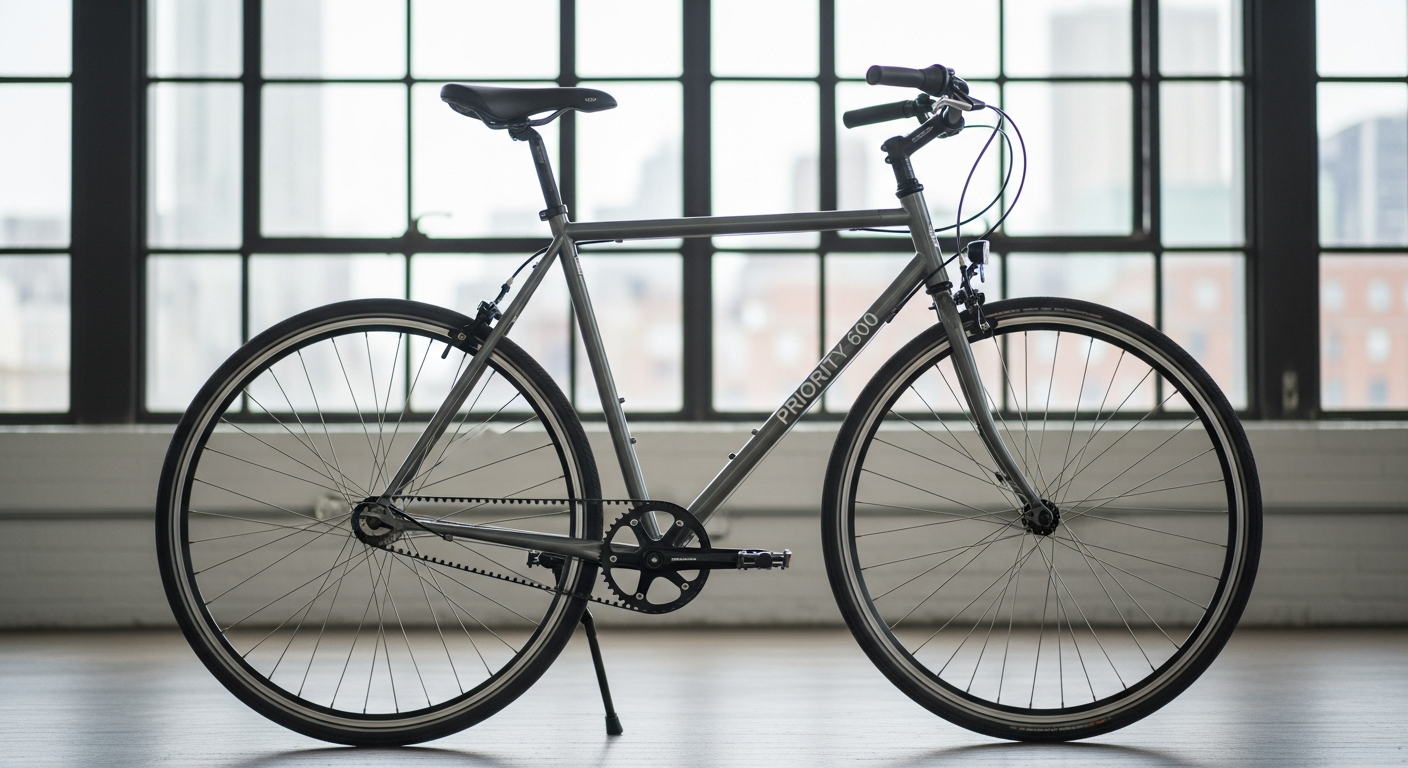
Imagine never cleaning a chain again. Never worrying about rust, grease stains on your pants, or derailleur adjustments eating into your riding time. The Priority 600 all-road commuter bicycle delivers exactly that—a premium cycling experience engineered to eliminate the friction that plagues traditional bikes.
Priority Bicycles has built its reputation on one radical principle: bikes should require less maintenance, not more. The Priority 600 embodies this philosophy through its Pinion C1.12 internal gearbox and Gates Carbon Drive belt system—technologies borrowed from automotive engineering and adapted for cyclists who refuse to compromise on reliability or performance.
Discover the Priority 600 and transform your commute today.
Engineering Excellence: The Pinion C1.12 Gearbox Explained
How the Pinion C1.12 Gearbox Differs Fundamentally from Traditional Derailleurs and Hub Gears
The Pinion C1.12 represents a departure from conventional drivetrain architecture. Unlike traditional derailleurs that hang vulnerably from the frame, exposed to impacts and mud, the Pinion system houses all gear-shifting mechanisms internally. This fundamental design difference eliminates the exposed pivot points and cables that require constant adjustment. Hub gears, while internal, typically offer more limited gear ranges and heavier weights. The Pinion C1.12 splits the difference—delivering internal protection while maintaining a range that rivals derailleur systems.
The 600% Gear Range: What It Means for Climbing Steep Hills and Maintaining Speed on Flats
A 600% gear range translates to a ratio of 6:1 between the highest and lowest gears. Practically speaking, this means the Priority 600 can effortlessly push up punishing inclines that would leave riders on conventional bikes gasping and dismounting, while still maintaining efficient pedaling speed on flat stretches. The 12 individual gears distribute themselves evenly across this spectrum, eliminating the overlapping gear problem where adjacent sprockets feel nearly identical. Commuters face varied terrain daily—rolling hills one moment, flat avenues the next—and this gear range handles both scenarios without compromise.
Former Porsche Engineers' Involvement and How Automotive Transmission Principles Translate to Cycling
The Pinion gearbox wasn't designed by bicycle engineers alone. Former Porsche engineers brought precision transmission expertise to the project, and the influence shows. Like automotive gearboxes, the Pinion system uses sealed bearings, hardened steel internals, and a design philosophy that prioritizes durability over lightness. Automotive transmissions endure far greater forces than bicycle drivetrains, yet Porsche's engineering team adapted these proven principles for cycling applications. The result feels more like a miniaturized car transmission than a traditional bicycle component.
Fully Enclosed Design That Protects Internal Components from Dirt, Water, and Corrosion
Every internal surface of the Pinion C1.12 sits sealed away from the elements. Rain, salt spray, and mud—environmental hazards that destroy exposed derailleurs—cannot penetrate the sealed casing. This protection translates directly into longevity. Coastal riders and those enduring harsh winters experience particularly severe corrosion issues with traditional systems. The fully enclosed design eliminates that vulnerability entirely.
The Gates Carbon Drive Belt: Why Chains Are Becoming Obsolete
What Makes Carbon Belt Drive Technology Superior to Traditional Steel Chains
Gates Carbon Drive technology employs a reinforced rubber belt with carbon-fiber tensile cords instead of the steel links found on traditional chains. The belt's smooth, continuous surface resists the snagging and catching issues that plague chain systems. Carbon fiber provides the necessary strength while distributing tension more evenly than chain links. The result is a drivetrain that feels smoother, shifts more quietly, and rarely experiences the sudden failure modes that chains encounter.
Elimination of Grease, Oil, and the Constant Need for Lubrication
Traditional chains demand regular lubrication. Riders must choose between wet lubes (which attract dirt) and dry lubes (which wash off in rain), then apply them frequently. The Gates belt requires no such maintenance. Its rubber composition provides sufficient grip and durability without any lubricant whatsoever. This fundamental difference saves riders hours of maintenance over a bike's lifetime while eliminating the constant low-level frustration of managing chain lube.
Rust-Resistance and Durability in Wet, Salty, and Humid Riding Environments
Steel chains corrode. In coastal areas where salt air accelerates oxidation, or in humid climates where moisture constantly condenses, chains deteriorate rapidly. The Gates belt resists both salt and moisture. Its rubber-based composition simply doesn't rust. Riders in challenging environments—whether battling coastal spray or enduring relentless humidity—find that a Gates belt outlasts conventional chains by years, even with zero maintenance.
Cleanliness Advantage: No Greasy Hands, No Stained Clothing After Maintenance
Anyone who's maintained a bike knows the ritual: dark grease inevitably transfers to hands, clothes, and surrounding surfaces. The Gates belt eliminates this entirely. Maintenance (rarely needed) doesn't involve any messy lubrication. Riders can work on their bikes in casual clothing without fear of stains. This practical advantage, though subtle, improves the ownership experience substantially.
Experience the cleanliness and reliability of the Priority 600's belt drive system.
Built for Every Road: Tire and Brake System Performance
WTB Horizon 650BX 47C Road Plus Tires: Specifications and What Road Plus Means
The Priority 600 rolls on WTB Horizon 650BX 47C tires. The 650B wheel size sits between traditional road wheels and larger 700c options, offering a sweet spot for all-road versatility. The 47c width (47 millimeters) provides substantial volume without the rolling resistance of full mountain bike tires. "Road Plus" designation indicates these tires bridge the gap between road and gravel applications. The 650B diameter and generous 47c width combine to deliver the low rolling resistance of road tires with the stability and traction of slightly chunkier rubber.
Tread Design and How These Tires Perform on Pavement, Gravel, and Light Off-Road Surfaces
WTB Horizon tread balances smooth center knobs (for low rolling resistance on pavement) with slightly more aggressive shoulder knobs (for gravel traction). This design allows the Priority 600 to roll efficiently on asphalt while maintaining confident grip on unpaved surfaces. The tread pattern won't match dedicated gravel tires on extremely technical terrain, but for light off-road capability and mixed-surface commuting, the balance is excellent. Riders can confidently take rail trails, dirt farm roads, and light forest paths without concern.
Hydraulic Disc Brake System: Stopping Power and Modulation in Various Weather Conditions
Hydraulic disc brakes deliver consistent, powerful stopping force regardless of weather. Unlike rim brakes, which perform terribly in rain or mud, hydraulic discs maintain full effectiveness when wet. The hydraulic system provides excellent modulation—riders can feather the brakes smoothly without sudden grabbing. This translates to safer, more predictable deceleration in emergency situations. The Priority 600's brakes inspire confidence in heavy traffic and on descents.
Tire Pressure Recommendations for Different Riding Conditions and Terrain Types
The 47c width allows considerable flexibility in tire pressure. For pure road commuting on smooth asphalt, 60–70 psi maximizes efficiency. Mixed-surface riding benefits from 50–60 psi, which improves traction without sacrificing efficiency. On gravel and light off-road terrain, dropping to 40–50 psi increases comfort and grip substantially. The wide tire volume means lower pressures don't create the pinch-flat risks that plague narrower tires, giving riders genuine versatility in how they set up the bike for different routes.
Safety and Convenience: Integrated Dynamo Lighting System
How Dynamo Hub Technology Generates Power While You Ride
The Priority 600's front hub contains a small generator. As the wheel rotates, internal magnets pass by coils of wire, creating electrical current through electromagnetic induction. This power generation requires virtually no additional pedaling effort—studies show resistance of only 2–3 watts, barely noticeable during normal riding. Unlike battery-powered lights that drain and require charging, dynamo systems work continuously whenever the wheels turn.
Front and Rear Light Integration: Brightness Levels and Visibility Standards
The integrated lights meet visibility standards suitable for daily commuting and evening riding. The front light provides adequate illumination for riding on unlit roads at moderate speeds, while the rear light ensures drivers see the cyclist from behind. Neither light matches the brightness of high-end battery-powered systems designed for mountain biking or extreme conditions, but both exceed minimum safety standards for urban commuting. The lights activate automatically as conditions darken.
Elimination of Battery Anxiety: Never Forgetting to Charge Lights Again
Commuters relying on battery lights face perpetual anxiety: Did I charge them last night? Will they last the full ride home? The dynamo system removes this concern entirely. As long as you're riding, your lights function. No charging cables, no dead batteries, no forgotten equipment in bedrooms. This psychological advantage—one less thing to manage in daily life—shouldn't be underestimated.
Weather Performance: How Dynamo Lights Function in Rain, Snow, and Extreme Conditions
Dynamo systems thrive in conditions that disable batteries. Cold weather doesn't reduce dynamo output the way it drains batteries. Rain doesn't interfere with power generation. Snow accumulation might dim the lights slightly (by blocking the lens), but the power source itself remains unaffected. Riders in harsh climates find dynamo systems substantially more reliable than battery alternatives.
Price Point Analysis: Is $2,200–$2,499 Worth the Investment?
Component-by-Component Cost Breakdown and Why Premium Parts Command Higher Prices
The Pinion C1.12 gearbox alone commands a premium price reflecting years of development, precision manufacturing, and sealed bearing quality. The Gates Carbon Drive belt system costs more than traditional chains. Hydraulic disc brakes exceed mechanical braking systems in complexity and performance. The aluminum frame from a reputable manufacturer, the WTB tires, the dynamo hub—each component represents investment in durability over cost-cutting. Priority Bicycles doesn't use economy-grade parts designed for disposable bikes. Every dollar of the $2,200–$2,499 price reflects materials and engineering selected for longevity.
Lifetime Cost of Ownership: Maintenance Savings Offset the Higher Upfront Price
Consider a bike's total cost over ten years of daily commuting. A $1,000 bike with a traditional drivetrain requires chain replacement ($20–50) every 1,500 miles. Derailleur adjustments and repairs ($50–150) occur regularly. Cable replacement, rust treatment, and general upkeep accumulate. A 10,000 annual-mile commuter spends $300–500 yearly on maintenance for a traditional bike. The Priority 600, with its sealed Pinion gearbox and maintenance-free belt, might require $50–100 annually in upkeep. Over ten years, the traditional bike costs $3,000–5,000 total (purchase plus maintenance), while the Priority 600 costs $2,700–2,900 total. The premium bike achieves cost parity while requiring dramatically less time and effort.
Comparison to Entry-Level Commuter Bikes with Traditional Drivetrains
Entry-level commuter bikes cost $400–800 and rely on traditional derailleurs, chains, and rim brakes. These bikes require constant maintenance and typically last 3–5 years before major repair or replacement becomes necessary. The Priority 600, at three times the price, offers a lifespan potentially triple as long, dramatically reduced maintenance, and superior performance across varied terrain. For casual riders using bikes occasionally, entry-level makes sense. For daily commuters, the calculation favors the Priority 600.
Return on Investment for Daily Commuters Who Eliminate Car Trips
A daily 10-mile round-trip commute by car costs roughly $3–5 per day in fuel, maintenance, and insurance. Over a year, that's $750–1,250 in driving costs alone. Parking fees add more. Cycling eliminates these expenses entirely. Even factoring in bike maintenance and replacement, a daily commuter recovers the Priority 600's purchase price in two years through eliminated driving costs. Every year thereafter represents pure savings, plus health benefits from daily physical activity.
Who Should Buy the Priority 600?
Daily Urban Commuters Who Value Reliability Over Trend-Chasing
The Priority 600 appeals to commuters who prioritize getting to work reliably over owning the latest or lightest bike. Urban commuting demands durability and ease of maintenance—exactly what the Priority 600 delivers. Commuters cycling in all weather conditions benefit most from sealed drivetrains and integrated lighting.
Riders in Regions with Harsh Weather, Salt Spray, or High Humidity
Coastal cyclists endure perpetual corrosion challenges. Mountain communities experience temperature extremes. Humid regions battle constant moisture. The Priority 600's sealed drivetrain, rust-resistant belt, and durable components excel in these environments where traditional bikes deteriorate quickly.
Cyclists Who Want to Eliminate Maintenance Time and Focus on Riding
Some riders view bike maintenance as therapeutic; others see it as a chore. For the latter group, the Priority 600 eliminates the friction that diverts time and energy from actual riding. The minimal-maintenance philosophy means more hours in the saddle, fewer hours hunched over repair stands.
Adventure-Minded Commuters Who Want Occasional Gravel and Off-Road Capability
The 600% gear range and Road Plus tires position the Priority 600 as a genuine all-road bike. Weekend gravel adventures, unpaved shortcuts during commutes, and light off-road exploration all fall within the bike's capable range. Riders wanting versatility across multiple terrain types find the Priority 600 more suitable than pure road bikes or single-speed fixies.
Long-Term Durability and Reliability: The Ownership Experience
Expected Lifespan of the Pinion Gearbox and Gates Belt Under Regular Use
The Pinion C1.12 gearbox is engineered for durability measured in decades, not years. Sealed bearing quality and hardened steel internals resist wear at rates that allow 50,000+ miles before major servicing becomes necessary. The Gates belt similarly endures 50,000+ miles under normal conditions. For a commuter riding 10,000 miles annually, these components should function reliably for five years or more with minimal intervention.
Frame Durability and Resistance to Fatigue or Stress Cracks
The aluminum frame benefits from Priority Bicycles' quality construction standards. Aluminum doesn't rust, though it can corrode if protective finishes are breached. Stress cracks develop if frames experience repeated impacts or flexing beyond design parameters. The Priority 600's frame design emphasizes durability and comfort over extreme lightness, distributing forces across the structure more evenly than race-oriented designs.
Component Replacement Schedules and Typical Maintenance Intervals
The Pinion gearbox requires no maintenance beyond occasional inspections until reaching 50,000+ mile intervals. The Gates belt similarly lasts 50,000+ miles without servicing. Hydraulic brakes might require pad replacement every 2,000–5,000 miles depending on riding style and conditions. Tires typically last 3,000–5,000 miles. The dynamo hub operates indefinitely without maintenance. Overall maintenance intervals stretch far beyond what traditional bikes demand.
Real-World User Reports: How Many Miles Before Major Repairs
Priority Bicycles owners frequently report minimal repairs across ownership periods spanning 5–10 years and 50,000+ miles. The most common maintenance complaints involve occasional creaking from frame joints or subtle noise from the rear hub while coasting—minor issues that don't affect functionality. Major drivetrain failures are exceptionally rare, with most problems occurring from external damage (crashed frames, bent rims) rather than component wear. User satisfaction with reliability and durability remains consistently high.
The Priority 600 Represents a Paradigm Shift in Commuter Cycling
The Priority 600 all-road commuter bicycle isn't just another bike—it's a statement that cycling infrastructure can be smarter, cleaner, and more reliable. From the Pinion C1.12 gearbox engineered by former Porsche designers to the maintenance-free Gates Carbon Drive belt, every component reflects a philosophy that your time matters more than endless chain adjustments. Yes, the $2,200–$2,499 price tag stings, but for riders who commute daily, face harsh weather conditions, or simply refuse to tolerate grease-stained hands and rusty components, this bike delivers unmatched value over its lifetime.
The Priority 600 fundamentally reframes what commuter cycling can be. Rather than accepting bikes as high-maintenance tools that demand constant attention, it presents an alternative: a bicycle engineered with the same precision and durability principles applied to automobiles. The sealed drivetrain won't need cleaning after riding through puddles. The belt won't rust in salt air. The integrated lights won't fail from forgotten charging. These features combine to create a cycling experience that feels genuinely modern compared to traditional bikes still relying on 19th-century chain technology.
If you're tired of maintaining your bike and ready to spend more time riding it, the Priority 600 warrants serious consideration. Visit a Priority Bicycles retailer, take one for a test ride, and experience firsthand why it's called the Porsche of commuter bikes.
Start your Priority 600 journey and join the commuter revolution today.
Leave a Reply