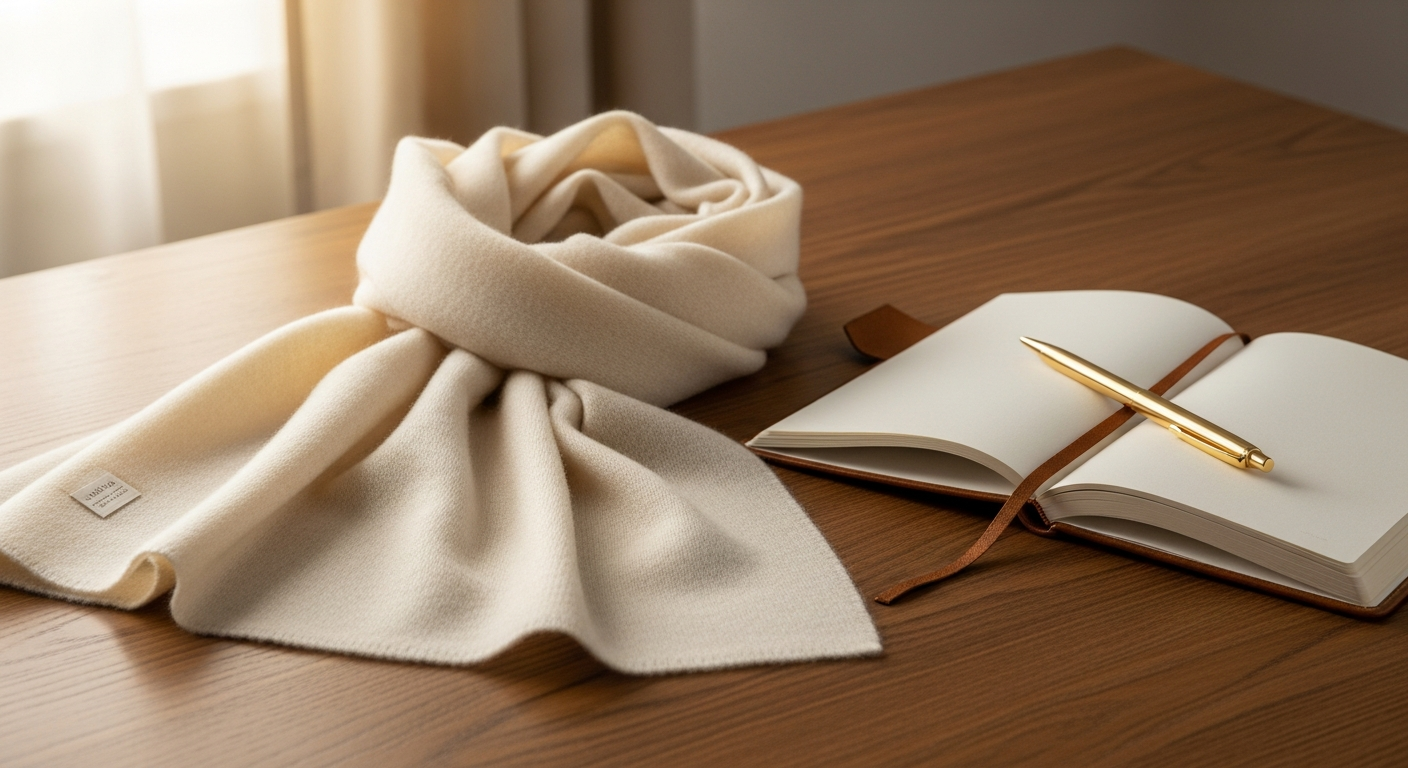
Ninety-seven percent of luxury fashion consumers now prioritize ethical sourcing—yet most struggle to find pieces that genuinely deliver on that promise. Walking into a boutique or scrolling through luxury retailers, you encounter countless claims about sustainability and craftsmanship, many of which dissolve under scrutiny. The PURSCHOEN Luxurious Handcrafted Cashmere Scarf represents something increasingly rare in the luxury market: a product where quality, ethics, and craftsmanship genuinely intersect without compromise.
This German brand has mastered the art of creating scarves that feel as good as they look, all while maintaining transparent, responsible production standards. Every element—from the sourcing of raw materials in the Himalayas to the final hand-felting touches in Nepal—reflects a commitment to excellence that extends beyond aesthetics. The brand's approach challenges the notion that luxury and ethics must exist separately.
Explore PURSCHOEN's collection to discover how true luxury feels.
The Artisan Heritage Behind Every Thread: Understanding Hand-Felting Mastery
Nepalese factories hold centuries of cashmere knowledge passed down through generations of artisans. This heritage isn't merely sentimental—it shapes every tangible quality of a PURSCHOEN scarf. The specialized washing and hand-felting technique creates the scarf's distinctive, lively texture that sets it apart from factory-processed alternatives.
Generational Knowledge in Modern Production
The craftspeople who work with PURSCHOEN bring decades of accumulated wisdom to their craft. This knowledge extends beyond basic techniques; it encompasses understanding how different water temperatures, fiber characteristics, and hand movements interact to achieve specific results. When you wear a PURSCHOEN scarf, you're experiencing the culmination of this refined expertise.
The Specialized Washing and Hand-Felting Process
Traditional hand-felting transforms raw cashmere into something extraordinary. The process begins with careful washing using specific water compositions and temperatures. Unlike industrial methods that rely on chemical treatments to achieve softness, hand-felting works with the fiber's natural properties. Skilled hands manipulate the cashmere repeatedly, creating a gentle felting effect that locks the fibers together while maintaining breathability.
This technique produces a characterful texture—one that feels alive rather than uniform. The result is light and transparent, qualities impossible to replicate through mechanical means alone.
Why Chemical-Free Processing Matters
Synthetic additives might create initial softness, but they degrade with wear and washing. PURSCHOEN's commitment to avoiding chemical treatments preserves the fiber's integrity. Without synthetic coatings, your scarf actually improves with age and proper care, becoming softer and more responsive to your skin.
This approach also benefits the environment. Processing water remains relatively clean, reducing the contamination that plagues conventional cashmere production facilities. The artisans working with these materials face fewer health risks from chemical exposure.
Machine-Made Versus Hand-Crafted: The Longevity Factor
Machine-made cashmere scarves prioritize consistency and speed. Industrial production can turn out thousands of identical pieces monthly. Hand-crafted scarves move at a different pace—each one receives individual attention, which manifests as superior longevity.
The character that emerges from hand-felting creates fibers with stronger bonds between them. Pilling occurs less frequently. Stretching and warping happen rarely. Over five to ten years of regular wear, hand-crafted scarves maintain their shape and softness far better than their machine-produced counterparts.
The Light and Transparent Quality: Natural Methods, Not Synthetic Shortcuts
That distinctive lightness isn't achieved through thinning or chemical treatments. Instead, the hand-felting process creates an optimal fiber density—tight enough for durability, loose enough for breathability. Traditional methods understand fiber behavior intuitively in ways that industrial processes struggle to replicate.
Water Quality and Natural Ingredients in PURSCHOEN Production
The water used in Nepalese production facilities comes from nearby mountain sources, often with natural mineral compositions that benefit cashmere fibers. Combined with the absence of harsh chemicals, this pure water maintains the fiber's lustrous quality. Natural ingredients—sometimes including gentle plant-based soaps—complete a processing system that honors both the material and the environment.
Sourcing That Matters: The Good Cashmere Standard® Certification Explained
Understanding where your cashmere originates matters profoundly. PURSCHOEN sources from certified regions in the Himalayas, Mongolia, and Tibet, adhering to The Good Cashmere Standard® by AbTF (Association of Boutique Textile Fibers). This certification goes far beyond marketing language.
What The Good Cashmere Standard® Actually Guarantees
The AbTF certification represents rigorous third-party verification. It establishes baseline requirements for animal welfare, worker compensation, and environmental protection across the entire supply chain. When you purchase a scarf bearing this certification, you're buying proof—not just promises.
The standard addresses specific practices: how animals are managed, what they're fed, veterinary care standards, and pasture rotation requirements. For workers, it ensures documentation of employment, fair wage calculations that account for local living costs, and safe working conditions.
Animal Welfare Commitments
Cashmere comes from goats raised across harsh mountain terrain. The AbTF standard demands that these animals receive appropriate care, including adequate feed during winter months, veterinary attention, and grazing practices that prevent land degradation. Certified farms cannot use cruel practices—no forced molting or extreme dehorning without pain management.
PURSCHOEN's sourcing directly supports farmers who prioritize herd health alongside fiber quality. When animals thrive, the cashmere they produce naturally excels.
Fair Labor Practices Across the Supply Chain
From herders to processors to artisans, The Good Cashmere Standard® tracks compensation and working conditions. Workers in Nepalese production facilities receive documented wages calculated to meet local living standards, not merely minimum legal requirements. Factory conditions include appropriate lighting, ventilation, and safety measures.
This systematic approach means your €199–€239 investment directly translates into dignified livelihoods for real people. The connection between your purchase and someone's ability to support their family becomes tangible and verifiable.
Environmental Protection and Sustainable Land Management
Overhauling traditional grazing practices requires intentional land stewardship. The certification monitors pasture health, preventing overgrazing that degrades soil and vegetation. Water usage in processing facilities faces scrutiny to ensure local water supplies aren't depleted or contaminated.
Environmental protection under The Good Cashmere Standard® operates on a premise that today's production shouldn't compromise tomorrow's resources. This matters particularly in ecologically sensitive regions like the Himalayas.
Verifying Certification and Investment Meaning
When examining a PURSCHOEN scarf before purchase, you can verify The Good Cashmere Standard® certification through AbTF's official registry. This verification transforms abstract ethical claims into concrete accountability.
Check PURSCHOEN's certified sourcing details on their official site.
The Transparency Gap: Standing Apart from Competitors
Many luxury brands discuss sustainability vaguely. PURSCHOEN provides specificity. You can learn exactly which regions produced your scarf's cashmere, understand the exact certifications backing that material, and trace the production pathway. This transparency sets them apart in an industry often shrouded in mystique.
Investment Styling: Building a Capsule Wardrobe Around Your Cashmere Scarf
A quality cashmere scarf serves as a versatile foundation piece. Rather than relegating it to winter-only duty, strategic styling incorporates it throughout the year and across different occasions.
Transitional Styling: Office to Evening
Draped elegantly over a crisp white button-down beneath a tailored blazer, your cashmere scarf transforms a professional outfit. The texture adds sophistication that signals attention to detail. As evening approaches, you can refresh the same base layers with a change of jewelry and the scarf's styling. This flexibility extends one outfit across multiple contexts.
Seasonal Versatility and Layering Techniques
Winter demands wrapped, voluminous styling that provides genuine warmth. Spring calls for lighter draping—consider looping the scarf once around your neck and letting the ends flow. Summer presents opportunities to wear the scarf as a beach cover-up or lightweight evening wrap over bare shoulders. Autumn invites layering over cardigans and structured outerwear.
The scarf's light, transparent quality means you can layer confidently without the bulk that synthetic materials create.
Color Psychology: Selecting Solid or Statement Patterns
PURSCHOEN offers solid colors from pink and purple to classic black and grey, plus multicolor designs like "Bengal Tiger" and "Reykjavik." Solid hues integrate seamlessly into existing wardrobes, providing versatile pairing options. Statement patterns make bolder declarations about personal style.
Consider your existing wardrobe when choosing. A jewel-tone emerald complements warm autumn aesthetics and neutral winter coats. Multicolor designs work beautifully when the majority of your clothing consists of solids.
Pairing Cashmere with Different Fashion Aesthetics
Minimalist wardrobes benefit from understated neutrals—natural, grey, or black scarves that emphasize clean lines. Contemporary fashion embraces the multicolor patterns. Classic aesthetics pair well with traditional jewel tones. Even maximalist wardrobes find balance through cashmere's inherent elegance.
The scarf adapts to your style rather than demanding you adapt to it.
Accessorizing Without Visual Competition
A quality cashmere scarf demands respect as a statement piece. Pairing it with equally bold jewelry creates visual chaos. Instead, choose simple gold or silver pieces that complement without competing. Minimal jewelry allows the scarf's texture and color to remain the focal point.
The Capsule Wardrobe Principle
One exceptional scarf genuinely replaces five mediocre ones. Consider the typical fashion consumer's approach: acquiring multiple affordable scarves of varying quality, each worn a handful of times before pilling, stretching, or fading. A single PURSCHOEN scarf worn consistently across seasons and occasions provides more versatility than that entire collection.
This principle extends beyond scarves to your overall wardrobe philosophy—quality over quantity always wins.
Durability and Long-Term Value: Why Price Reflects True Cost
The €199–€239 price point represents genuine value when assessed honestly across time.
Understanding Cost-Per-Wear Calculations
A €220 scarf worn twice weekly for five years costs approximately €0.42 per wear. An affordable €30 scarf worn the same frequency for two years (before degradation forces replacement) costs approximately €0.58 per wear. The math favors quality, and the gap widens over longer ownership periods.
Add the intangible benefits—genuine enjoyment, confidence in your appearance, alignment with your values—and the calculation becomes even more compelling.
Proper Care Extends Cashmere Lifespan
Hand-washing in cool water with gentle detergent maintains cashmere's integrity. Air-drying flat prevents stretching. Proper storage—in breathable bags rather than sealed containers—protects against moths and moisture accumulation. These straightforward practices keep a PURSCHOEN scarf beautiful for decades.
The fiber's natural characteristics make it more resilient than synthetic alternatives, but intentional care multiplies that durability.
Maintenance Tips Preserving Softness and Preventing Pilling
Pilling occurs when short fibers break free and mat together. High-quality cashmere features longer fibers that resist this tendency. When minor pilling does occur, a specialized comb (never a razor) removes the pills without damaging underlying fibers. Minimal washing preserves natural oils that maintain softness.
Storage Solutions Protecting Your Investment
Cedar blocks naturally deter moths. Acid-free tissue prevents color transfer and deterioration. Breathable cotton bags allow air circulation while protecting against dust. Storing cashmere folded rather than hung prevents stretching from the scarf's own weight.
Resale Value in the Luxury Secondhand Market
PURSCHOEN scarves maintain remarkable resale value. Authenticated pieces in good condition command 60–75% of original prices on luxury secondhand platforms. This represents genuine asset value—your scarf retains worth if circumstances change.
Five-Year Comparison: Premium Versus Fast-Fashion
Fast-fashion scarves at €15–€25 typically degrade within two to three years. Replacement cost for three or four pieces over five years reaches €60–€100. PURSCHOEN's single scarf at €220 outperforms through quality alone, before considering the ethical and aesthetic advantages.
The Conscious Consumer's Advantage: Making Luxury Purchases With Purpose
Purchasing decisions carry weight beyond the transaction itself. A PURSCHOEN scarf represents alignment between your values and your actions.
Direct Support for Fair Wages
Your purchase directly funds compensation for Nepalese artisans. Unlike fast-fashion models where workers receive minimal percentages of retail prices, fair-trade cashmere ensures meaningful portions reach those creating the product. You become a participant in economic dignity rather than a passive consumer.
The Ripple Effect: Ethical Spending and Sustainable Farming
Supporting certified cashmere sourcing incentivizes continued ethical farming practices. Herders who receive fair compensation for their animals' fiber can invest in improved land stewardship. Processors operating under certification standards can hire stable workforces rather than relying on transient, underpaid labor. Your purchase ripples outward, strengthening entire systems.
Building a Personal Brand Around Values-Aligned Fashion
Intentional fashion choices communicate identity. Wearing a PURSCHOEN scarf signals to yourself and others that aesthetics matter, ethics matter, and quality matters. Over time, a wardrobe built on these principles becomes increasingly coherent and personally expressive.
The Psychological Benefit of Transparency
Guilt-free luxury represents a rarity in modern consumption. You can wrap yourself in your scarf without uncomfortable questions about its origins. This psychological ease—knowing exactly where money goes and what practices it supports—constitutes genuine luxury that price alone never captures.
Community and Belonging
Ethical luxury advocates form loose communities united by shared values. Wearing recognizable quality pieces signals membership in this group. Conversations spark naturally when others recognize the care and intentionality behind your choices. This sense of belonging to something meaningful extends beyond the individual purchase.
Breaking Free from Guilt-Driven Shopping
Mainstream fashion culture encourages constant consumption driven by anxiety about appearing outdated or inadequate. Conscious luxury inverts this dynamic. Your PURSCHOEN scarf gives you permission to stop acquiring and start appreciating what you own. This shift from guilt-driven accumulation to intentional curation transforms your entire relationship with fashion.
Styling Across Seasons: A Practical Guide to Year-Round Wear
Your cashmere scarf deserves rotation throughout the year, adapting to seasonal contexts.
Winter Elegance: Warmth Without Bulk
Winter calls for generous wrapping. Loop the scarf twice around your neck, letting the ends drape asymmetrically down one side. Layer beneath wool coats and sweaters, allowing the texture to peek through at the neckline. The scarf's lightweight nature means you achieve genuine warmth without the restrictive bulk that heavy fabrics create.
Over a fitted turtleneck and beneath a structured coat, your scarf adds refinement while maintaining thermal efficiency.
Spring Transitions: Lightweight Draping
As temperatures moderate, transitional styling emerges. Drape the scarf loosely over a linen blazer worn open. The cashmere adds softness that balances the blazer's structure. Lightweight knits benefit from simple looping—around the neck once with ends falling freely, creating movement without volume.
Spring's unpredictable weather means cashmere's insulating properties prove valuable, yet its breathability prevents overheating.
Summer Sophistication: Beach and Evening Wear
Summer presents unexpected styling opportunities. Draped over bare shoulders as an evening wrap, the scarf adds elegance and warmth for outdoor dinners. At the beach, it serves as a sophisticated cover-up that transitions easily from sand to restaurants. The light, transparent quality means it won't feel suffocating in warm weather.
Summer styling tends toward minimal, allowing the scarf's natural beauty to dominate without competing colors or patterns.
Autumn Layering: Structured and Cardigans
Autumn invites layering that incorporates warmth gradually. Drape your scarf over a fitted cardigan, adding visual interest and depth. With structured outerwear, consider wrapping techniques that sit higher on the neck, allowing the coat collar to frame the scarf's color or pattern.
Autumn's color palettes—burgundies, golds, deep oranges—often complement cashmere's rich hues beautifully.
Travel Companion: The Ultimate Packing Essential
Few accessories offer cashmere's versatility for travel. It compresses efficiently, weighs virtually nothing, and transitions across diverse contexts. Airport lounges, hotel lobbies, outdoor excursions, and evening dinners—your scarf adapts to all scenarios. It provides genuine warmth in over-air-conditioned spaces and adds polish when circumstances demand presentation.
Experienced travelers recognize cashmere scarves as non-negotiable packing staples precisely because they deliver disproportionate value across the journey.
Occasion Versatility: Casual to Formal
Coffee runs with friends benefit from casual draping over a sweater. Family dinners call for slightly more polished styling. Formal events demand elegant wrapping that complements evening wear. This remarkable range—from casual to black-tie appropriate—eliminates the need for occasion-specific accessories.
Your Wardrobe's Most Meaningful Investment Awaits
The PURSCHOEN Luxurious Handcrafted Cashmere Scarf transcends the typical accessory category—it's a statement about who you are and what you value. From the moment you wrap one around your shoulders, you'll feel the difference that generations of Nepalese craftsmanship and ethical sourcing make. The softness is undeniable, the versatility genuinely impressive, and the knowledge that your purchase supports fair labor and animal welfare constitutes the real luxury.
Whether drawn to rich jewel tones, captivating multicolor patterns like "Bengal Tiger" and "Reykjavik," or timeless neutrals, you're making an investment that will serve your wardrobe beautifully for years to come. The scarf becomes a quiet constant—reliable, beautiful, and increasingly meaningful as you wear it across seasons and occasions.
This choice represents more than acquiring a pleasant accessory. You're voting with your wallet for the kind of fashion industry you want to exist. You're saying that quality matters, that ethics aren't negotiable, and that luxury should feel genuinely good—both on your skin and in your conscience.
Begin your PURSCHOEN journey and experience the difference intentional luxury makes.
Leave a Reply