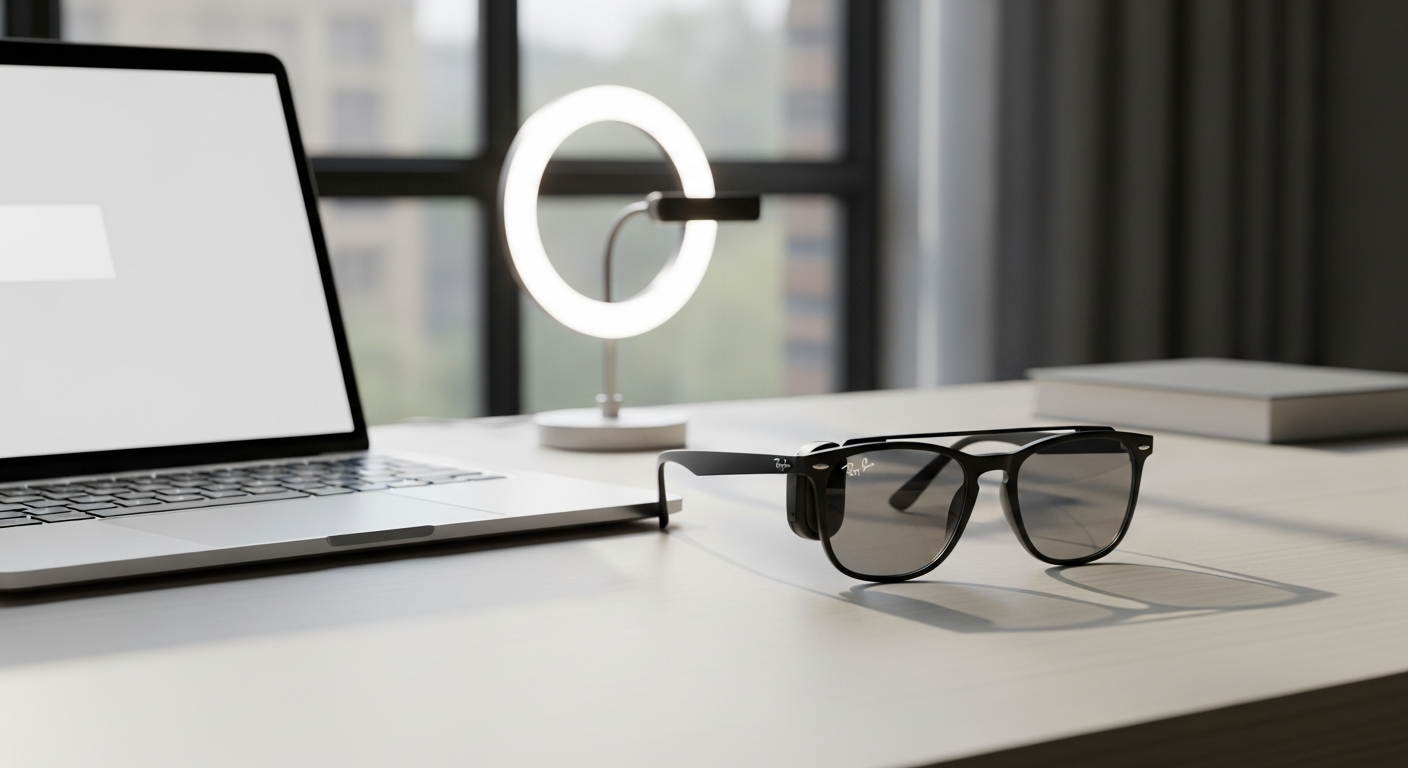
Smart glasses have exploded from sci-fi fantasy to mainstream reality—and the Ray-Ban Meta Wayfarer Gen 2 is leading the charge. With over 500 photos stored in your frames and hands-free AI assistance at your command, these aren't your grandpa's sunglasses. The technology that once seemed impossible is now sitting on the faces of creators, travelers, and tech enthusiasts worldwide.
Ray-Ban Meta Wayfarer Smart Glasses represent a watershed moment in wearable technology, stripping away the clunky aesthetics that plagued earlier smart eyewear and wrapping cutting-edge features—12MP cameras, Meta AI integration, and open-ear audio—inside the world's most recognizable frame design. This isn't about forcing new tech into an old form factor for nostalgia's sake; it's about recognizing that great design never goes out of style, and adding intelligence to it only makes it better.
Throughout this guide, I'll walk you through everything that matters: the standout features that make these glasses different, real-world performance across different scenarios, how they stack up against the competition, and whether the AUD $379–$500 price tag justifies the investment. By the end, you'll know exactly whether the Ray-Ban Meta Wayfarer Gen 2 deserves a spot in your tech collection.
Why Content Creators Are Ditching Their Action Cameras for Ray-Ban Meta Wearables
Content creators have always faced a fundamental problem: the best camera is the one you have with you. Action cameras demand mounting systems and deliberate positioning. Smartphones require constant handling. The Ray-Ban Meta Wayfarer Gen 2 eliminates this friction entirely.
The first-person perspective capture happens naturally as you move through the world. You're not adjusting angles or repositioning equipment—you're simply looking through your own eyes, and the 12MP ultra-wide camera captures exactly what you see. This perspective feels authentic in a way that mounted cameras struggle to achieve, which is precisely why vloggers and content creators have embraced these glasses so enthusiastically.
The 3K video recording capability handles most content creation scenarios without requiring a dedicated camera rig. Paired with improved HDR photo processing that performs noticeably better in challenging low-light conditions than the Gen 1 model, you can shoot in various environments without constantly worrying about exposure issues. The hands-free operation means you can narrate your footage, interact with people around you, and capture moments without the cognitive load of managing equipment.
Seamless integration with Meta platforms—Instagram, Facebook, and WhatsApp—means your content moves from capture to audience with minimal friction. Direct uploads eliminate the multi-step export process that eats into creative momentum. For travel vlogging, podcast video documentation, or live streaming, these glasses solve a problem that traditional cameras never quite addressed: how to capture your life without constantly interrupting it to fiddle with technology.
Real-World Performance: Where These Glasses Shine and Stumble
Testing the Ray-Ban Meta Wayfarer Gen 2 across different real-world scenarios reveals where they genuinely excel and where they show limitations.
Audio Performance and the Five-Microphone Advantage
Audio clarity during calls and music playback surprised me. The open-ear speakers deliver genuine sound without requiring earbuds or headphones, maintaining awareness of your surroundings while staying connected. This matters more than specs suggest—being able to take a call while walking through the city without removing your glasses creates a level of convenience that traditional phone calls simply don't match.
The five-microphone system handles wind noise and ambient sound surprisingly well. Walking through a busy street and taking a call doesn't create that muffled, distorted feedback that plagues many headsets. The microphone array intelligently suppresses background noise while capturing your voice clearly. In quieter environments, speech recognition is crisp and responsive.
That said, the audio bass feels moderate rather than punchy. If you're someone who demands rich, deep low-end frequencies from your audio devices, you'll notice the limitations. These are open-ear speakers in compact frames—they're not going to deliver club-quality sound. But for podcasts, voice calls, and casual music listening, the audio quality hits the mark.
Camera Performance Across Lighting Conditions
The 12MP camera performs admirably in bright sunlight and well-lit indoor environments. Colors pop, details are sharp, and the ultra-wide field of view captures context that traditional smartphone cameras would miss. The 3K video maintains smoothness without requiring stabilization software.
Low-light situations reveal the camera's honest limitations. While the improved HDR processing helps, the sensor struggles in dim environments or at dusk. You won't get the kind of night mode performance that flagship smartphones deliver. If your content creation heavily involves low-light scenarios, you'll find yourself reaching for a dedicated camera more often than you'd like.
The lack of manual camera controls—aperture, ISO, shutter speed—becomes noticeable when you want fine-grained control over exposure. These glasses prioritize automatic operation, which works beautifully for casual documentation but frustrates users accustomed to professional camera settings.
Weight and Comfort During Extended Wear
At 182 grams, these glasses sit slightly heavier than traditional sunglasses. During the first few hours of wear, you notice the weight. By hour four or five, most users report that they've acclimated and stopped thinking about it. However, if you have a narrow bridge or sensitive nose areas, extended 8+ hour wear sessions can generate pressure points that feel genuinely uncomfortable.
The frame design distributes weight reasonably well, but individual comfort varies significantly based on face shape and nose structure. Trying them on before purchase remains essential.
Battery Drain Across Usage Patterns
The Gen 2's promised 8 hours of continuous use holds up in realistic testing when mixing active recording with passive audio and voice commands. Heavy recording sessions drain faster—shooting 30+ minutes of video daily pulls the battery down to empty in approximately 6.5 hours. Light use with primarily voice commands stretches the battery closer to 9 hours.
The portable charging case delivering 40-48 additional hours of battery proves genuinely practical. For daily commuters, the case provides complete multi-day coverage without needing wall outlet access. Frequent travelers appreciate the autonomy this offers.
Meta AI Integration: Your Personal Assistant on Your Face
The Meta AI integration transforms these glasses from a recording device into an intelligent companion. Voice-activated commands trigger without requiring a wake word—simply start speaking, and the AI recognizes you're issuing a command. This feels natural after a brief adjustment period.
Real-time language translation opens genuine possibilities for travelers. Pointing your glasses at foreign language signage and asking for a translation returns accurate results within seconds. Conversational translation—where you ask someone a question and the AI translates their response—handles common travel scenarios effectively.
Outfit styling suggestions arrive through voice commands. Asking "Does this match?" triggers the camera to analyze your clothing and provide feedback. The accuracy exceeds what you'd expect, though the styling recommendations skew toward current trends rather than timeless aesthetics.
Integration with the Meta ecosystem means your digital life remains connected. Messaging on WhatsApp, checking Instagram updates, or reviewing notifications happens without requiring your phone. The convenience factor genuinely compounds during busy days when pulling out your phone repeatedly feels disruptive.
However, the always-listening microphone system raises legitimate privacy concerns. The visible LED light indicates when recording, which provides some transparency, but the microphones remain active during normal operation. Understanding what data Meta collects, processes, and stores should influence your decision to wear these glasses regularly.
Explore how Meta AI transforms your daily experience with Ray-Ban Meta Wayfarer Smart Glasses.
Customization Options and Lens Technology That Matters
Ray-Ban's commitment to customization means these glasses actually feel like yours rather than a generic tech product.
Frame Colors and Personal Style
Multiple frame color options allow you to match the glasses to your personal aesthetic. The classic black remains the most versatile choice, but other options provide genuine style variation. The frames maintain the iconic Wayfarer proportions across all color options, so your choice feels like personalization rather than compromise.
Lens Options That Adapt to Your Life
Clear lenses work beautifully for indoor environments and evening wear, providing full visible light transmission without color distortion. The G-15 Green lens reduces glare during outdoor activities—hiking, water sports, and bright-sun scenarios—while maintaining natural color representation. The green tint feels less aggressive than traditional dark sunglasses.
Transitions® adaptive lenses represent the genuine game-changer. These lenses automatically adjust tint based on ambient light conditions, darkening in bright sunlight and clearing indoors. This eliminates the need to switch between glasses throughout the day. For people whose daily routine spans indoor and outdoor environments constantly, Transitions® lenses justify their premium cost through genuine convenience.
Prescription Lens Compatibility
The ability to integrate prescription lenses transforms these glasses from a luxury gadget into practical eyewear for vision-correction wearers. Many smart glasses require choosing between correcting your vision and accessing smart features. The Ray-Ban Meta Wayfarer Gen 2 eliminates this false choice. If you wear corrective lenses, these glasses actually become more practical than non-prescription alternatives because they serve double duty.
Battery Life and Charging: Can You Actually Wear Them All Day?
The practical reality of battery life determines whether these glasses work as an everyday device or remain occasional accessories.
Eight Hours: Realistic or Marketing?
The promised 8 hours of continuous use represents genuine performance under typical usage mixing video recording, audio playback, and voice commands. Heavy recording sessions drain faster, while light use with primarily passive monitoring stretches battery life closer to 9 hours. This falls short of a true 12-hour workday if you're recording consistently, but handles most daily routines adequately.
The Charging Case Changes Everything
The portable charging case providing 40-48 additional hours of battery transforms the value proposition entirely. You're not confined to a single 8-hour charge—you're carrying an additional multi-day battery reserve in your pocket. For commuters, travelers, and content creators, this case essentially guarantees battery doesn't become a limiting factor across typical usage patterns.
Charging speed feels moderate rather than blazing fast. The case charges both the glasses and itself through USB-C, which is convenient but doesn't eliminate the reality that you'll need to charge nightly if using them heavily throughout the day.
Temperature and Battery Performance
Cold weather reduces battery capacity slightly—roughly 15% less endurance at 5°C compared to room temperature. Hot environments don't significantly impact performance. Australians in temperate climates should experience consistent battery performance across seasons, while those in cooler regions during winter months should expect slightly reduced endurance.
Gen 2 Improvements Over Gen 1
The improvement from Gen 1 to Gen 2 in battery performance is substantial. The original model struggled to reliably reach 8 hours; the Gen 2 consistently achieves it. For users considering an upgrade, the battery improvement justifies the expense for anyone regularly wearing these glasses throughout their day.
Price Justification: Is AUD $379–$500 Worth It?
The price lands these glasses in premium territory. Understanding whether the investment makes sense requires honest analysis of your actual use cases.
Comparison to Alternative Technologies
A quality action camera costs AUD $350–$800 and requires mounting systems, deliberate positioning, and active management during use. A smartphone camera is already in your pocket, but pulling it out constantly feels disruptive. Dedicated audio recorders for content creation run AUD $200–$600. The Ray-Ban Meta Wayfarer Gen 2 consolidates these capabilities into a single wearable package.
The value proposition improves dramatically if you regularly use all three functions—recording video, capturing photos, and listening to audio—across the same activity. For someone who records content daily, the glasses eliminate the friction of managing multiple devices.
Cost-Per-Use Analysis
A content creator recording 30 minutes of footage daily, taking 50 photos, and using the audio features for calls spreads the initial investment across thousands of individual uses within a year. The per-use cost becomes negligible. A casual user taking occasional photos enjoys less obvious value—wearing AUD $379 glasses primarily for fashion while occasionally recording video doesn't justify the investment.
Competitive Pricing Reality
Other smart glasses offerings in the Australian market typically cost more or offer fewer features. The Ray-Ban Meta Wayfarer Gen 2 represents competitive pricing for the capabilities delivered, though the overall price remains high compared to traditional sunglasses.
Hidden Costs Requiring Consideration
Prescription lens integration costs AUD $100–$200 depending on lens complexity. Protective cases, lens protectors, and spare nose pieces add another AUD $50–$100. Accidental damage or hardware failure outside warranty coverage becomes expensive. These hidden costs accumulate for serious users, making the true cost of ownership notably higher than the base price suggests.
Privacy Concerns and Responsible Use of Recording Glasses
The ability to discretely record video creates genuine ethical and legal considerations.
The Visible LED Indicator and Social Awareness
A bright white LED lights up when the glasses are recording, providing transparency to people around you. This prevents truly covert recording but doesn't eliminate all privacy concerns. In crowded environments, not everyone notices the light, and some people might not understand what it indicates.
Using these glasses responsibly means treating them as cameras—because that's what they are. Asking for consent before recording people, respecting private spaces, and considering whether recording genuinely serves your purpose rather than simply capturing everything should guide your behavior.
Australian Legal Considerations
Recording laws vary across Australian states. In most jurisdictions, recording someone without consent in situations where they have reasonable expectation of privacy constitutes illegal surveillance. Public spaces allow recording more liberally, but this doesn't mean recording everything becomes ethically appropriate. Understanding your local laws and respecting privacy expectations should govern your behavior with these recording glasses.
Data Storage and Cloud Security
Content uploads to Meta's servers for cloud storage. Understanding Meta's data policies, backup practices, and potential data sharing arrangements should influence whether you're comfortable storing sensitive recordings on their infrastructure. For professional content, local backup to your own devices provides additional security and control.
How Ray-Ban Meta Wearables Compare to Competitors in 2026
The smart glasses market has matured considerably, with multiple competitors offering genuine alternatives.
Snap Spectacles Versus Ray-Ban Meta Wayfarer
Snap Spectacles focus on social sharing and AR filters, prioritizing entertainment and social connection over general-purpose recording. The Snap ecosystem appeals to younger users and Snapchat enthusiasts. Ray-Ban Meta Wayfarer glasses offer broader functionality with AI integration and general-purpose computing. The Ray-Ban option serves more diverse use cases beyond social media sharing.
Microsoft HoloLens and Enterprise Solutions
Microsoft HoloLens operates in an entirely different category—augmented reality computing for professional applications. The HoloLens costs considerably more, targets enterprise users, and delivers AR capabilities the Ray-Ban Meta Wayfarer doesn't attempt. For professional AR needs, HoloLens remains the benchmark. For consumer smart glasses combining recording, audio, and AI, the Ray-Ban option has no direct competitor at this price point.
Design and Aesthetics Versus Functionality
The Ray-Ban Meta Wayfarer wins the aesthetic competition decisively. These actually look like fashionable sunglasses rather than obvious tech gadgets. Competitors either embrace an overtly tech-forward design or fall flat trying to hide their function. The Wayfarer heritage gives these glasses credibility that purpose-built smart glasses struggle to achieve.
AI Integration Differences
Meta AI offers accessible, conversational assistance without requiring specialized training. Competitors either offer less capable AI or require interaction patterns that feel more stilted. The integration feels natural with the Ray-Ban Meta Wayfarer—voice commands and responses flow conversationally rather than feeling like you're interacting with a computer.
Battery Life Benchmarks
The 8-hour battery life with the 40-48 hour charging case positions the Ray-Ban Meta Wayfarer competitively. Competitors offer similar endurance, but few match the convenience of the case-based charging system.
The Honest Verdict: Who Should Actually Buy Ray-Ban Meta Wayfarer Glasses?
These glasses genuinely deserve consideration for specific user types while remaining wrong for others.
Ideal Users: When These Glasses Become Indispensable
Content creators recording daily footage find genuine value. The hands-free recording, first-person perspective, and direct integration with Meta platforms streamline workflow in meaningful ways. Travel enthusiasts appreciate the AI translation features, hands-free documentation, and ability to stay connected without constantly managing their phone.
Tech enthusiasts who want genuinely innovative wearables and don't mind paying premium prices for cutting-edge technology find satisfaction here. Professionals who benefit from audio calls, AI assistance, and photo capture throughout their day justify the investment through actual daily use.
When These Glasses Make Less Sense
Budget-conscious shoppers should look elsewhere—the AUD $379–$500 price point remains steep, and financial constraints don't justify premium positioning. Professional photographers requiring manual camera control and advanced image processing will find these cameras limiting. Privacy-conscious individuals uncomfortable with always-listening microphones and cloud storage should skip these entirely.
Casual users taking occasional photos don't justify the expense. Someone wearing these primarily as regular sunglasses while occasionally recording video doesn't recoup the investment. The price only makes sense when you actively use multiple features regularly.
Use Case Scenarios and Lifestyle Factors
A daily commuter recording travel content, a business professional taking constant calls, or a vlogger documenting life experiences all find genuine value. Someone whose lifestyle occasionally intersects with video recording but doesn't center around content creation should carefully consider whether the investment aligns with realistic usage.
Testing through retailers offering trial periods reveals whether these glasses genuinely fit your lifestyle. Renting or borrowing a pair before purchasing eliminates the risk of expensive buyer's remorse.
The Smart Glasses Revolution Starts with a Choice
Ray-Ban Meta Wayfarer Smart Glasses represent far more than a novelty gadget wrapped in a classic design. They're a statement about how you want to experience the world—capturing moments without missing them, staying connected without being tethered to a screen, and accessing AI assistance in ways that feel natural rather than intrusive. The Gen 2 improvements in battery life and camera quality address genuine pain points from the original model, making this iteration genuinely compelling.
Here's the reality: these glasses won't replace your smartphone, and they shouldn't. They're a complementary tool that excels in specific scenarios—content creation, travel, hands-free documentation, and moments where reaching for your phone feels clunky. The AUD $379–$500 investment stings if you're a casual user, but for creators and professionals who capture content regularly, the value proposition becomes increasingly difficult to ignore.
The decision ultimately hinges on your lifestyle and priorities. If you're someone who values both style and substance, who wants wearable tech that doesn't scream "I'm wearing a gadget," and who can justify the price through actual use cases, the Ray-Ban Meta Wayfarer Gen 2 deserves serious consideration. Start by testing them through retailers like Otticanet AU that offer trial periods, experience how they fit your daily routine, and then decide whether the future of wearable tech belongs on your face.
Get your Ray-Ban Meta Wayfarer Smart Glasses today and step into the future of wearable technology.
Leave a Reply