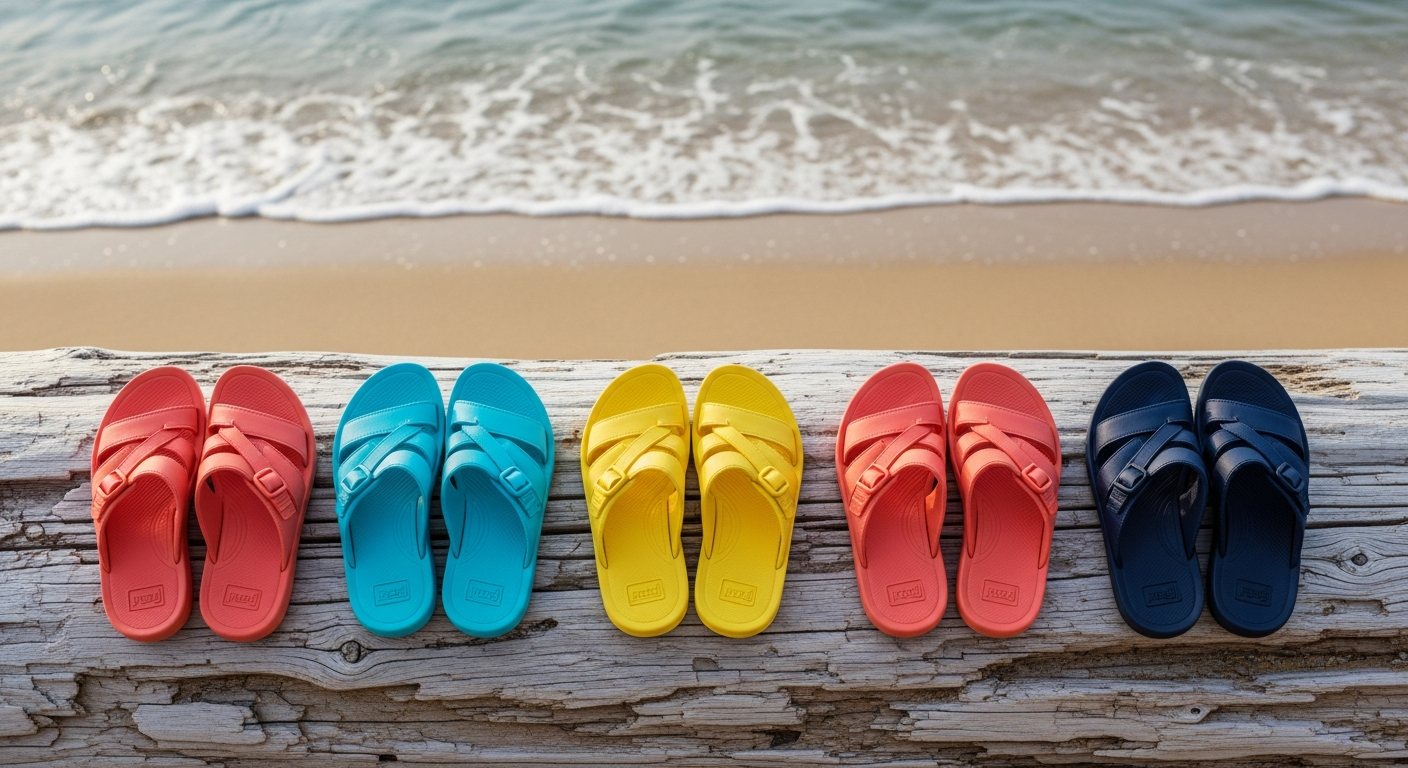
Over 20 years after their debut, Reef Fanning Sandals continue to dominate the casual footwear market—and for good reason. Named after legendary three-time world surf champion Mick Fanning, these sandals transcend typical flip-flop territory with precision engineering combining a compression-molded EVA footbed, anatomical arch support, and a revolutionary 360-degree heel airbag. What started as performance footwear for surfers has evolved into an icon embraced by beachgoers, casual wearers, and anyone seeking reliable comfort.
The Reef Fanning's reputation rests on tangible engineering rather than marketing hype. Each component—from the herringbone rubber outsole to the padded jersey liner—serves a specific biomechanical purpose. This isn't accidental; it's the result of decades refining what makes a sandal genuinely comfortable for extended wear.
Discover the Reef Fanning Sandals collection and experience the comfort that made them legendary.
The Engineering Behind Reef Fanning's Cloud-Like Comfort
360-Degree Heel Airbag Technology
The standout feature that distinguishes Reef Fanning from standard sandals is the 360-degree heel airbag. Rather than concentrating cushioning in one area, this innovation distributes pressure evenly across your entire heel. Users consistently describe the sensation as "walking on a cloud," and this isn't hyperbole—the airbag absorbs shock that would otherwise travel up your leg during extended wear. Whether you're navigating sandy beaches or concrete pathways, that cushioning layer protects your feet from the repetitive impact that causes fatigue.
Compression-Molded EVA Footbed
Beneath the surface lies a compression-molded EVA footbed engineered with anatomical arch support. This footbed isn't flat; it's contoured to match your foot's natural shape. The arch support prevents the foot fatigue that comes from pronation or supination, while the compression molding process creates a durable structure that resists breaking down after months of wear. This design philosophy prioritizes long-term support over the initial softness of cheaper alternatives that compress into uselessness.
Synthetic Nubuck Upper with Jersey Liner
The upper material combines synthetic nubuck with a padded jersey liner. This pairing serves dual purposes: the nubuck provides durability and water resistance, while the jersey liner prevents blistering and skin irritation during extended wear. Many users find this combination eliminates the rubbing problems common with traditional sandals, particularly during the break-in phase.
Herringbone Rubber Outsole
The outsole pattern isn't decorative—it's functional. The herringbone design delivers excellent traction on wet surfaces, sand, and varied terrain. Whether you're walking across wet pool decks or sandy beaches, the outsole maintains grip without slipping. This traction performance extends to casual urban settings as well, making the Fanning suitable for environments beyond just water-adjacent activities.
Anatomical Design Philosophy
Every component reflects a commitment to biomechanics over fashion-first aesthetics. The straps sit at angles that promote proper foot alignment, the footbed contours match natural arch curves, and the heel airbag positions itself to absorb impact at the point where your body weight concentrates. This engineering-focused approach explains why Reef Fanning wearers report sustained comfort even after eight or ten hours of continuous wear.
The Iconic Bottle Opener—Function Meets Conversation Starter
Built-In Utility Feature
The integrated bottle opener represents pure practical innovation. Instead of carrying a separate tool, the opener sits integrated into the sandal design, accessible whenever needed. At beach parties, backyard gatherings, camping trips, or casual hangouts, the Fanning becomes a genuinely useful tool. This isn't a gimmick that fails under real-world use; reviewers consistently report that the opener withstands repeated use without degradation or loosening.
Novelty Appeal
Beyond functionality, the bottle opener serves as a conversation starter. It's distinctive, memorable, and unexpected—qualities that make the Fanning instantly recognizable in a sea of generic sandals. This novelty appeal has driven significant word-of-mouth marketing, with many customers specifically seeking out Reef Fannings because they heard about the bottle opener feature.
Real-World Applications
The opener proves genuinely useful across multiple scenarios. At the beach, you're not digging through bags for a tool. At camping sites, the opener is always with you. During barbecues or casual gatherings, it becomes a practical asset rather than a novelty. Users report reaching for this feature regularly, confirming that it's not just a marketing angle but an actual benefit of ownership.
Durability of the Opener Mechanism
The mechanism withstands extended use without degradation. Unlike bottle openers on cheap promotional items, this feature maintains structural integrity through hundreds of openings. The engineering behind the opener placement and construction ensures it remains functional for the sandal's entire lifespan.
Differentiation from Competitors
In a crowded sandal market, the bottle opener is the feature that separates Reef Fanning from every other option. Competitors offer arch support and cushioning; only the Fanning combines those features with integrated utility. This differentiation has proven powerful enough to drive customer loyalty across multiple decades.
Performance Across Different Settings and Activities
Beach and Poolside Use
The water-friendly construction makes the Fanning ideal for water-adjacent activities. The synthetic materials resist saltwater and chlorine damage, while the quick-drying sole prevents that uncomfortable soggy feeling. Users report the sandals perform equally well at ocean beaches and chlorinated pools, with the herringbone outsole maintaining traction even when wet.
Everyday Casual Wear
Beyond beach settings, the Fanning transitions seamlessly into everyday casual wear. Running errands, shopping, or low-key outings all benefit from the comfort and support that standard flip-flops don't provide. The athletic styling appeals to users seeking practical footwear that doesn't require changing shoes multiple times daily.
Outdoor Adventures
For hiking, camping, and uneven terrain, the Fanning provides stability and traction that casual sandals typically lack. The anatomical arch support prevents foot fatigue during extended walking, while the outsole grip handles dirt, rocks, and variable surfaces. This versatility means you're not sacrificing comfort for the sake of trying a single pair of sandals for multiple purposes.
Athletic and Active Lifestyles
The Fanning suits gym trips, sports sidelines, and scenarios requiring high movement. Users report wearing them to workout facilities, standing on sidelines during sports events, and other active settings where casual footwear is appropriate. The cushioning and arch support keep feet comfortable even during extended standing or walking.
Climate Adaptability
The sandals perform consistently across seasonal variations. Summer heat doesn't compromise materials, cold weather doesn't make the footbed brittle, and rain doesn't cause deterioration. This climate adaptability contributes to the year-round utility that makes them a lifestyle choice rather than seasonal footwear.
The Break-In Period—What to Expect in Week One
Initial Stiffness of the Footbed
New Reef Fannings feel noticeably rigid compared to broken-in pairs. The compression-molded EVA footbed requires a brief adjustment period before it fully conforms to your foot's shape. This initial stiffness typically subsides within three to five days of regular wear. Understanding this timeline prevents disappointment; the sandal isn't uncomfortable—it's simply adjusting to your biomechanics.
Strap Comfort Timeline
The padded straps transition from snug to perfectly molded over roughly one to two weeks. Initially, they may feel firm against your foot, but this firmness ensures they don't shift or slide during wear. As you move through the break-in period, the jersey liner softens slightly and the straps adapt to your foot's contours. By week two, most users report the straps feel custom-fitted.
Drying Speed Considerations
The padded straps dry slower than the sole due to their material composition. After water exposure, the footbed dries quickly, but the straps may retain moisture for longer. This isn't a flaw—it's simply a material characteristic. Allowing adequate drying time between water activities prevents mildew and extends the lifespan of the padded liner.
Strategies for Faster Adaptation
Accelerate the break-in process by wearing the sandals during low-impact activities initially. Short errands, indoor wear, or leisurely walks condition the footbed and straps without stressing your feet. Gradually increase wear duration as comfort improves. Avoid immediately attempting eight-hour beach days in brand-new Fannings; instead, build up to extended wear as the materials soften and conform.
When Comfort Peaks
Optimal comfort typically arrives within two to three weeks of regular wear. At this point, the footbed has fully conformed to your arch, the straps feel personalized, and the heel airbag pressure balances perfectly. Many users report this is when they understand why Reef Fanning has such a devoted following—the wait is worthwhile.
Shop Reef Fanning Sandals now and invest in footwear that delivers comfort through every season.
Durability and Longevity—Do Reef Fannings Last?
Water-Resistant Construction
The synthetic materials resist saltwater, chlorine, and freshwater exposure without degrading. Unlike sandals that develop cracks or discoloration from repeated water contact, the Fanning maintains structural integrity across multiple seasons of beach use. Users report no noticeable deterioration even after years of regular ocean exposure.
Material Degradation Timeline
With regular use—approximately three to five days per week—Reef Fannings typically remain in excellent condition for two to three years before showing significant wear. The footbed eventually compresses slightly, and the straps may soften further, but these changes enhance rather than diminish comfort. The outsole maintains traction throughout this timeline, and the bottle opener continues functioning without issue. High-frequency users (wearing daily) may see accelerated timeline, while occasional wearers report five-plus years of service.
Repeat Purchaser Phenomenon
The Fanning's repeat customer rate is remarkably high, not because the sandals fail, but because users choose to replace them. Many reviewers report repurchasing identical models after years of ownership. This pattern reveals a critical distinction: the Fanning doesn't break; it simply ages. Users recognize that replacing a well-worn pair with fresh materials provides renewed comfort, and they're willing to invest because they trust the product.
Maintenance Best Practices
Extend the sandal's lifespan through straightforward care. Clean them regularly with mild soap and water, dry thoroughly before storage, and avoid prolonged exposure to extreme heat. Store them in cool, dry conditions rather than damp bathrooms or direct sunlight. These basic practices prevent material degradation and keep the footbed resilient far longer than neglected pairs.
Investment Value
Calculate cost-per-wear over multiple years of ownership. At $75-$90 initial cost, wearing them 100 days annually for three years yields approximately $0.25-$0.30 per wear. Factor in the arch support that prevents foot pain, the versatility across multiple activities, and the durability that stretches across years, and the investment becomes remarkably reasonable compared to constantly replacing cheaper alternatives.
The Bottom Line: Are Reef Fanning Sandals Worth Your Money?
After examining every angle—from that cloud-like heel airbag to the practical bottle opener, from break-in realities to long-term durability—the verdict becomes clear. Reef Fanning Sandals deliver on their promise of iconic comfort and genuine utility. Thousands of repeat customers don't repurchase on nostalgia alone; they return because these sandals genuinely perform across multiple scenarios. The $75-$90 investment makes sense when you factor in anatomical arch support, water-resistant construction, and the sheer lifespan these sandals offer. You're not just buying flip-flops—you're acquiring a versatile tool that adapts to your lifestyle, earning its legendary status through consistent, measurable performance.
Leave a Reply