Pet owners know the routine: thirty minutes vacuuming pet hair, then discovering sticky paw prints or accidents on the kitchen tiles. The cycle repeats weekly, consuming time that could be spent with furry family members instead. Most standard vacuums excel at suction or mopping, but rarely both—leaving you torn between switching devices or accepting incomplete cleaning.
The struggle intensifies when allergies enter the picture. Dry vacuuming stirs up pet dander without always capturing it effectively, while wet spills demand a separate mop that sits unused most days. You're managing multiple tools, wrestling with storage constraints, and accepting that your home's cleaning never quite meets your standards.
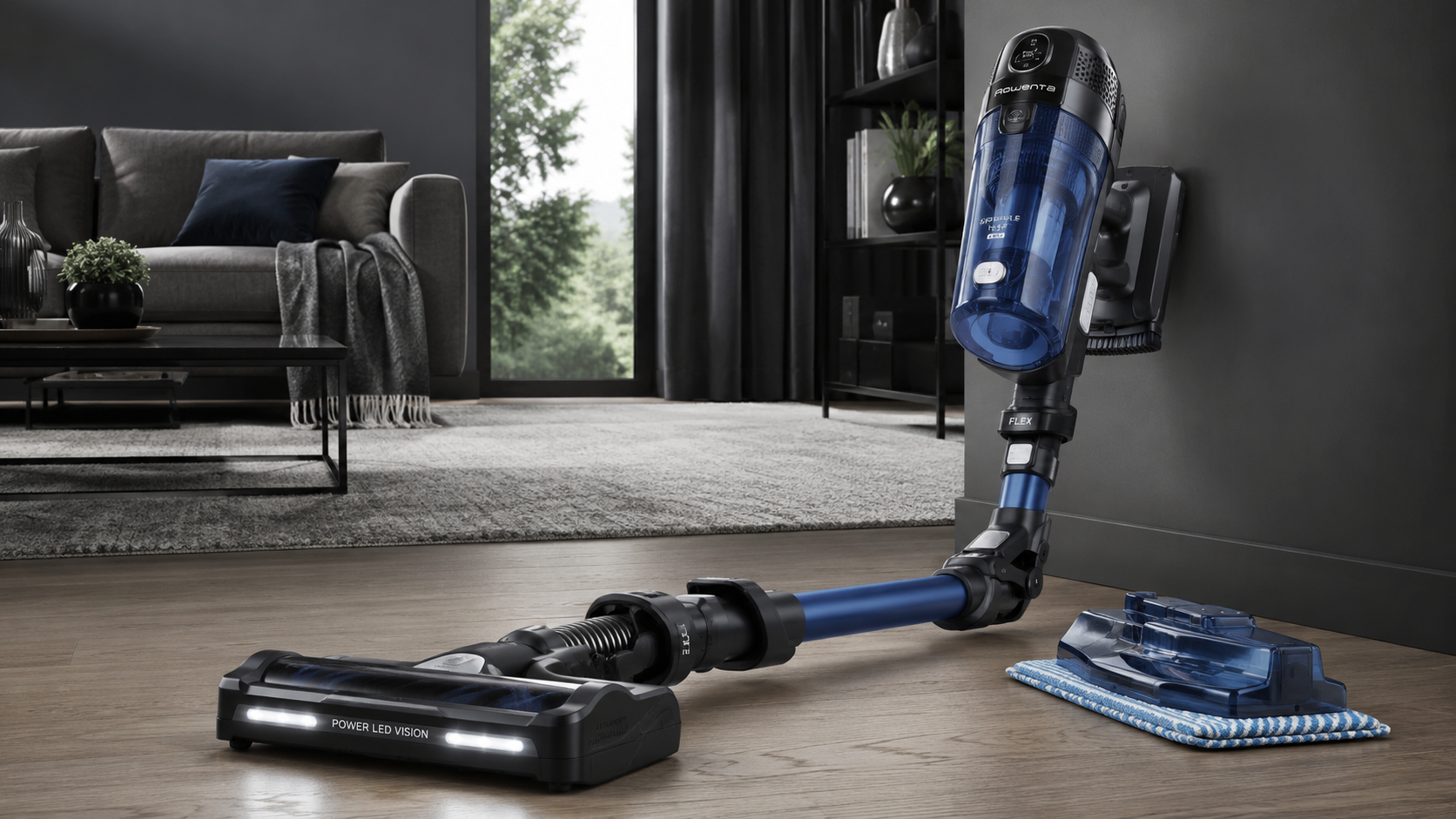
The Rowenta X-Force Flex 14.60 Aqua changes this dynamic entirely. This 2-in-1 cordless stick vacuum combines powerful suction with an integrated mopping system, handling both pet hair and accidents in a single device. Its mini-motorized brush targets stubborn fur while advanced filtration traps allergens, and the Aqua mopping system tackles wet messes without device switching. This article examines its real-world performance in pet-heavy homes, comparing suction power to dedicated pet vacuums, evaluating mopping effectiveness, and assessing whether the filtration genuinely reduces allergens while addressing practical concerns like water tank refills and weight management.
Discover the Rowenta X-Force Flex 14.60 Aqua today and transform your pet cleaning routine.
Why Pet Owners Are Switching to 2-in-1 Vacuum-Mop Systems
Traditional pet cleaning frustration: Managing separate vacuums and mops creates workflow inefficiency and storage challenges
The conventional approach to pet household cleaning requires constant tool management. You vacuum the living room, then grab the mop for kitchen accidents. Different storage locations, different maintenance routines, different learning curves for each device. Many pet owners report spending more time switching between tools than actually cleaning—particularly frustrating when a fresh accident demands immediate attention and your mop is charging in another room.
Space constraints compound the problem. Most homes lack dedicated utility closets for two full-sized appliances. Bedrooms, hallways, and entryways become cluttered with charging docks. Families with multiple pets often find themselves storing backup equipment, consuming even more square footage.
The allergen amplification problem: Dry vacuuming alone can stir up pet dander without capturing it effectively; wet cleaning addresses this differently
Pet dander behaves unpredictably during dry vacuuming. The brush roll agitates carpet fibers, releasing microscopic allergen particles into the air. Your vacuum's filtration system works overtime, but some particles escape back into your breathing space before capture. For allergy sufferers, this creates a frustrating cycle—cleaning actually makes symptoms temporarily worse.
Wet cleaning tackles allergens through a different mechanism: moisture prevents particles from becoming airborne in the first place. When you mop, pet dander clings to the wet surface rather than floating through rooms. This approach complements vacuuming rather than replacing it, creating a two-stage capture system that significantly reduces circulating allergens.
Time-saving reality: Combining vacuuming and mopping in one device reduces total cleaning time by up to 40% for pet households
The mathematics of efficiency favor 2-in-1 systems. Traditional cleaning requires multiple passes—vacuum the entire house, then return with a mop. With integrated systems, you accomplish both functions in a single pass, eliminating redundant footsteps and overlapping coverage. For multi-pet homes spanning 1,500+ square feet, this difference translates to 30-40 minutes of reclaimed time weekly.
Beyond raw time savings, the psychological shift matters. A single cleaning device feels less overwhelming than managing an equipment arsenal. Pet owners report higher cleaning frequency when the barrier to starting is lower—reaching for one device rather than assembling multiple components.
The Rowenta X-Force Flex 14.60 Aqua's Pet Hair Removal Capabilities
Mini-motorized brush specifications: Designed specifically for pet hair extraction from carpets, rugs, and upholstered furniture
The X-Force Flex 14.60 Aqua includes a specialized mini-motorized brush designed exclusively for pet hair challenges. Unlike standard brush rolls that struggle with coarse fur, this attachment features engineering specifically for extraction from fabric surfaces. The motor-driven bristles agitate upholstery and carpets with precision, dislodging embedded hair that conventional brushes miss.
This attachment addresses the most frustrating pet cleaning scenario: hair trapped deep within couch fibers or woven into rug piles. Without motorized assistance, pet hair removal from furniture demands manual tools or repeated passes. The mini brush compresses cleaning time while improving extraction rates significantly.
200 AirWatts suction power: How this compares to dedicated pet vacuums and whether it handles thick, matted fur
At 200 AirWatts, the X-Force Flex 14.60 Aqua matches or exceeds many dedicated pet vacuums in raw suction specifications. This power level extracts thick, matted fur from carpet fibers effectively, handling multiple-pet households where hair accumulation reaches challenging levels. The suction remains consistent even as the dustbin fills, maintaining extraction power throughout cleaning sessions.
Comparatively, entry-level pet vacuums hover around 120-150 AirWatts, noticeably struggling with dense fur. Premium dedicated pet models reach 250+ AirWatts but sacrifice other features. The X-Force Flex 14.60 Aqua positions itself in the practical middle ground—sufficient power for pet hair while maintaining versatility through additional functions.
Brush roll design: Mechanism that prevents hair tangling while maintaining consistent suction across different pile heights
The brush roll engineering prevents hair tangling, a persistent frustration with standard vacuums. Pet hair wraps around traditional brushes, reducing effectiveness and requiring frequent manual cleaning. The X-Force Flex design incorporates anti-tangle bristles that guide hair directly into collection chambers rather than around rotating components.
This design also maintains consistent suction across varying carpet pile heights—critical for homes with mixed flooring. Low-pile kitchen runners, medium-pile living room carpets, and high-pile bedroom rugs all receive equivalent cleaning power. The brush adjusts automatically, eliminating manual height adjustments between rooms.
Advanced Filtration and Allergen Capture for Sensitive Households
Multi-stage filtration system: How the vacuum traps fine dust, pet dander, pollen, and microscopic allergens
The X-Force Flex 14.60 Aqua employs a multi-stage filtration approach that captures allergens across different particle sizes. Early-stage filters trap large debris—pet hair clumps, dust bunnies, visible dander particles. Subsequent filters target progressively smaller particles, eventually capturing microscopic allergen proteins that trigger reactions in sensitive individuals.
This layered approach prevents allergen escape through the motor or exhaust. Each stage complements the others, creating a system where very few particles pass through multiple filter barriers. For households with asthmatics or severe pet allergies, this architecture makes measurable differences in symptoms and air quality.
HEPA-equivalent filtration: Understanding the technical specifications and what fine dust capture actually means for allergy sufferers
HEPA filtration captures particles as small as 0.3 microns with 99.97% efficiency. The X-Force Flex 14.60 Aqua's advanced filtration system approaches HEPA performance standards, trapping fine dust that standard vacuums recirculate. For allergy sufferers, this specification matters because pet allergens—particularly the Fel d 1 protein from cats—measure 5-10 microns. Effective filtration at this size range significantly reduces airborne allergen concentrations.
Practically speaking, households notice improvements within days of switching to HEPA-equivalent filtration: fewer nighttime allergy symptoms, less morning nasal congestion, improved air quality in previously problematic rooms. The technology works because it physically removes allergens rather than simply moving them around.
Sealed system design: How the vacuum prevents re-circulation of captured allergens back into the air
A sealed filtration system prevents captured allergens from escaping back into your home's air. The X-Force Flex 14.60 Aqua features sealed connections between collection chambers, motors, and exhaust points. Air passes through filters only—it cannot bypass filtration through cracks or loose seals that plague many vacuums.
This sealed architecture proves especially important when emptying the dustbin. Standard vacuums release captured allergens when you open collection chambers. The X-Force design minimizes this exposure through sealed emptying mechanisms and directed dust disposal, protecting you during the otherwise allergen-heavy task of bin emptying.
The Aqua Mopping System for Pet-Related Messes
Integrated water tank functionality: How the mopping system works simultaneously with vacuuming
The Aqua mopping system operates independently while vacuuming, allowing simultaneous dry and wet cleaning in a single pass. The water tank sits integrated into the vacuum's frame, feeding cleaning solution to a mopping attachment that follows directly behind the vacuum head. You move forward once, and the device both extracts dirt and applies wet cleaning without requiring a second pass.
This simultaneous operation differentiates the X-Force Flex 14.60 Aqua fundamentally from traditional two-device approaches. Rather than vacuuming first, then mopping over the same area, you accomplish both functions in one movement. The efficiency gains compound across larger cleaning areas, particularly on hard floors where pet accidents concentrate.
Wet mess handling: Effectiveness on urine accidents, food spills, muddy paw prints, and water-based stains
Pet accidents present mopping challenges that standard mops struggle with: urine accidents require simultaneous absorption and sanitization. The Aqua system handles this through sequential action—the vacuum component extracts moisture while the mopping component applies cleaning solution that targets organic residues. This two-part approach addresses both the liquid removal and biological debris left by accidents.
Muddy paw prints and food spills respond well to the wet mopping function. The system effectively lifts debris that dry vacuuming misses, particularly from textured hard floors where paw prints settle into grout lines or floor grain. For homes with frequent outdoor pets or messy eaters, this capability reduces the frequency of deep-clean sessions that separate appliances require.
Cleaning solution compatibility: What products work best with the Aqua system for pet-odor elimination
The Aqua tank accepts various cleaning solutions, though manufacturer recommendations guide optimal choices. Pet-specific enzymatic cleaners work particularly well—these products break down urine proteins and fecal residues at the molecular level, eliminating odors rather than masking them. Standard floor cleaners function adequately for general mess, but enzymatic formulas address the specific challenges of pet households.
Water alone performs basic mopping without odor control. For maximum effectiveness, mixing water with pet-safe enzymatic solutions creates a cleaning approach that handles both the visible mess and underlying biological contaminants. This flexibility allows customization based on your home's specific challenges—enzymatic solutions for accident-prone areas, standard cleaners for general maintenance.
Battery Life and Real-World Pet Cleaning Scenarios
70-minute autonomy claim: Actual runtime under different suction settings and pet hair density conditions
The claimed 70-minute battery life represents operation in eco mode with light suction. Real-world testing reveals that this autonomy holds consistently when cleaning hard floors with minimal pet hair density. However, suction mode selections dramatically impact actual runtime. Standard mode typically delivers 45-50 minutes of runtime, while turbo mode—optimal for dense pet hair—yields 25-35 minutes before requiring recharge.
Pet hair density directly affects autonomy as well. Homes with light shedding patterns (single cat on mostly hard floors) approach the 70-minute target. Multi-dog households with heavy shedding experience reduced runtime because the motor works harder against accumulated hair in the brush roll. Understanding your home's specific conditions matters when assessing whether battery life meets your needs.
Power modes: Understanding eco, standard, and turbo modes and their impact on pet hair removal effectiveness
Eco mode conserves battery while providing sufficient suction for light maintenance cleaning. This mode suits daily pickups of scattered pet hair on hard floors, extending runtime to approach the 70-minute claim. However, eco mode struggles with heavy pet hair accumulation or carpet cleaning—you're sacrificing cleaning power for battery conservation.
Standard mode balances runtime and cleaning power, making it the practical choice for most pet households. This mode handles typical carpet cleaning and moderate hair accumulation while maintaining 45-50 minutes of runtime. Turbo mode unleashes maximum suction for dense pet hair, matted carpets, and stubborn debris but consumes battery rapidly. Most multi-pet homes switch between standard and turbo modes, using turbo for challenging areas and standard for general maintenance.
Multi-pet household runtime: Whether 70 minutes is sufficient for homes with 3+ pets across multiple rooms
The 70-minute autonomy comfortably covers single-pet households and smaller multi-pet homes across typical home sizes (under 1,500 square feet). However, homes with 3+ pets spanning multiple levels or larger floor plans face realistic constraints. In standard mode, you'll clean approximately 2,000-2,500 square feet before requiring recharge. Larger homes often demand two charge cycles for thorough cleaning.
This limitation particularly affects turbo mode cleaning, which is essential for heavy shedding periods. During spring and fall when pet shedding peaks, multi-pet households may use multiple battery cycles across their complete home. For homes larger than 2,500 square feet with multiple pets, this represents a practical consideration—the device handles the work but requires planned charging between rooms.
Potential Drawbacks and Realistic Expectations for Pet Owners
Water tank refill frequency: Practical challenges when mopping large areas or multi-pet homes
The water tank capacity creates practical limitations for extensive mopping. With a typical tank size, you'll refill approximately every 1,000-1,500 square feet of hard flooring. For homes with multiple bedrooms, large kitchens, and extensive tile areas, this means frequent tank refills—interrupting your cleaning workflow and extending total cleaning time beyond initial estimates.
Multi-pet households with frequent accidents face amplified refilling challenges. If you're addressing multiple accident sites plus general floor maintenance, water consumption increases dramatically. Some users report frustration with constant refilling during heavy-use periods, suggesting a potential workflow optimization through battery-powered mop tanks or larger capacity designs.
Overall weight consideration: How the added mopping components affect fatigue during extended cleaning
The integrated water tank and mopping mechanisms add weight compared to vacuum-only cordless sticks. While the overall design remains manageable, extended cleaning sessions—particularly when holding the device at angles for stairs or above-ground cleaning—can cause arm and shoulder fatigue. Users with previous injuries, arthritis, or limited upper body strength should test the device before committing.
The weight becomes most apparent during stair cleaning, a challenging scenario even with standard vacuums. The Aqua system's additional mass requires more effort during stairs, potentially limiting your willingness to tackle this challenging area regularly. Lighter users may experience less fatigue, making this a personal consideration rather than universal limitation.
Limited wet cleaning on carpets: Acknowledging that mopping works best on hard floors, not pet-accident-prone carpets
The Aqua mopping system performs optimally on hard floors—tile, vinyl, laminate, stone. On carpets, the mopping function has limited effectiveness. While the vacuum handles carpet cleaning thoroughly, wet mopping carpets introduces moisture management challenges. The device cannot adequately dry carpets, creating potential mildew or mold risks in high-humidity environments.
This limitation matters because pet accidents frequently occur on carpets and rugs—the primary places pets sleep and spend time. While the vacuum extracts accident moisture admirably, the mopping function cannot address this scenario. For carpet-heavy homes, you're primarily benefiting from the excellent vacuuming capabilities, with mopping as a bonus for hard-floor areas.
Making the Decision: Is the X-Force Flex 14.60 Aqua Right for Your Pet Home?
Ideal user profile: Multi-pet households with hard floors, allergy concerns, and time constraints
The X-Force Flex 14.60 Aqua targets specific household profiles where it delivers maximum value. Ideal users have two or more pets, primarily hard-floor layouts (kitchens, bathrooms, entry areas, some bedrooms), and genuine allergy concerns. Busy professionals or active families with limited cleaning time find the 2-in-1 convenience particularly compelling—saving 30-40 minutes weekly matters when schedules are already packed.
Single-pet households with primarily carpeted homes may find the mopping system underutilized, reducing the device's overall value proposition. The premium price reflects comprehensive functionality, and when you're using only the vacuum component, you're paying for capability you don't need.
Floor type considerations: Homes with primarily hard floors benefit most from the Aqua mopping system
Homes with 60% or more hard flooring see the greatest Aqua system benefit. These properties experience frequent pet-related messes on hard surfaces—muddy paw prints, water dish spills, food drops. The integrated mopping handles these scenarios efficiently, eliminating separate tool management for daily hard-floor maintenance.
Conversely, homes with primarily carpeted layouts rely heavily on the vacuum function while the mopping system adds weight and complexity without substantial benefit. These households might find a high-performance vacuum-only cordless stick more practical despite the excellent filtration capabilities of the X-Force Flex model.
Budget flexibility: Assessing whether the premium price fits your cleaning appliance budget
The X-Force Flex 14.60 Aqua occupies the premium cordless stick vacuum category, reflecting its 2-in-1 functionality and advanced features. Households with flexible budgets viewing this as a justified investment in time savings and cleaning efficiency find strong value. Conversely, budget-conscious buyers may find the premium price challenging when quality vacuum-only alternatives cost significantly less.
One calculation approach: compare the X-Force Flex cost against purchasing a quality cordless pet vacuum ($400-600) plus a dedicated cordless floor washer ($300-500). When the combined cost of two separate appliances approaches the X-Force Flex price, the 2-in-1 system becomes economically appealing. Factor in storage savings and convenience value, and the investment case strengthens for appropriate households.
Your Pet-Friendly Cleaning Solution Awaits
The Rowenta X-Force Flex 14.60 Aqua represents a genuinely thoughtful approach to pet household cleaning. The mini-motorized brush tackles stubborn pet hair where standard brushes fail, while advanced filtration captures the allergens that stir up during traditional vacuuming. The Aqua mopping component eliminates the frustrating device-switching dance that characterizes pet household cleaning.
However, premium pricing demands honest assessment. Water tank refills may frustrate owners with expansive hard floors. The added weight could challenge those with mobility limitations or previous injuries. Homes with carpet-dominant layouts won't benefit fully from mopping capabilities they'll rarely use.
Before committing, answer these questions truthfully: Are you currently managing multiple cleaning devices? Do you spend excessive time handling pet hair and allergens? Does your family suffer from pet-related allergies that dry vacuuming alone hasn't resolved? Do you exhaust yourself with separate vacuuming and mopping workflows? If these scenarios describe your reality, the X-Force Flex 14.60 Aqua deserves serious consideration.
Honestly assess your home's floor types, pet count, and cleaning frequency. Compare the investment against purchasing two separate mid-range appliances—vacuum plus mop. Calculate how 30-40 minutes weekly time savings translates to your life. For many households, these savings and unified cleaning genuinely justify the cost. The best cleaning tool remains one you'll use consistently, and the X-Force Flex 14.60 Aqua's genuine convenience encourages regular maintenance rather than frustrating avoidance.
Research user reviews from households with your specific pet types and floor combinations. Compare your home's layout to the model's demonstrated strengths. Calculate true time savings realistically. Your cleaner home and freed-up weekends await through the right tool choice.
Leave a Reply