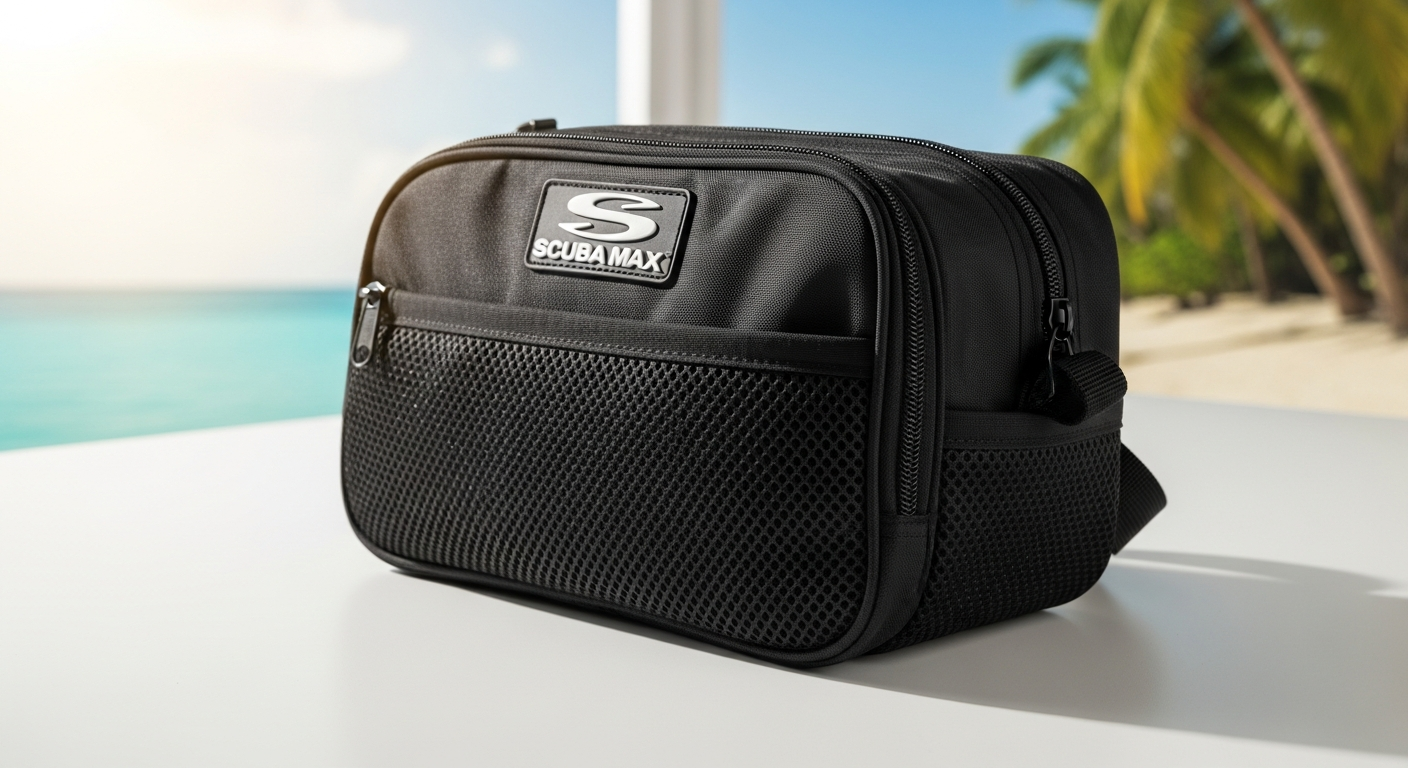
Mildew, odors, and waterlogged gear are the silent killers of snorkeling equipment. After a day in the ocean, your fins, mask, and snorkel need proper ventilation to survive the week ahead. The Scuba Max BG-632 Mesh Snorkeling Fin Bag solves this problem with a straightforward design trusted by water sports enthusiasts for years.
Unlike standard gear bags, this mesh construction allows air circulation and drainage, meaning your equipment dries properly instead of festering in moisture. At just $11.95, it's a practical investment that pays dividends through extended gear lifespan and fresher-smelling equipment.
Discover the Scuba Max BG-632 and transform how you store your snorkeling gear.
Why Mesh Ventilation Matters for Wet Snorkeling Gear
How moisture trapped in regular bags accelerates mildew growth and material degradation
Sealed storage containers create the perfect breeding ground for mildew. When wet neoprene, rubber, and synthetic materials sit in enclosed spaces without airflow, moisture never fully evaporates. Instead, it condenses against the bag walls and settles into fabric fibers, creating ideal conditions for fungal growth. Within days, black spots appear on your fins. Within weeks, the smell becomes unbearable.
The science behind air circulation and why it prevents odor development in neoprene and rubber
Mesh bags operate on a simple principle: continuous airflow strips away moisture before it can accumulate. Neoprene and rubber materials release volatile organic compounds (VOCs) that create odor when trapped in still air. When these compounds disperse naturally through mesh openings, they don't concentrate and intensify. The result is equipment that stays fresher, with bacteria and fungi unable to establish colonies on perpetually drying surfaces.
Comparison of mesh ventilation versus waterproof bag storage for post-dive care
Waterproof bags excel at keeping external moisture out during transport, but they're counterproductive for storage. Once wet gear goes inside, it remains wet. Mesh bags sacrifice waterproofing to gain ventilation—a worthwhile trade-off for stationary storage at home or on boats. The BG-632 handles short transfers without issue; the mesh doesn't soak everything instantly. For extended storage, mesh outperforms sealed containers every time.
Real-world drying times: mesh bags versus sealed containers
Fins stored in a sealed waterproof bag take 48-72 hours to fully dry, even in warm climates. The same fins in a mesh bag dry in 12-24 hours due to constant air exchange. Mask lenses emerge without cloudiness. Rubber components don't develop permanent odors. This speed difference compounds across an entire season—your gear simply stays in better condition.
Impact of ventilation on equipment longevity and material integrity over multiple seasons
Repeated moisture cycles degrade material integrity. Neoprene becomes brittle. Rubber hardens and cracks. Stitching weakens from constant dampness. Equipment stored in mesh bags experiences significantly slower material degradation. Fins last 5-7 years instead of 2-3. Masks remain clear and flexible. Snorkels don't develop internal rust or mineral buildup. The financial difference across multiple seasons easily justifies choosing ventilation-first storage.
Why professional divers and snorkel instructors prioritize breathable storage solutions
Professionals understand that gear failure underwater creates safety risks. Instructors managing rental equipment for dozens of students have learned that proper ventilation prevents equipment damage and liability issues. They specify mesh bags because they've seen what happens without them—corroded valves, degraded seals, and equipment failures that cost far more than preventive storage solutions. When experts choose breathable storage, casual snorkelers should take note.
Unpacking the BG-632's Durable Construction
210D Nylon reinforced bottom: what it means and why it matters for heavy gear
The 210D designation refers to denier weight—a measure of fabric density and durability. Standard mesh bags use 75-100D material. The BG-632's 210D nylon bottom provides triple the durability in the area that takes the most punishment. When you load wet fins (which gain significant weight when saturated), the bottom bears concentrated pressure. This reinforcement prevents tears, punctures, and sagging that plague lighter bags after a single season of use.
Adjustable shoulder strap design and ergonomic considerations for beach transport
A single adjustable strap might seem limiting, but it's perfectly suited for this bag's intended use. The width distribution prevents shoulder strain even when the bag holds 10-15 pounds of wet gear. Adjustment flexibility accommodates different body sizes and clothing layers. You're not hauling this bag for hours—you're carrying it from car to beach, boat to shore. The design prioritizes quick adjustments over multiple carrying positions.
Draw-string closure mechanism and security during travel
The draw-string top keeps contents secured without rigid zippers that can jam or break. This closure works flawlessly when the bag is wet or sandy, unlike zippered alternatives that corrode from salt exposure. The simple mechanism means nothing to malfunction or replace. Your gear stays in the bag during transport, and the easy opening allows rapid draining if water accumulates.
Dimensions (20"x31") and what actually fits inside: fins, masks, snorkels, and accessories
At 20 inches wide and 31 inches tall, the bag comfortably holds a full-sized pair of snorkeling fins (which are roughly 16-18 inches long), a mask with strap, and a snorkel. You have room for additional small accessories: defog solutions, lens cloths, fin socks, or booties. The single large compartment prevents deep-bag searches—grab what you need quickly. It's not spacious enough for a full scuba BCD or multiple sets of gear, but that's not its purpose.
Stitching quality and seam durability under repeated wet-gear loading
Budget bags often fail at stress points. The BG-632's seams use reinforced stitching in high-tension areas where the shoulder strap attaches and where the reinforced nylon bottom meets the mesh sides. Users report seams holding strong after three to five years of regular use. The stitching pattern is simple but effective—form following function rather than ornamental detailing that adds weakness without benefit.
How reinforced materials extend bag lifespan compared to standard mesh alternatives
Standard mesh bags last 1-2 seasons before developing tears, fraying edges, or separated seams. The BG-632's reinforced bottom and quality stitching extend practical lifespan to 4-5 years. Casual users report 6+ years of service. When you spread the $11.95 cost across that timeline, the cost-per-use becomes negligible compared to replacing a cheaper bag every season.
Packing Strategy: Maximizing Space in a Single-Compartment Bag
Best practices for organizing fins, masks, and snorkels without dedicated pockets
Start with fins as your base layer. Position them so the foot pockets face downward and heel sections point toward the bag's top. This creates a stable foundation. Place your mask on top of the fin heels, with the strap tucked underneath to prevent unraveling. Your snorkel lays horizontally across the mask. This arrangement fills the bag efficiently while keeping fragile items protected in the middle.
Layering techniques to prevent gear tangling and damage during transport
Avoid random throwing-in. Build your layers deliberately. Bottom layer: fins. Middle layer: mask and snorkel. Top layer: accessories. This prevents gear from shifting during movement. Fins won't flex the mask lens. The snorkel mouthpiece won't contact sharp fin edges. Each item occupies its designated space. The mesh sides prevent complete compression, so even with careful layering, nothing gets crushed.
Accessory placement: where to position smaller items like defog solutions and lens cloths
Smaller items go on top where you'll retrieve them first. Lens cloths and small spray bottles nestle in the spaces between your mask and snorkel. Lip balm and sunscreen fit in mask pockets. This arrangement keeps small items from getting lost in the bottom and prevents them from shifting around during transport. When you reach in, you grab the item you want without excavating the entire bag.
Weight distribution and shoulder strap comfort for longer carries
Heavy fins at the bottom create a low center of gravity that sits comfortably on your shoulder. The strap won't dig in because weight is distributed evenly rather than concentrated in a small area. If you're carrying for more than 10-15 minutes, a quick shoulder switch prevents strain. Most beach walks occur in shorter intervals, so discomfort isn't a realistic concern for intended use.
Protecting delicate gear: when to add padding or use protective sleeves
Prescription masks and expensive prescription snorkels warrant additional protection. Simple foam pipe insulation wrapped around your mask frame provides cushioning without bulk. A mesh pouch inside the larger bag creates compartmentalization for truly fragile items. For casual gear, padding is unnecessary—the mesh sides absorb minor impacts without issue.
Travel-specific packing: fitting the bag into luggage and carry-on considerations
The BG-632 folds flat more readily than rigid bags. Roll your fins tightly and the bag compresses significantly for luggage packing. It fits within most carry-on dimensions for airline travel, though you'll want to pack it last in your suitcase and pull it out first. When packed properly, it takes minimal luggage space. Some travelers carry it as a personal bag separate from luggage, especially on flights to vacation destinations.
Affordability Meets Functionality: The Value Proposition
Get the Scuba Max BG-632 for just $11.95 and protect your snorkeling investment.
Price-to-feature analysis at $11.95 compared to premium snorkeling gear bags
Premium snorkeling gear bags cost $40-80. They add waterproofing, multiple compartments, and aesthetic polish. The BG-632 strips away everything except functional essentials, reducing cost by 75-85%. You're not paying for design elements that don't improve core functionality. A $60 bag with waterproofing isn't five times better at preventing mildew—it's actually worse because waterproofing traps moisture. The BG-632 wins on pure functionality-per-dollar.
Cost-benefit breakdown: investment in one bag versus replacement of damaged equipment
A single pair of quality fins costs $40-100. A mask runs $20-50. A snorkel adds $15-30. Damaged fins from improper storage cost replacement. Equipment stored in improper conditions doesn't last one season before degradation begins. The BG-632 at $11.95 prevents this damage across multiple pieces of gear valued at $100+. The payback occurs on the first piece of equipment you save from mildew damage.
Who benefits most from this budget-friendly option: casual snorkelers, families, beginners
Casual snorkelers who take trips once or twice yearly benefit tremendously. Families with multiple swimmers benefit from buying several bags at this price point—one per person keeps everyone's gear organized. Beginners building their first kit appreciate spending $11.95 on proper storage rather than $60 while they're still developing their snorkeling interests. These audiences represent the BG-632's core market, and for them, it's an obvious choice.
Long-term savings through proper gear storage and reduced replacement frequency
Over five years, proper storage prevents equipment replacements that would cost $150-200. That savings multiplies if you own multiple sets of gear or snorkel frequently. A family of four snorkelers saves $600-800 across five years simply by using proper ventilated storage from day one. The upfront investment in correct storage habits pays massive dividends.
Comparison with higher-priced alternatives and what you're actually paying for
Higher-priced bags offer rigidity, multiple compartments, and brand recognition. You're paying for design, durability claims that exceed practical needs, and retail markup. A $60 bag from a premium brand does the same job as the BG-632 for most snorkelers—store and transport gear. The BG-632 doesn't sacrifice the essential functions; it just skips the premium pricing layer. For budget-conscious shoppers, this is intelligent spending.
Entry-level snorkeler perspective: is this the right first gear bag investment?
Absolutely. Before investing in expensive gear upgrades, ensure you're storing current equipment properly. The BG-632 allows beginners to focus gear investment on fins, masks, and snorkels—the items that directly impact snorkeling quality. Storage is a one-time purchase that supports all future gear. It's the logical first investment after basic equipment.
Limitations to Consider Before Purchasing
Mesh material vulnerability to sharp objects and impact damage
The mesh that provides ventilation offers zero impact protection. If your bag contacts rocky surfaces or sharp boat equipment, tears can develop. The 210D nylon bottom provides some protection when placed on rough surfaces, but the mesh sides and top are vulnerable. Careful handling is required during transport, especially in rugged environments.
Lack of waterproofing: what happens when wet gear contacts dry items inside
The mesh allows water through in both directions. If you place dry items (phone, wallet, electronics) inside the bag with wet gear, those items will get wet. This isn't a design flaw—it's intentional sacrifice of waterproofing for ventilation. You must accept that anything in the bag will likely get damp. Some users place a waterproof pouch inside for electronics or valuables, which works perfectly.
Single compartment drawback for those who prefer organized packing systems
Organized packagers miss having dedicated pockets for small items. Sunscreen, lip balm, and accessories don't have designated homes. Everything shares one large space. For people who value systematic organization, this feels chaotic. However, for practical snorkelers, the single compartment simplifies packing and reduces weight.
Limited protection for delicate equipment like prescription masks or high-end snorkels
Expensive prescription masks or premium snorkels deserve padded protection that this basic bag doesn't provide. Without compartmentalization and padding, these items can contact other gear during transport. Serious snorkelers with pricey equipment might want additional protection beyond what this bag offers.
Durability concerns in extreme conditions or heavy-use environments
In tropical environments with constant use, the mesh can degrade faster than in temperate climates. Salt water accelerates wear on stitching and materials. Professional rental operations using the bag daily might find it wears out faster than expected. Heavy-use environments demand more robust solutions.
When you might need additional storage solutions alongside this bag
If you own a full scuba setup, this bag handles only snorkeling components. If you have multiple sets of fins or masks for different water conditions, you'll need multiple bags. If you carry non-gear items (towels, dry clothes, personal effects), you'll want separate storage. The BG-632 works best as a dedicated snorkeling gear bag, not as a catch-all solution.
Real-World Performance: Snorkeler and Diver Feedback
Common user experiences from casual beach snorkelers and vacation travelers
Casual users consistently report satisfaction with the bag's simplicity. Beach snorkelers appreciate how quickly they can pack and grab their gear. Vacation travelers love the minimal luggage footprint. The overwhelming feedback is positive—users get what they expect and nothing disappoints them. No surprises, no hidden drawbacks in practical use.
Durability reports after multiple seasons of regular use
Users report the bag remaining functional after 3-5 years of regular snorkeling trips. The reinforced bottom holds up through sandy beaches and boat decks. Stitching doesn't fail in year two. The mesh fibers maintain integrity through salt water exposure. Reports of premature failure are rare, usually resulting from tear-related damage rather than material fatigue.
Mildew prevention effectiveness in humid and tropical climates
Users in Hawaii, Florida, and Southeast Asia—where humidity accelerates mildew growth—report the BG-632 effectively preventing the smell and discoloration they experienced with sealed bags. Even in extreme humidity, the mesh construction succeeds at its core purpose. This validates the ventilation-first design philosophy.
Shoulder strap comfort feedback during beach walks and boat transfers
Users carrying the bag for extended periods (30+ minutes) occasionally mention shoulder fatigue, but brief carries (5-15 minutes) generate no complaints. The strap width distributes weight adequately for intended transport distances. Most users carry the bag from parking to beach, then leave it stationary—the strap comfort issue doesn't arise in typical use patterns.
How the bag performs with different gear combinations and loads
Whether packed with just fins or with fins plus mask, snorkel, and accessories, the bag performs consistently. Users note that overpacking beyond designed capacity causes mesh bunching but doesn't damage the bag. Reasonable loading stays well within the bag's capacity.
Comparison of expectations versus actual performance for budget-conscious buyers
Budget-conscious buyers expecting a "cheap bag that might work" are pleasantly surprised by durability and functionality. The BG-632 exceeds expectations at its price point. Users consistently report feeling they got genuine value rather than compromising quality for low cost. This exceeds-expectations dynamic drives much of the product's popularity.
Maintenance and Care for Long-Lasting Use
Cleaning the mesh material without damaging fibers
Rinse with fresh water after each use to remove salt and sand. Use soft brushes or cloth, never hard scrubbing that can fray mesh fibers. For stubborn residue, soak in fresh water for 15 minutes, then rinse. Air dry completely before storing. Avoid harsh chemical cleaners that can degrade mesh material. Simple water and gentle handling preserve mesh integrity for years.
Proper drying procedures for the bag itself between uses
After rinsing, hang the bag vertically so water drains through the mesh. A clothesline or hook works perfectly. Allow 2-4 hours of air drying before packing with gear. In humid climates, extend drying time. Never store the bag wet—this creates conditions for mildew in the bag itself, which then transfers to your gear. A completely dry bag ensures your gear stays fresh.
Storage recommendations when not in active use
Store in a cool, dry location with decent air circulation. A closet shelf or garage corner works perfectly. Don't compress the bag tightly for storage—slight air circulation prevents odor buildup. If storing for several months, briefly hang and air the bag monthly to prevent mustiness. Some users store with a small packet of baking soda inside to absorb any lingering odors.
Inspection tips for early signs of wear or stitching failure
Before each season, visually inspect seams where the strap attaches and where the nylon bottom meets mesh sides. Look for loose threads or separated stitching. Check the mesh for developing tears. Minor fraying at edges is normal; significant tears need attention. Catching small issues early allows simple repairs rather than bag replacement.
Preventing odor buildup in the bag itself over time
Odors develop when the bag stores gear while damp. Always ensure both bag and gear are fully dry before storage. Baking soda placed inside the dry bag absorbs lingering smells. In humid climates, regular airing prevents mustiness from accumulating. A bag that stays dry stays fresh indefinitely.
Seasonal maintenance for year-round snorkeling enthusiasts
Inspect the bag at the start of each snorkeling season. Rinse thoroughly and air dry. Check stitching and mesh integrity. Verify the shoulder strap isn't strained or fraying. These simple checks take 15 minutes and ensure the bag remains functional for another full season. End-of-season inspection after the final snorkel trip ensures you store the bag properly for off-season months.
Beyond the Beach: Alternative Uses for Your Mesh Fin Bag
Storing and transporting scuba diving equipment and BCD gear
While not ideal for full scuba setups, the BG-632 holds fins and accessories used during scuba diving. Some scuba divers use it specifically for fin storage while other gear goes in larger bags. The ventilation prevents post-dive moisture issues with specialized scuba fins.
Using the bag for other water sports equipment: booties, gloves, rash guards
Surfers and paddleboarders use identical mesh bags for storing and drying booties and gloves. The ventilation prevents mildew in neoprene items. Rash guards dry properly in mesh rather than staying damp in sealed containers. Water sports equipment beyond snorkeling benefits from the same ventilation principles.
Gym and fitness applications: ventilated storage for wet workout gear
Athletes with wet gym clothes, towels, and swimwear benefit from the mesh bag's ventilation. Damp workout gear dries quickly rather than developing odors in a sealed gym bag. This application extends the bag's utility beyond water sports into general athletic use.
Travel organization for damp clothing and swimwear
When packing luggage with damp swimwear or wet clothing, placing these items in a mesh bag prevents moisture from spreading to dry clothes. The mesh allows continued drying during travel. This practical application makes the bag useful for any travel involving water activities.
Laundry and household storage solutions leveraging the mesh design
Some users employ the bag for delicate laundry that needs air circulation during drying. Sweaters, delicate fabrics, or items requiring flat drying can be stored in mesh bags. The principle is identical—ventilation prevents mildew and moisture accumulation.
Pet gear storage: keeping wet dog towels and equipment separate
Pet owners with dogs use the bag for wet towels and swimming gear. The mesh construction prevents odors from developing in wet dog-related items. This keeps pet-related moisture from affecting household storage areas.
Making Your Purchase Decision
Checklist of questions to ask before buying: Do you need waterproofing? Multiple compartments?
Ask yourself: Will I protect electronics separately? Do I need organized compartments? Do I require waterproofing? Can I accept that everything in the bag will get slightly damp? If you answer "no" to waterproofing needs and "no" to needing compartments, the BG-632 is perfect. If you answer "yes" to either, consider whether additional accessories inside the bag solve the problem.
Assessing your snorkeling frequency and gear volume requirements
Snorkel once yearly? The BG-632 handles it perfectly. Snorkel weekly with multiple sets of fins? You might need multiple bags or a larger solution. Assess how much gear you own and how frequently you need to transport it. The BG-632 suits casual to moderate snorkeling perfectly; serious enthusiasts with extensive collections might want something larger.
Determining if this entry-level bag meets your specific needs or if upgrades are necessary
This bag excels at storing basic snorkeling fins, mask, and snorkel. If your needs match this description, buy confidently. If you're carrying scuba equipment, multiple fins, prescription masks, and various accessories, you might outgrow it. Be honest about your actual needs rather than preparing for hypothetical scenarios.
Where to buy: Dip'N Dive US and authorized retailers
The BG-632 is available through Dip'N Dive US's official website and authorized retailers. Purchasing through official channels ensures authenticity and access to proper warranty coverage. Verify the seller is authorized before buying to avoid counterfeit products.
Warranty and return policy considerations
Dip'N Dive US stands behind their products. Review their warranty terms and return policy before purchasing. Most quality retailers offer 30-day returns, allowing you to test the bag with your gear and return it if it doesn't meet expectations. This low-risk purchasing approach is standard in the industry.
Pairing this bag with complementary gear storage solutions for complete organization
Consider a waterproof pouch inside the bag for electronics. Use small mesh pouches for organizing accessories. A larger duffel bag with the BG-632 inside creates a complete storage system for beach trips. The BG-632 functions as a specialized component in a larger organization system rather than as a standalone solution for all gear storage needs.
Your Snorkeling Gear Deserves Better Than a Musty Closet
The Scuba Max BG-632 Mesh Snorkeling Fin Bag delivers exactly what it promises: practical, affordable, and effective wet gear storage. The mesh construction prevents the mildew and odor nightmares that plague casual snorkelers, while the reinforced nylon bottom ensures durability through years of beach trips and dive excursions. At $11.95, you're looking at one of the smartest investments you can make for your equipment's longevity.
That said, this bag isn't a one-size-fits-all solution. If you're hauling expensive prescription masks or prefer organized compartments for every accessory, you might outgrow it quickly. The lack of waterproofing means careful packing is essential, and the mesh won't shield delicate gear from impacts. For casual snorkelers, vacation travelers, and anyone building their first snorkeling kit, this bag checks all the boxes. For serious technical divers with extensive gear collections, you'll probably want something more robust.
The real question isn't whether the BG-632 is good—it clearly is. The question is whether it matches your specific snorkeling lifestyle. If you're nodding along thinking you just need something to keep your fins from smelling like a fish market, grab one today. Your future self will thank you when your gear stays fresher, lasts longer, and your beach bag doesn't become a biohazard.
Shop the Scuba Max BG-632 on Dip'N Dive and experience the difference proper ventilation makes.
Leave a Reply