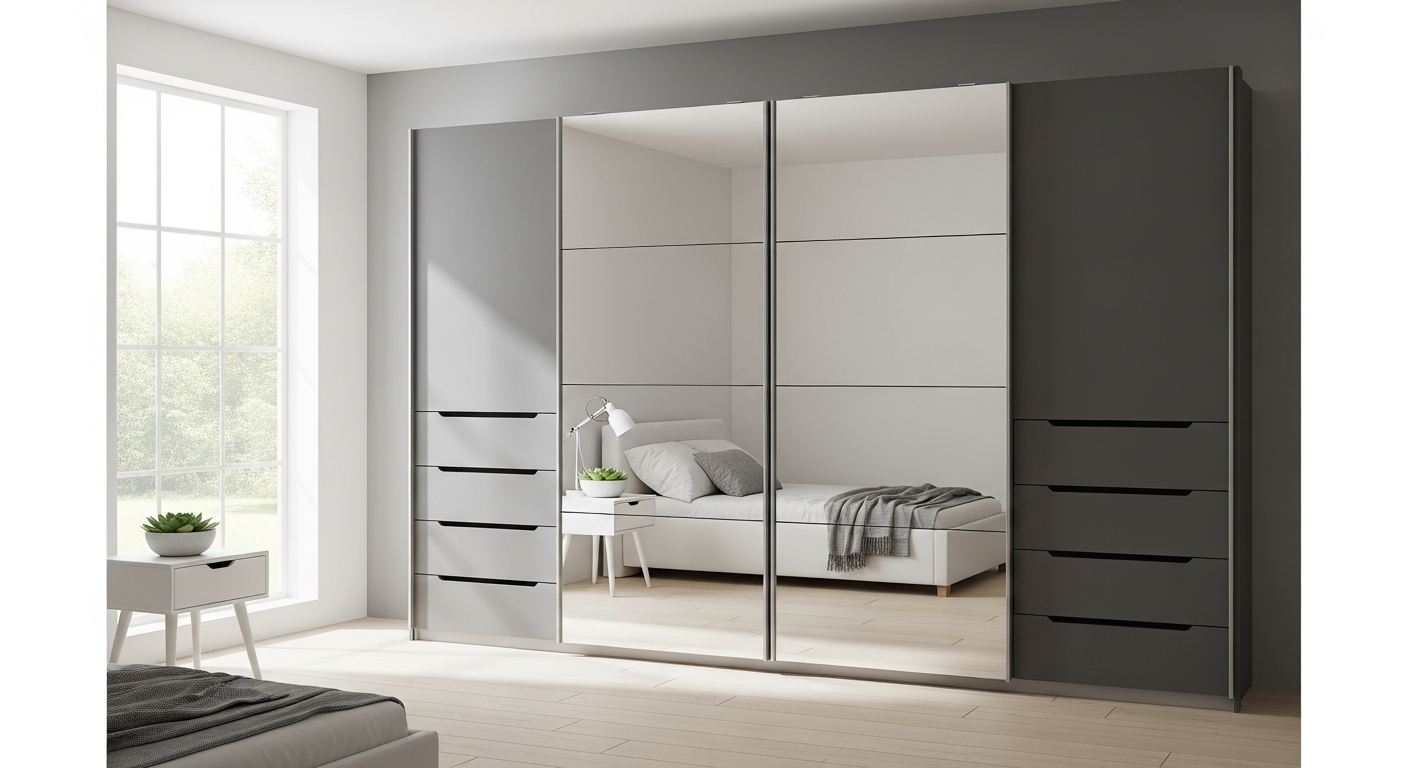
Why Sliding Door Wardrobes Outperform Traditional Closet Solutions
Swing-out hinged doors demand real estate. They require clearance space in front of the wardrobe, forcing you to plan furniture placement around their arc of movement. Sliding doors operate on a completely different principle—they move parallel to the wall, consuming virtually no additional floor space. This fundamental difference makes them ideal for bedrooms where every square foot counts.
Compact bedrooms and studio apartments benefit most from this design. A traditional wardrobe with hinged doors might force you to keep the bedroom door closed or restrict how you can position your bed. Sliding mechanisms eliminate that constraint entirely. You can position the wardrobe in corners, along walls, or even in alcoves without worrying about door swing clearance.
The visual impact matters too. Sliding door systems appear lighter and more refined than the chunky frames of traditional wardrobes. The horizontal lines created by the sliding tracks complement modern bedroom aesthetics. The mechanism itself becomes part of the design statement rather than an afterthought.
The 200cm width standard strikes a practical balance. It's wide enough to provide substantial storage capacity yet fits comfortably against most bedroom walls. Apartments, studios, and master bedrooms with standard dimensions all work well with this size. Other widths—150cm, 180cm, 250cm, and 280cm—accommodate various room configurations, but the 200cm option covers the majority of household needs.
Breaking Down the Storage Architecture—Shelves, Rods, and Drawers
The eight-shelf configuration creates designated zones for different clothing categories. Folded items—sweaters, jeans, t-shirts—stack neatly on shelves without creasing. Accessories find their place on upper shelves where they remain visible and accessible. Seasonal clothing rotates through without requiring separate storage containers scattered throughout your bedroom.
Two aluminum hanging rods run the full height of the wardrobe's interior. Dresses, coats, blazers, and blouses hang freely without competing for space. The dual-rod system effectively doubles hanging capacity compared to single-rod designs. Weight distributes evenly across the structure, preventing sagging or warping even with a full load of winter coats.
The four internal drawers represent the true organizational revolution. Unlike external dressers that consume floor space, these drawers operate within the wardrobe's footprint. Socks, undergarments, hosiery, belts, and small accessories find dedicated compartments. The drawer depth accommodates standard items while remaining accessible—you're not fishing through a bottomless abyss.
This integrated storage system means you might eliminate the need for a separate dresser entirely. Many bedroom layouts suffer from furniture clutter: a wardrobe here, a dresser there, a nightstand somewhere else. The modern sliding wardrobe consolidates multiple furniture functions into one piece. Floors remain clear. The room feels larger. Movement becomes easier.
Vertical space utilization becomes your secret advantage. While traditional setups sprawl horizontally, sliding wardrobes stack functionality upward. The mirror on the door adds another utility layer without consuming additional square footage.
Discover the complete storage solution that transforms bedroom organization
The Mirror Advantage—Functionality Meets Interior Design
A full-length mirror integrated into one of the sliding doors serves dual purposes. Practically, it eliminates the need for wall-mounted mirrors or separate standing mirror frames. You check your outfit before leaving the bedroom without additional fixtures taking up space. The mirror remains part of the wardrobe's structure rather than an accessory competing for wall real estate.
Mirrors create psychological effects in small spaces. Reflective surfaces bounce light around the room, making it feel larger and brighter than it actually is. A bedroom with eastern or northern exposure benefits tremendously from mirror placement that captures and redistributes available light. During darker months, this reflected light maintains the room's sense of openness and vitality.
The white gloss finish surrounding the mirror intensifies this effect. Light reflects off the glossy surfaces, multiplying the brightening impact. Bedrooms that tend toward dimness gain immediate luminosity without requiring additional lighting installations.
Aesthetically, the integrated mirror contributes to the minimalist contemporary look that defines modern interior design. Rather than cluttering the room with separate pieces, the mirror becomes part of the wardrobe's visual statement. The overall effect is clean, intentional, and professionally designed.
Mirror placement varies depending on bedroom orientation and layout. North-facing rooms benefit from mirror placement that captures maximum available light. South-facing rooms might prefer mirrors positioned to avoid excess heat gain. East-facing bedrooms enjoy morning light reflection, while west-facing rooms gain evening luminosity.
Maintaining the mirror surface requires routine attention. A microfiber cloth and mild glass cleaner keep fingerprints and dust from accumulating. Unlike wall-mounted mirrors that demand scaffolding for cleaning, the sliding door mirror sits at convenient height for regular maintenance.
Material Quality and Construction—What Makes It Last
The 16mm laminated Eco Wood board represents serious construction. This isn't thin particleboard that warps after a year or two. Laminated wood resists scratches from daily contact—hangers brushing against the interior, items sliding past one another, inevitable wear from regular use. The 16mm thickness provides structural rigidity that prevents sagging even when fully loaded.
ABS veneer edging protects the board's vulnerable edges from chipping and splitting. This finishing detail determines whether your wardrobe looks pristine five years from now or shows signs of deterioration. Quality edge protection extends the furniture's lifespan significantly.
The sliding mechanism represents perhaps the most critical quality consideration. Steel tracks (like the Laguna system) offer durability and strength. Polished aluminum tracks (such as Nexus Drive System) provide smooth operation with reduced maintenance. Both approaches employ ball bearings or telescopic elements that ensure fluid door movement. This engineering quality differentiates professional-grade furniture from budget alternatives that squeak and stick within months.
Polish-manufactured furniture maintains quality assurance standards that reflect European construction traditions. Production facilities maintain strict specifications for materials, assembly processes, and mechanism installation. This attention to detail justifies the 1,300–1,600 PLN price range.
Longevity expectations for well-constructed sliding wardrobes span 10-15 years with proper care. The resistance to everyday wear and tear—opening and closing doors thousands of times, temperature and humidity fluctuations, accumulated dust—determines real-world durability.
The Sliding Door Mechanism—Engineering Smooth, Silent Operation
Advanced track systems eliminate the squeaking that plagues cheaper wardrobes. Ball bearing technology allows doors to glide with minimal friction. You slide the doors open and closed hundreds of times without audible protest. This smooth operation becomes a daily reminder that you invested in quality.
Telescopic elements work in concert with ball bearings to control door closure. Rather than slamming shut, doors close with deliberate deceleration. This prevents finger pinching, protects the mechanism from impact damage, and extends operational lifespan. The engineering subtlety separates professional-grade systems from basic alternatives.
Maintenance requirements for keeping doors operating silently remain minimal. Occasional vacuuming of the track removes dust accumulation. A light application of silicone lubricant annually keeps ball bearings moving smoothly. That's genuinely the extent of routine care.
Different track systems available in the market serve various priorities. Steel systems prioritize maximum durability for heavily used wardrobes. Aluminum systems emphasize smooth, quiet operation with lower maintenance demands. Both approaches represent legitimate engineering choices depending on usage patterns and preferences.
Load capacity and safety features of professional-grade mechanisms prevent catastrophic failures. Wardrobe doors won't suddenly derail or collapse under the weight of a full load of winter clothing. The engineering safety margins exceed typical household use scenarios significantly.
Mechanism quality ultimately impacts long-term satisfaction. A wardrobe that operates smoothly after three years of daily use builds confidence. A wardrobe that sticks, squeaks, or requires mechanical adjustment within months generates frustration. The choice of mechanism affects whether ownership becomes a pleasure or a burden.
Real-World Organization Strategies for Maximum Efficiency
Categorizing clothing by type transforms the wardrobe from storage space into organizational system. Everyday wear occupies middle shelves and accessible hanging space. Formal clothing reserves upper sections, accessed less frequently. Seasonal items rotate through with minimal disruption to established routines.
Drawer organization systems for accessories prevent chaos. Drawer dividers or small boxes create compartments for different accessory types. Socks occupy one section, belts another, undergarments a third. This compartmentalization means you locate what you need instantly without rummaging through layers.
Shelf arrangement balances visual appeal with accessibility. Stacking items by color creates visual interest while making size variations obvious. Heavy items (denim, sweaters) sit lower to support the weight distribution. Lighter, delicate pieces occupy upper shelves where weight concerns matter less.
Hanging rod capacity reaches its maximum when items face the same direction with appropriate spacing. Overcrowding causes wrinkling and makes selections difficult. A moderately loaded rod with breathing room between items functions far better than one packed to capacity.
Seasonal clothing rotation without cluttering bedroom space becomes feasible with proper planning. Summer items compress into vacuum-sealed bags during winter months, occupying minimal shelf space. Winter coats disappear into appropriate storage during warmer months. The wardrobe adapts to seasonal needs without requiring external storage solutions.
Integration with additional storage solutions—drawer organizers, shelf dividers, hanging organizers—maximizes the wardrobe's organizational potential. These accessories transform theoretical capacity into practical functionality.
Internal drawers reduce or eliminate the need for separate dressers entirely. A typical dresser occupies significant floor space. Consolidating that storage into the wardrobe's integrated drawers reclaims usable bedroom area.
Design Versatility—Fitting Modern Wardrobes Into Any Bedroom Style
The white gloss finish compatibility with minimalist and contemporary interiors makes this wardrobe a design chameleon. Modern bedrooms with clean lines and neutral color palettes integrate the wardrobe seamlessly. The reflective gloss finish enhances the light, airy feeling that contemporary design prioritizes.
The neutral aesthetic works alongside various color schemes. Bedrooms with bold accent walls, colorful textiles, or eclectic furnishings still accommodate the wardrobe without clash. The white surface recedes visually, allowing other design elements to capture attention.
The sleek appearance functions as a statement piece or subtle background element depending on your design approach. In minimalist bedrooms with sparse decoration, the wardrobe becomes a focal point—its clean lines and integrated mirror creating visual interest. In more decorated bedrooms, it serves as functional background without competing for attention.
Size variations for different wall configurations and room layouts mean you're not forcing a square peg into a round hole. The 200cm width fits standard bedroom walls comfortably. Smaller rooms benefit from 150cm or 180cm versions. Larger master bedrooms accommodate 250cm or 280cm variants.
Corner placement possibilities unlock flexible room layout optimization. A sliding wardrobe positioned in a corner creates a naturally defined space boundary. This works particularly well in studio apartments or open-concept bedrooms where defining separate zones matters psychologically.
Complementary furniture pairing for cohesive bedroom design flows naturally when the wardrobe establishes the design language. Matching nightstands in similar finishes, a bed frame with compatible aesthetics, or accent pieces that echo the wardrobe's lines create unified interiors rather than random collections.
The reflection of light through mirrors brightens darker bedroom spaces noticeably. Bedrooms that face north, receive limited daylight, or have small windows gain illumination benefits from the integrated mirror.
Weighing the Investment—Cost Versus Long-Term Value
The 1,300–1,600 PLN price range covers the wardrobe itself. Understanding what constitutes this cost matters. Quality Eco Wood materials, precision manufacturing, professional-grade mechanisms, and integrated mirrors justify the investment compared to cheaper alternatives that cut corners on mechanism quality or material thickness.
Comparing with separate wardrobes, dressers, and mirrors combined reveals the true value proposition. Purchase a basic wardrobe (800 PLN), add a dresser (600 PLN), and include a standalone mirror (200 PLN), and you've spent 1,600 PLN while consuming significantly more floor space. The modern sliding wardrobe delivers all three functions at comparable cost with superior space efficiency.
Hidden costs warrant consideration. Delivery for large furniture typically costs 100-300 PLN depending on location and carrier. Assembly, though straightforward, requires time investment or professional assistance (potentially 200-500 PLN). These factors increase the total investment but remain reasonable relative to the overall cost.
Durability factors that extend furniture lifespan reduce replacement frequency significantly. A wardrobe lasting 10-15 years costs roughly 130-160 PLN annually. Cheaper alternatives lasting 3-5 years cost 160-270 PLN annually when replacement costs are considered. Quality pays dividends over time.
Resale value and market demand for quality sliding wardrobes remain strong. Used wardrobes in good condition sell readily on secondary markets, typically recovering 50-70% of original purchase price. This represents genuine value retention that cheaper furniture cannot match.
Budget-friendly alternatives exist but invariably sacrifice mechanism quality, material thickness, or finish durability. Premium upgrade options add features like soft-close drawers, additional organizational accessories, or alternative finish colors. These upgrades add value without dramatically increasing the cost.
The ROI perspective for improving bedroom functionality and aesthetics extends beyond financial calculations. A bedroom that feels organized, spacious, and visually appealing affects daily mood and sleep quality. The intangible returns on this investment merit consideration alongside dollars-and-cents analysis.
Transform Your Bedroom Into an Organized Sanctuary
This modern sliding wardrobe genuinely accomplishes something rare: it doesn't force you to choose between storage capacity and visual appeal. Both exist simultaneously—along with the space-saving efficiency that smaller bedrooms desperately require. Eight shelves, dual hanging rods, four internal drawers, and an integrated mirror create a comprehensive organizational ecosystem. Multiple furniture pieces become unnecessary. Your bedroom floor remains clear and spacious.
The construction quality endures. Eco Wood laminated boards resist scratches and warping. ABS veneer edges protect vulnerable surfaces from damage. Professional-grade sliding mechanisms—whether steel or aluminum—handle thousands of door operations without degradation. These aren't marketing buzzwords but engineering decisions reflecting years of manufacturing expertise.
Self-assembly and delivery costs require budgeting. Dust management demands occasional attention. Yet with over 1,000 satisfied customers in Poland enjoying these wardrobes daily, the evidence speaks clearly: this furniture delivers on its promises.
Your morning routine improves immediately. Getting dressed becomes easier with everything organized and accessible. The integrated mirror eliminates a separate fixture from your bedroom. Your room feels larger because the sliding doors consume minimal space and the mirror reflects light throughout. Winter mornings become less stressful when you can locate exactly what you need without searching through chaos.

Leave a Reply