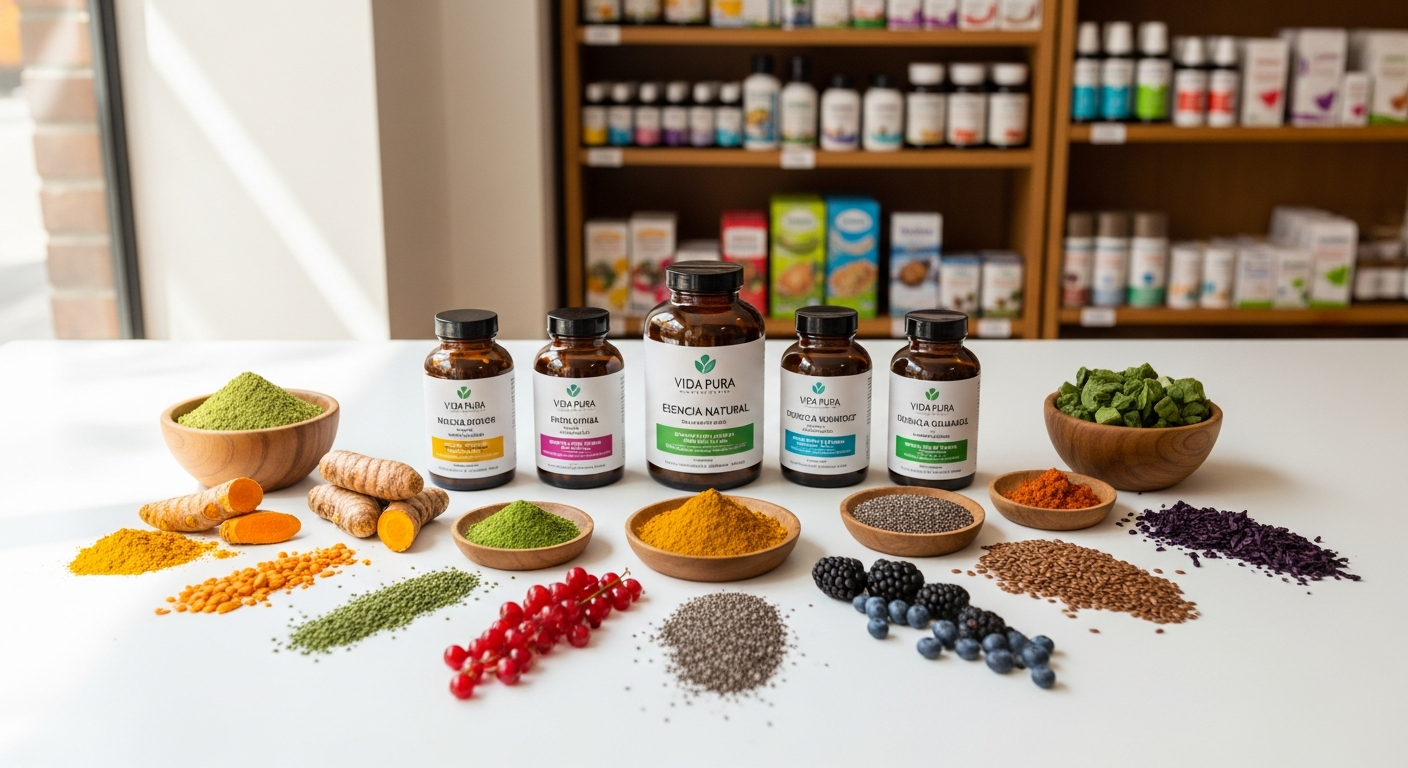
Over 60% of Europeans now purchase supplements online, yet most shoppers have no idea how to verify quality or authenticity when buying from unfamiliar brands. This gap between demand and confidence creates a real problem: health-conscious consumers default to big-name retailers simply because they're recognizable, not necessarily because those brands are superior. The marketing muscle of multinational corporations drowns out smaller, often equally rigorous competitors.
Spain has a thriving wellness industry with numerous supplement manufacturers and retailers serving both local and international markets, often operating with strict European regulations and quality standards that rival any major brand. Yet consumers frequently overlook them because they lack the brand recognition of multinational corporations. The opportunity here is substantial—access to high-quality, well-regulated products without the premium pricing that comes with global distribution networks.
Discover trusted Spanish supplement retailers that meet European quality standards.
In this guide, I'll walk you through the essential criteria for evaluating supplement retailers, how to verify product quality and sourcing, what regulatory certifications actually matter, and red flags to watch for when shopping with less-established brands. By the end, you'll have a framework for confidently selecting supplements from any retailer—regardless of their size or market presence.
Understanding European Supplement Standards and Certifications
What makes European supplements different from other markets
European supplements operate under regulatory frameworks that differ significantly from American or Asian markets. The European Union enforces stringent requirements for health claims, ingredient safety, and manufacturing standards. This means that even smaller Spanish retailers must comply with regulations that rival those of any multinational corporation. The difference isn't just bureaucratic—it translates to actual product quality and consumer protection.
Key regulatory bodies that oversee Spanish health products
Spain's regulatory environment includes the Agencia Española de Medicamentos y Productos Sanitarios (AEMPS) and alignment with EU-wide regulations under EFSA (European Food Safety Authority) guidelines. These bodies establish standards for how supplements are manufactured, labeled, and sold. Understanding their role helps you recognize which retailers take compliance seriously versus those cutting corners.
ISO certifications and quality assurance marks to look for
ISO 9001 certification indicates a company maintains quality management systems across operations. ISO 22000 or FSSC 22000 certifications specifically address food safety, which applies to supplements. GMP (Good Manufacturing Practice) certifications are crucial—they verify that products are manufactured consistently and with documented quality control. When evaluating a retailer, look for these certifications displayed prominently or available upon request.
The difference between pharmaceutical-grade and supplement-grade products
Pharmaceutical-grade products undergo rigorous testing comparable to medications and are subject to stricter regulations. Supplement-grade products, while still regulated in Europe, operate under a different framework. Neither is inherently superior—the distinction matters for understanding what testing has occurred and what claims can legally be made. European retailers are transparent about this difference; evasive retailers often are not.
How to verify third-party testing claims
Legitimate retailers should identify which third-party laboratories tested their products. USP (United States Pharmacopeia), NSF International, and various EU-accredited laboratories all conduct independent testing. Request certificates of analysis for specific products. If a retailer claims third-party testing but can't provide documentation, that's a significant red flag. Cross-reference lab names against official accreditation databases.
Understanding labeling requirements in Spain and the EU
EU regulations require specific information on supplement labels: ingredient lists, net quantity, expiration dates, storage conditions, and any allergen warnings. Spanish retailers must comply with both national and EU labeling standards. When examining a product listing online or in person, verify that all required information is clearly presented. Incomplete or vague labeling suggests a retailer isn't taking compliance seriously.
Red flags that indicate non-compliant or questionable products
Watch for products without clear expiration dates, missing ingredient lists, vague sourcing information, or exaggerated health claims. Retailers that can't explain their manufacturing processes or refuse to provide batch numbers are operating outside acceptable standards. Products with prices suspiciously lower than market rates may indicate counterfeit or substandard manufacturing. Any retailer that avoids direct questions about their operations deserves skepticism.
Evaluating Brand Transparency and Product Information
What information legitimate retailers should provide on their websites
A trustworthy retailer displays detailed product specifications, ingredient sourcing information, manufacturing facility details, and contact information for customer inquiries. Their website should include company background, registration details, and clarity about who stands behind the products. Vague "about us" sections or missing contact information signal a lack of accountability.
How to assess ingredient sourcing and supplier transparency
Quality retailers explain where their ingredients originate. Chinese-sourced raw materials aren't inherently inferior, but transparency matters—a retailer should disclose sourcing and explain their supplier vetting process. Some retailers even publish supplier audits or quality agreements. This level of detail separates serious operators from those simply reselling without understanding their supply chain.
Questions to ask about manufacturing processes and facilities
Contact customer service with specific questions: Where are products manufactured? Does the facility conduct in-house testing? How are batches tracked and stored? Legitimate retailers answer these questions directly or provide documentation. If responses are evasive, generic, or delayed, reconsider. A company confident in its operations welcomes scrutiny.
Identifying brands that publish detailed product specifications
Look for retailers that publish comprehensive product data sheets, specification sheets, or technical documents. These documents detail exactly what's in each product, potency levels, inactive ingredients, and testing results. Retailers investing in detailed documentation demonstrate commitment to transparency. Brands that restrict this information "for competitive reasons" are prioritizing secrecy over consumer confidence.
The importance of batch numbers and traceability
Every legitimate supplement batch receives a unique identifier. Batch numbers allow traceability throughout the supply chain and enable rapid response if quality issues emerge. A retailer that can connect your specific purchase to its batch number—and that batch to testing documentation—operates with integrity. Retailers that don't track batches can't guarantee consistency or manage recalls effectively.
How to contact customer service to verify product authenticity
Reach out with straightforward questions: Can they verify batch numbers for products you're considering? Will they provide test results? How long do they respond to inquiries? Professional customer service that answers thoroughly signals a retailer worth trusting. Poor communication, dismissive responses, or unanswered emails suggest deeper issues.
Recognizing when a brand is being evasive about their operations
Evasiveness takes many forms: refusing to disclose manufacturing locations, using vague language about "proprietary processes," declining to provide test results, or dismissing questions as "unnecessary." A company proud of its operations has nothing to hide. Trust your instincts—if something feels hidden, it probably is.
Researching Lesser-Known Supplement Companies
Using independent review platforms and health forums
Platforms like Trustpilot, independent health forums, and Reddit communities offer unfiltered customer experiences. Read both positive and negative reviews, looking for specific feedback about product quality, shipping, and customer service. Be skeptical of all five-star or all-negative reviews—balanced feedback often reflects genuine experiences. Look for patterns: if multiple customers mention the same issue, it's likely real.
How to check company registration and business legitimacy
Spanish companies maintain registration with the Registro Mercantil (Commercial Registry). EU companies register with their national equivalents. You can verify a company's legal status, ownership structure, and operational history through these public records. A company that can't provide registration details or actively hides its legal structure warrants suspicion.
Finding third-party testing reports and certifications
Search a company's website for links to testing reports, certification documents, or accreditation statements. Don't settle for claims alone—documentation matters. Independent lab websites sometimes allow searches by company name, confirming whether testing actually occurred. If extensive searching yields no verification, the claims are questionable.
Verifying claims through scientific databases (PubMed, Google Scholar)
Before trusting any health claims, search PubMed or Google Scholar for peer-reviewed research. Does scientific evidence actually support what the retailer claims? A legitimate company bases claims on published research, not marketing speculation. When evaluating ingredients, cross-reference what science says versus what marketing promises.
The role of customer reviews in assessing reliability
Customer reviews reveal how a company actually performs in real-world scenarios. Do products arrive as described? Are they potent and effective? Does customer service resolve issues? Read reviews skeptically but comprehensively. One negative review amid hundreds of positives differs from a pattern of complaints. Look for reviews mentioning batch consistency, effectiveness, and shipping reliability.
Checking for industry memberships and professional affiliations
Reputable supplement companies join industry organizations like NFSMI (National Food Supplement and Medical Ingredients) or participate in European supplement associations. These memberships indicate commitment to industry standards and code of conduct. Membership isn't guaranteed proof of quality, but its absence is notable.
Understanding the difference between marketing claims and evidence-backed benefits
Marketing language sounds compelling: "revolutionary formula," "scientifically proven," "clinically tested." Evidence-backed benefits reference specific research, dosages, and measured outcomes. A retailer distinguishing between what science shows and what they're marketing demonstrates integrity. Companies blurring this line are prioritizing sales over accuracy.
Navigating Product Selection When Information Is Limited
Starting with single-ingredient supplements for easier verification
Single-ingredient products are easier to evaluate than complex formulas. Vitamin D, magnesium, or omega-3 supplements contain fewer variables and simpler supply chains. Starting here builds familiarity with a retailer's quality standards. Once you trust their performance with simple products, expanding to more complex formulations becomes lower-risk.
How to cross-reference ingredients across multiple sources
Don't rely on one retailer's description. Research ingredients independently through databases like PubMed, the NIH, or the EFSA. Compare what multiple retailers say about the same ingredient. Consistency across sources increases confidence. Dramatic differences in how an ingredient is described might indicate marketing exaggeration from one source.
Asking for certificates of analysis before purchasing
Certificates of analysis (CoA) document what a product actually contains and confirm it matches the label. Request these before making large purchases. A retailer that immediately provides CoAs operates with confidence. Those that delay, refuse, or claim CoAs are "proprietary" are dodging accountability.
Understanding why some retailers don't publish extensive product catalogs
Smaller retailers might limit visible inventory due to warehouse constraints or because they work closely with individual customers. This isn't inherently problematic—it can reflect personalized service. However, they should still provide detailed information about available products upon request. Refusal to detail their catalog is different from having a smaller selection.
Building trust through smaller initial purchases
Your first purchase from an unfamiliar retailer should be modest in quantity and cost. Test their order processing, shipping, product quality, and customer service. If everything checks out, gradually increase order sizes and explore their fuller range. This incremental approach reduces risk while building confidence.
Documenting your purchases for reference and tracking
Keep records of what you buy, when you bought it, the batch numbers, prices, and how the products performed for you. Over months, patterns emerge: Does a retailer's quality remain consistent? Do batch variations occur? Do products actually deliver results? Documentation transforms subjective impressions into data you can review.
Creating a personal supplement sourcing checklist
Develop a checklist of non-negotiable criteria: Must provide batch numbers? Must have ISO certification? Must answer questions within 48 hours? Must publish CoAs? Your checklist becomes a screening tool for new retailers. This systematic approach removes emotion from decisions and ensures consistency in your sourcing standards.
Common Pitfalls When Shopping With Unfamiliar Brands
Assuming lower prices mean lower quality (and vice versa)
Prices reflect multiple factors: marketing budgets, distribution networks, production scale, and profit margins. A smaller Spanish retailer with lower overhead might genuinely offer better prices than a multinational corporation—and equal or superior quality. Conversely, high prices don't guarantee excellence. Evaluate quality independently from price.
Overlooking European quality standards in favor of American brands
The assumption that American supplements are inherently superior reflects marketing success, not regulatory reality. European standards are rigorous and, in many respects, stricter than American standards. Spanish retailers operate under these exacting standards. Dismissing European products solely because they're not American-branded costs you access to excellent options.
Trusting marketing language over actual certifications
"Natural," "pure," "clinically proven," and "pharmaceutical quality" are marketing terms with inconsistent legal definitions. Actual certifications—ISO marks, third-party testing confirmations, regulatory approvals—carry legal weight. When evaluating a retailer, bypass marketing language and demand documentation.
Ignoring ingredient lists and focusing only on brand names
The supplement itself matters far more than the retailer's reputation. Two retailers might both offer "magnesium supplements," but form, potency, sourcing, and purity differ dramatically. Read ingredient lists carefully. Understand what you're actually buying. A well-known brand selling poor-quality ingredients is worse than an unknown retailer offering excellent supplements.
Failing to check expiration dates and storage conditions
Supplements degrade over time, especially if stored improperly. Always verify expiration dates before purchase. Understand how products should be stored—some require cool, dark conditions; others tolerate room temperature. A retailer's storage facilities and shipping practices affect product quality. Ask about these details.
Not verifying whether products are suitable for your specific needs
Your health status, medications, allergies, and dietary restrictions matter. A supplement perfect for one person might be problematic for another. Don't assume a highly-rated product is right for you. Research interactions and contraindications. If uncertain, consult a healthcare provider before purchasing.
Skipping the step of consulting healthcare providers
Supplements aren't substitute decisions—they're additions to a broader health strategy. Your doctor or nutritionist understands your complete health picture. Before starting any new supplement, especially from unfamiliar retailers, discuss it with a qualified healthcare provider. Professional guidance protects your health and catches potential issues.
Building Confidence in Your Supplement Purchases
Creating a vetting system for new retailers
Develop a structured approach: Research their registration and certifications. Review independent feedback. Request product documentation. Make a small test purchase. Evaluate the entire experience. Only after this process expands to larger purchases. Systematic vetting reduces risk and builds justified confidence.
Keeping detailed records of what you buy and how it affects you
Document product names, retailers, batch numbers, purchase dates, and expiration dates. Track how you respond to each supplement: improvements, side effects, timing, dosages. Over time, this record reveals which retailers consistently deliver effective products and which don't. Your personal data becomes invaluable for future purchasing decisions.
Joining supplement communities to share research and recommendations
Online communities—Reddit's supplement forums, health-focused Facebook groups, or dedicated supplement discussion boards—connect you with people sharing similar interests. Exchange experiences with specific retailers and products. Learn from others' research. Share your own findings. Community knowledge accelerates your learning curve.
Developing relationships with knowledgeable staff at trusted retailers
Good customer service relationships go beyond transactions. Staff at reliable retailers understand their products deeply and can guide selections. Building rapport with specific people creates accountability and personal connection. Over time, knowledgeable staff become trusted advisors for your supplement journey.
Learning to read scientific studies about supplement efficacy
You don't need to become a researcher, but basic comprehension of peer-reviewed studies strengthens your decision-making. Understand concepts like sample size, study duration, and methodology. Learn to distinguish between preliminary findings and replicated results. This literacy inoculates you against marketing hype and helps you evaluate retailers' claims critically.
Understanding the limitations of what supplements can achieve
Supplements support health but don't replace fundamentals: nutrition, sleep, exercise, and stress management. They're not miracle solutions. A retailer making extravagant claims about what supplements accomplish is misrepresenting their role. Realistic expectations protect you from disappointment and help you assess whether a retailer operates honestly.
Recognizing when to seek professional guidance
Certain situations warrant professional input: if you're considering supplements with serious health conditions, taking multiple medications, pregnant or nursing, or trying to address a specific health challenge. A healthcare provider or registered dietitian adds valuable perspective. Some retailers have professional advisors available—this is a positive signal.
Your Path Forward With Spanish Supplement Retailers
Choosing supplements from smaller or less-familiar Spanish retailers doesn't require blind faith—it requires a systematic approach. The framework for evaluating everything from regulatory compliance to product transparency works whether you're shopping with established multinational companies or emerging regional brands. The key is shifting from brand recognition to evidence-based decision-making.
Start by identifying one or two retailers that meet your transparency standards, then request detailed product information before making your first purchase. As you gain confidence with their processes and quality, you can expand your exploration. Remember: the best supplement brand isn't necessarily the most famous one—it's the one that aligns with your values, meets rigorous quality standards, and delivers results for your health goals.
Begin by auditing your current retailers against the standards outlined here, then take the next step toward more informed, confident purchasing decisions.
Leave a Reply