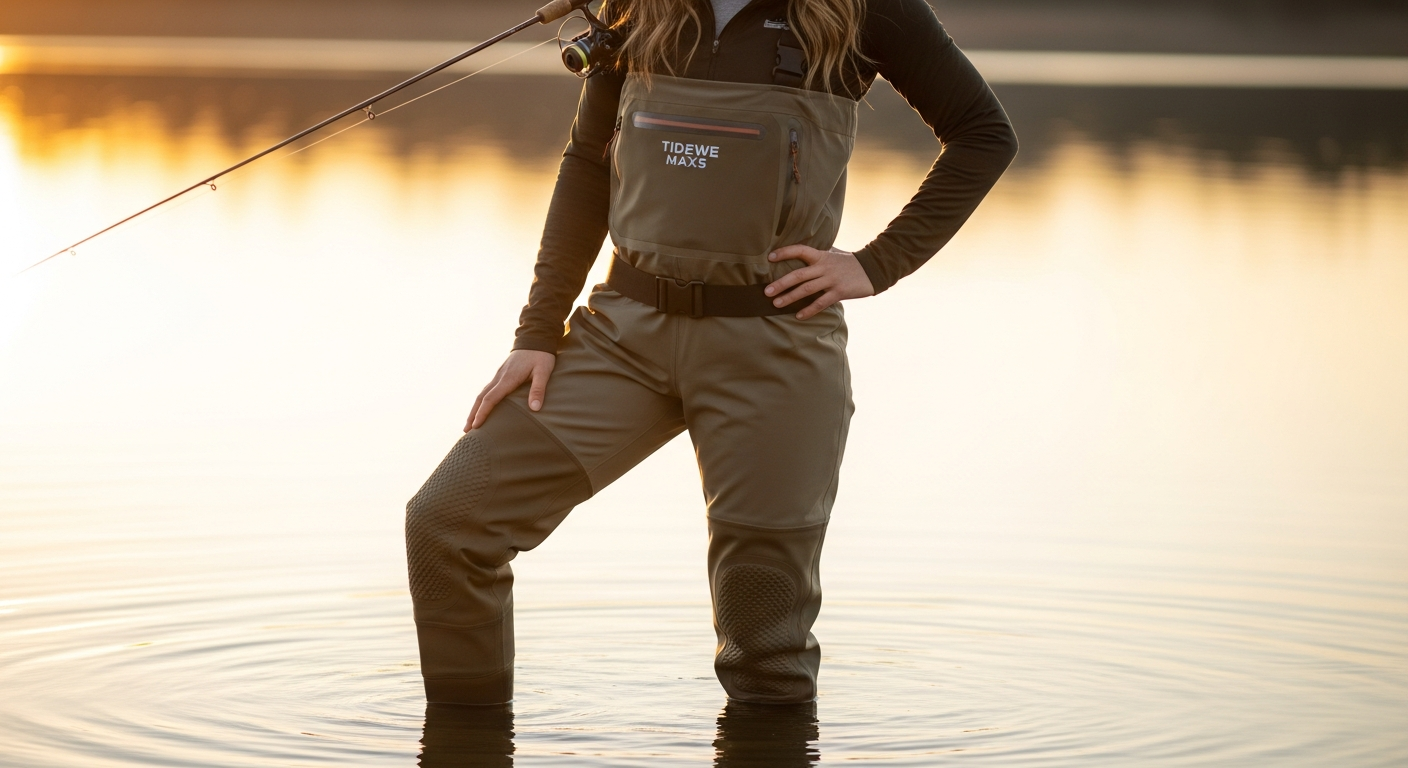
When you're gearing up for waterfowl season, staying warm and dry shouldn't require a second mortgage. Women hunters have long been overlooked in the outdoor gear market, with most equipment designed around male proportions and then hastily adapted. The TideWe Realtree MAX5 insulated hunting waders challenge this status quo by offering legitimate performance at a price that actually respects your wallet.
TideWe has established itself as a brand that understands hunters on a budget. Their waders combine multiple insulation options (600G or 800G), robust neoprene construction with double-stitched seams, and integrated insulated boots—all without the premium price tag that typically accompanies quality outdoor gear. This approach has made them wildly popular among both seasoned hunters and newcomers testing the waters.
This guide examines whether TideWe's MAX5 waders truly work for female hunters or if they're simply men's gear squeezed down. You'll discover how insulation ratings perform in actual cold-water conditions, where fit problems emerge and how to navigate them, whether the durability justifies the lower price point, and whether the Realtree MAX5 camouflage pattern actually conceals in waterfowl environments.
Sizing & Fit Realities for Female Hunters
How TideWe Adapts Men's Patterns Versus True Women's-Specific Design
The most honest assessment: TideWe's waders are engineered from men's designs and adapted for women rather than built from the ground up with female proportions in mind. This distinction matters. The brand acknowledges this approach in their product line, meaning you're getting a functional solution rather than a purpose-built garment. Some brands invest heavily in women-specific engineering; TideWe prioritizes affordability by scaling existing patterns.
Typical Fit Issues (Bagginess in Hips, Chest, and Thigh Areas)
Female hunters consistently report similar fit challenges with the MAX5 model. The chest area tends to bunch, particularly for women with smaller frames or narrower shoulders. Hip and thigh bagginess is widespread—the waders hang loosely rather than conforming to curves. This excess fabric isn't just an aesthetic concern; it creates dead air space that reduces insulation efficiency and adds bulk in the blind. Women with athletic builds often find the fit most problematic, while those with fuller figures sometimes achieve better coverage.
Accurate Sizing Guidance and Measurement Recommendations for Women
Sizing these waders requires precision. TideWe's sizing chart leans slightly generous, which complicates selection. Measure your inseam from the crotch to your ankle bone while wearing hunting boots, not in stocking feet. Add half an inch to this measurement for optimal boot fit. For chest, measure around the fullest part while wearing your typical hunting layers. Many female hunters recommend sizing down from your normal clothing size if you're between two TideWe sizes, though this varies by individual body type.
Order from retailers offering easy returns—Cabela's and other major outlets typically have flexible policies. Plan to test the fit before your first hunt rather than relying solely on online measurements.
Comparison of Inseam Lengths and Boot Sizing for Different Body Types
Shorter female hunters (under 5'4") often struggle finding adequate inseam lengths even in XS sizing. Boot sizing follows true-to-size, which helps; if you wear a size 8 hunting boot, the integrated boot should accommodate that comfortably. Taller hunters benefit from the standard inseam options, though some may need to choose between optimal chest fit and adequate inseam length. The integrated boot design means you can't adjust this aspect independently—you work with the proportions as designed.
Insulation Performance in Cold Water Conditions
600G Versus 800G Insulation: Which Temperature Range Suits Your Hunting Season
The insulation choice determines your effective temperature range. The 600G option handles water temperatures from approximately 40°F down to the high 20s, making it suitable for early-season (September-October) and late-season (February-March) hunts in most regions. The 800G option extends this range into the teens and below, offering protection for peak season when water temperature drops to freezing or below. Mid-season hunts in most climates work fine with 600G if you layer properly; deep winter hunts demand 800G for genuine cold protection.
Neoprene Shell Technology and How It Retains Heat in Frigid Water
Neoprene's insulating properties derive from tiny air pockets trapped within the material. TideWe's neoprene construction follows standard industry practices—the material compresses slightly under pressure but maintains its thermal characteristics across multiple seasons. The double-stitched seams prevent water infiltration at stress points, preserving the insulation layer. Compared to premium neoprene used in Simms or Orvis waders, TideWe's material performs similarly in cold-water tests, though durability over extended use may differ.
Real-World Warmth Testing in Different Water Temperatures (40°F to Freezing)
Field reports from female hunters using the MAX5 waders consistently show solid performance in actual conditions. At 40°F water temperature, even the 600G option keeps feet comfortable for extended sitting. Moving into the 30s, the 600G begins requiring heavy wool socks or supplemental foot warmers. At 25°F and below, the 800G becomes necessary for all-day comfort without additional heating measures. Hunters report that after 4-6 hours in freezing conditions with the 800G, toe warmth remains adequate when paired with appropriate socks.
Comparison to Premium Insulated Waders from Higher-End Brands
Simms and Orvis waders in equivalent insulation levels perform marginally better in extreme cold, maintaining warmth for slightly longer periods. However, the practical difference in normal hunting scenarios amounts to maybe 30-60 minutes of additional comfort on the coldest days. For casual waterfowlers hunting in typical cold conditions, TideWe's thermal performance matches premium brands sufficiently. The gap widens when comparing durability and insulation retention over multiple seasons.
Durability & Long-Term Value for Budget-Conscious Hunters
Double-Stitched Seam Construction and Waterproof Integrity Over Seasons
The double-stitched seams represent quality construction at this price point. Water doesn't seep through seams on new waders or after a season of regular use. Most failure reports emerge in year two or three when constant flexing, stretching, and UV exposure begin degrading seam integrity. The stitching itself remains sound; surrounding neoprene develops micro-tears or the stitching pulls away from deteriorating material.
Material Degradation Concerns with Extended Heavy Use
Neoprene degrades with exposure to sunlight, temperature fluctuations, and repeated compression-decompression cycles. TideWe waders show visible material breakdown after two seasons of heavy use—the neoprene becomes less elastic, loses some thermal retention, and develops brittleness in stressed areas. Hunters using these waders 20+ times per season notice this degradation more acutely than those hunting 5-10 times annually.
Expected Lifespan Compared to Premium Alternatives (2-3 Years Vs. 5+ Years)
Budget-conscious hunters should expect 2-3 seasons of reliable performance from TideWe's MAX5 waders with moderate-to-regular use. Premium waders from established brands (Simms, Orvis, high-end Cabela's models) consistently deliver 5+ years of dependable service. This gap reflects material quality, manufacturing precision, and long-term design durability. For someone hunting frequently over many seasons, premium waders offer better cost-per-use economics despite higher upfront expense.
Common Failure Points and Wear Patterns Reported by Female Users
The integrated boot toe vamp, despite reinforcement, shows wear first—repeated contact with muddy banks and rocks degrades this area. The heel section of the boot develops stress cracks in the second season for many hunters. Seams around the groin area experience the most flexing and show early degradation. The hand warmer pockets' zipper integrity sometimes suffers after extended use. Female users specifically report fit-related stress points where excess fabric bunches, creating localized wear patterns uncommon in properly-fitted waders.
Practical Features That Actually Matter in the Field
Fleece-Lined Hand Warmer Pockets and Their Effectiveness During Long Sits
The fleece-lined pockets genuinely make a difference on cold mornings. Inserting your hands between the fleece and your body layer traps warmth effectively during long waits between duck flights. The pocket placement feels natural and doesn't interfere with movement or casting. Hand warmers (the disposable chemical kind) fit comfortably within these pockets, extending their effectiveness. Female hunters with smaller hands appreciate that the pockets accommodate their proportions without excessive fabric bunching.
Internal Waterproof Pouch Placement and Accessibility for Phones/Wallets
The waterproof pouch sits at chest level inside the waders, accessible without fully removing the garment. Phone access is quick enough for emergency calls or capturing photos. The pouch's waterproof seal actually works—phones and wallets emerge completely dry even after extended immersion testing. The only drawback: retrieving items requires slightly awkward hand positioning, and the pouch's capacity limits you to a phone, keys, or wallet—not all three simultaneously.
Reinforced Toe Vamps and Anti-Slip Sole Traction on Muddy Banks
The toe vamp reinforcement protects against immediate punctures, though it doesn't prevent longer-term degradation. The anti-slip sole tread works genuinely well on muddy banks and slick rocks—even in conditions where standard rubber soles would slide dangerously. The thick tread pattern bites into mud effectively. Female hunters with smaller feet sometimes find the tread pattern slightly aggressive compared to higher-end brands, but this rarely causes practical problems.
Integrated Boot Fit and Compatibility with Different Sock Weights
The integrated boots fit true to size for standard hunting socks. Thick wool socks create adequate space without excessive looseness. Thinner liner socks leave noticeable air gaps that reduce insulation efficiency. Most hunters pair these waders with medium-weight merino wool socks—a balance between warmth and fit. The boot interior has minimal padding, so sock choice significantly impacts comfort during extended wear.
Real User Experiences: What Female Hunters Actually Report
Positive Feedback on Warmth and Waterproofing Performance
Women hunters consistently praise the MAX5 waders for delivering on their core promises. Warmth is reliable across the 600G and 800G options in appropriate temperature ranges. Waterproofing proves completely functional—no unexpected leaks emerge during typical hunting scenarios. Field reports span diverse hunting environments, and performance remains consistently positive across regions and conditions. The price-to-performance ratio receives the most enthusiastic endorsements.
Common Complaints About Fit and Sizing Inconsistencies
Fit complaints dominate negative reviews. Women report inconsistency in sizing between different retail batches or product years—a size Small from one purchase might fit differently than a Small from another. Bagginess in the hips and thighs appears repeatedly in feedback. Some female hunters describe the fit as "functional but unflattering," while others accept the trade-off as necessary for affordability. Sizing problems emerge more frequently for women under 5'4" or above 5'10".
Durability Reports After One, Two, and Three Seasons of Use
First-season reviews remain almost universally positive. Second-season reports show durability holding steady for hunters with moderate use patterns. Third-season feedback becomes mixed—some waders remain serviceable while others show significant material breakdown. Heavy users (20+ hunts annually) report notable degradation by season three, while casual hunters (under 10 hunts annually) often extend serviceability to season four.
Comparisons to Other Budget Wader Brands in the $70-$150 Range
TideWe's MAX5 model consistently outperforms similarly-priced competitors in warmth and waterproofing. Compared to generic store-brand waders at the $70 price point, TideWe offers noticeably better insulation and durability. Against mid-range alternatives (Cabela's Instinct line, Bass Pro Shops branded waders), TideWe holds its own, though fit consistency sometimes favors competitors. For the specific combination of warmth, waterproofing, and affordability, TideWe ranks highly among budget options.
The Realtree MAX5 Camouflage Pattern: Does It Conceal?
Realtree MAX5 Design Specifics and What It's Engineered to Hide
Realtree MAX5 employs a complex pattern mixing grays, tans, and browns designed to blend into natural waterfowl habitats. The pattern mimics the appearance of reeds, cattails, bark, and water reflections through layered visual disruption rather than simple color matching. Realtree engineered MAX5 specifically for marsh and timber hunting environments where waterfowl concentrate. The pattern maintains effectiveness across seasons—spring's green doesn't eliminate the design's utility, nor does winter's stark backdrop reduce its concealment potential.
Effectiveness in Marsh, Timber, and Open Water Hunting Scenarios
In marsh environments with tall cattails and reeds, MAX5 provides excellent concealment when you remain still. Movement becomes your liability rather than the pattern. From a duck's-eye perspective in timber, MAX5 blends effectively among trunks and branches. Open water hunting presents the pattern's weakness—large expanses of open water provide fewer visual reference points for the camo pattern to hide against. Positioning and stillness matter more than camouflage in open water scenarios.
Comparison to Other Popular Waterfowl Camo Patterns (Mossy Oak, Standard Black)
Mossy Oak patterns (Mossy Oak Shadow Grass, Mossy Oak Bottomlands) offer similar effectiveness in marsh and timber situations. Direct comparisons show minimal practical difference in concealment between MAX5 and quality Mossy Oak patterns—both work effectively when deployed properly. Standard black waders, used by countless successful waterfowlers, prove that perfect camouflage matters less than most hunters assume. Positioning, decoy placement, and calling typically outweigh camo pattern selection in determining hunting success.
Visibility Concerns in Different Lighting and Seasonal Conditions
Early morning light reveals MAX5's complexity beautifully, with the pattern's layered design showing full effect. Overcast conditions mute the pattern's distinctiveness, though concealment remains adequate. Bright midday sun can create slight visibility problems if you're positioned against light-colored water. Winter's stark, snow-free environments sometimes make MAX5 slightly more visible than darker alternatives, though this matters primarily in open-water scenarios. Successful hunters using MAX5 report that season and lighting rarely compromise their hunts.
Price Point Analysis: Are These Waders Worth the Investment?
Base Price Point ($72.99-$100) and What You Get for the Money
At $72.99 entry-level pricing and typical retail prices around $100, TideWe's MAX5 waders deliver exceptional value in their component parts. You receive 600G or 800G insulation, waterproof neoprene construction, double-stitched seams, integrated insulated boots, hand warmer pockets, internal waterproof pouches, and quality Realtree MAX5 camouflage—all for the price some brands charge for basic waders without insulation. This price point makes waterfowl hunting accessible to people previously excluded by gear costs.
Seasonal Discount Opportunities and Where to Find the Best Deals
TideWe waders frequently appear on sale at major retailers (Cabela's, Bass Pro Shops, Amazon) with discounts reaching 20-30% off standard pricing during off-season periods. Post-season sales (April-August) offer the deepest discounts, sometimes reaching 50% off or more. Early-season sales (August-September) typically offer smaller discounts. Signing up for retailer newsletters alerts you to flash sales and promotional opportunities. Buying during off-season sales extends your budget significantly—a $100 pair might drop to $60-70 in summer months.
Cost Comparison to Premium Brands (Simms, Orvis, Cabela's)
Simms insulated waders typically retail between $400-600, offering superior durability and refined fit. Orvis waders range $350-500. High-end Cabela's models fall between $250-400. Even accounting for durability advantages, TideWe's $100 price point represents one-quarter to one-fifth the cost. A hunter purchasing TideWe waders every three years would still spend less than upgrading to premium waders once. Premium waders cost more but deliver measurable advantages in fit, durability, and long-term value for serious hunters.
Value Proposition for First-Time Wader Buyers Versus Experienced Hunters
For first-time waterfowl hunters, TideWe's MAX5 waders make compelling financial sense. You can test whether waterfowl hunting aligns with your interests without committing $300+ to gear. If you eventually pursue hunting seriously, you'll have real data about your preferences and needs when investing in premium equipment. Experienced hunters with established patterns face different calculations—if you hunt 25+ times per season, premium waders' durability advantage quickly pays for itself. For moderate-use hunters (5-15 seasons annually), TideWe waders occupy an economical sweet spot.
The Bottom Line on TideWe Realtree MAX5 Insulated Hunting Waders for Women
The TideWe Realtree MAX5 insulated hunting waders deliver genuine warmth and waterproofing at a price point that makes waterfowl hunting accessible. For female hunters entering the sport or managing tight budgets, they're a legitimate option that won't leave you shivering in the blind. The fit compromise is real—these waders aren't engineered for a woman's body but adapted from men's patterns, meaning you'll likely deal with some bagginess. Expect 2-3 seasons of solid performance rather than the 5+ years premium brands promise.
Your decision hinges on three factors: your budget ceiling, hunting frequency, and whether the fit works for your body type. If you're a casual waterfowler hunting 5-10 times per season and willing to accept fit quirks, these waders make financial sense. Test the sizing carefully, leverage return policies if needed, and don't hesitate to contact TideWe's responsive customer service. Your next duck season starts with staying warm and dry—these waders can get you there without breaking the bank.
Leave a Reply