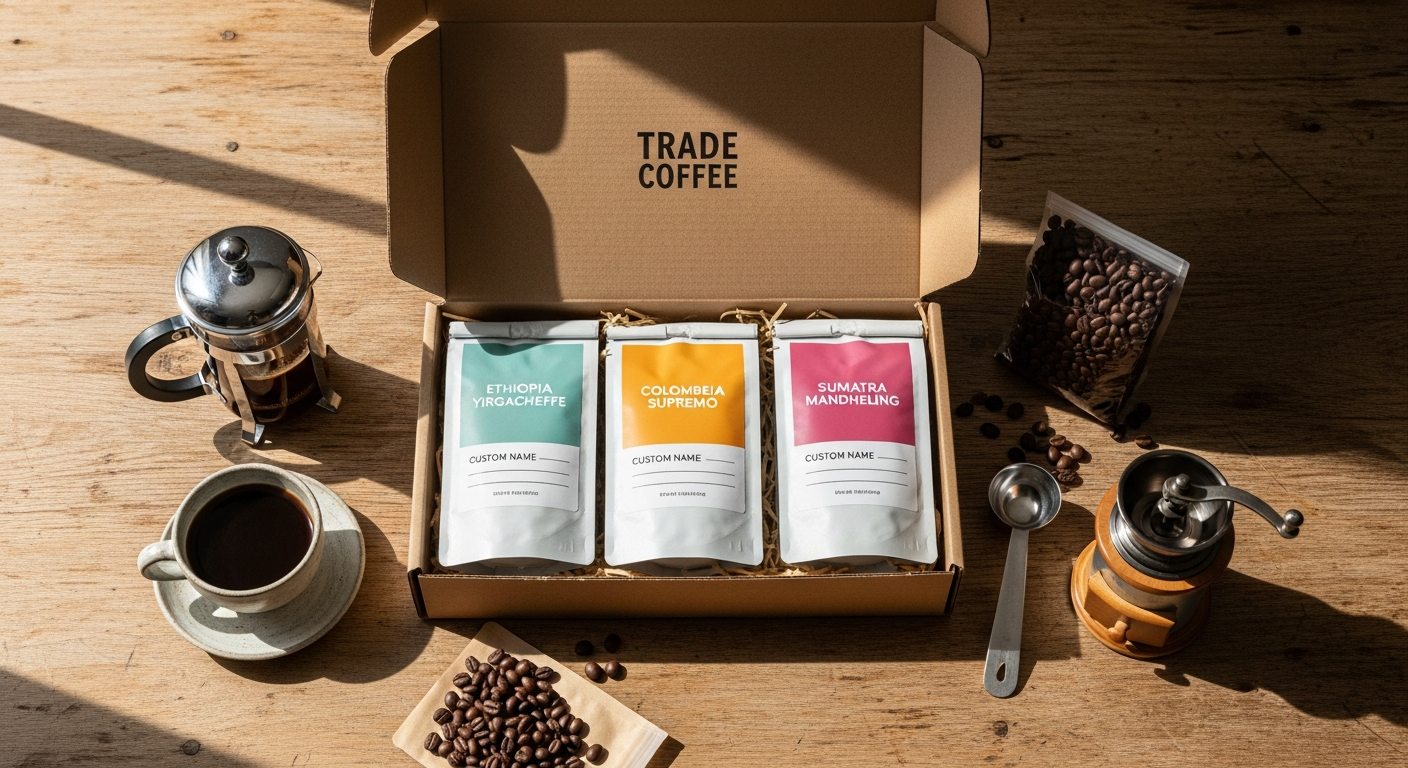
Specialty coffee drinkers face a paradox. Walk into any local roaster and you’re met with row upon row of colorful bags—Ethiopian naturals, Colombian microlots, single-origin pour-overs, and espresso blends. Over 60% of these enthusiasts report feeling genuinely overwhelmed by the sheer abundance of choice. What should take five minutes of pleasant browsing turns into analysis paralysis.
Trade Coffee’s Personalized Subscription Service solves this problem through a different approach entirely. Rather than abandoning you in a sea of 500+ coffee options from 55+ top roasters, the service uses a sophisticated algorithm to narrow those choices down to what actually matters to you. Think of it as having a knowledgeable roaster who knows your taste preferences, your brewing method, and your coffee goals—except this roaster has tasted every single coffee in their library and can match you with precision.
This guide walks you through exactly how Trade’s matching system works, breaks down the subscription tiers and pricing structure, and reveals why coffee drinkers are making the deliberate shift from grocery store browsing to intentional, curated subscriptions. You’ll discover whether this service fits your lifestyle and budget, and how to extract maximum value from your subscription investment.
Explore Trade Coffee’s personalized subscription service today.
The Algorithm Behind Your Perfect Cup: How Trade Coffee Matches You to Beans
Understanding the Comprehensive Taste Profile Quiz
The foundation of Trade’s personalization begins with a detailed quiz that goes far beyond “light or dark?” The questionnaire assesses your roast level preferences with genuine nuance—whether you prefer bright, acidic coffees or deeper, earthier profiles. It asks about your brewing method, distinguishing between espresso machines, drip coffee makers, French presses, and pour-overs. Each brewing technique extracts different flavor compounds, so your brewing preference directly shapes which coffees the algorithm recommends.
The quiz also explores your flavor preferences without pretension. Rather than asking whether you like “fruity” coffees, it presents actual tasting notes and asks which appeal to you—chocolate and caramel, or berry and citrus? This straightforward approach removes the intimidation factor from specialty coffee language while gathering precise data about your palate.
How Machine Learning Refines Your Experience Over Time
The real magic happens after your first shipment arrives. Trade’s algorithm learns from your behavior. You rate each coffee you try, giving feedback on whether it hit the mark or missed. The system notes which roasters consistently appeal to you, which flavor profiles you gravitate toward, and how your preferences might shift seasonally or with your mood.
This isn’t static matching. The recommendations improve with every rating you provide. A coffee lover who initially appreciated medium roasts might discover they actually prefer light roasts once they’ve tried a few examples. The algorithm adapts to these discoveries, ensuring future shipments reflect your evolving palate rather than locked-in assumptions.
Access to an Unmatched Coffee Library
The library behind Trade’s recommendations encompasses over 500 distinct coffees from more than 55 specialty roasters across the United States. This concentration matters. Most grocery stores stock perhaps 20-30 coffee options, and the vast majority are mass-produced and aged in warehouses. Trade’s library represents genuinely different roasters, each with distinct roasting philosophies and sourcing practices.
Having access to this breadth means the algorithm can match you with coffees from roasters you’d literally never encounter otherwise. A roaster in Portland might produce something perfect for your preferences, but you’d never know they existed without this subscription service. That discovery is the point.
Reducing Decision Fatigue While Expanding Your Palate
The personalization engine solves two contradictory problems simultaneously. First, it eliminates decision fatigue. You’re not staring at 500 coffees trying to figure out which one to buy. Instead, you receive a thoughtfully curated recommendation tailored to your preferences. The algorithm has already done the filtering work.
Second, the service systematically expands your coffee horizons. The algorithm doesn’t just recommend coffees identical to ones you’ve already loved. It strategically introduces new flavor profiles and roasters that align with your preferences but push your palate slightly further. Over time, you discover new favorites and develop a more refined understanding of what you actually enjoy.
Start your personalized coffee discovery with Trade Coffee.
Subscription Tiers Explained: Finding Your Coffee Budget Sweet Spot
The Best-Sellers Subscription: Starting at $16.99 Per Bag
The Best-Sellers tier represents Trade’s entry point for new subscribers. At $16.99 per bag, this tier features crowd-pleasing roasts from the roasters in the network. These aren’t the experimental, limited-edition roasts or single-origin micro-lots requiring an adventurous palate. Instead, they’re reliable coffees that consistently deliver excellent flavor.
For someone transitioning from grocery store coffee, this tier offers immediate improvement in freshness and quality without requiring a complete mindset shift about what coffee should cost. The roasts tend toward approachable flavor profiles—balanced, clean cups that don’t demand a trained palate to appreciate.
The Premium Customization Tier: $21.99 Per Bag
Moving to the Premium Customization tier at $21.99 per bag unlocks access to single-origin coffees, specialty roasts, and more experimental offerings. This tier is designed for coffee enthusiasts who have already refined their preferences and want to explore the deeper end of the specialty coffee market.
The premium coffees available at this tier often come with more detailed origin stories and roasting notes. A Premium bag might feature beans from a specific farm in Kenya, highlighting the cooperative structure and altitude where those beans were grown. These coffees typically showcase more distinctive flavor characteristics, requiring a bit more attention during brewing but rewarding that attention with complexity and depth.
Flexible Delivery and Prepayment Discounts
Trade structures its subscriptions around flexibility. You choose how often coffee arrives—monthly, bi-weekly, or every three weeks, depending on how quickly you consume a 12oz bag. This flexibility matters for people with varying coffee consumption rates or those who want to stockpile during certain periods.
The prepayment option rewards commitment. Paying for three shipments upfront typically includes one free bag and free shipping, effectively reducing your cost per bag. Committing to six shipments often provides two free bags plus free shipping. For someone confident they’ll enjoy the service, this prepayment structure saves meaningful money.
Price Comparison: Specialty Subscription Versus Grocery Store Alternatives
The math looks stark at first. A bag of grocery store coffee might cost $8-$12, while Trade’s Best-Sellers tier starts at $16.99. That’s nearly double for a single bag. However, the comparison requires more nuance.
Grocery store coffee typically sits on shelves for weeks before purchase, meaning it’s already aged and oxidized when you open it. A 12oz bag from Trade ships within days of roasting, arriving at peak flavor. From a pure quality-per-dollar perspective, the comparison becomes far tighter. You’re paying more, but you’re receiving coffee at its optimal freshness window—something impossible to achieve with supermarket purchases.
Additionally, the old adage about wasted grocery store purchases applies. How many times have you bought a coffee only to discover you don’t actually enjoy it? With Trade’s personalization engine, wasted purchases virtually disappear. You’re paying slightly more per bag, but you’re ensuring those bags are actually worth drinking.
Control Your Experience: Customization Features That Actually Matter
Whole Bean Versus Grind Options
Trade recognizes that different brewing methods require different grind profiles. The service offers whole bean options for purists and pre-ground options for espresso, drip, French press, and Turkish grind specifications. This flexibility matters because grinding immediately before brewing preserves volatile flavor compounds that oxidize once the bean is fractured.
If you have a grinder at home, ordering whole bean provides maximum freshness. If you’re traveling, in a dorm room, or simply prefer the convenience of pre-ground coffee, that option exists without forcing you into a different subscription tier.
Swapping Coffees Before Shipment
The algorithm makes recommendations, but it’s not infallible. Sometimes a coffee will sound appealing based on its description, but you’ll decide it’s not what you want this month. Trade allows you to swap recommended coffees before shipment leaves the warehouse. If the algorithm suggested an Ethiopian natural process coffee and you’re craving something more balanced this time, you can browse other options and make the switch.
This feature eliminates the frustration that can accompany any recommendation system. You maintain agency over what arrives at your door.
The Rating System That Drives Better Recommendations
After you’ve brewed and enjoyed (or not) a coffee, Trade asks for your feedback. The rating system is straightforward—rate the coffee and optionally add notes about what you liked or didn’t like. This data feeds directly into the algorithm, shaping future recommendations.
The rating system works as a conversation between you and the algorithm. You tell it what worked, and it listens. Over time, the recommendations become increasingly precise because the algorithm has accumulated months of data about your actual preferences, not just your initial quiz answers.
Pause and Skip Options
Real life intrudes on coffee subscriptions. Sometimes you’re traveling. Sometimes you’ve overordered and have a cabinet full of unopened bags. Sometimes you’re experimenting with a local roaster and want a break. Trade accommodates these scenarios with pause and skip features.
You can skip a single month without disrupting your subscription, or pause your subscription for an extended period. This flexibility removes the pressure that many subscription services create—the sense that you’re locked into a system regardless of circumstances.
The Discovery Advantage: Expanding Your Coffee Horizons Beyond the Usual
Roasters You’d Never Encounter Otherwise
The specialty coffee market in America is remarkably distributed. Excellent roasters exist in mid-sized cities and smaller communities, producing exceptional coffee that never reaches national distribution. Many of these roasters are too small to maintain significant online presence or too focused on local markets to pursue broader retail channels.
Trade’s network of 55+ roasters means exposure to these hidden gems. A roaster in Bozeman, Montana, or Austin, Texas might produce something perfect for your palate, but you’d need to specifically seek them out and order directly. Through Trade, discovery happens naturally as the algorithm matches you with their coffees.
Guided Exploration of Flavor Profiles and Origin Stories
Each coffee from Trade comes with detailed tasting notes and origin information. Rather than simply telling you that a coffee tastes like “chocolate and nuts,” the information provides context about where the coffee originated, how it was processed, and what flavor characteristics the roaster prioritized during roasting.
This guided exploration educates your palate over time. After several months of Trade subscriptions, you develop familiarity with different regions, processing methods, and roasting styles. You understand why a natural process Ethiopian coffee tastes fruity, or why a washed Colombian coffee tastes cleaner. The subscriptions function as an ongoing education in specialty coffee.
Breaking the Three-Brand Cycle
Most home coffee drinkers cycle through the same three brands repeatedly. You find a coffee you like, you buy it until you get bored, you switch to another brand, and the cycle repeats. This pattern limits exploration and prevents the palate from developing as it might with consistent exposure to variety.
Trade’s structure breaks this cycle intentionally. Each month brings new roasters, new origins, new flavor profiles. The variety is systematic rather than random, ensuring that new coffees align with your preferences while still expanding your experience.
Seasonal and Limited Releases Create Excitement
Specialty roasters release limited-edition coffees seasonally—harvest lots that arrived recently, experimental roasting techniques, or one-time partnerships. These releases create genuine excitement in the coffee community, but they’re typically available only directly from the roaster and only for a limited window.
Trade subscribers often gain access to these limited releases through the subscription service. Your monthly box might include a limited-edition Ethiopian natural that the roaster produced only 200 bags of, or a single-origin Kenyan that’s available for one month only. This exclusivity adds an element of discovery and occasion to each shipment.
Customer Experience and Support: The Human Side of Coffee Subscriptions
Highly Regarded Customer Service
Trade’s customer service reputation stands out in reviews and comparisons. The team is responsive to questions, genuinely helpful with troubleshooting, and willing to accommodate special requests. This matters when you’re committing to a recurring payment structure—knowing that real humans are available to help if something goes wrong provides peace of mind.
Service quality extends to how Trade handles issues. If a bag arrives damaged or you receive a coffee that somehow doesn’t match your preferences, the company handles replacements without friction or interrogation.
Easy Account Management and Subscription Adjustments
The Trade dashboard makes it simple to manage your subscription without emailing customer service or calling a phone number. You can adjust delivery frequency, swap recommended coffees, pause shipments, or update your taste preferences directly through the interface. This self-service approach respects your time while ensuring changes take effect immediately.
The account experience emphasizes friction-free management. Most subscription services make you navigate confusing portals or contact support for simple changes. Trade’s design assumes you might want to adjust things frequently and facilitates that without obstacles.
Transparent Communication About Roaster Partnerships and Sourcing
Trade provides transparency about how roasters source their beans and what partnerships exist. The company highlights roasters’ direct relationships with coffee farms, commitment to fair pricing for farmers, and environmental practices. This information allows subscribers to make purchases aligned with their values.
The transparency extends to the algorithm itself. Trade explains how it works and what factors influence recommendations, removing the “black box” feeling that many AI-driven services create.
Community Forums for Sharing and Learning
Subscribers can access community forums where fellow Trade customers share brewing tips, coffee reviews, and recommendations. This community aspect transforms the service from purely transactional—you buy coffee—into something more social and educational. Newer subscribers benefit from experienced brewers sharing their brewing approaches and flavor interpretations.
The Real Cost Analysis: When Premium Subscriptions Make Financial Sense
Monthly Cost Breakdown
The cost structure is straightforward. A Best-Sellers subscription at $16.99 per bag, assuming one monthly shipment, costs approximately $17-21 monthly (depending on whether shipping applies). The Premium Customization tier at $21.99 per bag runs $22-26 monthly.
Compare that to grocery store coffee in the $8-$12 range, and the monthly coffee budget roughly doubles. For someone spending $15-20 monthly on grocery store coffee, shifting to Trade means adding $5-15 to the monthly budget. For a household already spending $50+ monthly on coffee, the proportional increase becomes smaller.
Bulk Prepayment Savings
The prepayment structure provides meaningful savings for committed subscribers. Paying for three months upfront typically includes one free bag. That free bag represents roughly $17-22 in value, effectively reducing your average cost per bag by 7-8%. Committing to six months provides two free bags, bringing the per-bag savings closer to 14-16%.
For someone confident in the service, the prepayment structure makes financial sense. The first month remains risky because you don’t yet know if you’ll enjoy the service. After that initial month, if you’re satisfied, committing to prepayment delivers real savings.
Value Proposition for Specialty Coffee Drinkers
The pricing calculus shifts for coffee enthusiasts who currently visit local roasters or purchase premium coffee online. If you’re already spending $25-30 monthly on specialty coffee, Trade’s cost becomes incremental. You’re not adding a new expense; you’re replacing an existing one with a more convenient delivery mechanism and personalized curation.
For these drinkers, Trade provides significant value. The convenience of delivery eliminates weekly trips to roasters. The personalization engine handles the decision-making work that previously required research or barista consultation. The algorithm’s continuous improvement means recommendations become increasingly tailored to your actual preferences.
ROI Analysis: Subscription Costs Versus Discovery Value
The real return on investment comes from eliminated wasted purchases and the joy of discovery. How much do you currently spend on coffee that doesn’t work out? How often have you bought a new coffee, tried it, and discovered you didn’t actually enjoy it?
Trade’s personalization algorithm dramatically reduces those wasted purchases. Over a year, even small reductions in wasted coffee spending—say, one wasted bag per month—add up. At $10-15 per wasted bag, that’s $120-180 annually in savings from simply not buying coffee you dislike.
The discovery value is harder to quantify but genuinely meaningful. Finding new favorite coffees, exploring roasters you’d never have encountered otherwise, and developing deeper knowledge of specialty coffee has intrinsic value beyond the coffee itself. For coffee enthusiasts, that value justifies the premium pricing.
Potential Drawbacks: Honest Considerations Before You Subscribe
Higher Per-Bag Cost
The first drawback is straightforward—you’re paying roughly double what you’d spend on grocery store coffee. For budget-conscious consumers or those with large households and high coffee consumption, this cost increase requires careful consideration. If your household drinks five or six cups daily, Trade’s cost structure might not make sense compared to bulk grocery store purchasing.
The higher cost reflects higher quality and freshness, but if your budget is fixed, this reality matters regardless of justification.
Initial Overwhelm from Choices
Paradoxically, while Trade solves the overwhelming problem of choosing among 500+ coffees for regular purchases, the initial quiz and setup process can feel overwhelming. The questionnaire is detailed because precision matters, but longer quizzes intimidate some people.
Similarly, some new subscribers find the initial recommendations confusing or are uncertain whether they’re making optimal choices. This overwhelm typically dissipates after the first month, but it’s a real friction point for signing up.
Subscription Commitment Versus One-Time Flexibility
The subscription model assumes you want coffee delivered regularly. If you prefer purchasing coffee sporadically or trying one bag before committing to a roaster, Trade’s structure doesn’t accommodate that pattern. Some coffee drinkers have irregular schedules or consumption patterns, making subscriptions inconvenient.
Trade’s pause and skip options mitigate this issue, but they add friction compared to simple one-time purchases. You can’t simply decide one month that you’d prefer to wait two months—you need to remember to skip your upcoming shipment.
Storage Considerations in Small Spaces
Whole bean coffee remains fresher longer than ground coffee, but it still has a flavor window. A 12oz bag consumed within two weeks is ideal. If you receive a monthly shipment and only consume half the coffee before the next shipment arrives, you’re left with partial bags approaching staleness.
For people in small apartments or dorm rooms without dedicated pantry space, managing multiple bags of coffee simultaneously becomes logistically challenging. You need cool, airtight storage to maintain freshness.
Who Benefits Most: Matching the Service to Your Coffee Lifestyle
Specialty Coffee Enthusiasts Seeking Discovery
Trade is ideal for coffee drinkers who’ve already transcended the grocery store aisle and are actively seeking to explore and expand their coffee knowledge. If you visit local roasters, read about coffee origin and processing methods, or discuss brewing techniques, Trade amplifies that passion.
The service transforms coffee from a daily commodity into a ritual of exploration and discovery. Each month brings intentional, curated recommendations aligned with your preferences but pushing your palate slightly further.
Busy Professionals Who Value Convenience
Professionals with time constraints benefit enormously from Trade’s convenience. Shopping for coffee—whether at grocery stores or roasters—requires time and decision-making energy. Trade removes both friction points. Coffee arrives at your door on a schedule you set, personalized to your preferences, requiring zero effort beyond enjoying it.
The time saved is genuine. You’re not spending weekly mental energy thinking about coffee or visiting stores.
Home Brewers with Specific Equipment
If you’ve invested in an espresso machine, Chemex pour-over, Turkish coffee pot, or specialized brewing equipment, Trade’s flexibility matters. The service accommodates your specific brewing method through grind options and recommendations tailored to your equipment. Rather than buying coffee generically and hoping it works with your equipment, you receive coffee optimized for how you brew.
Coffee Drinkers Tired of Mediocre Grocery Store Beans
The final audience is straightforward—people who’ve noticed that grocery store coffee tastes stale and over-extracted. Perhaps you’ve tried coffee at a café and wondered why your home coffee doesn’t taste as good. Trade solves that frustration directly through the freshness guarantee. Beans roasted days before arrival, at their flavor peak, simply taste better than warehouse-aged grocery store alternatives.
Making the Switch: A Practical Guide to Starting Your Trade Coffee Journey
Taking the Quiz Honestly and Thoroughly
The foundation of your Trade experience depends on the accuracy of your taste preference quiz. Take it seriously and thoughtfully. Don’t rush through it or guess at answers. Consider what you actually enjoy when you have good coffee available, not what you think you should enjoy.
If you’re uncertain about specific flavor profiles, err on the side of honesty. It’s better to admit you’re not sure about something than to select an answer you’re unsure about. The algorithm will refine its understanding over time based on your ratings anyway.
Choosing Between Best-Sellers and Premium Customization Tiers
Decide which tier matches your preferences and budget. If you’re new to specialty coffee, the Best-Sellers tier is a sensible starting point. The coffees are excellent and accessible, and you’re not committing to premium pricing before understanding whether the service fits your lifestyle.
If you’ve already been buying specialty coffee or have refined preferences, the Premium Customization tier opens access to more interesting single-origins and experimental roasts.
Selecting Your First Delivery Frequency
Start with monthly delivery. This frequency allows you to test the service without overcommitting or risking that your cabinet fills with coffee faster than you can consume it. After your first month, if you’re satisfied with the quality and the personalization, you can adjust to more frequent delivery or commit to prepayment discounts.
Monthly frequency also aligns with how long a 12oz bag typically lasts for a regular coffee drinker, so you’re less likely to experience staleness from overlapping inventory.
Understanding How to Rate and Provide Feedback
After you receive your first shipment and brew the coffee, rate it in the Trade dashboard. Be honest about whether it met your expectations. Rate the individual coffee, and optionally provide notes about what you liked or didn’t like.
The algorithm learns from this feedback. Over time, as you accumulate ratings, the algorithm’s recommendations become increasingly accurate because it’s seen actual data about your preferences rather than relying solely on the initial quiz.
The Freshness Factor: Why Roast-to-Order Changes Everything
Roast-to-Order Model: Beans Ship Within Days of Roasting
Trade uses a roast-to-order model where beans are roasted only after your order is placed. This approach seems inefficient compared to maintaining roasted inventory, but it’s the secret to the service’s quality advantage. Your coffee ships within days of roasting, arriving at the absolute peak of its flavor window.
This freshness commitment fundamentally changes the product. You’re receiving coffee in its optimal state, not beans that have sat in warehouses slowly oxidizing.
Peak Flavor Window and Quality Impact
Coffee reaches peak flavor 5-14 days after roasting, depending on the roast level. Light roasts typically peak earlier; dark roasts take slightly longer. This window represents when the coffee tastes best—the most vibrant, complex, and balanced version of itself.
Grocery store coffee rarely reaches consumers during this window. By the time a bag sits on shelves for weeks and then goes home, it’s past peak flavor. Trade’s roast-to-order model ensures you’re always drinking coffee in its sweet spot.
Proper Storage Techniques to Maintain Flavor
To maximize the freshness advantage, store your coffee properly. Keep beans in an airtight container away from light, heat, and moisture. Your kitchen counter next to the coffee maker is the worst place to store coffee because heat and light degrade the beans. A cool, dark cabinet or pantry is ideal.
Whole bean coffee lasts longer than ground coffee because grinding increases surface area and accelerates oxidation. Properly stored whole beans remain at peak flavor for two to three weeks. If you grind immediately before brewing, you capture the maximum freshness advantage.
How Freshness Justifies the Premium Pricing
The freshness advantage, combined with flavor complexity, directly justifies Trade’s premium pricing. You’re not paying for branding or convenience alone. You’re paying for coffee in an objectively superior state—fresher, more flavorful, and more complex than supermarket alternatives.
When you factor in the personalization that ensures you’re actually drinking coffee you enjoy, the freshness advantage, and the elimination of wasted purchases, the premium becomes reasonable.
The Bottom Line: Your Next Great Coffee Discovery Awaits
Trade Coffee’s Personalized Subscription Service represents more than a convenient way to buy coffee—it’s a fundamental reimagining of how you source, discover, and experience your daily brew. The combination of sophisticated matching algorithms, access to 500+ specialty coffees from 55+ top roasters, and flexible subscription controls delivers a genuinely tailored experience that adapts as your preferences evolve.
Yes, you’ll spend more per bag than at the grocery store. The Best-Sellers tier at $16.99 and the Premium tier at $21.99 represent a genuine budget increase compared to $8-$12 supermarket coffee. However, that premium purchase delivers freshness that simply cannot be found elsewhere—beans roasted days before arrival, at their absolute flavor peak, from roasters you’d likely never discover independently.
The math shifts when you calculate the value equation. Eliminate wasted coffee purchases. Factor in the joy of discovering new roasters and expanding your palate. Consider the convenience of curated coffee arriving at your door without shopping trips or decision-making. For anyone serious about coffee, that value proposition justifies the higher cost.
The beauty of Trade’s approach is that it removes guesswork from specialty coffee shopping. The algorithm handles the curation work. You enjoy the discovery. Over time, recommendations become increasingly precise because the system has accumulated months of data about your actual preferences.
Whether you’re a seasoned espresso enthusiast with a premium espresso machine, or someone frustrated with stale supermarket beans, Trade Coffee removes the barriers between you and great coffee. Starting with the Best-Sellers tier is a low-risk way to test whether curated coffee subscriptions fit your lifestyle. After your first month, you’ll understand whether the freshness, personalization, and discovery justify the investment.
Leave a Reply