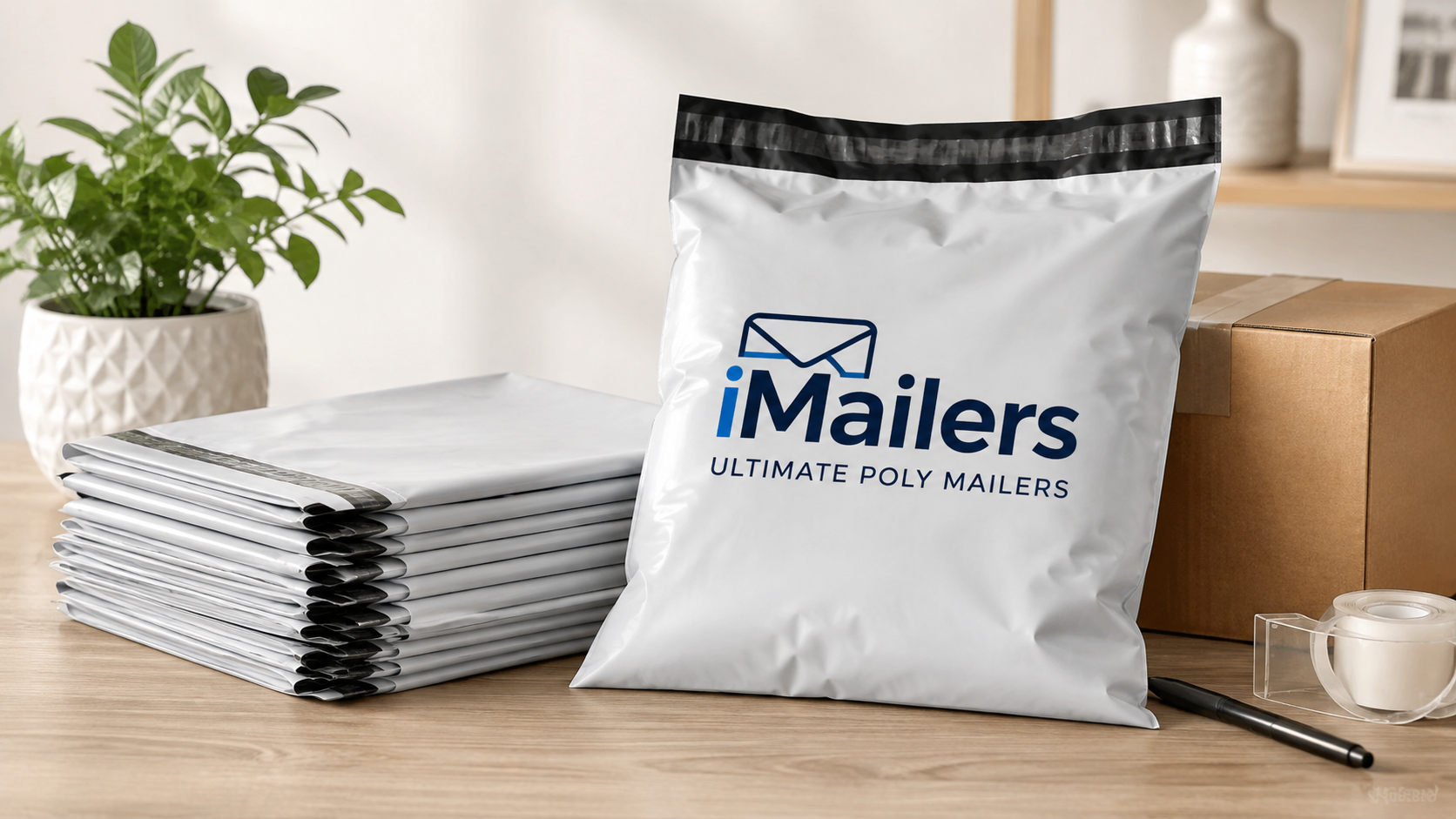
A damaged parcel can cost you more than the price of a replacement. It can lead to additional postage, extra customer support, and a disappointing delivery experience. Ultimate poly mailers offer a practical packaging option for clothing, textiles, accessories, and other flexible products that do not require a rigid box. Their lightweight construction can help control shipping weight, while the self-sealing closure makes order packing faster and more consistent.
However, choosing the correct size, thickness, and material remains essential. This guide explains how poly mailers work, where iMailer products may fit into your packaging setup, and when another form of protection makes more sense.
Ultimate Poly Mailers: What Are They and How Do They Work?
Ultimate poly mailers are flexible plastic shipping envelopes designed for sending non-fragile products. Most are made from polyethylene, a moisture-resistant material that can withstand routine handling during storage and transportation.
A typical mailer includes:
- A self-sealing adhesive strip
- An opaque exterior for shipment privacy
- A smooth surface for labels
- Sealed edges that help prevent splitting
- A lightweight, flexible body
- A tear-resistant construction
These features make shipping poly bags useful for online stores, home-based businesses, warehouses, and individuals mailing products directly to customers.
The word “ultimate” may appear in a product name or describe mailers positioned as strong, dependable packaging. It does not represent a universal material standard. Always check the manufacturer’s dimensions, thickness, closure design, and intended application before ordering.
What Can You Ship in a Poly Mailer?
Poly mailers work best with soft, flexible, and relatively durable products. They conform to the item’s shape, so they require less empty space than many cardboard boxes.
Suitable products include:
- T-shirts, jeans, and jackets
- Socks and underwear
- Towels and bedding
- Fabric accessories
- Soft toys without delicate parts
- Packaged yarn and craft textiles
- Non-fragile books with added protection
- Small boxed goods that need a waterproof outer layer
- Replacement clothing and returned apparel
A clothing seller, for example, could fold a shirt, place it inside a clear inner bag, and then insert it into an ecommerce packaging bag. The inner packaging keeps the presentation tidy, while the outer mailer protects the order during delivery.
Products that need more protection
Standard poly mailers are usually unsuitable for:
- Glass containers
- Ceramics
- Electronics without protective packaging
- Sharp metal objects
- Collectibles that can bend
- Liquids that may leak
- Products with exposed corners
- Easily crushed retail boxes
A poly mailer provides limited cushioning. Use a padded envelope, corrugated box, or protective inserts when impact damage is a realistic concern.
Key Benefits of Using Poly Mailers
Lower packaging weight
A poly mailer generally weighs less than a comparable shipping box. This can help reduce the parcel’s total shipping weight, although the actual postage depends on the carrier, destination, dimensions, and service level.
Faster order packing
The built-in adhesive strip removes the need for separate packing tape in many applications. You can insert the product, remove the release liner, and press the flap firmly across the opening.
Better storage efficiency
Flat mailers occupy little space before use. This makes them convenient for small packing stations and businesses that cannot store stacks of assembled boxes.
Moisture resistance
Polyethylene helps shield contents from rain, splashes, and damp handling conditions. The protection is moisture-resistant rather than fully waterproof. Water may still enter through a damaged seam, puncture, or poorly sealed opening.
Privacy for shipped items
Opaque mailing envelopes help conceal the contents. This is helpful when sending clothing, personal products, gifts, and other items that customers may prefer to keep private.
Poly Mailers Compared With Other Packaging Options
| Packaging type | Best used for | Main advantage | Important limitation |
|---|---|---|---|
| Standard poly mailer | Clothing and soft goods | Lightweight and moisture-resistant | Provides little cushioning |
| Bubble mailer | Small, moderately delicate items | Built-in padding | Costs and weighs more |
| Paper mailer | Lightweight, flat products | Paper-based presentation | Moisture performance varies |
| Corrugated box | Fragile or structured products | Strong crush protection | Requires more storage space |
| Compostable mailer | Selected soft goods | Designed for specific composting conditions | Disposal requirements can confuse customers |
| Reusable mailer | Returns and repeat deliveries | Can support multiple shipping cycles | Higher initial cost |
No single packaging format works for every order. The product’s fragility, weight, shape, value, and delivery route should guide your decision.
How to Choose the Correct Poly Mailer Size
The correct mailer should hold the product comfortably without excessive loose material. A bag that is too small may place stress on its edges and adhesive closure. An oversized bag can wrinkle, catch on equipment, and make the order look untidy.
Follow these steps:
- Fold or arrange the product as it will be packed.
- Measure its length and width at the widest points.
- Measure its thickness or depth.
- Allow extra room for insertion and closure.
- Compare the packed dimensions with the supplier’s internal measurements.
- Test a sample before purchasing a large quantity.
For thick products, remember that depth uses part of the mailer’s available width and length. A folded sweatshirt may need a larger self-seal postal bag than a flat T-shirt, even if both garments have similar unfolded dimensions.
Helpful sizing examples
| Product | Practical starting size | Packing note |
|---|---|---|
| One T-shirt | 10 × 13 inches | Check the final folded size |
| Two or three shirts | 12 × 15.5 inches | Allow room for garment thickness |
| Sweatshirt | 14.5 × 19 inches | Choose a larger size for bulky fabric |
| Jacket | 19 × 24 inches | Compress gently without straining seams |
| Small accessories | 6 × 9 inches | Use inner packaging for loose pieces |
These are starting points rather than universal rules. Garment size, folding method, material thickness, and product presentation can change the required dimensions.
Material Thickness and Durability
Poly mailer thickness is commonly shown in mils in the United States. One mil equals one-thousandth of an inch. A higher number generally indicates thicker material, but thickness alone does not determine performance.
Durability can also depend on:
- Polyethylene quality
- Film formulation
- Seam strength
- Adhesive quality
- Distribution conditions
- Product weight
- Exposure to sharp corners
- Temperature during storage and shipping
For lightweight apparel, a standard mailer may provide enough protection. Heavier textiles or items with rigid corners may require tear-resistant mailers, thicker film, or a box.
Request samples and test them under realistic conditions. Fill the mailer, seal it, apply the shipping label, and handle it as a carrier might. Check for stretched seams, punctures, label lifting, and adhesive failure.
What to Look for in iMailer Poly Mailers
iMailer offers packaging products that may suit online sellers, offices, and everyday shipping needs. When comparing iMailer poly mailers with other options, focus on documented features instead of relying only on product names or general strength claims.
Check the product listing for:
- Exact internal and external dimensions
- Quantity per package
- Material type
- Film thickness, if stated
- Number of adhesive strips
- Opacity
- Printed warning information
- Recycled-content information, if available
- Intended use and weight recommendations
- Storage instructions
Some mailers include a second adhesive strip for returns. This feature can be useful for apparel stores because the customer may reuse the original package. Confirm that the specific iMailer product includes this feature, since designs can vary by size and product line.
How to Pack and Seal a Poly Mailer Correctly
Proper packing reduces the likelihood of seam failure and accidental opening.
Step 1: Inspect the mailer
Check for punctures, open seams, contamination, or a damaged adhesive strip. Set aside any defective bag.
Step 2: Prepare the product
Fold clothing neatly and remove excessive air. An inner bag can help keep the item organized and protect it if the outer packaging is damaged.
Step 3: Insert the item carefully
Avoid forcing the product through the opening. Sharp corners should be covered or repositioned so they cannot puncture the film.
Step 4: Seal the flap
Remove the release liner without touching the exposed adhesive. Fold the flap evenly and press firmly across its full width.
Step 5: Apply the label
Place the shipping label on a flat, clean section of the mailer. Avoid positioning barcodes over folds, seams, or heavily curved areas.
Step 6: Complete a final check
Confirm that the address is readable, the barcode is flat, and the flap has bonded securely. Do not cover required carrier information with decorative stickers.
Common Problems and Practical Solutions
The seams split during packing
The mailer may be too small, overfilled, or unsuitable for the product’s weight. Move to a larger size or choose thicker packaging.
The adhesive strip opens
Dust, moisture, low temperatures, or contact with the adhesive may weaken the bond. Store bags in a clean, dry area and press the entire closure firmly after sealing.
Shipping labels peel away
Apply labels to a clean, flat surface. Test your label material and printer combination before processing a large batch.
The contents arrive wrinkled
Use an inner garment bag, fold the item around a thin insert, or choose a slightly larger mailer. Removing all space can compress clothing too tightly.
The mailer gets punctured
Cover rigid edges, add a protective layer, or use a box. Thicker film may help, but it cannot replace cushioning around a sharp object.
Environmental Considerations
Plastic packaging creates valid concerns about resource use and disposal. The environmental impact depends on factors such as material quantity, recycled content, transportation efficiency, reuse, and local waste systems.
You can make more informed choices by:
- Selecting the smallest practical size
- Avoiding unnecessary double packaging
- Looking for verified recycled-content information
- Choosing returnable mailers when reuse is realistic
- Giving customers clear disposal instructions
- Reviewing local recycling acceptance
- Comparing total material use across packaging formats
Poly mailers may be accepted with plastic-film recycling in some locations, but they often do not belong in household curbside recycling bins. Labels, adhesive strips, and local facility rules can affect acceptance. Avoid broad “eco-friendly” claims unless the supplier provides specific, verifiable evidence.
Frequently Asked Questions
Are poly mailers waterproof?
They are generally moisture-resistant, but they should not be treated as fully waterproof. Punctures, open seams, and incomplete seals can allow water inside.
Can you reuse a poly mailer?
Some designs include a second adhesive strip for returns. A standard mailer may also be reused if it remains clean and undamaged, although you may need shipping-safe tape to close it securely.
Do poly mailers need packing tape?
Most self-sealing mailers do not need additional tape when they are correctly sized and sealed. Tape may be helpful if the flap or adhesive has been damaged.
Can you ship a box inside a poly mailer?
Yes, provided the box has no sharp edges that could puncture the material. The outer mailer can add moisture protection, but it does not increase crush resistance significantly.
Are poly mailers suitable for international shipping?
They can be used for international shipments if the carrier accepts them and the contents meet destination requirements. Attach customs documents securely and keep all barcodes easy to scan.
How many sizes should a small store keep?
Many small apparel stores can begin with two or three sizes. Review your most common packed product dimensions, then add another size only when the order data supports it.
Choosing Practical Packaging for Your Orders
Ultimate poly mailers can simplify shipping when you send clothing, textiles, and other non-fragile products. Focus on correct sizing, secure closures, strong seams, and realistic protection requirements.
Test iMailer options with your actual products before ordering in volume, then monitor damage rates and customer feedback. A small packaging test can help you choose a mailer that protects orders without adding unnecessary weight or material.
Leave a Reply