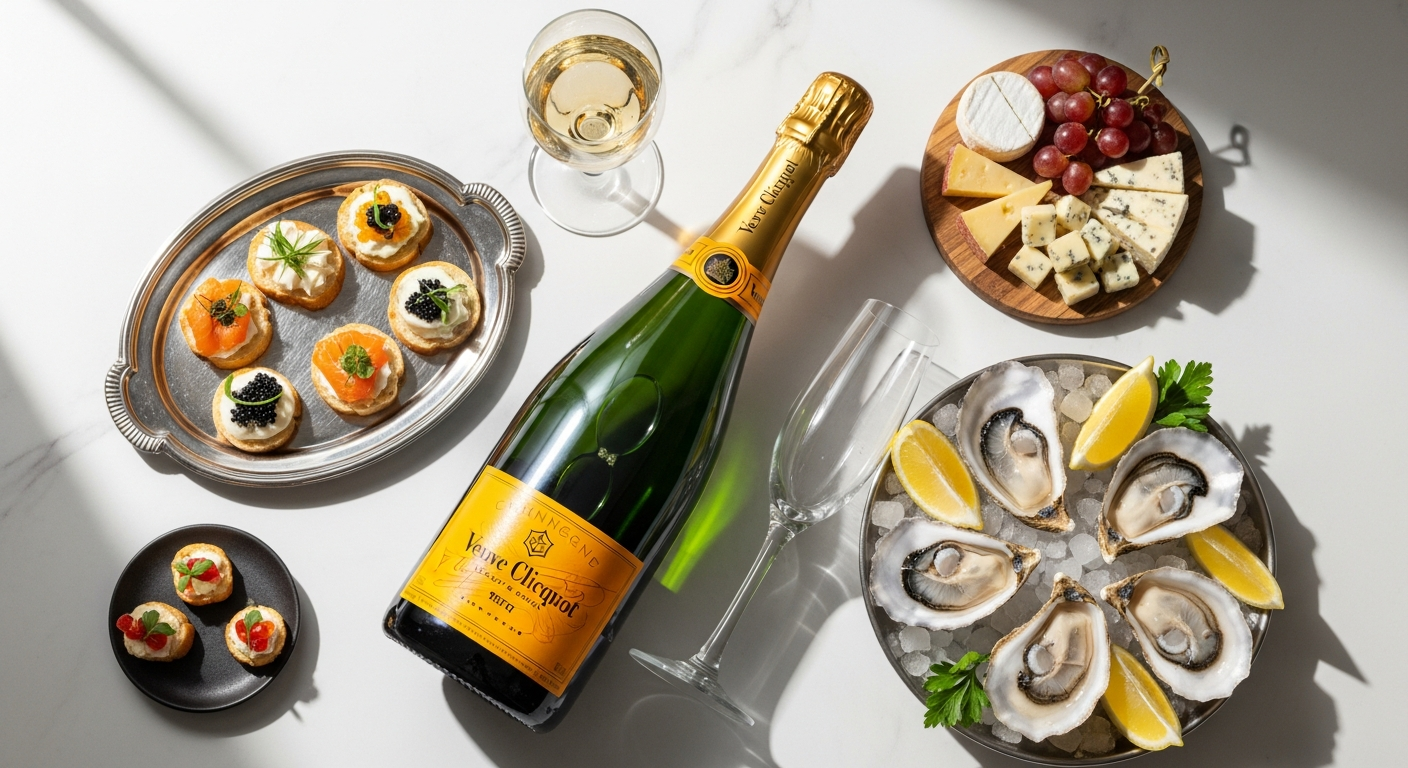
When celebration season arrives, champagne consumption spikes over 40%, yet most people serve it without unlocking its true potential. The bottles sit chilled, the glasses fill, and moments pass that could have been extraordinary—if only the host understood what they held. Veuve Clicquot Yellow Label Brut stands apart as one of the world's most trusted champagnes, carrying nearly 200 years of heritage in its iconic yellow label.
This non-vintage blend combines Pinot Noir, Pinot Meunier, and Chardonnay in precise proportions, creating a champagne that welcomes newcomers while satisfying seasoned connoisseurs. The craftsmanship behind each bottle speaks to consistency, sophistication, and the art of entertaining done right. Your entertaining experience transforms when you understand not just what you're serving, but how to serve it.
Discover premium champagne options at Món La Cata today.
Strategic Food Pairing: Beyond the Obvious Appetizers
Food pairing with champagne moves beyond conventional wisdom when you understand the wine's structural backbone. Veuve Clicquot Yellow Label Brut's composition creates bridges between flavors rather than clashes—a quality that transforms ordinary gatherings into culinary experiences.
Seafood Combinations That Highlight Mineral Notes
Oysters, scallops, and delicate white fish preparations reveal the champagne's mineral essence and white fruit aromatics. The acidity cuts through richness while the persistent mousse provides textural contrast against creamy bisques or buttery preparations. Shrimp cocktails, ceviche, and smoked salmon each showcase different facets of this versatile wine.
Poultry Dishes Where Toasted Notes Shine
Roasted chicken, duck à l'orange, and herb-brined turkey benefit immensely from the champagne's toasted undertones. These notes, born from the three-year aging process in the cellars, complement roasted flavors and butter-based sauces without overwhelming the dish. The 50-55% Pinot Noir base provides structural support for richer preparations.
Cheese Selections That Create Harmony
Aged Comté, Gruyère, and creamy Brie each interact differently with this champagne. Rather than competing for attention on the palate, thoughtful cheese selection creates moments of balance. Hard cheeses emphasize the wine's mineral character, while soft cheeses highlight its brioche and vanilla notes.
Unexpected Pairings With Asian Cuisine
Light curries, soy-based preparations, and umami-forward dishes reveal unexpected dimensions of this champagne. The acidity cuts through richness while the delicate bubbles complement the complexity of Asian spice profiles. These pairings challenge conventional entertaining wisdom and impress guests with genuine culinary knowledge.
Dessert Applications
The champagne's acidity elegantly cuts through sweetness, making it an ideal dessert companion. Macarons, fruit tarts, and light mousses benefit from the wine's fresh, powerful palate. Avoid heavily chocolate-based desserts, which can overpower the delicate aromatics.
Temperature and Glassware for Maximum Expression
Serve between 6-8°C in proper flute glasses that showcase the golden-yellow color and delicate mousse. The vessel choice affects how aromatic compounds reach your nose and how bubbles travel across your palate. Temperature precision preserves the champagne's 12.5% ABV balance and allows food pairings to reach their full potential.
Hosting Strategies: Creating Memorable Champagne Experiences
Pre-party preparation determines whether your champagne service flows smoothly or creates awkward pauses. Efficiency and intentionality combine to elevate the entire entertaining experience.
Pre-Party Preparation Techniques
Chill champagne bottles at least three hours before guests arrive, placing them in ice buckets with equal parts ice and water. This method cools bottles faster and maintains temperature throughout service. Never place champagne in the freezer—extreme cold damages the delicate flavor compounds. Prepare your glassware by chilling it separately; frost-covered flutes create visual appeal while protecting aromatic expression.
Timing Strategies Across Multiple Courses
Serve champagne as an aperitif before guests sit, establishing the evening's tone. Introduce it again with seafood courses where pairings amplify both wine and food. Recork opened bottles using specialized champagne stoppers rather than standard corks—these preserve carbonation for 3-5 days. Pour only quarter-full glasses, encouraging guests to finish each serving before refills, which maintains the persistent mousse and freshness.
Presentation Methods
The golden-yellow color and delicate mousse deserve presentation that honors the craftsmanship. Serve champagne bottles in elegant ice buckets visible to guests—the iconic yellow label becomes part of your décor. When pouring, angle the glass at 45 degrees initially, then straighten as it fills, controlling bubble action and preventing overflow.
Guest Education Talking Points
Share the three-year aging process that creates the champagne's complexity and fine bubbles. Explain the blend composition—how 50-55% Pinot Noir provides structure, 15-20% Pinot Meunier adds fruitiness, and 28-33% Chardonnay contributes elegance. This knowledge transforms champagne from background beverage to conversation centerpiece, and guests appreciate understanding what they're experiencing.
Champagne Cocktail Stations
Mixed-drinker crowds benefit from champagne cocktail stations offering simple combinations. Peach purée with champagne, blackberry liqueur additions, or fresh mint infusions provide variety without complicating service. Label each option clearly, allowing guests to customize their experience while featuring the premium champagne thoughtfully.
Budget Allocation Without Overspending
The €45-€60 price point for standard 750ml bottles allows strategic placement within your entertaining budget. Calculate per-serving costs based on group size—typically €3-€5 per guest for a single serving, making it feasible for gatherings of 12-20 people. Feature premium champagne as the opening course or final toast, using less expensive options for cocktail hour refills.
Complete Sensory Experience Through Ambiance
Champagne service pairs beautifully with soft jazz or classical music playing at low volume. Lighting should emphasize the champagne's color—candlelight or warm ambient fixtures enhance the golden-yellow hue. The combination of sight, sound, taste, and aroma creates memorable experiences that guests internalize beyond the actual tasting.
Explore the complete Món La Cata selection of premium champagnes and sparkling wines.
The Science Behind the Sip: Understanding What You're Serving
Knowledge of champagne's technical aspects builds confidence and allows meaningful conversations with your guests. Understanding the "why" behind flavor and quality elevates your entertaining from routine service to expert-level curation.
Non-Vintage Blending Philosophy
Non-vintage champagnes blend grapes from multiple harvest years, ensuring consistent taste profiles regardless of seasonal variations. This approach benefits entertainers seeking reliability—you know exactly what to expect every time you open a bottle. Consistency matters when your reputation depends on delivering memorable experiences repeatedly.
Extended Cellaring and Its Impact
The minimum three-year aging process in the cellars develops complexity that distinguishes quality champagne from inferior competitors. During this time, yeast autolysis creates the fine bubbles characteristic of premium offerings. The longer cellaring allows flavors to integrate, developing the brioche and toasted notes that emerge in the glass.
Grape Composition Breakdown
Pinot Noir (50-55%) provides the structural backbone—tannins and body that anchor the blend. Pinot Meunier (15-20%) contributes red fruit notes and softness, balancing the Pinot Noir's weight. Chardonnay (28-33%) adds elegance, acidity, and mineral complexity. Together, these grapes create a whole greater than individual parts, each component playing a specific role in the final expression.
Alcohol Content and Food Pairing Balance
The 12.5% ABV sits in the ideal range for food pairing—substantial enough to stand beside richer dishes yet restrained enough to maintain freshness alongside delicate seafood. This balance makes Veuve Clicquot Yellow Label Brut exceptionally versatile across multiple courses and serving scenarios.
Flavor Profile Anatomy
White fruits (apple, pear) provide the primary aromatic framework. Raisins emerge from the extended aging, offering subtle dried-fruit complexity. Vanilla and brioche notes, born from the aging process and blend composition, create warmth and richness on the palate. The fresh, powerful palate delivery with toasted notes creates an experience that develops as the champagne warms slightly in the glass.
Identifying and Discussing Characteristics
Guide guests toward noticing specific aromatics: "The brioche note comes from the aging process—it's what elevates this beyond basic sparkle." Reference the white fruit characteristics visible in the wine's pale color. Discuss toasted notes emerging mid-palate after the initial freshness. This vocabulary transforms casual drinkers into engaged participants in the tasting experience.
Non-Vintage Versus Vintage Variability
Vintage champagnes reflect specific years' characteristics, offering variability and potential for discovery. Non-vintage champagnes prioritize consistency—knowing Veuve Clicquot Yellow Label Brut tastes the same whether you serve it this year or next year removes uncertainty from your entertaining decisions. For hosts seeking reliability, this consistency represents genuine value.
Entertaining on Different Budgets: Making Premium Champagne Work
Premium champagne needn't dominate your entertaining budget when approached strategically. Smart allocation allows you to feature exceptional quality without financial strain.
Price Point Positioning
At €45-€60 per standard 750ml bottle, Veuve Clicquot Yellow Label Brut occupies the accessible-premium tier. This positioning allows featuring genuinely quality champagne at reasonable cost. Compared to ultra-premium offerings at €100+, this price point makes premium champagne feasible for regular entertaining rather than exclusively special occasions.
Cost-Per-Serving Calculations
A 750ml bottle yields approximately five 5-ounce pours, translating to €9-€12 per serving. For 12 people receiving one serving each, total champagne cost reaches €108-€144. Scaling upward, 20 people spending the same per-person brings total investment to €180-€240. These calculations reveal that premium champagne becomes cost-effective once you move beyond very small gatherings.
Investment Timing Decisions
Reserve premium champagne for occasions where impact matters most—formal dinner parties, milestone celebrations, business entertaining. For casual cocktail hour mixed drinks, alternative options suffice. This selective deployment maximizes the psychological and sensory impact while managing overall entertaining expenses.
Larger Format Bottles for Visual Impact
Magnums (1.5L) cost approximately 25-30% more than standard bottles while holding 40% more liquid, improving per-serving costs. Beyond economics, larger formats create visual impact and signal celebration. The larger bottle becomes a focal point, generating conversation and reinforcing the special nature of the gathering.
Retailer Relationships
Building relationships with specialized retailers like Món La Cata ensures consistent availability and potential access to recommendations. Regular customers often receive advance notice of special selections and may negotiate modest discounts on bulk purchases. These retailers possess expertise that improves your selections and simplifies decision-making.
Gifting Strategies
The iconic yellow label makes this champagne memorable for gift-giving to hosts. Recipients recognize the brand immediately, understanding its value and your thoughtfulness. Corporate entertaining benefits from this champagne's gift-giving reputation—it says "quality" and "celebration" without pretension.
Bulk Purchasing for Regular Entertainers
If you host regularly, purchasing cases directly from retailers creates volume discounts and ensures inventory availability. Storing champagne in cool, dark conditions (50-65°F ideally) allows you to maintain supplies without compromising quality. Case purchases represent smart financial planning for those making entertaining a lifestyle priority.
Practical Serving Techniques: Maximizing the Experience
Technical execution separates adequate champagne service from exceptional experiences. Mastering these techniques demonstrates respect for the wine and your guests.
Proper Chilling Methods
Ice buckets combining equal parts ice and water chill champagne to 6-8°C within 20 minutes. This temperature range allows aromatic expression while maintaining the persistent mousse. Frozen buckets work in warm climates, though they cool too rapidly and can shock the wine. Never refrigerate champagne for extended periods—the cold dulls aromatic compounds and can flatten the wine's character.
Flute Versus Coupe Glass Selection
Modern flutes showcase the champagne's color and bubbles while directing aromatic compounds toward your nose. Tall, narrow vessels minimize surface area, preserving carbonation. Vintage coupes offer aesthetic appeal but sacrifice practical function—wider openings release carbonation rapidly and disperse aromatics. For serious entertaining, flutes serve the wine and your guests better.
Opening Techniques
Remove the foil carefully without tearing. Loosen the wire cage by turning it counterclockwise three full rotations—complete removal isn't necessary. Hold the bottle at 45 degrees with a towel ready. Grip the cork firmly while rotating the bottle gently (not the cork), allowing internal pressure to push the cork free with a soft "pop" rather than dramatic explosion. This controlled opening prevents champagne loss and maintains an elegant presentation.
Pouring Angles and Pacing
Begin pouring at 45 degrees with the glass tilted, filling one-third full to control bubble action. Straighten the glass as foam subsides, filling to approximately three-quarters full. This controlled technique prevents overflow while maintaining the persistent mousse. Allow 2-3 minutes between pours, giving bubbles time to settle before refilling.
Storage for Opened Bottles
Specialized champagne stoppers sealed opened bottles for 3-5 days when stored upright in the refrigerator. Standard corks don't work—they won't create proper seals due to internal pressure. The champagne deteriorates gradually after opening, losing both carbonation and aromatic freshness. Plan consumption within this window for best results.
Preventing Common Service Mistakes
Never shake champagne bottles—this creates excessive pressure and creates aggressive opening situations. Avoid placing bottles in the freezer, which damages delicate flavor compounds. Don't pour too quickly or completely fill glasses, which wastes carbonation. Prevent warm service by maintaining proper chilling throughout the event, refreshing ice as needed.
Sensory Guidance for Guests
Direct guest attention toward visual inspection first—note the golden-yellow color and vigorous mousse. Encourage smelling before tasting, identifying white fruit aromatics, vanilla, and brioche notes. Finally, guide tasting by asking them to notice the initial freshness, mid-palate development, and lingering finish. This structured approach transforms passive consumption into active participation.
The Psychology of Celebration: Why This Champagne Resonates
Beyond technical specifications and flavor profiles, Veuve Clicquot Yellow Label Brut succeeds because it satisfies deeper psychological needs surrounding celebration and status.
The Iconic Yellow Label
The distinctive label creates instant recognition and communicates luxury without explanation. Guests see the yellow label and immediately understand the occasion's importance. This visual communication operates beneath conscious awareness, subtly influencing guest perception and behavior throughout the evening.
Brand Heritage as Trust Signal
Nearly 200 years of consistent champagne production represents reliability and expertise. This heritage reassures hosts that their selection communicates quality and taste. Guests trust long-established brands, interpreting longevity as validation of excellence. The historical foundation removes doubt from your entertaining decisions.
Confidence Through Consistency
The non-vintage approach ensures you're serving the same excellent champagne regardless of when you purchase it. This consistency builds confidence for important occasions—you need not worry about disappointing variations. Reliable performance across multiple purchases creates psychological safety, allowing you to focus on other entertaining elements rather than wine anxiety.
Psychology of Gift-Giving
Presenting this champagne signals thoughtfulness and appreciation. Recipients understand its market value and perceive the gift as appropriately generous without excess. The iconic branding makes the gift memorable long after consumption—recipients remember the brand as well as the occasion it marked.
Traditions Around Champagne Service
Regular champagne service at specific occasions creates anticipated traditions. Annual celebrations featuring this champagne become part of family or friend group identity. These traditions deepen relationships by marking shared experiences and consistent values around gathering and celebration.
Balancing Accessibility With Prestige
The €45-€60 price point allows featuring a genuinely prestigious product without seeming pretentious or financially ostentatious. This balance appeals to hosts seeking sophistication without extremism. Guests appreciate quality without discomfort about cost or feeling pressured to reciprocate with equivalent expense.
Social Proof and Best-Seller Status
Global recognition as one of the world's best-selling champagnes validates your selection. Knowing millions of discerning consumers share your choice reinforces the decision. This social proof operates powerfully in entertaining contexts, where selection reflects on the host's judgment and sophistication.
Your Entertaining Transformation Starts Here
Veuve Clicquot Yellow Label Brut Champagne represents far more than a bottle on your shelf—it's a deliberate tool for orchestrating moments that matter. From mastering food pairings that amplify both wine and cuisine to understanding the science creating those delicate bubbles, you possess knowledge transforming how you entertain.
The real magic emerges when you move beyond simply opening a bottle and instead architect a complete experience. Thoughtful temperature control, strategic glassware selection, intentional food pairing, and guided tasting create experiences guests remember for years. These technical elements combine with the psychological resonance of premium champagne to produce gatherings that transcend routine socializing.
Start immediately—don't wait for perfect circumstances. Choose one pairing suggestion that genuinely excites you. Invest in proper flute glasses if you don't already have them. Calculate how many guests you'll serve and determine whether a standard bottle or larger format makes sense. Contact a trusted retailer to confirm availability and explore their current selection.
Your next gathering becomes the laboratory for applying this knowledge. Your guests will taste the difference—enhanced aromatics in proper glassware, food combinations that sing in new ways, carbonation preserved through careful service. More importantly, they'll remember the experience you created. That's what distinguishes memorable entertaining from routine hospitality.
Start your champagne journey with Món La Cata's curated selection today.
Leave a Reply