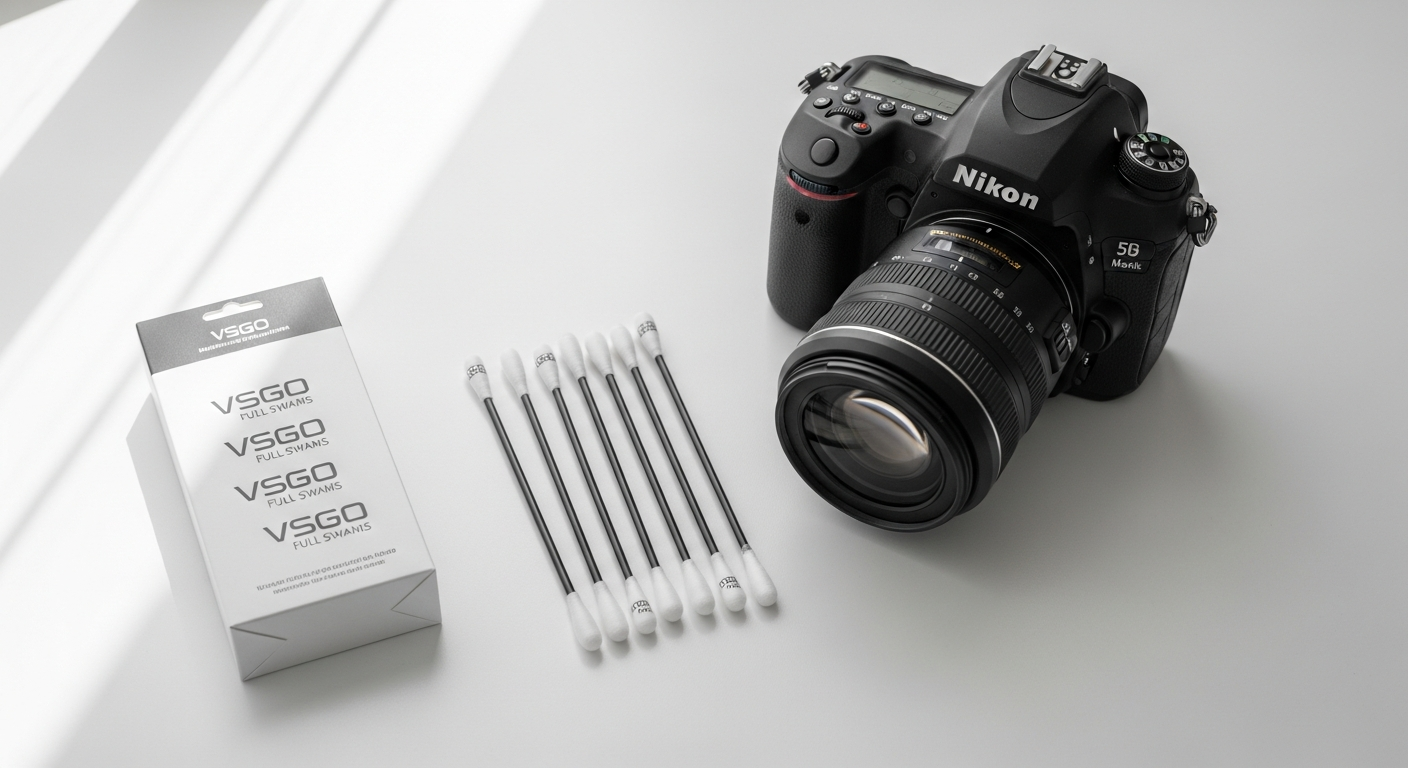
Dust on your camera sensor doesn't just blur a few photos—it silently destroys your investment, appearing in every single frame you capture. Each speck becomes a permanent fixture in your images, degrading sharpness and forcing you into extensive post-processing to salvage shots that should have been pristine from the start.
VSGO has built its reputation by solving one of photography's most persistent headaches: sensor contamination. Their Full-Frame Camera Sensor Cleaning Swabs represent years of innovation in microfiber technology, dust-free manufacturing, and ergonomic design. The brand has become synonymous with camera maintenance excellence, trusted by photographers worldwide who refuse to compromise on image quality.
Understanding Full-Frame Sensor Contamination and Why It Matters
The impact of dust particles on image quality and sharpness
Sensor contamination manifests as dark spots or fuzzy areas that appear consistently across your photographs. Unlike focusing issues or motion blur, these defects stay in the exact same location because they're physically on your sensor. A single dust particle measuring just 100 microns becomes visible in your images, particularly noticeable in bright skies or white backgrounds where contrast makes imperfections obvious.
The frustration intensifies when you realize post-processing can't fully eliminate these spots without degrading surrounding image data. Clone stamping and healing tools consume editing time that could be spent on creative work instead of cleanup.
Common sources of sensor contamination during photography
Dust infiltrates your camera through multiple pathways. Changing lenses exposes the sensor directly to ambient air, inviting particles inside. Windy outdoor shoots push dust into camera cavities. Even the mirror mechanism itself sheds microscopic debris as it cycles thousands of times during a shooting session. Sand from beaches, pollen from fields, and urban particulates all find their way onto the sensor surface.
Environmental factors play a significant role. Working in construction zones, deserts, or heavily trafficked urban areas dramatically increases contamination risk. Travel photography compounds the problem—moving between different climates and locations means your camera encounters constantly changing dust sources.
Why full-frame sensors are more susceptible to visible dust spots
Full-frame sensors cover a significantly larger surface area than crop-sensor alternatives. This expanded real estate means dust particles become proportionally more visible when projected onto the imaging plane. A speck on a crop sensor might occupy a negligible portion of the final image, while the same particle on a full-frame sensor appears far more prominent.
The larger sensor also means lower pixel density in comparable megapixel cameras. This physical spacing makes individual dust particles more noticeable to the human eye when examining final images.
The difference between surface dust and stubborn particles
Surface dust sits loosely on the sensor and responds well to air blowing. A manual blower removes these particles quickly and safely. Stubborn particles, however, have bonded to the sensor surface through static electricity or humidity. These require physical contact to remove—exactly where VSGO swabs excel. Understanding this distinction determines which cleaning approach you'll need.
VSGO Full-Frame Swabs: Technical Specifications and Design Features
24mm width specification perfectly calibrated for full-frame sensor dimensions
VSGO engineered their full-frame swabs at precisely 24mm wide—a dimension that spans the width of a full-frame sensor with minimal overlap. This sizing prevents the swab from contacting the camera body's interior walls, protecting both the sensor and the equipment itself. The fit remains snug enough to maintain consistent pressure distribution across the entire sensor width during a single cleaning stroke.
Ultra-fine microfiber cloth composition at micrometer-level precision
The swab head features microfiber strands measured in micrometers—units of measurement typically reserved for discussing particle size itself. This extraordinary fineness creates an incredibly dense fabric that lifts dust and smudges without scratching the delicate silicon surface beneath. The microfiber composition also prevents lint shedding, a critical advantage over standard cotton swabs that can leave behind fibers worse than the original contamination.
Dust-free manufacturing technology and vacuum-sealed packaging
VSGO manufactures these swabs in clean-room conditions, then immediately seals each unit in vacuum packaging. This two-step process ensures absolute cleanliness when you open the package. No air exposure means no opportunity for dust to settle on the microfiber head before you use it.
High-elasticity plastic shaft construction and ergonomic grip design
The plastic shaft flexes slightly during cleaning, allowing gentle compliance with the sensor surface. This elasticity prevents the rigid application of pressure that could cause damage. The ergonomic grip naturally fits your hand, enabling controlled motion and even pressure distribution. You're never fighting the tool itself—instead, it works with your natural hand movements.
Mastering the Cleaning Technique: A Step-by-Step Approach
Pre-cleaning preparation: blower cleaning and sensor inspection
Before introducing a swab, use a manual air blower to dislodge loose particles. This preliminary step removes surface dust that would otherwise stick to your swab, potentially scratching the sensor as you drag captured particles across the surface. Hold the camera with its sensor facing downward so gravity assists particle removal. Fire 5-10 blower bulb compressions, pausing between each to allow air pressure to settle.
Next, inspect the sensor using your camera's cleaning mode or by pointing a flashlight into the mirror box. Angle the light so reflections highlight any remaining particles. This assessment determines whether you need a swab or whether blower cleaning sufficed.
Proper grip and pressure distribution using the ergonomic shaft
Hold the swab lightly but firmly, using a grip similar to holding a pen. Position your hand near the middle of the shaft rather than gripping near the microfiber head. This positioning naturally distributes your weight across the shaft's elasticity, preventing excessive pressure concentration. Your forearm and hand should move as a single unit—avoid bending your wrist excessively, which can apply uneven pressure.
Single-stroke cleaning motion and directional technique
A single, deliberate stroke across the sensor width constitutes one complete cleaning action. Starting from one edge, move the swab in a straight line to the opposite edge. Apply gentle, consistent pressure throughout the motion—imagine guiding the swab rather than scrubbing with force. The microfiber does the work; your job is simply positioning and directing it properly.
After completing the stroke, flip the swab to its unused side for a second pass in the perpendicular direction. This cross-pattern coverage ensures you've contacted every portion of the sensor surface.
Why one swab per cleaning session prevents cross-contamination
Once a swab has contacted your sensor, it has captured dust particles. Using that same swab for a second cleaning session risks dragging previously collected particles across fresh sensor areas, redepositing contamination. VSGO's multi-pack offerings account for this requirement—their 12, 24, and 50-unit packs provide sufficient swabs for frequent maintenance without financial strain.
Comparing VSGO Swabs Against Alternative Cleaning Methods
VSGO swabs versus sensor cleaning kits from competing brands
VSGO's reputation rests on proprietary microfiber technology and manufacturing standards that competitors often fail to match. Many alternative brands use coarser microfiber or skip the dust-free manufacturing process. VSGO's consistently high review scores and professional adoption reflect the tangible quality difference. Photographers testing multiple brands frequently report that VSGO swabs leave noticeably cleaner sensors with fewer repeat cleaning sessions required.
Swab-based cleaning versus professional sensor cleaning services
Professional sensor cleaning services can cost $50-$150 per session, not including shipping. For photographers who encounter contamination monthly, costs accumulate quickly. VSGO swabs handled properly eliminate the need for professional service in most scenarios. The trade-off requires learning proper technique and accepting personal responsibility for sensor safety—a worthwhile exchange for photographers confident in their care practices.
Liquid cleaning solutions paired with VSGO swabs for stubborn particles
Certain contamination responds better to liquid cleaning solutions designed specifically for camera sensors. These alcohol-free formulations break down residue that dry swabbing alone cannot remove. VSGO offers cleaning kits pairing their swabs with complementary solutions, creating a comprehensive cleaning system. The liquid application followed by dry swab completion handles even stubborn smudges without scratching.
Cost-effectiveness analysis: single-use swabs versus professional services
A 12-pack VSGO cleaning kit costs approximately $15-$25, providing cleaning supplies for a year of regular maintenance. Professional services at three-month intervals total $200-$600 annually. VSGO swabs deliver professional-grade results at a fraction of the cost, making them financially sensible for anyone cleaning their sensor more than twice yearly.
Real-World Applications: Who Benefits Most From VSGO Swabs
Professional photographers shooting in high-dust environments
Studio photographers frequently encounter contamination from lighting equipment dust and air circulation. Documentary photographers working in developing countries face exponentially higher environmental contamination. These professionals cannot afford image rejections due to sensor dust—VSGO swabs provide the reliable, rapid cleaning that keeps production timelines intact.
Travel photographers dealing with frequent environmental changes
Traveling photographers transition between vastly different climates and dust sources. Coastal areas introduce salt-laden particulates, deserts bring fine sand, and urban environments add vehicle exhaust particles. Frequent lens changes during travel exacerbate sensor exposure. Travel photographers benefit enormously from VSGO swabs' portability and effectiveness—they can address contamination issues immediately rather than waiting for professional service.
Wedding and event photographers requiring consistent image quality
Wedding photographers cannot return to shoot a scene if sensor dust ruins critical moments. Event photographers shooting quickly in various venues accumulate contamination rapidly. The consistent, sharp image quality that VSGO swabs maintain directly impacts client satisfaction and professional reputation. These photographers typically maintain swabs in their camera bags for same-day sensor maintenance.
Landscape photographers working in sandy or desert conditions
Landscape photographers frequently shoot in environments notorious for fine, invasive dust. Desert sand particles prove particularly challenging—their abrasive nature makes sensor care critical. VSGO swabs designed for safe, effective removal ensure that landscape photographers can work confidently in challenging environments without dreading the contamination they'll inevitably encounter.
Protecting Your Investment Through Smart Maintenance
Your camera sensor deserves protection, and VSGO Full-Frame Camera Sensor Cleaning Swabs deliver exactly that—precision, safety, and reliability in a compact package. Whether you're a seasoned professional shooting daily or an enthusiast who picks up your camera weekly, these swabs represent a smart, cost-effective addition to your camera care arsenal.
The combination of dust-free technology, ultra-fine microfiber construction, and ergonomic design means you're getting professional-grade cleaning in a user-friendly format. Rather than watching sensor dust accumulate and compromise your images, you now have a proven solution that photographers worldwide trust for consistent results.
Start with a 12-pack kit, master the cleaning technique through your first few sessions, and watch your image quality remain consistently sharp and pristine. The minimal investment in VSGO swabs yields massive returns in image clarity, reduced editing time, and extended equipment lifespan. Your photography deserves nothing less than a sensor kept in pristine condition.
Leave a Reply