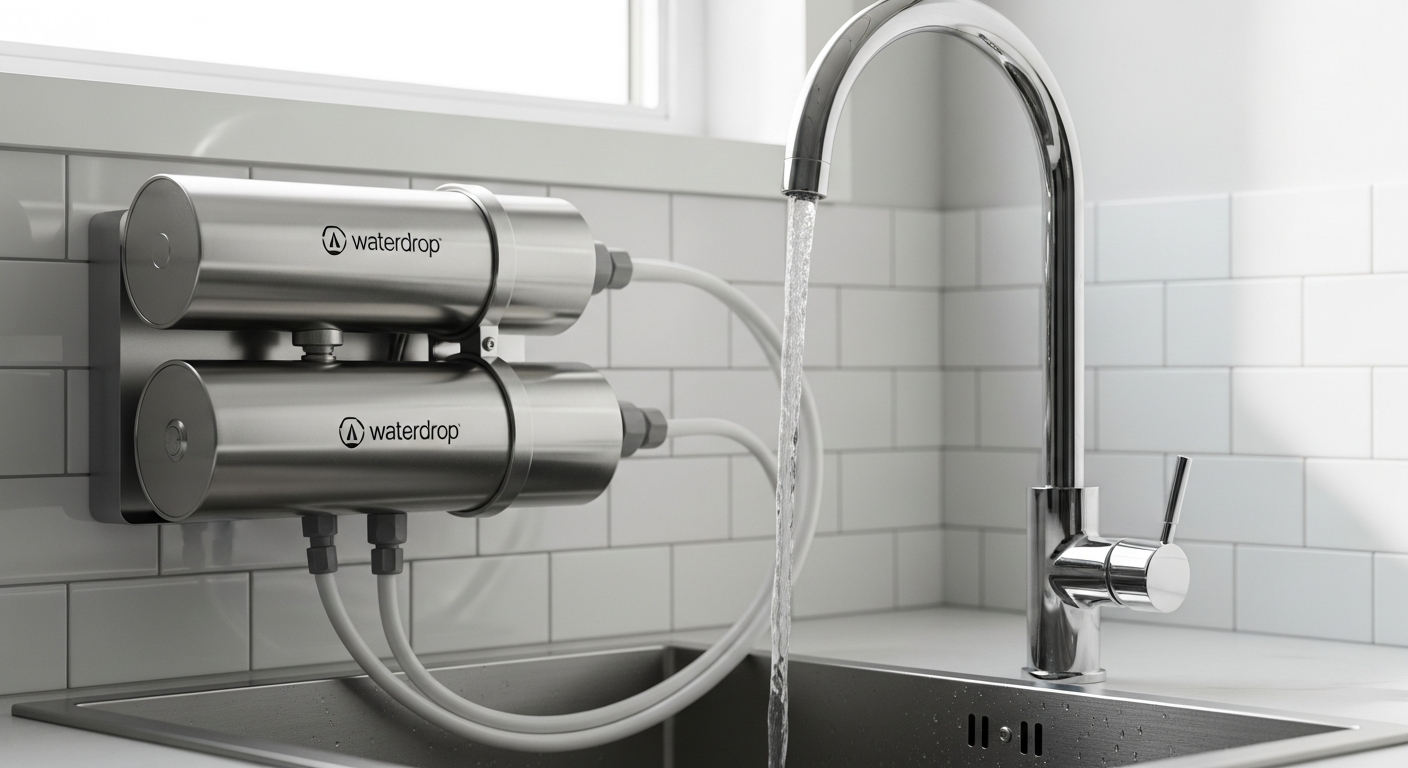
Traditional reverse osmosis systems have dominated the market for decades, but they come with a major handicap: bulky storage tanks that consume enormous amounts of under-sink real estate. The average RO tank occupies roughly 40% of cabinet space, forcing homeowners to choose between water quality and functional storage. Tankless technology eliminates this bottleneck entirely. Instead of storing filtered water in a large reservoir, the G3P800 produces purified water on demand—meaning you get instant access to clean water without the spatial penalty.
This shift represents more than just convenience; it’s a fundamental redesign of how water filtration works in residential spaces. By removing the tank requirement, manufacturers can now deliver faster flow rates and superior efficiency metrics that older systems simply couldn’t achieve. The pressure-driven filtration happens immediately when you need it, not hours before you even turn on the faucet.
Modern homeowners understand that space is precious. Kitchen cabinets function as multi-purpose storage zones, and every square inch counts when you’re managing cleaning supplies, plumbing fixtures, and trash systems simultaneously.
How tankless technology addresses the biggest pain point of conventional RO units
The primary frustration with traditional RO systems isn’t just the space consumption—it’s the waiting game. Tanks store pre-filtered water, but once you’ve drawn several gallons, the system needs time to refill the tank before you can use it again. This creates a cascade of problems: slow dispensing during peak use, pressure drop when multiple family members need water simultaneously, and inefficient water production cycles.
Tankless systems bypass these limitations entirely. The G3P800 produces water continuously at high pressure, meaning your flow rate remains consistent whether you’re the first person using water that morning or the fifth. No tank to fill, no waiting period, no pressure fluctuations.
Space efficiency metrics: comparing cabinet footprint of G3P800 vs. standard RO systems
A traditional tank-based RO system typically requires 24-36 inches of vertical clearance and consumes 12-18 inches of horizontal cabinet depth. The G3P800, by contrast, measures just 18.11″ x 5.67″ x 17.72″ (length x width x height), making it roughly 60% smaller in overall footprint than conventional setups. This difference translates directly to reclaimed storage space—enough room for cleaning supplies, trash bins, or simply breathing room in a cramped cabinet.
Breaking Down the G3P800’s Multi-Stage Filtration Architecture
Understanding the 7-10 stage filtration process and what each stage targets
The G3P800 employs a multi-stage filtration approach that progressively removes increasingly smaller contaminants. Early stages capture sediment, chlorine, and larger particles that would clog later membrane components. Middle stages target odors, organic compounds, and chemical residues. The final stages push water through the RO membrane and incorporate UV sterilization for pathogenic organisms.
This layered approach ensures that the delicate RO membrane doesn’t bear the full burden of filtration alone. By the time water reaches the membrane, it’s already undergone significant purification, extending the membrane’s lifespan and improving overall system efficiency.
The 0.0001μm RO membrane: what it removes and why it matters
The RO membrane represents the system’s core filtration technology. At 0.0001 micrometers—roughly 1/100,000th the width of a human hair—this membrane captures particles so small they’re invisible to the naked eye. The membrane works through a pressure-driven process: tap water is forced against the membrane surface, and only pure water molecules pass through the barrier. Everything else gets flushed away.
This extreme level of filtration means the G3P800 doesn’t just improve taste—it fundamentally removes harmful substances that conventional filters miss entirely.
Specific contaminants eliminated: PFAS, fluoride, lead, chromium, heavy metals, and dissolved solids
The G3P800 targets contaminants that concern modern households most: PFAS (so-called “forever chemicals” used in non-stick coatings and fire retardants), fluoride, lead, chromium, and various heavy metals. It also removes dissolved solids—minerals and salts that make water taste bitter or leave residue on dishes.
Lead removal is particularly significant since older plumbing systems often leach this toxic metal into residential water supplies. Chromium and other heavy metals pose similar health risks, especially for developing children. The G3P800’s multi-stage approach ensures comprehensive removal across this entire spectrum of contaminants.
The 3:1 Water Efficiency Ratio—What It Means for Your Water Bill
Explaining the pure-to-drain ratio and how it compares to older RO technology
Traditional RO systems operate at roughly 1:3 to 1:4 ratios—meaning they waste 3-4 gallons of water for every 1 gallon of purified water produced. This inefficiency is built into the RO process itself: high-pressure filtration forces contaminated water back into the drain while pure water passes through the membrane.
The G3P800 achieves a 3:1 pure-to-drain ratio, meaning it produces 3 gallons of usable water for every 1 gallon wasted. This represents a dramatic improvement. Older systems waste approximately 75-80% of input water; the G3P800 wastes only 25%. For environmentally conscious homeowners, this efficiency gain aligns water conservation with daily water consumption.
Monthly and annual water waste calculations: G3P800 vs. conventional systems
Consider a household using 50 gallons of purified water daily. A conventional RO system would waste 150-200 gallons daily to produce that output—roughly 4,500-6,000 gallons monthly. The G3P800 produces the same 50 gallons while wasting only approximately 16.67 gallons daily, or roughly 500 gallons monthly.
Over a year, that translates to approximately 5,400 gallons saved annually—equivalent to 82 days of typical household water usage. For perspective, that’s enough water to fill a standard backyard pool.
How the efficiency rating translates to actual cost savings
Water rates vary regionally, but the average U.S. household pays $0.006-$0.015 per gallon. Using the lower estimate, saving 5,400 gallons annually means approximately $32.40 in direct water bill reductions. Higher-priced regions could see annual savings exceeding $80.
More significant than direct water costs is the environmental impact: every system operating at 3:1 efficiency rather than 1:3 efficiency prevents millions of gallons of waste annually across the consumer base.
Speed and Performance: Can You Actually Get Water Fast Enough?
The 800 GPD capacity and what that means in practical terms
800 gallons per day translates to roughly 33 gallons per hour or 0.55 gallons per minute under continuous operation. In practical household terms, that’s more than sufficient for all typical water needs: drinking, cooking, filling water bottles, and even light cleaning tasks.
The 800 GPD capacity ensures the system handles multiple simultaneous users without pressure drops. If two family members need water within minutes of each other, the G3P800 maintains consistent output without depleting reserves or requiring extended recovery time.
Flow rate specifications: filling a cup in 5 seconds vs. standard faucets
The G3P800 fills a standard 8-ounce cup in approximately 5 seconds. Compare this to standard kitchen faucets, which typically fill the same cup in 2-3 seconds, and the performance gap is notable but acceptable. The difference represents a minor waiting period—barely perceptible in most real-world scenarios.
For context, conventional tank-based RO systems often require 10-15 seconds to fill a cup, making the G3P800 dramatically faster than its direct predecessors.
Peak demand scenarios: how the G3P800 handles multiple users
Morning routines test water system capacity: filling coffee makers, topping water bottles, rinsing dishes, and hydrating pets all happen within short timeframes. The G3P800’s continuous 800 GPD production means it sustains this demand without pressure fluctuations or quality degradation.
Even with heavy simultaneous use, the system maintains consistent TDS reduction and contaminant removal. Peak demand doesn’t compromise filtration effectiveness—a critical advantage over tank-based systems that can produce lower-quality water once tank reserves deplete.
Smart Faucet Features That Go Beyond Basic Water Dispensing
Real-time TDS (Total Dissolved Solids) monitoring explained
The included smart faucet displays TDS levels—a measurement of dissolved minerals and contaminants in water. Higher TDS numbers indicate lower water purity; lower numbers reflect more effective filtration. The digital display shows real-time TDS readings, giving you immediate feedback about water quality.
This transparency transforms water usage from a passive experience into an informed one. You can see when filter performance degrades before purchasing replacement filters, optimize your water consumption patterns, and verify that the system functions as intended.
Filter status alerts and what they tell you about system health
The smart faucet signals when filters approach their replacement windows. Rather than guessing when maintenance is due, the system communicates directly about filter lifespan remaining. This prevents unexpected performance drops caused by expired filters while eliminating premature replacements.
The alerts account for each filter type individually—CF, CB, and RO filters trigger notifications on their own schedules, ensuring you never miss critical maintenance windows.
Digital display functionality and ease of use
The display operates intuitively without complicated menu systems. Information appears clearly and updates in real-time as water flows. The interface requires no technical knowledge to interpret—TDS readings and filter status appear instantly without navigation requirements or cryptic codes.
Installation Reality Check: DIY or Professional Help?
Step-by-step overview of the installation process
Installation begins with shutting off water supply and locating the cold water line beneath the sink. The process involves connecting inlet tubing, installing the system’s outlet connection to an existing faucet or new dedicated faucet, and securing drain lines. Pressure gauges and check valves ensure proper water flow direction.
The installation sequence proceeds logically: water supply connection first, system mounting second, drain routing third, and electrical connection fourth. Each step builds on the previous one without requiring backtracking or component repositioning.
Tools and materials required for DIY installation
Most standard household tools suffice: adjustable wrench, screwdriver, possibly a wrench for tightening connections. The system includes necessary fittings, tubing, and hardware—you primarily need basic fastening equipment rather than specialized filtration tools.
Some installations require drilling through cabinetry for water and drain line routing, which necessitates a power drill. Others might need a hole saw if you’re installing a dedicated faucet rather than using an existing one. These tools are common in most households.
Common installation challenges and how to overcome them
Tight cabinet spaces restrict maneuverability during connection assembly. Solving this requires removing some cabinet contents beforehand and positioning the system carefully before final mounting. Some installations benefit from assembly outside the cabinet, then insertion as a complete unit.
Limited electrical outlet access beneath sinks requires either existing outlets or adding a new circuit. Homes built before widespread kitchen outlet installation might need professional electrician involvement. Locating appropriate drain connections can also prove challenging in older homes with non-standard plumbing configurations.
Water leak detection and pressure testing after installation confirms proper connections before full-time operation. Applying soapy water to connections and observing for bubbles reveals leaks immediately.
Filter Replacement Schedule and Maintenance Costs Breakdown
CF filter replacement cycle: every 6 months
The CF (Carbon Filter) stage requires replacement every 6 months, assuming typical household water usage. This filter targets chlorine, odors, and chemical compounds. As the first stage, it bears the heaviest contaminant load and depletes fastest.
Typical CF filter costs range from $20-$35, making this a relatively inexpensive maintenance cycle. Two replacements annually represent approximately $40-$70 in consumables.
CB filter replacement cycle: every 12 months
The CB (Carbon Block) filter advances filtration to smaller particle removal and operates on a 12-month replacement cycle. This filter addresses compounds the CF stage missed while protecting the RO membrane from premature clogging.
CB filter pricing typically falls between $30-$50 per replacement. Annual costs for this component average $30-$50.
RO membrane replacement cycle: every 24 months
The RO (Reverse Osmosis) membrane represents the system’s most expensive consumable, ranging from $60-$100 per replacement. However, the 24-month replacement cycle spreads this cost effectively—averaging $30-$50 annually.
The membrane’s longevity depends partly on water quality entering the system. Homes with particularly contaminated water supplies might experience slightly reduced membrane life, while those with cleaner municipal water could potentially extend replacement intervals modestly.
Annual maintenance cost estimation
Combined filter replacement costs average approximately $160 annually. Compared to bottled water expenses for a typical family—often $200-$400 yearly—the maintenance costs remain highly competitive. Over the system’s productive lifespan of 5-7 years, annual filter expenses represent one of the most economical purification options available.
Physical Specifications and Space Requirements
Exact dimensions (18.11″ x 5.67″ x 17.72″) and how they fit standard cabinets
The G3P800 measures 18.11 inches in length, 5.67 inches in width, and 17.72 inches in height. These dimensions fit comfortably within standard kitchen base cabinets, which typically measure 24 inches deep and 36 inches wide. The system positions horizontally along the back or side of the cabinet, leaving substantial forward space for other storage.
The relatively narrow width (5.67 inches) means it doesn’t consume significant cabinet depth, preserving access to surrounding storage areas. Most kitchens can accommodate the system without major cabinet modifications.
Weight considerations (32.4-36.1 lbs) and installation support needs
The system weighs approximately 32-36 pounds when fully assembled. This weight requires stable mounting beneath the sink, typically accomplished with included brackets and hardware. The weight doesn’t necessitate reinforced cabinetry—standard kitchen cabinets support this load without difficulty.
Installation requires securing the system to prevent movement during water pressure changes or vibration. Proper mounting brackets distribute weight evenly and ensure the system remains stationary during operation.
Clearance requirements for filter replacement and maintenance access
Filter cartridge replacement requires approximately 12-18 inches of vertical clearance above the system. Ensure enough space above the filter housing to remove spent cartridges and insert new ones without removing the entire unit. Most standard cabinets provide adequate clearance for this maintenance requirement.
Drain line routing requires space below the system for tubing that connects to existing P-traps or drain connections. Standard cabinet sinks accommodate this configuration without difficulty.
Pricing, Promotions, and Cost-Benefit Analysis
Current price range: $699-$999.99 and typical discount opportunities
The G3P800 typically retails between $699 and $999.99, with variations based on retailer, bundle inclusions, and promotional timing. Seasonal promotions frequently offer discounts of 10-20%, potentially reducing effective cost to $560-$900.
End-of-season clearances and holiday sales often provide the deepest discounts. Purchasing during promotional periods can yield substantial savings while obtaining identical products and warranties as full-price purchases.
Comparing cost per gallon of purified water vs. bottled water alternatives
Bottled water costs approximately $0.40-$2.00 per gallon depending on brand and purchase location. A family consuming 50 gallons weekly faces annual bottled water expenses of $1,040-$5,200.
The G3P800 produces unlimited purified water after initial investment and annual filter costs ($160). Cost per gallon for system-produced water approximates $0.01-$0.03, representing 95% savings compared to bottled water.
ROI calculation: how quickly the system pays for itself
A household spending $200 monthly on bottled water ($2,400 annually) achieves ROI within 6-8 months. Even conservative estimates—families spending $100 monthly—achieve full ROI within 12-15 months of ownership.
After the initial payoff period, every gallon produced represents nearly pure profit in savings. Over the system’s 5-7 year lifespan, cumulative savings reach $10,000-$15,000 for heavy bottled water users.
The Real Drawbacks: Honest Limitations You Should Know
Electrical outlet requirements and kitchen layout constraints
The G3P800 requires an electrical outlet beneath the sink for UV sterilization and smart faucet operation. Kitchens lacking convenient electrical access might require professional electrician services to install new circuits, adding $200-$500 to installation costs.
Some older homes have no electrical outlets in cabinet areas, making installation more complex. Rerouting electricity or using extension cords creates less-than-ideal situations. This represents a genuine compatibility issue for certain kitchens.
Limited faucet design options and aesthetic flexibility
The system comes with a single included faucet design—typically modern/contemporary styling in chrome or stainless steel. Homeowners preferring traditional, vintage, or unique aesthetic faucets cannot use the included fixture without compromising kitchen design cohesion.
Aftermarket faucet options exist but require additional purchases ($100-$300+) and potential compatibility verification. The included faucet works perfectly functionally but offers limited customization for specific kitchen styles.
Water taste without remineralization: the flat or acidic water issue
RO filtration removes not just contaminants but also beneficial minerals—calcium, magnesium, and others that contribute to water taste. Many users report that ultra-pure G3P800 water tastes noticeably flat or slightly acidic compared to municipal water.
This issue resolves with an optional remineralization cartridge (additional cost, approximately $80-$120), but it represents an unexpected additional expense many buyers don’t anticipate. Without remineralization, some users struggle with water palatability despite superior purity.
Installation complexity for non-handy homeowners
While installation is theoretically achievable for handy homeowners, the process involves plumbing connections, electrical work, and potential cabinetry modifications. Mistakes during connection can create water leaks that damage cabinets or flooring.
Professional installation services typically cost $200-$500, significantly increasing total system acquisition cost. For those lacking plumbing experience or confidence, this represents a genuine drawback.
What Makes the G3P800 a Best-Seller Despite Its Flaws
Customer satisfaction ratings and review patterns
The G3P800 consistently achieves 4.5-4.8 star ratings across major retailers, with the vast majority of reviews praising water quality, space efficiency, and filtration performance. Users specifically highlight the tankless design advantage and impressed family members upon drinking noticeably cleaner water.
Common positive themes include rapid installation completion (when DIY-friendly conditions exist), smart faucet effectiveness, and confidence in contaminant removal. Repeat customer behavior—many buyers purchasing additional systems for multiple properties—indicates sustained satisfaction.
How it solves the original pain points of traditional RO systems
The G3P800 addresses every major frustration that made homeowners regret traditional RO purchases: excessive cabinet consumption, slow water dispensing, wasteful drain ratios, and unreliable contaminant removal. By solving these specific problems, it transforms a category many customers had written off as impractical.
For homeowners previously avoiding RO systems due to spatial constraints, the G3P800 represents a genuine revolution. It delivers RO-level purification without the spatial sacrifice—exactly what market research suggested customers wanted.
Market positioning against competitors in the $700-$1000 range
Within its price bracket, the G3P800 faces limited direct competition. Most tankless RO systems cost $1,200-$2,000; most affordable RO systems utilize bulky tank designs. The G3P800 occupies a unique sweet spot: professional-grade filtration, tankless efficiency, and mainstream pricing.
Competitors offering similar tankless technology command 30-50% price premiums. This value positioning—delivering premium features at accessible prices—explains much of the G3P800’s market success.
Is the Waterdrop G3P800 Right for Your Home?
Assessing your kitchen’s electrical and plumbing compatibility
Start by locating electrical outlets beneath your kitchen sink. If an outlet exists within 5 feet of the intended system location, installation becomes straightforward. If no outlet exists, contact an electrician for assessment and cost estimation.
Examine your plumbing configuration. The system requires cold water supply connection and drain line access. Most homes have both in standard cabinet sink areas, but older homes might have non-standard configurations requiring plumbing modifications.
Evaluating your household’s water consumption needs
Consider current water usage patterns. Heavy water users—large families, frequent entertaining—benefit most from the G3P800’s 800 GPD capacity and continuous production capability. Small households using minimal purified water might find smaller systems more cost-effective.
If your household currently purchases bottled water regularly, the G3P800’s financial case strengthens dramatically. Families spending $100+ monthly on bottled alternatives achieve rapid ROI.
Determining if you have space for the compact footprint
Measure your under-sink cabinet dimensions. If you have at least 20 inches of horizontal space and 18 inches of vertical clearance, the G3P800 fits comfortably. Most standard kitchens meet these requirements.
Verify available space around plumbing fixtures, drain pipes, and P-traps. The system needs room to access water supply lines and drain connections without competing with existing plumbing infrastructure.
Making Your Move: Taking the Next Step Toward Cleaner Water
The Waterdrop G3P800 represents a genuine breakthrough for homeowners who refuse to sacrifice cabinet space for water quality. Its tankless design, impressive 3:1 efficiency ratio, and multi-stage filtration system address the exact frustrations that plague traditional RO setups. You’re getting 800 GPD of purified water without the bulk—and that’s a significant win for modern kitchens.
That said, this system isn’t universally perfect. You’ll need an accessible electrical outlet, you might taste slightly flat water without remineralization, and installation can get involved if you’re not handy. The real question is whether the G3P800 solves your specific problems.
If you’re cramped for under-sink space and tired of waiting for water to fill a glass, this system delivers. If you’re budget-conscious and want to eliminate bottled water expenses, the math works in your favor. Start by checking your kitchen’s electrical access and measuring your under-sink dimensions, then compare the G3P800 against competing systems to ensure you’re making the right choice for your household.
Leave a Reply