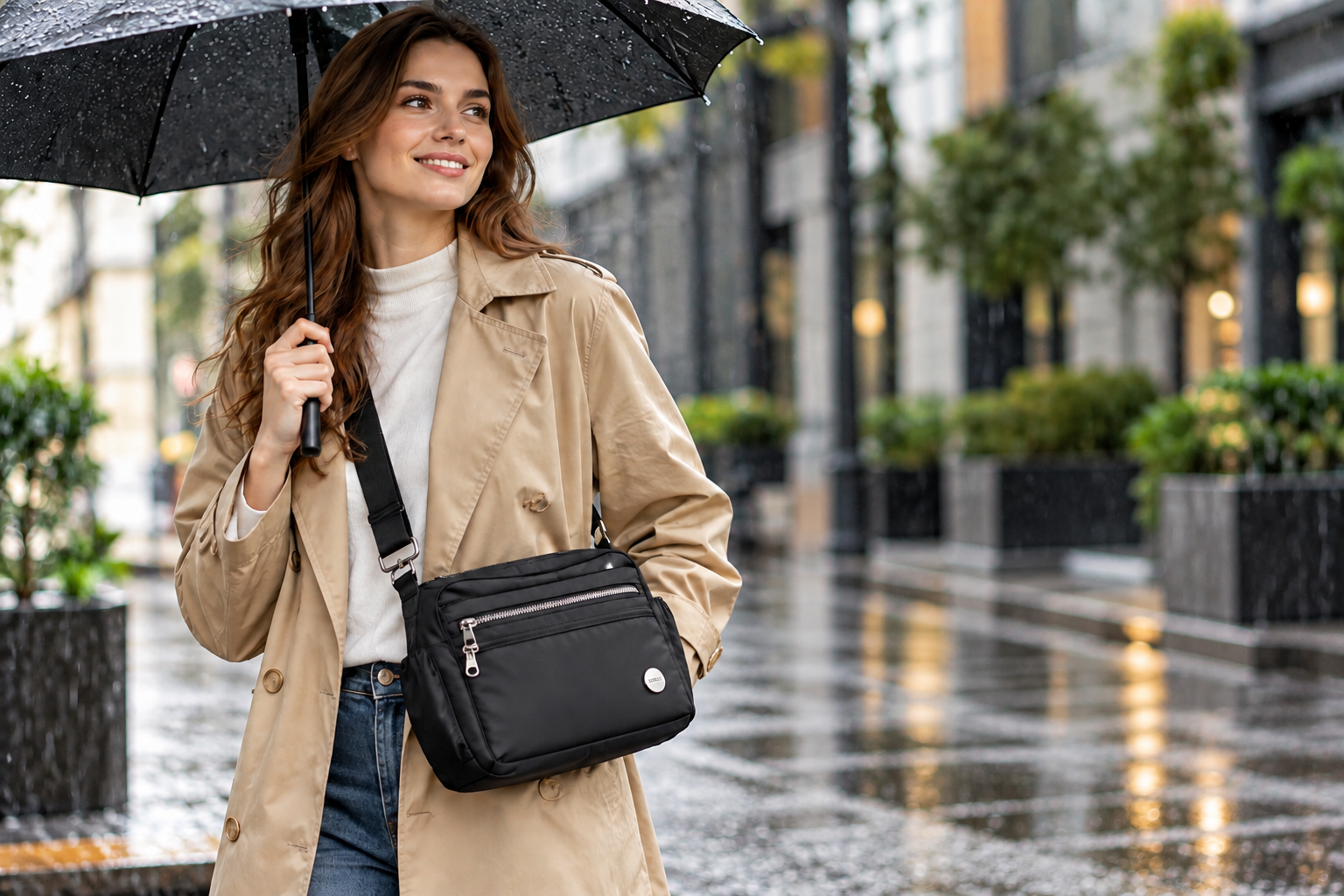
Yet the word “waterproof” deserves careful attention. Nylon itself does not automatically make a bag waterproof, and protection can depend on coatings, seams, zippers, and overall construction.
Before buying, look beyond appearance and examine how the bag is made, how much it carries, and how the manufacturer describes its resistance to water.
A good comparison can help you find a bag suited to commuting, errands, sightseeing, or everyday use without paying for features you do not need.
What to Check in Waterproof Nylon Crossbody Bags for Women
A waterproof crossbody bag should be evaluated as a complete product rather than by fabric alone. Nylon is a synthetic material commonly used in bags because it can provide good strength relative to its weight. Actual water protection, however, varies considerably among products.
Manufacturers may use coated fabrics, treated surfaces, protected zippers, or other construction methods to limit water entry. Product descriptions should tell you exactly what level of protection is claimed.
Pay attention to:
- Fabric construction and coating
- Zipper design
- Seam construction
- Interior lining
- Strap attachment points
- Pocket arrangement
- Closure design
- Manufacturer care instructions
If a listing uses terms such as waterproof, water-resistant, or water-repellent, check for an explanation of what that wording means for that specific bag.
Waterproof and Water-Resistant Are Different Claims
One of the easiest purchasing mistakes is assuming these terms mean the same thing.
A truly waterproof design is intended to prevent water from entering under defined conditions. A water-resistant product generally provides limited protection against moisture but may allow water through during prolonged or heavy exposure.
A water resistant shoulder bag, for example, may be suitable for occasional rain while walking between buildings. That does not automatically mean you can expose it to sustained rain or submerge it without moisture reaching the contents.
Look for manufacturer documentation describing the intended conditions. If no test method, rating, or explanation is provided, treat broad waterproof language cautiously.
Why Nylon Is Commonly Used for Crossbody Bags
Nylon can work well for bags because manufacturers can produce it in different weights, textures, and constructions. It can also be paired with coatings or treatments designed to improve moisture resistance.
Fabric alone should not determine your purchase, though. Two nylon bags can perform differently because of differences in fabric thickness, stitching, lining, hardware, coatings, and construction.
Check the entire bag rather than assuming all nylon designs provide comparable durability or protection.
Check Size Against What You Actually Carry
Crossbody bags range from compact styles designed for essentials to larger versions capable of holding small notebooks, travel documents, chargers, and personal items.
Before buying, make a quick list of what you regularly carry. Common items might include:
- Smartphone
- Wallet or card holder
- Keys
- Sunglasses
- Small personal-care items
- Portable charger
- Earbuds
- Passport or travel documents
Then compare those items against the manufacturer’s listed bag dimensions.
A lightweight crossbody bag can be comfortable for extended use, but low empty weight means little if the bag becomes awkward after being filled. Dimensions, compartment layout, and strap design can have a major effect on carrying comfort.
Look at Pocket Layout, Not Pocket Count
A bag with many compartments is not automatically easier to use. Placement matters.
An exterior pocket can provide quick access to items you use frequently, while an interior zippered compartment can help separate smaller belongings.
A dedicated key clip or divided compartment may reduce time spent searching inside the main section.
Think about your routine. If you frequently reach for your phone, placing it behind several zippers may become irritating. If you carry important documents, an exposed outer pocket might not be your preferred location.
The most practical layout is one that matches how you use the bag.
Strap Adjustment Can Affect Everyday Comfort
An adjustable strap crossbody bag gives you some control over where the bag sits against your body. Strap length can matter because body height, clothing layers, and preferred carrying position vary from person to person.
Check the manufacturer’s minimum and maximum strap measurements when available. Also inspect product photos to see how the adjustment hardware is positioned.
Strap width matters too. Narrow straps can feel different from wider designs once a bag is loaded. Padding, attachment hardware, and strap material can influence comfort as well.
For travel, adjustable straps can be especially practical when switching between light clothing and jackets.
Think About Travel Use Separately From Daily Use
A women’s travel crossbody bag may need features that are less important for everyday errands. Travelers may prioritize compact dimensions, organized compartments, secure closures, low empty weight, and enough room for documents and small electronics.
Security deserves attention as well. Look at how easily the main compartment can be opened and where exterior pockets sit when the bag is being worn.
Do not assume labels such as “travel” or “anti-theft” prove a particular level of security. Check the actual construction and manufacturer description behind those claims.
For air travel, verify the current baggage rules of your airline if you plan to carry the bag alongside other cabin luggage.
Examine Zippers and Seams Carefully
Water can enter through areas other than the main fabric.
Standard zipper openings and stitched seams can become entry points for moisture. Some manufacturers address this through covered zipper designs, coated zippers, seam treatments, or alternative closures.
If water protection is a major purchasing priority, read the technical description carefully. Product photos can help you inspect visible construction, but they cannot establish waterproof performance on their own.
The manufacturer’s stated testing or water-protection information is a stronger basis for comparison.
Check Hardware and Attachment Points
Buckles, clips, strap adjusters, zipper pulls, and attachment rings affect daily usability. These components regularly experience movement and load as you carry the bag.
Look closely at how the strap connects to the body of the bag. Reinforced attachment areas may be worth checking, particularly if you expect to carry heavier items.
Also examine zipper pulls and adjustment hardware in product images. They should appear easy to grip and operate for your intended use.
Specific durability claims should come from documented manufacturer information or credible independent testing rather than appearance alone.
Interior Lining Can Affect Maintenance
The inside of a crossbody bag matters almost as much as the exterior.
Light-colored linings can sometimes make small objects easier to locate, while darker interiors may show certain marks less readily.
Always follow the manufacturer’s cleaning instructions. Coated nylon and treated fabrics may require different care from untreated materials, and harsh cleaning products could affect finishes or coatings.
Is nylon naturally waterproof?
Not necessarily. Nylon fabric can resist some moisture depending on its construction, but waterproof performance typically depends on factors such as coatings, seams, closures, and manufacturing methods.
Can you use a nylon crossbody bag in the rain?
That depends on the specific bag’s documented water protection. A product described as water-resistant may handle limited exposure while still allowing moisture through during heavier or prolonged rain.
Is a crossbody bag practical for travel?
It can be. Crossbody designs keep your hands free and can keep frequently used belongings close to your body. Capacity, closure design, comfort, and airline requirements should still be checked before travel.
How large should your crossbody bag be?
Choose dimensions based on the items you intend to carry. Comparing the manufacturer’s measurements against your phone, wallet, documents, and other essentials is safer than judging capacity from photographs alone.
How should you clean a nylon bag?
Follow the care directions supplied by the manufacturer. Cleaning methods can differ according to coatings, linings, hardware, dyes, and other materials used in the bag.
Buying Factors Worth Comparing
Before choosing a bag, compare fabric construction, dimensions, empty weight, strap measurements, closure type, pocket placement, lining, care requirements, and documented water protection.
Pay particular attention to the features that affect your own routine. Someone carrying only a phone, keys, and cards has different requirements from someone carrying travel documents, chargers, cosmetics, and other daily essentials.
Product specifications can also help you eliminate unsuitable options before focusing on style.
For current dimensions, materials, available designs, and manufacturer-stated water protection, view the product details and compare the available crossbody bag options before purchasing.
Is a Waterproof Nylon Crossbody Bag Right for You?
Waterproof nylon crossbody bags can be practical when you value hands-free carrying, compact storage, relatively low bag weight, and some form of protection from wet conditions. The exact performance depends on the individual product rather than the material name alone.
Focus on documented water protection, construction, dimensions, strap adjustment, closures, and pocket placement.
Leave a Reply