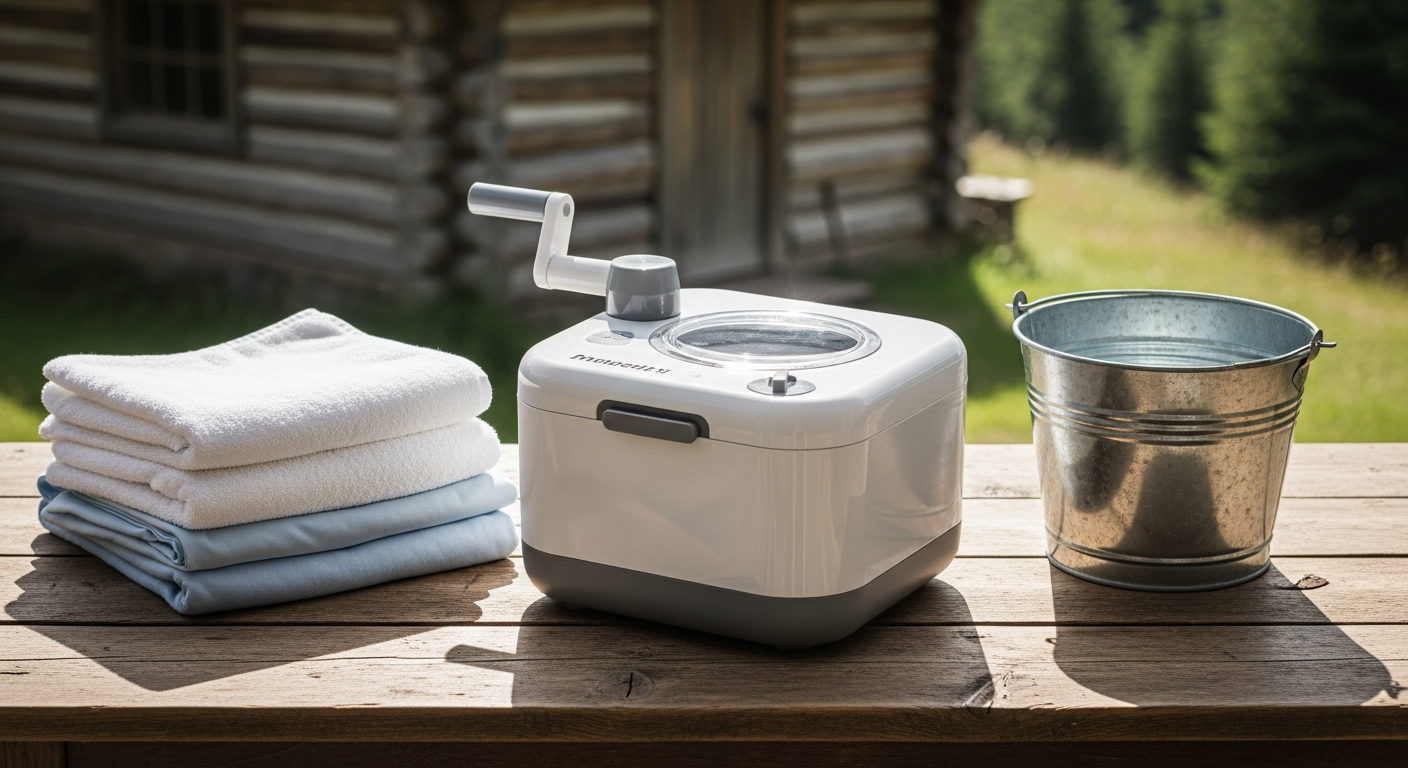
Traditional washing machines are built around assumptions that not everyone shares. They expect stable electricity, large living spaces, and unrestricted water access. For RV travelers, tiny home owners, and off-grid households, those assumptions quickly become impractical.
The WonderWash Portable Washing Machine was designed for a completely different lifestyle. Instead of relying on electricity and large wash drums, it uses a compact hand-crank system focused on portability, water efficiency, and mechanical simplicity.
That niche focus has helped the WonderWash develop a strong following among people prioritizing self-sufficiency and low-resource living.
The Manual Crank System Eliminates Electricity Dependence
The biggest difference is the complete lack of electrical components.
The WonderWash operates entirely through:
- Manual cranking
- Mechanical agitation
- Gravity-fed drainage
This makes it especially useful for:
- RV living
- Camping
- Emergency preparedness
- Off-grid cabins
- Tiny homes
Without motors or electronics, the machine can function almost anywhere with access to water and detergent.
For many users, that independence is one of its strongest advantages.
Water Usage Is Dramatically Lower Than Standard Washers
Water efficiency is another major selling point.
The WonderWash typically uses:
- Around 2–3 gallons per load
compared to:
- 20+ gallons in many traditional washers
For households managing limited water supplies, that reduction matters significantly.
Lower water use also reduces:
- Detergent consumption
- Wastewater output
- Utility costs
This aligns well with sustainability-focused lifestyles where conservation is a priority.
The Gentle Agitation Works Well for Delicate Fabrics
The machine uses oscillating agitation rather than aggressive spinning.
This gentler cleaning motion works particularly well for:
- Wool
- Silk
- Delicate garments
- Vintage clothing
- Lightweight fabrics
Many users actually prefer the WonderWash over standard machines for sensitive clothing items because it creates less mechanical stress on fibers.
The slower wash action also reduces tangling compared to many high-speed washers.
The Compact Design Fits Small Living Spaces
Space-saving design is essential for portable appliances.
The WonderWash’s relatively small footprint makes it easy to store in:
- RV cabinets
- Tiny home closets
- Boats
- Camping setups
- Apartment storage areas
For users living in compact environments, storage practicality becomes just as important as cleaning performance itself.
The Cleaning Performance Handles Everyday Laundry Well
For normal laundry loads, the WonderWash performs surprisingly well.
It effectively cleans:
- Cotton clothing
- T-shirts
- Lightly soiled garments
- Casual wear
- Synthetic fabrics
The machine works best for:
- Small regular loads
- Daily essentials
- Maintenance washing
However, it is less effective for:
- Heavy-duty stains
- Large bedding
- Thick comforters
- Heavily soiled workwear
Some difficult stains may still require pre-treatment or hand scrubbing.
The Lack of a Spin Cycle Is the Biggest Limitation
The most common criticism involves drying.
Because the WonderWash does not include a spin cycle, clothes come out:
- Very wet
- Dripping after rinsing
Users typically rely on:
- Manual wringing
- Air drying
- Separate spin dryers
Air-drying times can become especially challenging in:
- Humid climates
- Rainy weather
- Cold environments
Many long-term users eventually pair the machine with a compact spin dryer for better practicality.
Physical Effort Still Matters
The machine requires:
- Approximately 5–7 minutes of continuous cranking per load
For some users, the repetitive motion feels manageable or even relaxing.
For others, especially those with:
- Mobility limitations
- Arthritis
- Shoulder issues
the manual operation may become tiring during multiple loads.
This remains one of the biggest considerations before purchasing.
The Small Capacity Limits Large Household Use
The WonderWash handles roughly:
Equivalent loads include:
- Several shirts
- A few undergarments
- One pair of jeans
For large families generating heavy weekly laundry volumes, the machine quickly becomes impractical as a primary washer.
It works best for:
- Solo travelers
- Couples
- Supplemental laundry use
- Minimalist lifestyles
Long-Term Costs Stay Relatively Low
The WonderWash generally costs between:
- $50–$100
Compared to electric portable washers, this lower upfront pricing makes experimentation easier.
The lack of electrical consumption also reduces ongoing operating costs over time.
Because the design uses few moving parts, maintenance requirements remain relatively minimal as well.
A Portable Washer Built for Simplicity and Self-Sufficiency
The WonderWash Portable Washing Machine stands out because it embraces simplicity instead of competing directly with full-size electric washers. The manual crank operation, low water usage, quiet performance, and compact design make it especially useful for off-grid living, RV travel, and sustainability-focused households.
For users prioritizing portability, self-sufficiency, and reduced resource consumption over speed and automation, the WonderWash remains one of the most practical manual laundry systems currently available.
Leave a Reply